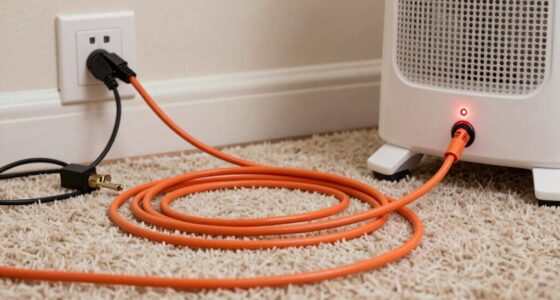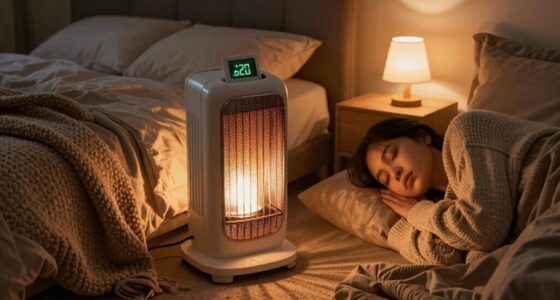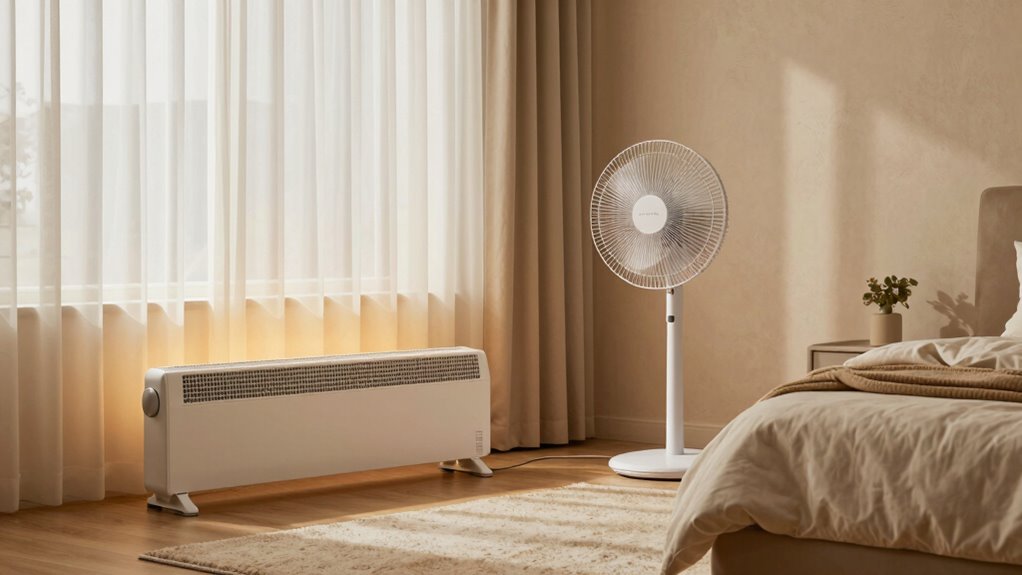
To heat your bedroom quietly, choose a radiant heater since it emits infrared heat directly and operates silently without moving parts. Fan heaters, while quick and effective, produce noise from the fan, which can disturb your peace. If you want a peaceful, noise-free environment, radiant options are best. However, many factors influence the choice, including cost and installation. Keep exploring to discover the specific features that suit your needs best.
Key Takeaways
- Radiant heaters operate silently by emitting infrared heat, ideal for quiet bedroom environments.
- Fan heaters produce noise from the moving fan, which may disturb sleep unless equipped with noise reduction features.
- Proper insulation enhances the efficiency of radiant heaters, maintaining warmth quietly and reducing energy costs.
- Choosing quiet fan heaters with soundproofing and strategic placement can minimize noise in bedrooms.
- For the quietest heating, combine radiant systems with soundproofing techniques and avoid placing noisy fan heaters near sleeping areas.
How Do Radiant and Fan Heaters Work in Bedrooms?
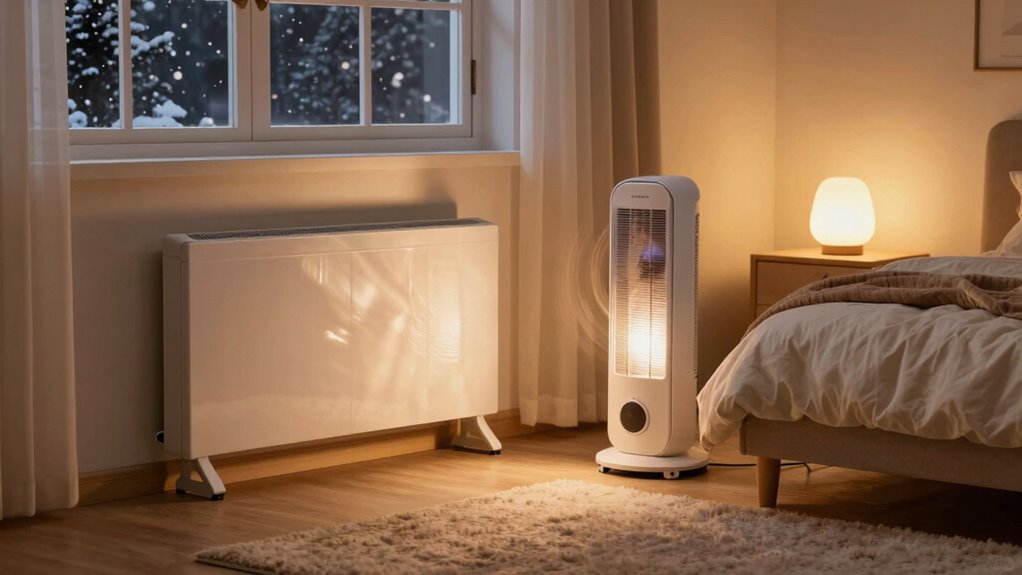
Have you ever wondered how radiant and fan heaters warm your bedroom so quickly and quietly? Radiant heaters work by emitting infrared heat that directly warms your body and surrounding objects, making them efficient in well-insulated rooms. Fan heaters, on the other hand, use a heating element and a fan to blow warm air across the room rapidly. Your bedroom’s thermal insulation plays a crucial role in retaining heat, enhancing each heater’s effectiveness. Both types come with safety features like tip-over and overheat protection, so you can feel secure while staying cozy. Radiant heaters tend to produce quieter warmth by eliminating moving parts, whereas fan heaters generate noise from the fan itself. Understanding these differences helps you choose the right heater for peaceful, efficient heating. Additionally, selecting a heater with the appropriate size and load capacity ensures safe and reliable operation in your space. Proper insulation can significantly improve heating efficiency and comfort, regardless of the heater type you choose.
Which Is Quieter: Radiant or Fan Heaters?
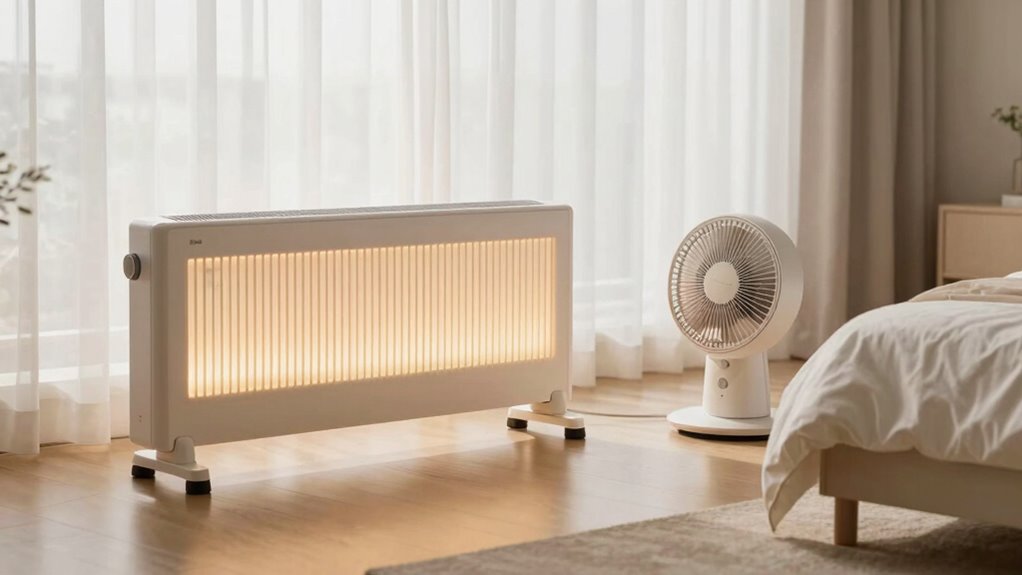
When choosing between radiant and fan heaters for a quiet bedroom environment, noise level becomes a key factor. Radiant heaters operate silently because they have no moving parts, so they won’t disrupt your sound insulation or sleep. Fan heaters, however, generate noise from the blowing fan, which can be noticeable, especially at higher settings. Your heater placement also affects noise; placing a fan heater near sound-sensitive areas might amplify disturbances. Radiant heaters, being more discreet and silent, are usually better for maintaining a peaceful atmosphere. If noise is your priority, opt for a radiant model and position it carefully to avoid unnecessary sound reflection or amplification, ensuring a quiet and comfortable bedroom environment. Additionally, choosing a heater with a transparent fee structure can help avoid unexpected costs and ensure a stress-free experience. Selecting a model with noise-reduction features can further enhance your comfort during use. For added peace of mind, look for models with sound-insulating design to minimize any residual noise and maximize tranquility throughout the night. Proper placement and choosing appropriate heating materials can also contribute to a quieter heating experience.
Pros and Cons of Radiant Heating for Quiet Comfort
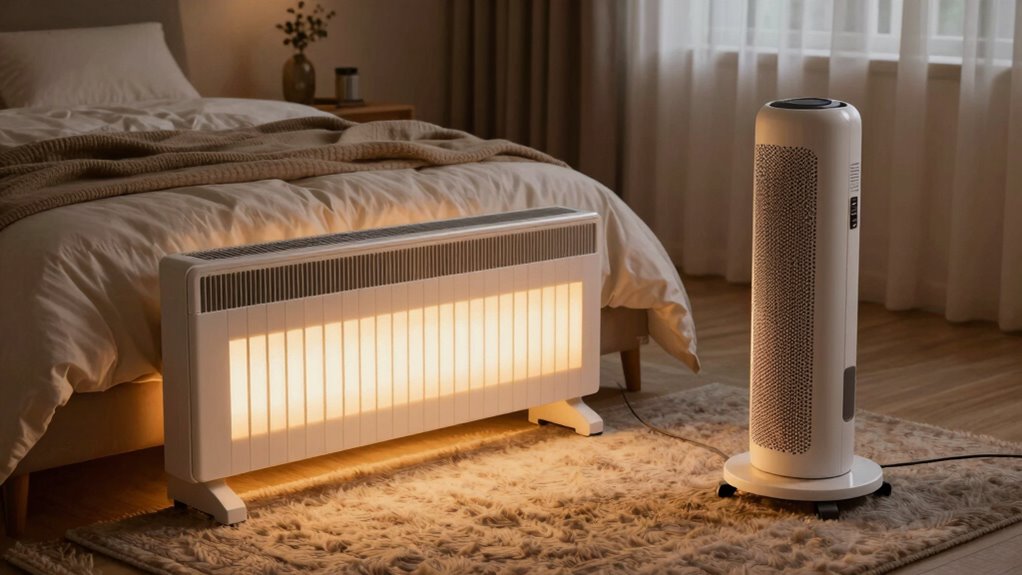
Radiant heating offers several advantages for maintaining a quiet bedroom environment, as it operates without moving parts or noisy fans. This means you won’t be disturbed by mechanical sounds, making it ideal for restful sleep. Additionally, radiant systems work well with thermal insulation, helping retain heat efficiently and reducing energy waste. Proper soundproofing techniques, like adding insulation between rooms, can further enhance quietness by preventing noise transfer. Moreover, contrast ratio can influence the perception of warmth and comfort, as a more consistent heat distribution creates a more inviting environment. Efficient thermal insulation is crucial for maximizing the benefits of radiant heating, ensuring minimal heat loss and maintaining a steady temperature. Optimal heat distribution can also improve comfort levels by avoiding hot or cold spots in the room. It is also important to consider noise reduction techniques to further minimize any potential sound disturbances from other household sources. However, radiant heating can have drawbacks, such as slow response time and higher installation costs. It’s also essential to ensure your bedroom’s insulation is sufficient; otherwise, heat may escape, compromising comfort and quietness. Furthermore, selecting the right heating system can optimize energy efficiency and comfort for your space. Overall, radiant heating provides a peaceful, silent heating solution when paired with good insulation and soundproofing.
Are Fan Heaters Noisy? When Do They Still Make Sense?
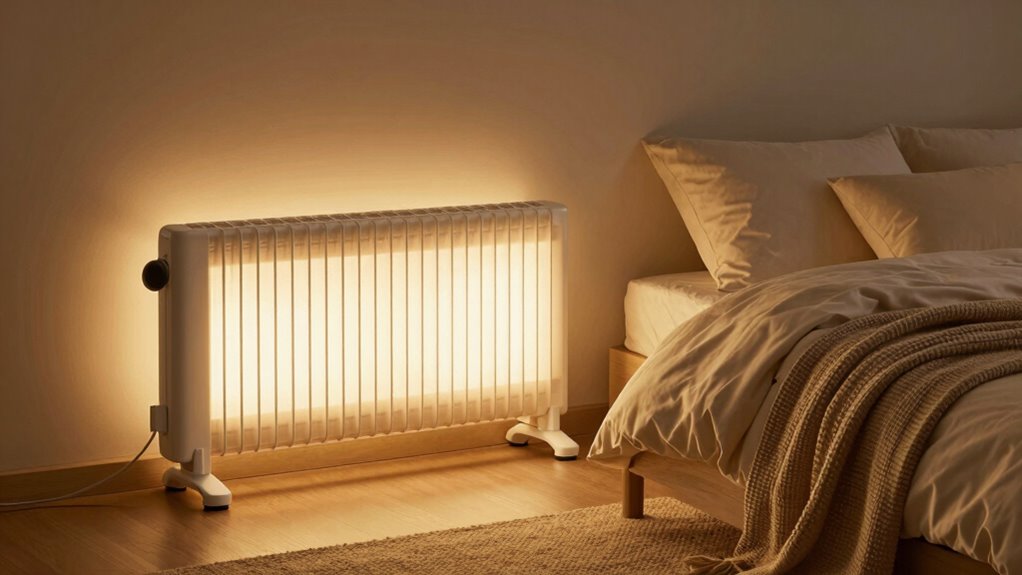
Fan heaters can produce different types of noise, from gentle hums to louder operational sounds. You should consider when these noises might be acceptable, like during the day or in less quiet spaces. For example, using a fan heater in a water park or other lively environment might be less disruptive. Additionally, choosing models with noise reduction features can help minimize disturbance in more sensitive settings. Being aware of noise mitigation techniques can further enhance your comfort in quiet spaces. Some modern fan heaters incorporate quiet operation technology to further reduce noise levels during use. Integrating smart controls can also help you schedule heating during times when noise is less noticeable, improving overall comfort.
Noise Levels and Types
Are fan heaters too noisy for a quiet bedroom? Not necessarily. While some models produce a noticeable hum or whir, you can minimize noise with soundproofing strategies like acoustic insulation or installing soft furnishings that absorb sound. Look for fan heaters with quieter operation features, such as low-noise motors or adjustable speed settings. When noise is a concern, consider positioning the heater away from your sleeping area or using barriers to dampen sound. In some cases, the noise level is acceptable if the heater’s benefits outweigh the disturbance, especially in colder months. Additionally, selecting a model with soundproofing features can help reduce operational noise further. Proper regulation and safety measures should also be considered to ensure the heater operates quietly and safely. Choosing a heater with noise reduction technology can make a significant difference in maintaining a peaceful bedroom environment. Incorporating soundproofing materials can further enhance comfort by decreasing the transmission of sound. Implementing quality insulation can also prevent heat loss and improve energy efficiency. Ultimately, choosing a quieter model and applying soundproofing strategies helps you enjoy warm comfort without sacrificing the tranquility of your bedroom.
Situations for Fan Use
While noise from fan heaters can be a concern, there are situations where their use is perfectly justified. If you need quick warmth or temporary relief, fan heaters are convenient portable options. They’re especially useful during unexpected cold spells or power outages, providing emergency heating when radiators aren’t enough. You might also prefer them if you want to target specific areas without heating the entire room. Fan heaters can be ideal when you’re short on time, want something easy to move around, or need instant heat. Even with their noise, their speed and portability can outweigh the inconvenience. Keep in mind, they’re best suited for short-term use or when other quieter options aren’t available. To understand how these heaters operate efficiently, it’s helpful to grasp heating system fundamentals and their impact on comfort and energy use. Additionally, understanding local automation and how to set up routines can help manage heating more quietly and efficiently in your home.
Which Bedroom Heater Saves Money and Energy?
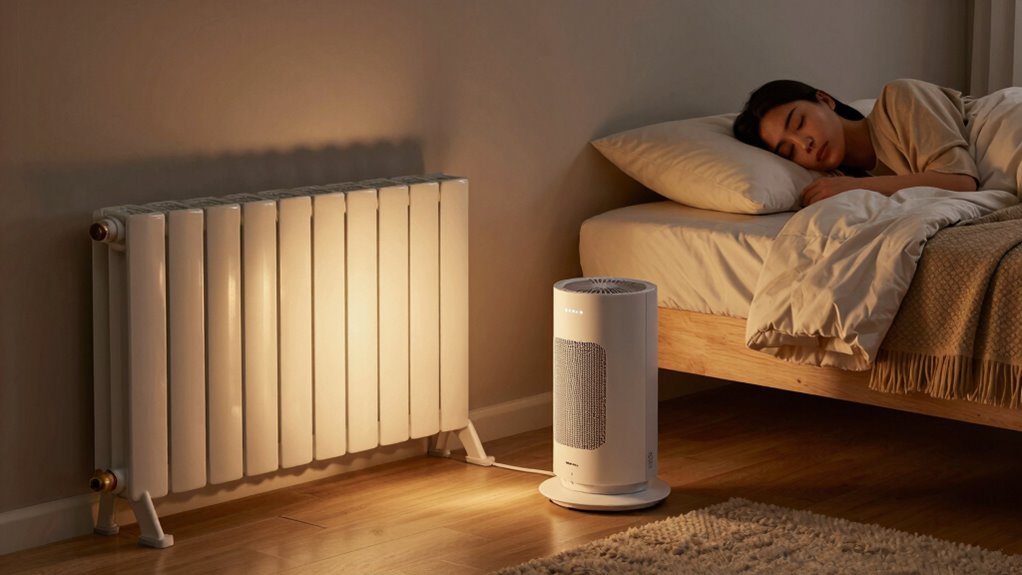
When choosing a bedroom heater, consider its energy efficiency rating to get the best value. Operating costs can vary considerably between models, affecting your monthly expenses. Over time, investing in a more efficient heater can lead to substantial savings, making it a smart choice for your budget. Additionally, selecting appliances with smart technology integration can optimize energy usage and enhance convenience. For optimal performance, look for models with energy-saving features to further reduce your overall energy consumption. Incorporating energy efficiency ratings into your decision-making process can help ensure you select a heater that balances performance and cost-effectiveness.
Energy Efficiency Ratings
Choosing an energy-efficient heater can substantially reduce your heating costs and cut down on energy waste. Look for models with high energy efficiency ratings, which often incorporate advanced thermal insulation and soundproofing techniques to maximize heat retention and minimize noise. When selecting a heater, consider these benefits:
- Lower energy bills that save you money over time
- Reduced environmental impact, making your home greener
- Quieter operation, preserving your bedroom’s tranquility
- Better heat distribution, ensuring consistent warmth
- Longer-lasting performance, decreasing maintenance costs
Operating Cost Differences
Selecting a heater that saves you money and energy depends on understanding their operating costs. Conducting a cost comparison helps you identify which option is more economical over time. Radiant heaters often have lower energy costs because they directly warm objects and people, reducing wasted heat. Fan heaters, on the other hand, tend to consume more electricity due to their continuous fan operation and less efficient heat distribution. By evaluating energy savings, you can determine which heater minimizes your monthly utility bills. Keep in mind that initial purchase price isn’t the only factor—operating costs play a vital role in long-term affordability. Choosing a heater with lower energy consumption ensures you stay warm without overspending, making your heating solution both budget-friendly and efficient.
Long-Term Savings Potential
Over time, radiant heaters often offer better long-term savings because they use less energy and directly warm people and objects, reducing wasted heat. By investing in energy audits and insulation upgrades, you can make your entire space more efficient. This means your heater works less, saving you money on energy bills each month. Radiant systems heat spaces evenly and quickly, so you’re less likely to leave the heater on longer than needed. Additionally, better insulation prevents heat loss, maximizing your investment.
- Feel confident knowing your home is more energy-efficient
- Save money with lower utility bills
- Reduce your carbon footprint sustainably
- Enjoy consistent, quiet warmth without waste
- Invest in your home’s value and comfort long-term
How to Install and Maintain Your Heater for Quiet Operation
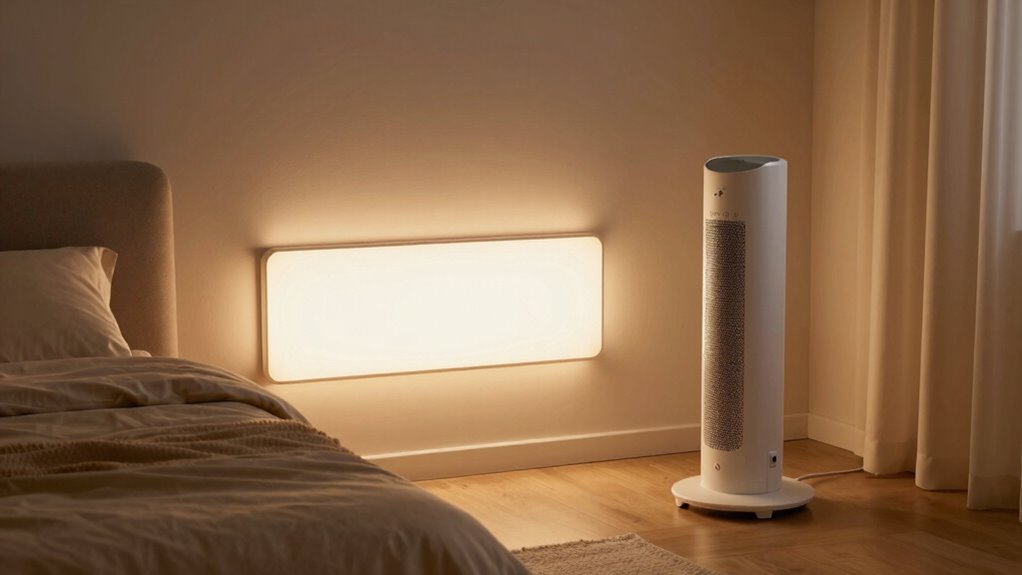
To guarantee your heater operates quietly, proper installation and regular maintenance are essential. Start with correct heater placement; avoid placing it near walls, furniture, or other objects that could cause vibrations or block airflow. Ensure it’s securely mounted and level to prevent rattling sounds. Follow maintenance tips like cleaning filters regularly and inspecting electrical connections to keep the unit running smoothly. Keep vents clear of dust and debris, which can cause the heater to work harder and generate noise. Schedule annual professional checkups to identify any worn components or loose parts early. By paying attention to installation details and routine upkeep, you’ll minimize operational noise and ensure your heater provides quiet, cozy warmth all season long.
Which Quiet Bedroom Heater Is Best for Your Needs?
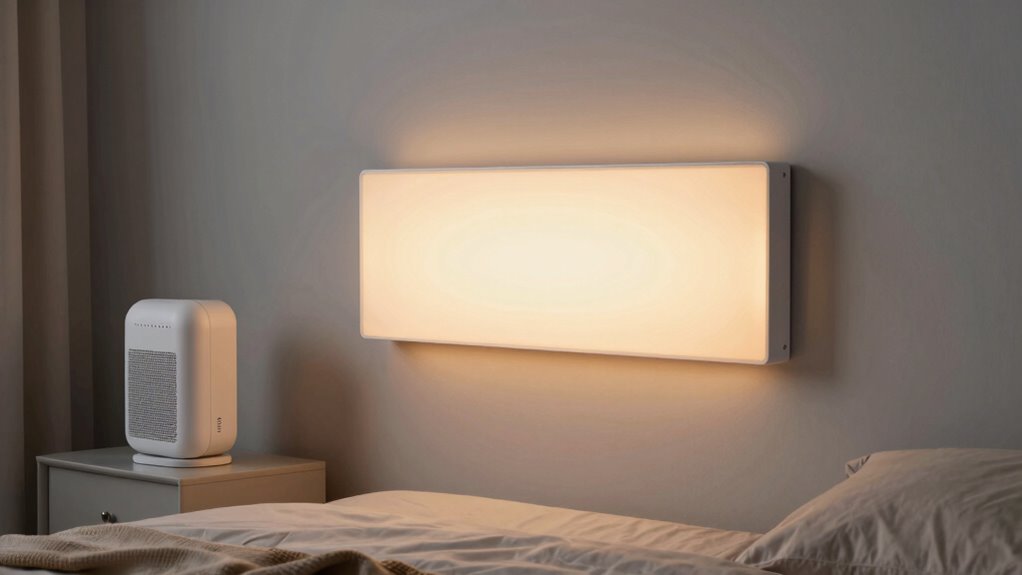
Choosing the right quiet heater can make a significant difference in creating a peaceful bedroom environment. You want a heater that offers easy thermostat settings, so you can maintain a comfortable temperature without noise disruptions. Safety features like tip-over protection, auto shut-off, and cool-touch surfaces provide peace of mind. Consider these options:
- Whisper-quiet operation for undisturbed sleep
- Adjustable thermostat for perfect comfort
- Built-in safety features for peace of mind
- Energy-efficient models that save on bills
- Compact design that fits seamlessly into your space
Finding a heater that balances quiet performance with safety features ensures a restful, cozy night. Your choice should prioritize calming silence and reliable safety to keep your bedroom serene and warm.
Frequently Asked Questions
Can Radiant and Fan Heaters Be Used Together Effectively?
Yes, you can use radiant and fan heaters together effectively for combined heating, creating heater synergy. This approach allows you to target different areas efficiently—radiant heaters warm objects and surfaces quietly, while fan heaters quickly boost overall room temperature. By combining these methods, you optimize comfort and energy use, ensuring a cozy, quiet bedroom environment without noise or delays. Just make sure to balance their settings to avoid overheating.
How Does Room Size Affect Heater Noise Levels?
Imagine your room as a cozy pond. In small spaces, quieter heaters like radiant ones hum softly, blending into the background, while larger rooms demand powerful fans that can create more noise. Your insulation impact and heater placement matter; well-insulated rooms keep heat steady, reducing noise disturbances. For bigger spaces, position heaters centrally and choose quieter options to maintain serenity, ensuring your bedroom remains a peaceful oasis.
Are There Any Safety Concerns With Quiet Heating Options?
Yes, there are safety concerns with quiet heating options. You should carefully consider heater placement to prevent fire hazards, avoiding placing them near curtains or bedding. Also, guarantee your room has good noise insulation to keep things peaceful and safe. Regularly check for overheating or electrical issues, especially with radiant heaters, and follow all manufacturer instructions to avoid accidents. Properly maintained, these quiet options are generally safe.
Do Energy-Efficient Heaters Operate More Quietly?
Yes, energy-efficient heaters often operate more quietly because they use advanced technology to minimize noise. To maximize noise reduction, place the heater in a strategic spot away from your bed or seating area, like near a wall or corner. Proper heater placement helps reduce vibrations and sound. These quiet models are perfect for creating a warm, peaceful environment without the disruptive noise typical of many traditional or less efficient heaters.
What Maintenance Steps Ensure Quiet Heater Operation Over Time?
While a noisy heater can disrupt your sleep, regular maintenance keeps it running quietly. You should check heater placement—ensure it’s away from walls or furniture that could cause vibrations. Insulation improvements also help, reducing strain on the heater and minimizing noise. Clean filters and vents regularly to prevent buildup. Proper maintenance not only prolongs your heater’s life but also guarantees quiet, efficient operation over time.
Conclusion
Choosing between radiant and fan heaters is like selecting a gentle breeze or a warm embrace for your bedroom. Both can bring comfort, but the quiet one lets you sleep undisturbed—your sanctuary’s heartbeat. Think of your heater as a silent guardian, quietly warming your nights and energizing your days. Pick the right one, and let it be the quiet symbol of peaceful, cozy mornings, where warmth and tranquility dance in perfect harmony.