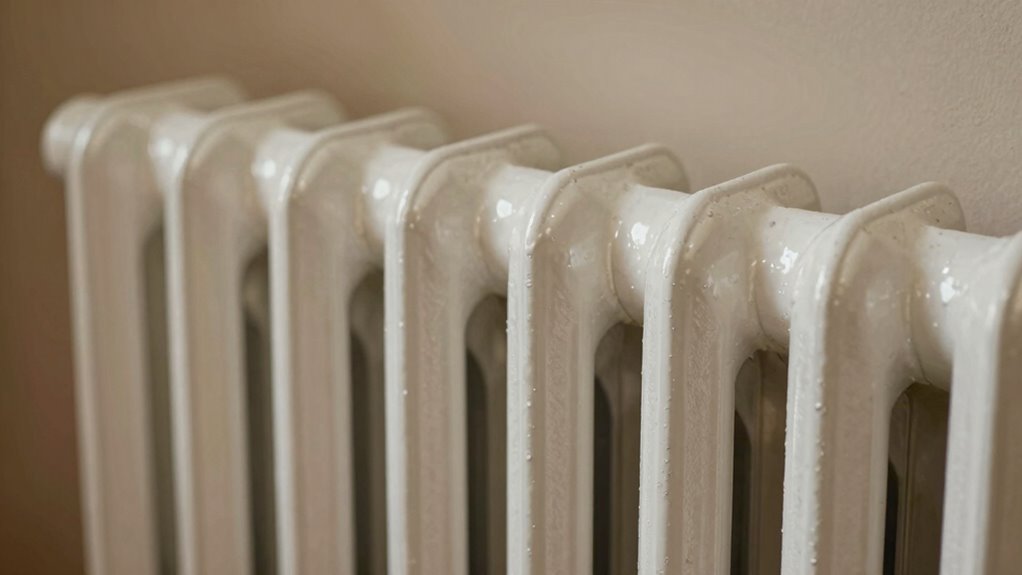

Oil-filled radiators warm up slowly because they rely on heating a thermal mass of oil, which then steadily radiates heat to your space. This gradual process prevents hot spots, guarantees even warmth, and keeps your room consistently comfortable. The slow heat-up actually benefits energy efficiency and safety, as it reduces fluctuations and thermal stress. If you’d like to discover how this slow heating works to your advantage, keep exploring the benefits further.
Key Takeaways
- The high thermal mass of oil causes thermal inertia, resulting in slower heating times.
- Slow, gradual warming ensures even heat distribution and prevents hot spots.
- Steady, prolonged heat release maintains consistent room temperature for greater comfort.
- Longer heating periods reduce energy waste by minimizing frequent cycling of the radiator.
- The slow process enhances safety and durability by avoiding temperature spikes and thermal stress.
Why Do Oil-Filled Radiators Take Longer to Heat Up?
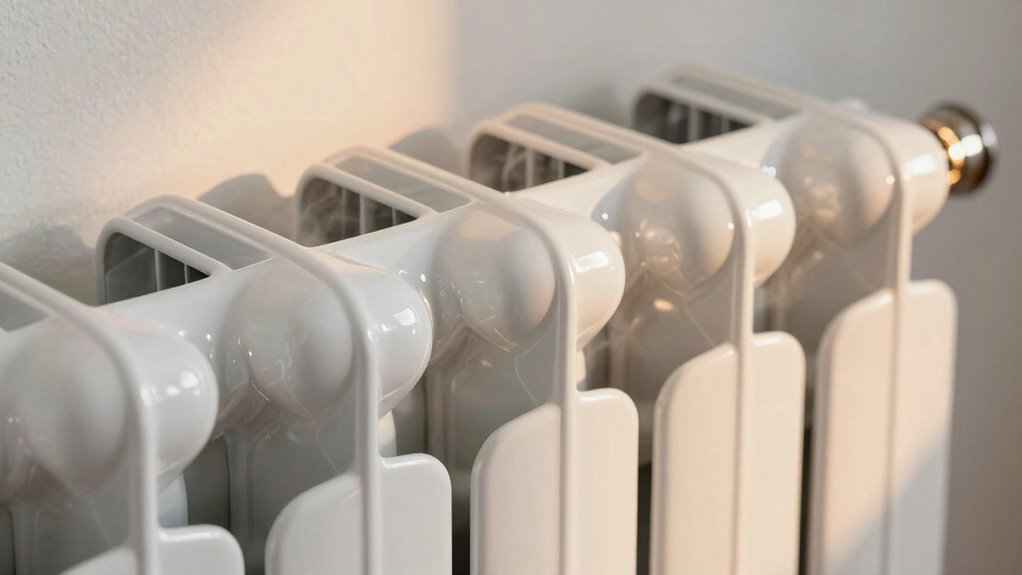
Oil-filled radiators take longer to heat up because the oil inside must warm to transfer heat effectively to the radiator’s surface. This process involves thermal inertia, meaning the oil resists rapid temperature changes, so it takes time to reach the desired warmth. The oil’s high heat retention allows it to hold onto heat longer once heated, which is beneficial for maintaining consistent warmth. As the oil gradually warms, it slowly radiates heat outward, leading to a slower overall heating process. This characteristic ensures the radiator doesn’t quickly cycle on and off, providing a steady and energy-efficient heat output. Additionally, the thermal properties of the oil contribute to energy efficiency, making oil-filled radiators a practical choice despite their slower start. The thermal inertia of the oil helps prevent temperature fluctuations, promoting a comfortable indoor environment. Because of this thermal mass, the radiator can provide a more stable and sustained heat over time, which is advantageous during prolonged use. While it takes longer initially, the oil’s thermal inertia and heat retention work together to deliver consistent warmth over time.
How Do Oil-Filled Radiators Heat & Why Is It Gradual?
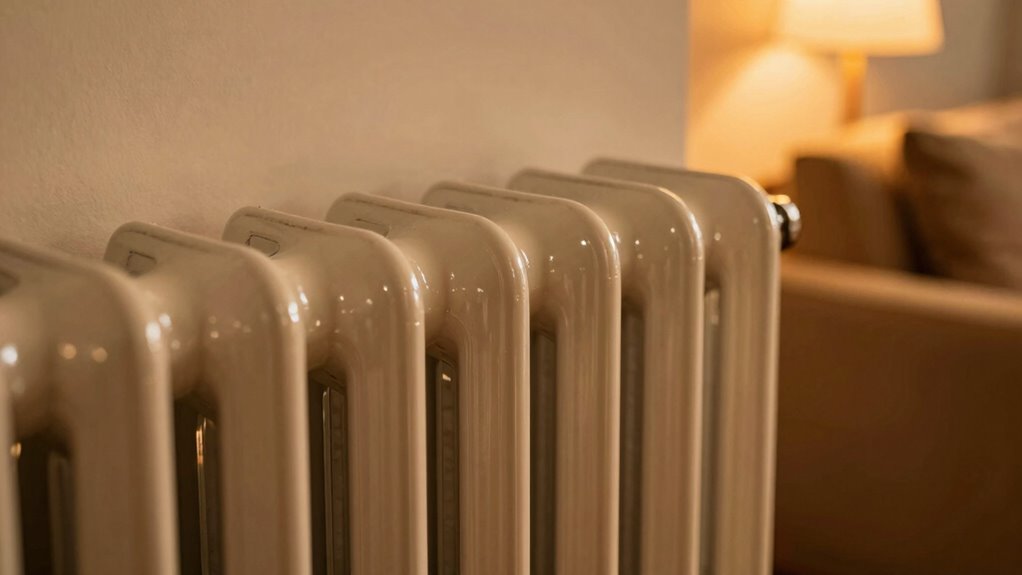
The way oil-filled radiators heat up is a slow but steady process rooted in how the oil inside responds to heat. When you turn on the radiator, the electric element warms the oil, which has a high thermal mass. This means it takes longer to heat initially but retains heat well. The oil’s heat retention allows it to stay warm for extended periods, gradually radiating heat into your room. The process also involves thermal mass, which ensures the heat is distributed evenly and steadily. Unlike quick-heating heaters, the oil’s thermal mass ensures a consistent, even warmth. This gradual heating process prevents sudden temperature spikes and provides a steady, comfortable environment. It’s this combination of thermal mass and heat retention that makes oil-filled radiators a reliable choice for maintaining warmth over time. Additionally, the slow heating characteristic makes them safer and more energy-efficient for continuous use. The energy efficiency of these radiators is often highlighted as a benefit, especially for prolonged heating needs.
How Slow Heating Keeps Your Home Warm and Even?
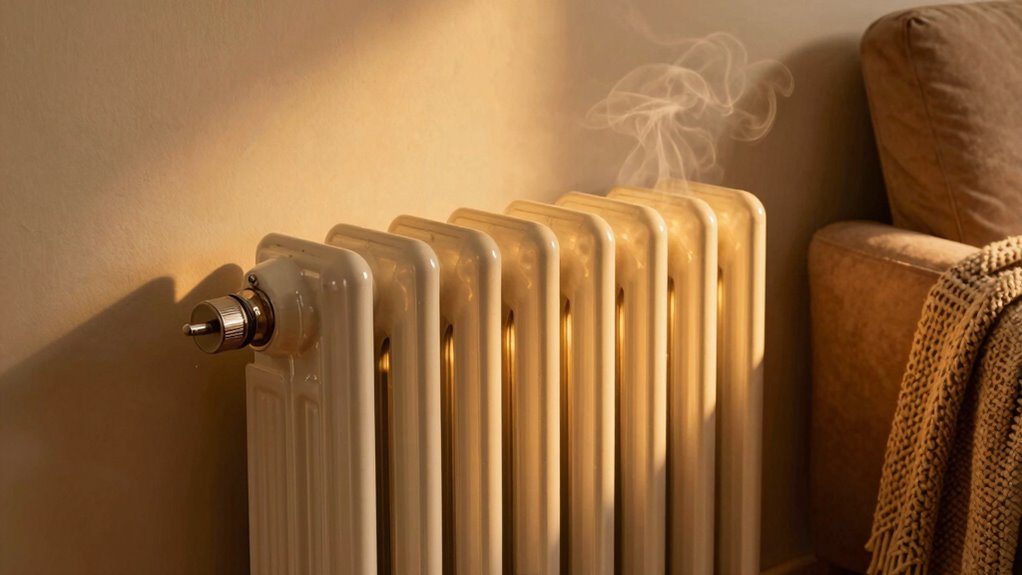
Because oil-filled radiators heat gradually, they distribute warmth evenly across your room, avoiding hot spots. This slow process helps keep the temperature consistent, so your home stays comfortable without sudden changes. As a result, you experience fewer temperature fluctuations, making your space feel warmer and more stable. Additionally, reliable backup power solutions emphasize safety and consistent performance, similar to the steady heat distribution of oil-filled radiators. Their long-lasting design ensures dependable operation over many seasons, providing peace of mind during colder months. This approach supports a calmer workspace, reducing distractions caused by uneven heating or noisy alternatives. Implementing effective risk management strategies further enhances safety and efficiency in your heating setup, contributing to overall financial savings by reducing energy waste.
Gradual Heat Distribution
As oil-filled radiators heat up gradually, they deliver warmth slowly but steadily, guaranteeing your home stays consistently comfortable. This gradual heat distribution enhances radiator efficiency by spreading warmth evenly across the room. Over a typical heating duration, you can imagine:
- The radiator warms from cold to cozy, like a gentle sunrise.
- Warmth radiates outward, reaching every corner of your space.
- The room’s temperature rises evenly, avoiding cold spots.
- The radiator maintains a steady temperature without sudden spikes.
- The wall surfaces and finishes help to evenly absorb and reflect heat, further improving warmth distribution.
- This energy-efficient process aligns with smart home strategies for optimized energy management, reducing unnecessary power use over time.
- The slow heating also minimizes thermal stress on the radiator components, extending their lifespan and maintaining consistent performance.
This slow, steady process prevents overheating and ensures consistent comfort. Instead of rapid bursts of heat, you get a reliable, even warmth that lasts longer, making your home feel cozy and balanced. It’s a smart way to keep your space warm without wasting energy.
Consistent Room Temperature
Since oil-filled radiators warm up gradually, they help maintain a stable and even temperature throughout your home. This slow heating process prevents sudden temperature fluctuations, ensuring consistent comfort. The steady heat distribution minimizes energy waste by reducing the need for frequent adjustments. Additionally, because of their slow heat-up time, they are less likely to cause temperature swings that can lead to discomfort or higher energy costs. As a result, your home stays warm and comfortable longer, promoting energy conservation. This consistent temperature stability also reduces strain on your heating system, extending its lifespan. Proper heat distribution ensures that every corner of your space benefits from reliable warmth, enhancing overall energy efficiency. Moreover, their gradual heating contributes to safe operation, lowering the risk of overheating and potential hazards.
Reduced Temperature Fluctuations
Oil-filled radiators reduce temperature fluctuations by heating gradually, giving your home a more stable and even warmth. This slow heating process enhances thermostat stability, preventing sudden spikes or drops in temperature. Additionally, efficient heat distribution helps maintain consistent comfort levels throughout your space. As a result, the heating response becomes smoother, avoiding abrupt changes that can make your home uncomfortable. Imagine this:
- The radiator gently warms the room, avoiding rapid temperature swings.
- The thermostat maintains a steady setting, reducing unnecessary cycling.
- Your home stays consistently warm, without sudden cool or hot spots.
- The heater responds gradually to adjustments, providing comfort without overshoot.
Furthermore, the thermal inertia of oil-filled radiators contributes to their slow but steady heating, making them particularly effective for maintaining long-term comfort. This controlled heating process ensures your space remains cozy and even, with fewer temperature fluctuations. It’s a key advantage of oil-filled radiators, prioritizing comfort and efficiency through slow, stable heat delivery. Recognizing the importance of energy efficiency can also help homeowners make cost-effective choices. Competitive pricing in the market makes these radiators an attractive choice for budget-conscious homeowners seeking reliable warmth.
Are Oil Radiators Energy Efficient? Benefits Explained?
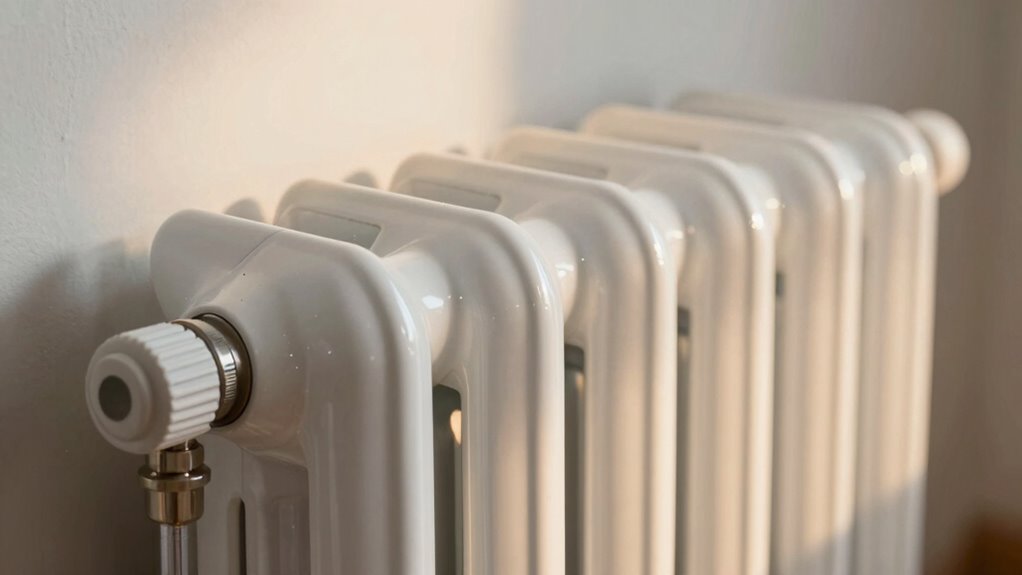
Oil radiators are known for their energy-efficient heating capabilities, making them a popular choice for many households. Their design allows for significant energy savings because they retain heat longer, reducing the need for continuous power consumption. When the radiator is turned off, the stored heat continues to warm your space, lowering overall energy use. This efficiency also minimizes environmental impact by reducing electricity consumption and associated emissions. Additionally, oil radiators maintain a steady temperature, preventing energy waste caused by frequent on-off cycles. Because of their ability to deliver consistent warmth with less power, they’re an eco-friendly option for those looking to cut energy costs while reducing their carbon footprint. Furthermore, understanding the psychological tactics that influence consumer choices can help in making more informed, energy-conscious decisions. The thermal retention feature of oil radiators enhances their efficiency, making them a smart choice for sustainable heating. Overall, oil radiators combine cost-effectiveness with environmental benefits, making them a smart heating choice.
How Oil Radiators Minimize Hot Spots and Boost Comfort?
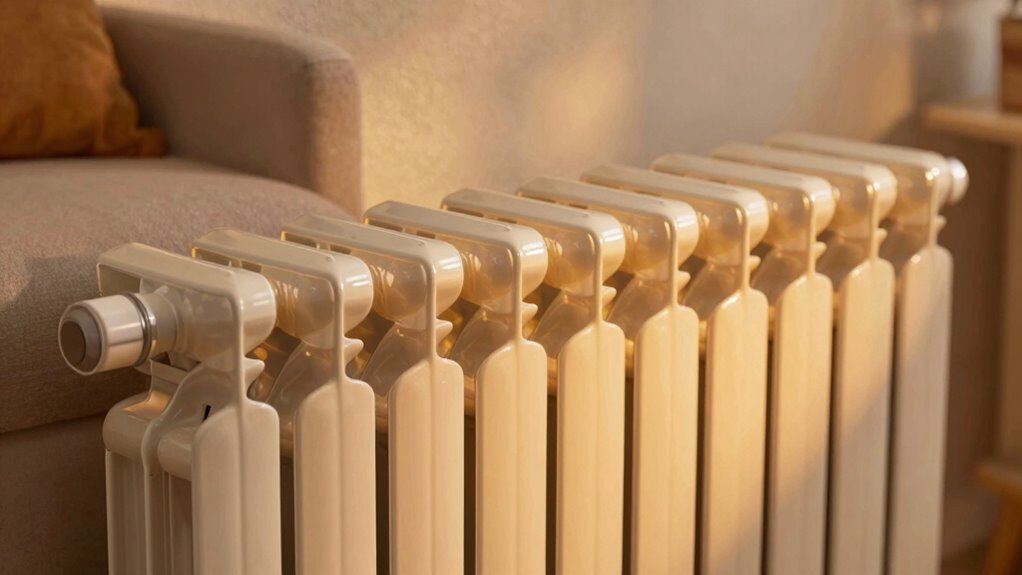
Oil radiators provide even heat distribution, so your room warms consistently without cold spots. This minimizes hot spots, creating a more comfortable environment. As a result, you enjoy a balanced, cozy temperature throughout your space.
Even Heat Distribution
Because of their design, oil radiators provide consistent warmth across a room, minimizing hot spots and uneven temperatures. This even heat distribution is achieved through the gentle, steady release of heat from the oil, which radiates outward uniformly. Imagine:
- Warmth spreading smoothly from baseboards to ceiling.
- Soft, consistent heat touching every corner evenly.
- No sudden temperature fluctuations or cold patches.
- Quiet operation that maintains comfort without noise.
This balanced heating not only boosts comfort but also promotes energy conservation by reducing the need for frequent adjustments. Plus, many models offer portable options, enabling you to position them strategically for even coverage. As a result, you enjoy steady warmth with minimal energy waste, making oil radiators a smart, efficient choice.
Reduced Cold Spots
Thanks to their steady heat release, oil radiators effectively prevent hot spots and cold patches in a room. Their thermal insulation helps retain heat, ensuring consistent warmth. Because they heat slowly, the heat disperses evenly, reducing cold spots and creating a more comfortable environment. This gradual heating process boosts heating efficiency by minimizing energy waste.
| Feature | Benefit |
|---|---|
| Thermal insulation | Maintains heat, prevents uneven temperature zones |
| Steady heat release | Promotes even warmth, reduces cold patches |
| Slow heating process | Ensures consistent temperature, improves efficiency |
Consistent Room Warmth
The steady heat release of oil radiators plays a key role in maintaining consistent warmth throughout a room. Unlike rapid heating methods, oil radiators reduce temperature fluctuations, ensuring even comfort. Imagine:
- The gentle glow spreading across your walls, avoiding hot spots.
- Warmth radiating uniformly from ceiling to floor.
- No sudden drops in temperature or cool patches.
- A stable, cozy environment, even if outside temperatures vary.
Because oil radiators heat slowly, they prevent hot spots that can cause discomfort. Instead of quick, uneven bursts of heat, they provide a controlled, consistent warmth. This steady heat minimizes temperature fluctuations, making your space more comfortable and inviting. You enjoy an even, reliable heat that adapts smoothly to your needs.
Oil Radiators vs. Rapid-Heat Heaters: Which Is Better?

When choosing between oil radiators and rapid-heat heaters, understanding their strengths can help you make an informed decision. Oil radiators excel in energy efficiency because they retain heat longer, providing consistent warmth without constantly consuming power. They’re ideal for steady, prolonged heating, making them cost-effective over time. Rapid-heat heaters, on the other hand, prioritize heating speed. They warm up rooms quickly, which is useful if you need instant comfort. However, they often use more energy during their short bursts of high heat. If you value sustained, efficient warmth and lower energy costs, oil radiators are better. If you need quick warmth for short periods, rapid-heat heaters serve that purpose more effectively. Consider your heating needs and energy preferences before choosing.
Tips to Maximize Warmth From Your Oil-Filled Radiator?
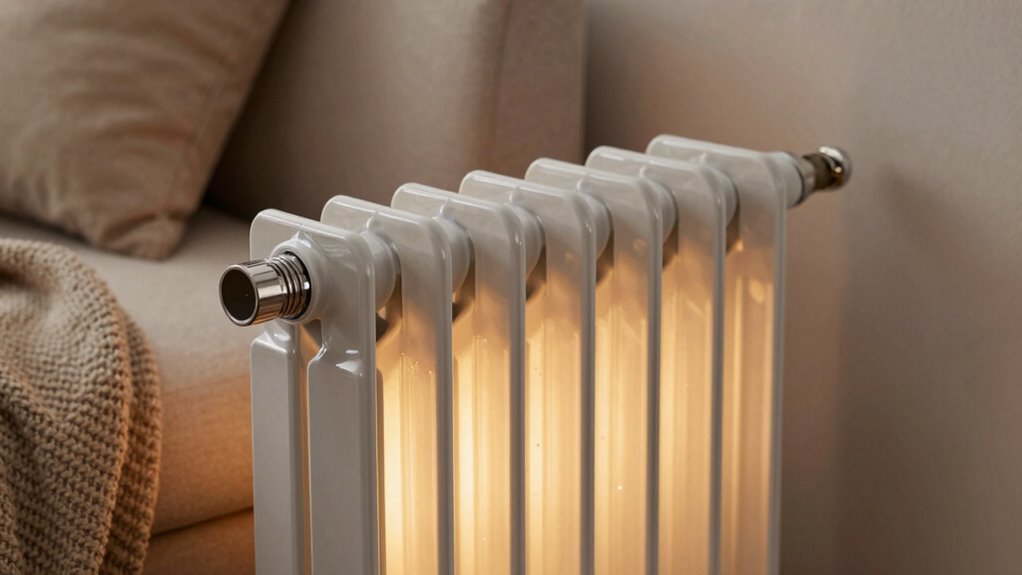
To get the most out of your oil-filled radiator, optimizing its placement and settings can make a noticeable difference in warmth and efficiency. First, position the radiator against an interior wall, away from drafts, to prevent heat loss. Second, place it on a level surface to ensure even heat distribution. Third, keep furniture or curtains at least a foot away to allow airflow. Fourth, adjust the thermostat settings to find a comfortable balance—set it higher during coldest times, then lower it when warmth is sufficient. Proper radiator placement prevents heat from escaping, while fine-tuning thermostat settings conserves energy. When used correctly, these tips help maximize warmth, making your oil-filled radiator more effective and energy-efficient.
Are Slow-Heating Radiators Worth the Wait?

Although slow-heating radiators may test your patience, they often offer benefits that make the wait worthwhile. These radiators prioritize steady, even warmth over rapid heat, which means you won’t experience sudden temperature swings. While they don’t provide quick response times, the consistent heat they produce can create a cozy environment that’s comfortable and reliable. If you need rapid heat for immediate warmth, they might not be ideal, but for long-term comfort, they excel. Their slow response allows the radiator to maintain a stable temperature, reducing energy waste and preventing uneven heating. So, if you’re willing to wait a little longer for reliable, even warmth, a slow-heating oil-filled radiator is definitely worth it.
Common Myths About Oil-Filled Radiator Heating Speed?
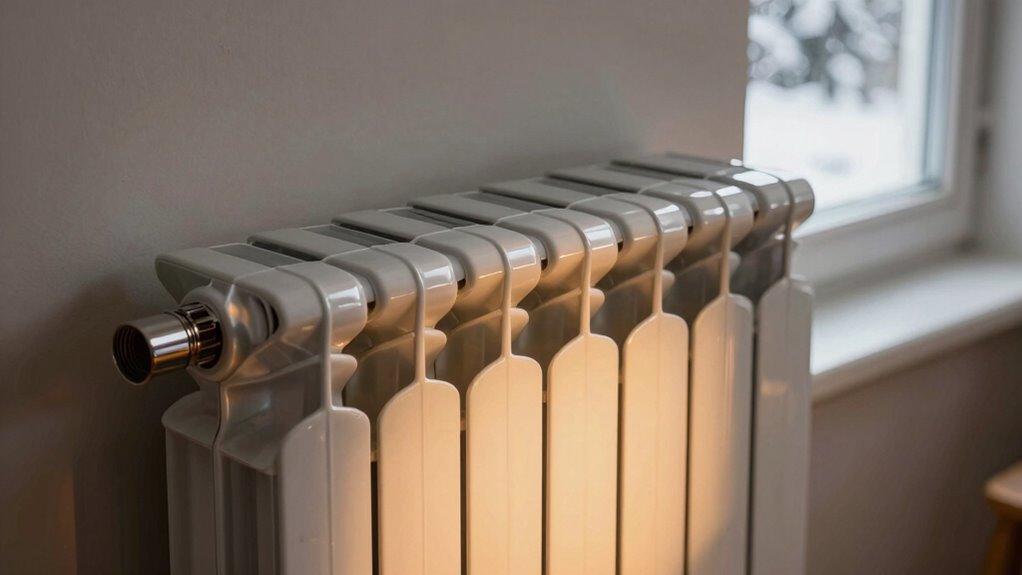
Many people believe that oil-filled radiators are slow to heat up, but this is a common misconception. They actually heat steadily, providing consistent warmth over time. Some also think these radiators are noisy, but modern models operate quietly, with only subtle radiator noise. To keep your radiator running smoothly, follow simple maintenance tips like cleaning vents and checking the thermostat regularly. Imagine:
- The radiator slowly beginning to warm, like dawn breaking.
- The oil inside gently circulating, distributing heat evenly.
- A quiet hum as the heater maintains temperature.
- Warmth radiating steadily into your space, creating comfort.
Understanding these myths helps you appreciate their efficiency and longevity, proving that slow heating isn’t a flaw but part of their design for reliable, long-lasting warmth.
Frequently Asked Questions
Can Oil-Filled Radiators Be Used as Primary Heating Sources?
Yes, you can use oil-filled radiators as your primary heating source, especially if you’re seeking an alternative heating option. They’re energy-efficient because they retain heat well and release it slowly, which helps maintain consistent warmth. While they may warm up slowly, their efficiency means you’ll save energy over time. Just make certain your space isn’t too large or poorly insulated, as this could reduce their effectiveness as a main heat source.
How Long Do Oil-Filled Radiators Typically Last?
Think of your oil-filled radiator as a dependable friend that sticks around for years; it typically lasts 10-20 years with proper care. Its thermal efficiency guarantees steady warmth while keeping energy consumption reasonable. Regular maintenance can extend its lifespan, making it a smart investment. You’ll appreciate how its durability and consistent performance bring comfort season after season, proving that quality heating solutions can truly stand the test of time.
Are Oil-Filled Radiators Suitable for Large Rooms?
Yes, oil-filled radiators are suitable for large rooms if you choose one with adequate heating capacity. You need to take into account the room size and select a model designed to handle the space effectively. While they heat slowly, their steady warmth is beneficial for maintaining consistent temperatures in larger areas. Make certain the radiator’s wattage matches your room’s size for optimal comfort and energy efficiency.
Do Oil-Filled Radiators Require Maintenance or Refilling?
Oil-filled radiators don’t need frequent maintenance checks or refilling procedures. You simply plug them in, and they work efficiently. You might occasionally wipe dust off the surface or check the power cord for damage, but generally, maintenance is minimal. Refilling isn’t necessary because the oil is sealed inside the radiator, and it doesn’t evaporate or require replenishing over time. This makes them low-maintenance and hassle-free.
What Safety Features Do Oil-Filled Radiators Include?
You’ll find that oil-filled radiators have safety features like safety certifications and tip-over switches built in. Safety certifications guarantee the unit meets strict standards, giving you peace of mind. Tip-over switches automatically turn off the heater if it’s knocked over, preventing accidents. These features make oil-filled radiators safer to use in your home, especially if you have children or pets. Always check for these safety features before purchasing.
Conclusion
Think of an oil-filled radiator as a steady gardener, tending your home’s warmth with patience and care. Its slow rise mirrors the sunrise, bringing light and comfort gradually but reliably. Rushing it is like trying to force a bloom—destined to falter. Embrace its gentle warmth as a symbol of enduring comfort, knowing that patience yields a home filled with consistent, soothing heat, turning your space into a sanctuary of calm amid the rush.