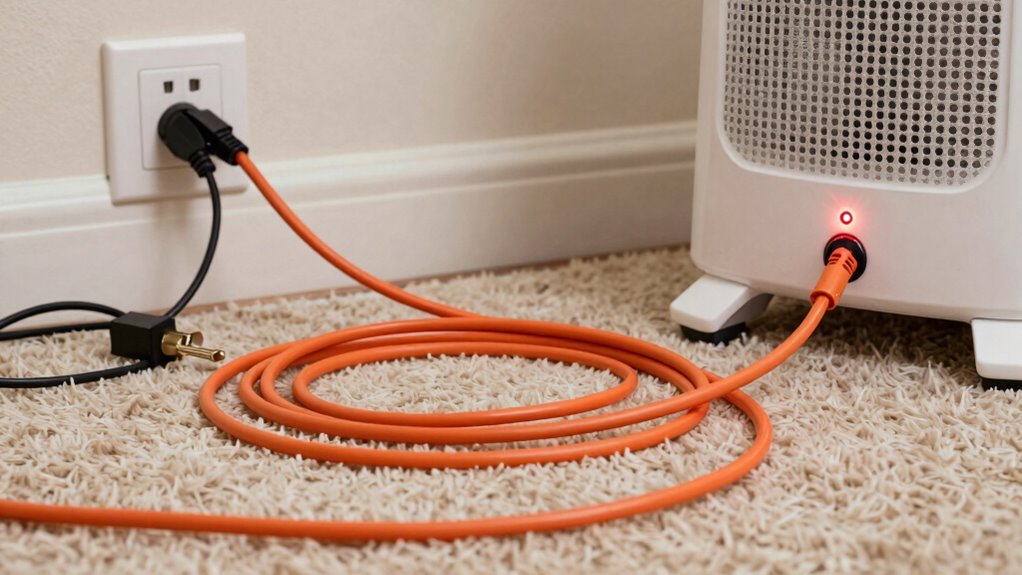

Using extension cords with space heaters can be unsafe if you don’t choose the right one or use it improperly. It’s best to plug your heater directly into a grounded wall outlet, as extension cords can overheat and cause fires if they’re not heavy-duty or too long. Always check that the cord’s rated for your heater’s power needs. To learn more about safe practices and alternatives, keep exploring this important safety topic.
Key Takeaways
- Always plug space heaters directly into grounded wall outlets; avoid using extension cords whenever possible.
- Use heavy-duty, properly rated extension cords (at least 14 or 12 gauge) if extension use is unavoidable.
- Regularly inspect extension cords for damage, burns, or wear; replace damaged cords immediately.
- Keep extension cords short, rated for high wattage, and avoid daisy-chaining multiple cords.
- Follow local electrical codes and manufacturer guidelines to ensure safe operation of space heaters and extension cords.
Are Extension Cords Safe to Use With Space Heaters?
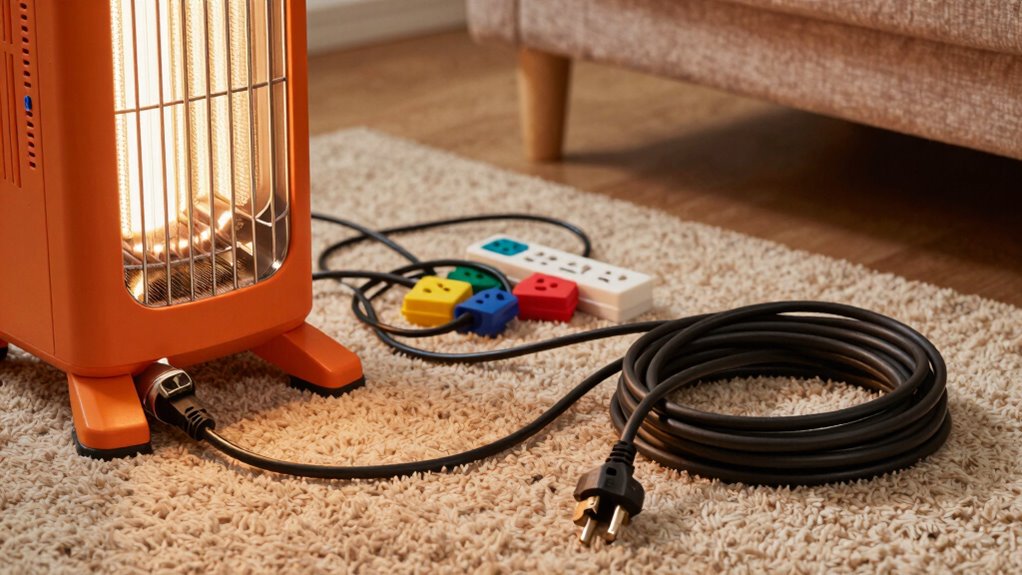
While it might be tempting to plug your space heater into an extension cord for convenience, doing so can be risky. The cord’s length affects its ability to safely carry current; longer cords increase resistance, which can lead to overheating. You should also consider the electrical capacity of the extension cord, ensuring it matches or exceeds the heater’s power requirements. Using a cord with insufficient capacity can cause overheating and pose fire hazards. Never use a cord that isn’t rated for high-wattage appliances like space heaters. Opt for a heavy-duty, properly rated extension cord if you absolutely need to extend your reach, but always prioritize plugging the heater directly into a grounded wall outlet whenever possible. This minimizes risks and keeps you safe. Additionally, regularly checking and cleaning filters in connected air purifiers can improve overall indoor air quality and safety when using multiple appliances. Being aware of electrical safety standards can help you make better choices and prevent accidents. Moreover, understanding the proper wiring practices can further reduce the risk of electrical issues when using extension cords and space heaters.
What Are the Risks of Using Extension Cords With Space Heaters?
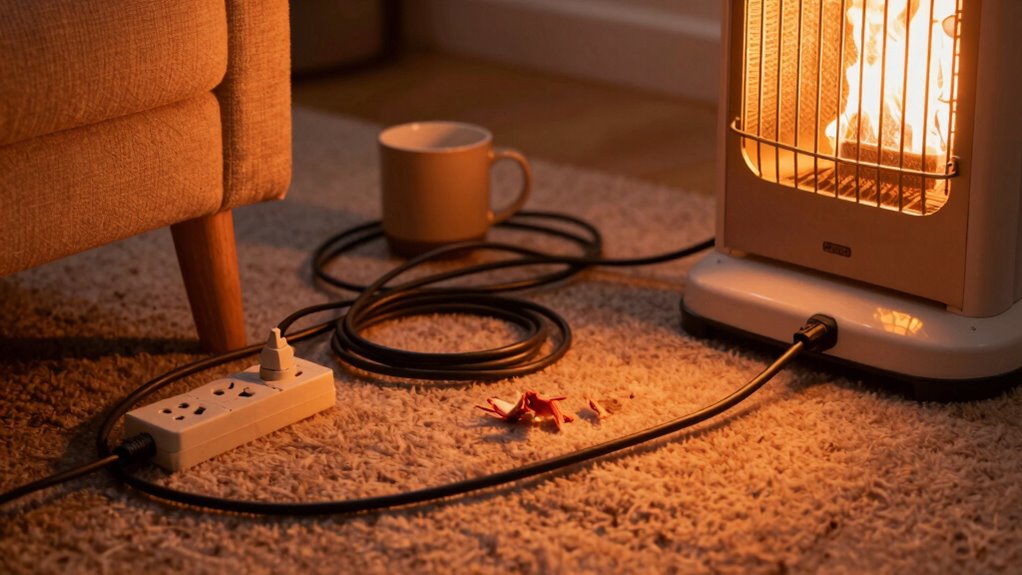
Using extension cords with space heaters can be risky if you overload them, which may cause the cord to overheat. This increases the chance of a fire starting in your home. It’s important to understand these dangers to keep yourself and your property safe. Additionally, using smart appliances or connected devices can help monitor and prevent electrical hazards associated with improper extension cord use. Choosing projector technology that minimizes electrical strain can also contribute to safer usage. Being aware of affiliate disclosure policies can help you make informed decisions about safety products and accessories that support secure appliance operation. Proper electrical safety practices are essential to prevent accidents and ensure safe home heating.
Overloading Extension Cords
Overloading extension cords when plugging in space heaters can lead to serious electrical hazards. If you connect a heater to an extension cord that’s too long or has a low power rating, the cord can overheat or short out. Always check the cord’s power rating and avoid exceeding it. Longer cords increase resistance, which can cause overheating, especially with high-wattage space heaters. Use the chart below to keep your setup safe:
| Cord Length | Max Power Rating | Risk Level |
|---|---|---|
| Up to 25 ft | 15 amps | Low |
| 25-50 ft | 12 amps | Moderate |
| Over 50 ft | 10 amps | High |
| Low gauge | 20 amps | Very High |
Stay within recommended ratings to prevent overloads. Understanding electrical load capacity is essential for safe usage, especially when integrating smart home fitness technology into your home environment.
Fire Hazard Risks
Have you considered the fire hazards that come with plugging your space heater into an extension cord? A long cord length can increase resistance, leading to overheating, especially if the cord isn’t rated for high electrical capacity. Extension cords not designed for space heaters often can’t handle the power demands, risking electrical fires. When the cord’s capacity doesn’t match the heater’s needs, it can overheat and ignite nearby materials. Using an extension cord with insufficient gauge or one that’s too long amplifies these risks. Always check the cord’s rating and keep it as short as possible. Never use an extension cord as a permanent solution—plug your space heater directly into a properly grounded outlet to minimize fire hazards. Electrical safety is crucial to prevent potential fires and injuries, and understanding power capacity can help you choose the right cords and prevent dangerous situations. Additionally, selecting appropriate extension cords designed for high wattage appliances can further reduce risks. Ensuring that your extension cords are correctly rated for the appliance’s wattage is essential for safety and performance. Being aware of cord gauge ratings and their relation to electrical load can further help in making safe choices.
How to Choose a Safe Extension Cord for Your Space Heater
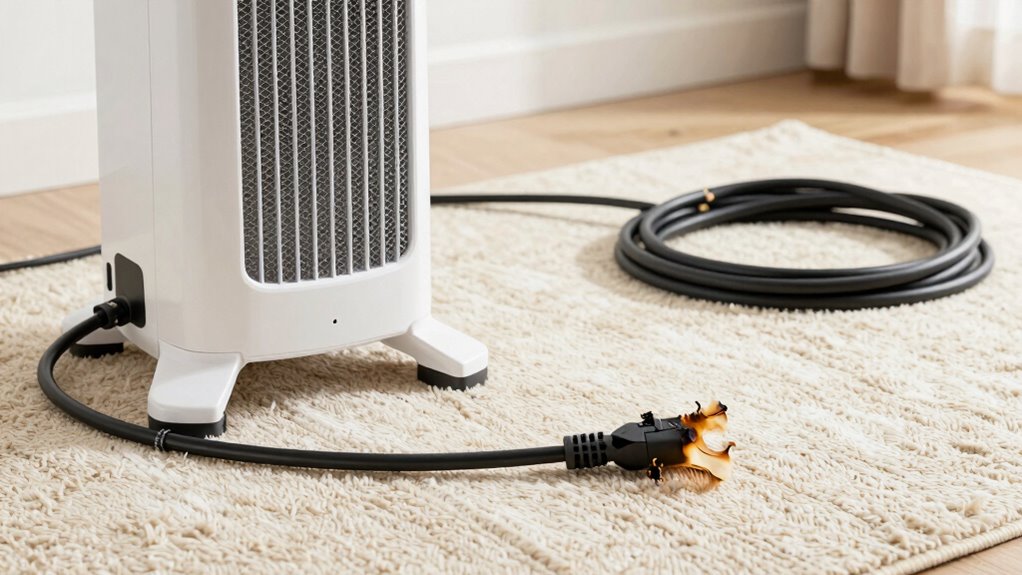
Choosing a safe extension cord for your space heater is essential to guarantee electrical safety and effective home heating. First, select a cord rated for at least 15 amps and 1,875 watts, matching your heater’s power needs. Check that the cord has a grounding plug and an appropriately rated plug and socket. Avoid thin or damaged cords, as they can overheat and pose fire hazards. Use a heavy-duty extension cord designed for appliances, not lightweight cords meant for low-power devices. Make sure the cord is long enough to reach safely without tension but not so long that it causes voltage drops. Properly rated cords reduce the risk of electrical hazards, ensuring your space heater operates efficiently and safely in your home heating setup. Additionally, understanding electrical safety standards can help you select the most reliable and compliant extension cords for your needs.
Safe Ways to Plug in Your Space Heater With Extension Cords
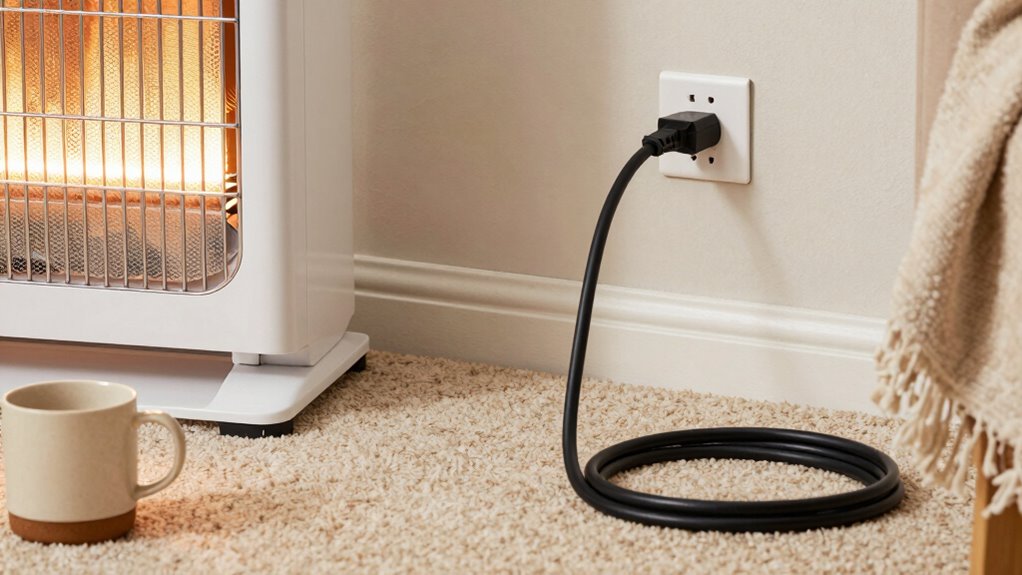
To guarantee safety when plugging in your space heater with an extension cord, you should always connect the heater directly to a properly rated cord and avoid daisy-chaining multiple extension cords. If you must use one, consider cord length considerations to prevent voltage drops that can cause overheating. Keep the extension cord as short as possible—longer cords increase the risk of overheating and reduce power efficiency. Use only indoor extension cords rated for the heater’s wattage, and never use outdoor cords indoors, as they may not handle the heat or current properly. Always check that the cord is in good condition, free of damage or frays. Properly rated, short, indoor extension cords help ensure safe operation and reduce fire hazards. Additionally, understanding load capacity can help prevent electrical overloads and potential hazards. Properly managing electrical loads and choosing the right extension cord are key components of electrical safety when using space heaters. Being aware of safe electrical practices can further minimize risks associated with heating devices. Ensuring the extension cord is compatible with the heater’s power requirements is essential for safe operation and avoiding overloads.
How to Spot Unsafe Extension Cord Setups for Your Space Heater
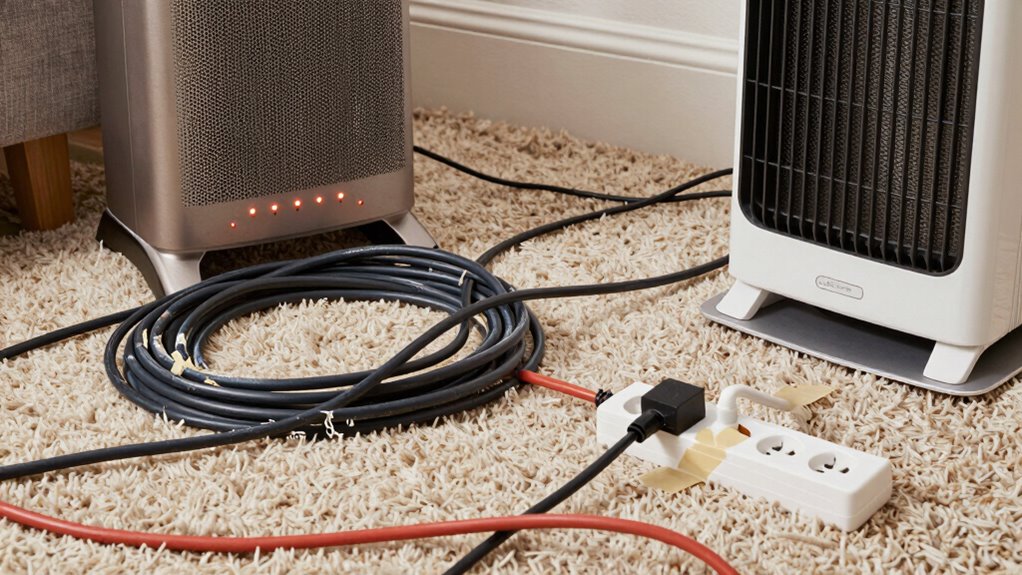
To keep your space heater safe, start by checking the insulation on your extension cords for cracks or fraying. Make sure you aren’t overloading outlets, which can cause overheating or fires. Also, regularly inspect cords for any damage or signs of wear that could compromise safety. Additionally, using air purifiers to improve indoor air quality can help reduce dust and allergens that may settle around electrical equipment, minimizing potential hazards. Understanding electrical safety practices can further help prevent accidents and ensure your space remains secure. Additionally, knowing how to identify fire hazards in your home can aid in urgent safety measures and fire prevention. Moreover, researching Lifevest Advisors can provide valuable insights into avoiding scams and making safe investment decisions related to home safety and electrical equipment.
Check Cord Insulation Integrity
Inspecting your extension cord’s insulation is essential before using it with a space heater. Check for any signs of damage, such as cuts, tears, or worn spots, which can compromise insulation integrity. Frayed or cracked insulation exposes wires, increasing the risk of electrical shock or fire. Feel along the length of the cord for any soft or unusual spots, indicating internal damage. Look for discoloration, melting, or burn marks, which signal overheating or deterioration. If you notice any of these issues, do not use the cord—unsafe insulation jeopardizes cord safety and your home’s safety. Regularly inspecting your extension cords guarantees they maintain proper insulation integrity, reducing hazards when powering space heaters. Proper insulation maintenance is crucial for preventing electrical hazards and ensuring safe operation. Always prioritize cord safety to prevent accidents. Additionally, understanding the importance of high-quality cords can further enhance safety during use.
Avoid Overloading Outlets
Overloading outlets is a common mistake that can lead to dangerous electrical situations when using a space heater with an extension cord. To prevent this, avoid plugging multiple high-wattage devices—like indoor plants grow lights or additional appliances—into the same outlet. Proper cord management helps reduce overload risks; keep cords organized and separate from high-traffic areas to prevent accidental disconnection or damage. Never use a single outlet for multiple extension cords or daisy-chain them together, as this can exceed the outlet’s capacity. Check that your extension cord is rated for the power demands of your space heater, and don’t rely on it to power multiple devices. Staying mindful of outlet load limits ensures safer operation and helps prevent electrical fires. Understanding the importance of human-centered safety practices can further enhance your electrical safety awareness.
Inspect for Damage or Wear
Regularly checking your extension cords for damage or wear can prevent unsafe setups that might cause electrical hazards when using a space heater. Look for signs of cord damage, such as frayed insulation, cuts, or exposed wires. Insulation wear can weaken the cord’s safety, increasing the risk of sparks or shock. Use this table to help identify potential issues:
| Warning Signs | What to Do |
|---|---|
| Frayed or exposed insulation | Replace the cord immediately |
| Cracked or broken plugs | Discard and replace |
| Burn marks or melting | Do not use; seek a new cord |
| Loose connections | Avoid using; replace if needed |
Inspect cords regularly, and never ignore damage—safety depends on it.
Better Alternatives to Extension Cords for Heating Safely
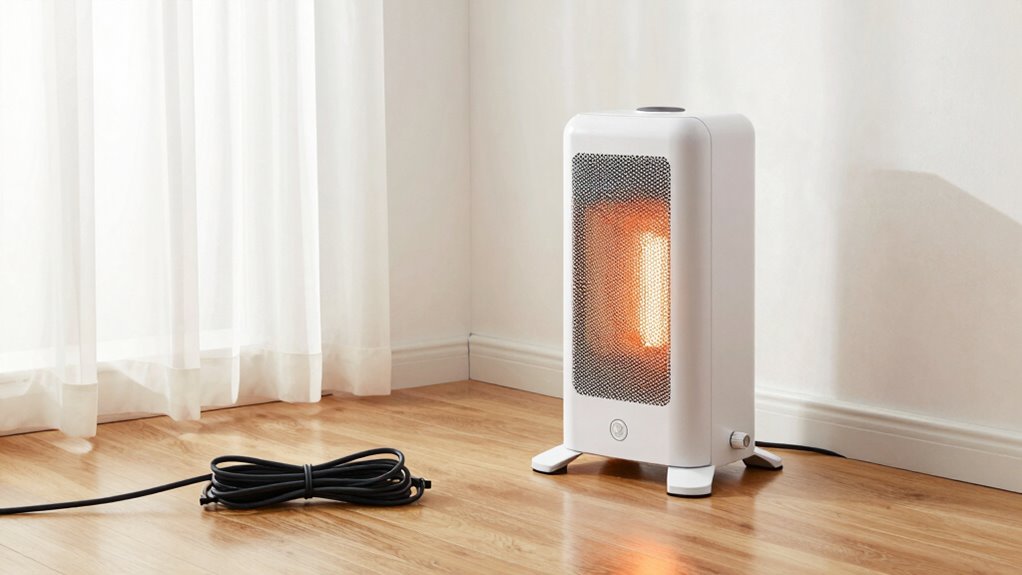
When it comes to keeping warm safely, using proper heating solutions is far better than relying on extension cords. Instead of using extension cords, focus on effective cord management to prevent tripping hazards and electrical issues. Portable heating options like space heaters designed for indoor use provide a safer alternative, as they are built with safety features such as automatic shutoff and thermostats. These heaters deliver consistent warmth without the risks associated with daisy-chaining extension cords or overloading outlets. Keep cords organized and out of walkways to reduce accidents, but avoid using extension cords for heating altogether. Investing in a dedicated, properly rated heater is the safest way to stay warm while protecting your home and loved ones.
What Are the Laws About Using Extension Cords With Space Heaters?
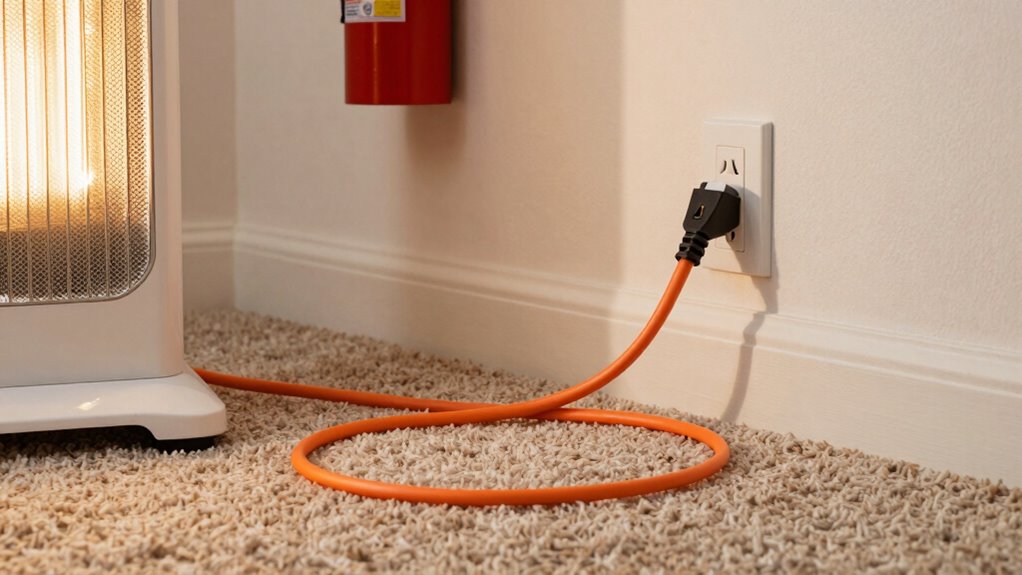
Using extension cords with space heaters is often against the law because it poses serious safety risks and can violate electrical codes. Regulations typically specify rules about cord length and cord gauge to prevent overheating and fire hazards. You should avoid using extension cords longer than necessary, as longer cords can cause voltage drops and overheating. The cord gauge must be heavy-duty, usually at least 14 or 12 gauge, to handle the heater’s power load safely. Many local codes prohibit plugging space heaters into extension cords altogether. Always check your local electrical codes before use. The key points include:
Using extension cords with space heaters is unsafe and often illegal; always follow local electrical codes.
- Keeping cord length as short as possible
- Using the proper cord gauge for high wattage devices
- Avoiding daisy-chaining multiple extension cords
- Following manufacturer and local regulations to stay safe
Frequently Asked Questions
Can Using Extension Cords Void My Space Heater’s Warranty?
Yes, using an extension cord can void your space heater’s warranty if you don’t follow safety guidelines. You should choose a cord with the appropriate cord gauge—thicker for higher wattage heaters—and keep the cord length short to prevent overheating. Using the wrong gauge or excessively long cords can cause damage or malfunctions, which might be considered user misuse, potentially voiding your warranty. Always check your heater’s manual for specific recommendations.
What Signs Indicate an Extension Cord Is Unsafe for Heater Use?
An extension cord showing signs of damage is like a ticking time bomb—dangerous and unpredictable. You should watch for frayed wires, cracks, scorch marks, or exposed insulation. These are clear signs of extension cord damage that increase overheating risks. If your cord feels hot to the touch or sparks when plugged in, it’s unsafe for heater use. Always replace damaged cords immediately to prevent fire hazards and guarantee safe operation.
Are There Specific Outdoor Extension Cords Suitable for Space Heaters?
Yes, there are outdoor extension cords designed for heater compatibility. You should look for heavy-duty, weather-resistant outdoor extension cords that are rated for outdoor use and have a sufficient power capacity. Always check the cord’s wattage and amperage ratings to make certain they match or exceed the heater’s requirements. Using the right outdoor extension cord keeps your space heater safe and prevents electrical hazards during outdoor use.
How Long Can I Safely Run a Space Heater With an Extension Cord?
A stitch in time saves nine, and knowing how long you can run a space heater on an extension cord is key. Keep the cord length short—ideally under 25 feet—and make sure it matches your heater’s power capacity. Running it too long or with a cord that can’t handle the wattage risks overheating. Always follow manufacturer instructions to keep your space safe while staying warm.
What Safety Certifications Should I Look for in Extension Cords?
You should look for extension cords with electrical safety certifications like UL, ETL, or CSA, which guarantee they meet safety standards. Prioritize cords with high durability to withstand daily use, especially if you’re connecting space heaters. These certifications confirm the cord’s safety and reliability, reducing fire or shock risks. Always check the cord’s rating and ensure it’s suitable for high-power appliances to keep your space safe.
Conclusion
Using extension cords with space heaters is like walking a tightrope—you risk falling into a fire hazard if you’re not careful. Always prioritize safety by choosing the right cord, following proper setup tips, and exploring better options. Remember, your home’s safety is more important than a quick fix. Stay vigilant and treat your space heater like a delicate plant—you want to keep it healthy and safe, not overwhelmed or damaged.