Traditional size charts often mislead because they don’t reflect your actual body measurements and vary across brands, leading to poor fits and returns. To improve accuracy, measure yourself at home using a flexible tape, ensuring it’s snug but not tight, and record key areas like bust, waist, and hips. Consistently reviewing your measurements and understanding how fabric stretch impacts fit can save you from costly mistakes. Keep exploring to discover precise measuring techniques that truly help you find the right size.
Key Takeaways
- Accurate home measurements using a flexible tape and consistent technique ensure better size matching and reduce return rates.
- Relying solely on size charts is unreliable due to brand variability and lack of standardization.
- Measuring key areas like bust, waist, and hips captures individual body differences for a more precise size selection.
- Understanding fabric stretch and body shape helps interpret measurements and choose the right fit.
- Proper measurement practices build confidence, improve fit, and minimize the need for returns caused by sizing errors.
Why Traditional Clothing Size Charts Are Often Wrong
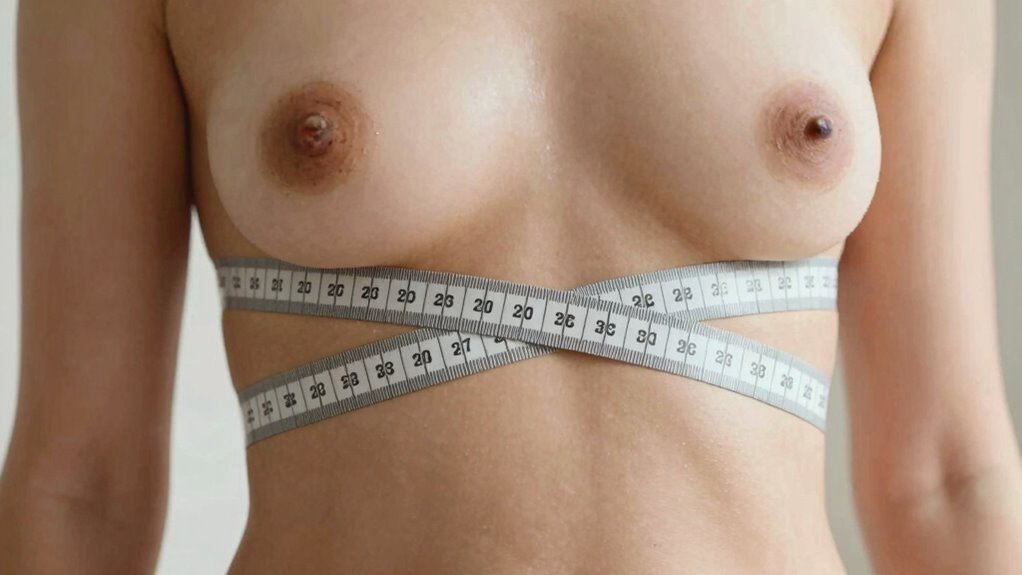
Traditional clothing size charts often don’t reflect real body measurements because manufacturers use different sizing standards and inconsistent measurement methods. This inconsistency affects size accuracy, making it hard to find the right fit without trying clothes on. This variability can lead to measurement discrepancies that confuse consumers and hinder online shopping success. When size charts don’t match your actual measurements, your confidence in ordering online drops, and you may end up returning items more often. Without a universal standard, a size labeled “medium” in one brand might be a small or large in another. This lack of uniformity creates confusion and frustration. To improve fit confidence, you need to understand that size charts are rough guides at best. Relying solely on them can lead to disappointment, so it’s essential to contemplate other measurement methods for more precise sizing. Connected technology can also help provide more accurate sizing data through innovative measurement tools and wearable devices. Embracing standardized measurement techniques can greatly reduce the need for returns and improve overall satisfaction with online shopping. Additionally, incorporating 3D body scanning technology can further enhance measurement accuracy and fit predictions.
How to Measure Yourself Accurately at Home
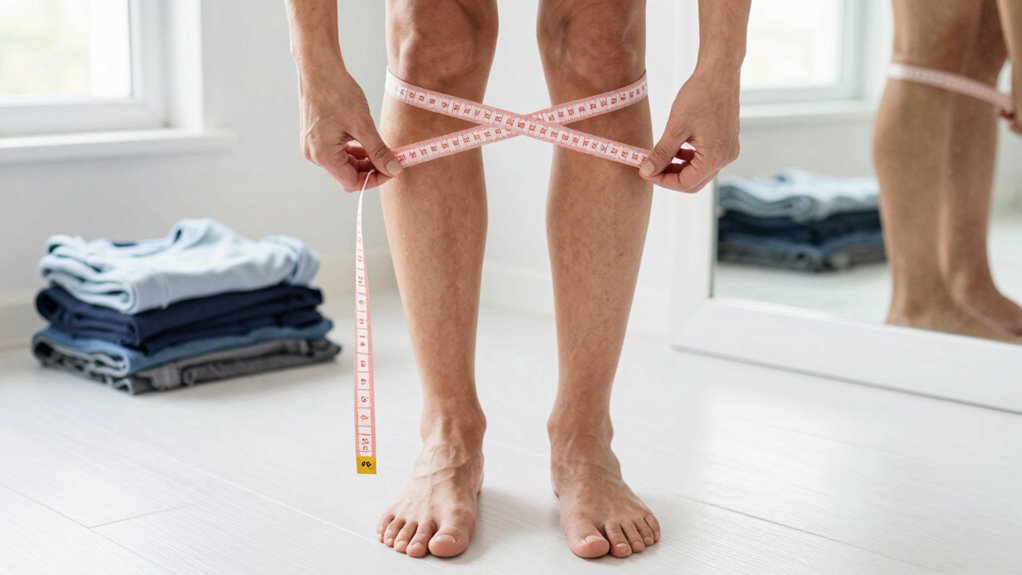
Getting accurate measurements at home can considerably improve your chances of finding clothes that fit well, especially since size charts often vary between brands. To do this effectively, use a flexible measuring tape and stand in front of a mirror. Measure key areas like your bust, waist, hips, inseam, and sleeve length. Keep the tape snug but not tight for precision. Recording these measurements allows you to perform virtual fitting and body shape analysis more accurately, reducing returns. Additionally, measurement accuracy is crucial for ensuring your clothing fits perfectly and minimizes the need for returns. Accurate measurements can also help you understand your body shape, leading to better clothing choices. Here’s a quick reference:
| Measurement Area | Key Tips |
|---|---|
| Bust | Measure around fullest part |
| Waist | Measure at narrowest point |
| Hips | Measure at widest part of hips |
| Inseam | Inside leg from crotch to ankle |
| Sleeve Length | Shoulder to wrist, arm relaxed |
This method guarantees your measurements reflect your true body shape. Incorporating proper measuring techniques can further enhance the accuracy of your results, making online shopping more efficient and enjoyable. Being aware of clothing size variations among brands can help you select better-fitting garments and avoid unnecessary returns. Accurate measurements are especially important when shopping for Gold IRA investments, as personalized sizing can help you select the right options that suit your body type.
Matching Your Measurements to Clothing Sizes
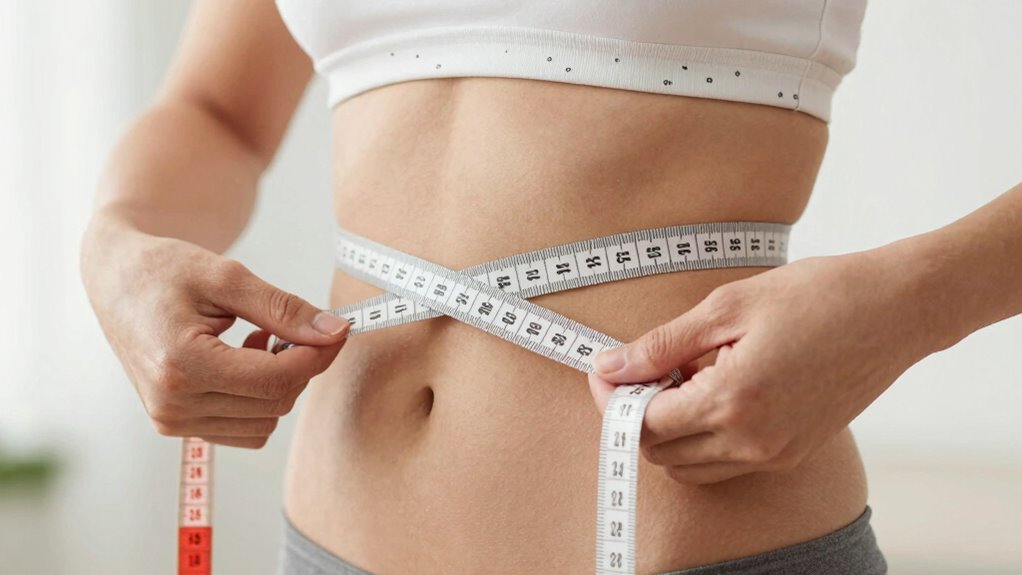
When you have your accurate measurements in hand, the next step is to match them to clothing size charts carefully. Keep in mind that fabric stretch can influence how a garment fits; stretchy fabrics may require you to size down for a snug fit, while non-stretch fabrics need more room. Your body shape also plays a role—pear-shaped or apple-shaped bodies might need different sizing adjustments for comfort and style. Don’t rely solely on the numbers; read the sizing notes and consider how different brands interpret their charts. Comparing your measurements to the chart, but remember that size labels vary across brands and styles. By understanding how fabric stretch and body shape impact fit, you can choose clothing that matches your measurements more accurately. Additionally, considering garment fit principles can help you select sizes that offer the best comfort and style for your body type, especially when you understand the importance of size consistency across different brands. Recognizing the influence of fabric content on fit can further refine your sizing decisions and help prevent unnecessary returns. Being aware of measurement accuracy ensures you are selecting the best size for your unique body, and paying attention to fit guidelines can improve your overall shopping success.
Tips for Ensuring Consistent and Reliable Measurements
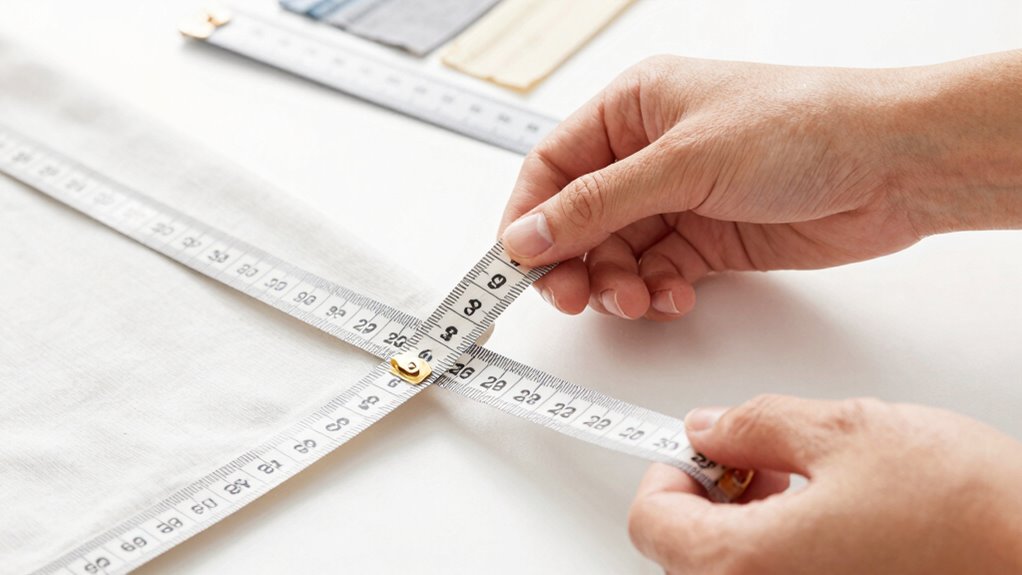
To guarantee your measurements are consistent and reliable, it’s essential to follow a few simple steps each time you measure. First, use the same measurement tools, like a flexible tape measure, to ensure fit consistency. Always measure in the same position—stand naturally, breathe normally, and keep the tape snug but not tight. Record measurements immediately to prevent errors or changes over time. Avoid guessing or pulling the tape too tight, as that skews results. Double-check each measurement for accuracy before recording. Consistent use of measurement tools and following a standardized method help you maintain accuracy, reducing size discrepancies and returns. These small steps make a big difference in achieving reliable measurements that reflect your true size. Incorporating sound vibrations or calming music into your measurement routine can also help promote focus and reduce tension, leading to more precise results. Additionally, paying attention to measurement consistency can help you develop a reliable system that minimizes errors over time. Establishing a standardized measurement process creates a dependable routine that enhances accuracy and confidence in your measurements.
Troubleshooting When Measurements Don’t Match Standard Sizes
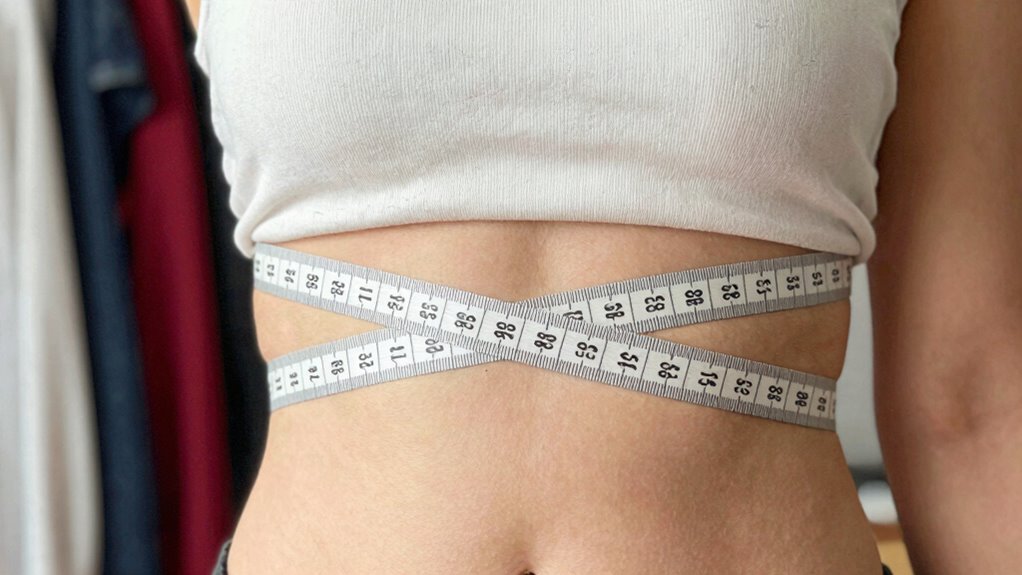
If your measurements don’t align with standard sizes, it’s time to troubleshoot. First, consider fabric stretch—some fabrics, like spandex or knits, expand and conform to your body, so relying solely on static measurements can be misleading. Next, evaluate your body shape; certain styles fit differently depending on your proportions. For example, if you have a broader chest or hips, standard sizes may not reflect your true fit. Take note of where measurements differ most—are they in the bust, waist, or hips? Adjust for fabric flexibility by opting for stretchy materials or sizing up when necessary. Also, consider customizing or tailoring pieces to match your unique body shape. Additionally, staying informed about size chart limitations can help you select styles that better suit your measurements. Recognizing market trends and insights allows for more accurate shopping decisions, reducing returns and increasing confidence. Understanding the diversity of body types and how they influence fit can further improve your clothing choices. Being aware of how different body proportions impact fit can help you select garments that flatter your figure and reduce dissatisfaction. Incorporating knowledge about fit preferences and how personal comfort plays a role can further assist in making more precise choices. Troubleshooting these factors helps you find garments that truly fit, reducing returns and increasing confidence.
Frequently Asked Questions
How Often Should I Re-Measure Myself for Accuracy?
You should re-measure yourself every 3 to 6 months to maintain accuracy. Regular measuring frequency guarantees your measurements stay current, especially if your weight or body shape changes. This practice helps you avoid sizing errors and ensures a better fit when shopping online. Keep a record of your measurements, and revisit them periodically to maintain accuracy, so you always choose the right size and reduce the chances of returns.
What Tools Are Best for Measuring Clothing Sizes at Home?
Imagine holding the key to perfect fit—use a soft, flexible measuring tape. It’s your best tool for capturing subtle changes in fabric flexibility and ensuring measurement consistency. Avoid rigid rulers or guesswork; instead, opt for a flexible, retractable tape measure that molds to your body’s curves. Keep it snug but not tight, and re-measure regularly to stay confident in your size. Your wardrobe will thank you.
How Does Body Shape Affect Clothing Fit Beyond Measurements?
Your body shape substantially impacts clothing fit beyond just measurements. For example, if you have a pear shape, you might find skirts or pants tighter around the hips, while a rectangular shape may need more definition at the waist. Recognizing your body shape helps you select styles that flatter your figure and guarantee a better fit. Adjusting your sizing approach based on shape ensures comfort and confidence in your outfits.
Can Different Brands Have Varying Size Standards?
Isn’t it like comparing apples and oranges? Yes, different brands can have varying size standards, leading to sizing discrepancies. While some brands prioritize brand consistency, others may not, making it tricky to find the right fit. You often need to check each brand’s sizing chart and reviews, rather than relying solely on standard measurements. Stay vigilant, and don’t assume size equivalency across brands—your perfect fit depends on it.
Are There Specific Measurement Tips for Maternity or Plus-Size Clothing?
When measuring for maternity or plus-size clothing, focus on accurate maternity measurements like your bust, waist, and hips, allowing extra room for comfort and growth. For plus size fitting, make sure you measure the fullest part of your hips and bust, not just your measurements from standard charts. Always use a flexible measuring tape, keep it snug but not tight, and wear fitted clothing or undergarments to get the most precise results.
Conclusion
Stop trusting those outdated size charts—they’re like a faulty map guiding you astray. Instead, master your measurements and become the captain of your own fit. When you measure accurately, you’ll navigate fashion’s tricky waters with confidence, avoiding costly returns and wardrobe woes. Remember, your body is unique, and so should be your size. Embrace your true measurements as your compass, steering you toward clothes that fit like they were made just for you.