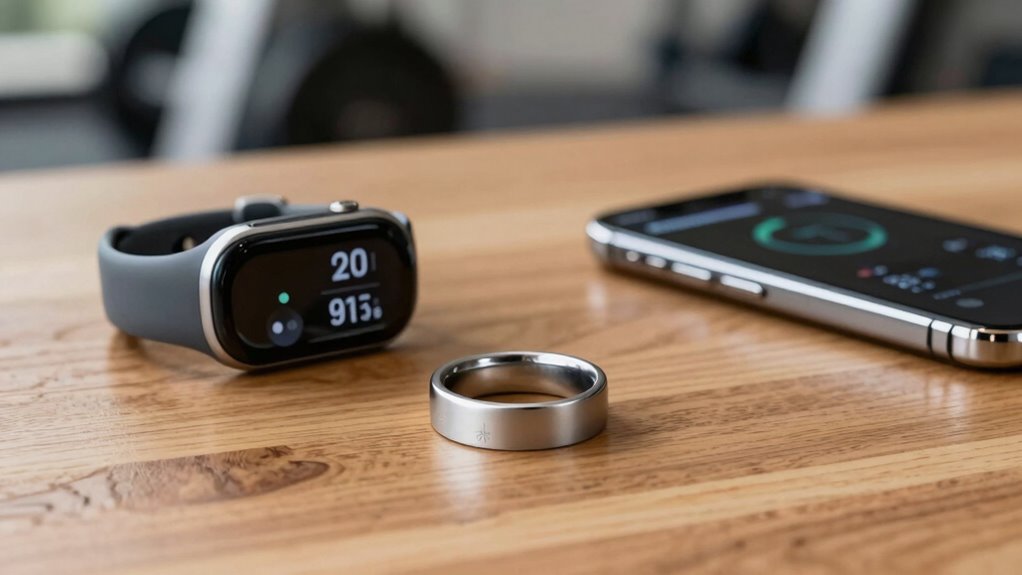

Smart rings excel at tracking basic fitness metrics like steps, activity levels, and sleep patterns, giving you simple insights into your daily habits. However, they aren’t as accurate for advanced measurements such as precise heart rate and oxygen levels, especially during intense activity or at night. They also have limitations in differentiating sleep stages. If you want to know more about what these devices can truly do, keep exploring the details.
Key Takeaways
- Smart rings effectively track basic activity metrics like steps, calories, and sleep duration but lack detailed sleep stage analysis.
- They reliably measure heart rate and oxygen levels during rest and light activity but may be less accurate during intense exercise.
- Advanced fitness metrics such as VO2 max or lactate threshold are generally not supported by most smart rings.
- Sensor placement, fit, and environmental factors can influence the accuracy of health and sleep data collected.
- Designed primarily for daily health monitoring, smart rings are less suitable for elite training or high-performance athletic goals.
How Do Smart Rings Track Fitness Metrics Like Steps and Sleep?
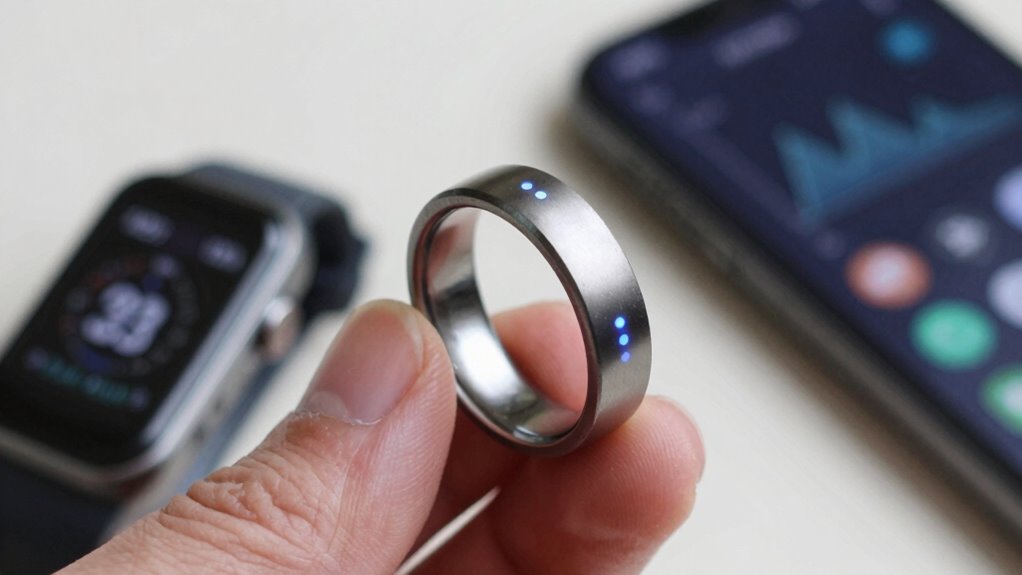
Have you ever wondered how smart rings keep track of your fitness? These sleek devices blend fashion trends with advanced technical specifications to monitor your activity levels. Inside, tiny sensors detect motion and changes in your body, translating them into data about steps taken and sleep patterns. Smart rings are designed to be stylish, making them easy to wear daily without sacrificing fashion. Their technical specs ensure accurate tracking while maintaining a minimalistic appearance. By syncing with your smartphone, they provide real-time insights into your activity, helping you stay motivated and informed about your fitness journey—all from a simple, fashionable ring. Additionally, sensor technology plays a crucial role in enhancing the accuracy of activity measurements. Understanding wearable device capabilities can help you better interpret the data your smart ring provides. Moreover, energy-efficient design ensures that these devices have long battery life, so you don’t need to charge them frequently.
Can Smart Rings Accurately Measure Heart Rate and Oxygen Levels?
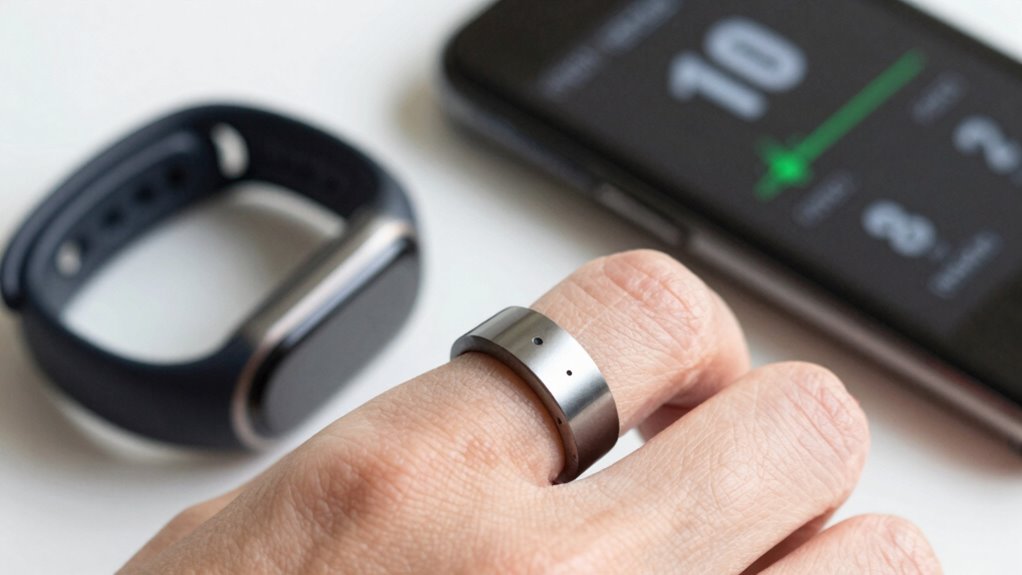
Smart rings use advanced optical sensors to measure heart rate and oxygen levels directly from your finger. Thanks to their wearable design, they provide continuous monitoring without discomfort. While they can often give reliable readings during rest or light activity, accuracy may vary during intense exercise. Factors like skin tone, movement, and placement impact measurement quality. Good battery performance ensures you get ongoing data without frequent charging, but some models may have limited battery life depending on sensor use. You’ll want a ring that balances accurate health metrics with a sleek, comfortable design. Keep in mind, though, that while smart rings excel at convenience, they might not always match the precision of medical-grade devices. Overall, they’re a promising tool for everyday health insights, with some limitations. Additionally, sensor placement can influence the accuracy of measurements, highlighting the importance of proper fit and positioning. Proper fit and positioning are crucial to ensure reliable readings and maximize the benefits of your smart ring. Ensuring proper wearable positioning can also help improve measurement accuracy and user comfort. Selecting a ring with adjustable sizing can further enhance measurement reliability. A well-designed ring with secure fit can also prevent measurement errors caused by movement or slippage.
What Are the Limitations of Fitness Tracking With Smart Rings?

While smart rings offer a convenient way to track fitness, they do have notable limitations that can affect your results. Wearable limitations, such as sensor placement and fit, can impact data accuracy. If the ring isn’t snug or shifts during activity, readings may be off, reducing reliability. Additionally, smart rings often struggle with precise measurements during high-movement activities or intense workouts. The sensors may not capture every detail accurately, leading to gaps or errors in your data. Environmental factors, like temperature or moisture, can also interfere with sensor performance, further affecting data accuracy. Moreover, natural ingredients promote overall health and wellness, but smart rings typically do not measure nutritional intake or dietary quality, which are essential for comprehensive health monitoring. Recognizing these limitations helps you interpret your fitness data more effectively. It’s important to understand the sensor technology behind these devices to set realistic expectations for their capabilities. Additionally, appliance maintenance plans can help ensure your devices remain in optimal condition, preventing issues that might compromise data quality. Being aware of these sensor limitations allows for better data interpretation and more effective health management.
How Well Do Smart Rings Track Sleep Compared to Other Devices?
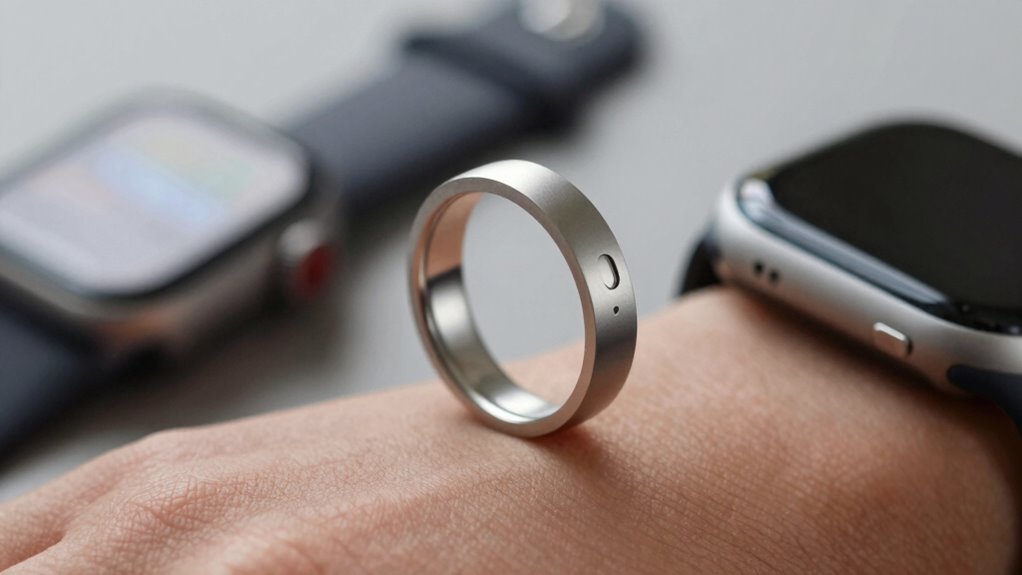
Smart rings are gaining popularity for sleep tracking, but how accurate are they compared to other devices? Their sensor technology differs, which can impact how precisely they monitor your sleep stages. Understanding these differences helps you decide if a smart ring can truly meet your sleep tracking needs. Additionally, some models may incorporate health and wellness features that provide a broader view of your well-being beyond sleep. For example, the quality of the sensors used in smart rings can influence the accuracy of sleep stage detection, making it important to compare device specifications before making a choice.
Sleep Tracking Accuracy
Smart rings have gained popularity as a discreet way to monitor sleep patterns, but their accuracy can vary when compared to other devices like wrist-based fitness trackers or sleep-specific monitors. While they often provide useful insights into sleep quality, they may fall short in detailed aspects like dream analysis or detecting subtle sleep disruptions.
- They excel at tracking overall sleep duration but may miss nuances in sleep stages.
- Their ability to assess sleep quality can be limited, especially in differentiating deep sleep from lighter stages.
- Some models offer basic dream or rest cycle data but lack the precision of specialized monitors.
You might find smart rings helpful for general sleep trends, but for in-depth analysis or precise sleep stage detection, other devices still hold an edge.
Sensor Technology Differences
Sensor technology plays an essential role in determining how accurately a device can track sleep, and smart rings rely on a combination of sensors that differ markedly from those used in wrist-based trackers or dedicated sleep monitors. Unlike wrist devices that often use accelerometers and optical sensors, smart rings typically utilize smaller, more precise sensors for heart rate, temperature, and motion, offering unique advantages. Proper sensor calibration guarantees data accuracy, especially for subtle signals like skin temperature or pulse, which are critical for sleep analysis. Data synchronization also matters—smart rings often sync seamlessly with smartphones or cloud platforms, enabling real-time updates and more accurate sleep tracking. Additionally, sensor calibration ensures that subtle physiological signals are reliably captured, further impacting sleep detection accuracy. These differences can influence how well a smart ring detects sleep phases compared to other devices, making sensor technology a key factor in their performance.
What Challenges Do Smart Rings Face in Monitoring Heart Rate and Oxygen?
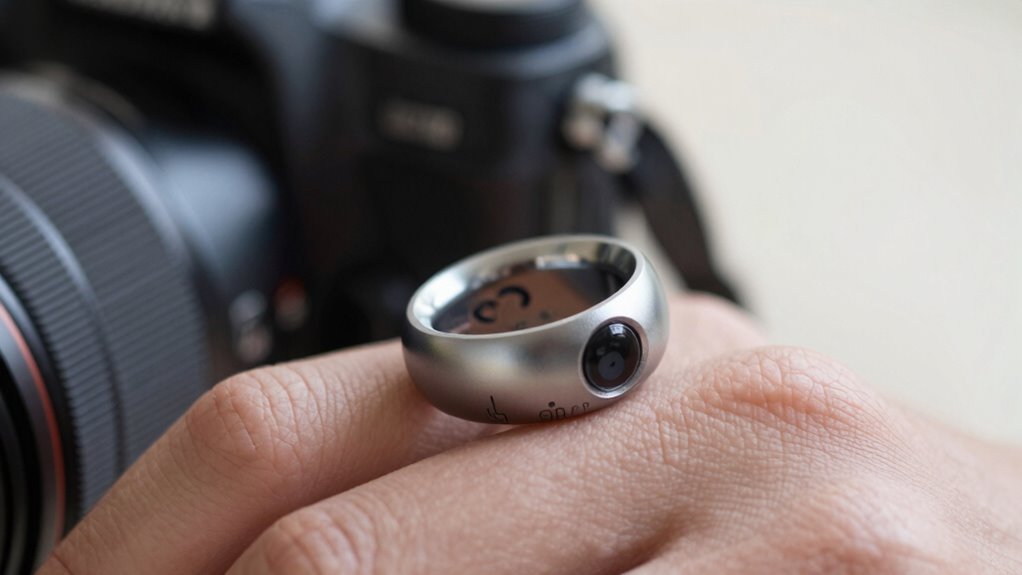
Monitoring heart rate and oxygen levels with smart rings presents several challenges, mainly due to the small size of the device and the way it makes contact with your skin. Precise sensor calibration is essential, but difficult given the limited space and movement. Variations in skin tone, temperature, and movement can affect readings, making consistency hard to achieve. Additionally, because these devices collect sensitive health data, ensuring data privacy becomes a major concern. The tiny sensors often struggle to maintain stable contact, especially during vigorous activity, leading to inaccurate measurements.
- Sensor calibration issues can cause inconsistent readings
- Maintaining stable skin contact is tricky during movement
- Protecting your health data from breaches remains critical
What Features Matter When Choosing a Fitness Smart Ring?
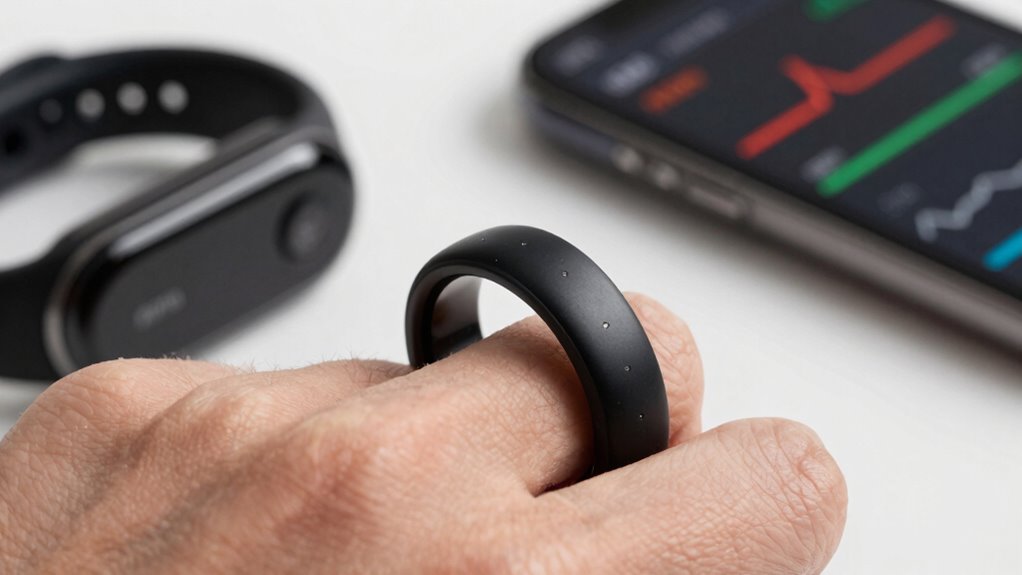
When choosing a fitness smart ring, you want to focus on how accurately it tracks your metrics, so you get reliable data. Battery life and durability matter too, ensuring it stays powered and intact through your workouts. Ultimately, comfort and fit are key, so you forget you’re even wearing it during your activity. Additionally, understanding which features can detect ear wax odor or other subtle cues can enhance your awareness of your health status. Incorporating AI-driven health monitoring can provide deeper insights beyond simple activity tracking. Considering how simple systems are implemented can make the device easier to maintain and use consistently, especially when they incorporate wellness technology principles for safe and effective at-home use. Leveraging modern kitchen technology concepts can also inspire innovative ways to integrate health data into daily routines for better overall wellness.
Accuracy of Metrics
Choosing a fitness smart ring means paying close attention to how accurately it tracks your health metrics, since reliable data can substantially impact your workout decisions and progress. When evaluating wearable technology, consider how well the device measures key metrics like heart rate, sleep quality, and activity levels. Precision is vital for making informed choices and tracking improvements over time. Keep in mind that some rings may sacrifice accuracy for convenience, so research reviews and user feedback. Additionally, confirm the device has strong data privacy protections to keep your sensitive health information secure. Features to look for include:
- Consistent and validated sensor performance
- Advanced algorithms for precise readings
- Clear data privacy policies and security measures
Being aware of sensor validation and ongoing performance testing can help ensure you’re choosing a device that provides trustworthy metrics. Moreover, understanding the importance of measurement accuracy can guide you toward selecting a ring that truly meets your health tracking needs.
Battery Life Durability
Long-lasting battery life is essential for a fitness smart ring because it guarantees you won’t have to frequently remove or recharge the device, allowing continuous tracking without interruption. Battery longevity varies across models, often ranging from a few days to over a week. Durability challenges, such as wear and tear or exposure to elements, can impact battery performance over time. A device with strong battery longevity minimizes the risk of sudden shutdowns, ensuring consistent data collection. Look for rings with efficient power management and rechargeable batteries designed for long-term durability. Regular maintenance and understanding the device’s battery management features can help optimize its lifespan. Additionally, selecting a ring with water resistance can protect the electronics and preserve battery health in various environments. Incorporating energy-efficient components can also significantly extend the device’s overall battery life, especially when combined with features like power-saving modes that optimize energy use during operation. Moreover, advancements in battery technology continue to improve overall device performance and longevity.
Comfort and Fit
A smart ring’s comfort and fit directly influence how often you’ll wear it and how accurately it tracks your activity. If it’s uncomfortable or slips off, you’ll be less likely to wear it consistently, compromising your data. When choosing a fitness smart ring, prioritize features that enhance user comfort and integrate seamlessly into your wearable fashion. Look for a ring with adjustable sizing options to ensure a snug yet comfortable fit. Consider the material—smooth, hypoallergenic surfaces minimize irritation. The ring’s form factor should be lightweight and unobtrusive, so it feels natural on your finger.
- Adjustable sizing for a personalized fit
- Lightweight, sleek design for everyday wear
- Hypoallergenic materials to prevent irritation
Are Smart Rings Suitable for Serious Athletes or Advanced Fitness Goals?
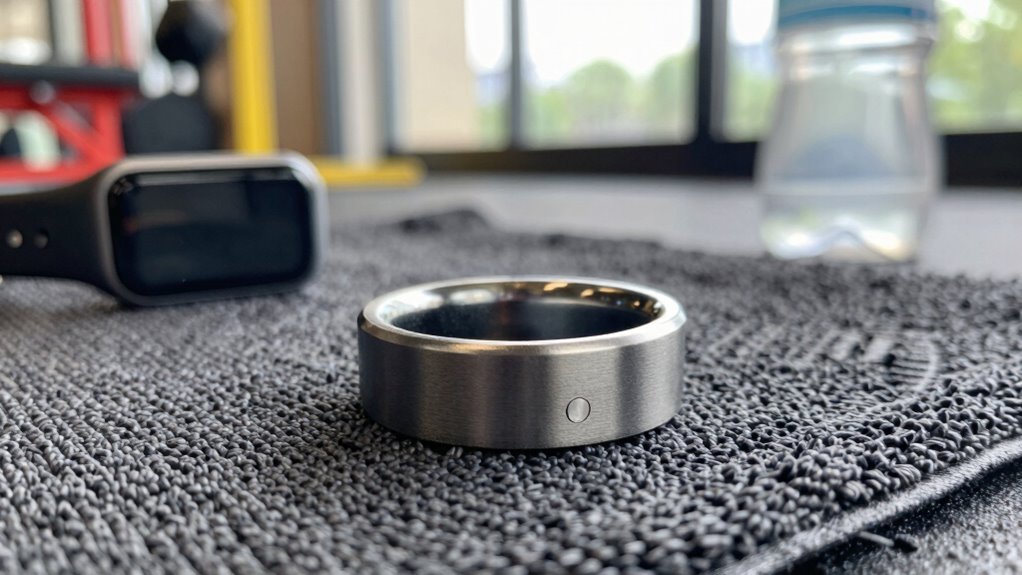
While smart rings offer convenient fitness tracking, they may not fully meet the needs of serious athletes or those pursuing advanced goals. Their limited battery life and simplified sensors restrict advanced tracking capabilities essential for high-level training. For athlete suitability, smart rings excel in basic metrics like heart rate and sleep but often fall short in providing detailed data such as VO2 max, lactate threshold, or power output. If you’re pushing for elite performance, dedicated devices like advanced wearables or chest straps might be more appropriate. Smart rings are great for casual fitness enthusiasts, but their features can be too basic for serious athletes aiming for precise insights and optimized training. For advanced tracking, investing in specialized gear remains the smarter choice.
Should You Combine Smart Rings With Other Devices for Better Insights?
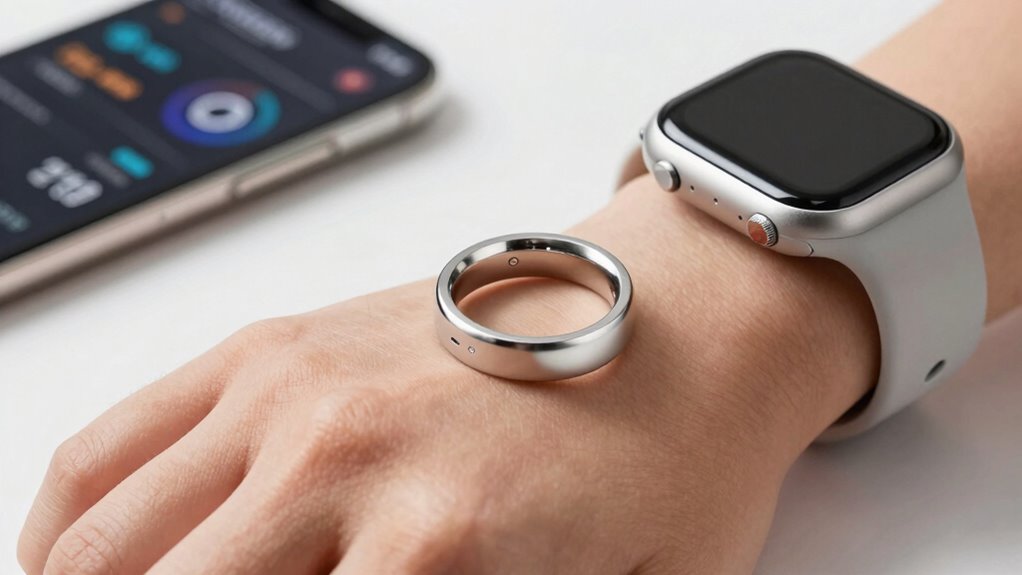
To get a more thorough view of your fitness progress, combining smart rings with other devices can be highly beneficial. Wearable integration allows you to gather extensive data, filling in gaps that a smart ring alone might miss. For example, syncing your ring with a smartwatch or heart rate monitor can enhance activity tracking and recovery insights. However, it’s vital to take into account data privacy, as sharing information across devices increases exposure risks.
Combining smart rings with other devices offers richer fitness insights but requires careful attention to data privacy.
Think about:
- How well your devices sync and share data seamlessly
- The level of data privacy and security measures in place
- Whether combining devices provides actionable insights without overwhelming you
Final Tips: Making the Most of Your Fitness Smart Ring
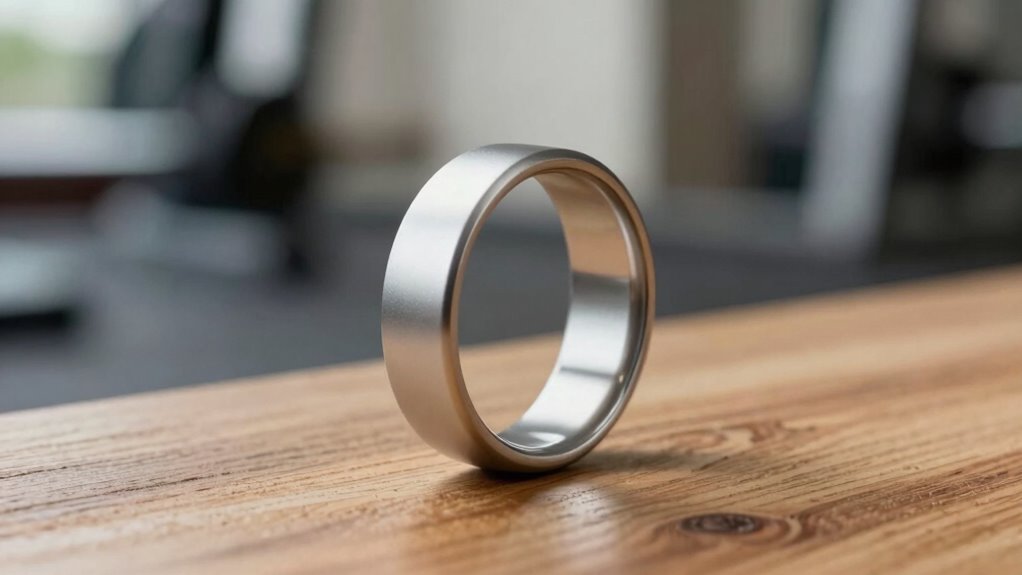
Maximizing the benefits of your fitness smart ring involves understanding how to use it effectively and consistently. Personalize your device with custom fashion options to match your style, making it feel like a natural part of your daily look. Regularly review your data to identify patterns and set realistic goals. Stay engaged by leveraging social connectivity features—share progress with friends or join fitness challenges to stay motivated. Keep your ring clean and charged to ensure accurate readings. Remember, the more you integrate your smart ring into your routine, the better insights you’ll gain. By combining personalized style with social interactions, you’ll stay committed and make the most of your device’s capabilities for improved health and fitness.
Frequently Asked Questions
How Durable Are Smart Rings for Everyday Fitness Activities?
Smart rings are generally quite durable for everyday fitness activities, thanks to their strong material durability and water resistance. You can wear them during workouts, runs, or even in the rain without worry. Most are made with sturdy materials like titanium or stainless steel, and many feature water resistance up to a certain depth. Just avoid harsh impacts or extreme conditions to keep them in top shape.
Do Smart Rings Require Regular Calibration for Accuracy?
Smart rings usually don’t require regular calibration, but you should check the sensor calibration periodically to guarantee data accuracy. Most devices automatically calibrate themselves during wear or syncing, which helps maintain precision. If you notice inconsistent readings, it’s a good idea to follow the manufacturer’s instructions for recalibrating the sensors. Regularly updating the ring’s firmware can also improve sensor calibration and ensure your fitness data remains reliable.
Can Smart Rings Detect Specific Types of Physical Activity Accurately?
Smart rings can often detect specific types of physical activity with reasonable accuracy, thanks to activity recognition algorithms and sensor specificity. You’ll find they excel at identifying common activities like walking or running, but may struggle with more complex or subtle movements. Keep in mind that sensor placement and quality influence detection accuracy, so while smart rings are useful, they might not replace detailed activity analysis for all sport or exercise types.
Are There Privacy Concerns With the Data Collected by Smart Rings?
Yes, there are privacy concerns with data collected by smart rings. You should be aware that your data is protected through data encryption, which prevents unauthorized access. However, it’s also essential that you give informed user consent before sharing your information. Always review the privacy policies of the device manufacturer to understand how your data is stored, used, and shared, so you can protect your personal information effectively.
How Long Do Smart Rings Typically Last on a Single Charge?
You’ll find that most smart rings last around 3 to 7 days on a single charge, so you won’t need to charge them daily. Their battery life depends on the model and features you use, but generally, you can expect a longer battery life with less frequent charging. Charging frequency varies, but many models only need a quick charge once a week, making them convenient for daily wear.
Conclusion
So, if you love the idea of a sleek ring tracking your every move—well, good luck catching all those perfect metrics. Just remember, while smart rings promise the moon, they might only deliver a flashlight’s beam on your fitness journey. Don’t rely solely on them; combine, compare, and maybe, just maybe, accept that some things are better left to your own intuition. After all, who needs accuracy when you’ve got style?