To make the most of your light therapy lamp, aim for a lamp with about 10,000 lux, which effectively lifts winter blues. Sit about 16-24 inches from the light, with the lamp at eye level but avoiding direct glare. Use it for 20-30 minutes in the morning, following safety tips to prevent eye strain or discomfort. Proper setup and routine can boost mood safely—just keep exploring for more tips to maximize your benefits.
Open a free Amazon Business account
Business pricing, bulk buying and tax-exempt orders.
As an affiliate, we earn on qualifying purchases.
Key Takeaways
- Use lamps emitting 10,000 lux for effective winter blues treatment, adjusting based on symptom severity.
- Maintain a sitting distance of 16-24 inches from the lamp at eye level for optimal light exposure.
- Limit sessions to 20-30 minutes in the morning to align with circadian rhythms and prevent eye strain.
- Position the lamp at an angle to avoid glare and ensure safe, direct light exposure without staring into it.
- Follow manufacturer guidelines, ensure device safety, and incorporate regular breaks for a safe, effective routine.
As an affiliate, we earn on qualifying purchases.
How Light Therapy Eases Winter Blues
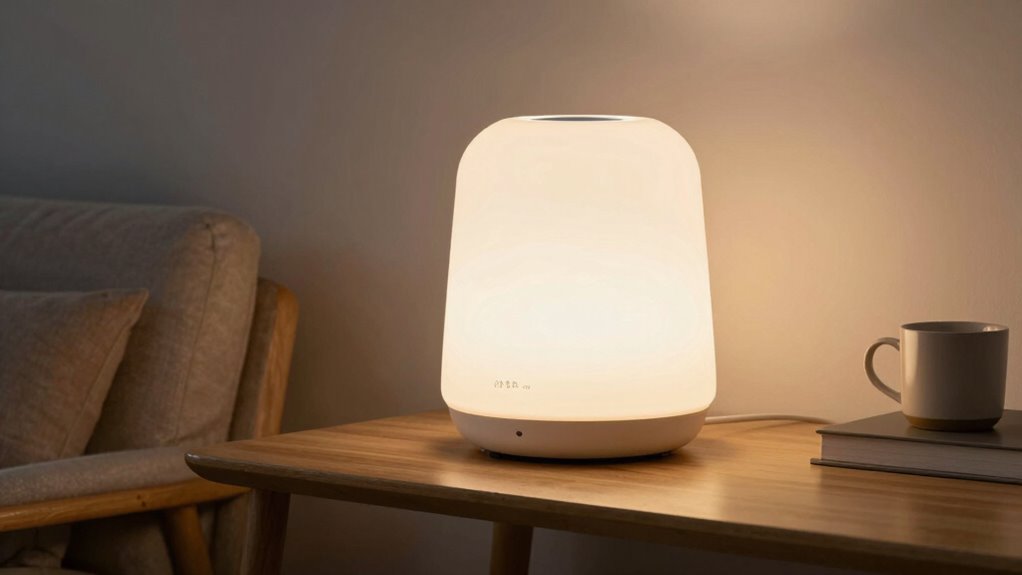
During the darker months of winter, many people find their mood and energy levels dip, a condition often called Seasonal Affective Disorder (SAD). Light therapy helps by influencing your circadian rhythm, which regulates sleep and wake cycles. When daylight decreases, your internal clock can shift, causing feelings of depression and fatigue. By using a light therapy lamp, you expose yourself to bright, broad-spectrum light that mimics natural sunlight. This signals your brain to produce more serotonin and melatonin, improving mood and alertness. Consistent morning exposure helps reset your circadian rhythm, reducing SAD symptoms. Light therapy effectively counteracts the winter blues by aligning your biological clock with the natural light cycle, restoring your mental clarity and energy levels during the darkest months. Understanding light exposure can help you optimize your routine for better mood regulation throughout winter. Incorporating light intensity guidelines ensures you receive sufficient brightness for effective therapy. Additionally, being aware of recommended distance from the lamp can help maximize benefits while maintaining safety. Moreover, paying attention to recommended duration ensures you get enough exposure without overdoing it.
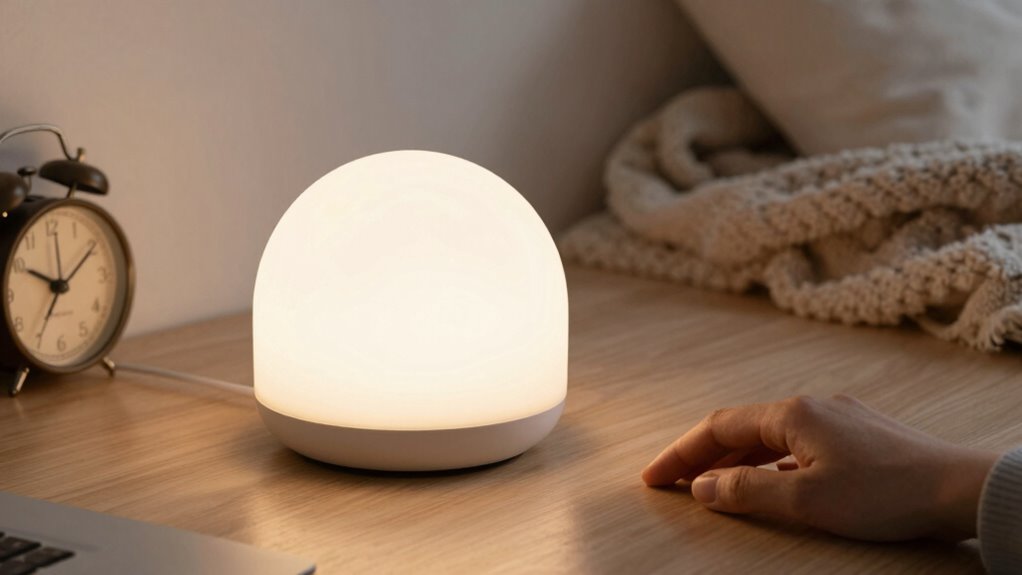
light therapy lamp for winter blues
As an affiliate, we earn on qualifying purchases.
As an affiliate, we earn on qualifying purchases.
What’s the Best Brightness (Lux) for Your Light Therapy Lamp?
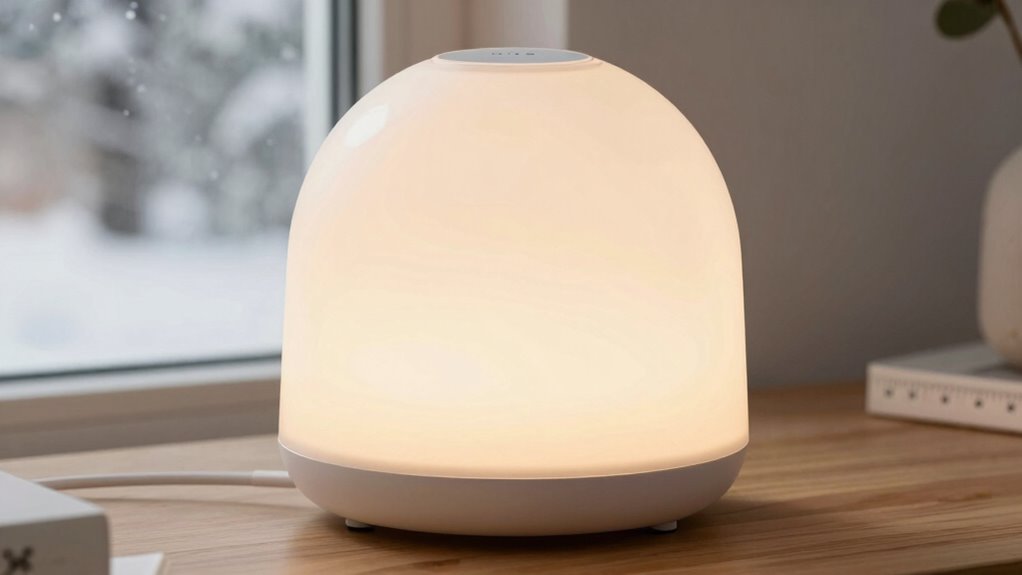
Choosing the right brightness level for your light therapy lamp is key to maximizing its benefits. The ideal lux measurement depends on your needs, but generally, higher brightness levels deliver better mood improvement. Most effective lamps emit between 2,500 and 10,000 lux. For mild winter blues, 2,500 to 5,000 lux may suffice, while more severe symptoms benefit from 10,000 lux. Here’s a quick guide:
| Brightness Level | Suitable for |
|---|---|
| 2,500 – 5,000 lux | Mild symptoms or mornings |
| 5,000 – 10,000 lux | Moderate to severe symptoms |
| Above 10,000 lux | Professional medical use |
In addition, understanding light intensity can help you choose the most effective lamp for your condition. Being aware of lux levels can also assist in determining the appropriate distance from the light source to ensure safety and effectiveness. Properly adjusting distance from the lamp is crucial for safety and maximizing the benefits of your light therapy routine. Maintaining a secure setup can also help prevent accidents during use. Moreover, considering lamp placement can optimize your exposure and comfort during daily sessions.
As an affiliate, we earn on qualifying purchases.
How Far Should You Sit From Your Light Box?
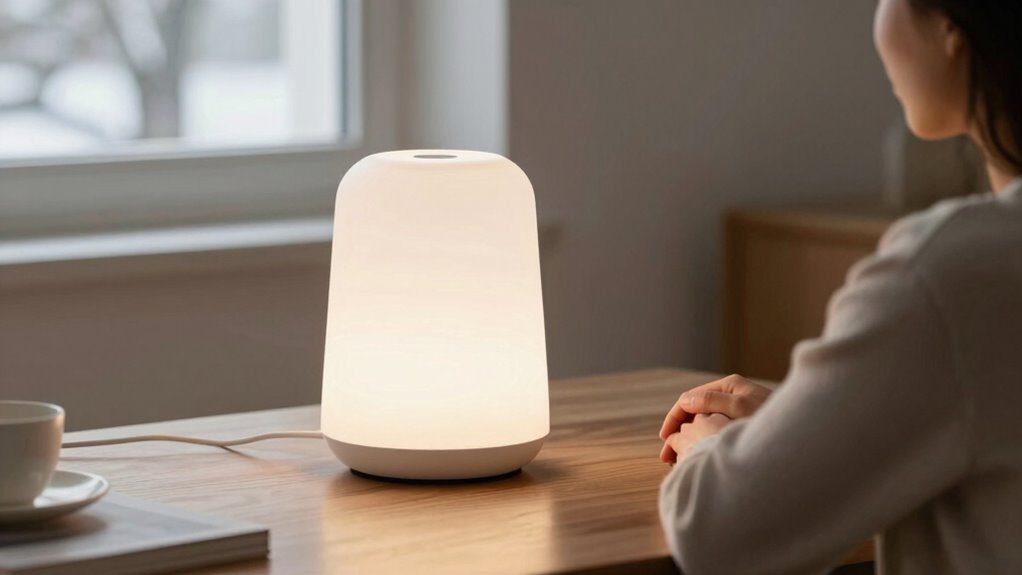
Ever wondered how close you should sit to your light therapy box for maximum benefit? The ideal light distance depends on your lamp’s brightness and your sitting position. Generally, aim to be about 16 to 24 inches away. To picture it:
- Sit upright, facing the light directly.
- Keep the light at eye level or slightly above.
- Maintain a sitting position that allows you to comfortably look toward the light without straining.
- Ensure your eyes are within the light’s effective range, but avoid staring directly into the bulb.
- Adjust your sitting position if you notice glare or discomfort. The right light distance helps you get the proper lux exposure without risking eye strain, ensuring a safe, effective routine.
Additionally, understanding the contrast ratio of your light therapy lamp can impact the effectiveness of your routine, especially in how well you see details in different lighting conditions. Proper placement and awareness of light intensity are essential for optimizing your experience and avoiding potential side effects. Being aware of the recommended sitting distance can help you tailor your routine for maximum comfort and benefit.
As an affiliate, we earn on qualifying purchases.
How to Build a Safe, Effective Light Therapy Routine
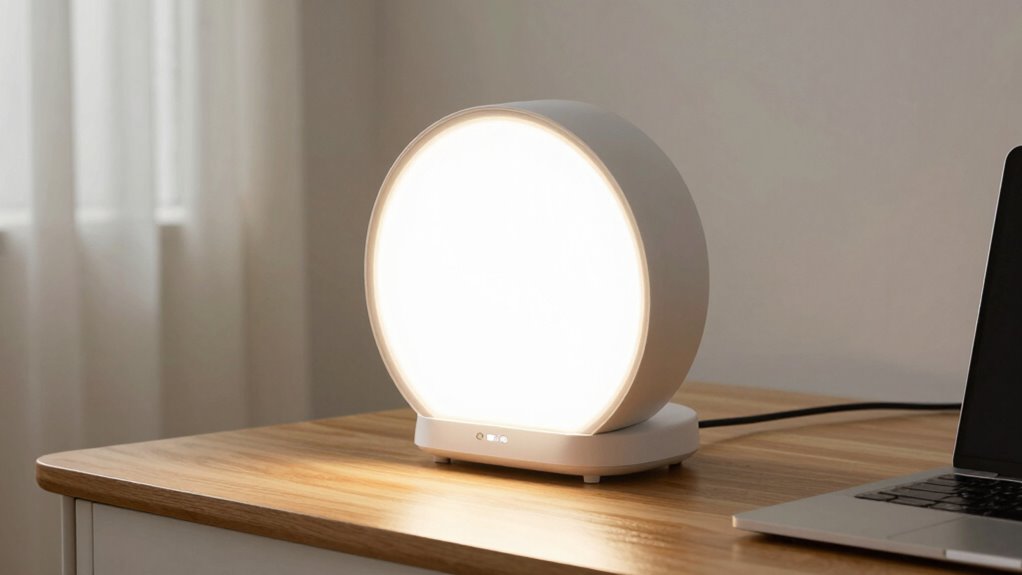
Creating a safe and effective light therapy routine starts with setting clear guidelines for your daily exposure. Choose consistent light exposure timing, ideally in the morning, to help regulate your circadian rhythm. Limit sessions to about 20-30 minutes, ensuring your eyes stay safe by avoiding direct gaze into the light. Position the light box at the appropriate distance—usually 16 to 24 inches—so you receive the right lux without risking eye strain. Use the table below to understand the importance of timing and eye safety:
| Light Exposure Timing | Eye Safety Importance |
|---|---|
| Morning sessions | Prevents eye strain |
| Consistent schedule | Maintains circadian |
| 20-30 minutes | Protects vision |
| Proper distance | Reduces glare |
| Avoid direct stare | Ensures safety |
Following these guidelines helps you maximize benefits while keeping your eyes safe. Additionally, being mindful of light intensity levels ensures you don’t inadvertently cause discomfort or harm during your sessions. Understanding the Lux levels of your light therapy device can help tailor your routine for optimal safety and effectiveness. Regularly checking the device’s specifications can further optimize your routine for comfort and safety. Moreover, considering the recommended distance can help you achieve the desired lux levels without overexposure. Being aware of recommended exposure duration is also crucial for maintaining a safe and effective routine.
Tips to Maximize Benefits and Stay Safe During Light Therapy
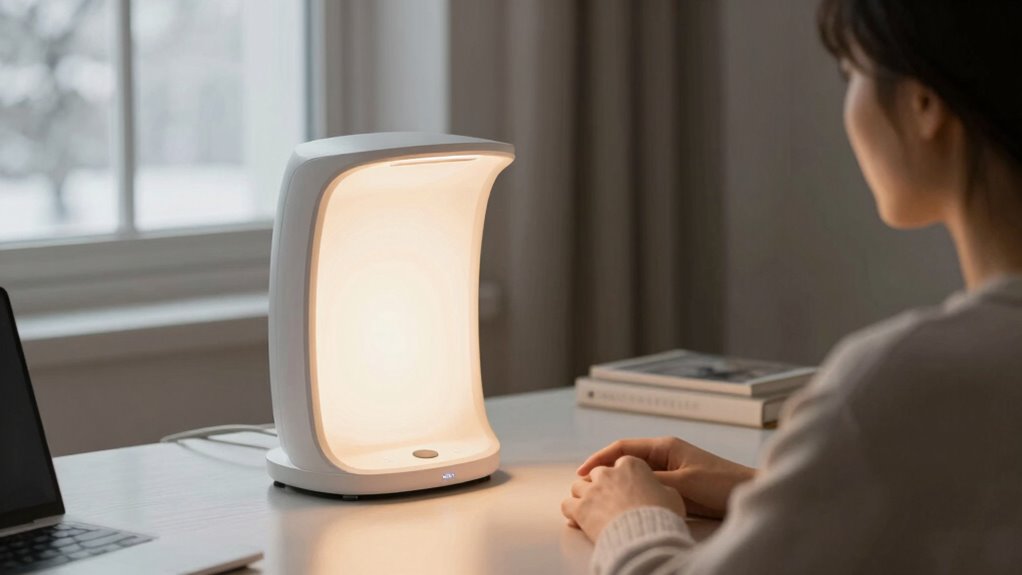
To get the most out of your light therapy sessions while keeping your eyes safe, focus on practical tips that enhance benefits and minimize risks. First, verify your device is properly maintained, cleaning its UV safety filters regularly. Second, position the lamp at the recommended distance to avoid overstimulation while maximizing exposure. Third, limit sessions to the advised duration to prevent eye strain or discomfort. Fourth, always follow manufacturer instructions on UV safety, such as avoiding direct eye contact or using protective eyewear if recommended. Regularly check your device for damage or malfunction to ensure safe operation. Additionally, understanding the importance of device maintenance can help you maintain a safe environment by reducing indoor pollutants that may impact your overall health. Proper upkeep of your light therapy device can prevent potential hazards and ensure consistent performance. Maintaining a clean and well-functioning device also supports indoor air quality, which can influence your overall health during long winter months. Ensuring that your device’s soundscape is appropriate can also contribute to a more relaxing and effective therapy session. Keeping your device in a well-ventilated space is also advisable to promote better air circulation and reduce the buildup of dust or allergens. By maintaining your device and adhering to these guidelines, you’ll optimize your therapy’s benefits while protecting your eyes and overall safety.
Frequently Asked Questions
Can Light Therapy Help With Seasonal Affective Disorder (SAD) Other Than Winter Blues?
Yes, light therapy can help with seasonal affective disorder (SAD) beyond winter blues. You might also consider alternative treatments like counseling, medication, or lifestyle adjustments such as regular exercise and healthy sleep habits. Combining these approaches with light therapy can boost your mood and energy levels year-round. Always consult a healthcare professional to create a personalized plan that best suits your needs and guarantees safe, effective treatment for SAD.
Are There Any Side Effects or Risks Associated With Light Therapy?
You might worry about side effects, but with proper use, light therapy is safe. Risks include UV exposure, which can harm your skin and eyes, so choose a lamp with no UV emission. Always maintain eye safety by keeping the light at the recommended distance and avoiding direct eye contact. If you experience headaches, eye strain, or agitation, consult a healthcare professional to adjust your routine and make certain of your well-being.
How Long Does It Typically Take to Notice Improvements?
You can generally expect to see symptom improvements within one to two weeks of consistent light therapy. While timing expectations vary, many people notice mood boosts, increased energy, or better sleep during this period. To maximize benefits, use the lamp daily as recommended. If you don’t see changes after a few weeks, consider adjusting the duration or consult a healthcare professional for personalized guidance.
Can Light Therapy Be Combined With Medication or Therapy?
You can definitely combine light therapy with medication or therapy, creating a powerful treatment symphony. Combining treatments, or therapy integration, often enhances your overall mood improvement. It’s like adding extra brushes to your palette, enriching the color of your recovery. Always consult your healthcare provider to coordinate these approaches safely. Together, they can work in harmony, boosting your resilience against winter blues and bringing brighter days ahead.
Is It Safe to Use Light Therapy Lamps While Sleeping or Napping?
You should avoid using light therapy lamps while sleeping or napping because it can cause sleep disruption and interfere with your natural sleep cycle. Additionally, ensuring eye safety is vital; avoid looking directly at the light to prevent eye strain or damage. Use the lamp as recommended—typically in the morning and at a safe distance—to get the benefits without risking sleep quality or eye health.
Conclusion
Think of your light therapy routine as tending a delicate garden—consistent care helps it flourish. By choosing the right brightness, sitting at the right distance, and following a safe routine, you’re nurturing your winter wellness. With patience and care, you’ll watch your mood bloom and brighten, turning the dark days into a season of growth. Keep your routine steady, and let the gentle glow guide you toward brighter, happier winters.
Flea & tick season Picks
flea and tick prevention
As an affiliate, we earn on qualifying purchases.