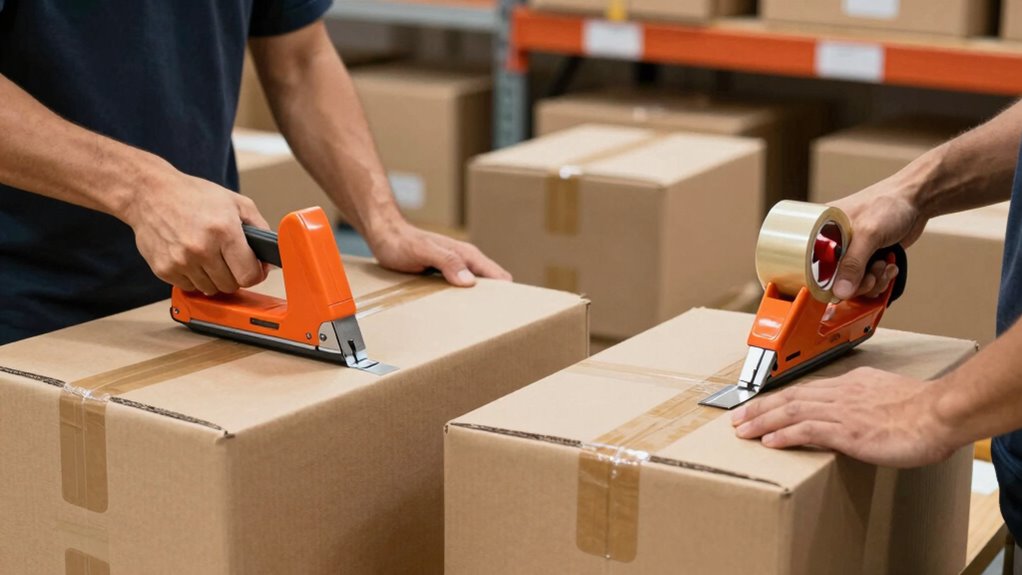

If you’re choosing between case sealers and tape dispensers, consider how each impacts speed, consistency, and training. Sealers offer faster, more reliable seals ideal for high-volume operations, with less operator variability. Tape dispensers are simpler and easier to operate but slower and less consistent for large-scale use. To optimize your packaging process, understanding their features and best applications helps you make the right choice—more details await to help you decide.
Key Takeaways
- Case sealers offer faster sealing speeds suitable for high-volume operations, reducing manual effort and increasing throughput.
- Automated sealers provide more consistent, uniform seals, enhancing security and reducing variability compared to manual tape dispensers.
- Sealers typically require less operator training, simplifying onboarding and ensuring reliable, high-quality sealing.
- Tape dispensers are more flexible for small volumes or quick repairs but may result in more material waste and inconsistent seals.
- Choosing between tools depends on speed needs, volume, and desired sealing consistency, with combining both offering optimal flexibility.
What Are the Key Differences Between Case Sealers and Tape Dispensers?

While both case sealers and tape dispensers are essential tools in packaging, they serve different purposes. Case sealers are designed to automatically close and secure the tops of cartons, ensuring consistent sealing that supports a strong packaging design. This automation reduces material waste and can lessen environmental impact by optimizing tape or glue use. Tape dispensers, on the other hand, are manual or semi-automatic tools primarily used for sealing smaller packages or for quick repairs. They offer flexibility and control but often result in more tape usage and waste. When choosing between them, consider how each aligns with your packaging design goals and environmental commitments. Proper selection can improve efficiency and reduce waste, benefiting both your workflow and the planet.
How Fast Can Each Sealing Method Handle High-Volume Packaging?
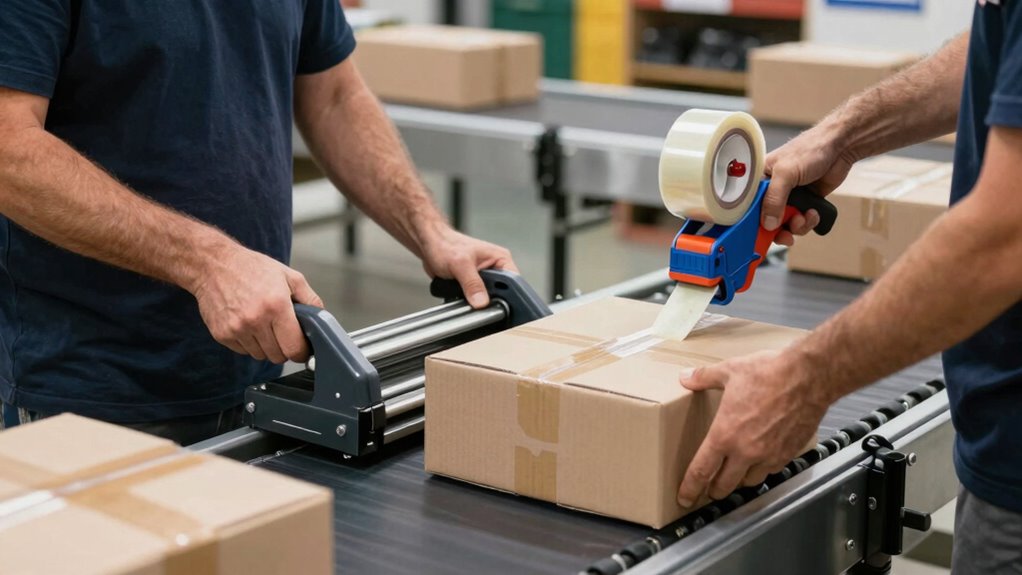
When it comes to high-volume packaging, the speed at which your sealing methods operate can substantially impact efficiency. Case sealers can process dozens of boxes per minute, making them ideal for large-scale operations, ensuring rapid throughput without sacrificing packaging aesthetics. They streamline the workflow, reducing manual effort and boosting productivity. Tape dispensers, on the other hand, typically handle lower volumes more slowly, which might cause bottlenecks during peak times. However, they offer flexibility for small batches or customized packaging. From an environmental impact perspective, case sealers often use less material overall, reducing waste. Additionally, sealing speed is a critical factor that influences overall packaging efficiency and throughput. Tape dispensers may generate more waste due to excess tape or improper cuts. Overall, for high-volume packaging, case sealers generally outperform tape dispensers in speed, maintaining consistent quality while supporting eco-friendly practices. Additionally, color accuracy in the sealing process ensures clear, professional results, especially important when branding or product presentation is a priority. Implementing proper maintenance can further optimize sealing speed and consistency over time.
Which Tool Ensures Secure, Consistent Package Seals?
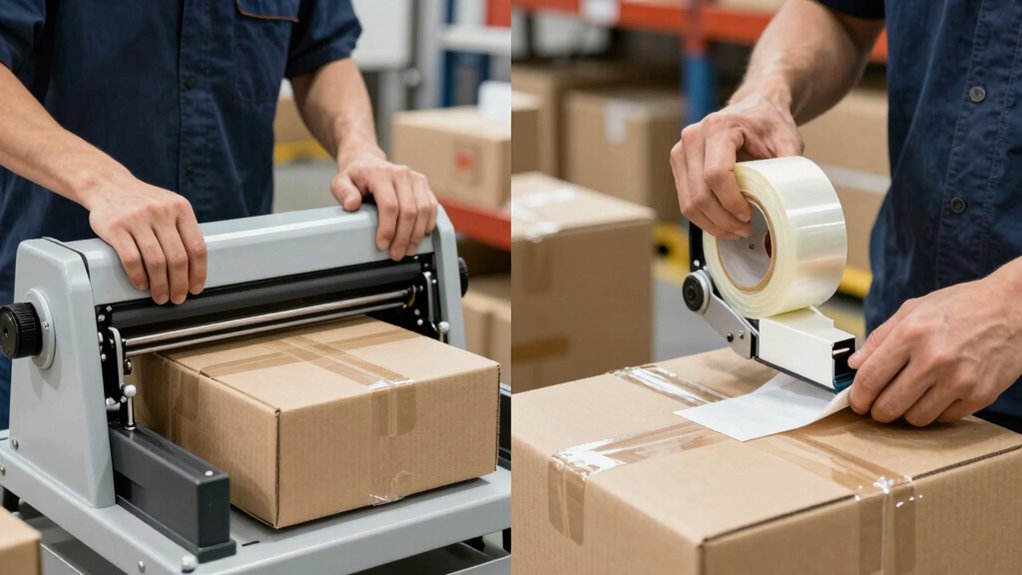
Both case sealers and tape dispensers aim to secure packages efficiently, but their ability to provide consistent, reliable seals varies. When it comes to sealing techniques, case sealers often deliver stronger, more uniform seals that meet strict packaging standards, ensuring your packages stay secure during transit. Tape dispensers rely on manual application, which can lead to inconsistent sealing quality, especially under high-volume conditions. For applications requiring high security and durability, case sealers generally outperform tape dispensers by maintaining consistent pressure and seal integrity. Additionally, seal strength is a critical factor in preventing damage during shipping. Incorporating appropriate media can further enhance the reliability of sealing processes. Proper training and technique are essential to maximize the benefits of either sealing method. Ultimately, if your priority is a secure, uniform seal that aligns with industry packaging standards, a case sealer is the better choice. It minimizes human error and guarantees that each package is sealed properly every time.
What Training Do Operators Need for Sealers and Tape Dispensers?
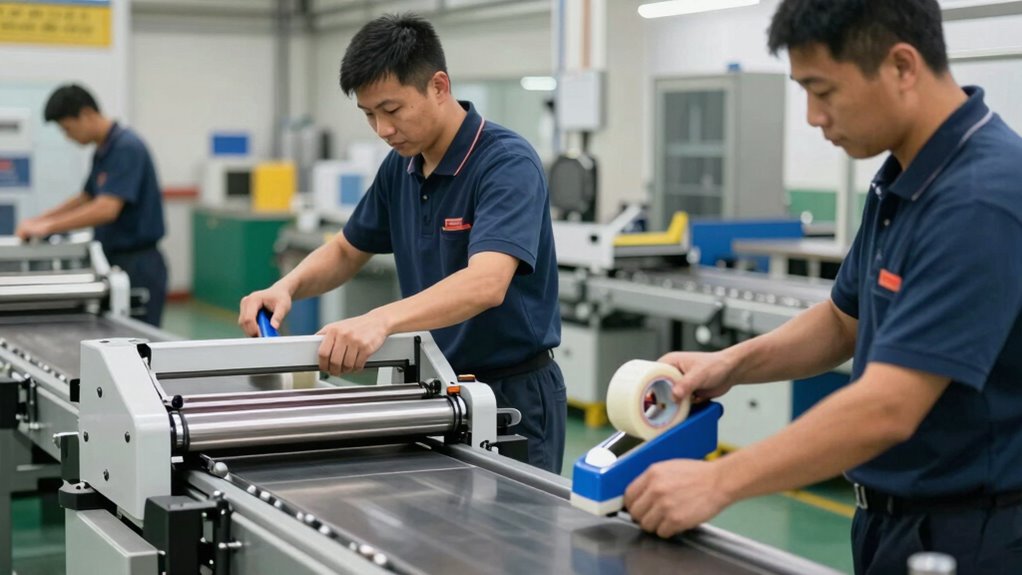
What training do operators need to effectively use sealers and tape dispensers? You must understand packaging safety to prevent accidents and ensure secure seals. Proper training includes learning how to operate equipment correctly, avoiding common errors that could compromise package integrity. Additionally, focusing on operator ergonomics helps reduce strain and fatigue, improving productivity and long-term health. You should be familiar with adjusting settings for different box sizes and materials, maintaining the equipment, and troubleshooting minor issues. Emphasizing safety procedures is essential to prevent injuries from moving parts or sharp blades. Familiarity with power tools and heavy-duty equipment is also beneficial for handling maintenance and repairs efficiently. Moreover, comprehensive training covers automation features that can significantly enhance workflow efficiency. Ensuring operators understand equipment calibration helps maintain consistency across all packages. Overall, exhaustive training enhances efficiency, maintains consistency, and promotes safe handling of sealing and taping tools, ensuring your packaging process remains smooth and effective.
What Are the Long-Term Costs of Sealing Equipment?
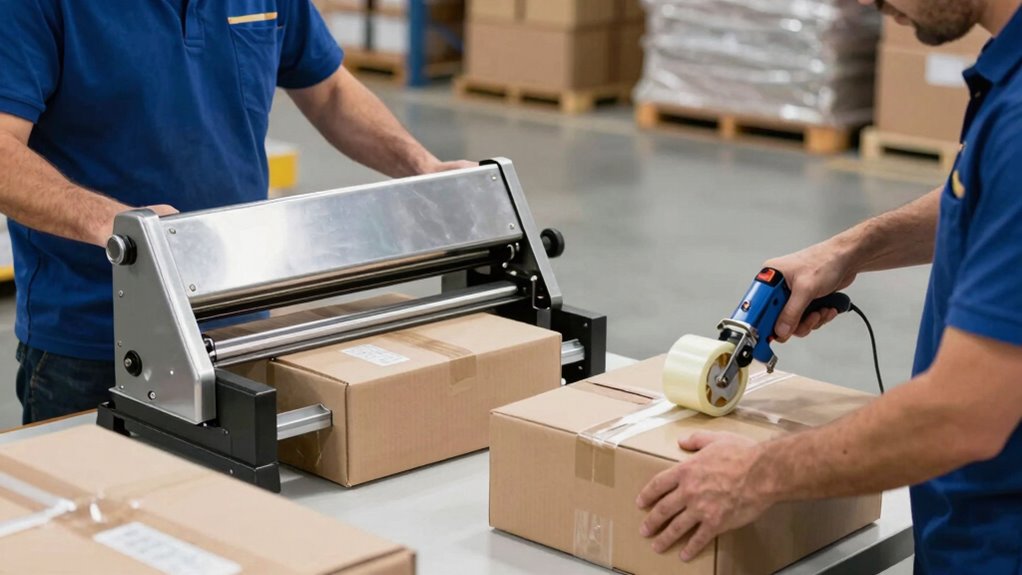
Understanding the long-term costs of sealing equipment is essential for maintaining a profitable and efficient packaging operation. Maintenance costs can add up over time, especially if your equipment requires frequent repairs or part replacements. Regular upkeep helps prevent costly breakdowns but also contributes to ongoing expenses. Additionally, energy consumption is a significant factor; some sealers and tape dispensers use more power, increasing your operational costs. Investing in energy-efficient models may have higher upfront costs but can save money over the long run. Consider both maintenance requirements and energy use when selecting equipment to ensure you’re not surprised by hidden expenses later. Proper maintenance and choosing energy-efficient options help you control costs and maximize your equipment’s lifespan, ultimately boosting your bottom line. Incorporating cost-effective strategies and energy-efficient models can further optimize your investment and reduce overall expenses. Being aware of long-term operational costs allows you to make more informed purchasing decisions that benefit your business in the long term.
How Flexible Are Sealers and Tape Dispensers for Different Package Sizes?
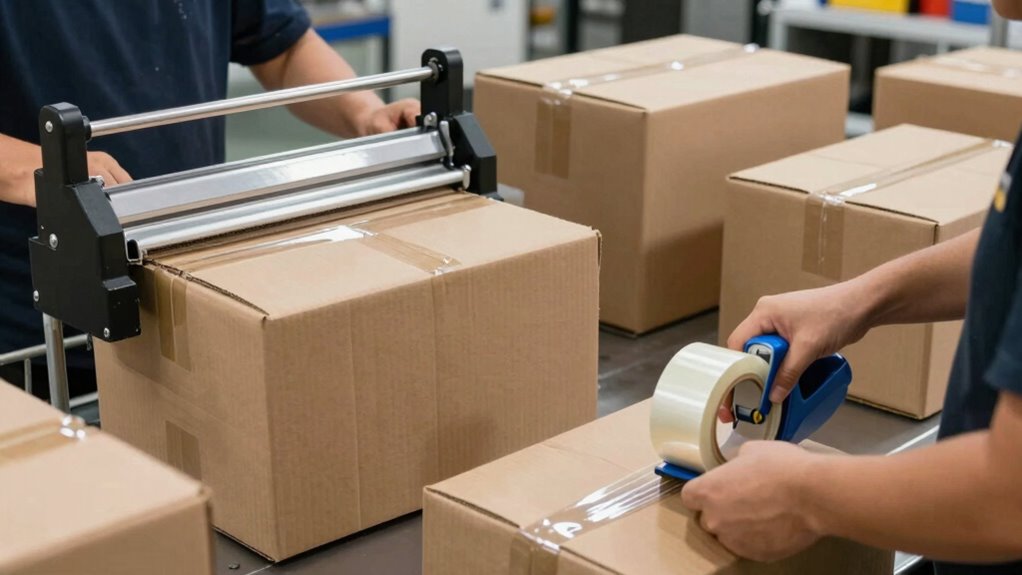
Sealers and tape dispensers vary in their ability to handle different package sizes, which can substantially impact your workflow. Flexible equipment offers features like adjustable settings to accommodate various box dimensions quickly. Material compatibility also plays a vital role, guaranteeing your sealer or dispenser works seamlessly with different packaging materials. Consider these key points:
- Adjustable settings allow quick customization for small or large packages.
- Some sealers automatically detect package size, reducing manual adjustments.
- Tape dispensers with adjustable tension suit different material thicknesses.
- Compatibility with various materials ensures versatility across packaging types.
- Incorporating quality control features helps maintain consistent sealing and taping accuracy.
Your choice impacts efficiency, so prioritize equipment that adapts easily to your packaging needs, saving time and reducing errors.
How to Keep Your Sealing Equipment Operating Without Downtime?
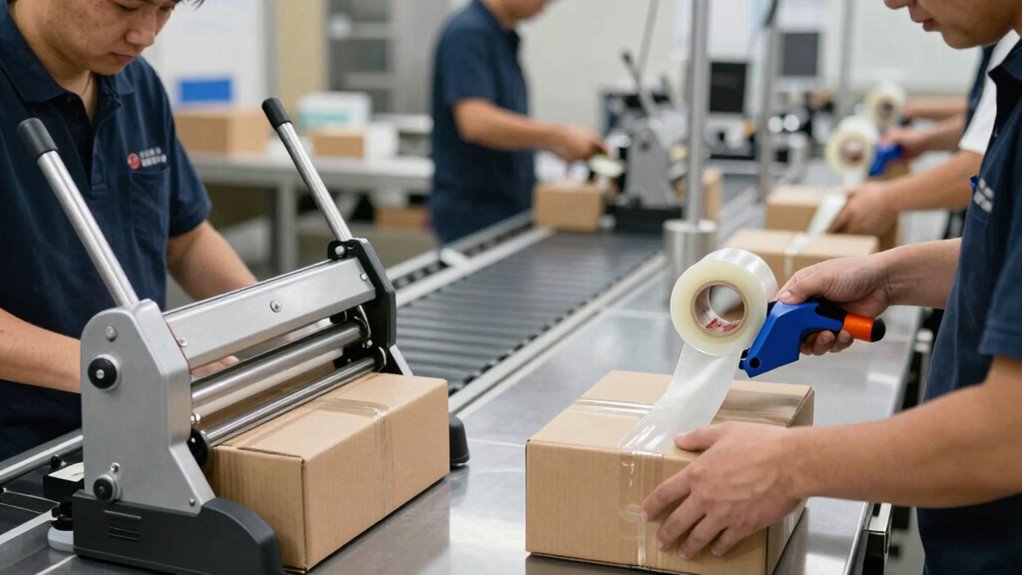
Maintaining peak performance of your sealing equipment is key to avoiding costly downtime and keeping your packaging line running smoothly. Addressing maintenance challenges proactively helps prevent unexpected breakdowns and extends equipment lifespan. Regular inspections and cleaning ensure seals remain consistent and prevent jams. Operator ergonomics play a crucial role; designing workflows that reduce strain helps operators perform routine tasks efficiently and safely. Train staff on proper operation and troubleshooting to quickly resolve minor issues before they escalate. Keeping spare parts on hand minimizes delays during repairs. Regularly reviewing equipment maintenance procedures ensures that all team members are aligned on best practices, further reducing the chance of operational errors. Consistent maintenance routines, combined with ergonomic considerations, streamline operation and reduce unplanned stoppages. Paying attention to auditory processing can also enhance staff communication and coordination during busy shifts. By prioritizing these elements, you ensure your sealing equipment stays reliable, maximizing uptime and productivity.
Is a Case Sealer Better for Large Operations? Or Should You Use Tape Dispensers?
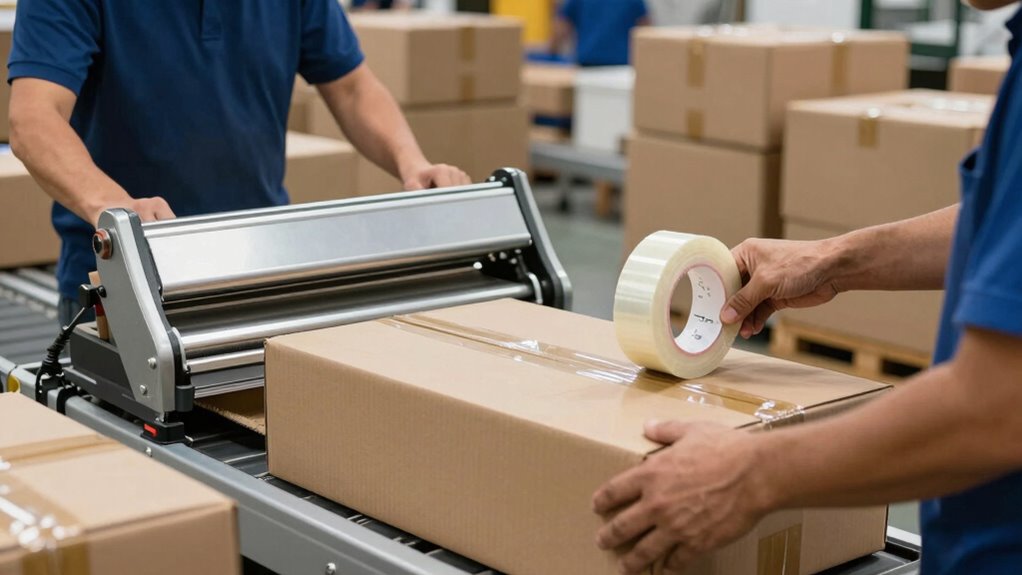
When managing large operations, you need equipment that keeps up with your pace and minimizes costs. Case sealers often offer faster, more efficient sealing, while tape dispensers can provide greater flexibility and lower initial expenses. Consider which factors matter most to your workflow to decide if a case sealer or tape dispenser suits your needs best.
Speed and Efficiency
For large operations aiming to maximize speed and efficiency, choosing the right sealing method is essential. A case sealer often outperforms tape dispensers by providing:
- Faster throughput, reducing labor time per box
- Consistent sealing quality, enhancing packaging aesthetics
- Reduced material waste, lowering environmental impact
- Quicker training for staff, increasing overall productivity
Additionally, selecting the appropriate equipment can help prevent common digital safety pitfalls associated with manual sealing methods.
While tape dispensers may seem flexible, case sealers streamline high-volume workflows. They ensure uniformity and speed, which are critical in large-scale settings. Additionally, case sealers minimize packaging waste, supporting eco-friendly practices. If your goal is rapid, reliable sealing that maintains a professional look and reduces environmental footprint, a case sealer is usually the better choice. Tape dispensers, however, might suit smaller operations with less demanding throughput needs.
Cost and Flexibility
Choosing between a case sealer and tape dispenser hinges on your budget and operational needs. Case sealers often have higher upfront costs but can reduce labor expenses over time, making them ideal for large-scale operations. They provide a cleaner packaging aesthetic, which can enhance your brand image. Tape dispensers are more flexible and cost-effective for smaller volumes, allowing quick adjustments and less investment. When considering environmental impact, case sealers typically use fewer materials, reducing waste and packaging costs. Tape dispensers may generate more scrap tape, increasing waste. If you prioritize consistency and a professional look for high-volume packing, a case sealer offers long-term savings and improved packaging aesthetics. For smaller or more flexible needs, tape dispensers provide affordability and adaptability.
Should You Use Both Sealers and Tape Dispensers Together?
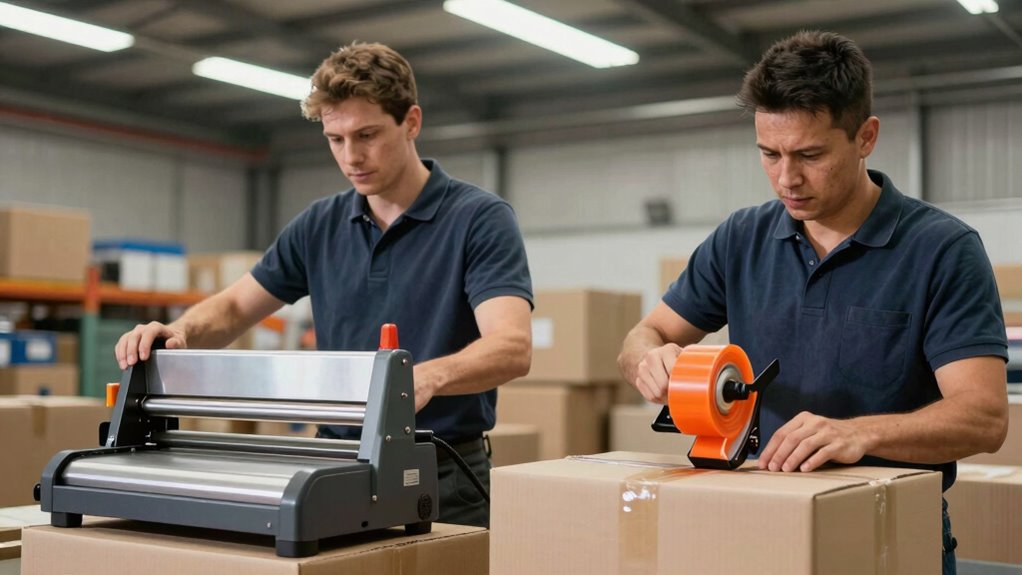
Using both sealers and tape dispensers together can be a strategic move to enhance packaging efficiency, especially for high-volume operations. Combining these tools guarantees faster sealing and better product durability, reducing the risk of damage during transit. Consider these advantages:
- Increased speed by switching between sealing methods based on box size.
- Improved consistency, ensuring each package meets quality standards.
- Flexibility to adapt to different product types and environmental conditions.
- Reduced environmental impact by choosing eco-friendly tapes or sealers.
- Proper training ensures operators maximize the benefits of both tools and maintain safety standards. Additionally, understanding sealant and tape compatibility can help prevent issues like adhesion failure or material waste. Proper selection of materials also contributes to overall packaging reliability and reduces rework or returns. Incorporating efficient workflows can further optimize the use of both tools and streamline operations. Implementing quality control measures can help monitor performance and identify areas for improvement over time.
Using both tools can streamline your workflow and optimize packaging quality. While it requires initial investment, the benefits in efficiency and product protection often outweigh costs, making it a smart choice for businesses focused on durability and sustainability.
What Factors Matter Most When Choosing Sealing Equipment for Your Business?
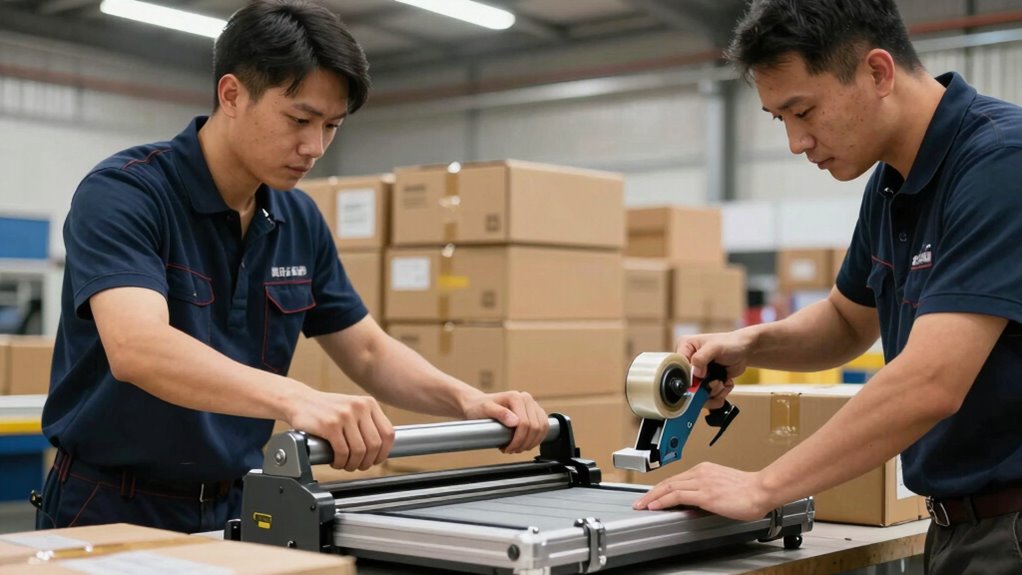
When choosing sealing equipment, you need to prioritize speed and efficiency to keep your operations smooth. Cost and training are also key, since budget constraints and ease of use can impact your long-term success. Considering these factors helps you select the right equipment for your business needs. For example, understanding the essential oils for sealing can help optimize your sealing process and improve overall productivity. Additionally, selecting equipment with transparent fee structures can prevent unexpected expenses and facilitate better budget planning. Staying informed about market trends and insights can also help you anticipate future demands and choose equipment that remains effective over time. Being aware of industry standards ensures that your sealing procedures meet necessary safety and quality requirements, further supporting your business growth.
Speed and Efficiency
Speed and efficiency are critical factors when selecting sealing equipment because they directly impact your workflow and productivity. To optimize performance, consider these key aspects:
- Sealing speed – Faster machines increase throughput, reducing bottlenecks.
- Ease of operation – User-friendly equipment minimizes training time and errors.
- Packaging aesthetics – Consistent sealing enhances product presentation, appealing to customers.
- Environmental impact – Choose options that minimize waste and energy use, supporting sustainability.
Cost and Training
Choosing the right sealing equipment involves carefully weighing both upfront costs and ongoing expenses, as these factors directly affect your budget and return on investment. Case sealers may have higher initial costs but can reduce labor and speed up shipping processes, saving you money over time. Tape dispensers are typically less expensive upfront but might require more manual effort and frequent replacement of tape rolls, increasing long-term costs. Consider how each option impacts your shipping materials and the overall packaging aesthetics; a professional seal can enhance your brand image. Additionally, evaluate the training needed for staff to operate the equipment efficiently. Simplified operation and minimal training requirements can decrease downtime and ensure consistent sealing quality, ultimately benefiting your business’s bottom line.
Frequently Asked Questions
How Do Maintenance Requirements Differ Between Case Sealers and Tape Dispensers?
You’ll find that maintenance requirements differ between case sealers and tape dispensers. Case sealers need more frequent maintenance, like daily cleaning procedures to prevent adhesive buildup and assure smooth operation. Tape dispensers typically require less frequent cleaning, but you should still check the tape path regularly. Maintenance frequency for both devices depends on usage intensity, but staying on top of cleaning procedures helps prevent jams and prolongs their lifespan.
What Safety Considerations Are Associated With Each Sealing Method?
Did you know that improper safety measures can lead to a 30% increase in workplace injuries? With case sealers, you should focus on ergonomic design to prevent strain, and guarantee proper training to avoid pinch points. Tape dispensers pose less risk but still require caution around sharp blades and potential chemical exposure from adhesives. Always prioritize workplace ergonomics and handle materials carefully to maintain a safe working environment.
Can Sealers and Tape Dispensers Be Integrated Into Existing Packaging Lines?
Yes, you can integrate sealers and tape dispensers into your existing packaging lines. Focus on automation integration to streamline operations and enhance efficiency. Make certain your equipment fits well within your workspace to optimize space. Many systems are designed for easy integration, allowing you to upgrade your line without major disruptions. Proper planning helps you achieve faster throughput, consistent sealing, and better space utilization, ultimately improving your overall packaging process.
How Do Environmental Factors Affect Sealing Effectiveness?
Environmental factors can throw a wrench in your sealing process. Humidity impact is significant—high moisture levels can weaken adhesive bonds, while low humidity can cause tapes to lose stickiness. Temperature fluctuations also affect sealing effectiveness; extreme heat may cause materials to warp, and cold can make adhesives brittle. To keep your packaging airtight, monitor these factors closely and adjust your equipment settings accordingly. Think of it as weatherproofing your sealing operation.
Are There Any Industry-Specific Standards for Sealing Equipment?
Yes, industry-specific standards for sealing equipment do exist. You should look for equipment that meets industry certifications and conforms to relevant standards to ensure safety and performance. These standards, set by organizations like ASTM or ISO, help you maintain quality and consistency in packaging. By choosing equipment that adheres to these compliance standards, you ensure efficient sealing, reduce errors, and meet regulatory requirements effectively.
Conclusion
Ultimately, whether you choose case sealers or tape dispensers, it’s funny how the “simple” task of sealing boxes can become so complex. You might think speed and consistency are all that matter, but don’t forget about training, costs, and downtime. Sometimes, the easiest solution isn’t always the fastest or cheapest. So, embrace the irony—your perfect sealing setup might just be the one you least expected.