Barcode labels are essential for tracking inventory, assets, and engaging customers. Code 128 is ideal for fast, space-efficient scanning in shipping and warehousing, offering high-density data storage and security features. QR codes are better suited for marketing, multimedia, and quick access to online content, with larger data capacity. Choosing between them depends on your specific needs—keep exploring to discover which option fits your operational goals best.
Key Takeaways
- Code 128 is ideal for compact, high-speed scanning of alphanumeric inventory or shipping labels, especially in industrial settings.
- QR codes support larger data storage, making them suitable for marketing, customer engagement, and multimedia links.
- Choose Code 128 for environments prioritizing speed, security, and space-efficient barcodes; opt for QR codes when user interaction or data capacity is key.
- Durability and environmental conditions influence barcode selection; high-resistance labels may favor specific barcode types and customization.
- Consider future scalability and scanning needs to determine whether a linear Code 128 or a 2D QR code best fits your operational goals.
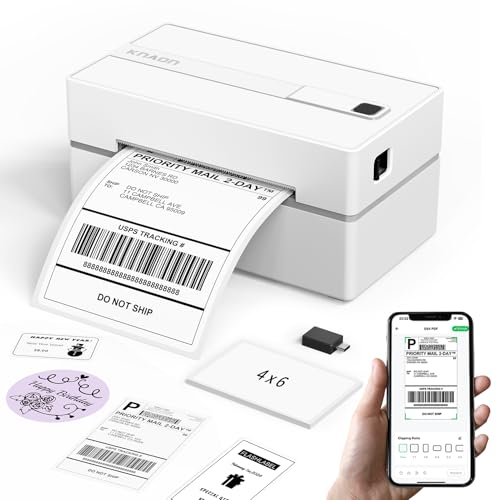
KNAON Bluetooth Thermal Shipping Label Printer, 4x6 Portable Thermal Address Label Printer for Small Business, Compatible with iPhone,Android,Windows,Mac–Works with Etsy Shopify USPS&More, White
- Wireless Bluetooth Printing: Supports mobile, Windows, and Mac devices
- USB Connectivity: Seamless connection with multiple OS including ChromeOS and Linux
- Preloaded Drivers & Tutorials: Easy setup with built-in drivers and videos
As an affiliate, we earn on qualifying purchases.
What Are Barcode Labels and Why Do They Matter?
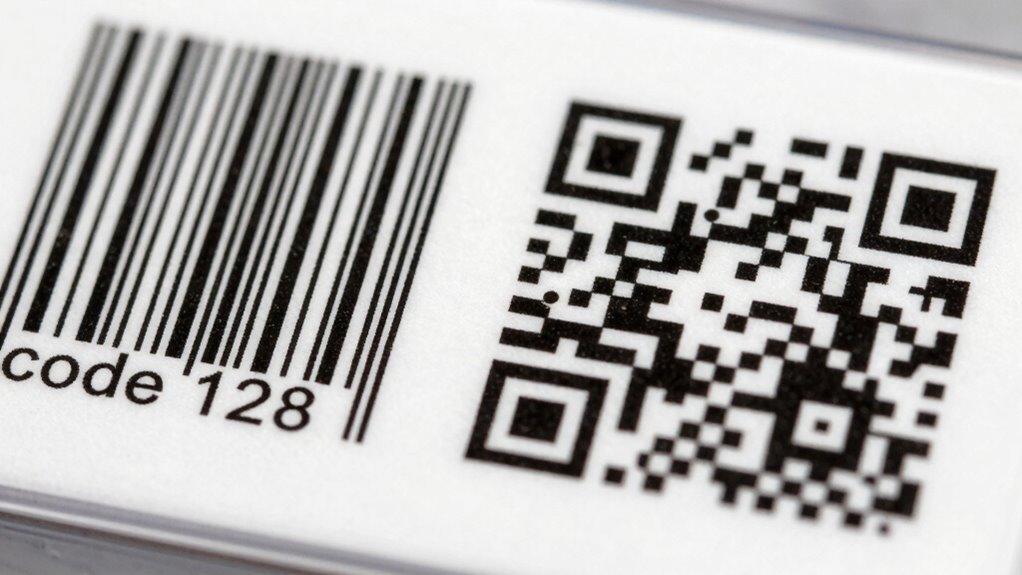
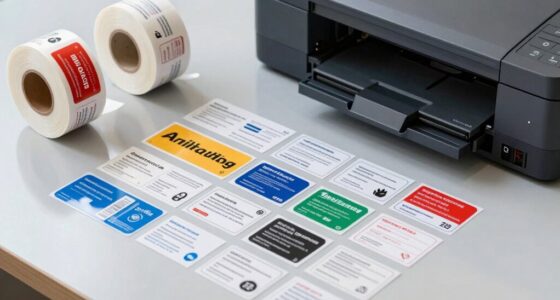
Have you ever wondered how stores keep track of thousands of products effortlessly? Barcode labels are the answer. They serve as a quick, reliable way to identify items and manage inventory efficiently. Understanding barcode standards, like Code 128 or QR codes, guarantees that each label contains the right data in a format your scanner can read. The choice of label materials also matters because it affects durability, print quality, and compatibility with your environment. Whether you need labels that withstand moisture, heat, or rough handling, selecting the right materials keeps your system running smoothly. Barcode labels streamline checkout, inventory management, and data collection, making them essential tools in retail, logistics, and healthcare. In short, they’re crucial for accurate, fast, and organized operations. Color accuracy plays a role in ensuring that printed barcode labels are easy to scan and read under various lighting conditions. Additionally, choosing the appropriate barcode type can optimize scanning efficiency for different applications.
EOM-POS Cash Drawer, Receipt Printer, Scanner. for Square Stand/Register
- Includes Epson Thermal Receipt Printer: With Autocut feature
- Includes Symbol USB Barcode Scanner: High-speed scanning
- Includes EOM-100 Cash Drawer: Secure cash storage
As an affiliate, we earn on qualifying purchases.
Comparing Code 128 and QR Codes: Structure, Data Capacity, and Use Cases
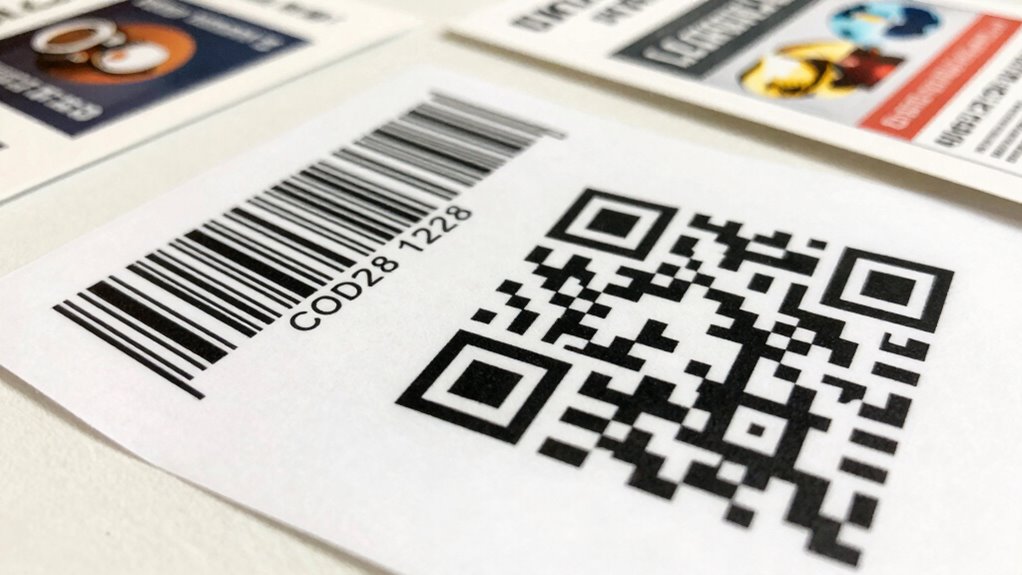
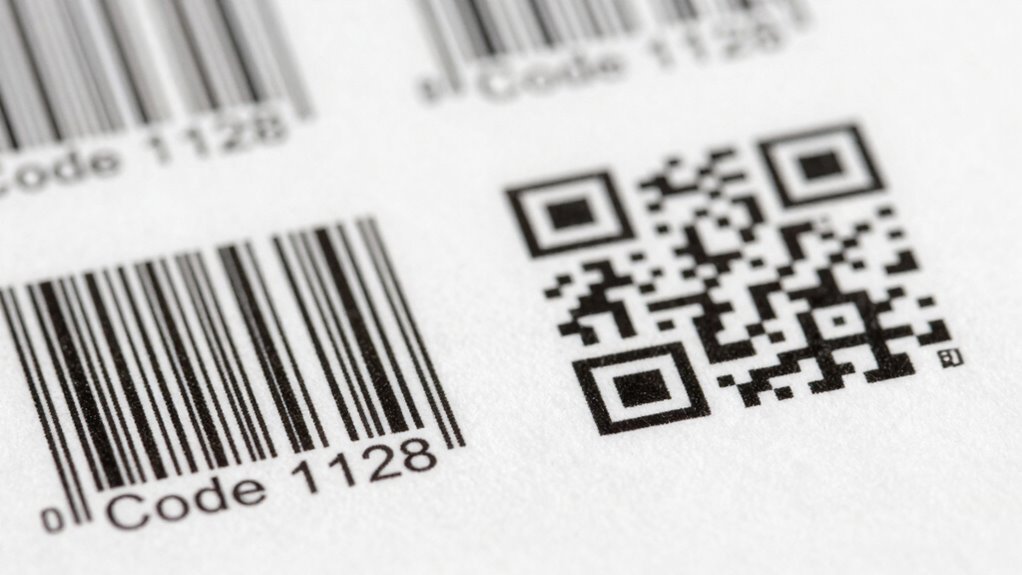
When choosing between Code 128 and QR codes, understanding their structure, data capacity, and typical applications helps you select the right barcode for your needs. Code 128 is a linear barcode optimized for digital scanning, offering compactness and high-speed reading, making it ideal for inventory and shipping labels. It encodes alphanumeric data efficiently but has limited capacity compared to QR codes. QR codes are two-dimensional and can store considerably more information, including URLs, contact details, or multimedia links, making them perfect for marketing campaigns or interactive experiences. In terms of data security, QR codes can be encrypted or password-protected, but both types rely on secure systems for safe data transmission. Your choice depends on whether you prioritize quick digital scanning or larger data storage.

Phomemo M110 Label Printer, Portable Bluetooth Label Maker, Gray
- Wide Label Compatibility: Supports 20-50mm diverse labels
- Intuitive App Integration: Prints with Print Master app, 100+ templates
- Multi-language Support: Supports 13 languages for customization
As an affiliate, we earn on qualifying purchases.
Which Barcode Label Is Right for Your Business? Key Factors to Consider

Choosing the right barcode label for your business depends on several key factors, including the type of data you need to encode, scanning environment, and future scalability. To guarantee you select the best option, consider these factors:
- Barcode customization – Decide if you need labels with specific branding or design elements.
- Label durability – Assess whether your labels will face harsh conditions like moisture, chemicals, or rough handling.
- Scanning environment – Determine if your scanners are indoor, outdoor, or in challenging lighting conditions.
- Data capacity – Choose between Code 128 for compact encoding or QR codes for larger data sets.
Matching these factors helps you select a barcode label that fits your operational needs and growth plans.

BrightMark - 2"x1" Thermal Barcode Labels – 1000 Labels/Roll | Smudge-Free, for Inventory, Shipping, Retail – Works with Rollo, Zebra, Jiose, MUNBYN, Brother (Not Compatible with Dymo Printers)
- High-Quality Thermal Labels: Crisp, clear printing without ink or ribbons
- Convenient Roll Packaging: 1000 labels per roll for easy replacement
- Wide Printer Compatibility: Works with Zebra, Rollo, Brother, and more
As an affiliate, we earn on qualifying purchases.
Best Scenarios for Using Code 128 Labels in Inventory and Shipping
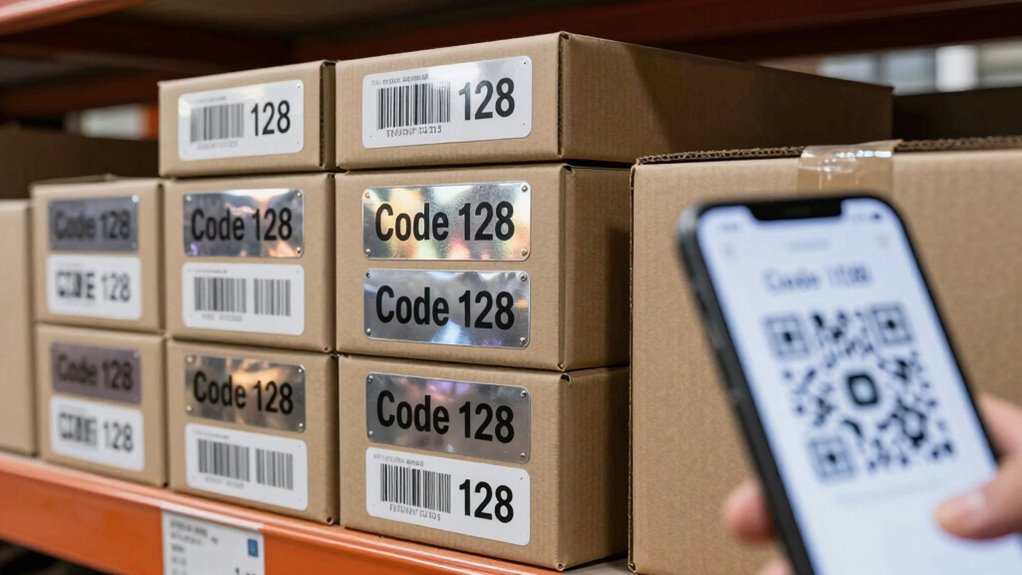
Code 128 labels are ideal for inventory and shipping applications due to their ability to encode alphanumeric data efficiently in a compact format. They align well with industry labeling standards that require high-density data storage and quick readability. You’ll find them useful when tracking large product lists or serial numbers, as they maximize space without sacrificing data capacity. Their high barcode security features help prevent unauthorized copying or tampering, ensuring data integrity during transit and storage. Use Code 128 labels for shipping labels, warehouse inventory, and asset management, where quick scanning and accurate data capture are critical. Their versatility and compliance with labeling standards make them a reliable choice for businesses needing secure, space-efficient barcodes in fast-paced environments. Additionally, barcode security features help protect sensitive information from unauthorized duplication, making them suitable for secure logistical operations. Incorporating industry standards further ensures compatibility with existing systems and enhances operational efficiency. Moreover, understanding attention to detail in barcode printing can significantly improve scanning accuracy and reduce errors in data collection, especially when considering printing quality and its effect on barcode readability. Implementing proper quality control measures can further enhance the overall reliability of barcode labels in demanding environments.
When and How to Use QR Codes for Marketing and Asset Tracking
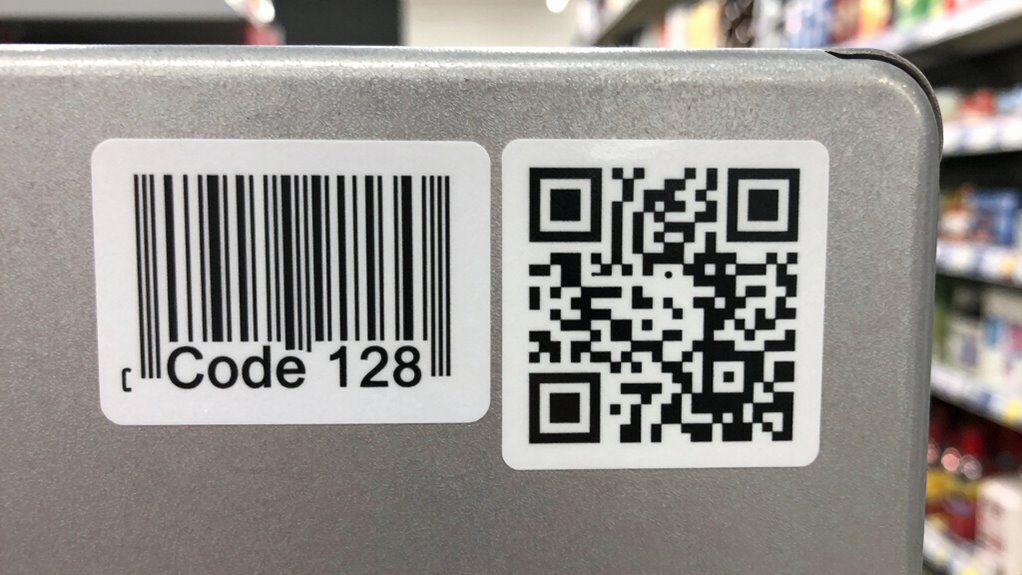
QR codes are a versatile tool that can enhance your marketing efforts and streamline asset tracking. Use them when you want quick access to information or increase customer engagement. Here are four effective ways:
- Integrate QR codes into digital signage to direct customers to special offers or product details instantly.
- Place QR codes on packaging or displays to encourage interaction and gather valuable data.
- Use QR codes in promotional campaigns to link to surveys, loyalty programs, or exclusive content.
- Attach QR codes to assets for easy tracking and maintenance updates, reducing manual inventory checks.
- Incorporate project management support from professional services to ensure seamless integration of QR codes into your operational workflows and optimize exfoliation benefits for your skin care routines.
How to Generate and Print Barcode Labels Effectively
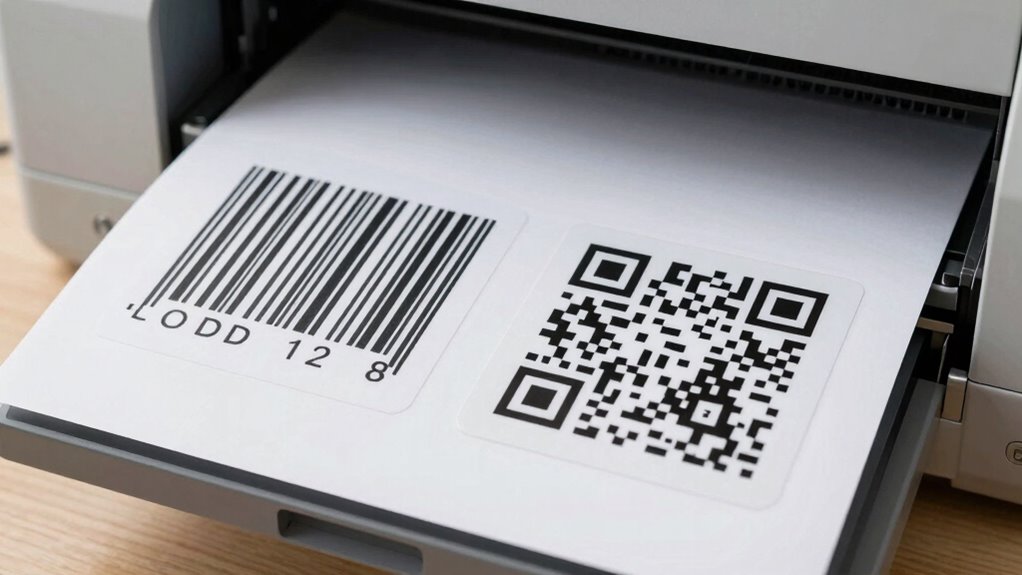
To generate and print barcode labels effectively, you need to select the right software and tools that fit your specific needs. Focus on options that offer customization for barcode aesthetics, guaranteeing labels are clear, professional, and easy to scan. Choose software that allows you to adjust font, size, and layout to match your branding and operational requirements. When printing, prioritize label durability by selecting high-quality materials suitable for your environment—water-resistant, scratch-proof, or temperature-resistant labels if needed. Use a reliable barcode printer that produces sharp, consistent prints, reducing errors and reprints. Properly aligned printing and test scans before mass production help ensure your labels are both visually appealing and functional, supporting efficient inventory management and asset tracking.
Common Mistakes to Avoid When Implementing Barcode Labels
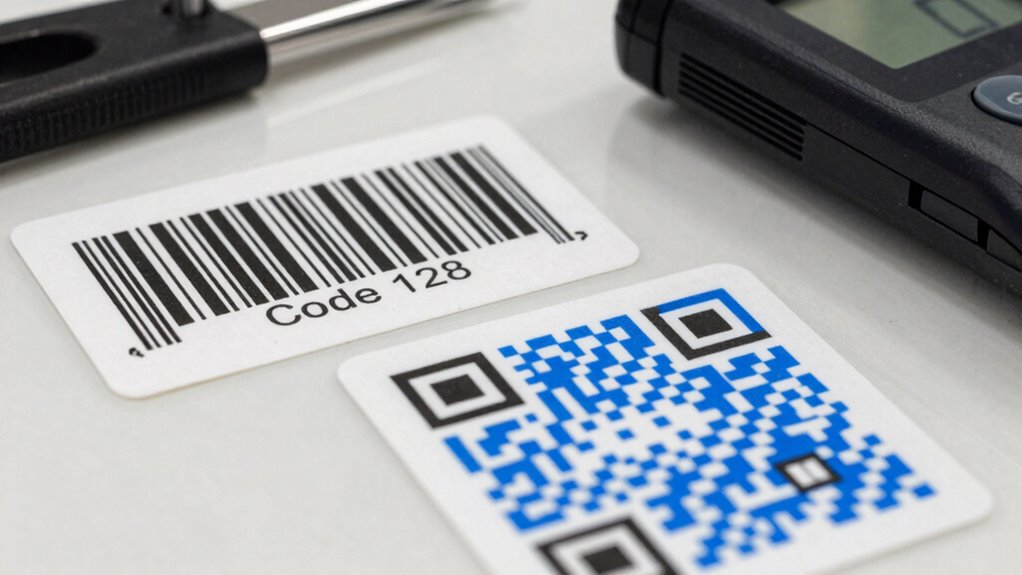
Implementing barcode labels can run into pitfalls if you overlook common mistakes during the process. To guarantee success, avoid these errors:
Avoid common pitfalls to ensure successful barcode label implementation and accurate tracking.
- Ignoring barcode security, which can lead to data breaches or unauthorized access.
- Using labels with insufficient durability, causing labels to peel, fade, or become unreadable.
- Overlooking proper placement, which impacts scannability and overall efficiency. Proper label placement ensures quick and accurate scanning in busy environments.
- Neglecting to test labels before full deployment, risking errors in inventory or tracking.
- Failing to consider label durability standards, which are essential for maintaining label integrity over time.
Summary: Picking the Best Barcode Label for Your Goals
Choosing the right barcode label is essential to meet your specific goals, whether it’s for durability, readability, or security. To do this, consider how barcode customization can help you tailor labels to your environment and needs. If your labels face harsh conditions, prioritize label durability to prevent fading or damage. For retail or quick scanning, opt for designs that enhance readability. The type of barcode—whether Code 128 or QR—also influences your choice, as each offers different benefits in terms of data capacity and security. Assess your goals carefully and select a label that balances barcode customization options with durability requirements. This approach ensures your labels perform reliably, support your operational efficiency, and align with your long-term objectives.
Frequently Asked Questions
How Secure Are Barcode Labels Against Counterfeit or Tampering?
Barcode labels can be fairly secure against counterfeit and tampering if you implement proper measures. While they have some security vulnerabilities, like duplication or removal, you can enhance tampering prevention by adding features like holograms, color codes, or encrypted data. Regularly updating your security protocols and choosing advanced barcode types help protect your products, making it harder for counterfeiters to bypass your checks and ensuring your labels remain trustworthy.
Can Barcode Labels Be Customized With Branding Elements?
Imagine transforming your barcode labels into powerful branding tools—yes, you can customize them! With extensive design flexibility, you can add logos, colors, and branding elements that catch the eye. This customization not only enhances your brand visibility but also makes your labels stand out. So, don’t settle for plain labels—explore the branding options available, and turn functional labels into a compelling part of your marketing strategy.
What Are the Environmental Considerations for Barcode Label Materials?
You should consider the environmental impact of your barcode label materials. Opt for sustainable materials, like biodegradable or recycled options, to diminish waste. Check for recyclability options to guarantee your labels can easily be processed after use. By choosing eco-friendly materials, you help minimize your carbon footprint and support environmental conservation efforts while maintaining effective labeling for your products.
How Do Barcode Labels Perform in Extreme Temperatures or Wet Conditions?
Think of barcode labels like a boat in rough seas—you need thermal resilience and water resistance to keep them afloat. In extreme temperatures, they maintain readability if made with durable materials. Wet conditions challenge labels, but waterproof and heat-resistant options guarantee they don’t fade or peel. You’ll find these labels perform well when exposed to harsh environments, ensuring your data stays intact regardless of the weather or temperature swings.
Are There Industry Standards Governing Barcode Label Quality and Readability?
Yes, industry standards govern barcode label quality and readability. You should follow barcode standards like GS1 or ISO to make certain your labels meet compliance requirements. These standards specify label materials, print quality, and placement to guarantee readability across various environments. Adhering to label compliance helps prevent scanning errors, reduces delays, and ensures your barcode labels perform reliably, even in tough conditions.
Conclusion
Choosing between Code 128 and QR codes is like selecting the right tool for a job—you want the one that fits your needs perfectly. Think of it as matching a key to a lock; each barcode type opens different doors for your business. By understanding their strengths and best uses, you’ll access smoother inventory management, marketing, and tracking. Pick wisely, and your barcode strategy will be a well-oiled machine that keeps your operations running seamlessly.