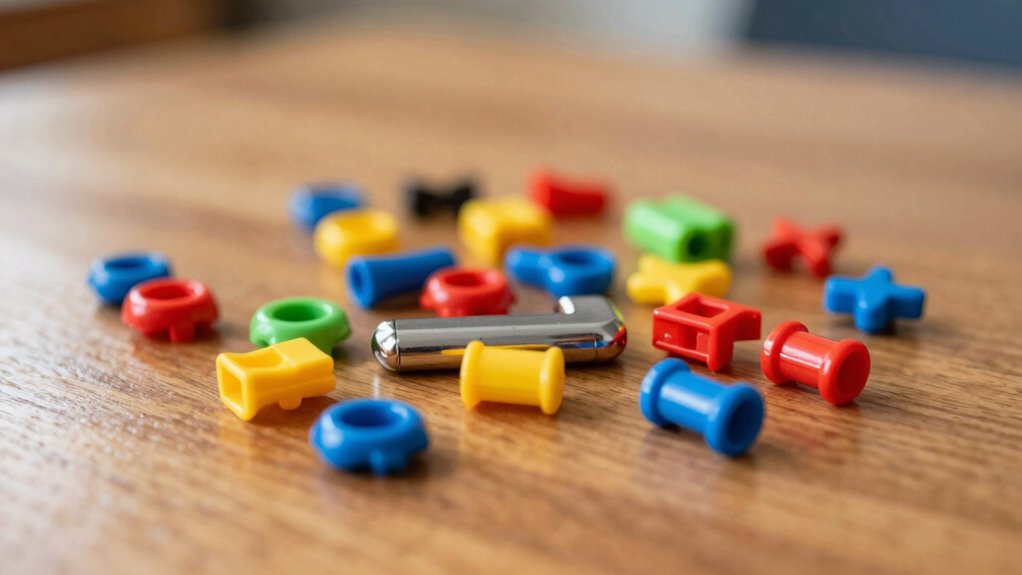

To keep kids safe, watch out for small parts and magnets that pose choking or internal injury risks. Always check if toy parts fit inside a toilet paper roll—if they do, they’re dangerous. Be cautious with strong magnets, especially if they can be removed. Inspect play areas for hazards like broken equipment or sharp objects. If your child swallows a magnet or small part, act fast and seek emergency help. Learning more can help you prevent these risks effectively.
Key Takeaways
- Small parts and strong magnets can cause choking, internal injuries, or blockages if swallowed; test toy parts with a toilet paper roll.
- Verify toy labels for age appropriateness, safety certifications, and warning symbols to ensure compliance with safety standards.
- Regularly inspect toys and play areas for damage, loose parts, or hazards like sharp edges and broken equipment.
- Educate children on the dangers of swallowing magnets or small parts, emphasizing safe play and disassembly avoidance.
- In case of ingestion, do not induce vomiting; seek emergency medical help immediately to prevent serious health risks.
What Are the Biggest Toy Safety Risks for Kids?
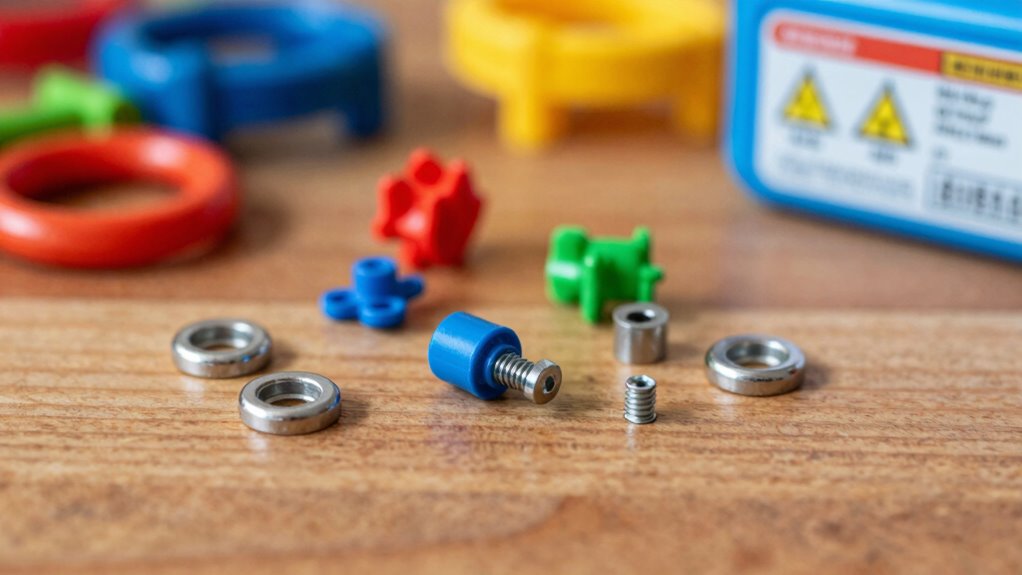
While toys can bring joy and learning opportunities, they also pose certain safety risks for kids. One major concern is the use of artificial toy materials, which may contain harmful chemicals like phthalates or lead. These substances can pose health risks if ingested or absorbed through the skin. Additionally, loud toy sounds can be startling or damaging to a child’s hearing if they are excessively loud or played at close range. Kids might also become overwhelmed or frightened by sudden noises, which can lead to distress or accidents. It’s crucial to select toys made from safe, non-toxic materials and to monitor sound levels, ensuring they don’t exceed safe decibel limits. Being aware of these risks helps you keep your child safe while they enjoy their toys.
How Can You Spot Dangerous Small Parts and Magnets?

To keep kids safe, you need to identify dangerous small parts and magnets. Check the size of small parts to make sure they can’t be swallowed, and test magnet strength to prevent choking hazards. Recognize hazardous toy designs that might have loose or sharp components, and always stay vigilant. Be aware of the risks associated with Free Floating designs that can pose additional safety concerns. Additionally, understanding the importance of Color Accuracy in toy design can help identify products that may have misleading appearances or defects. Incorporating European cloud innovation principles into toy manufacturing can also enhance safety standards by ensuring consistent quality and safety testing. To better understand potential safety issues, examining field‑of‑view and imaging‑scale concepts can provide insight into how small parts and magnets are integrated into toys and their visibility during play.
Check Small Part Size
How can you tell if a small toy part is dangerous? First, check the size of the parts. Small parts that fit entirely inside a toilet paper roll are a choking hazard for young children. When storing toys, keep small pieces separate from larger ones to prevent accidental ingestion. Always read labels carefully—product labels often specify age recommendations and warn about small parts. If a toy has tiny components, consider if they’re truly safe for the child’s age. Remember, even if a toy looks harmless, small parts can pose serious risks if they can be swallowed or inhaled. Small Part Size and proper toy storage and diligent label reading help you identify dangerous small parts before they become a hazard. Stay vigilant to keep playtime safe.
Test Magnet Strength
Testing magnet strength is an important step in identifying potentially dangerous small parts. You can do this by gently pulling on the magnet with your fingers or a tool to see if it stays in place. Stronger magnets indicate higher magnet strength, which can pose risks if swallowed, as they may attract each other through internal tissues. Pay attention to how securely the magnet is embedded in the toy, as weak or loose magnets compromise toy durability and safety. If a magnet easily separates or is removable with minimal force, it’s a red flag. Remember, toys with high magnet strength require close supervision to prevent accidental ingestion. Checking magnet strength helps you spot small parts that could cause harm, ensuring the toy’s durability doesn’t come at the expense of safety. Additionally, understanding ergonomics and layout can help you assess how children interact with toys and minimize the risk of accidental ingestion or injury.
Recognize Hazardous Designs
Recognizing hazardous designs involves paying close attention to small parts and magnets that could pose risks during play. Hazardous toy designs often include unsafe play features that can cause choking or internal injuries. To spot these dangers, look for:
- Small parts that easily detach or fit entirely in a child’s mouth
- Magnets that are strong enough to swallow or cause internal damage
- Toys with loose or poorly secured components
- Sharp edges or points on parts
- Excessively complex or confusing assemblies that encourage disassembly
- Being aware of Gold IRA markets can also help you understand the importance of investing in safe, reputable products and companies.
- Additionally, understanding toy safety standards can aid in identifying products that have been thoroughly tested for hazards.
- Recognizing water safety hazards is essential, as some toys can become waterborne risks, especially in aquatic environments.
Knowing these warning signs helps you identify dangerous small parts and magnets early. By staying alert to unsafe play features, you protect children from potential choking hazards and internal injuries caused by hazardous toy designs.
What Are Common Hazards in Play Areas and How to Recognize Them?
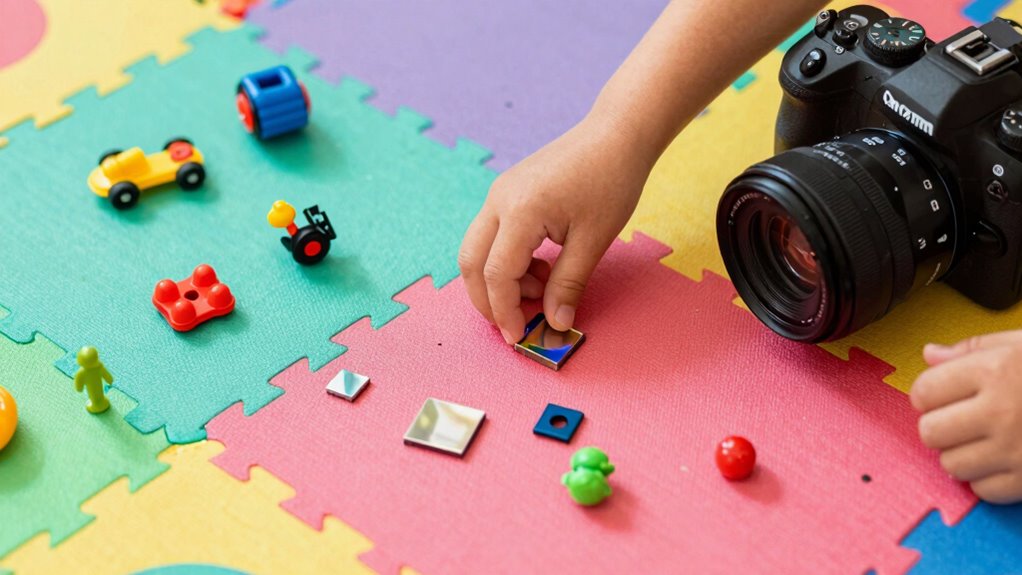
Play areas can pose various hazards that might not be immediately obvious, so it’s important to stay alert whenever children are at play. Common hazards include broken or rusted playground equipment, which can cause injuries, and outdoor hazards like sharp rocks, uneven surfaces, or exposed roots that increase fall risks. Always inspect the area for loose or damaged equipment, and check for debris or tripping hazards on the ground. Recognizing these dangers helps prevent accidents before they happen. Use the table below to identify typical hazards and their signs:
| Hazard Type | Warning Signs | Prevention Tips |
|---|---|---|
| Playground Equipment | Rust, sharp edges, loose parts | Regular maintenance and inspections |
| Outdoor Hazards | Sharp objects, uneven surfaces | Clear debris, level play areas |
| Structural Damage | Bent or broken support beams | Routine safety checks |
| Tripping Hazards | Exposed roots, uneven ground | Keep area tidy and level |
Additionally, conducting seasonal maintenance like checking for rust or loose components can help minimize long-term risks. Being aware of small parts and their potential to pose choking hazards is also crucial when children are playing around equipment. Furthermore, understanding the importance of qualified inspections can ensure that safety standards are consistently maintained. Regularly educating children about playground safety can also empower them to recognize and avoid hazards while playing.
How to Check Toy Labels and Safety Certifications Before Buying?
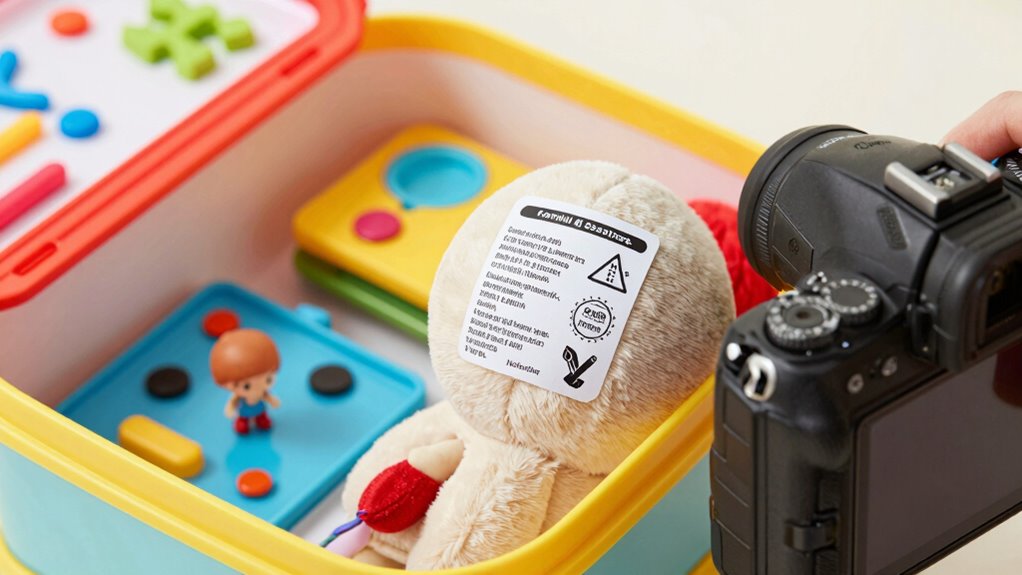
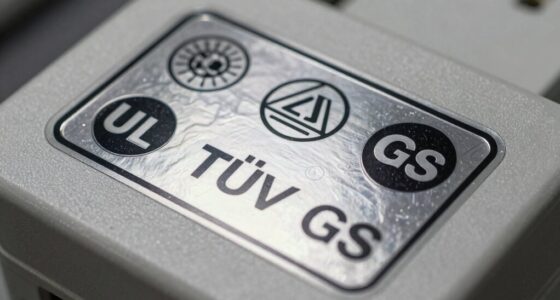
Before purchasing a toy, it’s essential to carefully check its labels and safety certifications to guarantee it meets safety standards. Start by examining the toy label interpretation to understand age recommendations, warning symbols, and small part alerts. Look for safety certification labels, such as ASTM, CE, or CPSC marks, which indicate compliance with safety regulations. To confirm safety, verify that labels are clear, not defaced, and match the product. Key points to check include:
- Age restrictions and warnings on the label
- Presence of safety certification marks (e.g., ASTM, CE)
- Clear language and legible print
- Absence of misleading or missing labels
- Consistency between packaging and product info
Being aware of potential hazards like small parts and magnets can further help prevent accidents. Additionally, understanding common toy safety standards can guide you in choosing safer toys. Recognizing how auditory processing relates to safety awareness can also be beneficial, especially for children with sensory sensitivities. This careful review helps you avoid unsafe toys and guarantees your child’s safety.
What Are Simple Tips to Teach Kids About Safe Play?
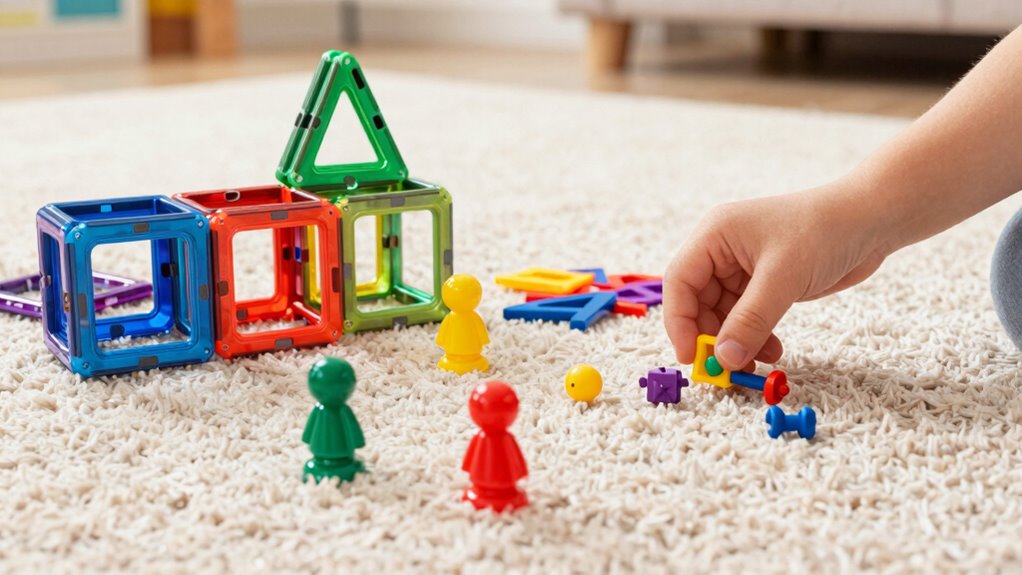
Teaching kids about safe play is essential to helping them enjoy their activities while avoiding injuries. Start by emphasizing the importance of playground safety, such as checking for broken equipment or sharp edges before play. Encourage children to follow rules, like waiting their turn and not pushing or roughhousing. Incorporate educational games that teach safety concepts in fun ways, making learning memorable. Reinforce the idea that they should tell an adult if something feels unsafe or if they see someone getting hurt. Keep communication open and ask questions to ensure they understand potential hazards. By modeling safe behaviors and engaging them with interactive learning, you help kids develop good habits that keep playtime both fun and secure. Additionally, teaching children about home safety systems and appliances can help them recognize hazards beyond the playground, fostering a broader awareness of safety in everyday environments. Teaching kids to recognize small parts, magnets, and other hazards helps prevent common accidents and encourages cautious behavior during play. Incorporating real-world examples, like the risks associated with small parts and magnets, can make safety lessons more relatable and impactful.
What Should You Do If Your Child Swallows a Magnet or Small Part?
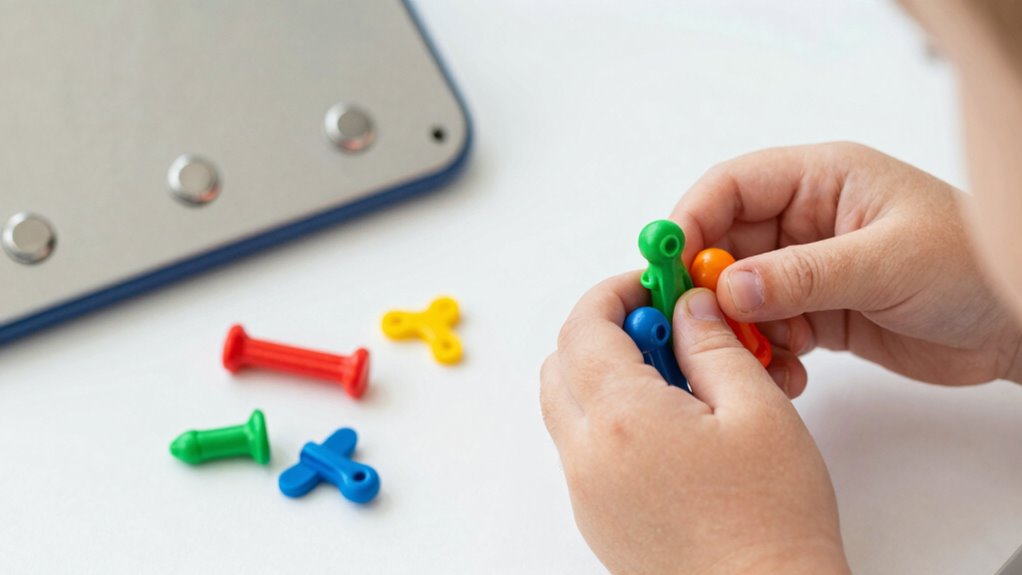
If you notice your child has swallowed a magnet or small part, acting quickly can prevent serious health issues. Magnet ingestion can cause internal damage or blockages, so prompt action is essential. Understanding thermal behavior of the stomach and intestines highlights why early intervention is crucial to prevent complications. Additionally, knowing safe emergency responses can make a significant difference in outcomes. Recognizing the dangerous health risks associated with small parts and magnets underscores the importance of swift medical attention. It’s also helpful to be aware of preventive measures to reduce the chances of such incidents occurring in the first place.
Involving professionals immediately helps minimize potential internal injury, which can be severe if not treated promptly. Here’s what you should do:
- Call emergency services immediately for guidance.
- Do not try to induce vomiting or give your child food or drink.
- Keep the child calm and still to prevent movement of the object.
- Monitor your child’s symptoms, such as pain, vomiting, or difficulty swallowing.
- Follow emergency responders’ instructions carefully.
Quick, decisive action can make a difference. Don’t delay seeking professional medical help—magnet ingestion can be dangerous, and timely emergency response is critical to ensure your child’s safety.
How to Choose Safe Toys and Keep Playtime Accident-Free?
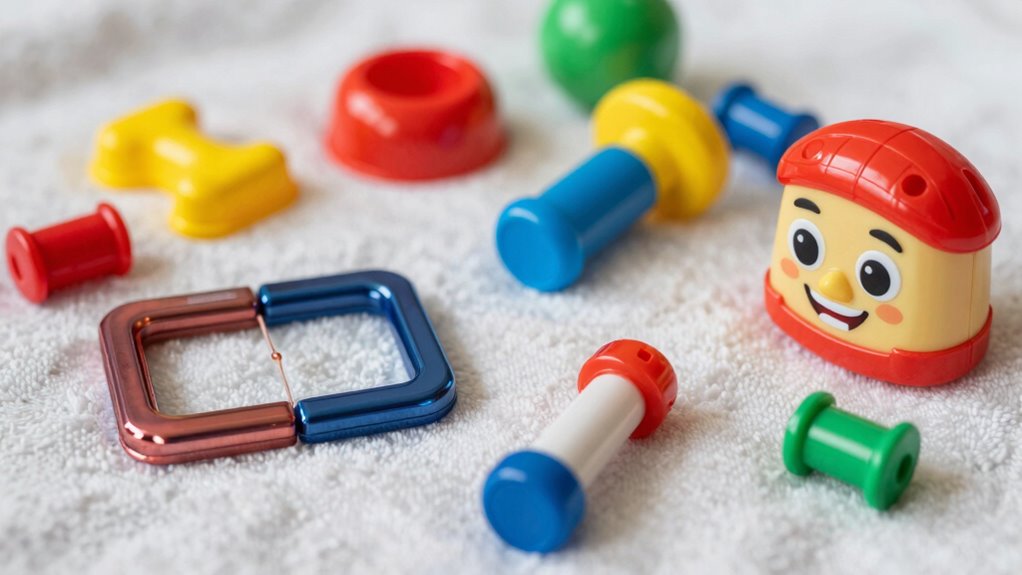
When selecting toys, always verify for small parts that could pose a choking hazard. Avoid toys with magnets that might be swallowed or cause injuries. Make sure the toys you choose are appropriate for your child’s age to ensure safe and enjoyable playtime. Additionally, inspecting toys regularly can help identify any damage or loose components that might increase safety risks. small parts safety Proper piercing care and hygiene of toys, including cleaning and maintenance, can also prevent the spread of germs and ensure a safer play environment.
Check for Small Part Hazards
Small parts can pose serious choking risks for young children, so it’s essential to scrutinize toys carefully before giving them to your child. Look for signs of small part dangers that could break off or detach easily. To identify potential hazards, check for:
- Tiny pieces that fit completely into a toilet paper roll
- Loose parts that can be easily removed
- Small buttons or beads that could be swallowed
- Detachable accessories or accessories that come apart
- Cracks or weaknesses in the toy
Always read manufacturer warnings and age recommendations. Avoid toys with small parts for children under three. Regularly inspect toys for damage or loose components. Staying vigilant helps prevent choking hazards and keeps playtime safe.
Avoid Magnet Risks
Magnetic toys can be engaging and educational, but they also pose unique safety risks if not chosen carefully. Magnet dangers include the risk of children swallowing small magnets, which can cause serious internal injuries or blockages. To prevent accidents, always follow toy safety guidelines and inspect toys regularly for loose or damaged magnets. Avoid toys with tiny, easily removable magnets, especially for younger children who might swallow them unknowingly. Choose products from reputable manufacturers that meet safety standards and clearly label age appropriateness. Keep an eye on the packaging for warnings about magnet hazards. Educate children about the dangers of magnets, emphasizing they shouldn’t be taken apart or ingested. By staying vigilant and adhering to toy safety guidelines, you can considerably reduce magnet risks during playtime.
Select Age-Appropriate Toys
Choosing toys that match a child’s age helps prevent accidents and guarantees safe, enjoyable play. An age-appropriate selection considers developmental suitability, ensuring the toy matches their skills and interests. To make the right choice, look for labels indicating the recommended age range. Consider these tips:
- Check for small parts that could be choking hazards for younger children
- Choose sturdy, well-made toys that can withstand rough play
- Avoid toys with sharp edges or small detachable pieces
- Select toys that promote learning and skill development
- Follow manufacturer guidelines for age and safety warnings
Frequently Asked Questions
How Do Age Recommendations Influence Toy Safety Choices?
Age recommendations guide your toy safety choices by ensuring the toy matches the child’s developmental considerations. You can avoid hazards like choking or injury by selecting age-appropriate toys that suit their skills and maturity. Always check the label, as these recommendations help you make informed decisions, reducing risks. By following age guidelines, you promote safe play and support your child’s growth safely and confidently.
Are There Specific Safety Standards for Electronic Toys?
Imagine you’re stepping into the future with a dial-up connection—electronic toys must meet specific safety standards today. Yes, there are standards for electronic toys, including magnetic safety, to prevent hazards like choking or magnetic ingestion. These standards make certain of proper insulation, secure batteries, and safe use of magnets. Always look for certifications like ASTM or CE marks to verify the toy complies with these strict electronic standards and keeps kids safe.
What Are the Long-Term Health Risks of Magnetic Toys?
Magnetic toys can pose long-term health risks if you’re exposed to high levels of magnetic exposure over time. You might be concerned about potential long-term neurological effects, such as cognitive or behavioral issues, especially if children swallow small magnets. While most toys meet safety standards, avoid letting children play with broken or damaged magnetic toys. Regularly supervise play and ensure magnets are securely attached to mitigate these health risks.
How Can Parents Effectively Supervise Children’s Toy Use?
Imagine the unexpected happening—how do you prevent it? You can effectively supervise your child’s toy use by employing vigilant supervision techniques and active parental monitoring. Keep toys within reach, watch for small parts or magnets, and set clear rules. Stay engaged, ask questions, and regularly inspect toys for damage. Your constant presence and attentive oversight create a safer environment, reducing risks and giving you peace of mind as your child explores and plays.
What Are Recent Recalls Related to Toy Small Parts or Magnets?
Recently, there have been recalls due to magnet ingestion and small parts choking hazards. You should check for updates from the Consumer Product Safety Commission, as magnet sets and toys with tiny components are often involved. Always supervise your kids during play, especially with toys containing small parts or magnets, to prevent dangerous incidents like swallowing or choking. Staying informed helps you keep your children safe from these common hazards.
Conclusion
Did you know that around 200,000 children visit emergency rooms each year due to toy-related injuries? By staying vigilant about small parts, magnets, and play areas, you can markedly reduce these risks. Always check labels, teach your kids safe play habits, and act quickly if an accident happens. With these simple steps, you help ensure playtime remains fun and safe—because every child deserves a worry-free way to learn and explore.