
The “verified purchase” badge shows that you bought the product before leaving a review, which adds some trust. However, it doesn’t guarantee the review is honest or the product is genuine. Fake reviews and biased feedback can still exist with this badge, so it’s not a foolproof indicator. To make smarter choices, learn more about what the badge proves—and what it doesn’t—by exploring these details further.
Key Takeaways
- The badge indicates the reviewer purchased the product, enhancing review credibility but doesn’t guarantee authenticity or honesty.
- Verification methods include linking accounts or confirming orders, but fake reviews can still bypass these checks.
- ‘Verified Purchase’ confirms a purchase, not the review’s quality, honesty, or lack of bias.
- Fake reviews and manipulation can occur despite verification, so consider detailed feedback and reviewer history.
- Use the badge as a helpful indicator alongside other review cues for more informed shopping decisions.
What Does the “Verified Purchase” Badge Really Mean?
Have you ever wondered what the “Verified Purchase” badge truly indicates? When you see this badge, it means the platform has confirmed your purchase, ensuring the review comes from someone who actually bought the product. Purchase verification adds a layer of trust, signaling that the review is based on firsthand experience rather than speculation or fake feedback. This badge helps improve review credibility, making it easier for you to distinguish genuine opinions from potentially biased or manipulated ones. Keep in mind, though, that a verified badge doesn’t automatically guarantee a positive review; it simply confirms the reviewer’s genuine purchase. Recognizing this badge helps you evaluate reviews more accurately and make better-informed buying decisions. Additionally, understanding the use of affiliate links and the importance of transparency can further influence how you interpret product recommendations. Knowing the review verification process can also provide insight into the reliability of user feedback. Being aware of review authenticity considerations can further help in assessing the trustworthiness of reviews. For example, verifying the reviewer’s purchase history can sometimes offer additional context to the review’s credibility.
How Do Platforms Verify Purchases and When Do You Get the Badge?
You might wonder how platforms determine whether you’ve genuinely purchased a product before awarding the “Verified Purchase” badge. Typically, they use purchase verification methods like linking your account to a retailer or confirming your order through email receipts. When you buy directly from the platform’s marketplace, purchase verification is straightforward, as they can confirm your transaction. For third-party sellers, platforms often require proof of purchase or order confirmation. Once your purchase is verified, you meet the badge criteria, and the “Verified Purchase” badge appears on your review. This badge signals that your review is based on an actual purchase, not speculation. However, the timing varies, and sometimes the badge appears immediately after verification, other times after manual review. Cookies and other tracking methods help ensure the authenticity of purchases and reviews.
Common Myths About Verified Reviews Debunked
Many people believe that a “verified” label means the review is completely authentic and trustworthy. However, this isn’t always the case, as verified status only confirms a purchase, not the review’s honesty. It’s important to look beyond the badge and consider other signs of genuine feedback. Additionally, understanding the affiliate disclosure can help you recognize potential biases in product reviews. For example, some home theatre projectors may have sponsored reviews that influence the content, regardless of verification status. Recognizing the role of essential oils in various health aspects highlights the importance of discerning credible information from marketing claims. Being aware of European cloud servers and their standards can also help you evaluate the credibility of cloud service reviews and claims. Furthermore, understanding the regulatory environment for investments like Bitcoin IRAs can aid in assessing the trustworthiness of related reviews and advice.
Myth: All Verified Means
While a verified purchase badge might suggest a trustworthy review, it doesn’t automatically guarantee the review’s authenticity or overall helpfulness. Relying solely on review verification can be misleading, as badge reliability varies. Here’s what it really indicates:
- The reviewer purchased the product, but not whether they used or liked it.
- The review could still be biased or fake, despite the badge.
- Some verified reviews might be overly positive or negative without context.
- Badge verification is just one part of evaluating review credibility.
- Floating on Water techniques are often used to promote relaxation and recovery, but such methods are not typically reflected in online reviews.
- Understanding ethical considerations in online reviews helps consumers make better-informed decisions.
- Recognizing review bias is essential to critically assess the information provided.
- Additionally, AI verification methods are increasingly used to identify fake reviews, but they are not foolproof and should complement other evaluation strategies.
Misconception: Authenticity Guaranteed
Although a verified purchase badge may suggest a review is genuine, it doesn’t guarantee the review’s authenticity. Review transparency relies on more than just a badge; it requires clear authenticity verification processes. Fake or biased reviews can still slip through, despite the verified label. This misconception leads many to believe that verified reviews are inherently trustworthy, but that’s not always the case. Authenticity verification involves checking factors like purchase confirmation, reviewer history, and review patterns. Additionally, some companies may have lax standards or lack rigorous checks. To truly understand a product’s reputation, you should look beyond the badge and consider the overall review ecosystem. Recognizing the importance of Review transparency can help consumers make more informed decisions. Remember, verified purchase status is a helpful indicator but isn’t a foolproof guarantee of review authenticity.
Limitations of the Verified Purchase Badge in Ensuring Trustworthy Reviews
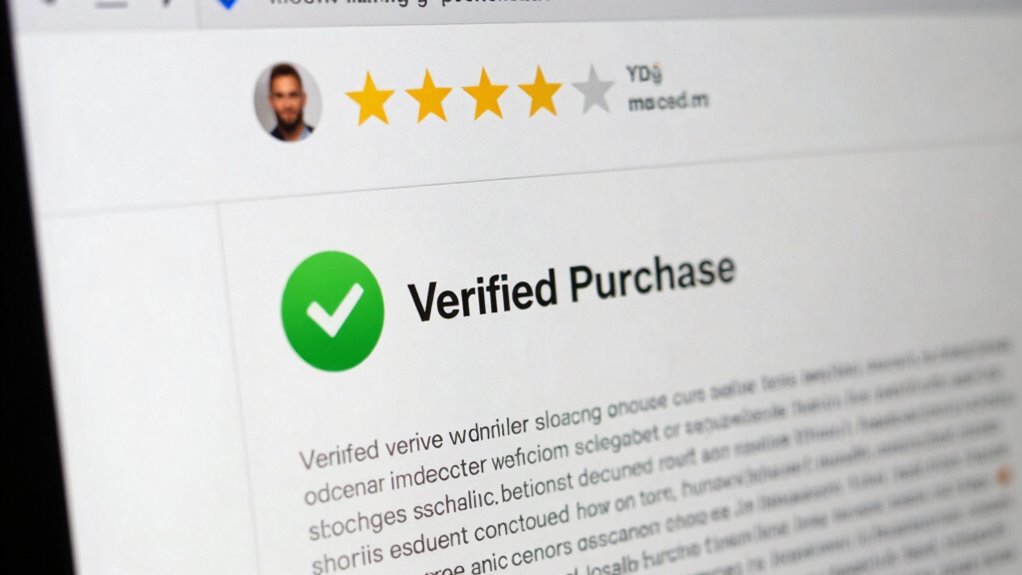
While the verified purchase badge aims to boost trust, authenticity challenges still exist. Some reviews may not be genuine, even if marked as verified, and misuse can occur. These limitations mean the badge isn’t a foolproof guarantee of review honesty. To better understand the trustworthiness of reviews, it’s helpful to consider review verification methods and how they impact the reliability of user feedback.
Authenticity Challenges Persist
Despite the verified purchase badge aiming to boost review credibility, it doesn’t fully guarantee product authenticity. Fake reviews can still slip through, undermining trust. Here are some key issues:
- Some sellers manipulate verification status to post false reviews.
- Verified badges don’t confirm actual product quality or authenticity.
- Review fraud persists, with fake accounts leaving biased feedback.
- Consumers may rely solely on the badge, ignoring other signs of review legitimacy.
- Review verification methods can be exploited, making it important to consider multiple factors when assessing reviews.
Ultimately, while the badge improves review credibility, it’s not foolproof for ensuring product authenticity. You need to look beyond the badge, scrutinize review patterns, and consider seller reputation to truly verify the authenticity of reviews and the product itself.
Potential for Misuse
The verified purchase badge, while designed to boost review credibility, can be easily exploited by dishonest sellers and reviewers. They may engage in review manipulation, posting fake endorsements to artificially inflate product ratings. Some might create fake accounts or incentivize false reviews, making it appear as if genuine customers endorse their products. This misuse undermines the badge’s trustworthiness, misleading potential buyers. You might think a product has authentic positive feedback, but behind the scenes, fake reviews could be skewing perceptions. The risk of fake endorsements highlights a significant limitation: the badge alone doesn’t guarantee honesty or authenticity. As a result, you should remain cautious and look beyond just the verified purchase label when evaluating reviews, understanding that some may still be manipulated despite the badge’s presence.
How to Spot Genuine, Unbiased Product Feedback
Spotting genuine, unbiased product feedback can be challenging, but paying close attention to specific cues makes it easier. First, look for detailed reviews that mention both pros and cons, indicating thoughtful feedback. Second, check for consistent language and tone across multiple reviews, which can reveal review manipulation. Third, verify if reviews come from verified purchases to support product authenticity. Fourth, be cautious of overly positive or negative reviews that lack specifics—they might be fake. Genuine reviews often include specific use cases and balanced perspectives. Recognizing these signs helps you filter out biased opinions and spot honest feedback. Additionally, understanding review authenticity and how it relates to product testing methods can significantly improve your ability to identify trustworthy opinions. Being aware of youngster choice and similar factors can also shed light on potential biases or promotional influences in reviews. Furthermore, staying informed about expert tips for assessing reviews can empower you to make smarter purchasing decisions and avoid falling for review manipulation that skews perceptions of product authenticity. Incorporating knowledge of deep-sky imaging techniques can also provide context for evaluating product claims related to astronomy gear.
Why Verified Purchases Don’t Guarantee the Perfect Review
While verified purchase badges help identify reviews from customers who actually bought the product, they don’t guarantee the review’s honesty or quality. Some reviewers might still engage in review manipulation, posting overly positive or biased feedback to influence others. Additionally, verified purchases don’t always confirm product authenticity; a product could be counterfeit or flawed despite a verified badge. Some sellers may incentivize reviews or use fake accounts to boost ratings, undermining trust. As a result, a verified purchase doesn’t automatically mean the review is genuine or helpful. You should remain cautious and consider other signs of credibility, like detailed feedback and consistent patterns across multiple reviews, to better assess the true quality of a product. It’s also important to recognize content quality and authority by focusing on high-impact, reliable information rather than just badge indicators.
Tips to Find Authentic Reviews Beyond the Verified Badge

To find authentic reviews beyond the verified badge, focus on the details and patterns that reveal genuine feedback. Look for comments that mention specific aspects of the product, such as durability, usability, or customer service experiences, which indicate thorough review authenticity. Pay attention to reviews that are detailed and balanced, highlighting both pros and cons. Consider the following tips:
- Check for reviews with detailed, specific customer feedback.
- Look for patterns in reviews—multiple similar comments suggest authenticity.
- Beware of overly generic or overly positive reviews lacking detail.
- Read a mix of high and low ratings to gauge consistent experiences.
Applying these tips helps you discern genuine reviews, ensuring your decision relies on review authenticity beyond just the verified badge.
What You Can Do to Trust Reviews and Make Informed Shopping Choices
Trustworthy reviews are essential for making smart shopping choices, especially when online information can be overwhelming or misleading. To improve your chances of finding genuine feedback, focus on evaluating reviewer credibility—look for detailed comments, verified profiles, and consistent posting habits. Be cautious of reviews that sound overly positive or vague, as they may lack authenticity. Consider cross-referencing reviews across different platforms to verify product authenticity. Pay attention to the reviewer’s history and whether they’ve reviewed similar products before. Remember, no single review should determine your decision; instead, gather a balanced view from multiple sources. By critically evaluating reviewer credibility and verifying product authenticity, you can make more informed, confident purchasing choices.
Frequently Asked Questions
Can a Product Have Reviews Without the Verified Purchase Badge?
Yes, a product can have reviews without the verified purchase badge. Some reviews might not be genuine and could be fake, making review authenticity questionable. Without that badge, you can’t be sure if the reviewer actually bought the product, which can lead to misleading impressions. Be cautious and look for other signs of trustworthy reviews to ensure you’re getting accurate feedback and avoiding fake reviews.
How Often Do Platforms Update Verification Processes?
Think of platform policies as a moving target; they update regularly to keep review authenticity in check. Most platforms revise their verification processes every few months, sometimes more often during high-traffic seasons or in response to fake reviews. These updates aim to help you trust reviews more, but it’s smart to stay informed about their latest policies. So, keep an eye out for updates to guarantee you’re getting genuine insights.
Are There Ways to Verify Reviews Outside the Platform?
Yes, you can verify reviews outside the platform through external review verification and third-party authentication services. These tools assess reviews’ authenticity by analyzing user behavior, review patterns, and other data points. By using trusted third-party services, you gain a clearer picture of genuine feedback, helping you make better-informed decisions. Keep in mind, though, that no method is foolproof, so consider multiple sources before trusting any review completely.
Do Verified Reviews Influence Product Rankings or Recommendations?
Yes, verified reviews can influence product rankings and recommendations because they often appear more trustworthy. However, you should be aware of trustworthiness concerns, as review manipulation can still occur even with verification tags. While verified reviews help you identify genuine feedback, they aren’t foolproof, so stay vigilant and consider multiple sources of information to make well-informed decisions.
What Are the Risks of Relying Solely on Verified Purchase Reviews?
Relying solely on verified purchase reviews risks falling for fake reviews and review manipulation. These fake reviews can inflate a product’s reputation, making you believe it’s better than it truly is. By only trusting verified purchases, you might overlook genuine issues or positive aspects not captured in those reviews. Always consider a mix of verified and non-verified reviews to get a more balanced and accurate understanding of the product’s quality.
Conclusion
Remember, the “verified purchase” badge is like a signpost, but not a guarantee of perfect reviews. It helps point you in the right direction, but you still need to read between the lines. Trust your instincts, look for detailed feedback, and consider multiple sources. By doing so, you can navigate reviews more confidently, like finding hidden gems in a treasure map, and make smarter choices that truly suit your needs.