In just seven seconds, you can spot fake reviews by noticing common language clues and formatting patterns. Look for overly generic comments, exaggerated praise, or vague details that lack specifics. Pay attention to repetitive phrases, poor grammar, excessive punctuation, and inconsistent styles, which often signal deception. Authentic reviews usually include nuanced insights, personal experiences, and clear examples. Keep these tips in mind, and you’ll quickly learn more about how to identify fake feedback effectively.
Key Takeaways
- Fake reviews often use overly generic, exaggerated, or overly positive language that lacks specific details.
- Suspicious reviews typically have repetitive phrases, unnatural phrasing, or inconsistent tone indicating deception.
- Rapid influx of similar reviews from new or unverified profiles suggests a coordinated fake review campaign.
- Fake reviews tend to omit personal experiences and avoid nuanced descriptions, focusing on vague praise or complaints.
- Authentic reviews usually include specific experiences, details, and balanced opinions, making them harder to produce quickly.
review verification tools for Amazon
As an affiliate, we earn on qualifying purchases.
As an affiliate, we earn on qualifying purchases.
Why First Impressions Are Critical When Reading Reviews
When you quickly scan reviews, your initial impression can heavily influence your trust in the entire set. This first impression often hinges on whether the reviews seem credible and come from trustworthy sources. If a review appears detailed, balanced, and specific, you’re more likely to believe it’s genuine. Conversely, vague or overly positive comments can raise suspicion. Review verification plays an essential role here; checking for signs like reviewer profiles, consistency, and timing helps confirm authenticity. Trustworthy sources tend to provide verified reviews, reducing the chances of falling for fake feedback. Additionally, understanding media literacy helps you critically assess review content and identify manipulation tactics. Developing critical thinking skills enables you to better evaluate the motives behind certain reviews and spot potential bias. Recognizing common fake review tactics, such as generic language or suspiciously similar wording, also improves your ability to discern authenticity. Being aware of how free floating language can influence perceptions allows you to stay more objective. By paying attention to your initial impressions, you can better identify reviews worth trusting and avoid being misled by deceptive ones. Your first instinct can notably impact how you evaluate the overall reliability of the reviews, especially when combined with awareness of water-related review content and context.
As an affiliate, we earn on qualifying purchases.
How the 7-Second Pattern Helps You Spot Fake Reviews Instantly
Have you ever wondered how you can spot a fake review in just seven seconds? The 7-Second Pattern streamlines review analysis techniques, enabling quick review verification. By focusing on key cues, you can instantly identify signs of deception. Here’s a simple guide:
| Aspect | What to Look For | Why It Matters |
|---|---|---|
| Language | Overly generic or overly positive | Indicates fake enthusiasm |
| Specificity | Lack of details or vague descriptions | Signals insincerity |
| Consistency | Conflicting reviews or patterns | Reveals manipulation |
| Timing | Sudden influx of reviews | Suggests fake campaigns |
| Reviewer Profile | New or suspicious accounts | Often fake reviewers |
Using this pattern enhances your review analysis techniques, making deception obvious within seconds. Additionally, understanding common review manipulation techniques can further sharpen your ability to detect fakes quickly. Recognizing patterns of deception can help you become more adept at identifying suspicious reviews at a glance. Being aware of the types of fake reviews can also improve your detection skills and prevent deception. Reviewing reviewer behavior related to the timing and profile of reviewers can give you an extra edge in spotting fakes. Developing an understanding of authentic review cues helps distinguish genuine feedback from manufactured comments.
As an affiliate, we earn on qualifying purchases.
Red Flags to Look for When Quickly Scanning Reviews
When scanning reviews quickly, watch out for overly enthusiastic praise that seems excessive or unnatural. Also, notice if many reviews use generic language like “amazing” or “best ever,” which can be a sign of fake feedback. Recognizing these red flags helps you spot suspicious reviews before trusting them blindly. Additionally, inconsistent client feedback across reviews may indicate that some are fabricated or manipulated. Being aware of review authenticity factors and common fake review tactics can further improve your ability to identify genuine experiences. Paying attention to review patterns such as timing and language consistency can also reveal artificial reviews. Moreover, analyzing the review submission timing can uncover suspicious bursts of activity suggesting coordinated fake reviews.
Excessive Praise Indicators
Excessive praise in reviews often signals authenticity issues, especially if the compliments seem overly enthusiastic or generic. Look for signs of product exaggeration, where reviewers claim the product is perfect in every way without offering specific details. Over-the-top customer praise can feel insincere, as if they’re just repeating a script. These reviews tend to use exaggerated adjectives or blanket statements like “the best ever” or “life-changing” without explaining why. Such patterns suggest the reviewer might not be genuine. When you spot reviews packed with relentless praise and no concrete information, it’s a red flag. This kind of excessive praise is often a tactic to sway potential buyers, rather than honest feedback. Stay cautious when reviews sound more like advertisements than real experiences. Additionally, understanding review authenticity patterns can help you better differentiate between genuine feedback and promotional content. Recognizing review authenticity patterns can help you better differentiate between genuine feedback and promotional content. Being aware of these red flags can empower consumers to make more informed decisions before trusting overly positive reviews.
Generic Language Usage
Generic language in reviews is a common red flag that can quickly reveal insincerity. Fake reviews often use vague phrases instead of specific details, making them seem superficial. When scanning reviews, look for patterns like:
- Overused phrases such as “best product ever” or “highly recommend” without explanation.
- Similar wording across multiple reviews, suggesting they’re copied or scripted.
- Lack of detailed customer testimonials that compare features or share personal experiences.
- Vague product comparison statements that don’t clarify what makes one product better or worse.
These signs indicate reviews aren’t genuine. Authentic feedback dives into specifics, sharing real experiences and honest product comparisons that help you make informed decisions.
As an affiliate, we earn on qualifying purchases.
Language Clues That Reveal Fake or Paid Reviews
Language clues can reveal whether a review is genuine or paid. When reading, you’ll notice that suspicious reviews often contain overly promotional phrases or vague descriptions, reflecting low review authenticity. These reviews may use generic praise like “excellent product” without specifics, which can trigger consumer skepticism. Additionally, paid reviews tend to have repetitive language, excessive adjectives, or unnatural phrasing that doesn’t match typical customer feedback. Pay attention to the tone—if it feels overly enthusiastic or robotic, it’s a red flag. Authentic reviews usually include personal details or balanced opinions, whereas fake ones focus solely on positive language. Recognizing linguistic patterns can significantly improve your ability to differentiate real reviews from fake or paid ones, protecting yourself from misleading information. For example, fake reviews often lack specific product details, making them easy to spot. Being aware of review authenticity signals helps you make more informed decisions and avoid falling for deceptive reviews. Noticing these subtle language cues can be a powerful tool in assessing review credibility, especially when combined with knowledge of review writing techniques.
Review Layout and Formatting Tips That Indicate Fakeness
Fake reviews often follow a suspicious pattern in their layout and formatting that sets them apart from genuine feedback. Recognizing review layout and formatting tips can help you spot fakes quickly. Here are four signs to watch for:
Fake reviews often have uniform length, minimal formatting, odd spacing, and excessive punctuation.
- Uniformity in length – reviews that are exactly the same length or overly short.
- Lack of detail – minimal formatting, such as no paragraphs or bullet points.
- Odd spacing or alignment – inconsistent line spacing or strange indentation.
- Overuse of capitalization or punctuation – excessive exclamation marks or all caps.
Additionally, fake reviews frequently lack authenticity indicators, making them appear hurried or manufactured. These formatting tips make fake reviews look unnatural and hurried. Pay attention to these layout clues, as they often reveal reviews created to deceive rather than share genuine experiences.
How Authentic Reviews Differ in Style and Content
Authentic reviews use genuine tone and natural language that reflect real experiences. They often include specific details and examples that make the story believable. Fake reviews, on the other hand, tend to sound generic and lack the depth that signals honesty.
Tone and Language
Have you ever noticed how genuine reviews often strike a conversational tone, making them feel more believable? Authentic reviews usually use natural language that reflects real experiences. Fake reviews, on the other hand, often exhibit certain language patterns: 1. Overly promotional phrases that sound exaggerated or robotic 2. Repetitive wording that feels unnatural 3. Lack of personal details or specific experiences 4. Generic language that could apply to any product or service. Additionally, research companies thoroughly to spot signs of authenticity and ensure reviews are not manipulated.
Specificity and Detail
Ever wonder how genuine reviews stand out through their level of detail? Authentic reviews often include specific customer testimonials that highlight particular features or experiences. They describe what they liked or disliked with concrete examples, making the review more credible. Fake reviews tend to lack this depth, offering vague praise or criticism. To spot review authenticity, look for detailed descriptions that address aspects like product quality, delivery, or customer service.
| Genuine Review | Fake Review | Common Trait |
|---|---|---|
| Shares specific experiences | Vague or generic | Lacks detail |
| Mentions particular features | Uses broad statements | Insufficient info |
| Reflects personal stories | Repeats clichés | Lacks authenticity |
Focusing on specificity helps you differentiate real customer testimonials from fake reviews.
Quick Tips to Verify Review Credibility on the Spot
To quickly assess a review’s credibility, pay close attention to the language and details provided. Look for signs that indicate review authenticity and help with scam detection. Here are four quick tips:
- Check for overly generic comments that lack specific details.
- Notice if the review uses exaggerated praise or complaints.
- Look for reviews that sound similar or copy-pasted across different platforms.
- Be wary of reviews that mention only positive or negative aspects without nuance.
What to Do When You Suspect a Fake Review?

When you notice a review that seems suspicious or too good to be true, it’s important to take action rather than dismissing your concerns. Start by analyzing customer testimonials for consistency and authenticity. Look for patterns, such as overly generic language or reviews that sound like copy-pasted templates. Keep in mind that review algorithms can sometimes be fooled by fake reviews, so don’t rely solely on automated signals. Instead, cross-check reviews across multiple platforms or sources. If you suspect a fake, consider reporting it to the platform’s moderation team. Your proactive approach helps improve review credibility and protects other consumers from misleading information. Remember, identifying fake reviews isn’t just about individual suspicion — it’s about safeguarding the integrity of customer testimonials overall.
Real-Life Examples of Spotting Fake Reviews in Action
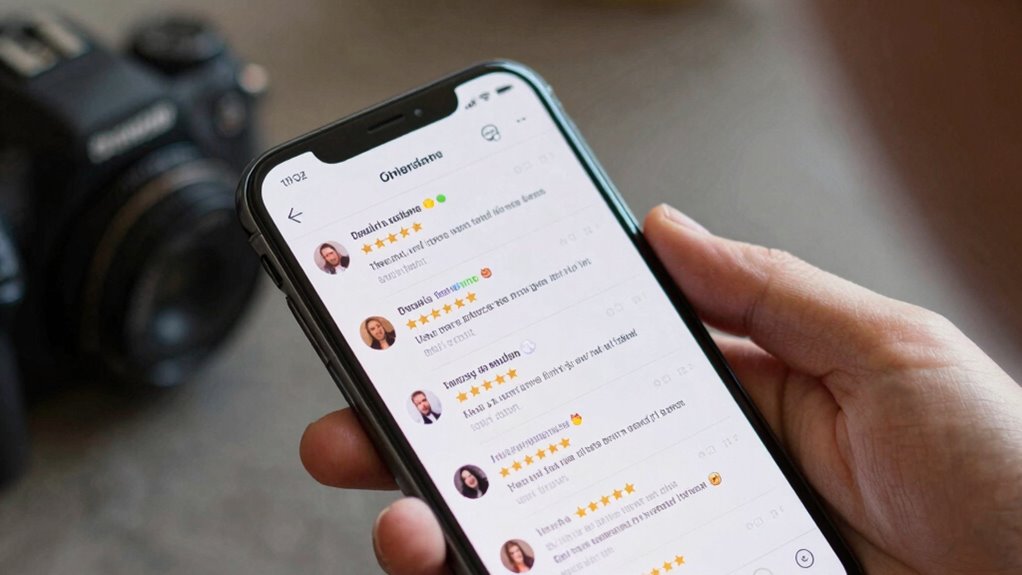
Have you ever come across a review that just seems too perfect or overly enthusiastic? That’s a red flag for review manipulation and can hurt consumer trust. Here are some real-life examples to watch for:
- Reviews that are overly generic, lacking specifics about the product or service.
- Multiple reviews posted in a short period, all praising the same features.
- Profiles with little activity or only review activity, indicating fake accounts.
- Extremely positive reviews without mention of any drawbacks.
Frequently Asked Questions
Can Fake Reviews Still Pass the 7-Second Pattern Test?
Yes, fake reviews can still pass the 7-second pattern test, but it’s less reliable for review detection. Savvy scammers adapt their tactics, making it harder for consumers to spot fakes quickly. Your consumer skepticism is essential; take extra time to analyze reviews, look for consistency, and verify details. Relying solely on quick pattern recognition isn’t enough anymore—combine it with critical thinking to better identify genuine feedback.
How Can I Verify a Review’s Authenticity Beyond Initial Impressions?
You can verify a review’s authenticity by checking verified sources and examining user profiles. For example, a detailed review with consistent activity across multiple products suggests credibility, while generic comments with no profile info raise suspicion. Always look for verified purchase badges and cross-reference reviews on trusted sites. This approach helps you identify genuine feedback and avoid fake reviews that might slip past initial impressions.
Are Certain Products More Prone to Fake Reviews Than Others?
Certain product types, like electronics, beauty products, and supplements, tend to be more prone to fake reviews because they generate high consumer interest and profit. Review patterns such as overly positive language, generic comments, or repetitive phrases often signal fake reviews. By paying attention to these patterns, you can better identify authentic feedback, especially on products that attract a lot of attention and have suspiciously similar reviews.
Does the Review Platform Influence the Likelihood of Fake Reviews?
Think of review platforms as castles with open gates—more credible platforms restrict reviewer anonymity, reducing fake reviews. You’re more likely to spot fakes on sites with strong review platform credibility because they verify identities carefully. Conversely, platforms that allow anonymous reviews can become playgrounds for fakery. Your best bet? Trust platforms that prioritize transparency and verification, making it harder for fake reviews to slip through unnoticed.
How Often Do Fake Reviews Successfully Deceive Consumers?
Fake reviews can deceive consumers surprisingly often, especially when review manipulation is subtle. Your natural skepticism helps you spot inconsistencies, but some fake reviews still manage to influence your decisions. If you’re unaware of common tricks, you might fall for convincing but false praise. Staying informed about review manipulation tactics increases your ability to judge reviews critically, reducing the chances of being misled by fake reviews.
Conclusion
Think of reviews as a garden—some blooms are genuine, while weeds try to hide. By mastering the 7-second pattern, you become a skilled gardener, quickly pulling out the weeds of fake reviews. Trust your instincts and look for red flags, language clues, and formatting tricks. With practice, you’ll cultivate a landscape of honest feedback, ensuring you make smarter choices and avoid getting fooled by counterfeit reviews. Stay sharp and keep your review radar tuned!