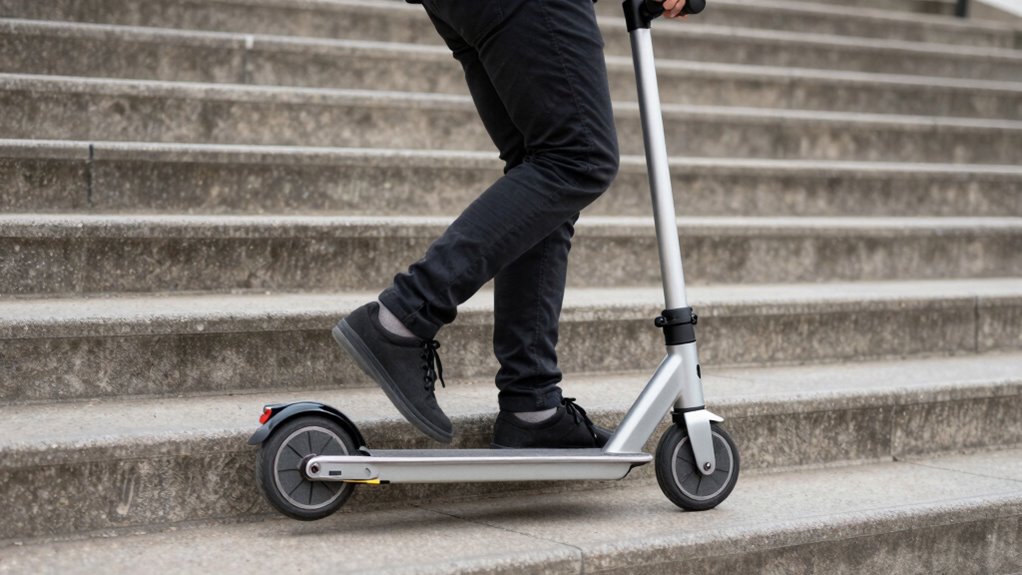

When carrying a scooter up stairs, focus on keeping your load close to your body for better balance and less strain. Find the folding points—usually hinges near the deck or handlebar—to collapse or carry it more easily. Use proper body mechanics: keep your back straight, bend your hips and knees, and use your leg muscles. Proper grip and posture keep you stable. If you stick to these tips, you’ll gain more confidence handling your scooter safely.
Key Takeaways
- Maintain proper weight distribution by holding the scooter close to your body with both hands for balance.
- Identify and fold along designated hinges or joints to reduce size and facilitate easier lifting.
- Keep your back straight, core engaged, and bend hips and knees to lift safely.
- Position the scooter centrally in your grip to ensure stability during stair ascent.
- Plan your route, move slowly, and use your legs to avoid imbalance and prevent injury.
electric scooter folding handlebar
As an affiliate, we earn on qualifying purchases.
As an affiliate, we earn on qualifying purchases.
Why Proper Weight Balance Is Key When Carrying a Scooter Upstairs
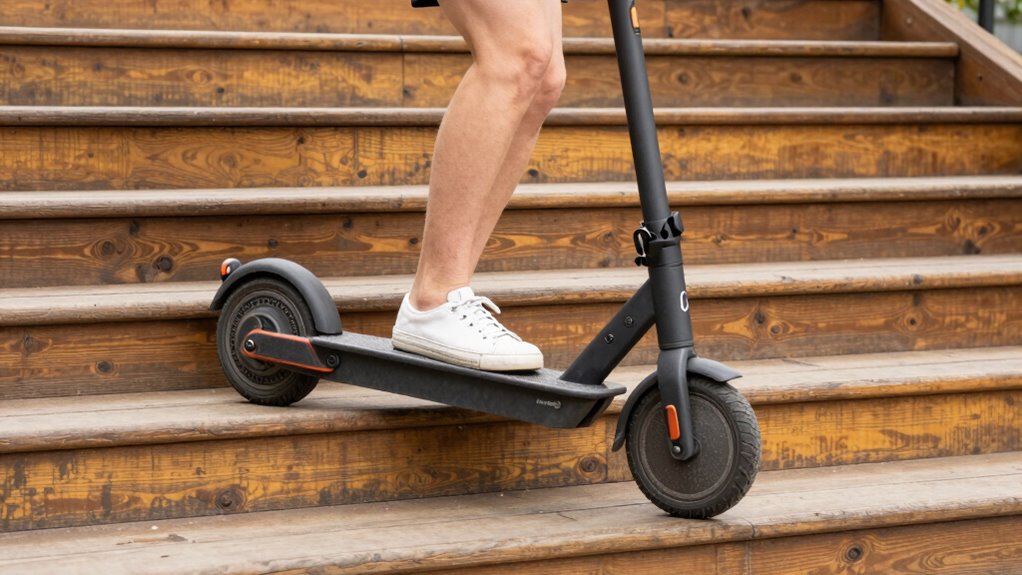
When carrying a scooter upstairs, maintaining proper weight balance is essential to prevent injury and make the process easier. Your focus should be on correct weight distribution, ensuring the load doesn’t strain one side or your back. Use balancing techniques like keeping the scooter close to your body and holding it with both hands equally. Shift your weight smoothly as you ascend, avoiding sudden movements that could cause imbalance. Distributing the weight evenly reduces fatigue and stabilizes your posture, making it less likely to slip or drop the scooter. Remember, your goal is to keep the center of gravity aligned with your body’s natural stance. Proper weight balance not only protects you but also improves control, making stair-climbing safer and less exhausting. Paying attention to weight distribution enhances stability and reduces the risk of injury during stair navigation. Additionally, understanding the importance of center of gravity can help you maintain better control and balance throughout the lift. Being aware of your body mechanics can further assist in executing the lift safely and efficiently, especially when considering factors like proper lifting techniques to minimize strain. Proper body positioning and awareness of injury prevention strategies are also crucial for a safe and effective stair-climbing process.
As an affiliate, we earn on qualifying purchases.
How to Find the Folding Points on Your Scooter
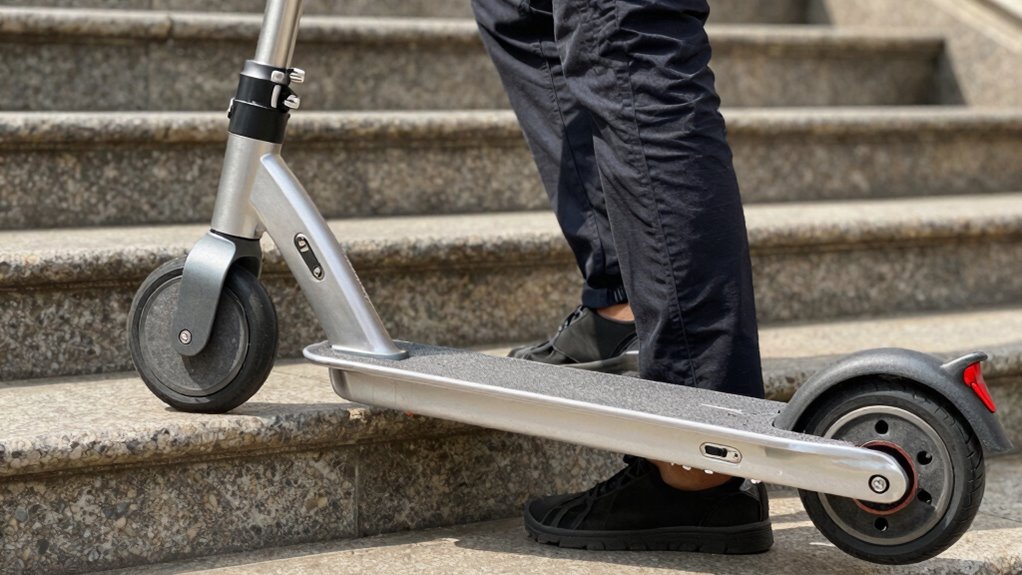
To find the folding points on your scooter, start by inspecting the frame carefully for hinges or joints designed for folding. The folding mechanism typically involves specific hinge locations that allow the scooter to collapse for easier carrying. Look closely at the frame for visible seams or moving parts. A smart home integration feature in some modern scooters allows remote locking or unlocking of the folding mechanism, enhancing security and convenience. Additionally, understanding the industry trends in scooter design can help you anticipate common folding features for different models. Recognizing European cloud innovation in manufacturing can also lead to more reliable and sustainable scooter designs. Being aware of time zone information can be useful if you are planning to travel with your scooter across different regions. Moreover, checking the manufacturing standards can ensure the durability and safety of your scooter’s folding points. | Step | What to Check | Tip |
| ——- | —————- | ——- |
|---|---|---|
| 1 | Hinge location | Usually near the deck or handlebar stem |
| 2 | Folding mechanism | Confirm how parts fold or collapse |
| 3 | Locking features | Ensure the hinges unlatch smoothly |
As an affiliate, we earn on qualifying purchases.
Mastering Body Mechanics for Safe Lifting and Support
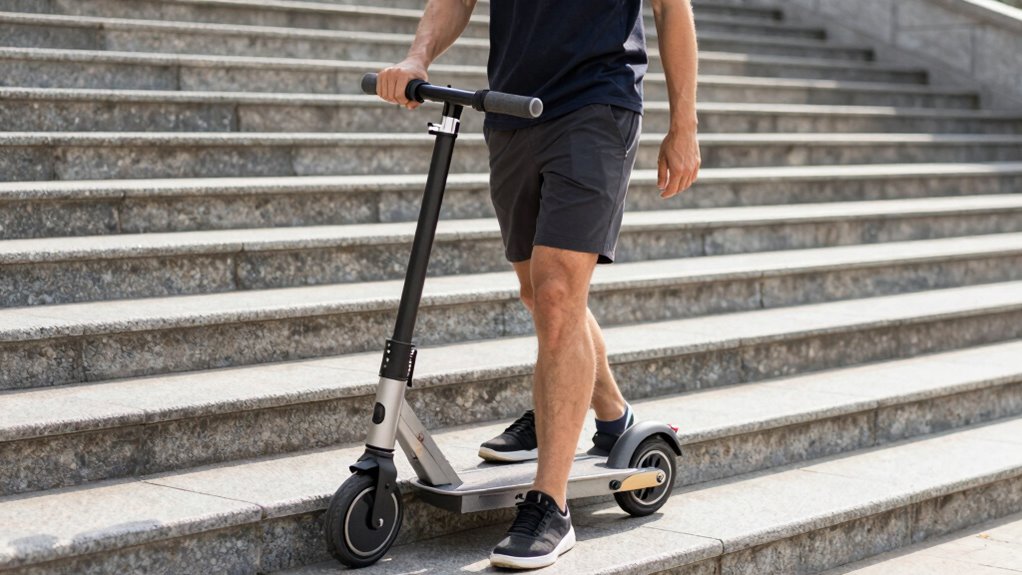
To lift and support your scooter safely, you need to focus on proper body mechanics. Keep your posture aligned and use balanced lifting techniques to prevent strain. Also, make certain you have a secure grip to maintain control and avoid accidents. Incorporating smart automation features can help coordinate lifting tasks more efficiently and safely. Additionally, understanding weight distribution is crucial for maintaining balance during the lift, especially considering the mass of the scooter and how it impacts your center of gravity. Properly assessing lifting techniques can further reduce the risk of injury and ensure a smoother process. Being aware of body positioning can also significantly improve your safety and effectiveness during the lift.
Proper Posture Alignment
Proper posture alignment is essential for safely lifting and supporting a scooter up stairs. Maintain an ergonomic posture by keeping your back straight and shoulders relaxed. Focus on maintaining good spinal alignment, avoiding hunching or twisting your torso. Engage your core muscles to support your spine and distribute weight evenly. Keep the load close to your body to reduce strain and improve stability. Verify your feet are shoulder-width apart for a solid base, and bend at your hips and knees rather than your waist. This alignment helps prevent injury and allows you to lift more effectively. Remember, your goal is to keep your body in a balanced, aligned position throughout the lift, minimizing stress on your muscles and joints. Incorporating proper style and technique can further enhance your safety and efficiency during the process. Additionally, practicing proper lifting mechanics can help you develop safer habits and reduce fatigue during repetitive tasks. Being mindful of body mechanics ensures that each movement supports your overall safety and minimizes injury risk. Developing awareness of weight distribution can also improve your lifting technique and stability during stair navigation.
Balanced Lifting Techniques
Mastering balanced lifting techniques means aligning your body correctly to move heavy objects safely. Focus on proper weight distribution by keeping the load close to your body, which helps maintain stability and reduces strain. Use ergonomic lifting by bending at your hips and knees, not your waist, to engage your leg muscles instead of your back. Keep your feet shoulder-width apart to create a solid base, and avoid twisting your torso during the lift. Engage your core muscles to support your spine and ensure even weight transfer. When lifting, breathe steadily and lift smoothly without jerking. Incorporating body mechanics can further enhance your lifting safety and effectiveness. Developing attention to detail in your movements can help you identify potential risks before they lead to injury. Additionally, understanding weight balance strategies is essential for safe and effective lifting. Being mindful of lifting posture ensures you maintain proper alignment throughout the process, and paying attention to body positioning can make a significant difference in preventing strain.
Secure Grip Strategies
Ensuring a secure grip is essential when lifting or supporting a heavy object like a scooter, especially on stairs. A firm hold prevents slips and maintains control, reducing the risk of injury. To maximize safety, focus on proper hand placement and keep your hands dry and clean. Remember, battery safety is vital—avoid pinching or damaging the battery while gripping. Also, check that tires are well-maintained to prevent unexpected slips. Use gloves if necessary for extra grip and protection. Keep your core engaged to avoid strain and maintain balance. Proper grip strategies help distribute weight evenly, making the process smoother and safer. Paying attention to weight distribution ensures you manage the load effectively and reduces unnecessary strain. Additionally, understanding the importance of body mechanics can greatly improve lifting efficiency and safety. Incorporating principles of Free Floating can help in balancing weight and reducing fatigue during such tasks.
As an affiliate, we earn on qualifying purchases.
Best Techniques to Support and Lift Your Scooter
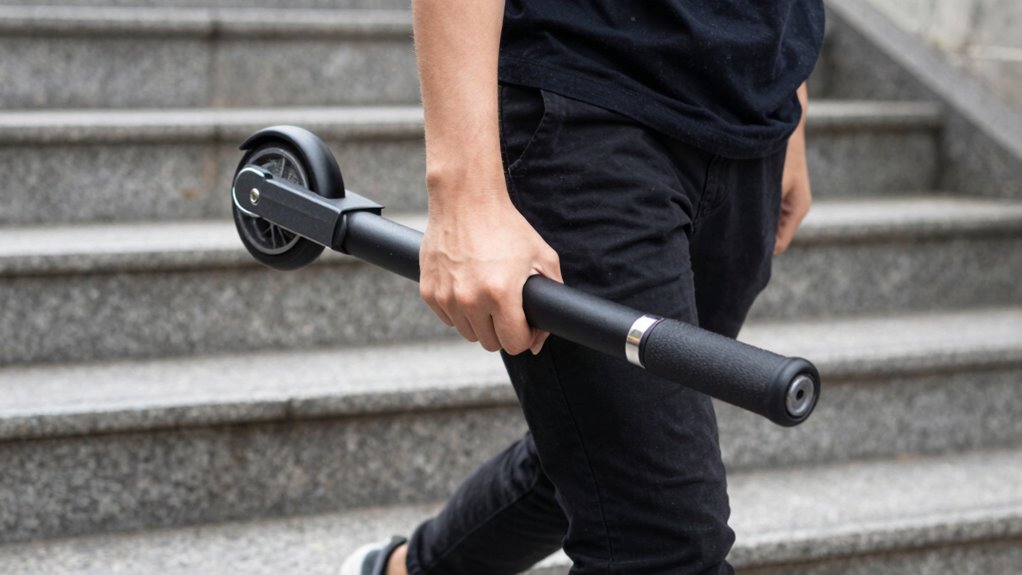
To support and lift your scooter effectively, focus on proper weight distribution so you don’t strain your back. Use ideal folding and grip strategies to keep the scooter stable and secure in your hands. Mastering these techniques makes stair climbing safer and easier.
Proper Weight Distribution Techniques
When lifting and supporting your scooter up stairs, proper weight distribution is essential to prevent injury and protect your equipment. Focus on maintaining your scooter’s center of gravity close to your body, which helps stabilize weight and reduces strain. Keep the load balanced between your arms and shoulders, avoiding uneven weight shifts that can cause imbalance. Use your legs to lift, not your back, to maximize strength and minimize injury risk. Remember to keep the folded scooter close to your torso for better control. Proper weight distribution ensures you don’t overexert yourself and keeps the scooter secure during the climb.
- Keep the scooter centered in your hands
- Maintain a low, stable stance
- Distribute weight evenly between arms
- Use your legs for lifting
- Keep the center of gravity aligned
Optimal Folding and Grip Strategies
Folding your scooter properly and adopting the right grip techniques can make lifting and supporting it much easier. Use ergonomic handles to guarantee a comfortable, secure grip that reduces fatigue and improves control. When lifting, position the scooter so that its center of gravity aligns with your body, promoting better weight distribution. This helps prevent strain on your arms and back, making the climb smoother. Keep a firm hold on the handles, engaging your core muscles to support the weight. Fold the scooter to minimize its size and shift the load closer to your body. By combining ergonomic handles with effective weight distribution, you’ll maintain balance and reduce effort, making stair navigation safer and less tiring.
What’s the Right Handhold and Carrying Position?
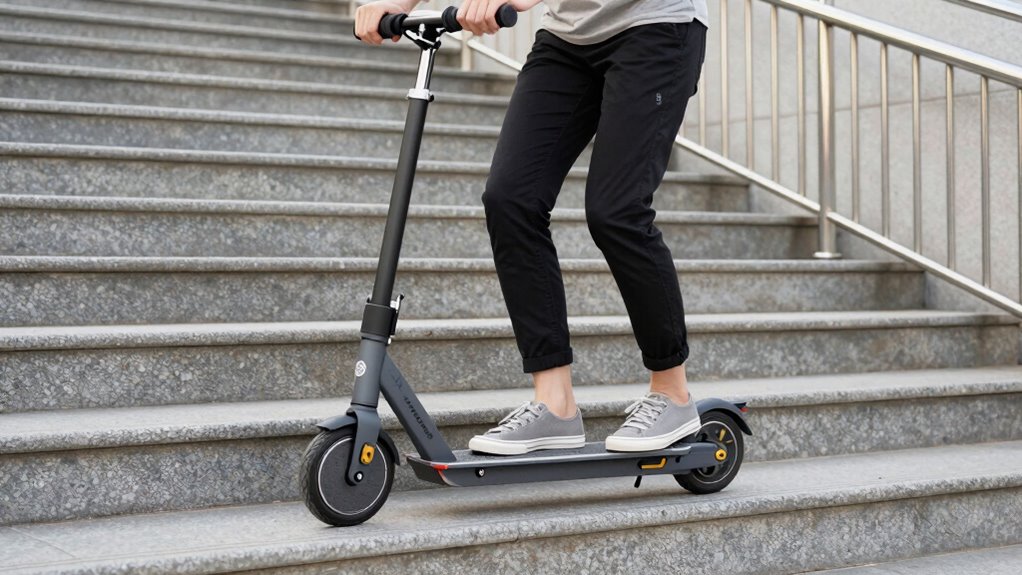
Choosing the right handhold and carrying position is essential for maintaining balance and reducing strain while lifting a scooter up stairs. Your hand grip should be firm but comfortable, ensuring control without causing fatigue. Keep your carrying posture upright, engaging your core to support your back. Position the scooter close to your body to improve stability and reduce strain on your arms. Use both hands if possible, one gripping the main frame and the other supporting the deck, to distribute weight evenly. Adjust your grip as needed to accommodate stair height and your comfort level. Remember, a good hand grip and proper carrying posture help prevent slips and injuries. Focus on balancing the load and keeping your movements smooth for a safer, easier climb.
Tips for Navigating Tight Spaces and Landing Edges Safely
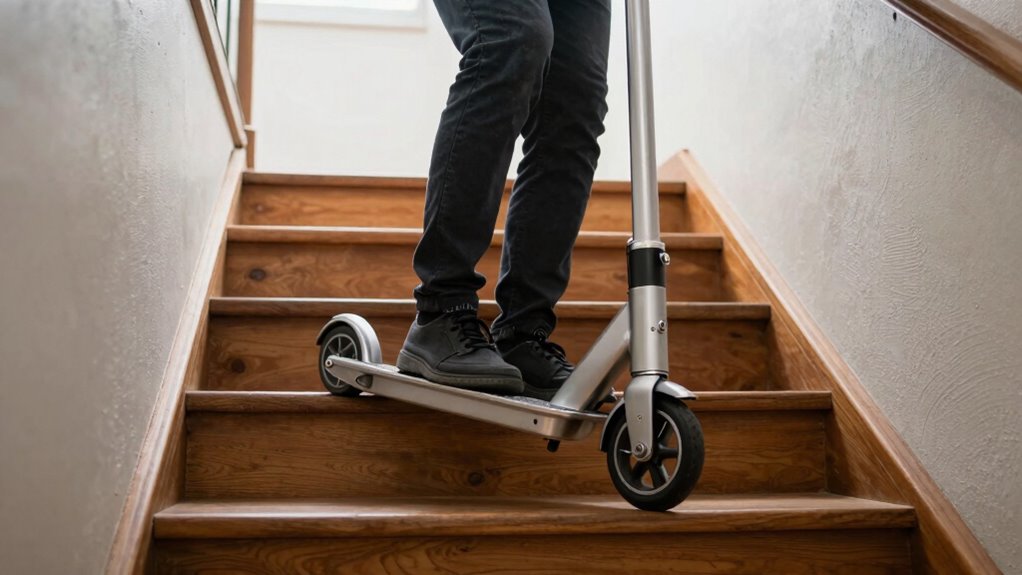
Moving through tight spaces and landing edges requires careful attention to your grip and movement. Use advanced ergonomic techniques, such as maintaining a steady, balanced posture and keeping your elbows close to your body to reduce strain. When orchestrating narrow areas, plan your route ahead of time to avoid sudden turns or awkward angles. Consider lightweight scooter options, which make maneuvering easier and reduce fatigue. Keep a firm but comfortable grip, ensuring your hands stay secure without causing discomfort. Slow down as you approach edges or tight corners, adjusting your body position to maintain control. Practice controlled movements, using your core to stabilize yourself. These techniques help you stay safe, minimize the risk of slips, and make carrying your scooter through challenging spaces more manageable.
Common Mistakes to Avoid When Carrying a Scooter Upstairs
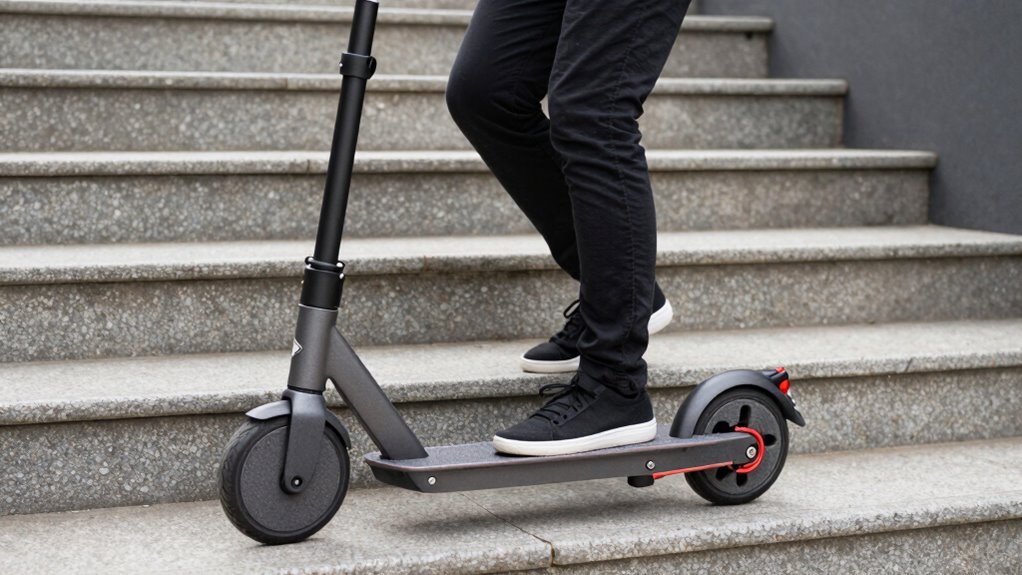
One common mistake to avoid when carrying a scooter upstairs is failing to maintain proper balance and posture. Poor balance can lead to accidents or damage to the scooter, especially when maneuvering parking challenges or tight spaces. Also, don’t ignore the importance of battery maintenance; a heavy, improperly balanced load can strain the battery compartment or dislodge components.
To stay safe, avoid these pitfalls:
- Leaning too far forward or back
- Carrying the scooter with one hand only
- Overestimating your strength
- Ignoring the scooter’s folding points
- Neglecting to plan for parking challenges
Maintaining good posture helps prevent injury, protects your scooter, and ensures smooth movement up stairs.
How to Fold and Unfold Your Scooter for Easy Transport
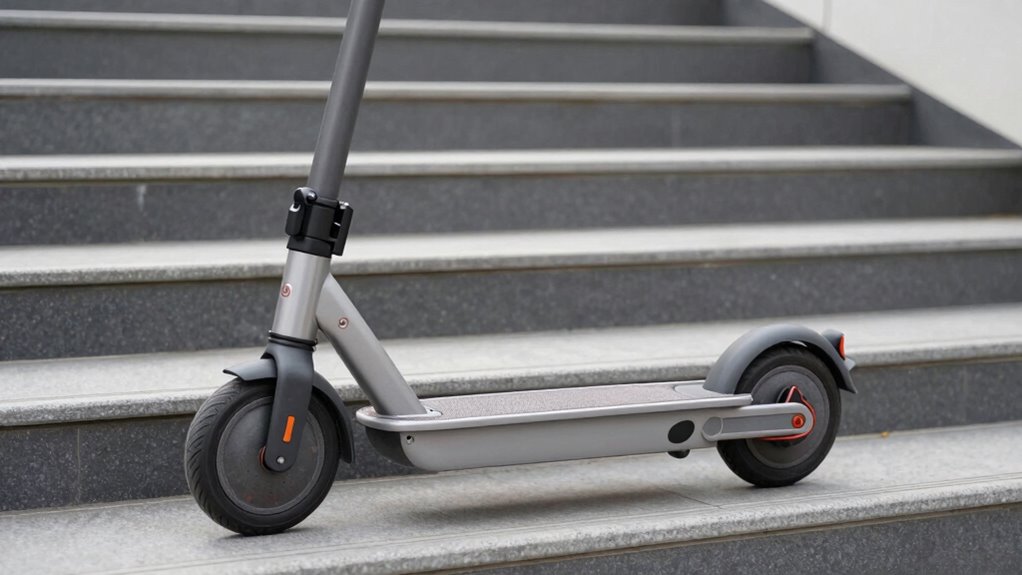
Folding and unfolding your scooter correctly makes transporting it much easier and safer. Start by turning off the scooter and ensuring the battery is properly maintained—this prevents damage and prolongs its lifespan. To fold, disengage the folding mechanism usually located near the stem or deck, then carefully collapse the stem until it clicks into the folded position. When unfolding, reverse the process, making sure the mechanism locks securely. Keep your scooter accessories like lights or reflectors in mind; they should be positioned correctly after unfolding. Proper folding not only makes carrying up stairs simpler but also reduces strain on the scooter’s components. Regularly checking the folding points and battery ensures your scooter remains in top condition for easy, safe transport every time.
Tools and Accessories That Make Carrying Your Scooter Easier
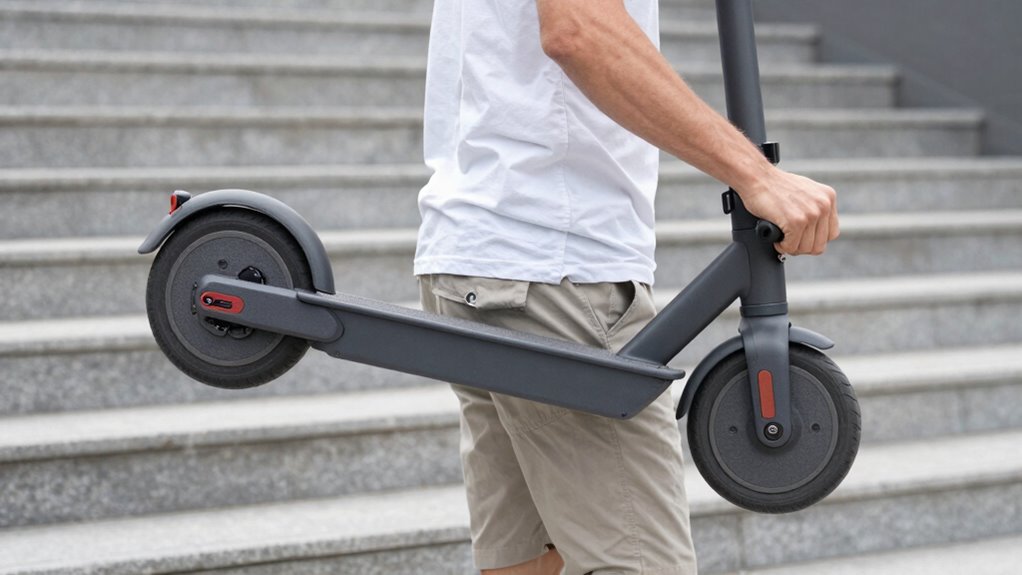
Using the right tools and accessories can considerably ease the process of carrying your scooter, especially up stairs or over long distances. These accessories help improve weight balance, reduce strain, and guarantee your scooter stays in prime condition. A sturdy carrying strap distributes weight evenly, making it easier to lift and carry. A portable tire pump is essential for quick tire inflation, preventing flats and ensuring smooth rides. Battery maintenance tools like a voltmeter or charger help keep your scooter’s power source reliable, reducing the effort needed to move it. Additionally, using a lightweight dolly or hand truck can save your strength. Finally, a grip pad or handle covers improve your hold, providing better control during transport.
When to Ask for Help or Use Alternative Carrying Methods
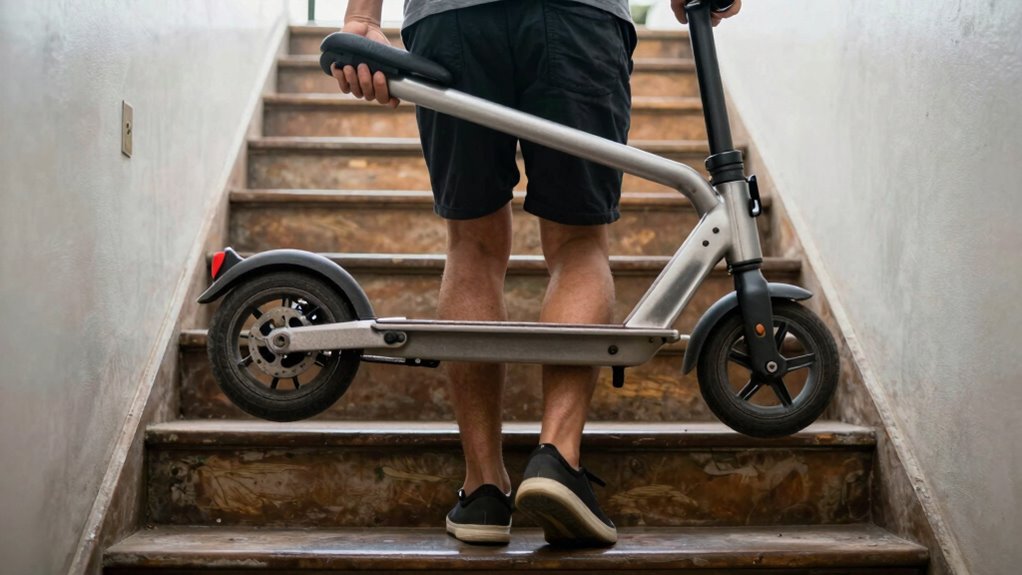
Carrying a scooter up stairs can become risky or exhausting if you’re dealing with heavy weight, awkward angles, or long distances. Knowing when to ask for help or switch to alternative methods is essential for safety. If you feel strain or instability, it’s time to seek assistance or consider a different approach. Proper assistance timing prevents injuries and makes the process easier.
| Situation | Recommended Action |
|---|---|
| Heavy or awkward load | Ask for help or use a dolly |
| Long staircases | Use an elevator or ramp |
| Feeling unbalanced or tired | Switch to a two-person carry |
| Difficult folding points | Use straps or a carrying bag |
| Uncertain about safety | Opt for professional help |
Frequently Asked Questions
How Do Different Scooter Models Affect Carrying Techniques?
Different scooter models affect your carrying techniques mainly because of their weight and folding mechanisms. Heavier scooters require you to balance the weight carefully and may demand a two-handed grip, while lighter ones are easier to carry single-handed. Folding mechanisms vary; some fold compactly, making it simpler to carry, whereas others need more effort to fold and transport. Adjust your technique based on your scooter’s weight and how it folds for safety and comfort.
Are There Specific Accessories That Improve Weight Distribution?
Think of your scooter like a backpack; the right accessories keep it balanced. Ergonomic straps and balance aids are perfect for this. I once used ergonomic straps on my foldable scooter, and it felt like carrying a lightweight parcel instead of a bulky load. These accessories help distribute weight evenly, making stairs easier to navigate, and prevent strain. They’re a simple upgrade that makes a big difference in carrying comfort.
What Safety Gear Should I Wear When Carrying a Scooter Upstairs?
When carrying a scooter upstairs, you should wear protective gloves to improve your grip and protect your hands. Opt for footwear with good grip to prevent slipping and ensure stability. Consider using a back support belt for added safety and comfort. Always lift with your legs, keep your back straight, and take your time. These safety measures help prevent injuries and make carrying your scooter safer and more manageable.
How Can I Train to Increase My Lifting Strength Safely?
To safely increase your lifting strength, focus on proper lifting techniques and consistent strength training. Start with lighter weights, keeping your back straight and engaging your core, then gradually increase the load. Incorporate exercises like squats and deadlifts to build overall strength. Be sure to rest adequately between sessions and listen to your body to prevent injury. Consistent practice and proper form will help you lift heavier safely over time.
Can Carrying a Scooter Upstairs Damage My Stairs or Environment?
Think of your stairs as the backbone of your home’s harmony. Carrying a scooter upstairs won’t usually damage the staircase if you’re careful, but repeatedly overloading or dropping it can weaken its durability over time. While your actions have minimal environmental impact, always lift with proper technique to safeguard the staircase’s integrity and ensure longevity, avoiding unnecessary stress that could cause cracks or wear.
Conclusion
Carrying a scooter upstairs can be manageable when you understand proper weight balance and folding points. Did you know that improper lifting can cause injuries in over 30% of scooter carriers? By mastering body mechanics, using the right techniques, and knowing when to ask for help, you’ll make the process safer and easier. Keep practicing these tips, and you’ll prevent strain while keeping your scooter in top shape for your next adventure.