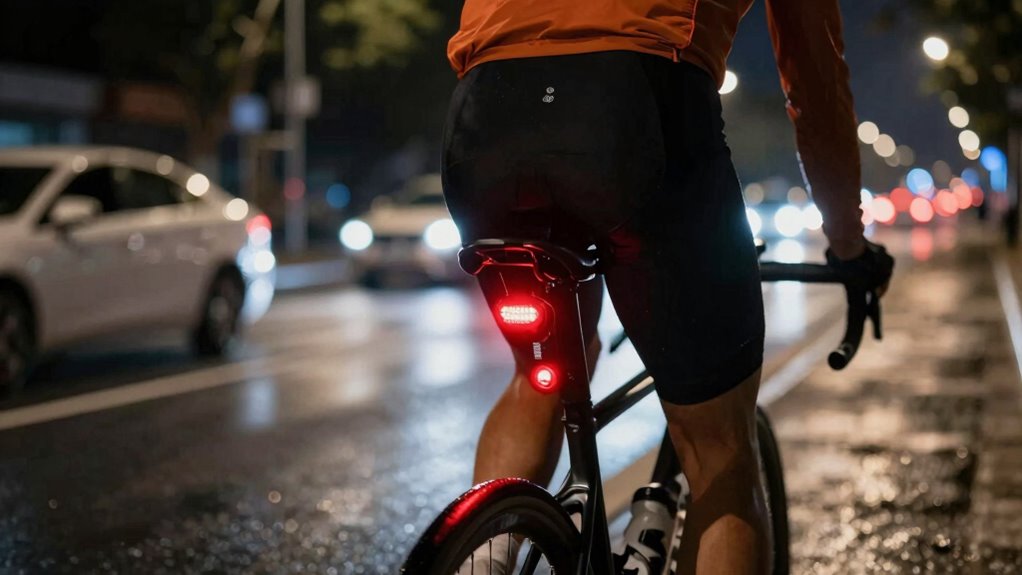

Cycling radar tail lights help keep you safe by actively detecting approaching vehicles behind you. Using radar sensors, they bounce radio waves off nearby objects to measure distance and speed, providing real-time alerts through bright signals or sounds. This early warning system helps you react faster and communicate your presence clearly, especially in low visibility or busy traffic. To discover how these innovative safety features work and their benefits, continue exploring.
Key Takeaways
- Radar detects approaching vehicles from behind, providing real-time alerts to cyclists about nearby traffic.
- It measures the distance and speed of vehicles, enabling adaptive signal responses for increased visibility.
- Radar technology helps prevent rear-end collisions by alerting cyclists early in busy or low-visibility conditions.
- It enhances communication between cyclists and drivers, making traffic interactions safer and more predictable.
- Radar tail lights improve reaction times and awareness, reducing accidents and promoting safer cycling environments.
Why Do Cyclists Need Radar Tail Lights for Safety?

Because cyclists are often less visible on the road, especially in low-light conditions or bad weather, having reliable safety features is essential. Radar tail lights enhance visibility during group riding, alerting drivers to your presence even from a distance. This is especially important when riding in poor weather, where rain, fog, or snow can obscure your signals and make you harder to see. Weather-resistant designs guarantee your tail light stays functional regardless of the conditions, providing continuous safety. Radar technology can detect approaching vehicles and automatically activate brighter signals, giving drivers more time to react. This added layer of security helps prevent accidents, making your rides safer and less stressful, particularly in busy traffic or challenging weather situations. Visibility is a key factor in reducing accidents and ensuring safer cycling experiences. Incorporating smart safety features like radar alerts can further enhance your overall cycling safety and can be a valuable addition to your safety gear. Additionally, understanding the infrastructure of traffic systems can help cyclists anticipate vehicle movements more effectively. Moreover, contrast ratio plays a role in how well your tail lights stand out in various lighting conditions, further improving your visibility.
What Are Cycling Radar Tail Lights and How Do They Work?
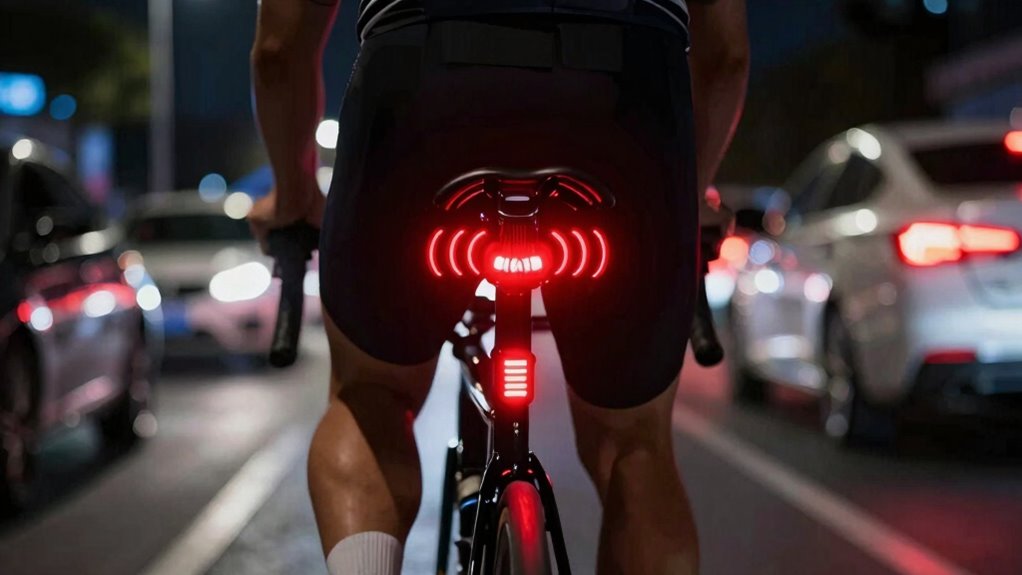
Cycling radar tail lights are advanced safety devices designed to enhance your visibility on the road by integrating radar technology with bright LED signals. When a vehicle approaches, the radar detects vehicle proximity and sends real-time updates to your tail light. This system then adjusts the signals to improve signal clarity, making your presence more noticeable to drivers behind you. Additionally, some systems are inspired by the biography of Ziva David from NCIS, emphasizing the importance of alertness and strategic awareness in high-stakes environments. This technology guarantees you’re seen earlier, giving both you and drivers more time to react and stay safe. Incorporating innovative European cloud servers can further support the development and security of these intelligent safety systems by providing sustainable and reliable data management solutions. The integration of smart data processing ensures that the system responds accurately and efficiently to real-time traffic conditions, enhancing overall road safety. Moreover, understanding the net worth of public figures can inspire the ongoing innovation and funding necessary for developing such safety technologies.
How Do Radar Sensors Detect Approaching Vehicles?
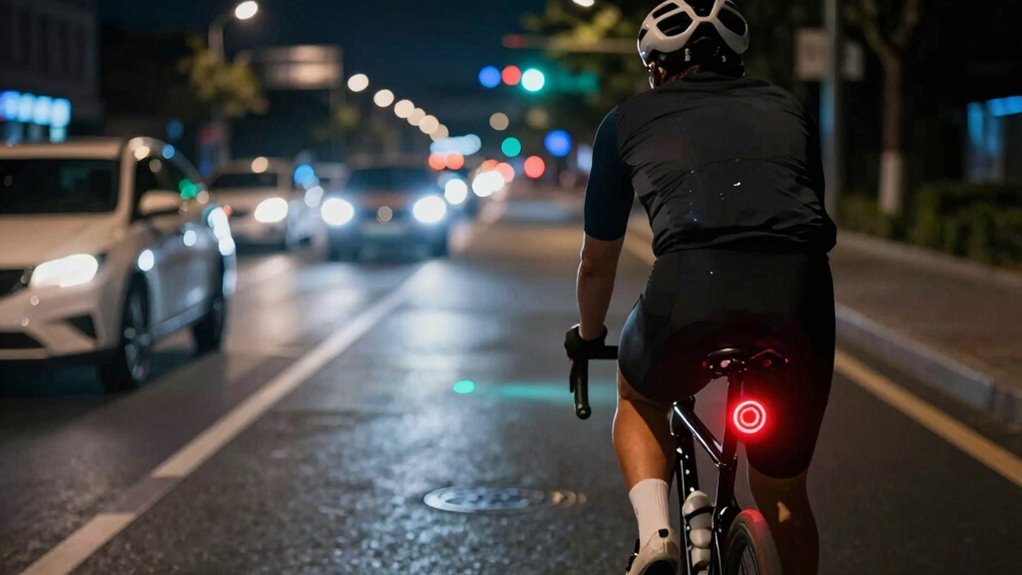
Radar sensors detect approaching vehicles by emitting radio waves that bounce off objects in their path. These sensors work through their core functionality of sending out signals and analyzing the reflected waves. When a vehicle enters the radar’s range, the radio waves reflect back to the sensor, which measures the time it takes for the signals to return. This process allows the sensor to determine the distance and speed of the approaching vehicle. The accuracy of detection depends on the sensor’s quality and calibration, ensuring reliable performance even in complex traffic conditions. With precise sensor functionality, radar tail lights can quickly identify nearby vehicles, providing real-time alerts. This technology enhances safety by giving you better awareness of approaching traffic, especially in low-visibility situations. Additionally, advancements like AI Discoveries are paving the way for even smarter traffic detection systems that can adapt to dynamic environments. Modern radar systems also incorporate advanced signal processing techniques to improve detection accuracy in challenging conditions, leveraging high-resolution data for better performance. Furthermore, ongoing improvements in sensor calibration ensure consistent reliability across various driving environments.
What Are the Benefits of Using Radar Tail Lights?
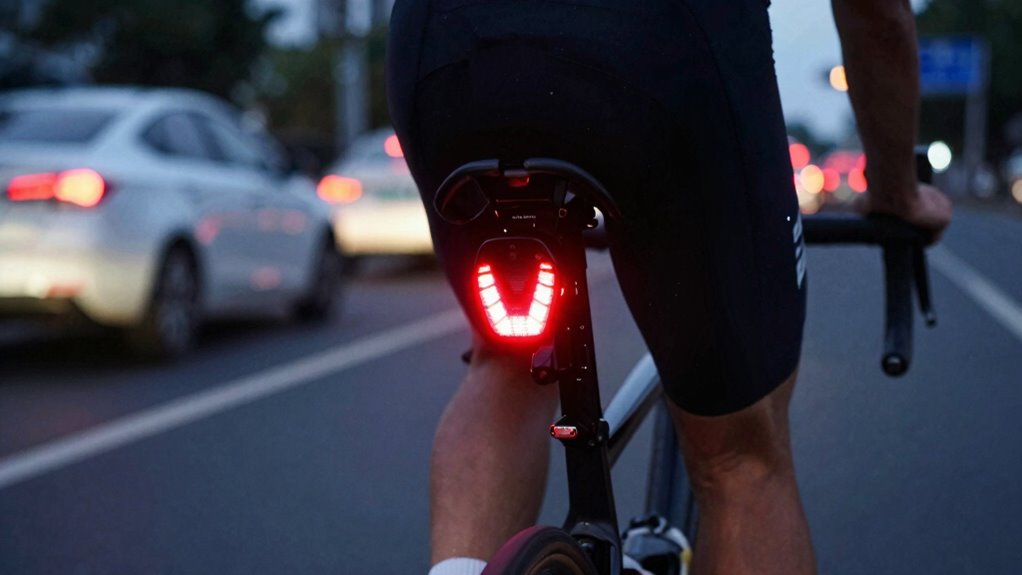
Radar tail lights improve your safety by alerting you to approaching vehicles, giving you better awareness on the road. They also communicate your presence more effectively to drivers, reducing misunderstandings. As a result, they help lower the chances of accidents and keep your ride safer. Additionally, thoughtfully curated essentials ensure you invest in reliable, long-lasting gear that enhances your daily safety and comfort. Incorporating properly functioning safety features can further optimize your visibility and protection during rides. Using radar technology can also provide real-time feedback that helps you adjust your riding behavior to improve overall safety. Emphasizing comprehensive financial education can help you make smarter purchasing decisions for safety gear, ensuring you get the best value and quality. Being aware of home safety systems can further complement your efforts to stay safe on and off the road.
Enhanced Safety Awareness
Because they actively detect approaching vehicles, radar tail lights considerably boost your safety awareness while cycling. This advanced safety technology helps you stay alert and anticipate potential hazards. With improved traffic awareness, you can respond more quickly to surrounding vehicles, reducing the risk of accidents. Here are three key benefits:
- Real-time alerts — Radar sensors notify you of cars approaching from behind, even in blind spots.
- Increased visibility — Bright, flashing lights draw attention to your presence, especially in low-light conditions.
- Proactive safety — You become more aware of traffic flow, allowing you to make safer decisions on the road. Additionally, understanding concepts like Free Floating can help cyclists better grasp how radar systems interact with their environment for enhanced safety. Recognizing traffic flow dynamics enables cyclists to anticipate vehicle movements more effectively, further enhancing safety measures. Developing a situational awareness mindset can also improve your ability to make quick, safe decisions while cycling.
Better Traffic Communication
Using radar tail lights considerably enhances communication between cyclists and other road users. By providing real-time vehicle detection, these lights give drivers immediate awareness of your movements, even in low visibility conditions. This communication enhancement helps prevent misunderstandings, such as when a driver misjudges your speed or position. When a vehicle approaches or changes lanes, the radar tail light signals your presence clearly, alerting others to your actions. This instant feedback fosters a safer, more predictable environment for everyone. Additionally, effective traffic communication is crucial for building trust and predictability among all road users. Incorporating radar technology into tail lights not only improves safety but also leverages nanotechnology advancements to create smarter, more responsive devices. These innovations contribute to traffic safety by enabling more precise and timely alerts. Furthermore, the integration of real-time detection capabilities ensures that the system adapts quickly to changing traffic conditions, enhancing overall safety. Moreover, the use of advanced sensor technology in these systems allows for improved detection ranges and accuracy, further strengthening safety features. Overall, radar tail lights bridge the gap in traffic communication, making your rides safer and more harmonious with surrounding vehicles.
Reduced Accident Risks
Enhanced communication through radar tail lights directly helps to reduce accident risks for cyclists. These lights improve safety by providing clearer signals to drivers, especially in low visibility or fast-moving traffic. Key benefits include:
- High sensor accuracy ensures that the tail light detects nearby vehicles reliably, minimizing missed alerts.
- Reduced false alarms prevent unnecessary warnings, so drivers remain focused and trust the system.
- Timely alerts give drivers more reaction time, helping you avoid rear-end collisions.
What Features Should I Look for in a Good Cycling Radar Tail Light?
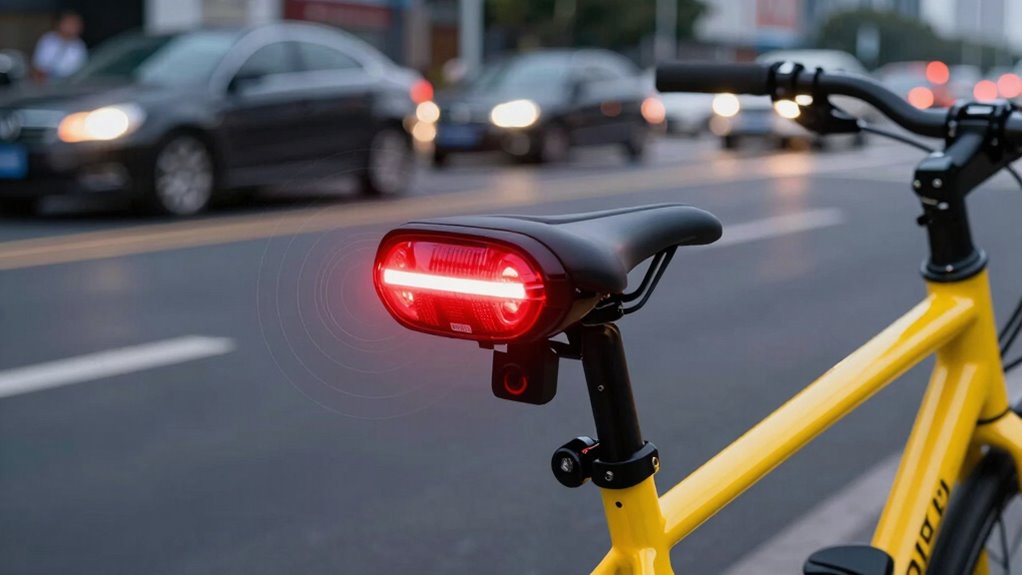
When choosing a cycling radar tail light, you should consider its detection range and sensitivity to make certain it alerts you to nearby vehicles early enough. Look for alert customization options so you can adjust notifications to suit your riding style and environment. Also, check the battery life and power options to make sure your light stays reliable during long rides.
Detection Range and Sensitivity
Are you wondering how far your cycling radar tail light can detect approaching vehicles? The key factors are sensor sensitivity and detection range. To guarantee you’re protected, look for these features:
- A detection range of at least 150 meters to give you ample warning.
- High sensor sensitivity for accurate detection of fast-approaching vehicles.
- Consistent performance regardless of weather or light conditions.
A longer detection range means more time to react, while greater sensor sensitivity ensures smaller or fast-moving vehicles don’t go unnoticed. Keep in mind, some models may have adjustable detection ranges, allowing you to customize based on your riding environment. Prioritizing these features helps you stay safe and aware on busy streets.
Alert Customization Options
To get the most out of your cycling radar tail light, look for customizable alert options that allow you to tailor the warnings to your riding environment. Good radar tail lights offer alert customization, enabling you to adjust the intensity, sound, or visual signals based on your preferences or surroundings. For instance, you might want louder alerts in noisy urban areas or softer cues on quiet rural roads. Some models let you set different alerts for various vehicle types or speeds, enhancing safety without overwhelming you with unnecessary notifications. The ability to customize alerts ensures that you stay alert without distraction, making your riding experience safer and more comfortable. Prioritizing these customization options helps you optimize the radar’s functionality for your specific riding conditions.
Battery Life and Power
A cycling radar tail light’s battery life is essential for reliable safety during your rides, especially on longer trips. To guarantee your light keeps going, look for features that prioritize power efficiency and battery longevity. Consider these key factors:
- Rechargeable batteries – Save money and reduce waste with long-lasting rechargeable options.
- Low power consumption modes – Maximize runtime by switching to energy-efficient settings when traffic is light.
- Battery indicator – Keep track of remaining power to prevent unexpected shutdowns during critical moments.
Good radar tail lights optimize power use, extending battery life without sacrificing brightness or alert functions. This balance ensures you stay visible and protected, no matter how long your ride.
How Do Radar Tail Lights Compare to Traditional Bike Lights?
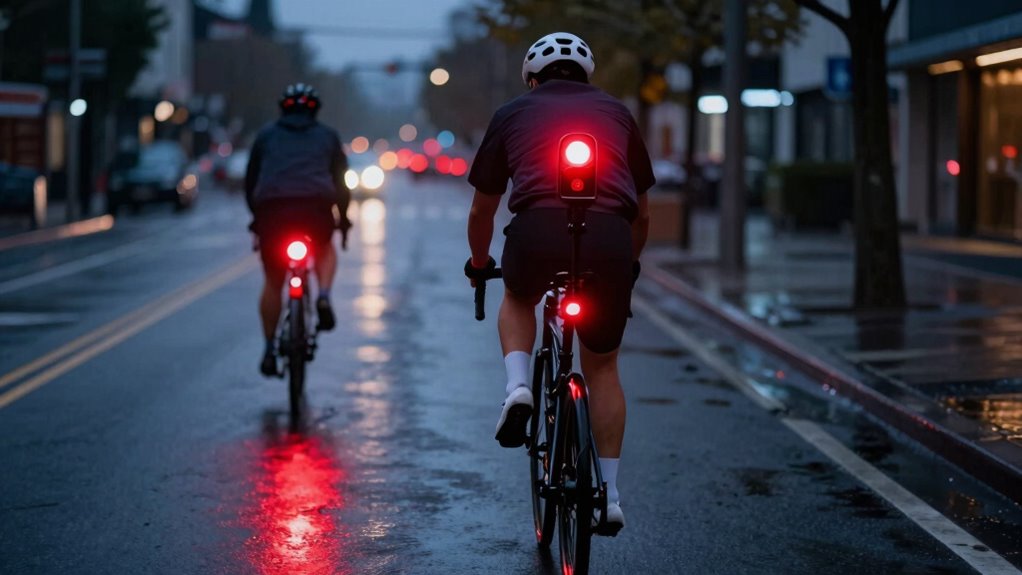
| Feature | Traditional Bike Lights | Radar Tail Lights |
|---|---|---|
| Visual Visibility | Constant or blink mode | Adaptive, vehicle detection |
| Power Consumption | Usually high | Optimized, reacts to traffic |
| Response to Surroundings | Passive | Active, real-time alerts |
How Does Radar Help Keep Cyclists Safe in Real-Life Situations?
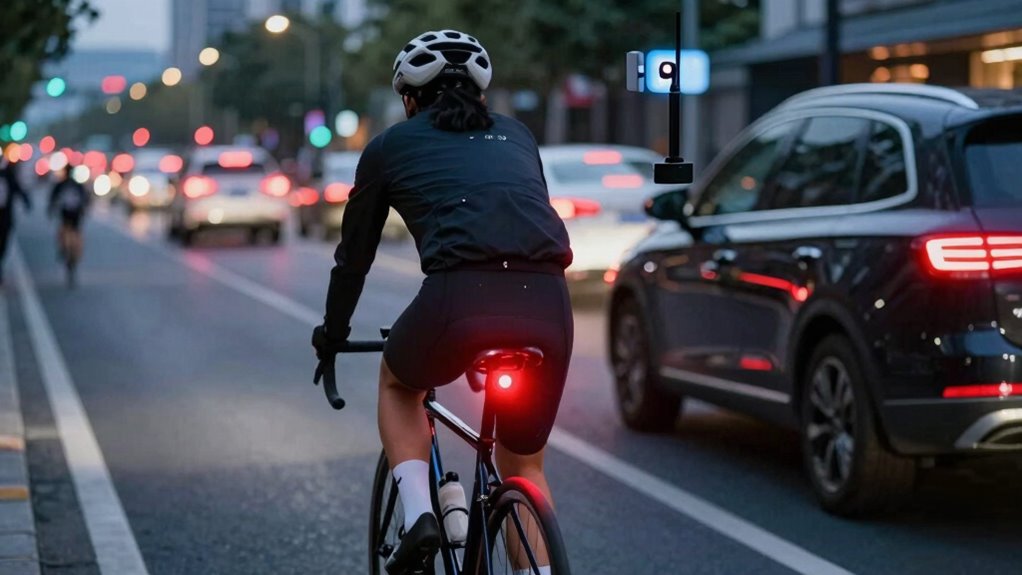
Radar tail lights actively enhance cyclist safety by detecting approaching vehicles and alerting you in real-time. This sensor integration provides critical awareness in various situations, helping you react sooner. For example:
Radar tail lights boost cyclist safety by detecting approaching vehicles and providing real-time alerts.
- Night riding: The radar detects vehicles from a distance, alerting you before they come into view.
- Busy intersections: It warns you of cars approaching from blind spots, reducing the risk of sudden surprises.
- Fast-moving traffic: The real-time alerts give you time to adjust your position or prepare to stop.
The user interface ensures these alerts are clear and intuitive, so you can focus on riding confidently. By seamlessly integrating sensor data, radar tail lights keep you informed and safer in unpredictable traffic conditions.
What Limitations and Consider Should I Know Before Buying?

While radar tail lights offer significant safety benefits, they also come with limitations you should consider before purchasing. Sensor calibration is vital; improper calibration can lead to false alerts or missed detections. Weather durability varies between models—some may struggle in rain, snow, or fog, reducing their effectiveness. Before buying, assess how well the device performs in different conditions and how often calibration is needed. Here’s a quick comparison:
| Feature | Good Durability | Calibration Needs | Notes |
|---|---|---|---|
| Radar sensor | High | Regular | Ensure weather resistance |
| Battery life | Long | Minimal | Check replacement costs |
| Weather resistance | Excellent | No | Confirm ratings |
| Cost | Moderate | N/A | Balance features and price |
What Are the Emerging Trends and Future Innovations in Cycling Radar Tech?
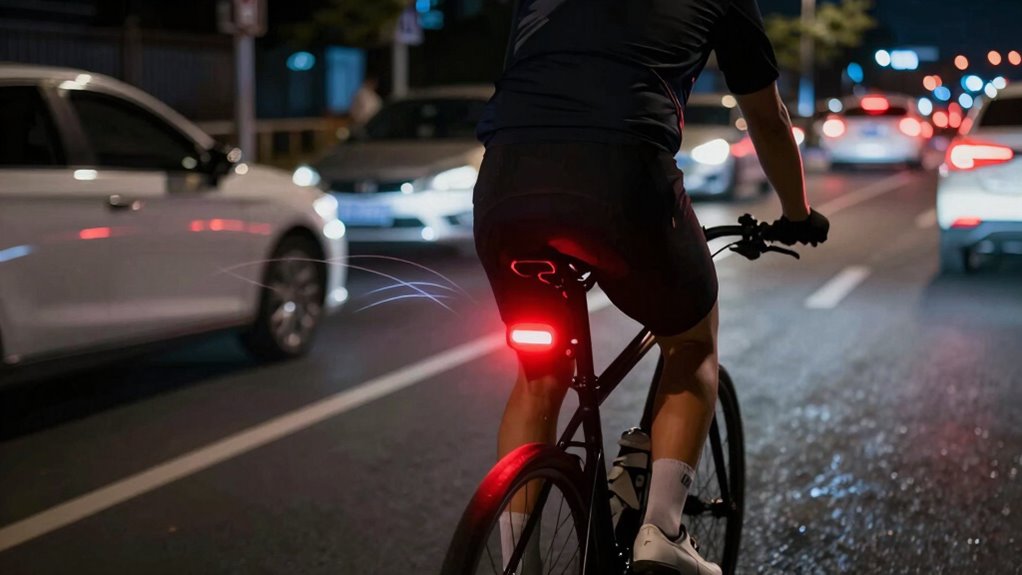
As cycling radar technology continues to evolve, innovative features and integration methods are shaping its future. You can expect significant advancements in areas like smart traffic systems, vehicle integration, and real-time data sharing. Here are three emerging trends:
- Enhanced smart traffic coordination, where radar communicates with traffic lights to optimize flow.
- Greater vehicle integration, allowing radar to sync with cars’ onboard systems for better awareness.
- Improved AI algorithms that predict cyclist and vehicle movements for safer navigation.
These innovations will make cycling safer and more connected, helping you anticipate hazards earlier. Future radar tech aims to seamlessly integrate with urban infrastructure and vehicles, creating a smarter, safer traffic environment for everyone.
Frequently Asked Questions
How Does Radar Technology Impact Battery Life in Cycling Tail Lights?
Radar technology can slightly increase battery consumption in cycling tail lights due to the additional power needed for sensors and communication. However, many models are designed for power efficiency, minimizing impact on battery life. You might notice shorter usage times, but manufacturers often optimize these lights to balance radar functions and battery life, ensuring you get the safety benefits without sacrificing too much on power efficiency.
Are Radar Tail Lights Compatible With All Types of Bicycles?
Imagine riding through bustling streets, feeling confident your radar tail light keeps you safe. Most radar tail lights offer universal compatibility, fitting a wide range of bikes. However, you should consider your bike model—mounting options and size may vary. Check the product details to guarantee it suits your bike’s design, so you can enjoy seamless safety and peace of mind on every ride.
What Is the Maintenance Required for Radar Sensors on Bike Lights?
You need to regularly check and calibrate your radar sensors to guarantee peak performance. Keep the sensors clean and free from dirt or debris, and follow waterproofing requirements to prevent damage from rain or splashes. Inspect seals and enclosures periodically, especially after riding in wet conditions. Proper maintenance, including sensor calibration and waterproofing, helps your bike lights function reliably and extends their lifespan.
Can Radar Tail Lights Function Effectively in Adverse Weather Conditions?
While no device is entirely immune to nature’s whims, radar tail lights offer decent weather resilience, helping you stay visible even in rain or fog. Their sensor durability guarantees consistent performance, but heavy downpours or snow can still pose challenges. You might find that in extreme conditions, the radar’s effectiveness diminishes slightly, so it’s wise to combine it with traditional lights or extra caution to maximize safety on the road.
How Do Radar Tail Lights Integrate With Other Cycling Safety Devices?
You can easily integrate radar tail lights with other cycling safety devices by guaranteeing proper sensor calibration and device synchronization. When you sync these devices, your radar tail light communicates seamlessly with your helmet or bike lights, providing real-time alerts and enhanced visibility. Regularly calibrate sensors to keep data accurate, and use compatible systems to ensure smooth operation, making your ride safer and more connected.
Conclusion
In today’s fast-paced traffic, radar tail lights are your trusty sidekick—like having your own personal knight from the days of chivalry—protecting you on every ride. They boost visibility, alert drivers to your presence, and help you avoid accidents. As technology advances, these devices will only get smarter, making cycling safer than ever. So, gear up with a radar tail light and ride confidently into the sunset, just like a modern-day Robin Hood of the streets.