
When you see a ‘low VOC’ label, it means the product releases fewer volatile organic compounds, which can improve indoor air quality and reduce health risks. However, ‘low VOC’ doesn’t mean free of VOCs—there are still some emissions, just at safer levels. Certification standards and testing methods guarantee these claims vary in reliability. If you want a clearer picture of what these labels truly mean for your health, there’s more to understand.
Key Takeaways
- “Low VOC” indicates products emit fewer VOCs but still release some within safety thresholds.
- Certifications and testing methods vary; they influence the reliability of “Low VOC” claims.
- “Zero VOC” aims for minimal emissions, but no label guarantees complete absence of VOCs.
- VOC labels do not reflect other indoor air factors like ventilation or pollutants from other sources.
- Consumers should review detailed product data, not just labels, for a comprehensive understanding of indoor VOC exposure.
What Are VOCs and Why Do They Matter Indoors?
Have you ever wondered what those chemical odors lingering in your home are? They’re caused by volatile compounds released into the air, known as VOCs. These compounds come from paints, cleaning products, furniture, and even electronics. Because VOCs easily vaporize at room temperature, they contribute notably to indoor pollution. Breathing in these fumes can cause headaches, dizziness, or respiratory irritation, especially in poorly ventilated spaces. Long-term exposure may lead to more serious health issues. Understanding what VOCs are helps you recognize the importance of controlling indoor pollution. By choosing low-VOC or no-VOC products, you can reduce these harmful emissions, creating a safer, healthier environment for everyone in your home. Being aware of VOCs is the first step to better indoor air quality, and indoor air quality improvements can significantly impact overall health and well-being. Additionally, proper ventilation plays a critical role in dispersing these compounds and maintaining healthier indoor air.
How Do ‘Low VOC’ Labels Differ From Zero or No VOC?
Understanding the difference between ‘Low VOC’ and ‘Zero or ‘No VOC’ labels can help you make smarter choices for indoor air quality. ‘Low VOC’ labels indicate products emit fewer chemical emissions but still release some VOCs, often within safety thresholds set by labeling standards. In contrast, ‘Zero’ or ‘No VOC’ labels suggest the product contains no detectable VOCs, aiming for minimal chemical emissions. However, ‘testing methods’ used to determine VOC levels can vary in sensitivity and accuracy, influencing the reliability of these claims. It’s important to recognize that ‘Low VOC’ does not mean no VOCs are present, just at lower levels. Accurate testing methods and certification standards also influence the accuracy of these labels. Always check the specific standards behind these labels to understand what’s truly being claimed and ensure your indoor environment stays healthy. Additionally, understanding how VOC emission levels are measured can help you better interpret these labels, especially considering different measurement techniques that impact reported results.
How Are VOC Levels Regulated and What Do Standards Guarantee?
Regulations and standards set clear limits on VOC emissions to help protect indoor air quality. These regulatory standards specify maximum allowable VOC levels for products and building materials, ensuring safer indoor environments. Certification processes verify that products meet these standards before they reach consumers. Agencies like the EPA or ASTM develop these guidelines, which manufacturers must follow to obtain certifications or labels indicating compliance. These Certification processes guarantee that products labeled as low VOC or compliant have undergone testing and meet specific emission limits. Emission testing ensures that products are accurately assessed for VOC emissions, providing transparency for consumers. Additionally, indoor air quality monitoring technologies can help detect VOC levels in real-time, enhancing overall safety. While regulations aim to reduce harmful VOC exposure, they also promote transparency and consumer confidence. Keep in mind that standards can vary by region and product type, so always check for official certifications to ensure the VOC levels are within safe limits.
What Do ‘Low VOC’ Labels Mean for Your Health and Air Quality?
When a product bears a ‘Low VOC’ label, it indicates that its emissions of volatile organic compounds are minimized, which can considerably benefit your health and indoor air quality. Reduced VOC emissions help improve indoor air safety by lowering the presence of potentially harmful chemicals. This can be verified through reliable certifications and standards**, which ensure that the product’s claims are accurate. This verification is crucial because VOC measurement methods can vary in accuracy and reliability. Decreased VOC levels not only benefit respiratory health but can also contribute to a more comfortable living environment overall. Additionally, rendering lard knowledge emphasizes the importance of understanding product components and how they impact health. Moreover, awareness of market regulations and industry standards helps consumers identify genuinely low-emission products. However, it’s essential to remember that product labeling accuracy varies; not all ‘Low VOC’ claims are equally strict or verified. While choosing products with reliable labels can enhance indoor air safety, it’s wise to verify certifications and standards. Ultimately, understanding what ‘Low VOC’ truly means helps you make informed decisions that support a healthier living environment**.
What Factors Should You Consider When Choosing Low VOC Products?
Choosing low VOC products involves more than just checking for a label; you need to contemplate the credibility of the certification, the product’s ingredients, and how it’s used in your space. Reliable product labeling helps identify products with genuinely low chemical emissions, but not all labels are equally trustworthy. Review the certification organizations and their standards to ensure the claims are credible. Pay attention to the ingredients listed—certain chemicals can still emit VOCs even if labeled as low VOC. Additionally, understanding VOC emissions and how they vary based on product composition can help you better assess the true impact of the products you choose. It is also helpful to consider user consent management and how your choices align with your preferences for indoor air quality. Also, consider how you’ll use the product: ventilation, surface area, and application method influence indoor air quality. Proper air purifier maintenance ensures that the device continues to operate efficiently, effectively reducing VOCs and other pollutants. By evaluating these factors, you make informed choices that effectively reduce chemical emissions and improve your indoor environment.
Are ‘Low VOC’ Products Always Safer? Limitations to Know
Although ‘Low VOC’ labels suggest a product is safer, they don’t guarantee it’s completely harmless. These labels can be misleading because of limitations in labeling accuracy and variations in chemical exposure. Some products labeled as low VOC still emit other harmful chemicals or volatile compounds not regulated or tested thoroughly. Manufacturers may also differ in how they measure VOC content, leading to inconsistencies. Additionally, low VOC doesn’t mean zero emissions; even small amounts can affect sensitive individuals or indoor air quality over time. Chemical emissions can vary based on factors like temperature and humidity, which are often not reflected in the label. The presence of indoor air pollutants from other sources can compound the effects, making it difficult to assess safety based solely on VOC levels. Relying solely on these labels might give you a false sense of safety. To truly protect yourself, it’s important to understand that ‘Low VOC’ doesn’t mean chemical exposure is eliminated, only reduced. Always look for comprehensive information beyond just the label. Furthermore, indoor air quality can be impacted by various factors, making it essential to consider overall ventilation and air purification strategies. Recognizing the limitations of VOC testing can help consumers make more informed choices about product safety. Being aware of testing inaccuracies can also help in understanding the true safety of indoor products.
How Can You Reduce VOC Exposure in Your Home Effectively?
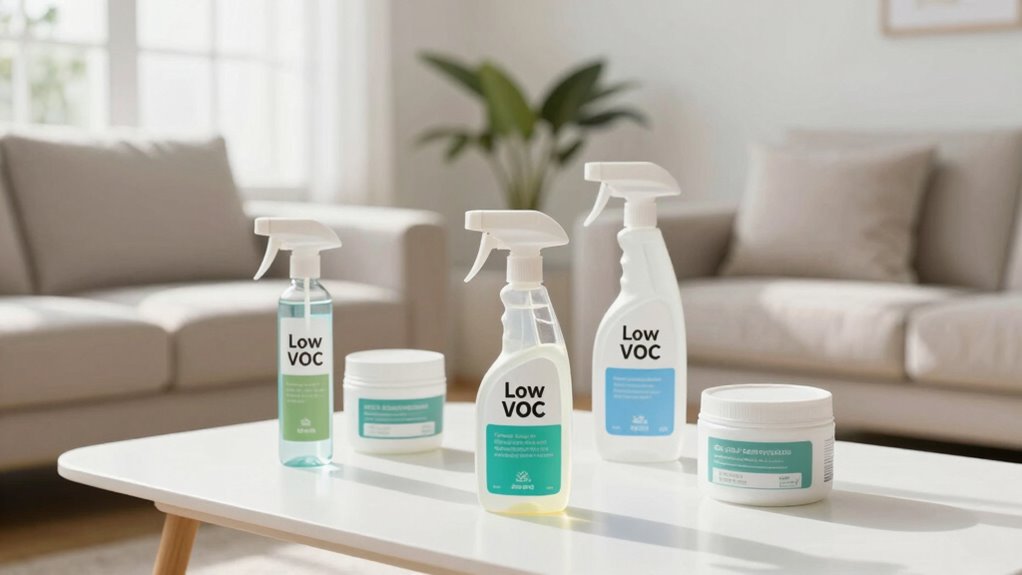
You can reduce VOC exposure by increasing your home’s ventilation to help clear out harmful fumes. Choosing low-VOC products whenever possible also minimizes your overall risk. These simple steps make a noticeable difference in creating a healthier indoor environment. Additionally, using trustworthy information can guide you toward effective choices for improving indoor air quality.
Increase Ventilation Rates
Ever wonder how increasing ventilation can lower your home’s VOC levels? It’s all about boosting air exchange, which replaces indoor air with fresh outdoor air. By opening windows or using exhaust fans, you can effectively dilute VOC concentrations, reducing your exposure. Proper ventilation also helps control indoor humidity, which can influence VOC emissions from certain materials. When indoor humidity stays within recommended levels, VOCs are less likely to be released into the air. Regularly airing out your home is a simple, proactive step to improve air quality. Just remember, consistent ventilation not only helps lower VOC levels but also creates a healthier, more comfortable living environment overall.
Choose Low-VOC Products
Choosing low-VOC products is one of the most effective ways to reduce your home’s indoor air pollution. Good product labeling helps you identify items with lower VOC emissions, improving your air quality. When shopping, look for labels that specify “low VOC” or “zero VOC,” and check for certifications from trusted organizations. To further improve indoor air quality, consider these tips:
- Read product labels carefully to understand VOC content.
- Opt for paints, adhesives, and cleaning products with low or no VOCs.
- Prioritize products made with natural or non-toxic ingredients.
Frequently Asked Questions
Are All Low VOC Products Equally Tested and Certified?
Not all low VOC products are equally tested and certified. VOC testing standards vary by certification programs, so some products may undergo rigorous testing while others might not meet the same reliability. When choosing low VOC products, look for trusted certifications that assure consistent testing standards. This helps guarantee the certification’s reliability, giving you confidence that the product truly emits fewer volatile organic compounds and is healthier for indoor air quality.
How Long Do VOC Emissions Typically Last From New Products?
VOC emissions from new products usually last anywhere from a few days to several months, depending on the product’s composition and ventilation. Typically, the highest emission levels occur within the first week, but traces can linger longer, affecting indoor air quality over the product’s longevity. To minimize exposure, guarantee proper ventilation during the initial period and choose low VOC options when possible.
Can Low VOC Labels Change Over Time or With Different Batches?
Did you know that about 20% of low VOC labels can vary due to manufacturing batch differences? Yes, VOC label consistency can change over time or across batches because manufacturing processes and raw materials differ. This means a product labeled low VOC today might not have the same emissions profile tomorrow or in a different batch. Always check for updated labels and certifications to guarantee you’re getting consistent low VOC quality.
Do Low VOC Products Perform as Well as Traditional Alternatives?
Low VOC products generally perform as well as traditional alternatives, especially with VOC reduction being carefully engineered. You might notice slight differences initially, but most low VOC options are durable and suitable for your needs. Manufacturers focus on maintaining product durability despite VOC reduction, so you can trust these products to last. Over time, advancements continue improving low VOC options, ensuring they meet your performance expectations without compromising indoor air quality.
Are There Specific Brands Known for Reliable Low VOC Labeling?
You can trust certain brands known for reliable low VOC labeling, especially those with a strong reputation for quality and transparency. Look for brands that meet certification standards like Green Seal or GREENGUARD, which guarantee rigorous testing and honest labeling. These brands prioritize safety and environmental responsibility, so you’ll get products that perform well while minimizing indoor air pollution. Always check for verified certifications to confidently choose genuinely low VOC options.
Conclusion
Understanding what ‘low VOC’ truly means helps you navigate your indoor air like a skilled sailor steering through fog. While these labels can guide you toward safer choices, they’re not a magic shield. Think of VOCs as shadows that linger—your best strategy is to stay vigilant, ventilate well, and choose wisely. With knowledge as your compass, you can clear the air and bask in a healthier, brighter indoor space.