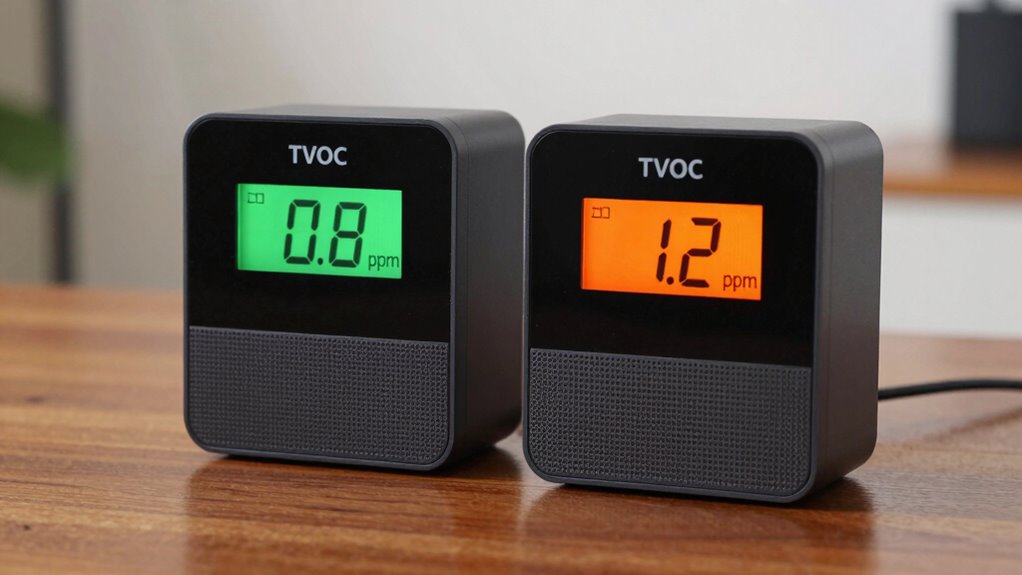

TVOC numbers can vary between brands because different sensor types, calibration methods, and data algorithms interpret indoor chemicals differently. Factors like sensor sensitivity, environmental conditions, and calibration standards impact the results. To get accurate indoor air quality insights, it’s important to understand these differences, guarantee proper calibration, and choose reliable devices. If you want to learn how to interpret and compare these measurements effectively, stick around for more detailed guidance.
Key Takeaways
- Different sensors and detection technologies (metal oxide vs. photoionization) influence TVOC readings and comparability.
- Variations in calibration procedures, standards, and frequency cause discrepancies between brands’ measurements.
- Brand-specific algorithms interpret sensor data differently, impacting reported TVOC levels.
- Environmental factors like temperature, humidity, and airflow affect sensor accuracy and result variability.
- Measurement differences are normal; understanding each device’s methodology helps interpret and compare results effectively.

16 in 1 Air Quality Monitor Indoor 7" Large Display 9 AQI+7 Alerts, CO2 Monitor Air Quality Tester for CO2, TVOC, PM2.5 PM1.0 PM10, HCHO Temperature Humidity AQI & Time Air Quality Meter for Home
【16-in-1 Air Quality Monitor Indoor】Experience the ultimate indoor air quality monitoring with our 16-in-1 Air Quality Monitor, offering...
As an affiliate, we earn on qualifying purchases.
What Do TVOC Measurements Really Tell You?
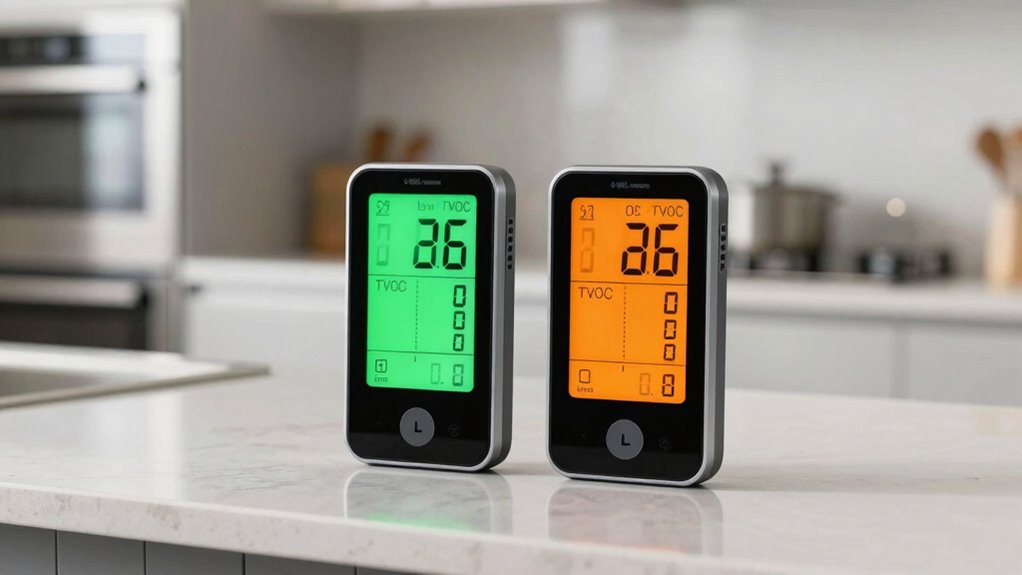
TVOC measurements provide a snapshot of the total volatile organic compounds present in the air, but they don’t tell you exactly what’s in that mix. Sensor sensitivity plays a key role here; a highly sensitive sensor detects even low levels of VOCs, offering a broader picture of air quality. However, this sensitivity can also lead to variability, affecting data consistency between different devices or brands. Just because two sensors measure the same environment doesn’t mean they’ll report identical results. Understanding what TVOC readings actually represent helps you interpret the data more accurately. Remember, these measurements are a general indicator of VOC presence, not a detailed breakdown of specific compounds. sensor calibration and comparable sensor sensitivity are critical for reliable, meaningful air quality assessments. Additionally, differences in sensor technology between brands can further influence the readings, making it essential to consider these factors when comparing data. Recognizing that measurement standards may vary can also help set realistic expectations for data interpretation.
Amazon Product B0FWB53946
As an affiliate, we earn on qualifying purchases.
How Do Sensor Technologies Affect TVOC Accuracy?

Sensor technology directly influences how accurately TVOC levels are measured. Variations in sensor sensitivity determine how well a device detects different VOC concentrations, impacting the reliability of readings. Higher sensitivity sensors can pick up lower VOC levels but may also be more prone to false positives if not properly calibrated. Calibration drift is another critical factor; over time, sensors can lose accuracy, causing TVOC readings to become unreliable. This sensor sensitivity varies depending on the technology used, affecting how well the device detects VOCs at different concentrations. Different sensor technologies—such as metal oxide sensors or photoionization detectors—have unique strengths and weaknesses regarding sensitivity and stability. Recognizing these differences helps you understand why TVOC numbers can vary between brands and why ongoing calibration is essential for accurate air quality monitoring. Additionally, the sensor stability over time plays a significant role in maintaining measurement consistency, emphasizing the importance of regular calibration and maintenance. Environmental factors like temperature and humidity can also influence sensor performance, further affecting measurement accuracy. Understanding the sensor technology employed by each device can help consumers make more informed decisions about air quality readings.
Amazon Product B0FPF3ZWG1
As an affiliate, we earn on qualifying purchases.
Why Testing and Calibration Methods Lead to Different TVOC Results
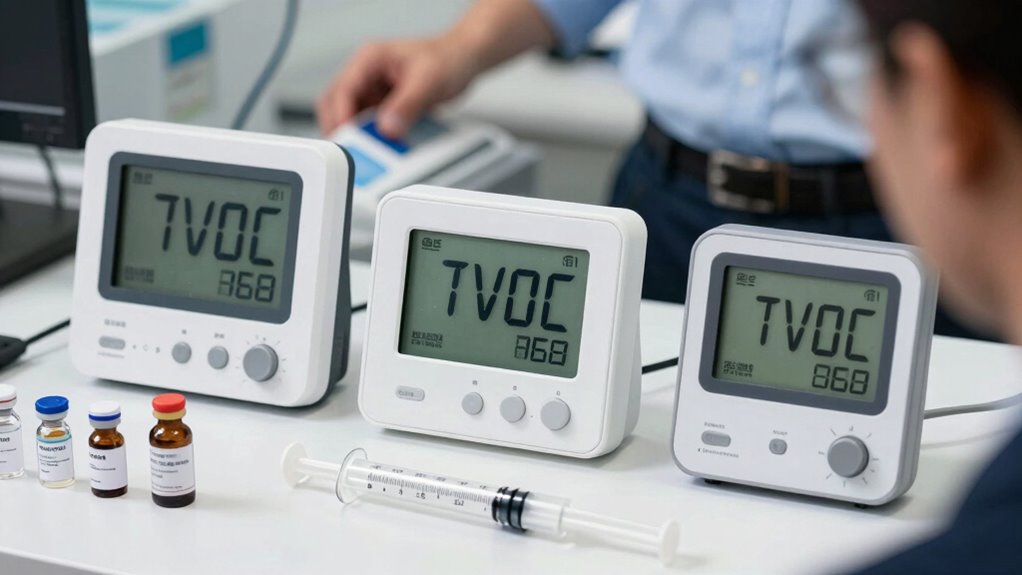
Testing and calibration methods can cause TVOC results to vary considerably between brands. Differences in calibration standards, sensor technologies, and sampling procedures all play a role in these discrepancies. Understanding these factors helps explain why results aren’t always directly comparable. Additionally, variations in measurement precision and calibration frequency can further impact the accuracy of readings across different devices. A thorough understanding of sensor sensitivity is also crucial, as it influences how each device detects and quantifies VOCs, leading to further differences in reported levels.
Variations in Calibration Standards
Because calibration standards vary among brands, the methods used to test and calibrate VOC sensors often produce different results. Each brand may use different calibration standards, which impacts sensor alignment and accuracy. Some calibrate sensors with specific VOC mixtures, while others rely on general or proprietary standards. These differences mean that even if two devices are measuring the same environment, their TVOC readings can vary markedly. Calibration standards influence how sensors interpret VOC concentrations, so inconsistent standards lead to discrepancies in results. Proper sensor alignment during calibration ensures the sensor responds accurately across a range of VOC levels. Without standardized calibration practices, these differences persist, making it challenging to compare TVOC numbers across brands reliably.
Differences in Sensor Technologies
Different sensor technologies interpret VOCs in distinct ways, which substantially impacts the results you see on different devices. Some sensors rely on metal-oxide semiconductors, while others use photoionization or electrochemical methods. These differences influence how accurately each sensor detects TVOCs, especially over time. Sensor drift occurs when sensors gradually become less precise, leading to inconsistent readings. Regular calibration is essential to maintain accuracy, but calibration frequency varies depending on the sensor type and usage conditions. If calibration isn’t performed often enough, readings can become unreliable, further widening discrepancies between devices. Understanding the underlying sensor technology helps you interpret results more accurately and recognize why TVOC numbers differ between brands, even when measuring the same environment. Sensor technology plays a critical role in how TVOC levels are measured and reported.
Sampling and Testing Procedures
Variations in sampling and testing procedures can substantially impact the TVOC readings you get from different devices. For example, how you calibrate sensors directly affects data accuracy. If sensors aren’t properly calibrated, they may overestimate or underestimate VOC levels, leading to inconsistent results. The testing environment also matters: sampling duration, airflow, and placement influence measurements. Short sampling periods can miss fluctuations, while poor airflow may cause inaccurate readings. Additionally, some devices use different calibration standards or reference points, which can skew comparisons. To improve consistency, ensure your device undergoes regular sensor calibration based on manufacturer guidelines. Understanding these procedural differences helps you interpret TVOC results more accurately and recognize why numbers vary across brands.
Amazon Product B0G64P7MRD
As an affiliate, we earn on qualifying purchases.
Which VOCs Are Measured and Why They Matter

Have you ever wondered which VOCs (volatile organic compounds) are measured in air quality testing and why those specific chemicals matter? The VOC composition detected depends on the sensor sensitivity of your device. Different sensors target various VOCs based on their ability to identify specific chemicals, such as formaldehyde, benzene, or toluene. These compounds are important because they can impact health and indicate indoor pollution sources. Some sensors focus on total VOCs (TVOCs), offering a broad overview, while others measure specific VOCs for more detailed analysis. Understanding which VOCs your device detects helps you interpret the readings accurately and assess potential risks. Additionally, Free Floating technology can influence the range of VOCs detected, impacting the overall accuracy of your air quality data. The choice of VOCs measured directly influences the relevance and reliability of your air quality data, especially in relation to ear wax odor, bleach aroma, spoiled ground beef scent, fentanyl characteristics, or trichomoniasis odor, which are all linked to specific chemical compounds or detection challenges. Being aware of the sensor sensitivity helps you better understand the limitations and capabilities of your air quality measurement device, including how sensor placement can affect detection accuracy. Moreover, variations in sensor calibration can lead to discrepancies between brands, affecting the comparability of their TVOC readings.
How Brand Algorithms Can Skew Your TVOC Readings

Since brand algorithms determine how TVOC levels are calculated and presented, they can markedly influence your perception of indoor air quality. Different brands use varying data algorithms to interpret sensor readings, which can lead to inconsistent results. Sensor calibration also plays a key role; if a device isn’t properly calibrated, its data algorithms might overestimate or underestimate VOC levels. This means two devices measuring the same air sample could display vastly different TVOC numbers. Some brands adjust their algorithms to emphasize or de-emphasize certain VOCs or apply smoothing techniques, skewing the results further. As a result, your TVOC reading might not reflect the real air quality, but rather how each brand’s algorithm processes the sensor data. Understanding these differences helps you interpret readings more accurately. Youngster Choice
Factors Like Room Size and Ventilation That Impact Indoor TVOC Levels
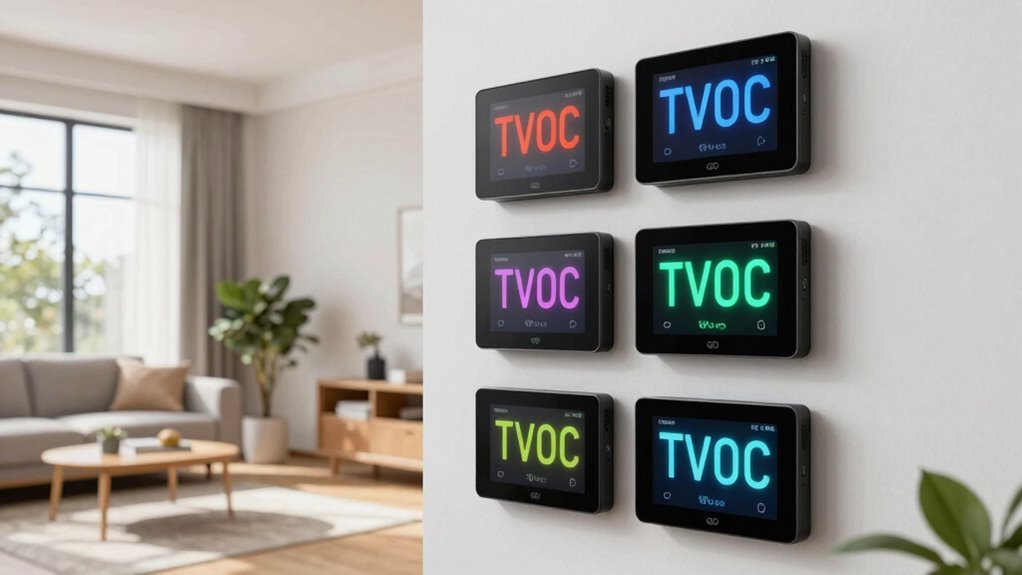
Room size and ventilation considerably influence indoor TVOC levels because they directly affect how pollutants disperse and accumulate. Larger rooms can dilute pollutant sources, lowering TVOC readings, while smaller spaces concentrate them. Proper air exchange is vital; increased ventilation helps remove VOCs and reduces buildup. Conversely, poor ventilation allows pollutants from sources like cleaning products, paints, or furniture to linger. Consider these factors:
- Room size determines the volume available for VOCs to disperse.
- Air exchange rate controls how quickly contaminated air is replaced.
- Pollutant sources constantly emit VOCs, influencing indoor levels.
- Indoor airflow patterns also play a significant role in distributing or trapping VOCs within a space. Additionally, understanding how ventilation effectiveness impacts pollutant removal can help optimize indoor air quality.
Understanding these elements helps you interpret TVOC readings more accurately and identify when ventilation improvements or pollutant source control are needed.
How to Interpret Discrepancies in TVOC Numbers Across Brands
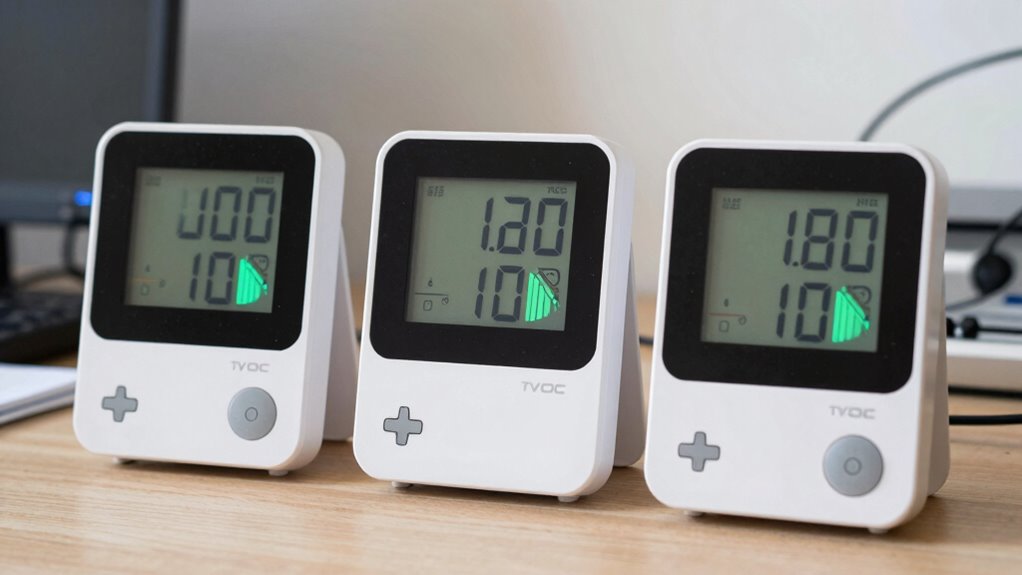
Discrepancies in TVOC numbers across different brands can be confusing, but understanding what influences these variations helps you make better comparisons. One key factor is sensor calibration; if a device isn’t properly calibrated, its readings may be off, making it seem like one monitor is more sensitive than another. Additionally, device placement matters—positions near sources of VOCs or in poorly ventilated areas can inflate readings, while locations away from emissions may show lower levels. Recognize that different brands may use varying sensor technologies and calibration standards, which impact their numbers. When comparing TVOC readings, consider these factors and avoid taking numbers at face value. Instead, focus on consistent testing conditions and understand that some variation is normal across brands. Being aware of decoding slang and informal language can also help you interpret product descriptions and marketing claims more accurately.
How to Choose a Reliable TVOC Monitor for Your Home

Choosing a reliable TVOC monitor for your home requires careful consideration of several key factors. First, pay attention to sensor placement—ensure the device can be positioned where you spend most of your time, like living rooms or bedrooms, for accurate readings. Second, examine the user interface; a clear, intuitive display helps you easily understand the data without confusion. Third, consider build quality and calibration stability to avoid false readings over time. Look for monitors with adjustable sensor placement options, straightforward controls, and good customer reviews. A reliable monitor should provide consistent data, simple operation, and flexible placement, so you can trust its readings and act accordingly to improve your indoor air quality. Additionally, understanding the sensor accuracy and how it influences measurement reliability is essential for making an informed choice. Ensuring the device has proper filter maintenance indicators can also help maintain measurement precision over time. Regular calibration and understanding measurement drift are important to ensure ongoing accuracy throughout the monitor’s lifespan. Being aware of sensor calibration stability can further help you select a device that maintains accuracy with minimal adjustments over time, especially when considering the quality of sensors used.
Using TVOC Data to Improve Your Indoor Air Quality

Once you have reliable TVOC data, you can take targeted steps to improve your indoor air quality. Use the data to identify pollution sources, like certain appliances or cleaning products, and increase ventilation in those areas. Regular sensor calibration guarantees your readings remain accurate, which is vital for making informed decisions. If your TVOC levels spike, consider removing or reducing the source, and then monitor the impact over time. Tracking changes helps you verify whether your adjustments are effective. Remember, consistent data allows you to set realistic air quality goals and evaluate your progress. By paying attention to sensor calibration and interpreting TVOC trends, you’ll create a healthier indoor environment tailored to your needs. Sensor accuracy is essential for trustworthy monitoring and meaningful improvements. Additionally, understanding how TVOC variability can occur due to environmental factors helps you better interpret fluctuations in readings. Recognizing the role of sensor drift in measurement discrepancies can further enhance your data reliability.
Common Mistakes When Reading and Comparing TVOC Levels

When reading and comparing TVOC levels from different brands, it’s easy to make mistakes that can lead to misinterpreting your indoor air quality. One common error is ignoring sensor lifespan, which affects measurement accuracy over time. Another is overlooking how data logging methods differ, making it hard to compare readings accurately. Additionally, some sensors record short-term fluctuations, giving a misleading picture of your air quality.
To avoid these mistakes, consider the sensor’s age and calibration history, and understand each device’s data logging capabilities. Be aware that some brands may display peak levels, while others show average readings. Recognizing these factors ensures you interpret TVOC levels correctly, avoiding false assumptions about your environment’s safety.
Frequently Asked Questions
How Often Should I Calibrate My TVOC Monitor for Accurate Readings?
You should calibrate your TVOC monitor at least once every 3 to 6 months to maintain accurate readings. Regular calibration helps counteract sensor drift, which can cause measurement inaccuracies over time. If you notice inconsistent or unexpected readings, increase calibration frequency. Always follow the manufacturer’s recommendations and use proper calibration procedures to guarantee your device remains reliable and precise in monitoring VOC levels.
Are Lower TVOC Numbers Always Better for Indoor Air Quality?
Lower TVOC numbers generally indicate better indoor air quality, but they aren’t always the full story. Variability in VOC measurement can cause differences, and some VOCs are more harmful than others. You should compare your readings to established indoor air quality standards to gauge safety. Keep in mind, consistently low TVOC levels are ideal, but it’s also important to contemplate the specific VOCs present and their health impacts.
Can External Environmental Factors Influence TVOC Sensor Accuracy?
Did you know external environmental factors can impact your TVOC sensor accuracy by up to 30%? External factors like temperature, humidity, and air circulation influence sensor sensitivity and can cause environmental interference, leading to inaccurate readings. You should keep your sensor away from drafts, vents, or direct sunlight to minimize interference. Regular calibration and proper placement help guarantee more reliable measurements, giving you a clearer picture of your indoor air quality.
Do All Brands Test for the Same VOCS in Their Measurements?
Not all brands test for the same VOCs in their measurements. Sensor calibration and pollutant specificity vary between devices, affecting what VOCs are detected and reported. Some sensors are calibrated for certain compounds, while others aim for broader detection. This means your TVOC readings can differ based on the sensor’s design and calibration process. To guarantee accuracy, choose a device with calibration suited to your specific needs and understand its pollutant detection limits.
How Do I Compare TVOC Readings From Different Brands Effectively?
To compare TVOC readings from different brands effectively, focus on standardized testing and calibration methods. Check if each device uses similar testing protocols, ensuring the measurements are consistent. Look for details on calibration procedures—well-calibrated devices provide more reliable data. Keep in mind that variations in sensor technology can affect readings, so consider these factors alongside the numbers. This approach helps you make informed comparisons and choose the best device for your needs.
Conclusion
Remember, discrepancies in TVOC readings across brands don’t mean one’s right and the other’s wrong. Instead, understand that different technologies and methods influence results. Don’t get stuck comparing numbers blindly—focus on consistent monitoring and improving your indoor air quality. By choosing reliable devices and interpreting data wisely, you can make smarter decisions. Ultimately, it’s your environment’s health that matters most, not just the numbers on a screen.