
If you’re concerned about indoor air quality, an NDIR CO2 sensor can be a smart choice. It provides accurate, real-time data on carbon dioxide levels, helping you maintain healthy ventilation and prevent stuffiness or headaches. While they’re more costly upfront, their reliability and long-term stability make them worth considering for homes, offices, or schools. Want to see if an NDIR sensor suits your needs? Keep exploring to learn more.
Key Takeaways
- If accurate, real-time indoor CO2 monitoring is essential for health and safety, an NDIR sensor is highly recommended.
- NDIR sensors provide stable, reliable measurements with minimal drift, making them suitable for long-term air quality management.
- For environments with fluctuating CO2 levels or strict compliance needs, an NDIR sensor ensures precise data.
- Although more expensive upfront, NDIR sensors offer better accuracy and lower maintenance compared to alternative technologies.
- Consider an NDIR sensor if you need continuous data logging, remote access, and dependable indoor air quality insights.
What Is an NDIR CO2 Sensor and How Does It Work?
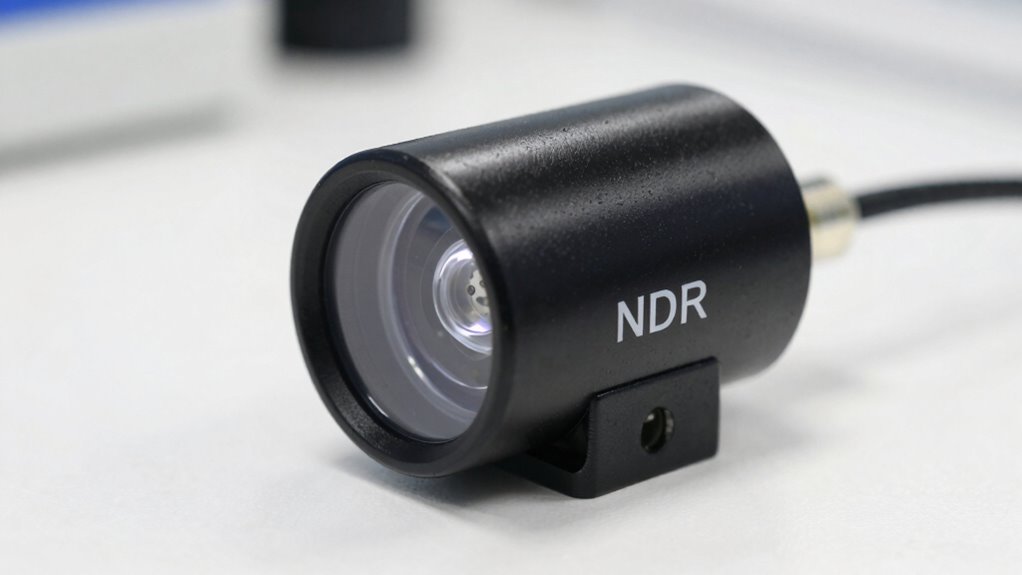
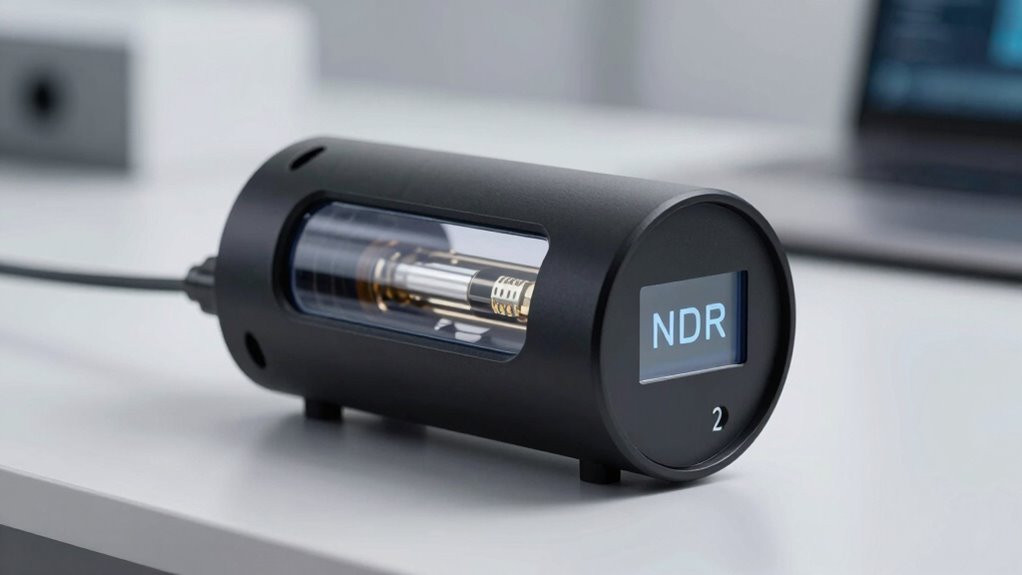
An NDIR CO2 sensor detects carbon dioxide levels by measuring how much infrared light the gas absorbs. This process relies on passing IR light through a sample chamber and detecting the amount absorbed by CO2 molecules. To guarantee accurate readings, regular sensor calibration is essential, especially over time or with environmental changes. sensor calibration procedures are vital for maintaining sensor accuracy over its lifespan. Because of their design, these sensors tend to be compact, making device portability straightforward. This portability allows you to use them in various settings, from indoor air quality assessments to industrial monitoring. Additionally, their selective detection ensures that the sensors respond primarily to CO2, minimizing interference from other gases. The sensor’s core technology provides reliable, real-time data, giving you confidence in your measurements. Furthermore, understanding how infrared light absorption works is key to appreciating their precision and practicality for different applications. Overall, understanding how an NDIR CO2 sensor works helps you appreciate its measurement accuracy and practicality for different applications.
How Do NDIR CO2 Sensors Compare to Other Measurement Technologies?
When comparing NDIR CO2 sensors to other measurement methods, you’ll notice differences in accuracy and reliability, which can impact your application. Cost and complexity vary as well, with some technologies offering simpler setups but at higher long-term expenses. Additionally, response time and maintenance needs play a vital role in determining the best fit for your environment. For instance, understanding the concept of Free Floating can help clarify how certain sensors operate without calibration or external references. Recognizing the sensor technology involved can also guide you in selecting devices that suit your specific monitoring requirements, especially considering the advantages of AI coaching benefits for improved decision-making. Moreover, the horsepower of electric dirt bikes demonstrates how electric sensors can deliver powerful performance in various applications, emphasizing the importance of selecting suitable technology for your needs.
Accuracy and Reliability
NDIR CO2 sensors are known for their superior accuracy and reliability compared to other measurement technologies. They maintain precision through regular sensor calibration, which guarantees consistent performance over time. Unlike chemical or photoacoustic sensors, NDIR sensors are less affected by environmental factors such as humidity, temperature fluctuations, or dust, making them more dependable in diverse settings. Their design minimizes drift and false readings, giving you confidence in your measurements. While other methods may require frequent recalibration or be sensitive to external conditions, NDIR sensors provide stable, long-term accuracy. This robustness makes them ideal for applications where precise CO2 monitoring is critical, such as indoor air quality, HVAC systems, or scientific research. Additionally, the integration of smart home technology with NDIR sensors can enhance real-time monitoring and data analysis, further improving indoor environmental control. Moreover, advancements in sensor durability ensure that NDIR sensors continue to perform reliably even in challenging environments.
Cost and Complexity
While NDIR CO2 sensors offer high accuracy and reliability, they tend to be more expensive and complex than some alternative measurement technologies. Sensor pricing reflects this, as NDIR units generally cost more upfront than chemical or optical sensors. Additionally, installation challenges can be significant; NDIR sensors often require precise calibration, stable power supplies, and proper positioning to function correctly. These factors contribute to higher initial setup costs and complexity. In contrast, simpler technologies might be easier to install and maintain but may lack the precision needed for certain applications. If budget constraints or installation ease are your priorities, alternative methods could be more suitable. However, if long-term accuracy and durability are critical, investing in an NDIR sensor could be worth the extra effort and expense. Calibration requirements are also an important consideration when evaluating these sensors.
Response Time and Maintenance
Compared to other measurement technologies, NDIR CO2 sensors generally offer faster response times and require less frequent maintenance. Their sensor durability means they can operate reliably over long periods with minimal calibration. You’ll notice that:
- The quick response time ensures you get real-time CO2 readings, which is vital for ventilation control and air quality management.
- Their durable construction reduces the need for frequent repairs or replacements, saving you time and money.
- Maintenance is straightforward; typically, only periodic calibration is needed, unlike some technologies that require complex servicing.
This combination of fast response time and robust sensor durability makes NDIR CO2 sensors a practical choice for consistent, accurate measurements with minimal upkeep.
What Are the Key Benefits of NDIR CO2 Sensors for Indoor Air Quality?
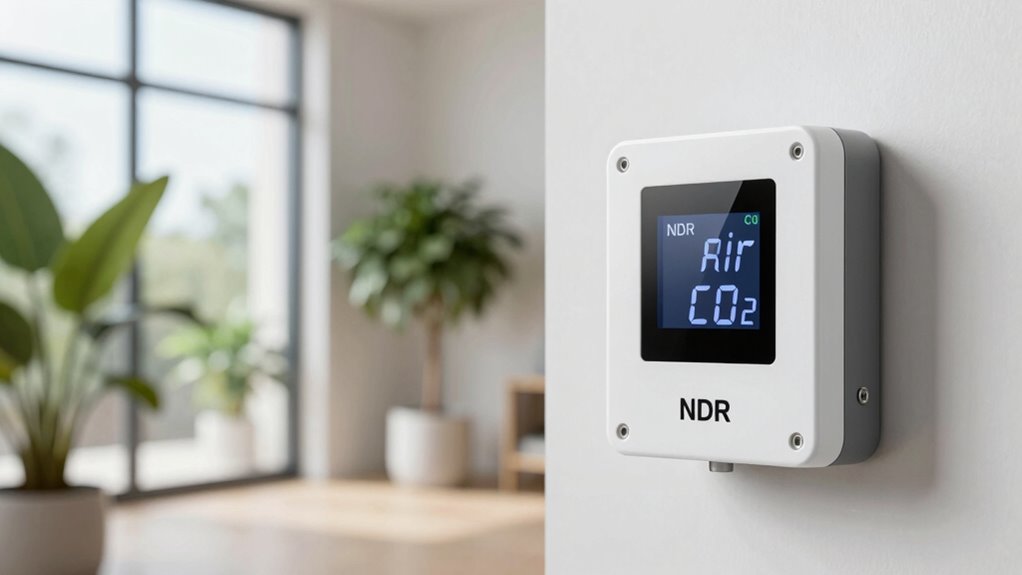
You can substantially improve indoor air quality by using NDIR CO2 sensors, which provide accurate and real-time measurements of carbon dioxide levels. This sensor technology helps you quickly identify when ventilation needs to be increased, preventing dangerous CO2 buildup. With precise data, you can maintain ideal air quality, reducing symptoms like fatigue and headaches caused by poor ventilation. NDIR sensors are reliable, requiring minimal maintenance, and deliver consistent performance over time. They enable you to make informed decisions about indoor environments, whether in homes, offices, or schools. Additionally, these sensors are a crucial part of creating a healthy home environment, promoting better productivity, comfort, and overall well-being for everyone inside. Incorporating ventilation controls can further optimize air quality and ensure safety.
Where Are NDIR CO2 Sensors Most Useful Indoors?

NDIR CO2 sensors are most useful in indoor environments where maintaining good air quality is critical for health and productivity. Proper sensor placement is key to accurate readings and effective ventilation control. Consider these areas:
- In classrooms or conference rooms to monitor occupancy levels and ensure fresh air.
- Near HVAC vents to optimize air circulation and detect CO2 buildup.
- In workplaces or laboratories to maintain consistent indoor air quality and prevent stagnation.
Position sensors away from direct airflow, windows, or sources of CO2 emissions, like kitchens, to avoid skewed data. Strategic placement helps you obtain reliable readings, enabling better ventilation decisions. Proper placement also supports air quality management and helps prevent health issues related to poor ventilation. Additionally, understanding emotional regulation can improve your awareness of environmental factors affecting well-being. Taking into account sensor calibration ensures ongoing accuracy and optimal performance of your CO2 monitoring system. Regularly checking sensor calibration and functionality is essential for sensor accuracy and reliable data collection. Ensuring sensors are correctly installed and maintained maximizes their effectiveness in monitoring indoor air quality. By focusing on these indoor locations, you enhance air quality and protect occupant health.
How Accurate and Reliable Are NDIR CO2 Sensors?

To trust an NDIR CO2 sensor, you need to understand its accuracy and reliability over time. Regular calibration checks, environmental factors like temperature and humidity, and long-term stability tests all play a role in ensuring consistent readings. Calibration procedures are essential to maintain sensor performance and detect potential deviations early. Implementing performance validation through periodic testing can help identify sensor drift before it impacts your data. Considering these points helps you choose a sensor that performs reliably in your specific environment. Additionally, reviewing total‑cost clarity and maintenance schedules can help ensure your sensor remains dependable over its lifespan. Understanding sensor lifespan and expected durability can further inform your purchasing decision and long-term planning. Proper environmental factors management can also extend the accuracy and reliability of your sensor over time.
Calibration Consistency Checks
Ensuring the accuracy and reliability of NDIR CO2 sensors depends heavily on regular calibration consistency checks. You should follow proper calibration procedures to maintain measurement precision. To verify consistency, consider these steps:
- Perform routine checks with known calibration gases to confirm sensor accuracy.
- Document results to track any drift over time and identify calibration needs.
- Adjust calibration settings if discrepancies exceed manufacturer guidelines, guaranteeing ongoing reliability.
- Regularly inspect the sensor’s maintenance and hygiene to prevent contamination that could affect readings.
- Implement standard operating procedures for calibration to ensure consistent and accurate results.
Consistency verification helps catch potential issues early, preventing inaccurate readings. Regular calibration procedures are essential for maintaining sensor performance, especially in critical environments. By staying diligent with these checks, you’ll ensure your NDIR CO2 sensor remains precise and dependable over its lifespan. This proactive approach saves time and money, reducing the risk of costly errors caused by uncalibrated or drifting sensors.
Environmental Interference Factors
Environmental factors can substantially influence the accuracy and reliability of NDIR CO2 sensors. Proper sensor placement is essential; placing it near vents, windows, or sources of environmental interference can lead to skewed readings. For example, drafts or fluctuating temperatures can cause sensor errors, as environmental interference disrupts the sensor’s ability to measure CO2 levels accurately. Make certain the sensor is positioned in a stable, representative environment, away from direct airflow or heat sources. Avoid areas with high humidity or rapid temperature changes, which can affect sensor performance. Regularly check the surroundings to minimize environmental interference, maintaining consistent conditions for reliable readings. Thoughtful placement and awareness of environmental factors are critical to getting precise, dependable CO2 measurements with your NDIR sensor.
Long-Term Stability Tests
How well do NDIR CO2 sensors maintain their accuracy over time? Long-term stability depends on proper sensor calibration and managing environmental factors. Without regular calibration, drift can occur, reducing reliability. To guarantee consistent performance, consider these key points:
- Schedule periodic sensor calibration to correct measurement drift caused by aging components.
- Minimize environmental factors like temperature and humidity fluctuations that can affect readings.
- Use sensors with built-in compensation features to counteract environmental influences and improve stability.
When Should You Consider Buying an NDIR CO2 Sensor?
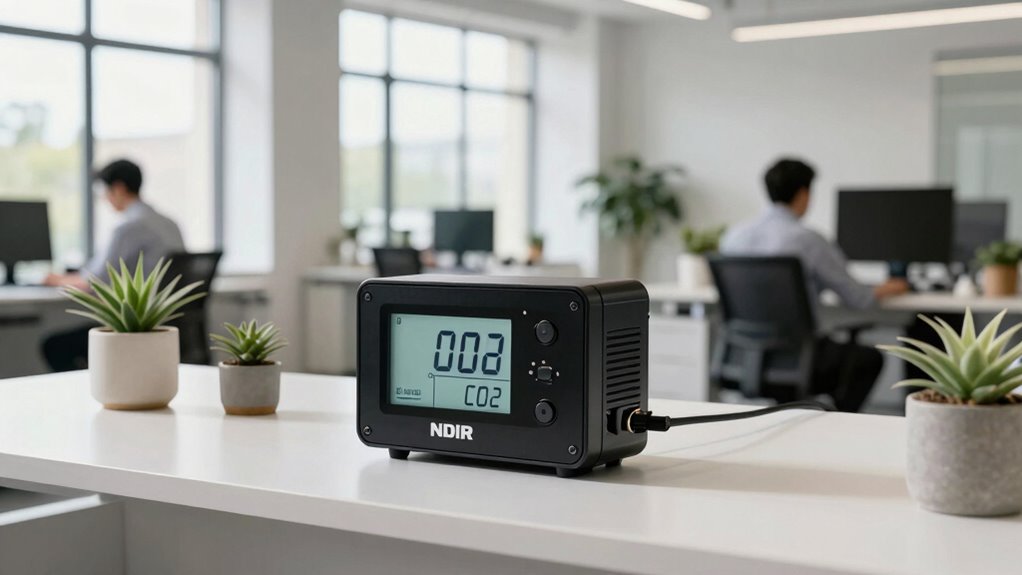
You should consider buying an NDIR CO2 sensor when accurate and reliable measurements of indoor air quality are critical for your space. If maintaining ideal air quality impacts health, productivity, or safety, this sensor technology offers precise monitoring. An NDIR sensor is ideal for environments like offices, schools, or labs, where consistent data is necessary. The table below highlights key factors that signal it’s time to invest in an NDIR CO2 sensor:
| Situation | Indicator | Benefit of NDIR Sensor |
|---|---|---|
| Need for precise air quality monitoring | Fluctuating CO2 levels | Accurate, real-time data |
| Long-term air quality management | Inconsistent readings or drift | Stability and reliability |
| Compliance with standards | Regulatory requirements | Meets strict measurement criteria |
| Improving sensor technology utilization | Outdated or less accurate sensors | Enhanced accuracy and durability |
What Factors Should You Consider Before Buying an NDIR CO2 Sensor?

Before purchasing an NDIR CO2 sensor, it’s vital to evaluate several key factors to guarantee it meets your specific needs. First, consider sensor placement; positioning it correctly ensures accurate readings and avoids interference. Second, think about data logging capabilities—will you need continuous monitoring or detailed records for analysis? Third, assess the sensor’s range and accuracy to match your environment’s conditions. Additionally, check if the sensor supports remote data access or integrates with existing systems. By focusing on these factors, you guarantee the device will perform reliably and provide meaningful insights. Remember, proper placement and robust data logging are essential for optimizing your CO2 monitoring setup and achieving your goals efficiently.
Are NDIR CO2 Sensors Easy to Install and Maintain?
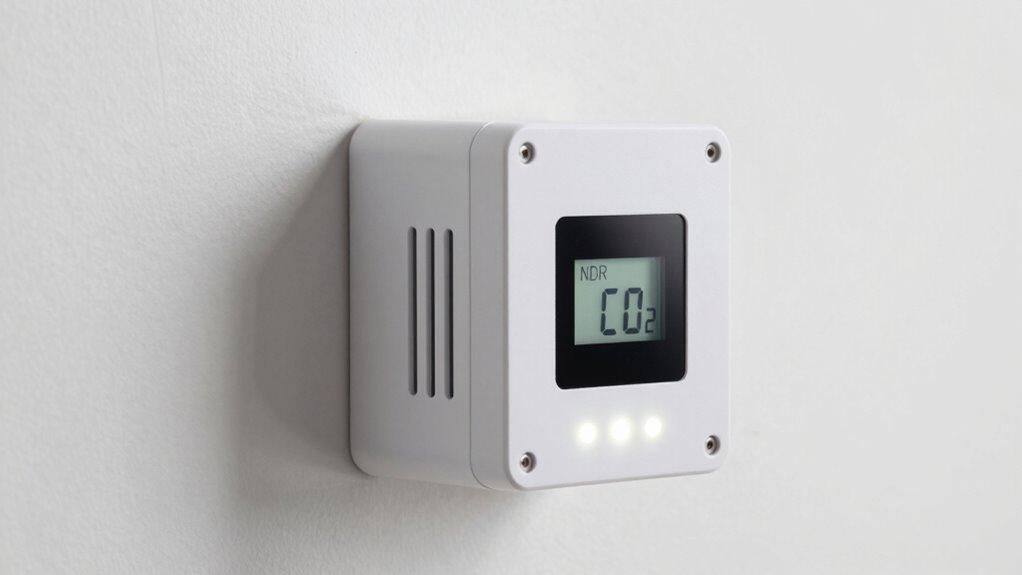
Installing and maintaining NDIR CO2 sensors is generally straightforward, especially with models designed for user-friendly setup. Sensor installation typically involves placing the device in an ideal location and connecting it to power and data systems, which most models simplify with clear instructions. Maintenance challenges are minimal; regular calibration ensures accuracy, but many sensors feature automatic calibration functions that reduce user effort. Unlike some other types, NDIR sensors are built for durability and long-term performance, so you don’t need frequent replacements or complex upkeep. Overall, these sensors are designed to be accessible, making sensor installation and maintenance manageable even for those without technical expertise. This ease of use makes NDIR CO2 sensors a practical choice for both home and business environments.
Are NDIR Sensors Worth the Cost for Your Home or Business?

While NDIR CO2 sensors tend to have a higher upfront cost, their accuracy, durability, and long-term reliability can make them a worthwhile investment for both homes and businesses. These sensors often require regular sensor calibration to maintain precision, but this guarantees consistent, trustworthy readings. Plus, their ability to support data logging lets you track CO2 levels over time, helping you identify patterns or issues early. Consider these benefits:
Investing in NDIR CO2 sensors ensures accurate, durable, and reliable indoor air quality monitoring for healthier environments.
- Precise, real-time measurement for healthier indoor air quality
- Long-lasting performance reduces replacement costs
- Continuous data logging supports informed decisions and better ventilation management
Though initial investment is higher, the improved accuracy and dependable operation make NDIR sensors a smart choice for safeguarding your environment.
Do NDIR CO2 Sensors Fit Different Budgets and Use Cases?

NDIR CO2 sensors come in a range of models designed to fit different budgets and specific use cases. Whether you’re monitoring indoor air quality at home or managing industrial processes, there’s a sensor suited for your needs. Budget options vary from affordable, basic models to advanced units with extensive features. Use case diversity means some sensors are optimized for portability, while others focus on high accuracy or long-term stability. Here’s a quick comparison:
| Budget Option | Use Case Focus | Suitable For |
|---|---|---|
| Basic models | Indoor air quality | Home, small offices |
| Mid-range sensors | Commercial environments | Schools, retail spaces |
| High-end sensors | Industrial applications | Manufacturing, laboratories |
| Portable units | Mobile monitoring | Field research, construction |
| Custom solutions | Specialized needs | Large-scale projects |
This variety guarantees you find a sensor matching your specific needs and budget.
Frequently Asked Questions
Can NDIR CO2 Sensors Detect Other Gases Besides CO2?
NDIR CO2 sensors primarily detect carbon dioxide and are highly specific due to their gas detection technology. They generally don’t sense other gases effectively because of their sensor specificity, which minimizes false readings. While some sensors might pick up trace amounts of other gases, their main function remains accurate CO2 measurement. So, if you need to detect multiple gases, consider specialized sensors designed for broader gas detection instead of an NDIR CO2 sensor.
How Often Do NDIR CO2 Sensors Require Calibration?
You should calibrate your NDIR CO2 sensor roughly every 6 to 12 months to guarantee accuracy. Regular calibration is key to effective sensor maintenance, preventing drift that can affect readings. Keep an eye on sensor performance, and if measurements seem off, it’s time for recalibration. By maintaining a consistent calibration schedule, you’ll ensure your sensor provides reliable, precise CO2 levels, making your indoor environment safer and more efficient.
Are There Portable NDIR CO2 Sensors Suitable for Outdoor Use?
Yes, there are portable NDIR CO2 sensors designed specifically for outdoor applications. These sensors are compact, rugged, and easy to carry, making them ideal for field measurements or monitoring air quality on the go. They typically feature weather-resistant cases and long-lasting batteries, allowing you to use them in various outdoor environments without worry. Look for models that explicitly mention suitability for outdoor use to guarantee durability and accuracy.
What Is the Typical Lifespan of an NDIR CO2 Sensor?
An NDIR CO2 sensor typically lasts between 5 to 10 years, depending on usage and sensor durability. You should expect regular replacement intervals to maintain accuracy, especially if it’s used continuously or in harsh environments. Proper calibration and maintenance can extend its lifespan, but eventually, the sensor’s performance will decline, making replacement necessary to guarantee reliable readings. Keep an eye on its accuracy over time for peak results.
Do NDIR CO2 Sensors Require Wi-Fi or Internet Connectivity?
You’ll be glad to know that NDIR CO2 sensors don’t require Wi-Fi or internet connectivity to operate, as they work independently by measuring CO2 levels through infrared signals. notably, only about 10% of models today rely on wireless connectivity for data transmission, making them ideal for environments with limited internet access. You can confidently use these sensors without worrying about internet dependence, ensuring reliable CO2 monitoring wherever you need it.
Conclusion
Choosing an NDIR CO2 sensor is like opening a window to healthier air, giving you peace of mind in your space. As with a lighthouse guiding ships safely to harbor, this technology helps you navigate indoor air quality with confidence. Investing in the right sensor means safeguarding your loved ones and your environment. Don’t let unseen dangers drift in—arm yourself with knowledge and breathe easier, knowing you’re making a smart, life-enhancing choice.