Air quality monitors use sensors like electrochemical, optical, and semiconductor types to detect pollutants and measure air quality in real-time. While these sensors vary in accuracy and need regular calibration, consumer models often have limitations, especially for detecting certain particles or gases. Be wary of overhyped claims and focus on features like durability and calibration practices. If you want to understand more about how these devices work and what to watch out for, keep exploring further details.
Key Takeaways
- Air quality monitors use electrochemical, optical, and semiconductor sensors to detect pollutants like gases and particulates.
- Sensor accuracy varies; regular calibration is essential to maintain reliable and precise air quality readings.
- Consumer monitors may have limitations, such as missing certain pollutants or experiencing sensor drift over time.
- Avoid trusting exaggerated claims of perfect accuracy; focus on devices with transparent testing and calibration practices.
- For comprehensive pollution assessment, professional testing is recommended when consumer monitor data appears inconsistent.
What Are Air Quality Monitors and How Do They Work?
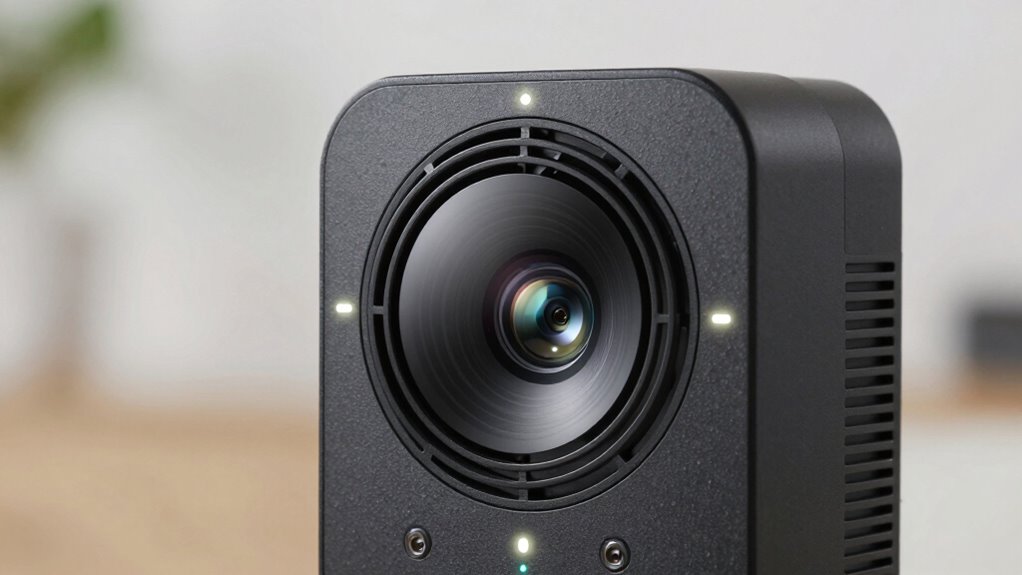
Have you ever wondered how you can tell if the air around you is safe to breathe? Air quality monitors help you do that by detecting pollutants and measuring air composition. They work through sensor placement, strategically positioned to capture accurate readings of your environment. These sensors detect particles, gases, and chemicals, providing real-time data on air quality levels. When using these devices, you should also consider data privacy, as some monitors transmit information to cloud servers. Ensuring your data remains secure is essential, especially if the device connects to the internet. Sensor accuracy is crucial for reliable readings and making informed decisions. Additionally, the use of European cloud infrastructure can enhance data security and privacy for connected air quality monitors. Moreover, understanding the different sensor types helps you choose the most suitable device for your needs. Being aware of sensor calibration ensures that your device maintains precision over time. Regular maintenance and calibration are essential to maintain accuracy, ensuring your device provides trustworthy data. Overall, air quality monitors are valuable tools that give you insight into your environment, helping you make informed decisions about your health and safety.
Which Sensor Technologies Are Used in Air Quality Monitors?
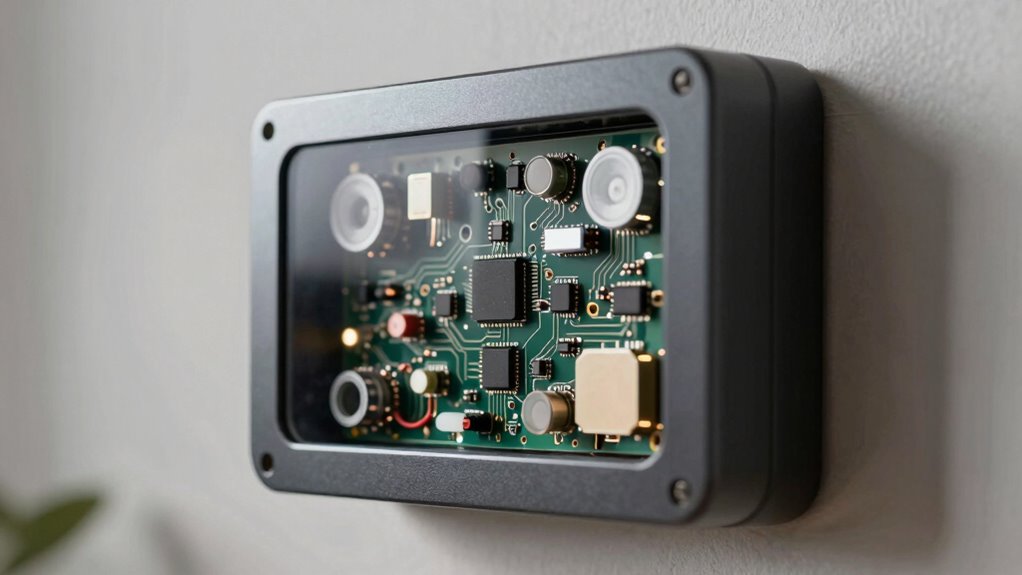
Air quality monitors rely on a variety of sensor technologies to accurately detect pollutants and measure air composition. These sensor types use different detection methods, such as electrochemical, optical, and semiconductor techniques. Electrochemical sensors detect gases like carbon monoxide and nitrogen dioxide by measuring electrical currents generated during chemical reactions. Optical sensors, including photoionization and laser-based detectors, identify volatile organic compounds (VOCs) and particulate matter by analyzing light absorption or scattering. Semiconductor sensors change their electrical resistance when exposed to specific gases, providing quick readings. Each detection method offers advantages in sensitivity, response time, and durability. Sensor integration plays a crucial role in enhancing the overall accuracy and reliability of air quality monitors by combining multiple detection methods for comprehensive analysis. By combining these sensor types and detection methods, air quality monitors can provide extensive and reliable data about the air you breathe, and advancements in sensor technology continue to improve their performance. Additionally, ongoing innovations in sensor calibration help maintain accuracy over time and across varying environmental conditions. For example, utilizing ProTextile Supprim fabric, which is durable, breathable, and eco-friendly, can be beneficial in designing protective gear or housings for these monitors to improve comfort and sustainability. Moreover, integrating maintenance practices ensures sustained accuracy and functionality of the sensors over their lifespan.
How Accurate Are Consumer Air Quality Monitors?
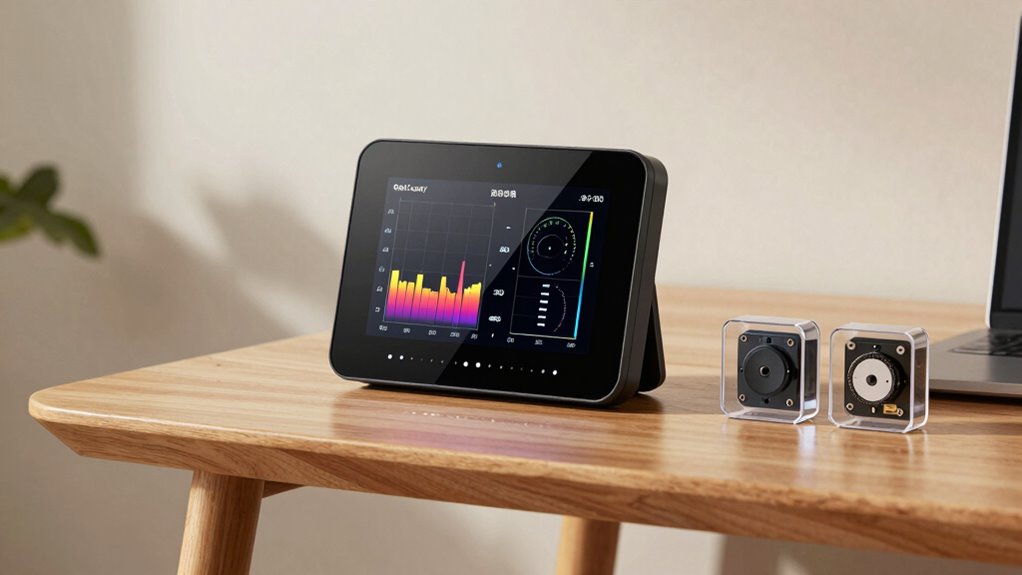
Consumer air quality monitors can vary in accuracy due to calibration challenges and sensor quality. You might find some devices provide reliable data, while others can be off by a significant margin. Interpreting this data correctly requires understanding these limitations. Additionally, understanding the Free Floating concept can help users better interpret readings that fluctuate with environmental changes. Being aware of the sensor types used in different monitors can further clarify their strengths and weaknesses in various settings. Recognizing measurement variability can also aid in making more informed decisions based on the data. Understanding how sensor calibration impacts accuracy can help users select more reliable devices and interpret their readings more effectively. Moreover, awareness of environmental factors can influence the performance and reliability of air quality sensors.
Calibration Challenges Impact Accuracy
Calibration challenges can considerably impact the accuracy of air quality monitors, making it difficult to rely on their readings without proper adjustments. Over time, sensor drift causes measurements to become less precise, especially if you neglect regular calibration. The frequency of calibration directly affects how well your monitor reflects true air quality; infrequent calibration allows drift to accumulate, leading to inaccurate readings. Some sensors may need calibration weekly or monthly, depending on usage and environmental conditions. Without attentive calibration, your device’s data may mislead you about air safety. To maintain accuracy, stay aware of your monitor’s calibration schedule and follow manufacturer recommendations. Regular calibration helps ensure your monitor continues providing reliable information, despite the inherent challenges posed by sensor drift.
Sensor Quality Varies Widely
The accuracy of consumer air quality monitors can vary considerably depending on the device you choose. Some sensors are built with higher durability, maintaining consistent performance over time, while others degrade quickly, reducing measurement reliability. Cheaper monitors often use less sophisticated sensors, which can lead to inaccuracies in detecting pollutants. Additionally, sensor quality affects data privacy, as lower-quality devices may not securely handle your personal information or environmental data. It’s important to research the sensor type and manufacturer reputation, as well as how they manage data privacy. Remember, a well-made sensor can provide more dependable readings, but no device is perfect. Vetted sensor quality can help ensure you select a device with trustworthy performance. Always consider the longevity and privacy features of your monitor to ensure you get accurate, trustworthy data. Ensuring the device has reliable calibration can also help maintain measurement accuracy over time.
Data Interpretation Complex
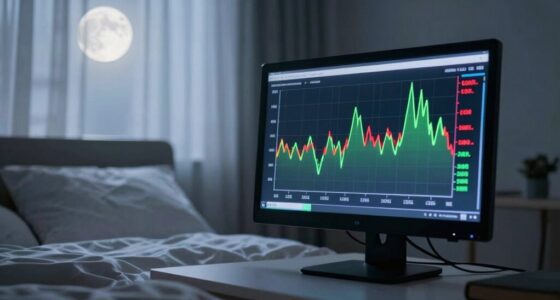
While many air quality monitors claim to provide accurate readings, interpreting their data can be more complicated than it appears. Variations in sensor calibration affect reliability, making it essential to understand what the numbers really mean. Data visualization helps you spot trends, but it can also mislead if the device isn’t properly calibrated or if environmental factors skew results. For example, a sudden spike might reflect sensor noise rather than true air quality change. Use the table below to relate sensor accuracy to your expectations:
| Sensor Calibration | Data Visualization |
|---|---|
| Critical for accuracy | Helps identify trends and anomalies |
| Affected by environmental factors | Can distort perception if misinterpreted |
| Regular calibration essential | Visual cues complement raw data |
Common Myths About Air Quality Monitors
Many people believe that all air quality monitors are equally accurate or reliable, but this isn’t true. In reality, the sensor lifespan varies markedly between models, affecting long-term accuracy. Cheaper monitors might seem appealing but often have sensors that degrade quickly, leading to misleading data over time. Additionally, some assume data privacy isn’t a concern with these devices, yet many monitors transmit your data to third parties or cloud servers. If privacy matters to you, it’s essential to choose a monitor that prioritizes data security. Understanding these myths helps you make smarter choices and avoid pitfalls when selecting an air quality monitor. For instance, sensor lifespan can significantly influence the reliability of your device over time. Moreover, being aware of data security concerns ensures you protect your personal information from unauthorized access. Recognizing the importance of device longevity can save you money and frustration in the long run, as it impacts both accuracy and maintenance needs. Additionally, considering sensor calibration can help maintain consistent readings and extend the useful life of your monitor.
What Features Matter Most When Buying an Air Quality Monitor?
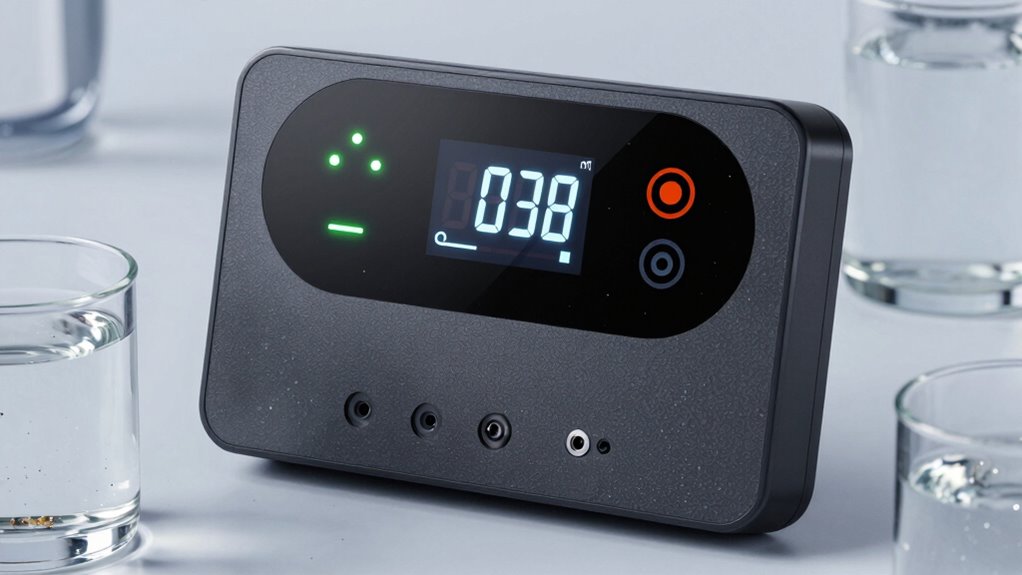
Choosing the right air quality monitor involves more than just comparing prices or brands; understanding which features genuinely impact performance can save you time and frustration. Focus on sensor durability, since a sturdy sensor guarantees accurate readings over time and reduces maintenance. A reliable sensor withstands environmental factors like humidity and temperature changes, maintaining precision. Additionally, consider the sensor lifespan, as longer-lasting sensors minimize the need for replacement and ensure consistent performance. Long-term durability is essential because it influences how well the device can handle environmental conditions over time. Equally important is a user interface that’s easy to navigate, display clear data, and allows quick access to critical information. An intuitive interface helps you interpret air quality levels without confusion, especially if you’re not a tech expert. Look for monitors with straightforward controls, clear displays, and customizable alerts. Prioritizing these features ensures you get a device that’s both long-lasting and simple to use, making your air quality management more effective. Incorporating sensor durability into your research ensures you select a device backed by credible and comprehensive information.
Limitations of Consumer Air Monitors and When to Consider Professional Testing
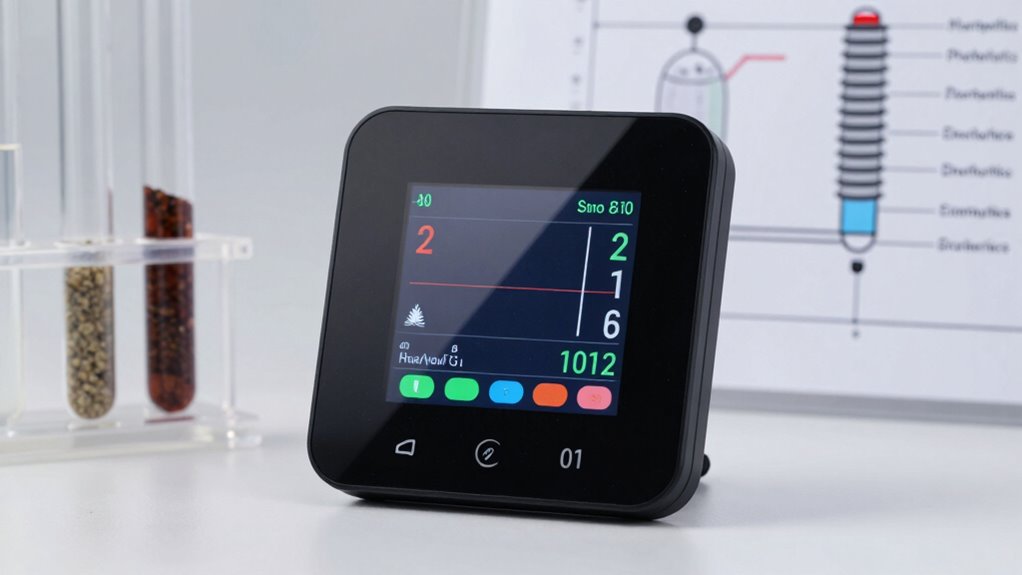
Consumer air monitors can be helpful, but they have sensor limitations and may miss some pollutants. Cost and accessibility can also make professional testing necessary if you need accurate results. Knowing when to seek experts guarantees you get a clear picture of your indoor air quality. Additionally, understanding sensor accuracy is vital, as some devices may give false readings due to calibration issues or environmental factors. Regular calibration and awareness of sensor limitations can improve the reliability of consumer devices.
Sensor Limitations and Gaps
While consumer air quality monitors offer a convenient way to track indoor pollution, they often have limitations that can affect their accuracy. One key issue is sensor blind spots, where certain pollutants or particle sizes go undetected. These sensors may also produce data gaps, missing fluctuations in air quality or failing to capture transient events. Additionally, many consumer monitors rely on simplified algorithms and less sensitive sensors, which can lead to inaccurate readings, especially in complex environments. If you notice inconsistent results or suspect hidden pollution sources, it’s a sign that professional testing might be necessary. Professional-grade monitors can detect a broader range of pollutants and provide more exhaustive data, filling the gaps that consumer devices might leave.
Cost and Accessibility Barriers
Are cost and accessibility barriers holding you back from getting accurate air quality readings? Sensor costs can be high, making it difficult to find affordable devices that meet your needs. Many consumer air monitors are designed for convenience rather than precision, limiting device accessibility for those seeking detailed or reliable data. Cheaper options often sacrifice accuracy or sensor quality, which can lead to misleading results. If you’re on a tight budget or live in an area with limited device options, you might hesitate to invest in an air quality monitor. Remember, while consumer devices are useful for general awareness, they might not always provide the detailed data you need. In some cases, professional testing could be a more accessible and cost-effective way to get precise air quality measurements.
When to Seek Experts
Despite the convenience of consumer air quality monitors, they have limitations that may require you to seek professional testing. If your device shows consistently poor air quality readings despite sensor maintenance, it’s a sign that a professional assessment might be necessary. Consumer monitors often lack the precision needed for complex pollutants or hidden issues, such as mold or VOCs. Additionally, consider data privacy concerns—professional testing provides more secure, detailed analysis without risking sensitive information. If your health or living environment is at stake, don’t rely solely on consumer devices. Experts can conduct thorough testing, interpret complex data accurately, and identify contaminants that consumer monitors might miss. When in doubt, consulting professionals ensures you get a reliable picture of your indoor air quality.
How to Interpret Your Air Quality Data and What Actions to Take
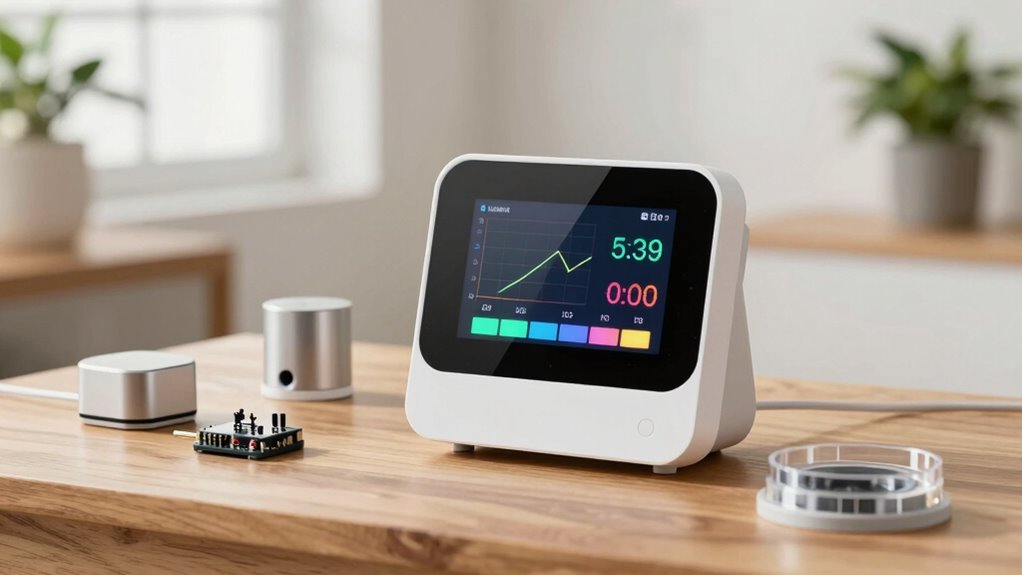
Understanding your air quality data is essential for making informed decisions about your environment. By regularly reviewing the data, you can spot air quality trends, such as patterns of pollution during certain times or activities. Sensor technology has improved accuracy, helping you identify real issues rather than false alarms. When your monitor shows elevated levels of pollutants like PM2.5 or VOCs, consider increasing ventilation, using an air purifier, or reducing sources of pollution. If measurements consistently stay high, it might be time to consult an expert for a thorough assessment. Keep in mind that fluctuations can be normal, but persistent poor readings signal actions are needed. Interpreting your data correctly helps you create a healthier indoor environment and avoid unnecessary concerns.
Features and Claims That Are Overhyped: What You Should Ignore
Have you ever been tempted to believe every claim a new air quality monitor makes? Many devices boast impressive sensor claims, but much of this is marketing hype. Companies often exaggerate features to stand out, promising ultra-accurate readings or groundbreaking technology. Don’t fall for overhyped features that sound too good to be true. For instance, claims of detecting all pollutants or providing perfect data are often misleading. Remember, no monitor is flawless, and sensor claims can vary widely in reliability. Focus on proven specifications and reputable brands rather than marketing buzzwords. Ignoring these overhyped features helps you avoid disappointment and makes your purchase more informed. Stay skeptical of grand claims and prioritize real, transparent information over flashy marketing hype.
Frequently Asked Questions
How Do Different Environmental Conditions Affect Sensor Performance?
Environmental conditions like humidity interference and temperature effects can considerably impact your air quality sensor’s performance. High humidity may cause false readings or sensor corrosion, while extreme temperatures can reduce accuracy or damage sensitive components. You should regularly check your monitor’s calibration, avoid placing it near sources of moisture or direct sunlight, and guarantee it operates within the recommended temperature range to maintain reliable readings.
Can Air Quality Monitors Detect All Types of Indoor Pollutants?
Air quality monitors can’t detect all indoor pollutants due to sensor limitations. They excel at measuring common pollutants like VOCs, particulate matter, and CO2, but may miss others like certain gases or volatile compounds. You should be aware that some sensors have restricted pollutant detection capabilities, meaning they might not identify every indoor contaminant. To get a thorough overview, consider combining monitors or using specialized sensors for specific pollutants.
What Maintenance Is Required to Keep Monitors Accurate Over Time?
Think of your air quality monitor like a fine-tuned instrument; regular calibration keeps it singing accurately. You should check sensor calibration every 6 to 12 months and replace filters as recommended, usually every 3 to 6 months. I once ignored filter replacement, and my readings went haywire—since then, I stay consistent. Proper maintenance guarantees your monitor gives reliable data, helping you breathe easier at home.
Are There Portable Air Quality Monitors Suitable for Outdoor Use?
Yes, there are portable air quality monitors designed for outdoor use. These devices feature a portable design, making them easy to carry around, and are built with outdoor durability in mind to withstand weather conditions. You can take them to different locations to get real-time air quality readings, helping you monitor pollution levels wherever you go. Just guarantee you choose one with the right sensor types for outdoor environments.
How Do I Calibrate My Air Quality Monitor for Reliable Readings?
Think of calibrating your air quality monitor as tuning a fine instrument. You’ll want to perform sensor calibration regularly, especially after environmental factors like temperature or humidity change. Start by placing your monitor in a stable environment, then follow the manufacturer’s instructions for calibration, often involving comparison with a reference or known air quality source. This keeps your readings accurate and trustworthy, like a well-played symphony.
Conclusion
While air quality monitors offer valuable insights, don’t rely solely on them for perfect accuracy. They’re helpful tools, but limitations exist—think of them as your first step, not the final word. By understanding their capabilities and myths, you can make smarter choices. Remember, real improvements come from consistent action, not just numbers. So, use your monitor wisely, stay informed, and breathe easier knowing you’re taking control—despite the tech’s flaws.