Air purifiers and air quality monitors serve different roles in improving your indoor environment. Purifiers actively clean the air by removing particles, odors, and harmful gases, making the air healthier to breathe. Monitors, on the other hand, measure pollutant levels and provide real-time data, helping you decide when to turn on or adjust your purifier. To effectively enhance your air quality, understanding how each device works is key—there’s more to discover ahead.
Key Takeaways
- Air purifiers actively remove pollutants and odors, improving indoor air quality; monitors detect pollutant levels to inform purification needs.
- Monitors provide real-time data on pollutants, helping users decide when and how to activate or adjust air purifiers.
- Purifiers tackle particulate matter and gases directly through HEPA and activated carbon filters, addressing specific indoor pollutants.
- Monitors identify pollution sources and fluctuations, enabling targeted responses to maintain healthier indoor environments.
- Combining both devices offers a comprehensive solution: monitors detect issues; purifiers eliminate pollutants, ensuring cleaner indoor air.

16 in 1 Air Quality Monitor Indoor 7" Large Display 9 AQI+7 Alerts, CO2 Monitor Air Quality Tester for CO2, TVOC, PM2.5 PM1.0 PM10, HCHO Temperature Humidity AQI & Time Air Quality Meter for Home
【16-in-1 Air Quality Monitor Indoor】Experience the ultimate indoor air quality monitoring with our 16-in-1 Air Quality Monitor, offering...
As an affiliate, we earn on qualifying purchases.
What Are the Main Differences Between Air Purifiers and Monitors?
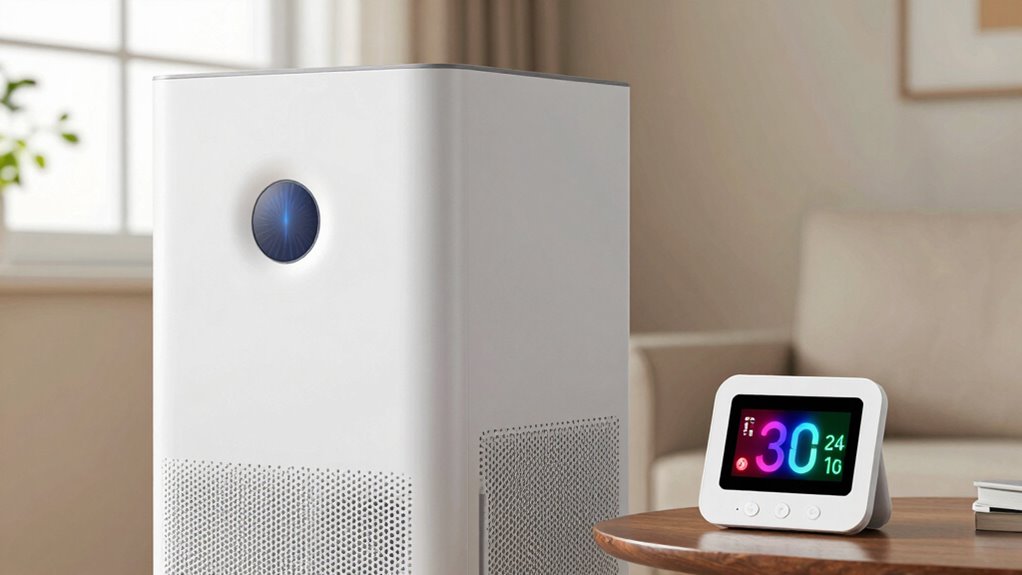
While air purifiers and air quality monitors both aim to improve indoor air, they serve different purposes. An air purifier actively cleans the air by trapping pollutants, requiring regular maintenance like filter replacements to stay effective. In contrast, an air quality monitor measures pollutant levels and provides data to help you understand your environment. The accuracy of an air quality sensor is vital for reliable readings, guiding your decisions on when to ventilate or adjust your purifier. Proper sensor calibration is essential to ensure the monitor provides trustworthy data. While purifiers focus on removing contaminants, monitors focus on detecting them. Understanding these differences helps you choose the right device for your needs, ensuring better indoor air quality through proper maintenance and reliable data collection. Additionally, selecting devices with high-quality sensors can significantly improve your ability to accurately assess indoor air conditions. Regularly updating your device firmware can also enhance sensor performance and data accuracy over time.

Professional Indoor Air Quality Monitor with AQI Alerts, Portable Real-Time Detector for Home, Car, Plants & Pet
【Professional 16-in-1 Real-time Air Quality Monitor】: With real-time detection of PM1.0 | PM2.5 | PM10 | CO2 |...
As an affiliate, we earn on qualifying purchases.
How Do Air Purifiers Improve Indoor Air Quality?

Air purifiers work by filtering out particulate matter like dust, pollen, and pet dander, helping you breathe easier. They also remove odors and harmful gases, improving your indoor environment. Together, these actions substantially boost your home’s air quality. Additionally, modern air purifiers often incorporate vintage-inspired designs that complement retro home decor, blending functionality with style. Incorporating energy-efficient technologies can further reduce power consumption, making them more environmentally friendly and cost-effective. Using air quality indicators can help you monitor improvements and determine when to replace filters for optimal performance. Selecting the right device based on air flow capacity ensures effective coverage of your living space. For optimal results, choosing models with user-friendly controls can enhance your overall experience and ease of maintenance.
Filter Particulate Matter
Air purifiers improve indoor air quality primarily by capturing and removing particulate matter from the air you breathe. They use HEPA filtration, which is highly effective at trapping tiny particles such as dust, pollen, pet dander, and smoke. These filters can remove particles as small as 0.3 microns, ensuring cleaner air and reducing allergy symptoms. When air passes through the HEPA filter, particulates are physically trapped, preventing them from recirculating indoors. This particulate removal process is essential for maintaining healthier indoor environments, especially in homes with pets or individuals with respiratory issues. By continuously filtering the air, your air purifier helps you breathe easier, minimizes airborne irritants, and creates a safer, more comfortable living space.
Remove Odor and Gases
Have you ever noticed persistent odors lingering in your home, even after cleaning? Air purifiers can help with odor removal and gas filtration, improving indoor air quality. They use activated carbon filters to adsorb gases and eliminate smells from cooking, pets, or smoke. This process reduces harmful gases and unpleasant odors effectively. To understand better, here’s a quick comparison:
| Feature | Benefits |
|---|---|
| Odor removal | Eliminates smells from environment |
| Gas filtration | Removes volatile organic compounds (VOCs) and gases |
| Activated carbon | Absorbs odors and chemical pollutants |
| Easy maintenance | Filters are replaceable for ongoing efficiency |
| Overall air quality | Creates fresher, healthier indoor spaces |
In addition, selecting an appropriate filtration system tailored to your specific needs can maximize these benefits. Using an air purifier with gas filtration ensures your home smells fresh and free of harmful gases. Incorporating advanced filtration systems can further enhance the effectiveness of odor and gas removal, especially when combined with proper air quality monitoring.

Air Quality Monitor Indoor, 10 in 1 Portable Smartair Quality Tester for CO2 | CO | TVOC | HCHO | Temp | AQI | PM0.3-1 Detection Hum for Home Cars Plants, Pets, Car, Hotel
【10-in-1 Smart Air Quality Monitor: Your All-Round Environmental Guardian】 This portable intelligent air quality tester delivers ultra-precise multi-gas...
As an affiliate, we earn on qualifying purchases.
What Do Air Quality Monitors Measure and Show?
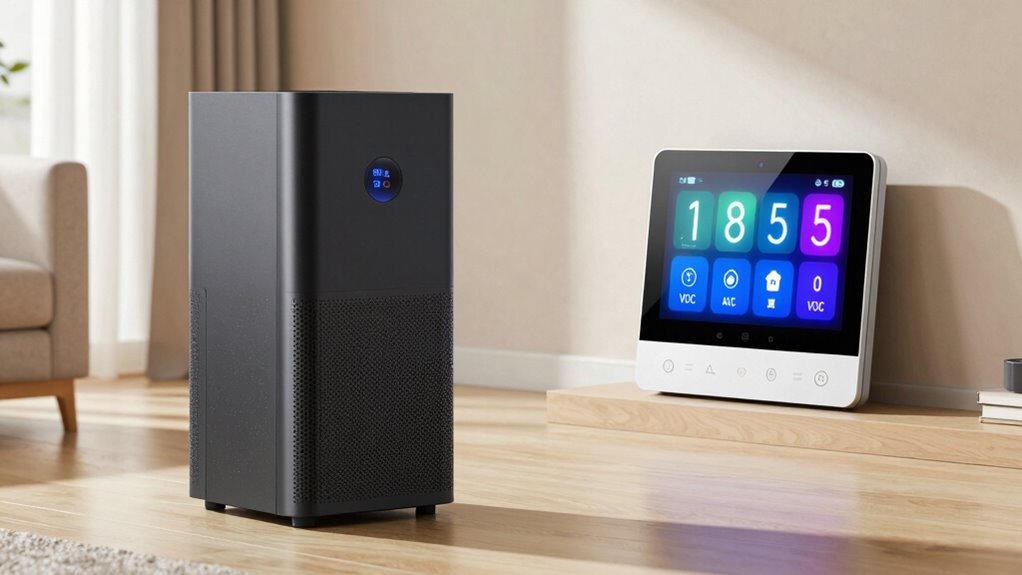
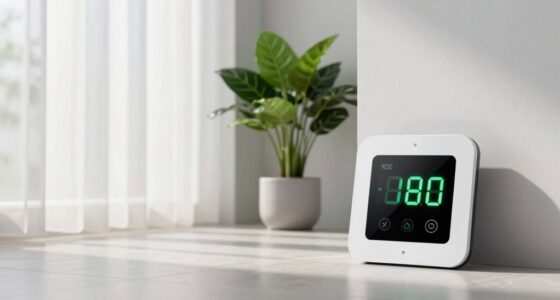
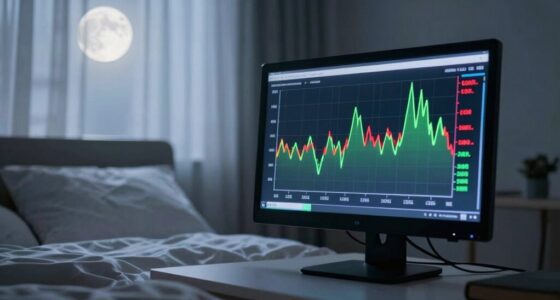
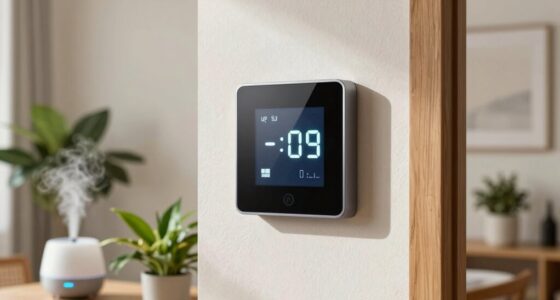
Air quality monitors provide essential data that helps you understand the environment around you. They measure various aspects of air composition, including levels of air pollution like particulate matter (PM2.5 and PM10), volatile organic compounds (VOCs), and gases such as carbon monoxide or ozone. These devices display real-time readings, so you can see how air quality fluctuates throughout the day. By showing specific pollutant concentrations, monitors help you identify when air pollution levels are high and potentially harmful. Some models also track humidity and temperature, offering an all-encompassing view of your indoor or outdoor environment. With this data, you gain clear insights into your air quality, empowering you to take informed actions to improve or protect your space. Micro influencers can also play a role in spreading awareness about air quality issues, making it easier for consumers to understand the importance of monitoring and improving their environment. Additionally, understanding air quality measurements allows you to better assess the effectiveness of air purification solutions and maintain a healthier living space.

Air Quality Monitor, Professional Air Quality Detector with CO2 Monitor/HCHO/TVOC/Temperature/Humidity for Home, Hotel, Office, Car
5 in 1 indoor air quality monitor, it tracks carbon dioxide (CO2), formaldehyde (HCHO), volatile organic compounds (TVOC),...
As an affiliate, we earn on qualifying purchases.
When Should You Use an Air Purifier or a Monitor?
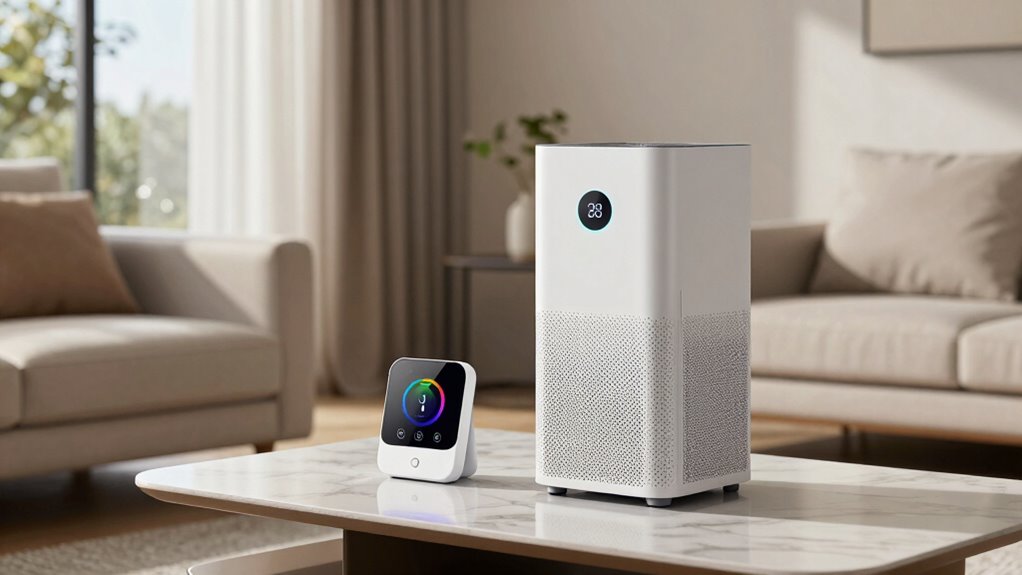
Knowing what your air quality monitors reveal can help you decide when to turn on an air purifier or when to take other action. If your monitor detects high levels of air pollution or volatile organic compounds, it’s time to activate your purifier. Use your monitor’s real-time data to identify patterns, like increased pollution during cooking or cleaning. Smart technology allows you to automate responses, such as scheduling purifiers to run when pollution spikes. Consider using a monitor consistently if you have allergies or respiratory issues, so you stay informed. Modern kitchen technology can also enhance your overall air quality management by integrating sensors and automation to optimize your environment. Regularly checking your air quality readings can help you maintain a healthier home environment. Being aware of air quality monitoring capabilities helps you better interpret the data and take appropriate actions. For example, some advanced monitors can detect specific air pollutants, allowing for more targeted responses. Here are some key moments to act:
- Elevated PM2.5 or VOC levels
- Sudden smells or visible pollution
- During allergy seasons
- After renovation or cleaning
- When household air quality fluctuates regularly
Monitoring for specific odors like ear wax or spoiled food can also alert you to underlying issues that need addressing, helping maintain a healthier indoor environment.
How to Choose the Best Indoor Air Quality Device for Your Home
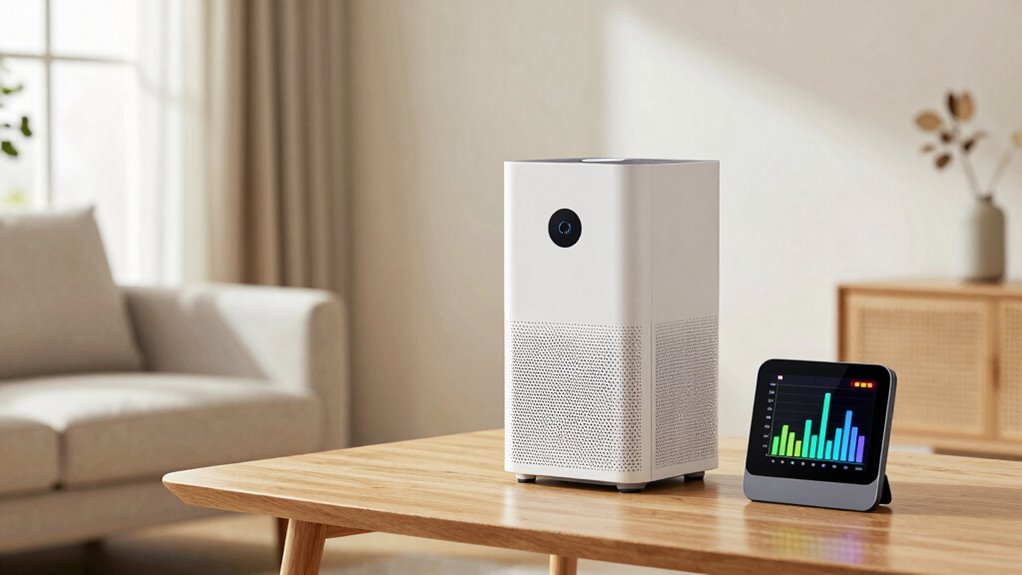
Choosing the right indoor air quality device can substantially improve your home’s air safety and comfort. Start by evaluating your specific needs—if you’re concerned about allergens or pollutants, an air purifier might be best. If you want to monitor air quality levels regularly, a quality monitor is essential. Make sure the device meets current air quality standards for safety and effectiveness. Consider ease of device maintenance; some air purifiers require frequent filter changes, while monitors need regular calibration. Think about your budget, room size, and the types of pollutants you want to target. A combination of both devices often offers the most thorough protection. Carefully research features and reviews to select a device that aligns with your home’s needs and guarantees consistent performance. Incorporating thermal behavior insights from high-heat outdoor cooking techniques can also help you understand how air circulation and temperature influence indoor air quality. Additionally, understanding air circulation patterns can aid in optimizing device placement for maximum effectiveness. Implementing air exchange rates can further improve your indoor environment by ensuring proper ventilation and reducing pollutant buildup. Moreover, considering smart home integration can enable seamless control and monitoring of your air quality devices through automation and voice commands, enhancing overall home comfort and safety. Regularly updating your knowledge on indoor air quality standards can also help you make informed decisions about device selection and maintenance.
Can Using Both Devices Together Keep Your Air Cleaner?

Using both an air purifier and an air quality monitor can work together to improve your indoor air. The monitor provides real-time data, helping you adjust the purifier for better results. Together, they offer a more all-encompassing approach to keeping your air cleaner.
Complementary Air Monitoring
Combining an air purifier with an air quality monitor can considerably enhance your ability to keep your indoor air clean. By pairing these devices, you can accurately track air pollution sources and make certain your environment meets air quality standards. The monitor detects pollutants like VOCs, particulate matter, and gases, giving real-time feedback. The purifier then adjusts its operation to target specific contaminants, optimizing air cleaning. This synergy allows you to respond quickly to pollution spikes, improve overall air quality, and maintain healthier indoor conditions.
- Identify pollution sources more effectively
- Prevent over- or under-utilizing your purifier
- Achieve consistent air quality levels
- Adapt to changes in your environment
- Ensure compliance with air quality standards
Enhanced Indoor Air Quality
When you operate an air purifier alongside an air quality monitor, you considerably boost your chances of maintaining cleaner indoor air. The air sensing capabilities of the monitor provide real-time data on pollutants and VOC levels, allowing you to adjust your air purification strategies effectively. The air purifier actively removes airborne particles, allergens, and odors, creating a healthier environment. Together, these devices create a feedback loop: the monitor detects changes in air quality, prompting the purifier to increase or decrease its operation accordingly. This synergy helps prevent pollutant buildup, ensuring your indoor air stays fresh and safe. Using both devices together offers a more all-encompassing approach, markedly enhancing indoor air quality and reducing health risks associated with poor air.
What Factors Should You Consider When Picking an Indoor Air Solution?
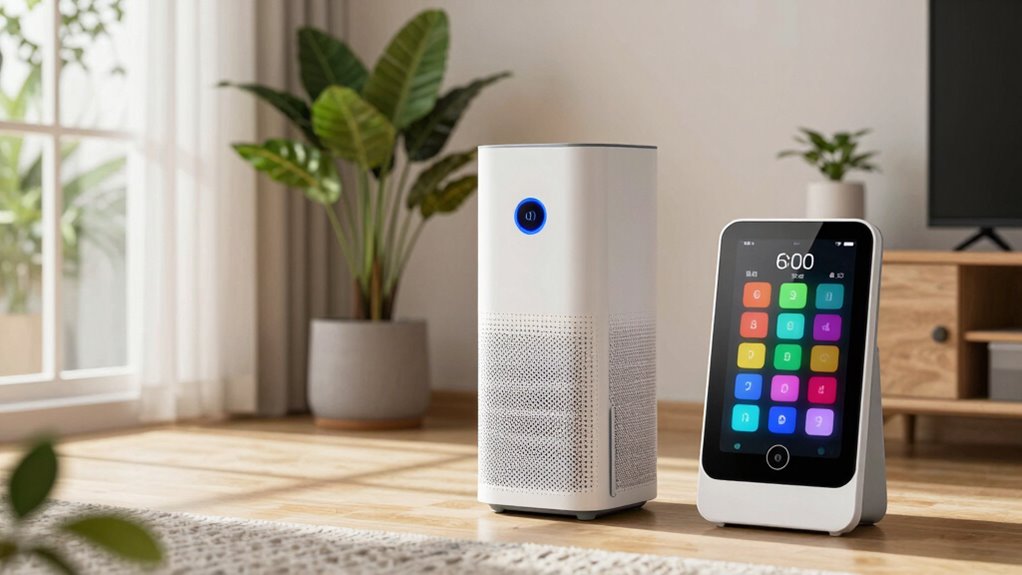
Choosing the right indoor air solution involves considering several key factors to guarantee you effectively improve your home’s air quality. First, assess your specific needs—are you targeting allergens, pollutants, or humidity? Next, evaluate your HVAC maintenance routines to ensure your system isn’t contributing to poor air quality. Air flow optimization is also vital; proper circulation helps distribute clean air and removes contaminants. Additionally, consider the size of your space to select equipment that’s appropriately scaled. Finally, look into maintenance requirements and costs to keep your solution effective over time. By focusing on these factors, you guarantee your investment enhances indoor air quality efficiently and sustainably.
Frequently Asked Questions
Can Air Purifiers Eliminate All Indoor Air Pollutants?
Air purifiers can’t eliminate all indoor air pollutants due to their limitations, especially with certain pollutant types like gases, volatile organic compounds (VOCs), and tiny particles. While they effectively remove dust, pollen, and some bacteria, they don’t fully address chemical fumes or odors. To improve indoor air quality, consider combining an air purifier with other measures like ventilation and air quality monitoring for thorough protection.
Do Air Quality Monitors Detect Harmful Gases or Just Particles?
Think of an air quality monitor as a detective on the case. It detects not just particles but also harmful gases, providing essential gas detection for pollutant identification. While it’s excellent at spotting airborne threats, it doesn’t eliminate them. So, if you want to know what’s lurking in your air, a monitor reveals the danger, helping you take informed actions, but you’ll need an air purifier for actual cleanup.
How Often Should I Replace Filters in an Air Purifier?
You should replace your air purifier’s filters based on the recommended filter lifespan, typically every 6 to 12 months. Check your device’s manual for a specific replacement schedule, as factors like usage and air quality can influence this. Regularly replacing filters ensures your purifier functions effectively, maintaining clean air in your space. Don’t wait too long—changing filters on time keeps air quality at its best.
Are There Smart Devices That Combine Purifying and Monitoring Functions?
Yes, you can find smart devices that combine purifying and monitoring functions, offering a seamless experience. These combined devices integrate smart technology to automatically adjust air purification based on real-time air quality data, monitor pollutants continuously, and provide alerts through your smartphone. With smart integration, you get proactive air management, efficient filtering, and peace of mind. Investing in such a device simplifies your environment, making clean air effortless and intuitive.
What Are the Maintenance Requirements for Air Quality Monitors?
You’ll need to regularly calibrate your air quality monitor’s sensors to guarantee accurate readings, typically every few months or as recommended by the manufacturer. Check and replace batteries as needed to maintain continuous operation, especially if it’s a portable device. Keep the device clean and avoid exposing it to dust or moisture, which can affect sensor performance and battery life. Proper maintenance helps your monitor stay reliable and accurate over time.
Conclusion
Imagine walking into your home, greeted by invigorating, crisp air that feels like a gentle breeze on a spring morning. By choosing the right combination of an air purifier and a monitor, you can turn your space into a sanctuary of clean air. Whether you’re tracking pollutants or actively removing them, these devices work together to create a breath of fresh atmosphere you can truly trust. Your perfect indoor oasis is just a decision away.