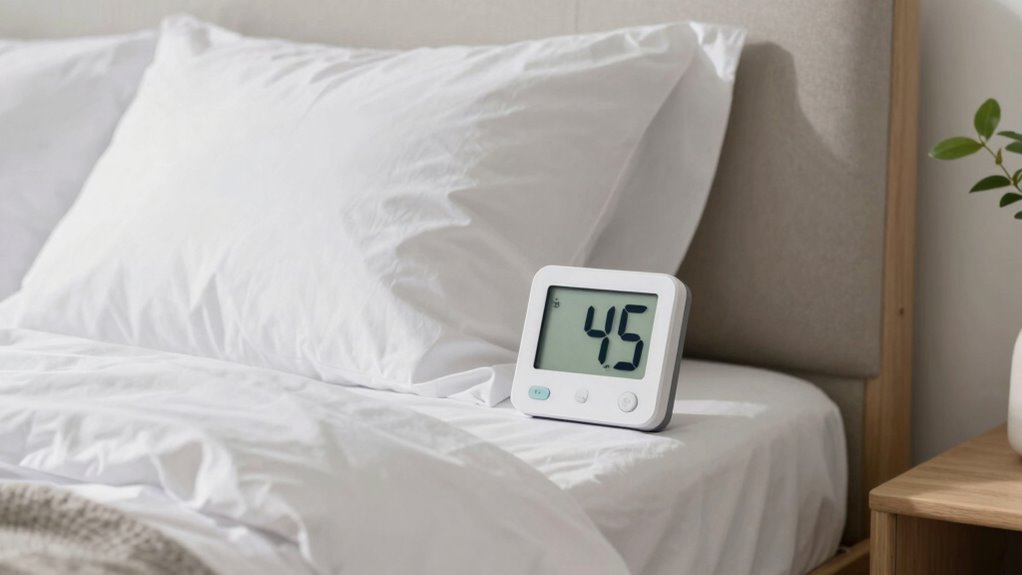
Maintaining indoor humidity between 40% and 60% is key for preventing mold growth in your bedroom. Many homes miss this safe zone, either letting humidity fall too low or rise too high, which promotes mold spores settling and thriving. Keeping humidity steady within this range reduces dampness, improves air quality, and protects your health and home. If you want to learn simple ways to stay within this ideal range year-round, there’s more to discover.
Key Takeaways
- Maintain indoor humidity between 40% and 60% to effectively prevent mold growth.
- Many homes overlook proper humidity levels, increasing mold risk and indoor air quality issues.
- Use reliable hygrometers and smart monitors to ensure consistent humidity control.
- Seasonal adjustments, like dehumidifiers in summer and humidifiers in winter, help maintain safe levels.
- Proper ventilation and moisture management are essential to avoid mold-prone environments most homes miss.
What Is the Ideal Humidity Range to Prevent Mold in Your Bedroom?

Maintaining the right humidity level in your bedroom is essential to prevent mold growth. When humidity is between 40% and 60%, you help preserve your bedroom aesthetics by reducing dampness and mold spots. This optimal humidity range also boosts your sleep quality, as it keeps the air comfortable and minimizes respiratory issues caused by mold spores. Proper ventilation and controlling moisture sources are also key to maintaining indoor air quality and preventing mold development. Using a hygrometer helps you monitor these levels accurately, ensuring you stay within the ideal humidity range for mold prevention. Regularly checking your humidity levels and adjusting your environment accordingly can significantly reduce the risk of mold. For example, managing humidity fluctuations can prevent condensation and dampness that foster mold growth. Your bedroom becomes a cozy haven where mold is less likely to thrive, supporting restful sleep and a cleaner, more inviting space.
How Humidity Levels Impact Mold Growth and Indoor Air Quality
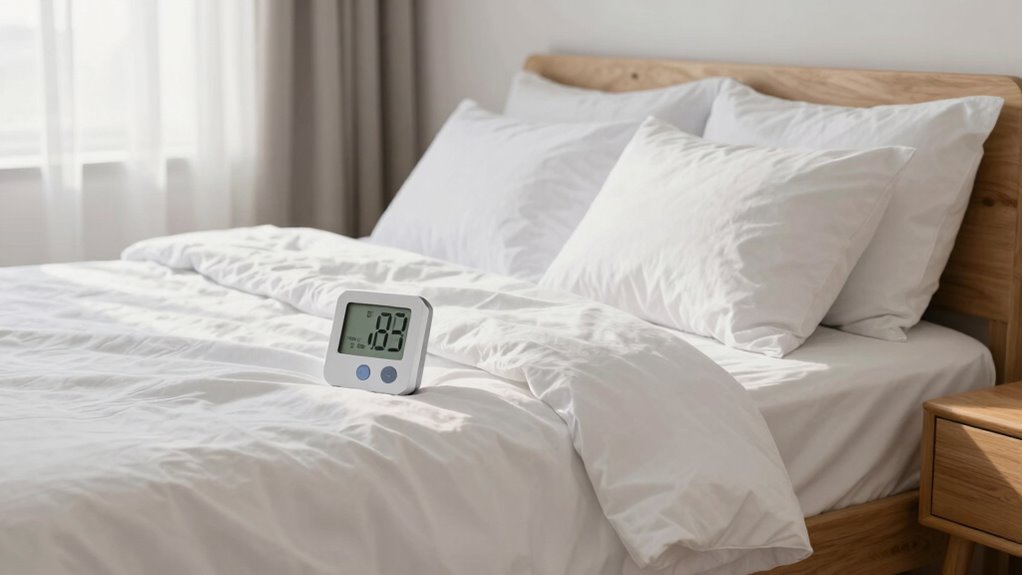
When humidity levels rise above the ideal range, mold spores find it easier to settle and grow on surfaces, substantially impacting indoor air quality. High humidity creates a perfect environment for mold spores to thrive, especially on damp surfaces like walls, fabrics, and even indoor plants. You might notice increased musty odors or allergy symptoms as mold spreads. Excess moisture also encourages indoor plants to retain more water, which can further boost mold growth if not managed properly. Additionally, maintaining proper humidity levels can help prevent issues with electric power generation with bike generators, which require dry conditions for optimal performance. Maintaining suitable humidity levels also depends on understanding indoor air quality and how it affects overall health. Proper ventilation and humidity control can significantly reduce the risk of mold development and improve your home’s air quality. Maintaining suitable humidity levels keeps mold spores from settling and prevents mold from spreading, helping to keep your indoor air clean and healthy. Keeping your bedroom within the safe humidity range minimizes mold-related health risks and preserves better indoor air quality. Proper humidity control is especially important in areas prone to dampness or leaks, which can exacerbate mold problems.
Common Mistakes That Promote Mold by Misregulating Bedroom Humidity
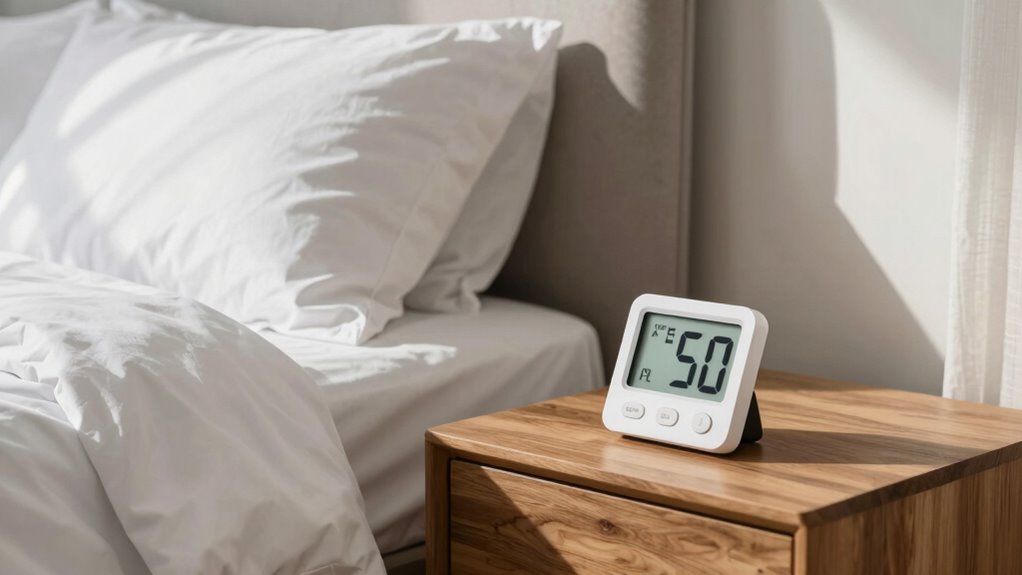
One common mistake that promotes mold growth is neglecting to monitor and control bedroom humidity levels properly. When humidity rises above the safe range, mold spores thrive, worsening allergies and affecting indoor air quality. Poor bedroom ventilation often leads to excess moisture buildup, creating ideal conditions for mold. Many homeowners overlook these issues, increasing mold allergy symptoms and compromising health. To avoid this, guarantee proper airflow and maintain humidity within the recommended range. Additionally, understanding indoor air quality can help homeowners identify early signs of mold issues before they become severe. Recognizing the importance of Free Floating in maintaining balanced humidity can be a game changer in mold prevention. Proper home comfort strategies, including humidity control, are crucial for preventing mold growth. Ensuring consistent humidity monitoring is essential for maintaining a healthy indoor environment. Implementing humidity sensors can provide real-time data to help homeowners adjust their strategies promptly. Here’s a quick overview:
| Mistake | Consequence | Solution |
|---|---|---|
| Ignoring humidity levels | Mold growth, allergy flare-ups | Use humidifiers/dehumidifiers |
| Poor ventilation | Moisture retention | Improve airflow |
| Not monitoring mold symptoms | Hidden mold problems | Regular inspection |
How to Measure and Monitor Your Bedroom’s Humidity Effectively
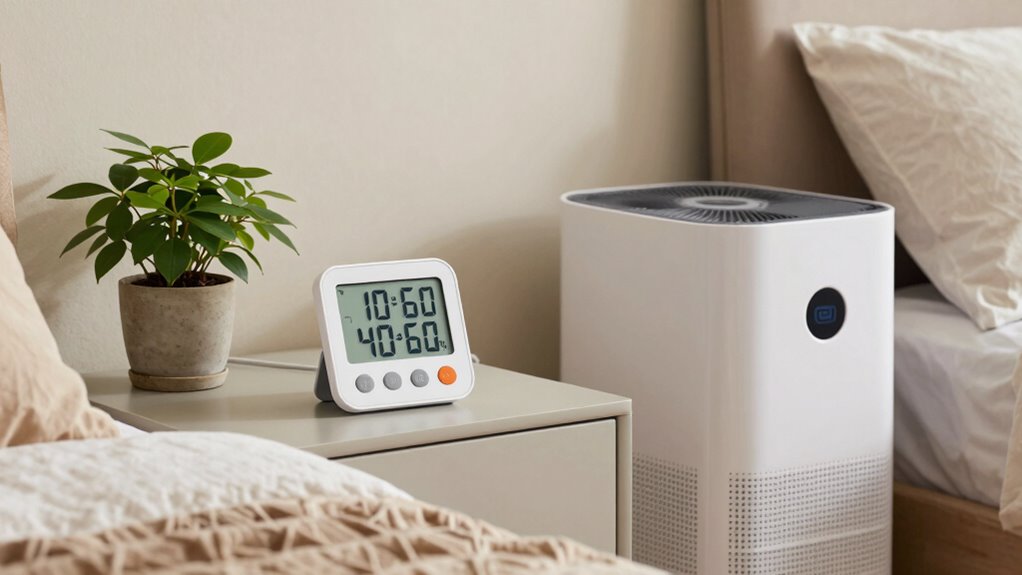
To keep your bedroom’s humidity in check, you’ll need reliable tools like a hygrometer. Make sure to check your readings regularly to catch any fluctuations early. Consistent monitoring helps you maintain the perfect balance for a healthy, comfortable space. Incorporating smart home automation can also help you set up alerts and automate adjustments, ensuring optimal humidity levels without constant manual oversight.
Choosing the Right Tools
Choosing the right tools is essential for accurately measuring and monitoring your bedroom’s humidity levels. To do this effectively, select a reliable hygrometer that provides precise readings. Modern digital models are easy to use and often include features like temperature tracking, which can influence humidity levels. When considering your bedroom decor, opt for discreet devices that blend seamlessly with your space, so they don’t interfere with your sleep environment. Monitoring humidity helps you maintain ideal conditions, directly impacting your sleep quality and mold prevention efforts. Consistent, accurate readings allow you to make informed adjustments, ensuring your bedroom stays within the safe humidity range. Invest in quality tools, and you’ll confidently manage your environment for healthier, more restful nights. Additionally, understanding the differences between various measurement technologies can help you select the most accurate device for your needs. Being aware of vetted options ensures you choose reliable equipment that aligns with your monitoring goals. Regularly calibrating your hygrometer also enhances its accuracy, ensuring your humidity readings remain trustworthy over time. Incorporating proper placement of your hygrometer within your room can further improve measurement reliability and help you achieve optimal humidity control.
Maintaining Consistent Checks
How can you guarantee your bedroom’s humidity stays within the ideal range consistently? Regularly monitoring air quality is key. Use a hygrometer to check humidity levels daily, ensuring they stay between 40-60%. Set reminders to record readings and observe patterns over time. To visualize your checks, imagine this simple table:
| Time of Day | Humidity Level | Air Quality Status |
|---|---|---|
| Morning | 45% | Good |
| Afternoon | 50% | Good |
| Evening | 55% | Good |
| Night | 48% | Good |
| Next Morning | 47% | Good |
Maintaining consistent checks helps you preserve bedroom comfort and prevent mold, keeping air quality ideal. Additionally, understanding humidity control techniques can further enhance your efforts.
Easy Tips for Maintaining Safe Humidity Levels Year-Round

Maintaining safe humidity levels in your bedroom throughout the year is essential for comfort and health. To do this effectively, you need to dispel humidity myths and focus on proven mold prevention techniques. First, regularly use a hygrometer to monitor levels; think of it as your home’s humidity stethoscope. Second, keep windows open when weather permits to promote air circulation, like opening a door to fresh air. Third, control indoor moisture sources, such as drying clothes or humidifiers, to prevent excess humidity buildup. Fourth, be aware of specific environmental factors like climate variations that can influence indoor humidity levels and adjust accordingly. Additionally, understanding pest control principles can help prevent mold and bacteria growth in your living space by maintaining cleanliness and reducing moisture. Being mindful of seasonal changes can also help you adjust humidity levels appropriately throughout the year, preventing mold growth during humid months. Simple adjustments like these help maintain the ideal range, reducing mold risks while ensuring comfort. Avoid misconceptions that high humidity always equals comfort—staying within the safe range is key for mold prevention and overall well-being.
Best Devices and Tools to Control Bedroom Humidity
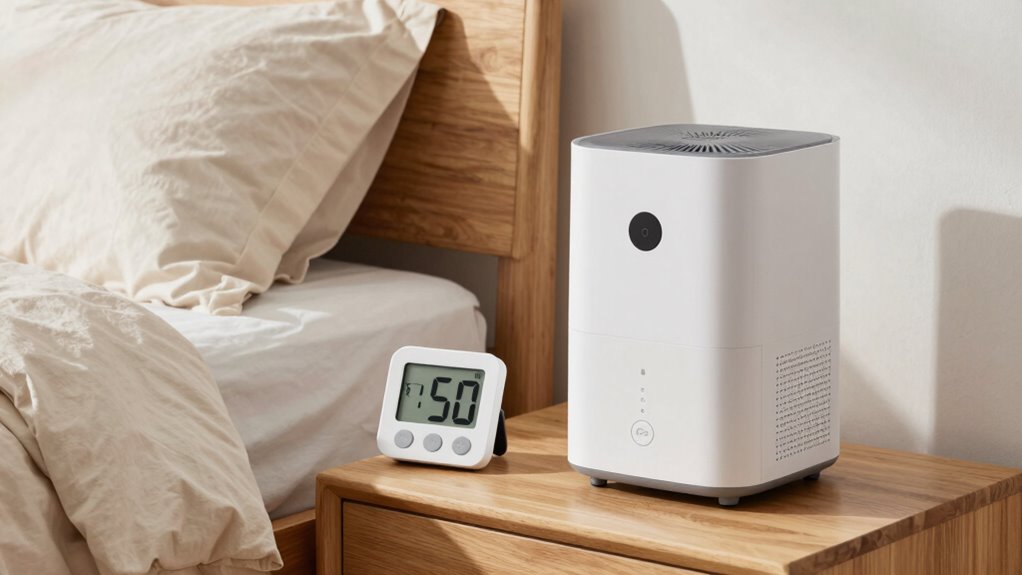
Using smart humidity monitors helps you keep track of your bedroom’s moisture levels in real time. Dehumidifier options can quickly decrease excess humidity to maintain a comfortable environment. With these tools, you can easily ensure your bedroom stays within the ideal humidity range. Additionally, understanding the science of humidity control can help you make more informed decisions about your home environment. Learning about home safety and accessibility can further enhance your living space by reducing risks associated with improper humidity levels. Incorporating proper ventilation practices can also improve air quality and humidity balance in your bedroom.
Smart Humidity Monitors
Smart humidity monitors have revolutionized how you control your bedroom’s moisture levels by providing real-time data and precise adjustments. You no longer rely on guesswork or outdated methods. Instead, these devices help you maintain the ideal humidity range effortlessly. Imagine placing a sleek monitor on your bedside table, seamlessly blending with decorative lighting and bedroom furniture. Picture viewing clear, easy-to-read readings that alert you when humidity goes out of range. Some top monitors include features like smartphone connectivity, allowing you to check levels remotely. Others have built-in alerts to notify you of fluctuations. With these smart tools, you can fine-tune your environment, preventing mold and creating a comfortable, healthy space. They’re a game-changer for anyone serious about bedroom air quality.
Dehumidifier Options
Choosing the right dehumidifier is essential for effectively controlling your bedroom’s humidity levels. You need to take into account dehumidifier capacity to match your room size; a small unit works for bedrooms under 200 square feet, while larger spaces require higher capacity models. Portable options are a great choice if you want flexibility, allowing you to move the device between rooms or store it easily. Look for features like adjustable humidity settings, automatic shutoff, and continuous drainage options to simplify maintenance. Energy efficiency is also important to keep costs low. By selecting a dehumidifier suited to your room’s size and needs, you can maintain ideal humidity levels and reduce mold risk. Proper device choice ensures your bedroom remains comfortable, healthy, and mold-free.
Adjusting Humidity During Different Seasons: What You Need to Know
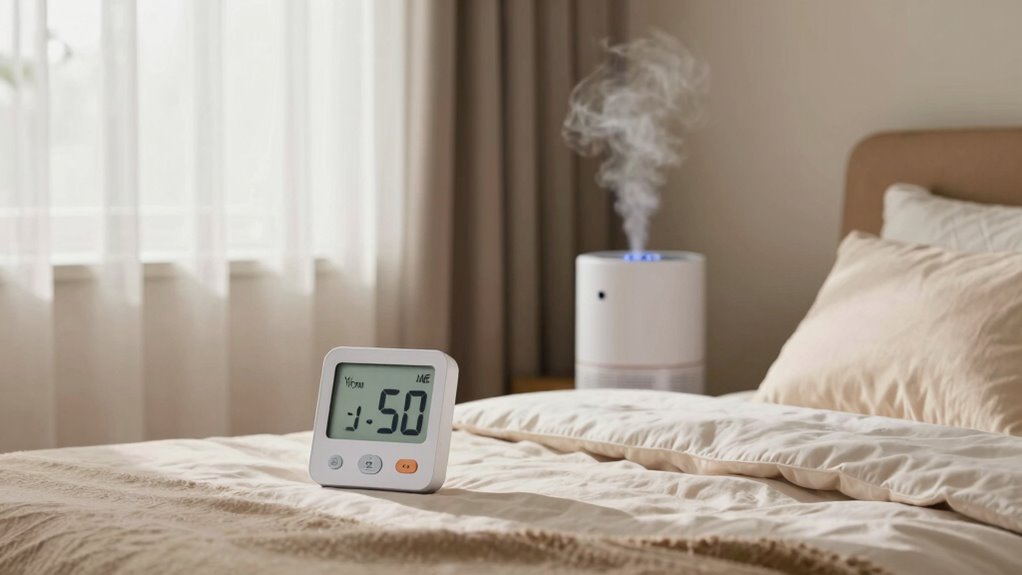
Adjusting your bedroom humidity levels throughout the year is essential for comfort and health. Seasonal adjustments help you manage humidity fluctuations, preventing mold and discomfort. In winter, dry air can cause chapped skin and respiratory issues, so you might need a humidifier to boost moisture. During summer, increased humidity can lead to mold growth, so a dehumidifier becomes necessary. Imagine:
Seasonal humidity adjustments are key to comfort and health year-round.
- A cold winter night with dry air making you restless.
- A humid summer day with condensation on windows.
- A spring morning with fluctuating humidity as temperatures change.
Why Staying Within the Right Humidity Range Protects Your Health and Home

Maintaining the right humidity levels in your bedroom is essential because it directly impacts your health and the integrity of your home. When humidity stays within the ideal range, mold spores have a harder time thriving, reducing the risk of mold growth that can cause respiratory issues and allergies. Humidity fluctuations create an environment where mold spores can settle and multiply, especially during high moisture periods. By keeping humidity steady, you prevent excess moisture that mold needs to grow. This protection extends beyond mold prevention—you also reduce dust mites and bacteria, improving your overall health. Staying within the safe humidity range helps preserve your home’s structure, preventing damage from mold and excess moisture. Ultimately, consistent humidity control safeguards your well-being and keeps your home healthier.
Frequently Asked Questions
Can Low Humidity Levels Cause Respiratory Issues in Bedrooms?
Yes, low humidity levels can cause respiratory issues in bedrooms. When the air is too dry, dust mites thrive, aggravating allergies and asthma. You might also notice dry skin, nasal congestion, and throat irritation. Maintaining proper humidity helps keep dust mites and other allergens at bay, making breathing easier. Use a humidifier if needed, and aim for a balanced level to improve comfort and respiratory health in your bedroom.
How Quickly Does Mold Develop After Humidity Levels Become Unsafe?
Mold growth can start within 24 to 48 hours after humidity levels increase above the safe range. When humidity rises, it creates the perfect environment for mold spores to settle and grow, especially in damp areas. If you notice a humidity increase, act quickly by reducing moisture and ventilating the room. The sooner you address the humidity increase, the better you prevent mold development and protect your health.
Are There Natural Methods to Regulate Bedroom Humidity Without Devices?
Think of your bedroom as a delicate garden, where natural methods can keep humidity in check. You can grow plant humidity by placing houseplants that absorb moisture, like spider plants or pothos. Additionally, natural ventilation—opening windows or creating cross-breezes—helps regulate moisture levels without devices. These simple steps act like a breath of fresh air, keeping mold at bay and your bedroom fresh and healthy.
What Are the Signs Indicating Excessive Humidity in Your Sleeping Space?
If your sleeping space has damp odors or visible mold, you’re likely dealing with excessive humidity. You might notice condensation on windows or walls, musty smells, or a clammy feeling in the air. These signs indicate moisture buildup that can promote mold growth. To keep your bedroom healthy, address these issues promptly by improving ventilation, reducing moisture sources, and maintaining proper humidity levels.
Does Seasonal Humidity Fluctuation Affect Long-Term Mold Prevention Strategies?
Think of seasonal variation as a gentle tide, subtly shifting your home’s humidity over time. These fluctuations can challenge your efforts to maintain humidity stability, making mold prevention trickier. To stay ahead, you’ll want to adjust your strategies seasonally—using dehumidifiers or vents as needed—so your environment remains consistently safe. Embracing this ebb and flow helps you protect your space from mold, regardless of changing weather patterns.
Conclusion
Maintaining the right humidity in your bedroom is key to preventing mold and safeguarding your health. By monitoring levels and making simple adjustments, you can create a comfortable, mold-free environment year-round. Remember, “An ounce of prevention is worth a pound of cure”—keeping humidity in check now saves you from costly mold issues later. Stay vigilant, stay healthy, and enjoy a safer, more comfortable home.