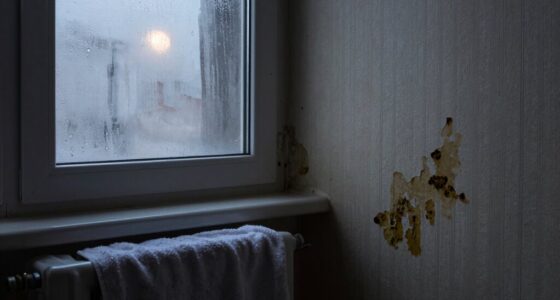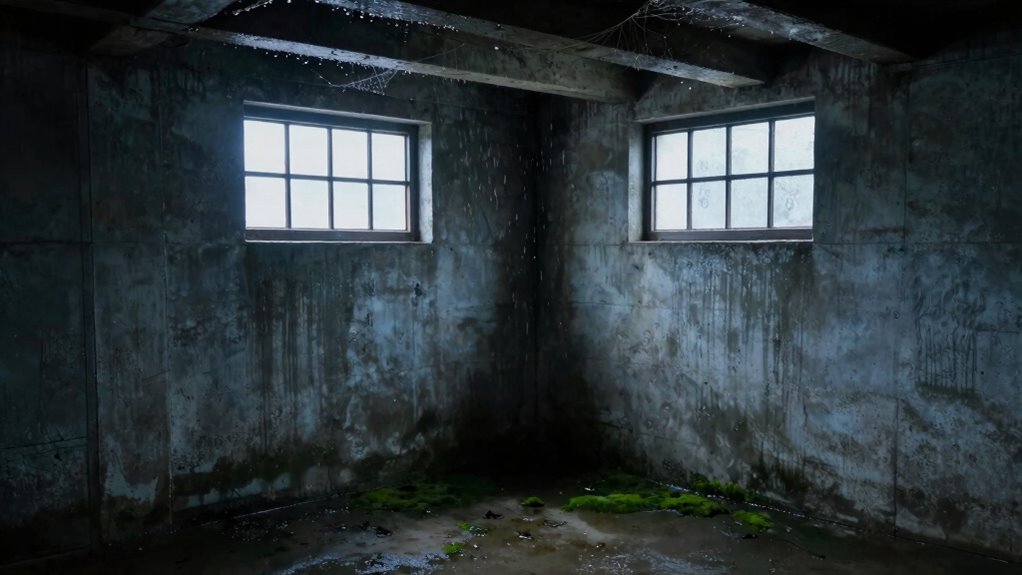

Your basement can feel damp even without visible leaks because unseen moisture often comes from high indoor humidity, poor ventilation, or groundwater seepage. Excess moisture condenses on surfaces, making the space feel clammy and uncomfortable. Without proper airflow or moisture control, mold and a damp smell can develop. By tackling these issues, you can better understand why your basement feels damp and discover effective ways to keep it dry and comfortable.
Key Takeaways
- Unseen moisture can seep through walls or floors without visible leaks, causing dampness.
- High indoor humidity and poor ventilation trap moisture, leading to a damp basement feel.
- Surface condensation from temperature differences creates a moist sensation without leaks.
- Groundwater seepage and inadequate drainage introduce moisture even with no apparent leaks.
- Insufficient insulation and moisture management allow humidity to linger and make the space feel damp.
Why Does My Basement Feel Damp Even When It Looks Dry?
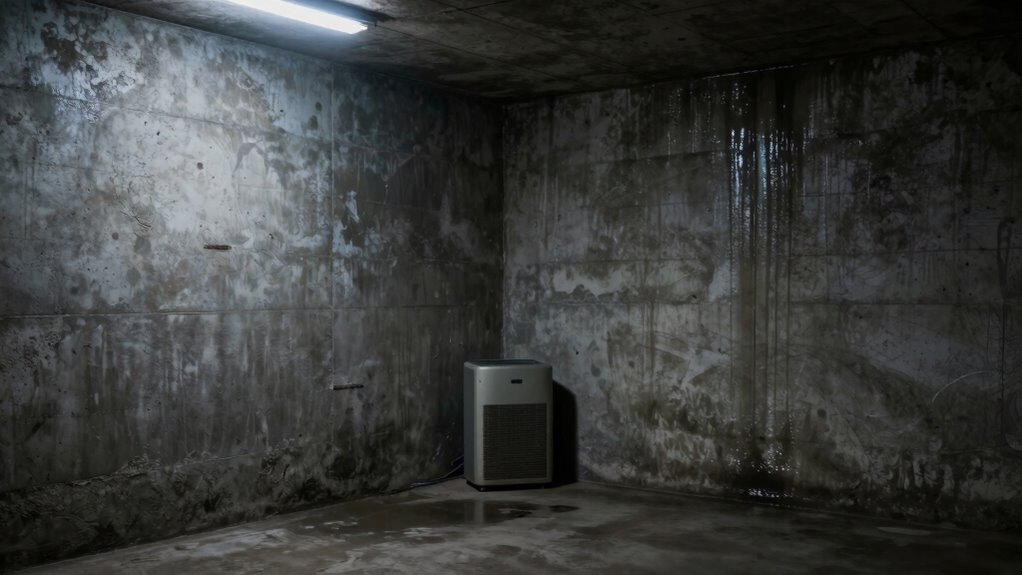
Even if your basement looks dry on the surface, it can still feel damp due to unseen moisture. This hidden humidity can cause discomfort and promote mold growth if left unchecked. Using a dehumidifier offers several benefits, including reducing excess moisture and maintaining a healthier environment. It helps control indoor humidity levels, preventing the dampness that isn’t always visible but can be sensed. Keeping humidity in check is vital for basement mold prevention, as mold thrives in moist conditions. Even without visible leaks, moisture can seep through walls or floors or come from high humidity outside. A dehumidifier continuously pulls moisture from the air, making your basement feel drier and safer. Proper ventilation and air circulation are also crucial in reducing lingering dampness and ensuring a well-ventilated space. Additionally, understanding building moisture management can help you implement long-term solutions for a dry basement. Regular maintenance of basement waterproofing systems can also significantly reduce unseen moisture intrusion. Incorporating humidity control strategies can further enhance your efforts to keep the space dry. This simple device considerably improves indoor air quality and protects your space from hidden dampness.
How Does Indoor Humidity Make My Basement Feel Wet?
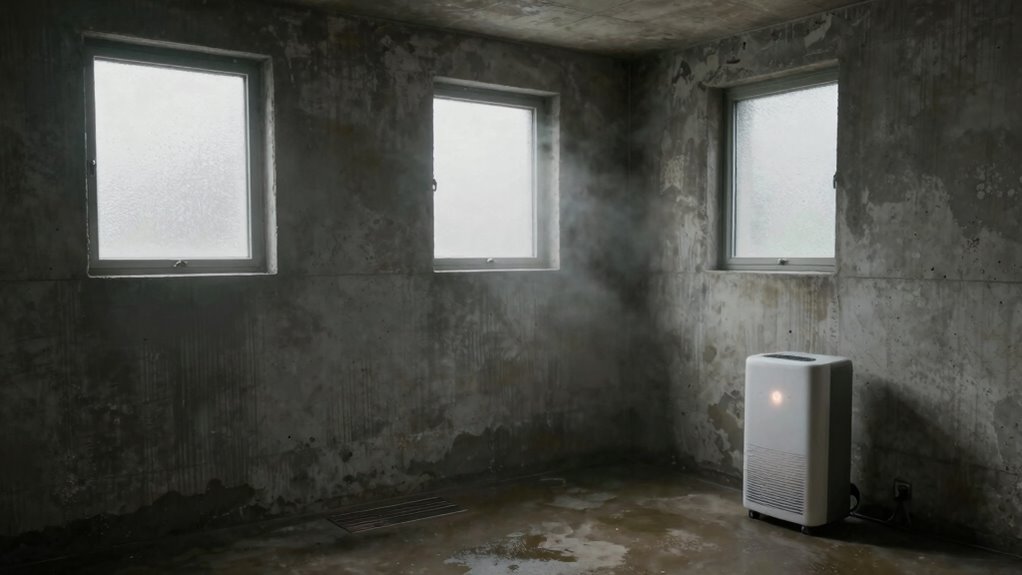
High indoor humidity levels can make your basement feel wet even when there are no visible leaks. Excess moisture in the air leads to increased surface condensation, creating a damp sensation. Poor air circulation traps humid air, encouraging mold growth on walls and floors, which exacerbates the damp feeling. When the air lacks proper movement, moisture settles on surfaces, making everything feel clammy and uncomfortable. To prevent this, assure good ventilation and reduce indoor humidity with dehumidifiers. Improving air circulation helps dry out excess moisture, making your basement feel less damp and more comfortable. Additionally, maintaining appropriate humidity levels can significantly reduce indoor dampness. Using a humidifier or dehumidifier can help control moisture levels effectively. Properly managing indoor moisture is essential for a healthier living environment. Consistent humidity control can also prevent long-term damage to your home’s structure. Here’s a quick overview:
| Humidity Level | Effect on Basement |
|---|---|
| High | Promotes mold growth |
| Low | Keeps surfaces dry |
| Poor airflow | Increases dampness |
| Good airflow | Reduces surface moisture |
| Ideal | Maintains a dry environment |
Can Poor Ventilation Cause Basement Dampness?
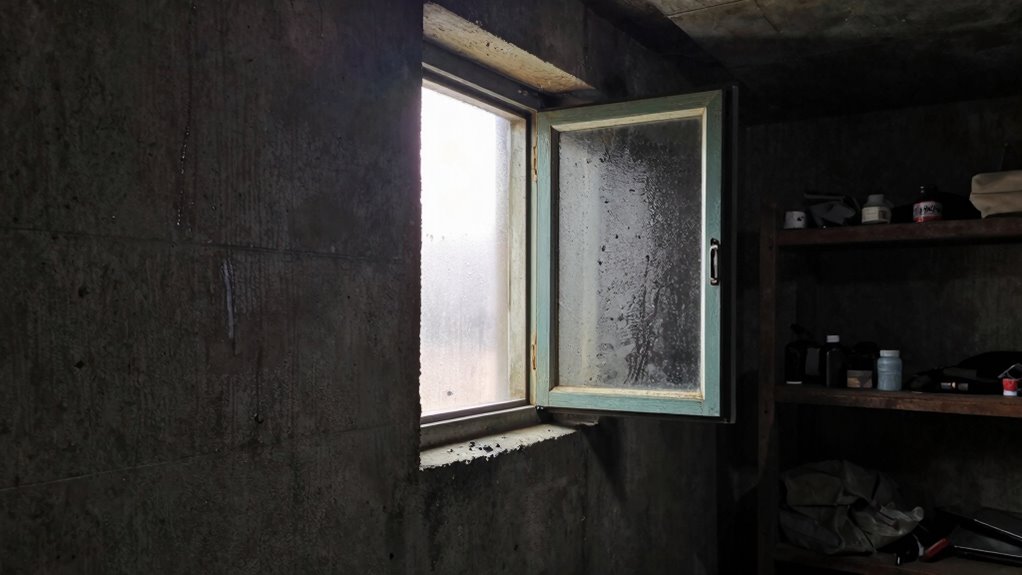
Poor ventilation directly contributes to basement dampness by preventing moisture from escaping and allowing humidity levels to rise. Without proper air circulation, moist air becomes trapped, leading to moisture buildup on walls and surfaces. This stagnant environment creates ideal conditions for dampness, even if there are no leaks. When air isn’t moving, humidity can linger, increasing the likelihood of mold growth and a musty smell. Improving ventilation helps circulate dry air and reduces moisture accumulation. Using exhaust fans, opening windows, or installing vents encourages better air flow, which prevents dampness from settling in. Effective filtration and pump protection are also essential to maintain any attached equipment that could influence indoor air quality. Ensuring good air circulation is a simple yet effective way to keep your basement dry and comfortable, even during humid weather. Additionally, smart contracts can automate climate control systems to optimize humidity levels automatically. Proper ventilation also reduces indoor pollutants, further contributing to a healthier basement environment. Incorporating humidity sensors can help monitor moisture levels and prompt timely ventilation adjustments.
Is Groundwater Seepage Causing Moisture in My Basement?
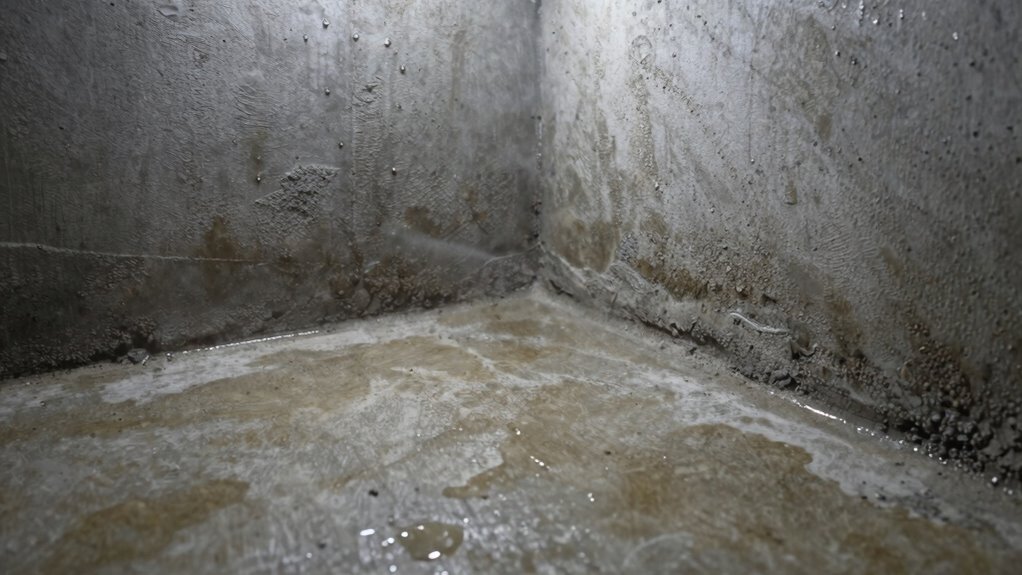
Groundwater seepage is a common cause of basement moisture, especially in areas with high water tables or poor drainage. When groundwater rises, it increases soil moisture around your foundation, which can lead to dampness inside your basement. If your basement walls or floors are porous or lack proper sealing, this moisture can seep through and cause persistent dampness. Installing vapor barriers on basement floors and walls helps block soil moisture from penetrating your space. These barriers act as a protective layer, preventing groundwater from reaching the interior. Keep in mind that seepage often occurs gradually, making it sneaky. Regularly inspecting your foundation and ensuring proper drainage around your home can help reduce the risk of groundwater seepage and keep your basement dry. Additionally, understanding how soil composition affects water movement can inform better drainage solutions, and consulting with foundation specialists can provide targeted strategies for your specific situation. Implementing effective drainage systems such as sump pumps and French drains can further help manage water intrusion and maintain a dry basement environment. Being aware of water table fluctuations can also help anticipate potential seepage issues before they become severe.
How Can I Reduce Basement Humidity and Keep It Dry?
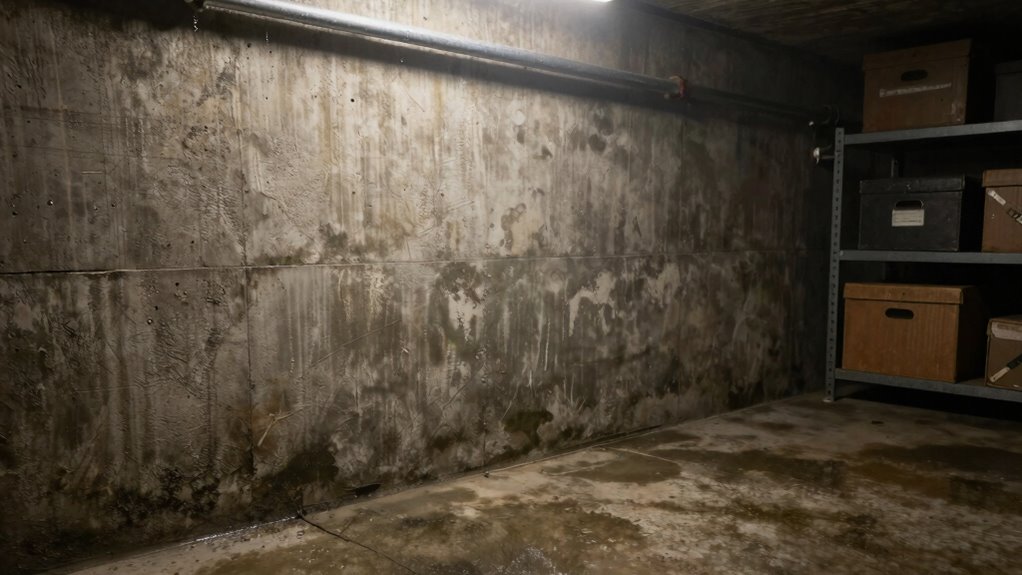
To effectively reduce basement humidity and keep it dry, you should focus on improving ventilation and controlling moisture sources. Use a dehumidifier regularly, and ensure proper dehumidifier maintenance to keep it functioning efficiently. Installing basement insulation helps prevent cold walls that attract moisture. Additionally, sealing cracks and leaks minimizes water intrusion. Proper ventilation allows moist air to escape and replaces it with drier air. Consider adding vents or using exhaust fans. Here’s a quick overview: dehumidifier maintenance.
| Action | Purpose | Tips |
|---|---|---|
| Use a dehumidifier | Remove excess moisture | Maintain and clean regularly |
| Improve insulation | Reduce cold surfaces attracting moisture | Seal gaps around walls |
| Enhance ventilation | Circulate air and dry out space | Use exhaust fans or vents |
Implementing these steps creates a drier, more comfortable basement environment.
Frequently Asked Questions
Can Mold Growth Cause a Damp Feeling Without Visible Water?
Yes, mold growth can cause a damp feeling without visible water. Mold spores thrive in humid environments, and humidity buildup in your basement can lead to mold development even when there’s no leaks. As mold spreads, it releases moisture into the air, increasing humidity and making the space feel damp. You might not see water, but the presence of mold spores and high humidity levels can still create that damp sensation.
What Role Do Basement Materials Play in Moisture Retention?
Basement materials substantially influence moisture retention through their permeability. If your basement construction uses highly permeable materials like certain bricks or porous concrete, they can absorb and hold moisture, making the space feel damp. Less permeable materials like sealed concrete or waterproofed surfaces help prevent moisture buildup. Understanding how your basement’s construction materials interact with humidity can help you choose better solutions to keep it dry and comfortable.
Does the Type of Foundation Affect Basement Humidity Levels?
The type of foundation you have directly impacts basement humidity levels. For example, poured concrete foundations tend to regulate moisture better than stone or block types, which can trap more dampness. Knowing your foundation type helps with moisture control strategies. Addressing these differences early can keep your basement dry and comfortable, avoiding water issues before they become a headache. Don’t wait for trouble to knock on your door!
How Does Outdoor Weather Influence Indoor Basement Dampness?
Outdoor weather greatly influences your basement’s dampness through humidity fluctuations and exterior drainage. When it’s rainy or humid outside, moisture seeps in through walls and floors, increasing dampness. Poor exterior drainage can worsen this by allowing water to pool near your foundation, raising indoor humidity levels. You can reduce dampness by improving drainage around your home and managing outdoor humidity, helping keep your basement dry despite changing weather conditions.
Are There Specific Household Activities That Increase Basement Moisture?
Think of your basement as a sponge soaking up every drop. Household activities like running the HVAC system without proper maintenance or having plumbing leaks can flood this sponge, increasing moisture levels. HVAC maintenance helps control humidity, while plumbing leaks introduce unexpected water sources. Both subtly turn your basement into a damp haven, making it feel muggy even without obvious leaks. Stay vigilant, and keep your basement dry and comfortable.
Conclusion
Even when your basement seems dry on the surface, unseen whispers of moisture can linger, like a gentle fog settling in. By understanding the subtle clues—humidity, ventilation, and seepage—you can clear the air and restore a sense of comfort. Think of your basement as a quiet pond; with a little care, you can keep its waters calm and inviting, ensuring it remains a cozy, dry haven beneath your home.