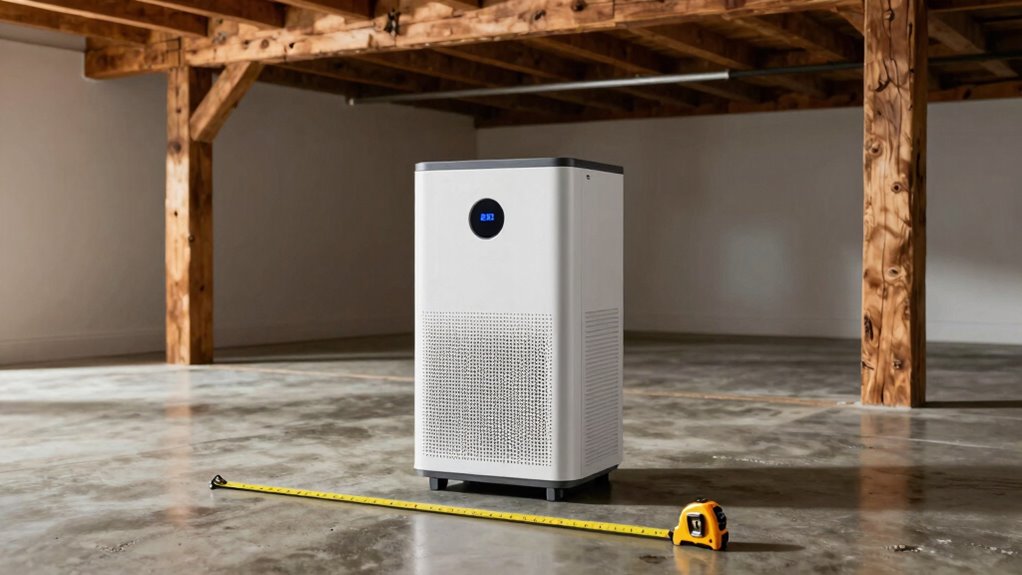

To size a dehumidifier effectively, measure your room’s square footage accurately and compare it to dehumidifier capacity guidelines. For rooms up to 500 sq ft, choose a unit rated for 30-50 pints; for larger areas, opt for 50-70 pints. Don’t forget to take into account moisture levels and environmental factors. Properly matching your space and needs helps prevent issues and keeps your environment comfortable. Keep going to discover detailed steps for perfect sizing.
Key Takeaways
- Measure your room’s square footage accurately, including irregular shapes, for precise dehumidifier sizing.
- Use recommended capacity ranges: 30-50 pints for up to 500 sq ft, 50-70 pints for 500-1,000 sq ft.
- Assess humidity levels with a hygrometer to determine if a higher or lower capacity is needed.
- Ensure proper airflow around the unit and select a placement that maximizes efficiency.
- Consider environmental factors and climate to adjust capacity needs for optimal moisture control.
Why Choosing the Right Dehumidifier Size Matters (And What Happens When You Don’t)
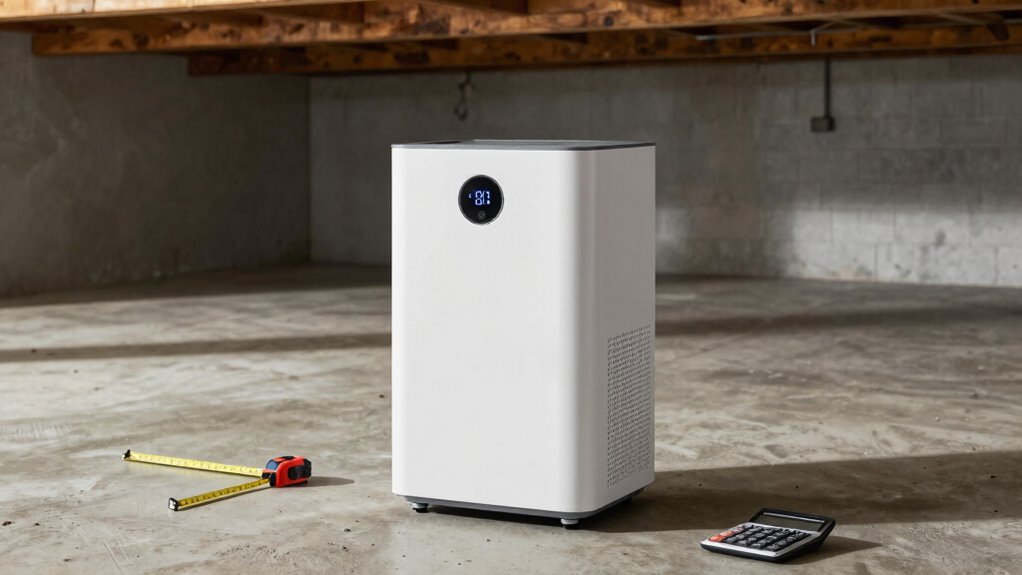
Choosing the right dehumidifier size is essential because an undersized unit won’t effectively reduce humidity, leaving your space damp and prone to mold. When your dehumidifier is too small, it struggles to improve air quality, and moisture remains trapped, risking health issues and property damage. Conversely, an oversized unit may cycle on and off frequently, wasting energy and lowering energy efficiency. Proper sizing guarantees your space stays comfortably dry, which enhances air quality by reducing mold and allergens. It also helps you save on electricity bills by optimizing energy use. When you select the right size, you achieve a balance between effective moisture control and energy efficiency, creating a healthier, more comfortable environment. Ignoring proper sizing can lead to ongoing problems and unnecessary expenses. Additionally, understanding the square footage of your space ensures you choose a dehumidifier that fits your specific needs and prevents inefficiencies. Accurate space measurement is a crucial step in achieving optimal dehumidification performance, as it helps you determine the appropriate capacity based on room size and moisture levels.
How to Accurately Measure Your Room’s Square Footage

To precisely gauge your room’s square footage, start by gathering a measuring tape or ruler, and make sure you have a pen and paper to record your numbers. Begin by measuring the length and width, keeping in mind your decorating styles and furniture arrangement, which can affect usable space. Use the table below to help visualize different room shapes:
| Shape | How to Measure | Example Calculation |
|---|---|---|
| Rectangle | Length x Width | 12 ft x 10 ft = 120 sq ft |
| L-Shape | Divide into rectangles | Measure each, then add |
| Irregular | Break into simple shapes | Measure parts, sum totals |
| Multi-Levels | Measure each level separately | Add all levels together |
Accurate measurements guarantee your dehumidifier fits perfectly and works efficiently.
Understanding Moisture Levels and How They Affect Capacity
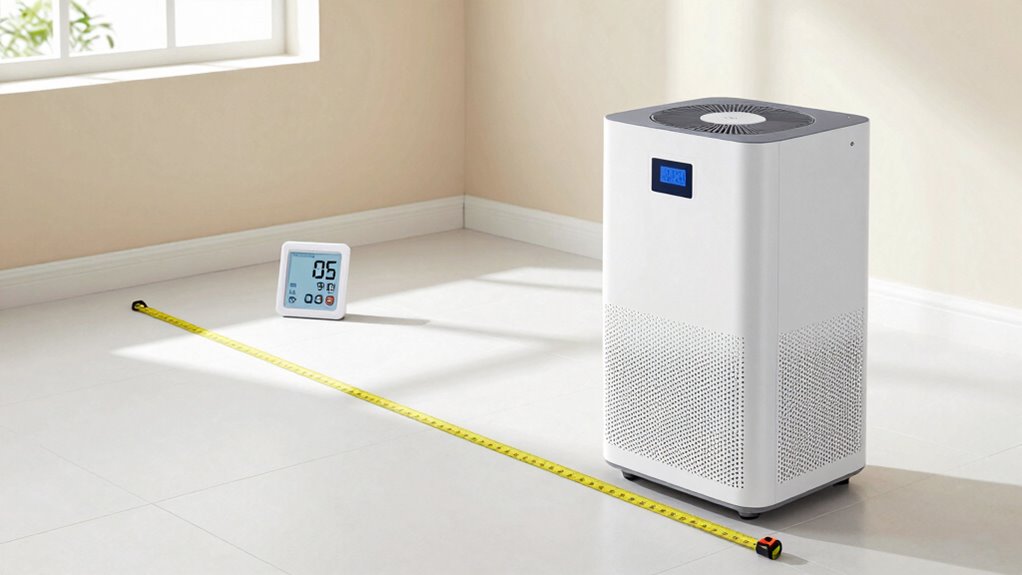
Understanding moisture levels is essential because the amount of humidity in your space directly impacts the capacity needed for your dehumidifier. Higher moisture content means more humidity that needs to be removed, requiring a unit with greater capacity. If the air is excessively damp, your dehumidifier must work harder to achieve effective humidity control. Conversely, in spaces with lower moisture levels, a smaller capacity unit may suffice. Knowing how much moisture is present helps you select a dehumidifier that can maintain a comfortable, balanced environment without overworking or underperforming. Monitoring humidity levels with a hygrometer can give you a clear picture of your space’s moisture content and guide you in choosing the right size for your needs. Proper sizing ensures your dehumidifier operates efficiently and effectively. Additionally, understanding the moisture content of your environment can help prevent mold growth and protect your home’s structural integrity. Being aware of humidity levels in your space can further optimize your dehumidifier’s performance and longevity. Awareness of support breakfast options can also provide a cozy and nourishing start to your day, especially if you’re managing a humid environment that affects your comfort.
How to Calculate the Right Dehumidifier Capacity for Your Space

Calculating the right dehumidifier capacity for your space involves evaluating both the size of the area and its moisture levels. To guarantee ideal energy efficiency and maintain your room’s aesthetic design, you need a unit that suits your specific needs. Start by measuring the room’s square footage and considering humidity levels; higher moisture requires a more powerful dehumidifier. Keep in mind that an oversized unit can waste energy, while one too small won’t effectively control moisture. Focus on models that blend seamlessly with your decor and are energy-efficient to save on running costs. Additionally, understanding Free Floating concepts can help identify the most effective placement and operation of your dehumidifier for optimal performance. Monitoring humidity levels with a hygrometer can further ensure your chosen unit maintains ideal moisture control. Recognizing the appropriate capacity for your space ensures you select a model that balances efficiency and performance, and paying attention to product specifications can help you make the best choice.
Matching Dehumidifier Size to Room Size: The Simple Formula
Choosing the right dehumidifier size for your room is straightforward when you use a simple formula. Measure your room’s square footage to find the appropriate capacity. For rooms up to 500 square feet, a dehumidifier with 30-50 pints per day is usually sufficient; for 500-1,000 square feet, opt for 50-70 pints. Larger spaces may require even higher capacity units. Matching your dehumidifier size to your room helps guarantee maximum energy efficiency and reduces strain on the appliance, lowering your energy bills. Proper sizing also makes dehumidifier maintenance easier, since a unit that’s too small will run constantly, while an oversized one cycles frequently. Understanding capacity ratings is essential to selecting the most efficient unit for your space. Additionally, considering the specific humidity levels of your environment can further optimize your choice. Selecting an appropriately sized dehumidifier can also prevent the device from overworking or underperforming, which can impact its longevity and your comfort. To ensure you pick the best fit, take into account room moisture levels and potential fluctuations throughout the year. By following this simple formula, you get a device that works efficiently, lasts longer, and keeps your space comfortable.
How to Verify Your Chosen Dehumidifier Fits Your Room

Once you’ve selected a dehumidifier based on your room size, it’s important to verify that it truly fits your space. Proper fit ensures suitable dehumidifier maintenance and energy efficiency, saving you money and hassle. Start by measuring your room’s dimensions and comparing them to the dehumidifier’s capacity. Check the manufacturer’s specifications for coverage area. Ensure the unit has enough capacity to handle your humidity levels without running constantly. Also, confirm there’s adequate space around the unit for airflow, which improves efficiency and longevity. Consider potential obstructions like furniture or curtains. Remember, a properly fitted dehumidifier not only performs better but also reduces energy waste. Regular maintenance and correct sizing are key to keeping your home comfortable and energy-efficient. Proper placement within the space further optimizes performance and extends the life of your dehumidifier. Additionally, understanding room size considerations can help prevent under- or over-sizing, ensuring optimal operation. Paying attention to space layout can further enhance airflow and dehumidifier effectiveness. Ensuring proper dehumidifier placement can also prevent issues like uneven humidity levels and inefficient operation.
Adjusting Your Dehumidifier Size for High Humidity Conditions
When humidity levels soar beyond normal ranges, simply sizing your dehumidifier based on room size may not be enough to keep moisture in check. In high humidity conditions, you need a unit with greater capacity for effective humidity control. Consider choosing a dehumidifier rated for more square footage or higher moisture removal, especially if your space is prone to dampness or mold. Regular dehumidifier maintenance is essential to guarantee consistent performance; clean filters and check for blockages. This helps prevent humidity from fluctuating and keeps the unit operating efficiently. If high humidity persists, you might need to run your dehumidifier longer or upgrade to a more powerful model. Proper equipment selection and maintaining your unit ensures ideal humidity control, protecting your space from excess moisture. Additionally, understanding the capacity ratings of dehumidifiers can guide you in selecting the most suitable model for your environment. To optimize your dehumidifier’s effectiveness, consider the environmental conditions that can influence moisture levels and unit performance. Being aware of local climate factors can further help in choosing the right dehumidification strategy for your space. Incorporating smart home automation features, such as integrating your dehumidifier with voice assistants or remote controls, can further enhance moisture management and energy efficiency.
Common Mistakes to Avoid When Picking a Dehumidifier

Many people make the mistake of ignoring room size when choosing a dehumidifier, leading to inadequate moisture control. Overlooking the specific humidity levels in your space can cause you to pick a unit that’s either too weak or too powerful. To get the best results, consider both factors carefully before making your choice. Additionally, understanding the wave and wind conditions in your area can help you select a dehumidifier that performs optimally under local environmental influences.
Ignoring Room Size
Ignoring room size is a common mistake that can lead to selecting a dehumidifier that’s either too small or too large for your space. When you overlook this, you risk wasting energy, damaging room aesthetics, or failing to control humidity effectively. An undersized unit won’t keep humidity in check, while an oversized one can cause unnecessary noise and disrupt furniture placement. Additionally, improper sizing can impact your furniture’s condition over time. To avoid these issues, consider the room’s square footage and layout before choosing a dehumidifier. Keep in mind that a well-sized unit maintains ideal humidity levels without compromising the room’s appearance or comfort. Proper sizing ensures your space remains comfortable, functional, and visually appealing.
Overlooking Humidity Levels
Overlooking humidity levels can lead to selecting a dehumidifier that doesn’t effectively control moisture in your space. Without proper humidity awareness, you might choose a unit that’s too small or too large, resulting in inefficient moisture control. High humidity areas require a more powerful dehumidifier, while moderately damp spaces need a less intense model. Failing to assess your environment’s specific humidity levels can cause issues like mold growth or excess condensation. Always measure the current humidity to determine the right capacity and avoid unnecessary energy use. By paying attention to moisture levels, you ensure your dehumidifier works efficiently, maintaining ideal humidity and protecting your space from damage. Proper moisture control starts with understanding your environment’s actual humidity needs.
Benefits of Properly Sized Dehumidifiers for Your Home or Office
Choosing the right-sized dehumidifier guarantees your home or office stays comfortable and healthy. Proper sizing improves air quality by reducing excess humidity that fosters mold, dust mites, and allergens. It also enhances energy efficiency, preventing unnecessary power use from an oversized unit working harder than needed. When you select the correct size, your dehumidifier operates at its best, maintaining ideal humidity levels without wasting energy. This ensures a healthier environment and lowers your utility bills. Properly sized units also last longer, saving you money on repairs or replacements. By matching your dehumidifier to your space, you create a more comfortable, safer, and cost-effective environment. Small adjustments in sizing can make a significant difference in overall air quality and energy consumption.
Frequently Asked Questions
Can I Use a Smaller Dehumidifier for Energy Savings?
Yes, using a smaller dehumidifier can boost energy efficiency and cost savings if it’s properly sized for your space. It runs less often, consuming less power, and reduces your energy bills. However, make sure it can handle your humidity levels effectively; otherwise, it might run constantly and waste energy. Proper sizing guarantees you get the most out of your dehumidifier’s energy efficiency while maintaining a comfortable environment.
What Features Should I Look for in a Dehumidifier?
You should look for a dehumidifier with high energy efficiency to save on electricity bills, and low noise levels for comfort, especially if you’ll use it in living areas or bedrooms. Check for features like adjustable humidity settings, automatic shut-off, and a convenient water removal system. These features help you operate the unit effectively while maintaining a quiet environment, making it easier to manage humidity without sacrificing comfort.
How Often Should I Maintain or Clean My Dehumidifier?
Think of your dehumidifier as a helpful guardian, quietly working to keep your space comfortable. To maintain its gentle vigilance, follow a regular maintenance schedule—clean the filter every 2-4 weeks and check for dust buildup monthly. Cleaning frequency depends on your environment; more humid areas may need more frequent care. This keeps it functioning smoothly, ensuring your air stays fresh and your dehumidifier lasts longer.
Is It Better to Oversize or Undersize My Dehumidifier?
It’s better to avoid oversizing your dehumidifier because it can waste energy and increase noise levels, making it less efficient and more disruptive. An appropriately sized unit maintains ideal humidity without overworking, saving you money and reducing noise. Undersizing, however, may struggle with humidity control, leading to constant operation and higher energy use. Choose a size that matches your space to balance energy efficiency and noise levels effectively.
How Does Room Insulation Affect Dehumidifier Performance?
Imagine your basement with thick insulation; it helps trap warmth and reduce drafts, which improves moisture control. Good insulation minimizes humidity buildup, making your dehumidifier more effective. Conversely, poor insulation allows damp air to seep in, forcing your unit to work harder. So, insulation impact directly influences dehumidifier performance, ensuring you maintain a dry, comfortable space with less energy use. Proper insulation is essential for ideal moisture management.
Conclusion
Choosing the right dehumidifier size is like planting a seed in fertile soil—you set the foundation for a healthier, more comfortable space. When you match capacity to your room’s needs, you’re nurturing an environment where moisture no longer shadows your daily life. Trust this simple formula as your compass, guiding you through the fog of uncertainty. With careful sizing, you awaken the true potential of your home, letting a balanced atmosphere flourish like a well-tended garden.