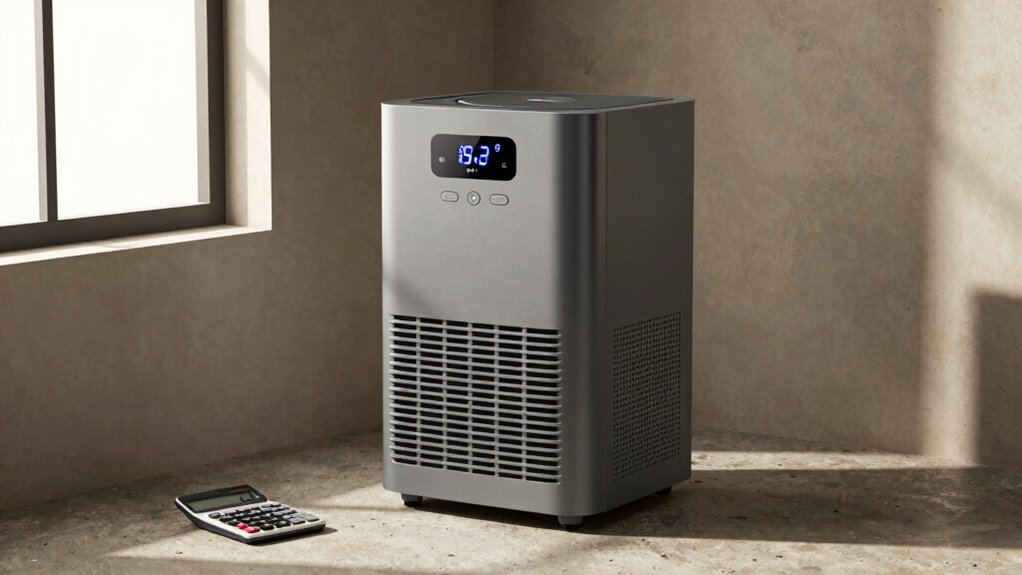

To estimate how much your dehumidifier costs to run, find its wattage listed on the label or manual. Multiply the wattage by the hours it operates daily, then divide by 1,000 to get kilowatt-hours (kWh). Multiply that by your local electricity rate to determine the daily cost. Keep in mind, energy-efficient models and proper maintenance can lower expenses—continue exploring to see how you can maximize savings.
Key Takeaways
- Determine the dehumidifier’s wattage from the label or manual to calculate energy use accurately.
- Measure or estimate daily operating hours to assess total energy consumption.
- Use a kWh calculator by multiplying wattage with hours of operation to find daily energy costs.
- Multiply daily energy use by your local electricity rate to estimate running costs.
- Choosing energy-efficient models and performing regular maintenance reduces overall power consumption and costs.
What Factors Affect Your Dehumidifier’s Energy Use and Cost

Several factors directly influence how much energy your dehumidifier consumes and how much it costs to run. One key factor is energy efficiency; a more efficient model uses less power to remove moisture, saving you money over time. energy efficiency can significantly impact your operational costs and environmental footprint. The size of your unit also matters—larger dehumidifiers tend to consume more energy, especially if they’re not appropriately matched to the space. Maintenance costs can impact your overall expenses too; regular cleaning and filter replacement keep the dehumidifier running efficiently, preventing unnecessary energy waste. Additionally, how often and how long you run the device affects total energy use. Proper unit sizing ensures optimal performance and energy consumption. Incorporating innovative European cloud servers can further optimize energy management and smart home systems, leading to enhanced efficiency and cost savings over time. Being aware of energy consumption patterns can help you better manage and reduce your operational costs.
How to Calculate Your Dehumidifier’s kWh Consumption

To calculate your dehumidifier’s kWh consumption, start by finding its power rating, usually listed on the unit or in the manual. Next, determine how many hours you run it each day, then multiply the two to get the total energy used. This simple process helps you estimate your energy costs accurately. Additionally, understanding regional variations in energy consumption habits can help you better manage your utility bills. Being aware of seasonal changes and climate conditions can also influence your dehumidifier’s operation and efficiency. Monitoring smart home energy management systems can further help you optimize your dehumidifier’s usage and reduce costs. Knowing the average energy costs in your area can further refine your cost estimates and help you optimize usage. Considering seasonal fluctuations can also improve your understanding of how climate impacts your dehumidifier’s efficiency and energy use.
Find Power Rating
Ever wondered how much energy your dehumidifier uses? To find out, you need to look at its power rating, which is part of its energy ratings and power specifications. This info is usually on a label or in the user manual. Here’s what to check:
- Locate the label on the back or bottom of your unit.
- Find the wattage (W) or power consumption listed.
- Note the voltage (V) and current (A) if wattage isn’t available.
- Calculate if needed: multiply voltage by current for wattage. Understanding the energy efficiency of your dehumidifier can also help you choose models that consume less power over time.
- Additionally, consider the average daily usage to better estimate total energy consumption. Knowing this number helps you estimate energy use accurately. It’s the foundation for understanding how much electricity your dehumidifier consumes during operation. This simple step empowers you to control your energy costs effectively, especially if you understand energy consumption patterns.
Calculate Operating Hours
Calculating your dehumidifier’s energy consumption in kilowatt-hours (kWh) involves tracking how long it runs each day. To do this, observe the appliance during typical humidity control conditions and note its daily operating hours. Use a timer or smart plug to monitor exactly when it turns on and off. Consistent operation ensures effective humidity control and reduces the strain on your appliance maintenance routine. Remember, running your dehumidifier longer increases energy use, so aim to optimize its runtime for efficiency. Additionally, understanding your appliance’s power consumption can help you better estimate your monthly energy costs. Knowing the average energy use of different models helps in selecting an energy-efficient unit that fits your needs. You can also consider how energy-efficient features may impact overall consumption. Regularly monitoring your energy consumption can provide insights that assist in adjusting usage habits for better efficiency. Tracking your energy usage patterns over time allows you to identify peak periods and optimize operation accordingly. By accurately tracking operating hours, you can better estimate your monthly energy consumption and costs. This helps you make informed decisions about usage, balancing humidity control needs with energy savings.
Estimating Operating Costs Using Local Electricity Rates
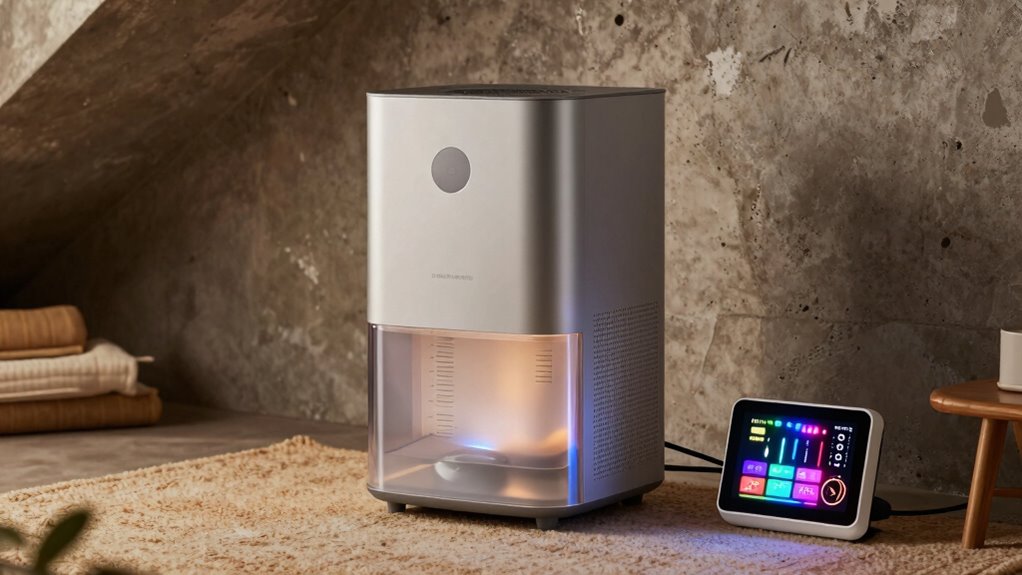
Understanding your local electricity rates is essential for accurately estimating the operating costs of a dehumidifier. Once you know your rate per kWh, you can confidently calculate expenses and make smarter choices. Here’s how to proceed:
Knowing your local electricity rates helps you estimate dehumidifier costs accurately.
- Gather your electricity rate from your utility bill or provider’s website.
- Adjust your dehumidifier to energy efficient settings to lower energy consumption.
- Calculate the daily energy use based on the dehumidifier’s wattage and hours of operation.
- Incorporate maintenance tips to keep your unit running efficiently, reducing unnecessary power draw.
- Remember that applying comparative advantage principles can help you decide whether investing in a more energy-efficient model is economically beneficial in the long run. Additionally, understanding energy consumption can guide you in selecting the most cost-effective appliance options. Being aware of energy efficiency ratings can further optimize your choices to save on operating costs over time. Considering long-term savings when choosing a dehumidifier can also lead to more cost-effective decisions.
Which Dehumidifiers Are Most Energy-Efficient?
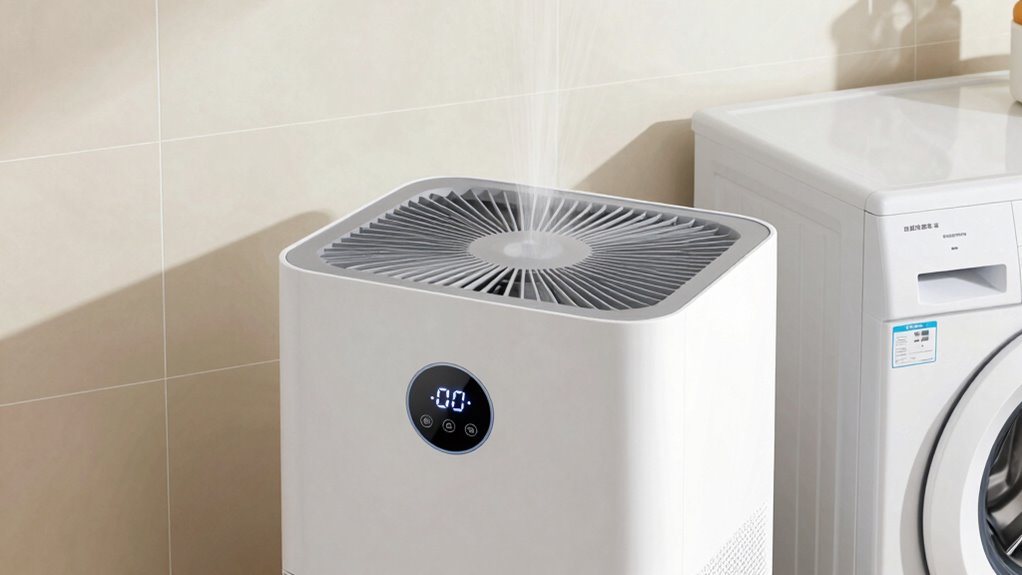
When choosing a dehumidifier, selecting an energy-efficient model can considerably lower your operating costs. Look for units with the Energy Star label, which indicates they meet strict energy efficiency standards. These models typically consume less power while maintaining performance, saving you money over time. Additionally, consider brand reputation; reputable brands often produce more reliable, energy-efficient dehumidifiers with better technology and durability. Reviews and expert ratings can help identify top-performing models. Features like adjustable humidity settings and smart controls can also enhance efficiency. Incorporating energy conservation techniques can further optimize your dehumidifier’s performance and savings. Proper maintenance ensures the unit operates at peak efficiency and prolongs its lifespan, which is essential for long-term savings. A focus on digital literacy and understanding your device’s energy consumption can help you make more informed choices and maximize savings.
How to Use a kWh Calculator for Accurate Cost Estimates

To get accurate cost estimates, start by gathering your dehumidifier’s details, like wattage and daily usage time. Next, use a kWh calculator to find out how much energy it consumes each day. Understanding energy consumption is crucial for precise calculations. Finally, multiply that number by your local electricity rate to estimate your monthly operating costs clearly and efficiently.
Gather Appliance Details
Using a kWh calculator is essential for accurately estimating your dehumidifier’s running costs. To do this, gather key appliance details first. This will help you get precise results and avoid surprises. Here’s what you need:
- Model number and brand — to find exact energy ratings.
- Wattage — usually listed on the label or manual.
- Average daily usage hours — how long you typically run it.
- Dehumidifier placement — ideal placement improves efficiency and reduces energy waste.
Calculate Power Consumption
Calculating your dehumidifier’s power consumption with a kWh calculator is straightforward and essential for accurate cost estimates. First, find your dehumidifier’s wattage rating, usually listed on the label or in the manual. Input this wattage into the calculator along with your typical daily running hours. This will give you an estimate of daily energy use in kilowatt-hours. To minimize environmental impact, consider maintenance tips like cleaning filters regularly to ensure efficiency. Accurate calculations help you understand how your appliance affects your energy bills and environmental footprint. Remember, consistent usage and proper upkeep can reduce unnecessary power consumption, making your dehumidifier more eco-friendly and cost-effective over time. Use this data to make informed choices about your dehumidifier’s operation.
Estimate Operating Costs
Once you’ve determined your dehumidifier’s daily energy consumption with a kWh calculator, you can estimate its operating costs accurately. This helps you make smarter decisions about energy savings and reduce your environmental impact. To do this effectively, consider these steps:
- Multiply your daily energy use by your local electricity rate to find daily costs.
- Multiply daily costs by the number of days you plan to run the dehumidifier.
- Compare monthly and yearly expenses to track savings over time.
- Use these insights to choose energy-efficient models, minimizing environmental impact and lowering bills.
Tips to Lower Your Dehumidifier’s Energy Expenses
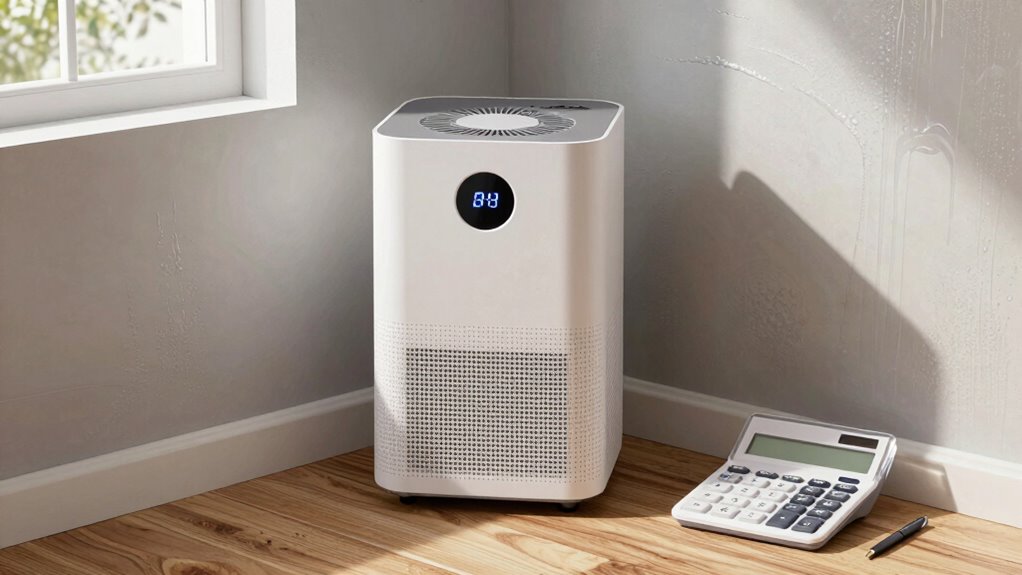
To reduce your dehumidifier’s energy expenses, start by adjusting its settings to the most favorable level for your space. Proper dehumidifier placement is essential; place it in a central location away from walls, furniture, or obstacles that block airflow. This ensures efficient operation and prevents it from working harder than necessary. Regular maintenance tips also help lower energy costs—clean filters monthly, check for dust buildup, and ensure vents are unobstructed. Additionally, keep windows and doors closed to maintain consistent humidity levels, reducing the workload on your dehumidifier. By optimizing placement and staying on top of maintenance, you can improve efficiency, save energy, and cut down on operating costs without sacrificing performance.
How Humidity Levels Impact Power Consumption

Humidity levels directly influence how much energy your dehumidifier consumes. When moisture control is a priority, higher humidity means your unit works harder, increasing power usage. You might notice:
Higher humidity causes your dehumidifier to work harder, increasing energy consumption.
- Your dehumidifier runs nonstop during humid days, raising your energy bill.
- Low humidity levels allow the unit to cycle less, saving power.
- Excess moisture causes the compressor to work overtime, increasing energy costs.
- Maintaining ideal humidity reduces strain on the device, lowering electricity expenses.
Understanding humidity impact helps you adjust settings effectively. By keeping humidity in the ideal range, you minimize energy consumption and ensure efficient moisture control. The more humid your environment, the more power your dehumidifier needs—so managing humidity levels is key to saving money.
When Is It Time to Upgrade to a More Efficient Model?
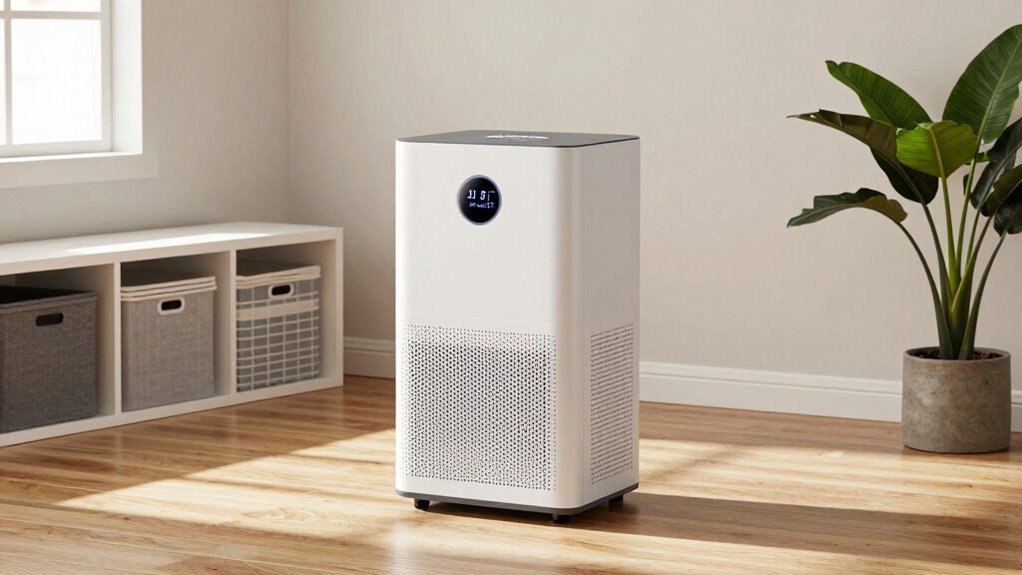
As your dehumidifier works harder to maintain prime humidity levels, it’s worth considering whether your current model is still cost-effective. If you notice higher energy bills despite regular maintenance, it might be time to upgrade. Look for signs like increased noise, reduced efficiency, or frequent repairs, which indicate an aging unit. Implement energy saving tips such as cleaning filters and sealing leaks to maximize efficiency, but know when replacement is more economical. Use a maintenance checklist to ensure your current dehumidifier operates at its best. Upgrading to a newer, energy-efficient model can reduce running costs and improve performance. When your current unit no longer meets your needs or becomes too costly to operate, it’s a smart choice to invest in a more efficient dehumidifier.
Real-Life Examples of Dehumidifier Running Costs
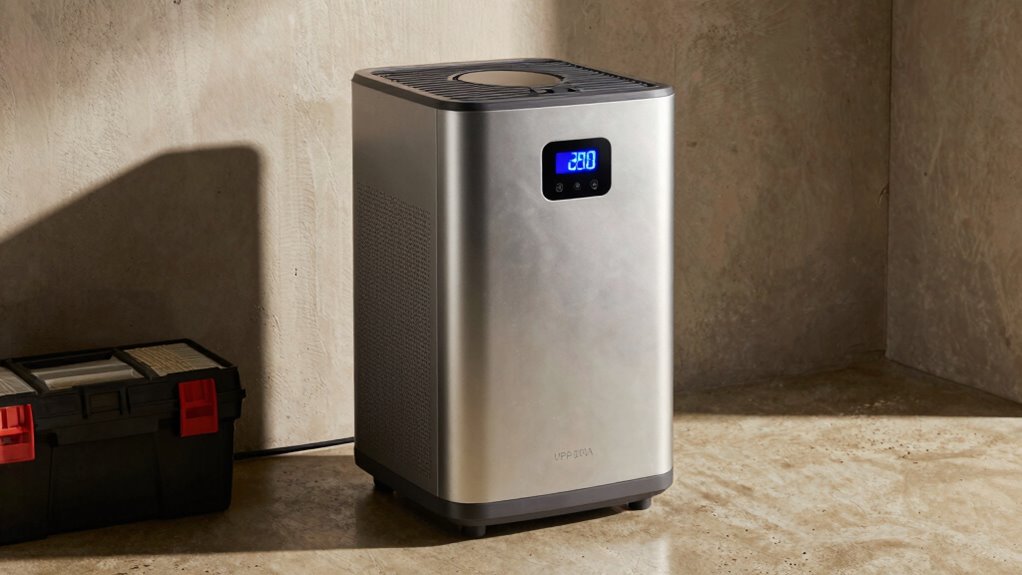
Understanding the actual running costs of a dehumidifier can help you make informed decisions about its efficiency and long-term value. For example, if you place your unit in a damp basement, it might run constantly, increasing costs. Proper humidifier maintenance and strategic dehumidifier placement can substantially reduce energy bills. Consider these real-life scenarios:
- A small room with good insulation uses a dehumidifier for 8 hours daily, costing around $0.50 per day.
- An unfinished basement running 24/7 increases monthly costs to about $15.
- Poor humidifier maintenance leads to higher energy use, raising costs by 20%.
- Correct placement near moisture sources minimizes run time, saving you up to $5 monthly.
Being mindful of these factors helps optimize your dehumidifier’s efficiency and control running costs.
Frequently Asked Questions
How Often Should I Run My Dehumidifier to Save Energy?
You should run your dehumidifier only when needed, typically a few hours each day, to save energy. Regular humidifier maintenance guarantees it runs efficiently, preventing unnecessary power use. Use energy-saving tips like setting the humidity level between 50-60% and turning it off when the air is dry. Monitoring the space helps you avoid overusing the device, ultimately reducing your energy costs while keeping your home comfortable.
Does Room Size Significantly Affect Dehumidifier Energy Costs?
Room size definitely impacts your dehumidifier’s energy costs. Larger rooms require more power to dehumidify effectively, making the unit work harder and consume more energy. Smaller rooms are more energy-efficient because the dehumidifier doesn’t have to run as long or as intensely. To save on costs, choose a dehumidifier suited to your room’s size, and guarantee it’s energy-efficient. Proper sizing maximizes efficiency and minimizes energy expenses.
Are Higher-Capacity Dehumidifiers More Energy-Efficient?
Higher-capacity dehumidifiers aren’t necessarily more energy-efficient, especially when considering dehumidifier maintenance and overall power use. They often consume more energy, but can handle larger spaces more effectively. To cut costs, you might explore alternative dehumidification methods like ventilation or moisture absorbers. Regular maintenance keeps your unit running efficiently, preventing unnecessary energy drain. Always match dehumidifier size to your space for ideal efficiency and cost savings.
Can Using a Timer Reduce My Dehumidifier’s Electricity Consumption?
Using a timer can definitely help reduce your dehumidifier’s energy consumption, especially if you only need humidity control during specific times. By scheduling it to run when humidity levels are highest, you save energy and lower costs. It’s a simple way to boost energy savings while keeping your space comfortable. Just make sure you set the timer wisely to avoid over- or under-humidifying your environment.
How Does Ambient Temperature Influence Dehumidifier Power Use?
Ambient temperature impacts your dehumidifier’s power use because lower temperatures often reduce compressor efficiency, making it work harder to remove humidity. When the air is cooler, your device may consume more energy as it struggles to maintain ideal humidity levels. Conversely, warmer temperatures typically improve compressor performance, reducing energy consumption. Keep an eye on humidity levels and ambient temperature to enhance your dehumidifier’s efficiency and save on electricity costs.
Conclusion
Understanding your dehumidifier’s energy use helps you save money and reduce your environmental impact. By calculating costs and choosing energy-efficient models, you can keep your home comfortable without breaking the bank. Remember, a penny saved is a penny earned—so take the time to monitor and optimize your dehumidifier’s operation. With a little effort, you’ll turn humidity management into a smart, cost-effective habit that benefits both your wallet and the planet.