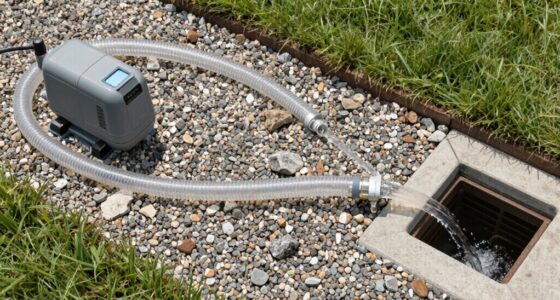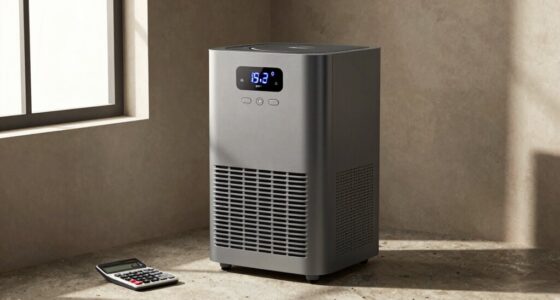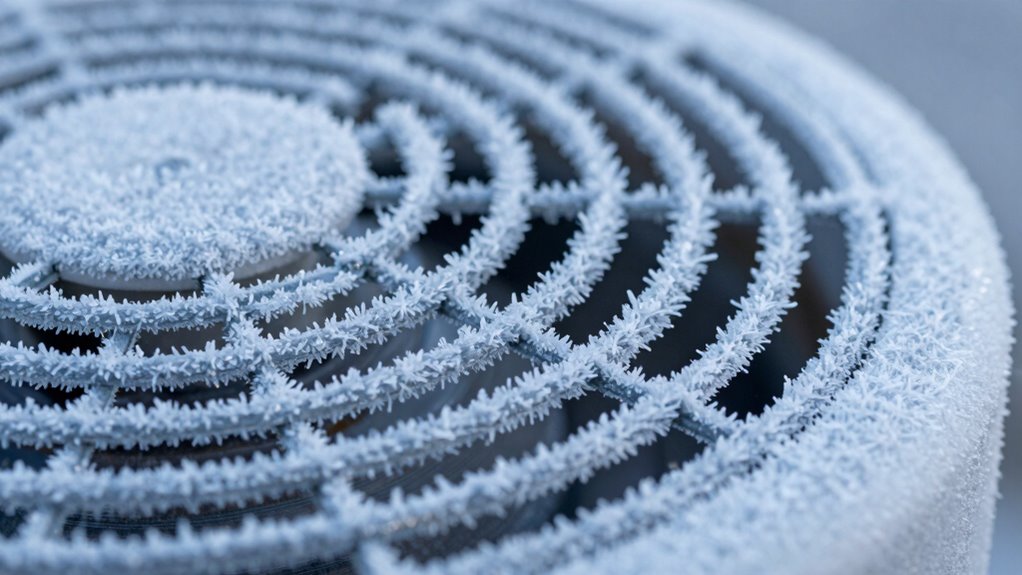

If your dehumidifier’s coils are freezing up and frost is forming, it usually means there’s low airflow, refrigerant leaks, or high humidity and cold temperatures causing overcooling. This can reduce efficiency and damage your unit if left unchecked. To prevent or fix this, you need to identify the cause, like cleaning filters or checking for mechanical issues. Continue exploring to understand how to troubleshoot and keep your dehumidifier running smoothly.
Key Takeaways
- Frost on a dehumidifier indicates excess moisture contact with cold coils, often caused by high humidity, poor airflow, or refrigerant issues.
- Persistent ice buildup suggests underlying problems like refrigerant leaks, restricted airflow, or mechanical failures needing professional inspection.
- Normal frost may occur during high humidity but should melt during defrost cycles; ongoing ice indicates a malfunction.
- Regular maintenance, including cleaning filters and coils, helps prevent frost formation and ensures efficient dehumidifier operation.
- Seek professional help if frost persists despite troubleshooting to avoid damage and restore proper functioning.
Why Do My Dehumidifier Coils Freeze? Understanding the Causes

Dehumidifier coils can freeze when the conditions inside your unit or the surrounding environment cause the refrigerant to become too cold. Poor dehumidifier maintenance can lead to frost formation, especially if filters are dirty or airflow is restricted. When airflow is blocked, the coils can’t shed heat properly, causing the refrigerant to drop below freezing temperatures. Low ambient temperatures also contribute, as colder air reduces the coil’s ability to warm up during operation. Additionally, a faulty thermostat or refrigerant imbalance can cause the coils to overcool. These issues disrupt the normal cycle, leading to frost buildup. Regular dehumidifier maintenance helps prevent these problems and keeps the coils functioning correctly, reducing the chances of unwanted frost formation. Proper system design and placement can also influence how well your dehumidifier operates in different environments. Innovative European Cloud Servers can provide more sustainable solutions for managing energy efficiency and system performance. In some cases, environmental conditions such as high humidity or inadequate ventilation can exacerbate coil freezing issues.
What Causes Frost on Dehumidifier Coils? Normal or a Problem?

Frost on dehumidifier coils isn’t always a sign of a problem; sometimes, it’s a normal part of operation. When humidity levels are high, your unit might develop frost as part of its cooling process. Proper humidifier maintenance can help prevent excess moisture that leads to freezing. If frost appears, coil defrost techniques like temporarily turning off the unit or increasing airflow can help melt the ice and restore proper function. Recognizing whether the frost is due to normal operation or a deeper issue depends on how often it occurs and the conditions around your dehumidifier. Regularly checking and maintaining your unit ensures frost doesn’t become a sign of a problem, keeping your dehumidifier running efficiently.
How Do Temperature and Humidity Levels Affect Coil Freezing?

When the air’s temperature drops and humidity rises, the chances of coil freezing increase considerably. High humidity levels mean more moisture in the air, which can condense on the cold coils, leading to frost buildup. If temperature control isn’t maintained properly, the coils become colder than necessary, making freezing more likely. Cooler temperatures reduce the coil’s ability to evaporate moisture efficiently, causing excess moisture to freeze instead. Conversely, warmer, drier air helps prevent frost formation by reducing moisture contact. To avoid coil freezing, you need to balance temperature and humidity levels carefully. Proper temperature control ensures the coils stay within an ideal range, preventing frost from forming while still maintaining effective dehumidification. Free Floating conditions can also influence how moisture interacts with the coils, impacting frost development. Additionally, understanding coil ice formation can help in diagnosing and preventing freezing issues.
What Are the Signs That Frost on My Dehumidifier Is a Problem?
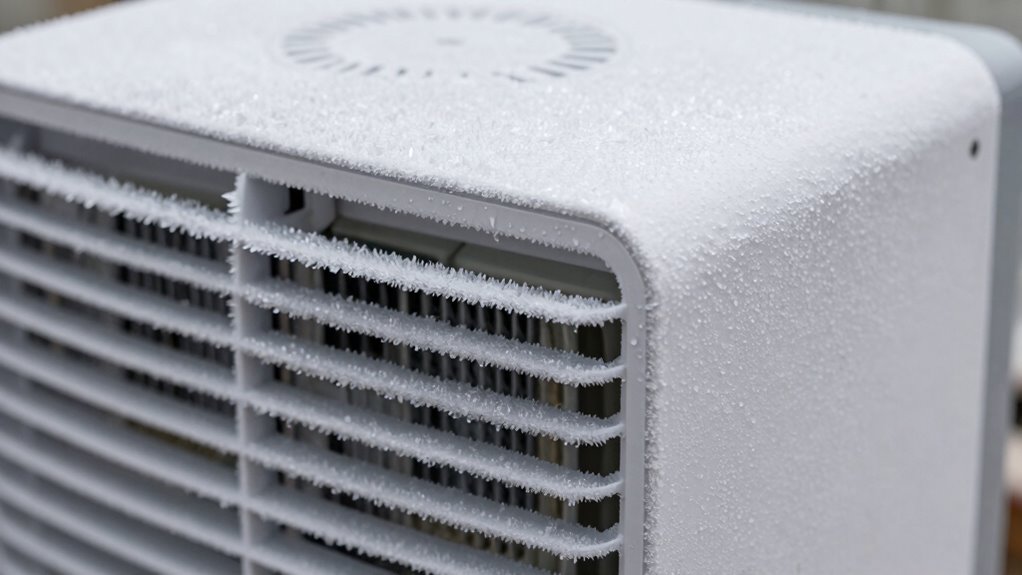
If you notice your dehumidifier isn’t working properly, it’s important to recognize the signs that frost may be forming on the coils. One clear sign is reduced airflow or the unit running constantly without effectively removing moisture. You might also see ice buildup on the coils or hear unusual noises during operation. Frost on the coils indicates that coil defrosting isn’t happening properly, which can hinder dehumidifier performance. Regular dehumidifier maintenance helps prevent this issue, but if you notice these signs, it’s a sign the coils need attention. Ignoring frost buildup can lead to more significant problems and costly repairs. Addressing these signs early ensures your dehumidifier functions efficiently and maintains a healthy indoor environment. Additionally, understanding the role of air quality in your home can help you recognize when issues like frost may impact overall indoor health. Proper thermal regulation is essential for preventing frost formation and ensuring your dehumidifier operates smoothly. Implementing proper ventilation considerations can also help reduce humidity levels and improve overall system performance. Maintaining optimal water chemistry can further support your dehumidifier’s efficiency by reducing excess moisture that contributes to frost formation. Moreover, ensuring your system has adequate airflow is crucial for preventing frost buildup and maintaining consistent operation.
What Mechanical Issues Lead to Freezing Coils?
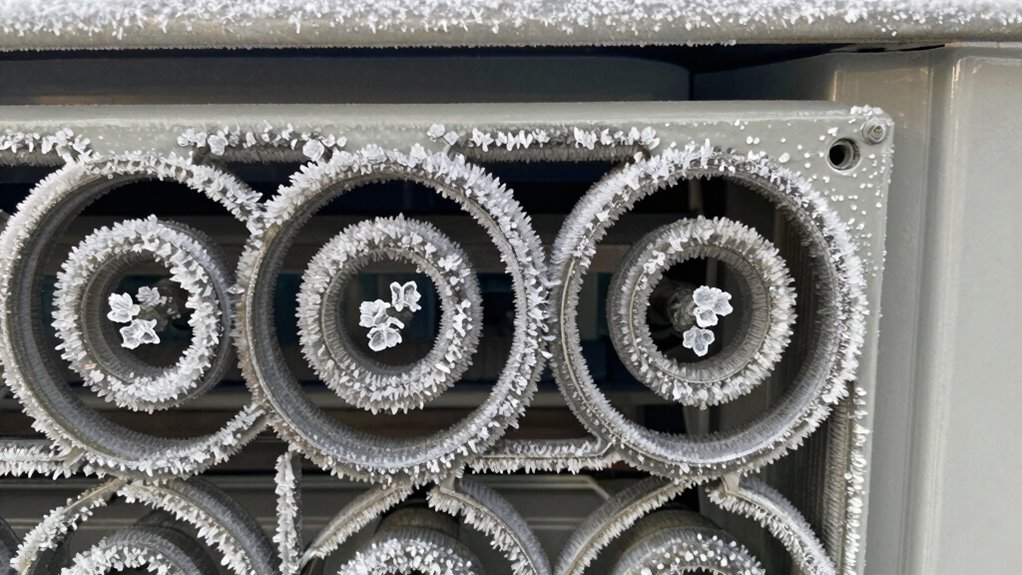
When your dehumidifier’s coils freeze, mechanical issues like airflow restrictions and refrigerant leaks could be the cause. Restricted airflow prevents warm air from reaching the coils, causing them to freeze. Similarly, refrigerant leaks lower pressure and temperature, leading to ice formation on the coils. Proper maintenance and understanding of refrigeration systems can help prevent these issues. Additionally, issues with system troubleshooting can identify underlying problems before they worsen. Recognizing the signs early and addressing mechanical failures can prolong the lifespan of your dehumidifier and ensure it operates efficiently. Regularly inspecting components and understanding air purifier maintenance dos and don’ts can also contribute to preventing coil freezing. Monitoring repair procedures and performing regular inspections can further aid in preventing coil freezing.
Airflow Restrictions
Airflow restrictions are a common cause of dehumidifier coil freezing because they prevent warm, moist air from circulating properly over the coils. When airflow is blocked or limited, the coils cool down excessively, leading to coil icing. To prevent this, check for these issues:
- Clogged air filters – Dust and debris can block airflow, reducing air exchange.
- Blocked vents or registers – Obstructions restrict air movement in and out of the dehumidifier.
- Dirty or restricted intake vents – Dirt buildup hampers proper air intake, causing uneven airflow.
Proper airflow management is essential for reliable dehumidifier performance and can help avoid frost buildup. Addressing these airflow restrictions ensures proper circulation, reducing the risk of coil icing. Maintaining clean filters and unobstructed vents helps your dehumidifier operate efficiently and prevents unnecessary frost buildup on the coils.
Refrigerant Leaks
Have you noticed your dehumidifier’s coils freezing despite clear airflow? One possible cause is a refrigerant leak. When refrigerant levels drop, the coil’s pressure decreases, making it harder for the coil to absorb heat. This results in the coil becoming too cold and forming frost. Refrigerant leaks often occur due to damage or corrosion, and they require immediate attention. Ignoring the issue can lead to more serious mechanical problems and inefficient operation. Regular coil maintenance helps spot early signs of leaks, allowing you to address them before frost buildup worsens. If you suspect a refrigerant leak, it’s best to call a professional technician. They can repair the leak and recharge the system, restoring proper function and preventing further freezing issues. Understanding pressure and temperature relationships can help diagnose refrigerant-related problems more effectively. Additionally, being aware of refrigerant cycle principles can help you better understand how these systems operate and why leaks disrupt their efficiency. Recognizing the signs of refrigerant loss early can save you from costly repairs down the line. It’s also helpful to know that refrigerant leaks can sometimes be caused by mechanical damage, which underscores the importance of proper handling and regular inspections.
How Do Dirty Filters and Coils Contribute to Frosting?

Dirty filters and coils block airflow and reduce the system’s ability to regulate temperature effectively. When airflow is restricted, moisture isn’t removed properly, causing the coils to become cold enough to frost. To prevent this, regular filter maintenance is vital—replace or clean filters as recommended. Additionally, coil cleaning ensures dirt and dust don’t insulate the coils, impeding heat transfer. Here are three ways dirty filters and coils cause frosting:
- Reduced airflow causes the coils to overcool, leading to frost buildup.
- Dust and dirt insulate coils, preventing proper heat exchange.
- Poor airflow leads to uneven cooling, increasing the likelihood of freezing.
- Proper maintenance of filters and coils helps ensure the dehumidifier functions correctly and prevents frost formation.
Neglecting these maintenance steps can significantly decrease the dehumidifier’s efficiency and lifespan, making regular upkeep essential for optimal performance.
Can Overworking My Dehumidifier Cause Freezing?

Running your dehumidifier nonstop or without giving it breaks can cause it to freeze up. When it works too long without rest, the coils get too cold, leading to frost buildup. It’s important to find a balance to prevent overworking it and avoid freezing issues. Additionally, improper airflow management can contribute to freezing problems, so ensure your dehumidifier is positioned correctly and not obstructed. Regularly monitoring humidity levels can also help prevent your unit from overworking and freezing. Being aware of ideal humidity ranges helps maintain proper operation and prevents frost formation. Maintaining proper dehumidifier maintenance routines can further reduce the risk of freezing and extend the lifespan of your unit.
Excessive Running Hours
When your dehumidifier runs nonstop for extended periods, it can lead to the coils freezing. Overworking your unit hampers its ability to maintain proper humidity control and reduces energy efficiency. To avoid this, consider these points:
- Continuous operation strains the compressor, causing the coils to freeze due to excessive moisture removal.
- Running your dehumidifier too long can cause it to cycle frequently, which may lead to frost buildup on the coils.
- Extended use without breaks prevents the system from defrosting naturally, increasing the risk of freezing and decreasing overall efficiency.
Limiting running hours helps maintain ideal humidity levels and keeps your unit working efficiently, preventing the coils from freezing caused by overuse.
Insufficient Rest Periods
Overworking your dehumidifier without giving it enough rest can lead to coil freezing. Continuous operation without proper rest periods strains the system, preventing it from warming up and defrosting as needed. Skipping regular maintenance routines, like cleaning filters and coils, worsens this problem by reducing airflow and efficiency. When your dehumidifier runs nonstop, moisture accumulates on coils, increasing the risk of frost buildup. To prevent freezing, ensure your unit gets adequate rest periods between cycles. Incorporate routine maintenance routines, such as cleaning and inspecting components, to keep it running smoothly. Proper rest and maintenance give your dehumidifier time to defrost naturally and operate efficiently, reducing the chances of frost forming on the coils. Additionally, understanding the airflow and how it affects frost buildup can help optimize your dehumidifier’s performance.
How Do I Troubleshoot a Frozen Dehumidifier Coil?

A frozen dehumidifier coil often signals an underlying issue that needs urgent attention. To troubleshoot, start by inspecting the air filter, as a clogged filter hampers airflow and causes freezing. Next, check the humidity settings—if set too low, the coil may freeze; raising the setting improves humidity control. Finally, examine the refrigerant levels; low refrigerant can cause coils to freeze, indicating a need for professional dehumidifier maintenance. Make certain your unit has proper airflow and isn’t obstructed by debris or objects. Regularly cleaning and maintaining your dehumidifier helps prevent freezing issues. Addressing these factors promptly keeps your device running efficiently, prevents frost buildup, and maintains optimum humidity control. Proper troubleshooting ensures your dehumidifier performs reliably and extends its lifespan.
When Should I Call a Technician for Coil Repairs?

Knowing when to call a technician for coil repairs is crucial to prevent further damage and guarantee your dehumidifier operates efficiently. If you notice persistent frost buildup despite your efforts or if the coil remains frozen for extended periods, it’s time to seek professional help. Ignoring these signs can shorten your dehumidifier’s lifespan and lead to costly repairs. Regular coil maintenance can prevent issues, but when problems persist, a technician can diagnose and fix underlying causes such as refrigerant leaks or faulty fans. Don’t delay repairs if you see ongoing freezing or performance declines. Addressing coil issues early ensures your unit runs smoothly and prolongs its lifespan, saving you money and hassle in the long run.
How Can I Prevent Coil Freezing and Keep My Dehumidifier Running Smoothly?

Regular maintenance and careful operation can help prevent your dehumidifier’s coils from freezing, guaranteeing it runs smoothly and efficiently. To boost energy efficiency and avoid frost buildup, follow these maintenance tips:
- Clean the air filters regularly—clogged filters reduce airflow, leading to colder coils.
- Maintain ideal room temperature; too low a temperature increases freezing risk.
- Check and clear the drain and vents to ensure proper airflow and prevent moisture buildup.
Frequently Asked Questions
Can a Frozen Coil Cause Water Leakage From My Dehumidifier?
Yes, a frozen coil can cause water leakage from your dehumidifier. When frost buildup occurs, it prevents proper coil defrosting, leading to excess ice melting and leaking water. As the frost melts, it overflows the drainage pan or causes leaks. To fix this, defrost the coil, verify proper airflow, and check for blockages. Regular maintenance helps prevent frost buildup and water leaks, keeping your dehumidifier working efficiently.
Will Defrosting My Dehumidifier Damage It?
Think of your dehumidifier as a delicate dancer—defrosting won’t damage it if done properly. When you defrost, you’re giving it a moment to rest, not harm. Proper dehumidifier maintenance, like regular cleaning and frost prevention measures, ensures it runs smoothly. Just follow the manufacturer’s instructions, avoid abrupt power cuts, and your unit will continue to operate efficiently, preventing future frost buildup without risking damage.
How Long Does It Take for a Coil to Thaw Naturally?
It typically takes about 30 minutes to a few hours for a coil to thaw naturally, depending on the ambient temperature and humidity levels. To speed up evaporator maintenance, guarantee your space is warmer and well-ventilated. Keep an eye on the frost buildup, and avoid running the dehumidifier when coils are frozen, as this can prolong the thawing process and prevent damage.
Does Low Ambient Temperature Always Lead to Coil Freezing?
Did you know that studies show coil frosting occurs in about 30% of dehumidifiers operating in low ambient temperatures? Usually, yes, a low ambient temperature can lead to coil frosting, especially when it drops below 65°F. When the air is cold, moisture can freeze onto the coils, causing buildup. However, other factors like airflow and humidity also play roles, so low ambient temperature isn’t the sole cause.
Are There Specific Brands More Prone to Coil Freezing Issues?
Certain brands with less reliable quality or poor coil design tend to be more prone to coil freezing issues. You should research brand reliability before purchasing, as some manufacturers use inferior materials or flawed designs that make coils more susceptible to frost buildup. Investing in reputable brands known for durable, well-designed coils can help prevent freezing problems and guarantee your dehumidifier operates efficiently in various conditions.
Conclusion
If your dehumidifier’s coils freeze, it’s easy to feel frustrated—like catching a cold on a chilly day. But often, it’s just a sign you need a quick fix or a little maintenance. Think of it as a coincidence, a gentle reminder to check your settings or clear any blockages. By staying attentive, you’ll keep your dehumidifier running smoothly, just like a warm cup of tea on a cold afternoon—comfort is within reach.