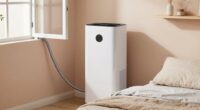
Understanding the differences between a tower fan, air circulator, and ceiling fan can help you choose the best option for your space. Tower fans provide focused, adjustable airflow and are portable, great for small to medium rooms. Air circulators excel at circulating air throughout a room and are energy-efficient, ideal for large spaces. Ceiling fans cover large areas with steady airflow and are best for long-term, large-scale cooling. Explore further for tips on making the right choice.
Key Takeaways
- Tower fans provide direct, adjustable airflow ideal for targeted cooling, while air circulators focus on enhancing overall room airflow.
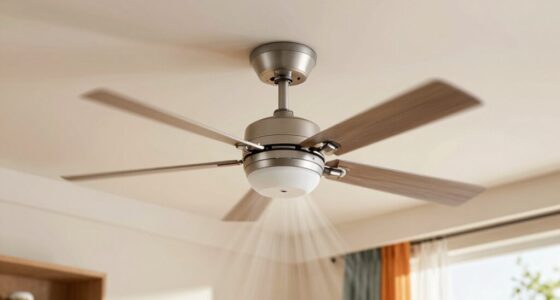
- Ceiling fans create broad, circular airflow coverage suitable for large spaces but are less flexible for small rooms.
- Air circulators excel at circulating air evenly throughout a room, reducing hot spots, with portable and versatile design features.
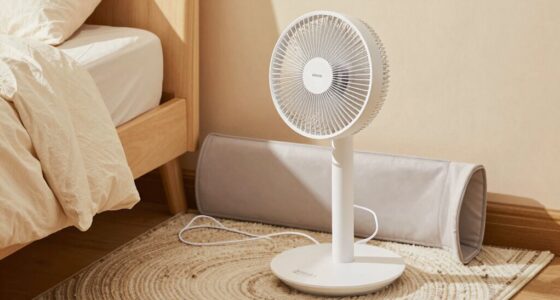
- Tower fans are compact and portable, offering quick setup and quiet operation; ceiling fans are fixed but energy-efficient for large areas.
- Choice depends on room size, cooling needs, and mobility—ceiling fans suit large, fixed spaces; tower fans and circulators are better for smaller, flexible use.
What Are the Main Types of Fans and How Do They Work?

Fans come in various types, each designed to deliver airflow in different ways. Understanding these types helps you choose the right one for your needs. Tower fans are tall and slim, providing 360-degree airflow, and they’re generally quiet, making fan maintenance easier without much noise disruption. Air circulators feature a small, oscillating design that directs air in multiple directions, often producing lower noise levels, but they require regular cleaning to keep noise levels down. Ceiling fans are mounted overhead, circulating air across large spaces efficiently, and their noise levels vary depending on the model and maintenance. Proper fan maintenance, such as cleaning blades and checking for loose parts, is essential to keep noise levels minimal and guarantee peak performance over time. Additionally, using a high-quality motor can significantly reduce noise and improve the longevity of any fan type.
Which Fan Is Best for Different Room Sizes and Cooling Needs?
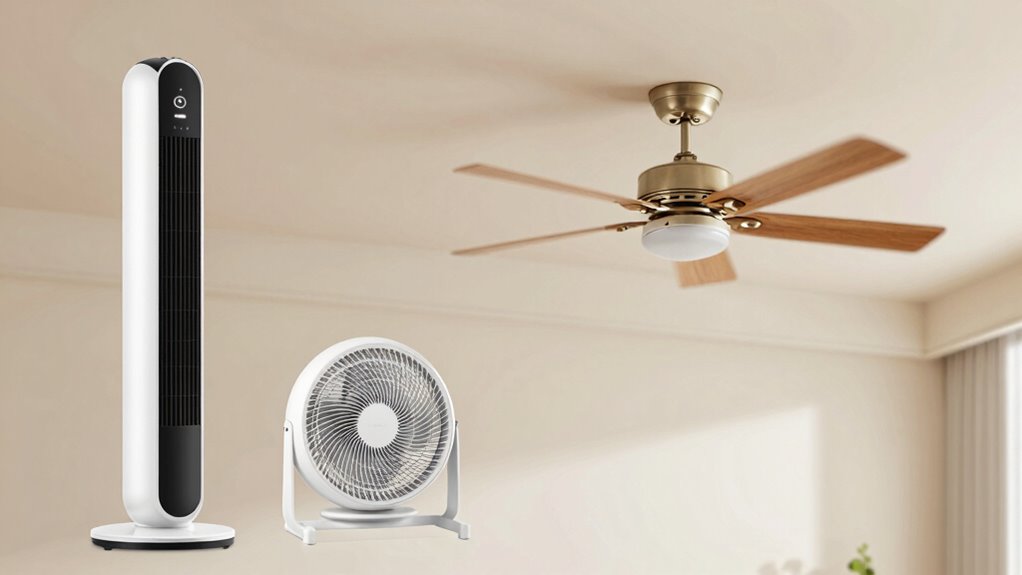
Choosing the right fan depends on your room size and cooling needs. Smaller rooms often need compact fans that focus airflow, while larger spaces require fans with wider coverage. Understanding these differences helps you pick the most efficient option for your space. Additionally, selecting energy-efficient fans can contribute to sustainable living and reduce energy costs. Energy-efficient fans are a smart choice for environmentally conscious consumers seeking long-term savings.
Small Room Efficiency
To effectively cool a small room, selecting the right fan depends on both the space size and your cooling preferences. If portability is key, a compact air circulator offers quick, easy setup with portable convenience. For quieter operation, ceiling fans generally produce lower noise levels, making them ideal for bedrooms or study areas. A tower fan provides a balance of both, with adjustable settings and sleek design. Consider these options:
- Use an air circulator for targeted, efficient cooling in tight spaces.
- Choose a ceiling fan if you prioritize noise reduction and steady airflow.
- Opt for a tower fan for versatile, portable convenience and customizable comfort. Additionally, understanding the noise levels of each fan type can help you select one that minimizes disturbance in your environment. Incorporating energy efficiency in your choice can also lead to long-term savings and reduced environmental impact. A proper fan choice ensures optimal comfort and efficiency for small rooms.
Large Space Coverage
When covering larger spaces, selecting the right fan depends on the room size and your cooling goals. For maximum coverage, ceiling fans are ideal—they circulate air across entire rooms efficiently, offering energy savings and lower noise levels. Air circulators are versatile, providing focused airflow over bigger areas, but may be noisier. Tower fans work well in moderate spaces, often with adjustable settings that balance noise and energy use.
| Fan Type | Best For |
|---|---|
| Ceiling Fan | Large rooms, energy-efficient cooling |
| Air Circulator | Open areas, adjustable airflow |
| Tower Fan | Medium-sized spaces, quieter operation |
| Energy Savings | Ceiling fans and efficient circulators |
| Noise Levels | Tower fans and ceiling fans generally quieter |
How Portable and Easy to Use Are Tower Fans, Air Circulators, and Ceiling Fans?
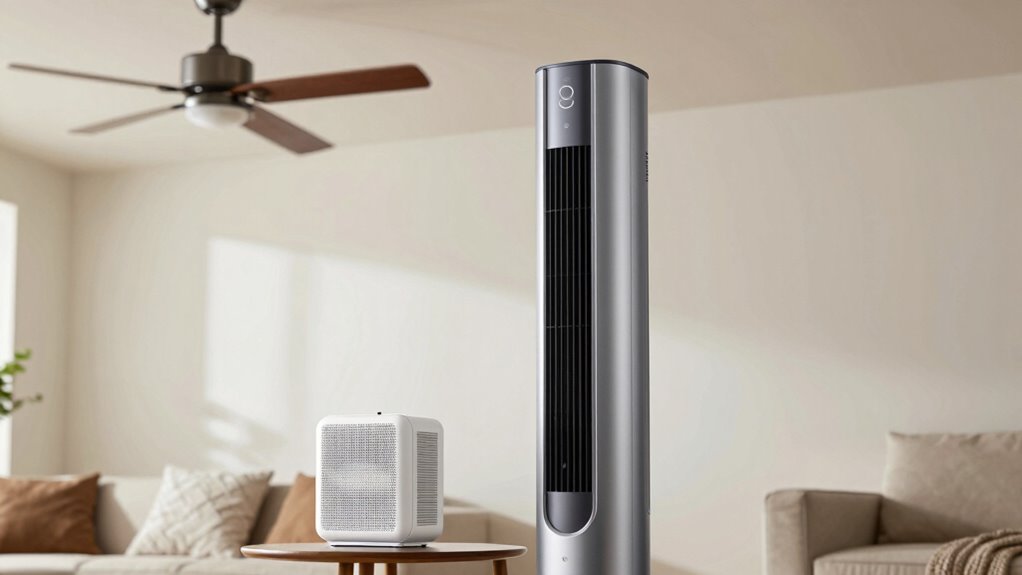
Tower fans are known for their slim, space-saving design, making them easy to move around and set up in various rooms. Their portable convenience means you can quickly relocate them without hassle. To maximize setup simplicity, look for features like lightweight construction and easy-to-operate controls. Additionally, Free Floating technology can help improve airflow distribution for more effective cooling. When selecting a fan, understanding filtration and airflow mechanisms can further enhance your comfort and energy efficiency. Moreover, considering energy efficiency can help reduce power consumption while maintaining optimal airflow, especially with modern smart appliances that optimize performance through automation.
How Efficient Are These Fans at Cooling a Room?
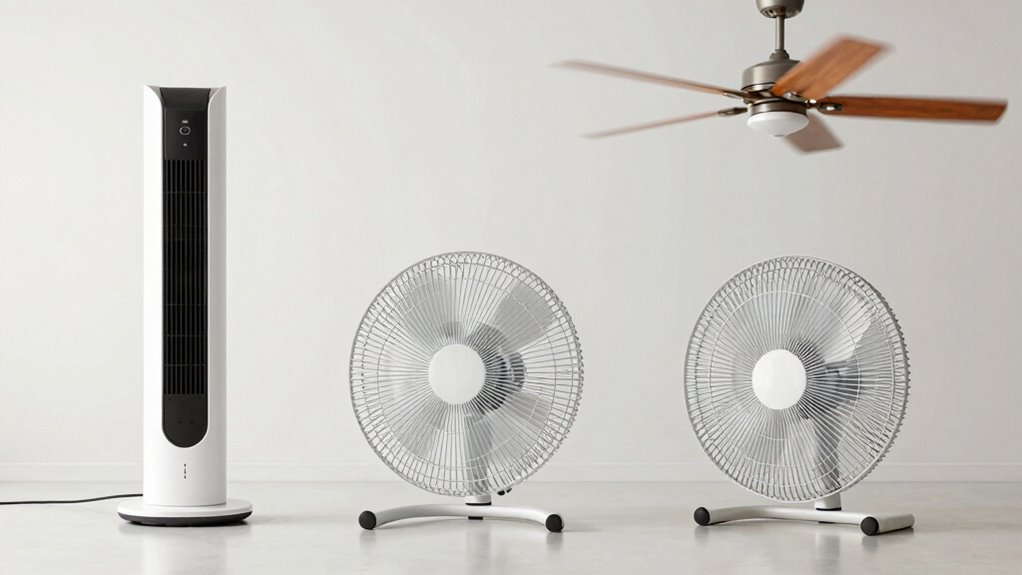
When evaluating how well these fans cool a room, consider their airflow coverage area, power efficiency, and actual cooling impact. A larger coverage area means more effective cooling for bigger spaces, but it might also consume more energy. Additionally, selecting a fan with energy-efficient operation can help reduce utility costs over time. Choosing a fan with the right fan control options can also improve energy savings and user comfort. A well-designed fan system can also incorporate smart energy management features to optimize performance and reduce waste. Incorporating proper fan placement can further enhance cooling efficiency and ensure even air distribution throughout the room. Implementing connected technology in fans allows for remote control and scheduling, further boosting energy efficiency. Ultimately, the best fan balances strong airflow with low power use to keep you comfortable without high bills.
Airflow Coverage Area
How effectively a fan cools a room depends largely on its airflow coverage area. The larger the coverage, the more evenly the cool air disperses. To maximize efficiency, consider these factors:
- Proper fan placement is vital—position fans where they can create ideal airflow patterns without obstruction.
- Tower fans typically have a focused airflow but cover a narrow area, suitable for personal spaces.
- Air circulators excel at creating wide, consistent airflow, ideal for larger rooms.
- Ceiling fans distribute air across a broad area, but their coverage depends on blade size and ceiling height.
- Additionally, understanding airflow patterns can help optimize the cooling performance of your fan setup.
Power Consumption Efficiency
Efficient cooling isn’t just about airflow coverage; it also depends on how much power each fan consumes to deliver that airflow. When comparing power consumption, you’ll find that ceiling fans typically use less energy for larger areas due to their design, while tower fans and air circulators may consume more wattage for smaller, targeted spaces. To illustrate this:
| Fan Type | Typical Power Consumption | Power Efficiency (Cooling per Watt) |
|---|---|---|
| Tower Fan | 50-70 Watts | Moderate |
| Air Circulator | 40-60 Watts | High |
| Ceiling Fan | 60-75 Watts | Very High |
Choosing the most energy-efficient fan depends on your room size and cooling needs, balancing energy consumption with effective airflow.
Cooling Effectiveness
Among the different fan types, ceiling fans, tower fans, and air circulators each vary in their ability to cool a room effectively. Your choice impacts airflow patterns and fan noise. For example:
- Ceiling fans create wide, circular airflow, evenly cooling the entire space but may be less effective in small rooms.
- Tower fans produce direct airflow with adjustable oscillation, quickly cooling specific areas while operating quietly.
- Air circulators excel at circulating air throughout the room, enhancing overall cooling but often generate more noise.
- Proper placement and airflow management are crucial for maximizing each fan’s cooling potential and achieving a comfortable environment.
Your decision depends on how well each fan type manages airflow patterns to remove hot air and how much noise it produces during operation. The most effective fan reduces hot spots and maintains a comfortable environment.
What Are the Costs and Energy Savings of Each Fan Type?
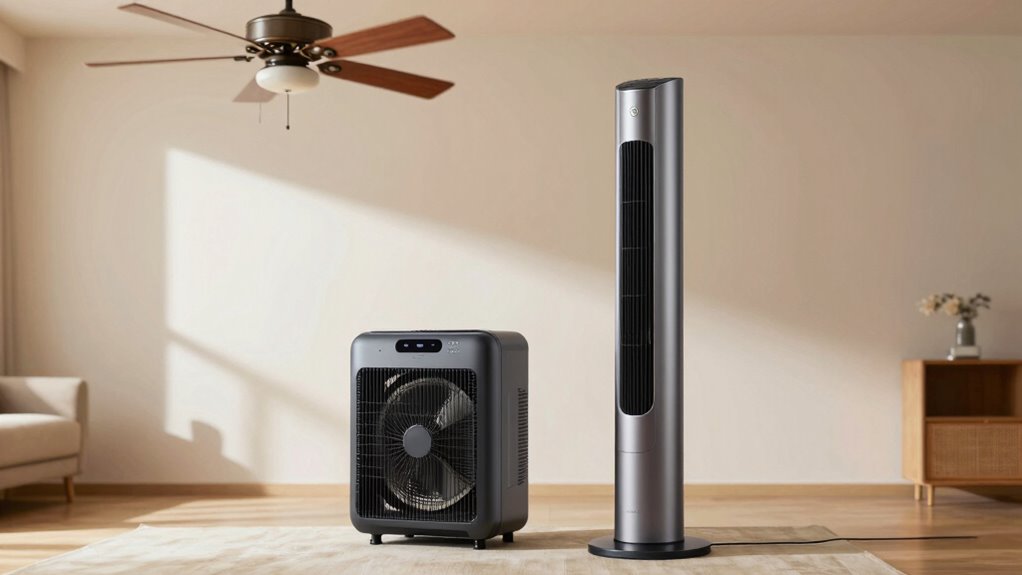
When considering costs and energy savings, each fan type offers different advantages that can impact your budget and utility bills. A thorough cost comparison shows that ceiling fans typically have higher upfront costs but are highly energy-efficient over time, reducing long-term expenses. Tower fans usually cost less initially and consume moderate energy, making them a budget-friendly option for smaller spaces. Air circulators tend to be the most energy-efficient, using minimal power while providing effective airflow, which lowers ongoing energy costs. While all fans use electricity, their Energy efficiency varies, influencing your monthly bills. Additionally, understanding the cost-effectiveness of each fan type can help you make smarter purchasing decisions that align with your financial goals, especially when considering the operating costs over their lifespan. Incorporating energy-saving features can further enhance the efficiency and cost benefits of your chosen fan. Recognizing the long-term savings potential of these fans can guide you toward a more economical and sustainable choice.
Are Ceiling Fans or Portable Fans Better Long-Term Investments?
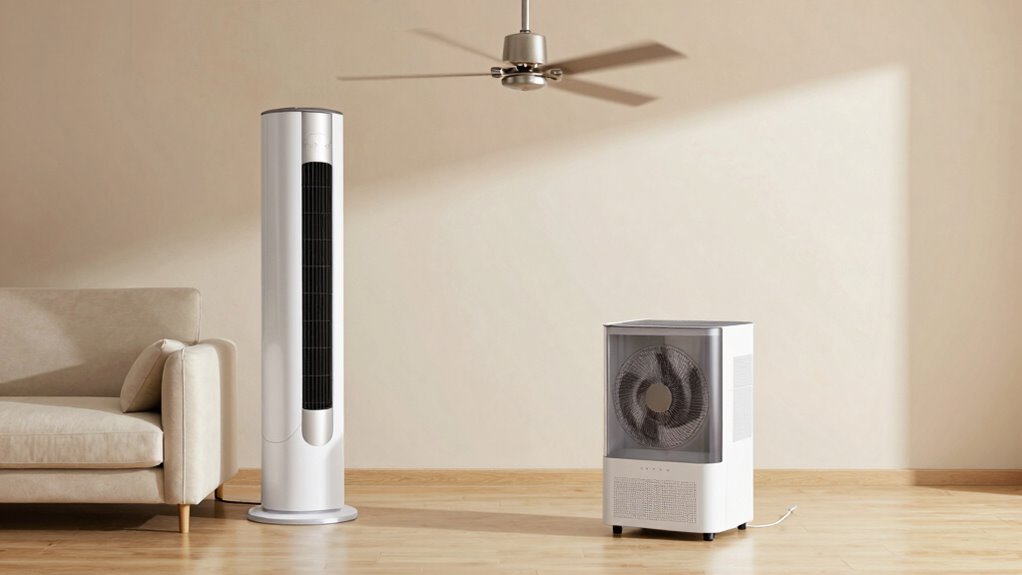
Deciding whether ceiling fans or portable fans make a better long-term investment depends on your specific needs and usage habits. If you prioritize energy efficiency and quieter operation, ceiling fans often outperform portable options because they circulate air efficiently across larger spaces with less energy. Conversely, portable fans offer flexibility and ease of use, making them ideal for targeted cooling. To help you decide, consider these factors:
Ceiling fans save energy and operate quietly, making them a smart long-term cooling investment.
- Ceiling fans typically have lower noise levels and use less energy over time.
- Portable fans can be moved easily but may be noisier and less energy-efficient.
- Long-term savings depend on energy consumption, so investing in a high-quality ceiling fan can be more economical.
- Incorporating protective styling benefits like crochet or fabric decorating markers can enhance your living space and improve comfort.
- Additionally, understanding the wave and wind principles can help you select the most effective fan type for your environment. Incorporating technological integration such as smart controls can further optimize energy use and convenience.
Choose what aligns with your space and comfort needs for a lasting investment.
How Do I Choose the Right Fan for My Home and Budget?
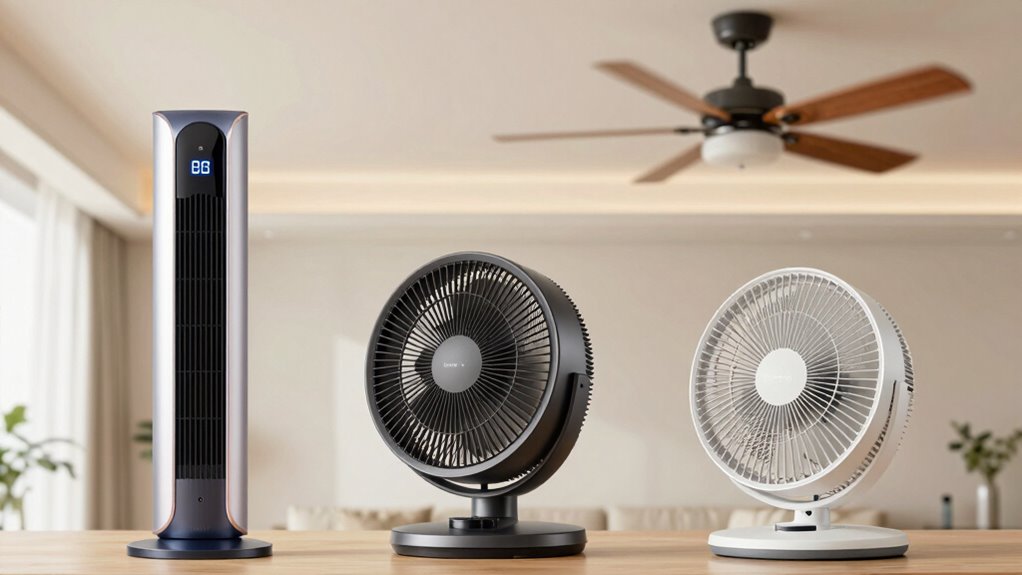
Choosing the right fan for your home and budget involves evaluating your cooling needs, space size, and financial limits. Consider energy efficiency to save on electricity bills and noise levels to maintain comfort. For small rooms, a tower fan offers portability and quiet operation. Larger spaces might benefit from an air circulator’s broad airflow. Ceiling fans provide steady airflow with minimal energy use but require installation. Use this table to visualize:
| Fan Type | Ideal For | Noise Level | Energy Efficiency |
|---|---|---|---|
| Tower Fan | Small rooms, personal comfort | Low | Moderate |
| Air Circulator | Large rooms, even air distribution | Moderate | High |
| Ceiling Fan | Whole rooms, long-term use | Low | Very high |
| Portable Fan | Flexible, adjustable cooling | Varies | Moderate |
| Wall-Mounted | Fixed spaces, space-saving | Low | High |
Additionally, consider the ventilation needs of your space to select the most effective fan type. Evaluating fan placement can also enhance cooling efficiency in your home.
Frequently Asked Questions
Which Fan Type Produces the Most Noise During Operation?
You’ll find that ceiling fans generally produce the most noise during operation. Their noise levels, measured in decibel ratings, can range from 40 to 60 decibels, depending on the model and speed setting. Tower fans and air circulators tend to operate more quietly, often staying below 40 decibels. So, if noise level is a concern, a tower fan or air circulator might be your best choice for a quieter environment.
Can Tower Fans Double as Air Purifiers or Humidifiers?
Did you know that around 70% of air purifiers also include humidification features? Tower fans typically don’t double as air purifiers or humidifiers. While some advanced models might incorporate air purification, they rarely offer humidification. If you want both functions, consider a dedicated air purifier or humidifier along with your tower fan. This way, you get ideal air quality and humidity control without sacrificing performance.
How Do Maintenance Requirements Differ Among Fan Types?
You need to regularly maintain your fans for ideal performance. Tower fans and air circulators often require filter replacements and should be cleaned every few weeks, depending on use and dust levels. Ceiling fans need less maintenance, usually just dusting and checking for wobbling or loose blades. Keep up with cleaning frequency to prevent dust buildup, and replace filters when they become dirty or clogged for better air quality and efficiency.
Are There Safety Concerns Specific to Ceiling Fans or Portable Fans?
You should be conscious of ceiling fan safety concerns like exposed blades or loose wiring that could pose risks, especially if installed improperly. Portable fan hazards include tipping over or electrical issues if cords are damaged. Always verify proper installation, keep blades covered, and avoid using damaged cords to mitigate these risks. Regular maintenance and safety checks help prevent accidents and keep your fans functioning safely.
Which Fan Type Is Most Suitable for Allergy-Sensitive Environments?
If you’re allergy-sensitive, choose an air circulator or a ceiling fan with high filtration efficiency. These fans help reduce airborne allergens by promoting better airflow and trapping particles. Avoid tower fans that often lack filtration features. You want a fan that minimizes dust, pollen, and pet dander — creating a cleaner, healthier environment. Prioritize models with HEPA filters or similar technology to guarantee maximum relief from airborne allergens.
Conclusion
Think a ceiling fan always beats portable options? Not necessarily. Modern tower fans and air circulators can cool small rooms just as effectively, often at lower costs and with greater portability. The truth is, choosing the right fan depends on your space, needs, and budget. Don’t buy into myths—evaluate each type’s strengths to find the perfect cooling solution for your home. Sometimes, the most convenient fan is the best choice after all.