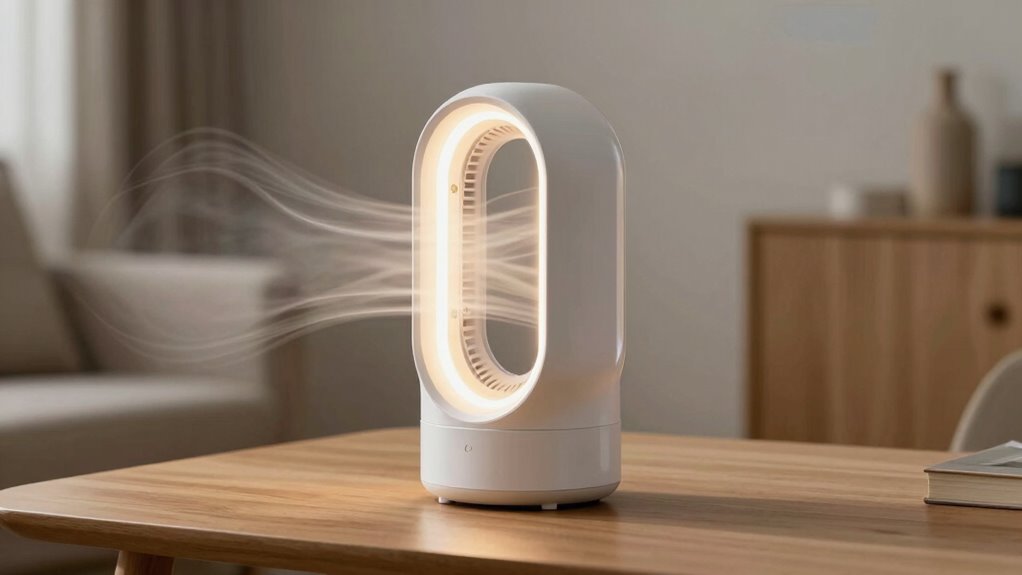

Bladeless fans work by using an internal motor to draw in air through hidden blades inside a circular ring, then accelerate and push the air out through a narrow slit, creating a smooth, jet-like breeze. They feel different because the airflow is continuous and gentle, without the gusts of traditional fans. Their innovative design reduces turbulence and noise, making the breeze more comfortable. To discover all the details, keep exploring how these fans genuinely function and why they seem so unique.
Key Takeaways
- Bladeless fans use an internal motor and hidden blades within a ring to generate airflow without external blades.
- They operate on the Venturi effect, accelerating air through a constriction to produce a smooth, continuous stream.
- The hollow ring amplifies airflow, creating a jet-like breeze that feels different from traditional fans.
- Their design reduces turbulence and noise, providing a quieter and more consistent airflow.
- The absence of external blades enhances safety and makes cleaning easier, contributing to the unique user experience.
What Is a Bladeless Fan and How Is It Different From Traditional Fans
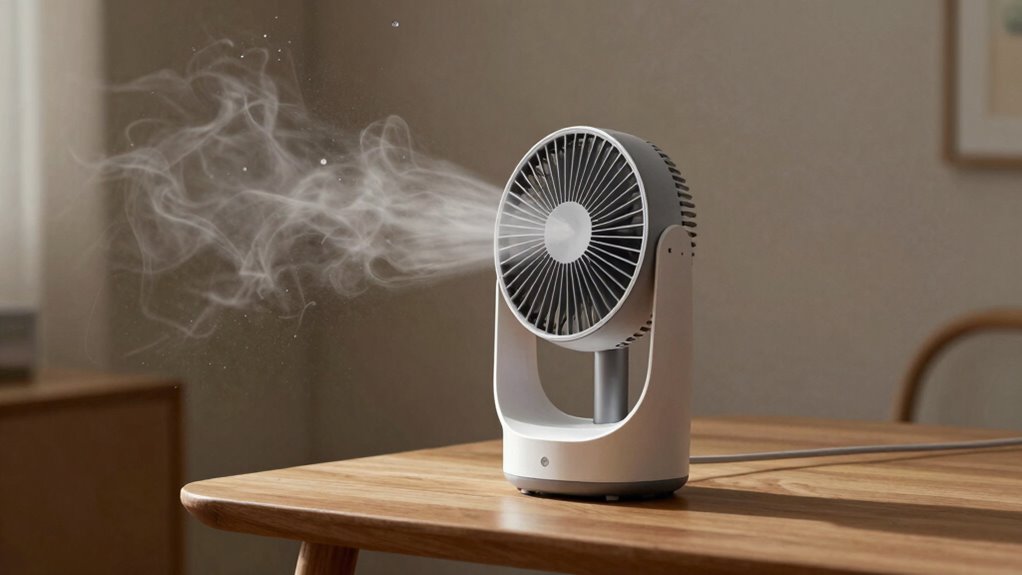
A bladeless fan is a modern device that cools the air without visible spinning blades, making it safer and more aesthetically pleasing than traditional fans. Its unique blade design uses an internal motor to generate airflow, which is then amplified and directed through a hollow ring. Unlike traditional fans with blades that cut through the air, bladeless fans produce smoother, more consistent airflow. This design also results in lower noise levels, so you won’t be bothered by loud, rattling sounds. The absence of visible blades not only enhances safety—especially around children and pets—but also gives the fan a sleek, modern look. Additionally, bladeless fans often incorporate energy-efficient technology that reduces power consumption, which aligns with sustainable practices. The airflow amplification process is what makes these fans feel different, providing a gentle yet powerful breeze. Overall, the distinct blade design and quieter operation make bladeless fans a popular choice for both comfort and style.
How Do Bladeless Fans Work? The Science Explained
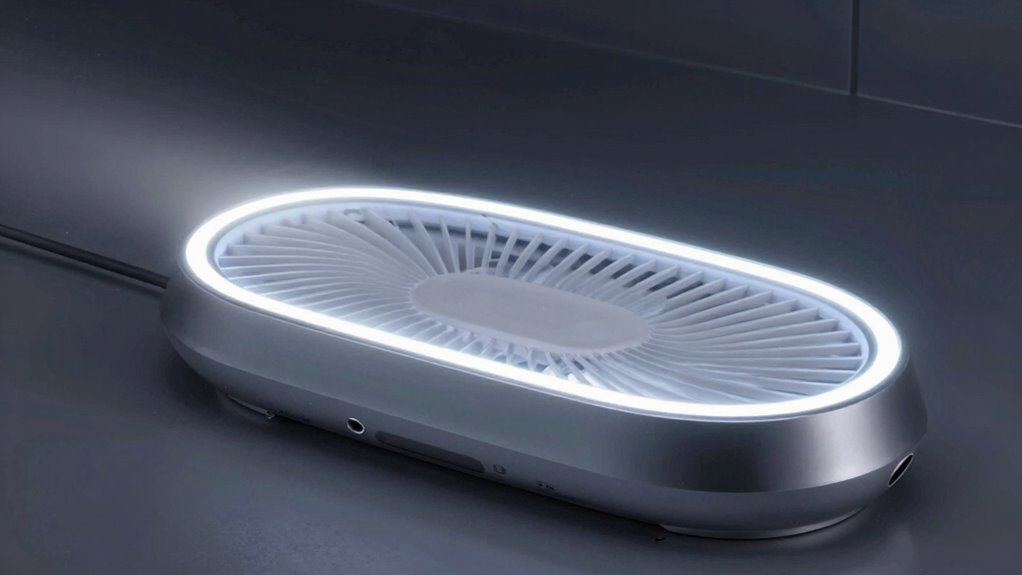
Bladeless fans work by using an internal motor to create a stream of air, which is then amplified and directed through a hollow ring. This design relies on airflow dynamics to produce a steady, smooth breeze without visible blades. The motor draws in air and pushes it through a small opening, creating a continuous airflow that’s channeled around the ring. Because there are no external blades, fan safety is improved, reducing risks of injury or accidents. The hollow ring acts as a conduit, guiding the airflow efficiently and enhancing the overall experience. This setup allows for quieter operation and a more even distribution of air, making bladeless fans feel different from traditional models. The design also contributes to their sleek appearance and ease of cleaning. By understanding these principles, you see how the science behind their operation creates a safer and more comfortable airflow. Additionally, the safety features of bladeless fans contribute to their popularity as a reliable cooling option. Their innovative use of airflow dynamics can be further optimized through advancements in engineering design, leading to even more efficient airflow management.
The Venturi Effect and Its Role in Bladeless Fans
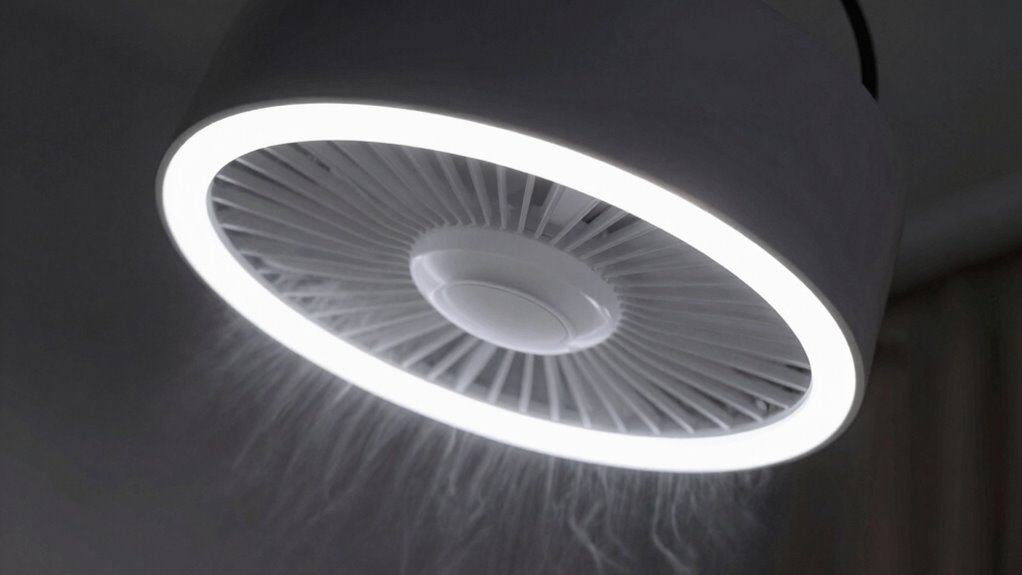
The Venturi effect plays a key role in how bladeless fans amplify airflow. This relies on the venturi principle, where a constriction in a tube increases the velocity of air passing through it, creating a pressure difference. In bladeless fans, a small amount of air is drawn in and accelerated through a narrow slit, following airflow dynamics based on this principle. As the air speeds up, it creates a low-pressure zone that pulls in surrounding air, generating a steady, smooth stream. This process allows the fan to produce a continuous flow without traditional blades, making the airflow feel smoother and more consistent. The odorless nature of Fentanyl makes understanding airflow and dispersion even more important for safety. Understanding the venturi effect helps explain how bladeless fans efficiently amplify airflow while maintaining a quiet operation. Additionally, this technology aligns with airflow dynamics principles to optimize performance and comfort. An understanding of connected device integration can further enhance the user experience by allowing smarter control and customization of airflow.
What Makes Bladeless Fans Feel Smoother and More Comfortable?
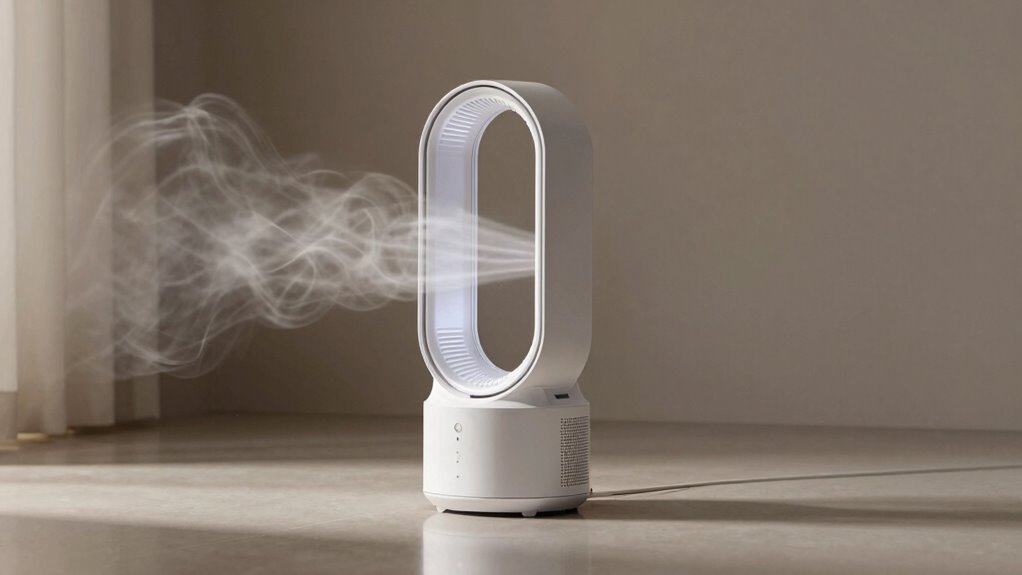
Bladeless fans feel smoother and more comfortable because they deliver a consistent airflow without sudden gusts. The gentle, steady air circulation creates a calming environment and reduces noise. This balance of airflow speed and consistency makes using the fan more pleasant for you. Additionally, the design eliminates the spinning blades that can cause airflow fluctuations, further enhancing comfort. The absence of blades also means fewer airborne particles stirred up in the air, contributing to a cleaner indoor atmosphere. Moreover, the innovative airflow technology used in bladeless fans helps maintain a uniform distribution of air, making the experience even more soothing. This airflow distribution ensures that the air feels natural and gentle rather than forceful or erratic.
Airflow Consistency and Speed
Because bladeless fans use a different mechanism to generate airflow, they tend to produce a smoother and more consistent stream of air. This results in better airflow consistency, meaning the air you feel isn’t interrupted by gusts or fluctuations. The design allows for a steady airflow speed, which makes the air feel more natural and gentle. Unlike traditional fans that create uneven pulses, bladeless fans deliver a uniform flow that feels calming and comfortable. This consistent airflow reduces the sensation of drafts or sudden blasts, making the experience more pleasant. You’ll notice the difference in how the air feels—softer, steadier, and more controlled—creating a more soothing environment. Additionally, the fan’s design minimizes noise and turbulence, enhancing comfort even further. This enhanced airflow consistency and steady speed are key reasons bladeless fans feel more comfortable, as their airflow dynamics promote a calming, uninterrupted breeze. Furthermore, the airflow control mechanisms in bladeless fans contribute to maintaining this uniform airflow, setting them apart from traditional models.
Gentle Air Circulation
Since bladeless fans generate airflow through a different mechanism, they produce a smoother and gentler stream of air that feels more natural. This gentle air circulation results from precise airflow regulation, which avoids harsh gusts. The airflow is steady and consistent, reducing drafts and making the environment more comfortable. Additionally, bladeless fans often include filters that improve air quality, filtering dust and allergens for a healthier space. This combination creates an airflow experience that feels softer and more soothing compared to traditional fans. The airflow regulation technology in bladeless fans allows for a more controlled and comfortable experience. Moreover, some models incorporate air quality monitoring features that can further enhance the environment by adjusting airflow based on real-time air conditions. These features contribute to a more comfortable living environment and healthier indoor air. Understanding how filtration systems work in these fans can help you choose models that best suit your needs. Properly designed airflow control mechanisms are essential for achieving the smooth airflow that makes bladeless fans stand out. The table below highlights key differences:
| Feature | Bladeless Fan | Traditional Fan |
|---|---|---|
| Airflow Regulation | Precise, smooth airflow | Variable, often turbulent |
| Air Quality | Enhanced with filters | Usually none |
| Air Stream Feel | Gentle, natural | Drafty, gusty |
| Comfort Level | Higher due to steady airflow | Lower due to uneven airflow |
| Overall Experience | Softer, more comfortable | Harsh, less consistent |
Benefits of Choosing a Bladeless Fan Over a Traditional Fan
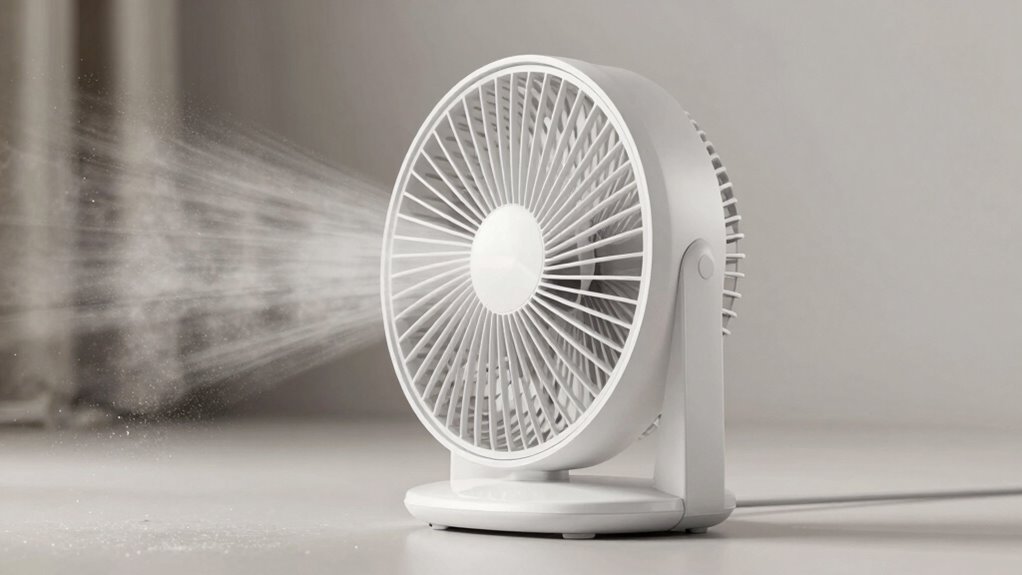
Choosing a bladeless fan offers several advantages over traditional fans, making it a popular choice for many households. One key benefit is its energy efficiency; bladeless fans typically use less power while providing effective airflow, which can lower your energy bills. Additionally, they come with enhanced safety features, such as smooth, enclosed surfaces without exposed blades, reducing the risk of injuries, especially around children and pets. The sleek design also means easier cleaning and less dust buildup, improving overall air quality. Unlike traditional fans with blades that may wobble or cause noise, bladeless fans operate quietly and smoothly. Moreover, the energy efficiency helps reduce long-term costs and supports more sustainable living. These benefits make bladeless fans a safer, more efficient, and more user-friendly option for cooling your space. In addition, the advanced technology used in bladeless fans often results in a more consistent airflow, enhancing comfort. Furthermore, the airflow technology employed in these fans can help improve ventilation and air circulation, contributing to a healthier indoor environment. Incorporating air quality improvement features, such as filtering capabilities, can further enhance indoor air health and comfort.
Common Myths About Bladeless Fans Debunked
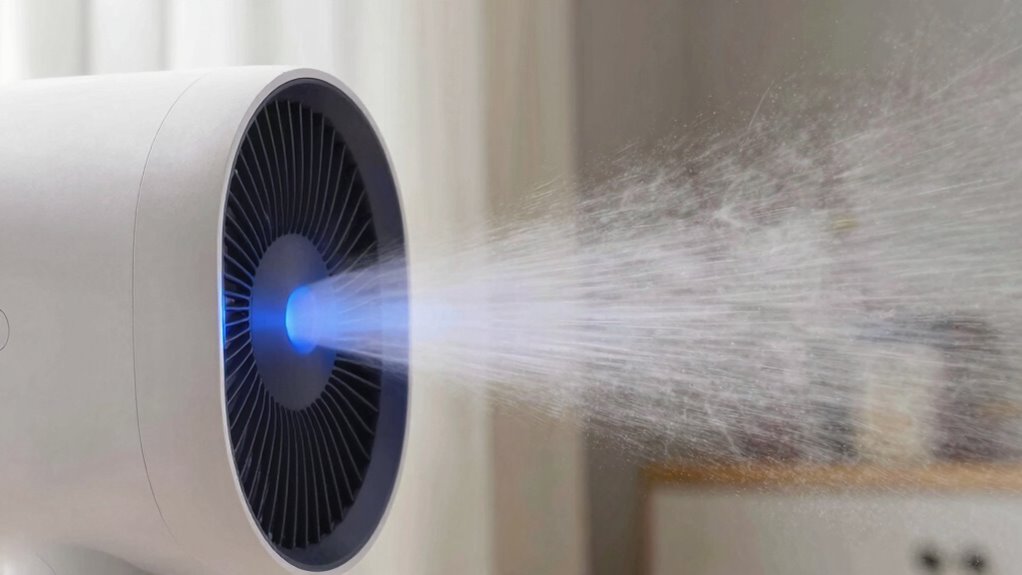
Many people believe bladeless fans have no blades at all, but they actually use hidden blades to generate airflow. You might also think they’re less efficient or weaker than traditional fans, but that’s not true. Let’s clear up these common myths and see what really makes bladeless fans effective.
Misconception of No Blades
A common misconception about bladeless fans is that they have no blades at all, but this isn’t entirely accurate. While they lack traditional external blades, they still feature a blade design inside the circular ring that powers airflow. This internal blade mechanism is responsible for drawing in air and pushing it through the hollow structure. Because the blades are hidden, the fan appears smooth and sleek, which contributes to the perception of a blade-free device. Additionally, this design helps with noise reduction, making the fan operate more quietly than traditional models. The absence of exposed blades not only offers a safer experience but also reduces turbulence, further decreasing noise levels. So, while they seem blade-free, a concealed blade system is still at work behind the scenes.
Efficiency and Power Claims
One common myth is that bladeless fans are markedly more energy-efficient and powerful than traditional fans, but this isn’t necessarily true. In reality, their energy efficiency depends on their motor design and how they’re used, not just their bladeless feature. Many believe bladeless fans consume less power, but their power consumption can be comparable to traditional fans, especially models with larger motors. While they may feel more efficient because of quieter operation and smoother airflow, this doesn’t always translate to lower energy use. If you’re aiming to save on energy bills, focus on the fan’s specifications and energy ratings rather than the bladeless label itself. Ultimately, efficiency varies, and bladeless fans aren’t inherently more power-saving than their traditional counterparts.
Things to Consider Before Buying a Bladeless Fan
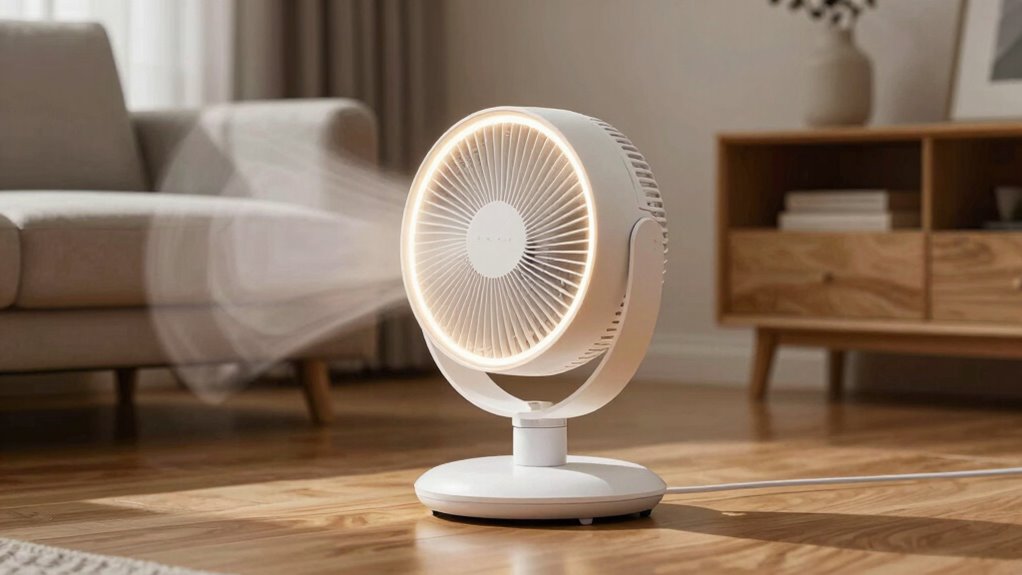
Before purchasing a bladeless fan, you should carefully consider your specific needs and the features that matter most to you. First, evaluate its energy efficiency to ensure it consumes less power while providing adequate airflow. This can save you money on electricity bills over time. Next, think about noise reduction; a quieter fan creates a more comfortable environment, especially if you plan to use it in a bedroom or workspace. Check reviews for real-world performance, as some models offer better sound insulation than others. Also, consider the size and design to match your space and aesthetic preferences. Finally, assess any additional features like remote controls or air purifiers, but prioritize energy efficiency and noise reduction to get the most value out of your investment.
How to Use and Maintain Your Bladeless Fan for Best Performance
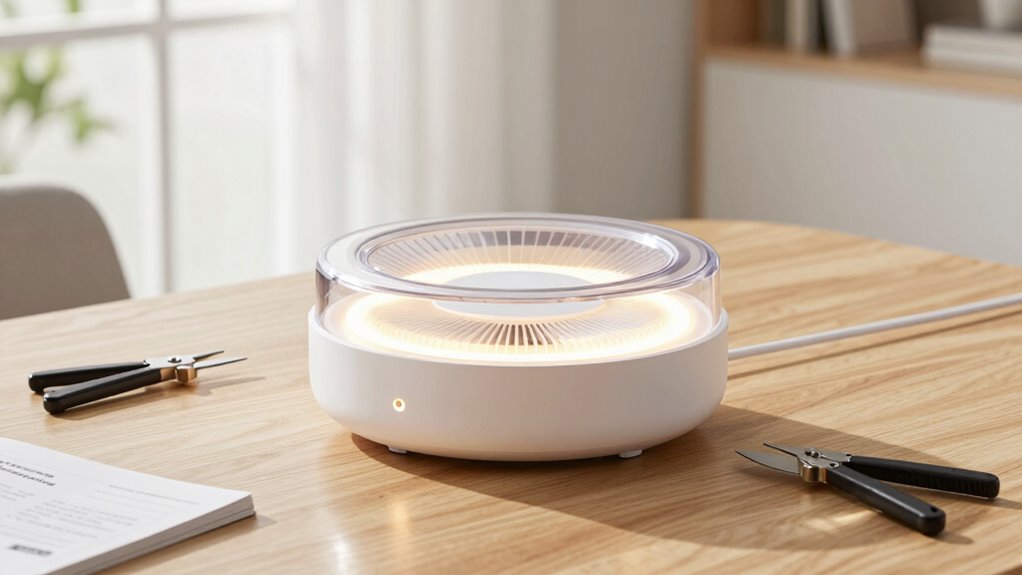
To keep your bladeless fan running smoothly, make sure to clean it regularly and remove dust buildup. Adjust the settings to find the most comfortable airflow without overworking the motor. Proper use and maintenance will guarantee you get the best performance and longevity from your fan.
Regularly Clean the Fan
Regular cleaning is essential to keep your bladeless fan operating at its best. Regularly check and clean the filter to prevent dust buildup that can hinder airflow and reduce efficiency. Proper filter maintenance not only keeps your fan running smoothly but also contributes to noise reduction, making it quieter during operation. Use a soft cloth or brush to remove dust from the fan’s surface and vents, ensuring no debris blocks airflow. Keeping the internal components clean helps prevent overheating and prolongs the device’s lifespan. Avoid harsh chemicals that could damage the fan’s surface or internal parts. Consistent maintenance will maintain peak performance, ensure quiet operation, and help your bladeless fan continue to provide a comfortable, cool environment.
Adjust Settings Properly
Are you getting the most out of your bladeless fan? To optimize its performance, make sure you’re adjusting the fan speed appropriately. Higher speeds increase airflow, providing a stronger breeze, while lower settings conserve energy and reduce noise. Use the airflow adjustment feature to target specific areas or create a gentle, consistent flow. Familiarize yourself with the control panel, so you can easily switch between speeds and set your preferred airflow. Regularly tweak these settings based on your comfort level and room conditions. Properly adjusting the fan speed and airflow ensures you enjoy maximum cooling efficiency without wasting power or creating unnecessary noise. Taking a moment to set it correctly guarantees a cooler, more comfortable environment with less effort.
Are Bladeless Fans Worth the Investment?
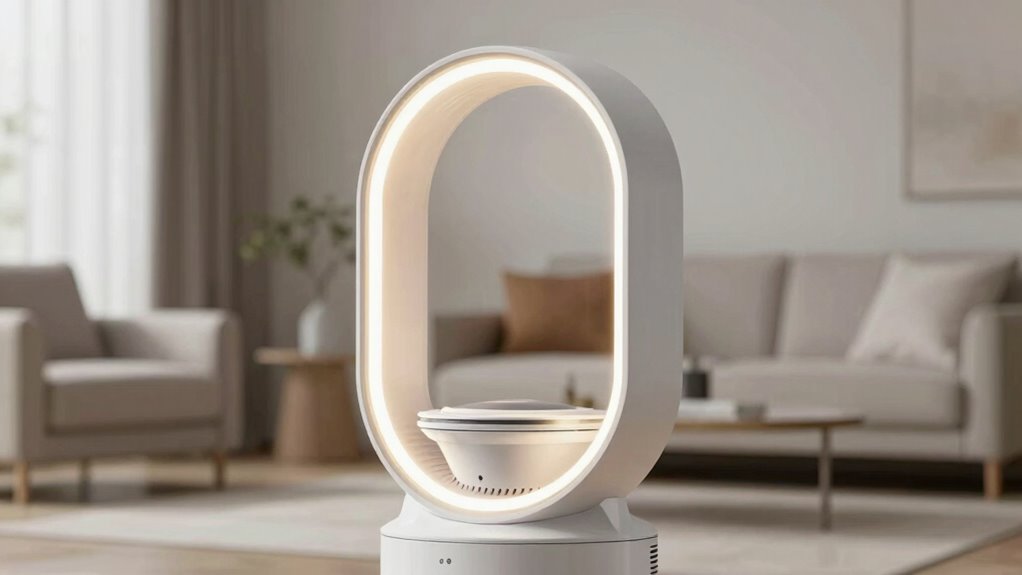
Considering the cost and features, you might wonder if investing in a bladeless fan is truly worthwhile. These fans often come with a higher price tag compared to traditional models, but they offer notable benefits. In regarding energy efficiency, bladeless fans tend to consume less power while providing smooth, consistent airflow, making them cost-effective in the long run. Their sleek, modern design aesthetics also add a stylish touch to your space, blending seamlessly with contemporary decor. If you value safety, ease of cleaning, and a quieter operation, these features enhance their appeal despite the initial investment. Ultimately, whether they’re worth it depends on your priorities for energy savings, design, and comfort. For many, the combination of style and function justifies the extra expense.
Frequently Asked Questions About Bladeless Fans
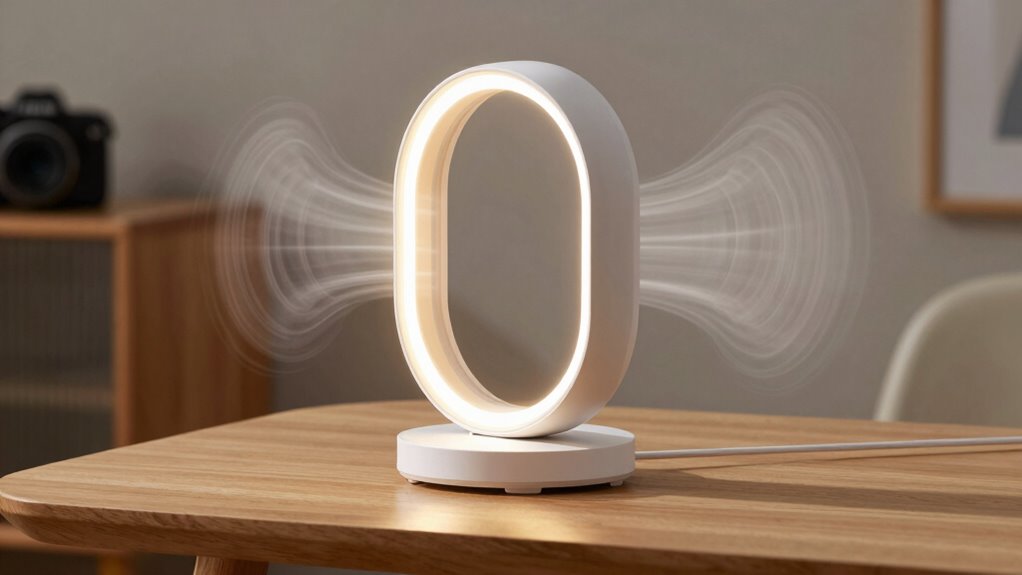
Many people have questions about bladeless fans before deciding if they’re the right choice for their space. You might wonder about their energy efficiency, noise levels, or maintenance. Here are some common questions answered:
1. Are bladeless fans more energy-efficient than traditional fans?
While they use modern technology, their energy efficiency varies by model, but many are designed to consume less power.
2. Do bladeless fans operate quietly?
Yes, they generally produce lower noise levels compared to traditional fans, making them ideal for quiet environments.
3. How easy are bladeless fans to clean and maintain?
They’re simple to clean since there are no external blades, reducing dust buildup and making maintenance easier.
Understanding these aspects helps you decide if a bladeless fan fits your needs.
Frequently Asked Questions
Do Bladeless Fans Consume Less Energy Than Traditional Fans?
Bladeless fans generally consume less energy than traditional fans because of their energy efficiency and power consumption design. They use a brushless motor that operates more efficiently, reducing electricity use. This means you can enjoy the same cooling effect while saving on energy bills. While they may sometimes use slightly more power than small traditional fans, their overall efficiency and quieter operation make them a smart choice for energy-conscious users.
Are Bladeless Fans Safe for Children and Pets?
Yes, bladeless fans are generally safe for children and pets because they lack exposed blades that could cause injury. Their smooth, enclosed design minimizes risks associated with traditional fans, making them a good choice for child safety and pet safety. You won’t need to worry about curious little hands or paws getting hurt. Just guarantee the fan is stable and kept away from water or liquids to maintain safety and ideal operation.
Can Bladeless Fans Be Used Outdoors Effectively?
Yes, you can use bladeless fans outdoors effectively, but keep in mind their outdoor durability and weather resistance. They’re generally designed for indoor use, so exposure to rain, high humidity, or extreme weather can damage them or diminish their lifespan. To make the most of your bladeless fan outside, place it in a sheltered area, and avoid direct contact with water. Proper care ensures safe, efficient cooling during outdoor activities.
How Noisy Are Bladeless Fans Compared to Traditional Fans?
Bladeless fans are generally quieter than traditional fans, thanks to their innovative design. You’ll notice lower sound levels, making them more comfortable for bedrooms or offices. In noise comparison, bladeless fans produce less hum and rattling, creating a more peaceful environment. You won’t be disturbed by loud blades spinning, so they’re ideal if you prefer a quieter fan option. Overall, they offer a more silent and calming cooling experience.
Do Bladeless Fans Have Adjustable Airflow Settings?
Yes, bladeless fans offer adjustable airflow settings. You can control the fan speed to customize airflow control, making it gentle or strong depending on your preference. Most models have easy-to-use controls or remote settings, so you don’t need to manually change anything. This feature allows you to find the perfect airflow for your comfort, whether you want a soft breeze or powerful air circulation.
Conclusion
In the world of fans, bladeless brilliance brings breezes with beauty and balance. By understanding how they work and what makes them special, you can make a smart, satisfying choice. Whether you’re seeking silent serenity or sleek style, bladeless fans deliver a smoother, safer, and more satisfying experience. So, step into the world of stylish, safe, and sensational cooling—your perfect breeze is just a decision away!