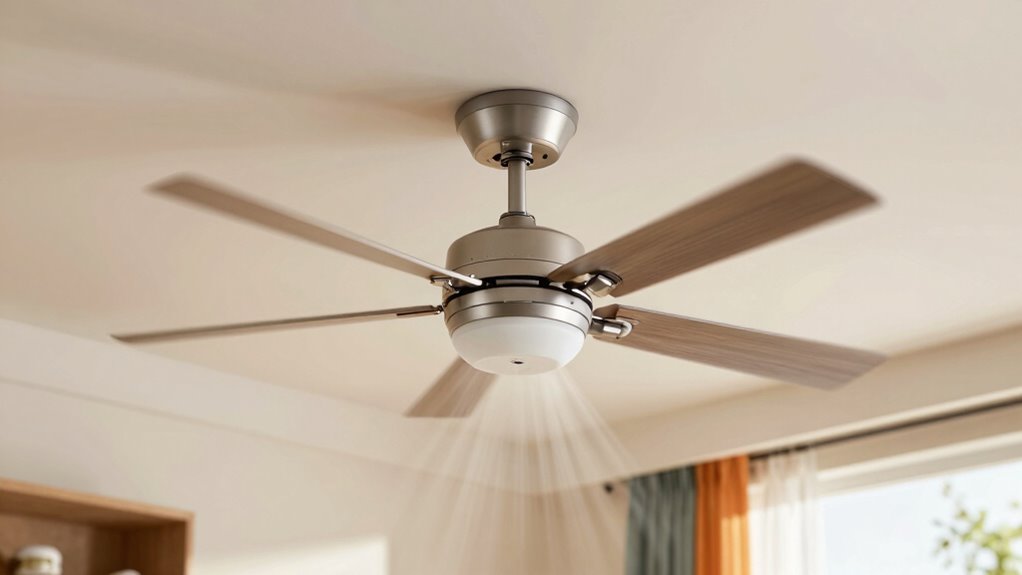

To understand ceiling fan direction for summer and winter, it’s simple: in summer, set your fan to rotate counterclockwise to create a downward breeze that cools you. In winter, switch it to clockwise so it pulls air up and pushes warm air downward, making your room feel warmer. Properly switching between these modes can boost comfort and save energy. Keep exploring to learn how to easily adjust fan direction and maximize your home’s comfort year-round.
Key Takeaways
- Summer mode: rotate fan counterclockwise to create downward airflow for cooling.
- Winter mode: rotate fan clockwise to pull air upward and circulate warm air.
- Check fan blades or remote control labels to identify current mode.
- Turn off the fan before switching directions to prevent damage.
- Proper seasonal adjustment improves comfort and energy efficiency year-round.
How Ceiling Fans Help Keep Your Home Comfortable Year-Round
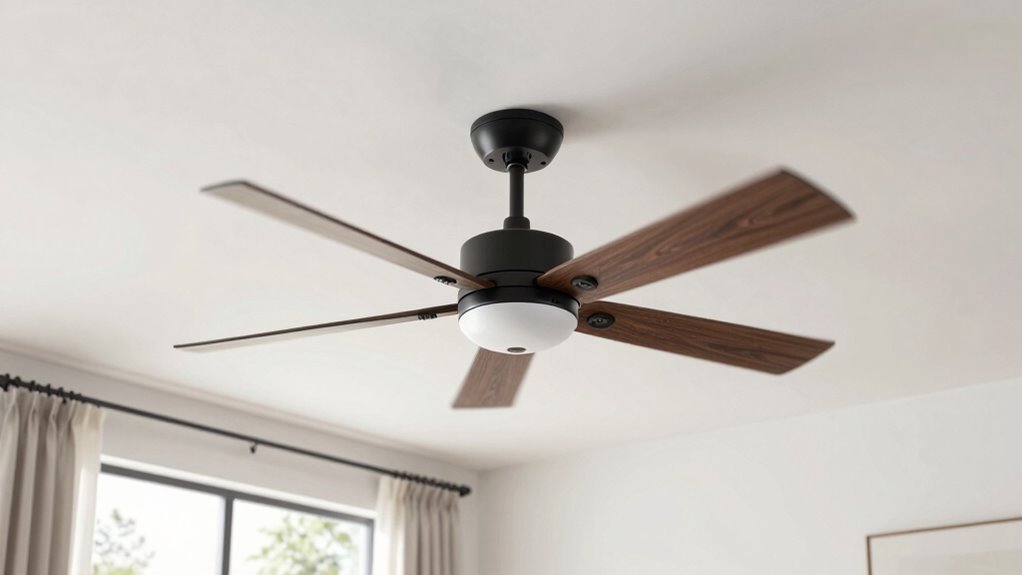
Ceiling fans are a versatile tool for maintaining comfort in your home throughout the year. They help regulate temperature by circulating air, making rooms feel cooler or warmer. The fan blade materials, such as wood, metal, or plastic, influence noise levels and durability, ensuring your fan operates smoothly and quietly. Adjusting fan speed settings allows you to customize airflow according to your needs, whether you want a gentle breeze or stronger circulation. In summer, a higher speed creates a cooling effect, while in winter, a lower speed helps distribute warm air more evenly. Properly installing and maintaining your fan ensures optimal performance and safety. By choosing the right materials and adjusting speed settings properly, you can maximize your fan’s efficiency and comfort, no matter the season.
How Fan Rotation Affects Airflow and Your Comfort
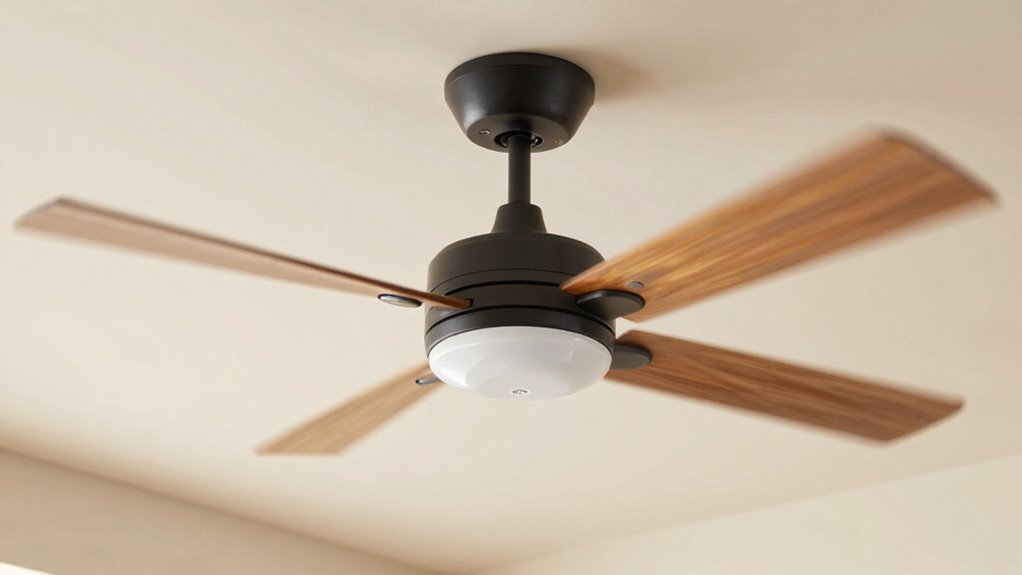
The way your ceiling fan rotates creates specific airflow patterns that directly impact your comfort. When set correctly, it helps regulate room temperature and improves air circulation. Understanding these effects lets you optimize room comfort with simple fan adjustments. Additionally, modern smart fan technology can automatically adjust rotation speed and direction based on the room’s needs, further enhancing comfort and energy efficiency. smart home integration can also allow for scheduling and remote control of fan settings to match your daily routines.
Air Circulation Patterns
When a ceiling fan rotates counterclockwise, it creates a downward airflow that cools the room and helps distribute air evenly. This airflow pattern pushes air directly down, creating a breeze that makes you feel cooler. The fan blade angles are designed to maximize this effect, directing air efficiently without causing turbulence. Properly angled blades enhance the airflow patterns by generating a steady, gentle breeze rather than chaotic drafts. As a result, the circulation of air becomes more uniform, preventing hot spots and ensuring consistent comfort throughout the space. Understanding how fan blade angles influence airflow patterns helps you optimize your fan’s performance. Whether in summer or winter, adjusting rotation direction can markedly improve your overall comfort by controlling how air circulates in your room. European cloud innovation can also inspire smarter, more energy-efficient fan designs that optimize airflow and reduce energy consumption. Recognizing how air circulation patterns impact comfort can help you make better decisions about fan placement and settings, especially as technology advances continue to improve fan efficiency and control. Additionally, awareness of fan blade pitch can further enhance airflow effectiveness by tailoring the fan’s performance to your specific needs. Moreover, understanding airflow dynamics helps in designing fans that better suit different room sizes and layouts for optimal cooling and heating efficiency.
Temperature Regulation Impact
Ever wondered how your fan’s rotation impacts your comfort? When set correctly, ceiling fans influence temperature regulation by improving ventilation efficiency and affecting insulation effects. In summer, a counterclockwise rotation pushes air downward, creating a breeze that cools your skin. Conversely, in winter, a clockwise rotation gently pulls air upward, helping heat circulate more evenly. Proper fan settings can also enhance energy efficiency, reducing your cooling and heating costs throughout the year. Additionally, understanding market trends and insights can help you determine the best times to make seasonal adjustments or upgrades to your ceiling fan. Being aware of airflow dynamics can further optimize your home climate management and maintain comfort year‑round. Recognizing seasonal adjustments can ensure you maximize your fan’s benefits and efficiency.
Room Comfort Optimization
Adjusting your ceiling fan’s rotation directly influences how air moves through your room, impacting your overall comfort. The fan blade design determines airflow direction and strength, so choosing the right rotation ensures ideal circulation. In rooms with high ceilings, a fan set to rotate counterclockwise in summer creates a downward breeze that cools you effectively. Conversely, in winter, a clockwise rotation gently pulls air upward, distributing warm air evenly. Proper fan direction also considers ceiling height; taller ceilings benefit from a fan that moves air in a way that prevents hot air from stagnating near the ceiling. By understanding how fan blade design and ceiling height interact, you can fine-tune your fan’s rotation to maximize comfort and airflow efficiency year-round.
How to Tell Which Mode Your Ceiling Fan Is Using
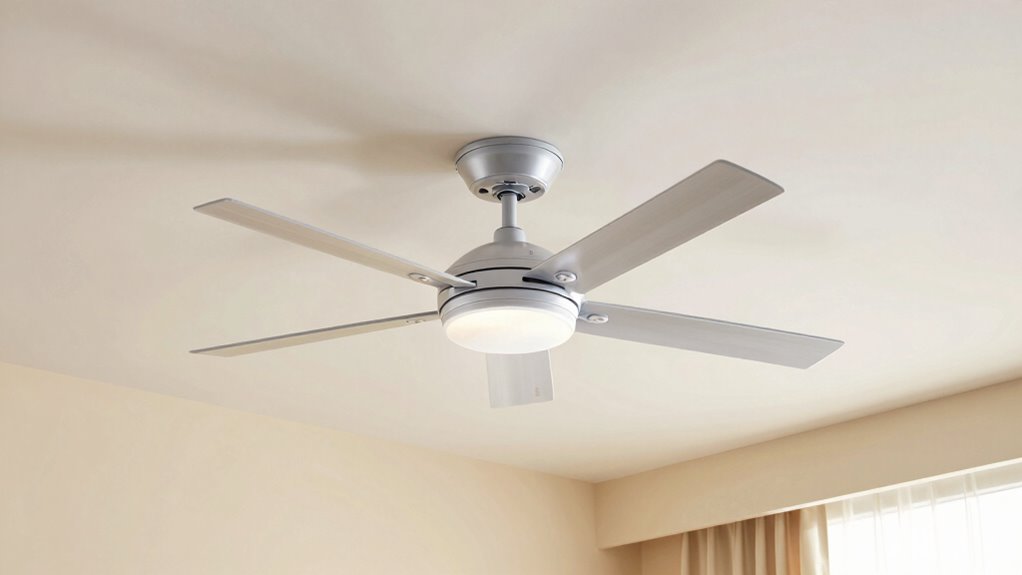
Wondering which mode your ceiling fan is currently using? First, examine the fan blade design—fans with reversible blades often have markings or labels indicating the current setting. If your fan has a remote control, check its features; many remotes display or allow you to toggle between summer and winter modes. Some remotes include a mode indicator light or a dedicated button that shows which direction is active. Additionally, listen for the fan’s rotation: a clockwise spin in winter mode or a counterclockwise spin in summer mode. If you’re unsure, turn the fan on low and observe the blade movement—this can help you identify its current setting. Confirming the mode guarantees you’re optimizing your fan’s efficiency for the season.
How to Change Your Ceiling Fan’s Direction in Easy Steps
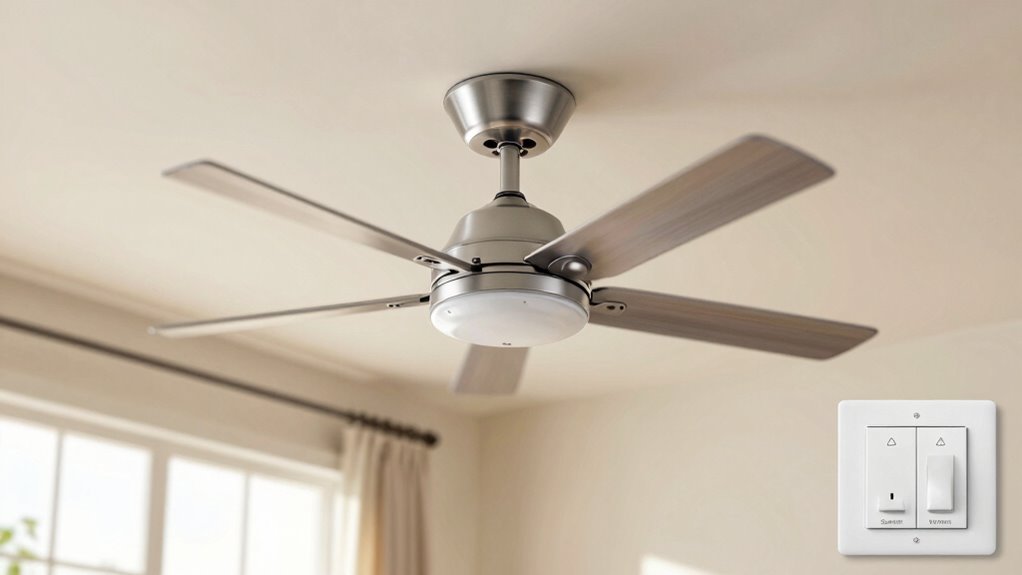
Changing your ceiling fan’s direction is a simple process that can help you save energy and stay comfortable year-round. First, turn off the fan and wait a few minutes for the blades to stop moving. Locate the fan’s reverse switch, usually on the motor housing. If your fan has a fan blade design that allows for easy access, it’ll be straightforward to flip the switch. Keep in mind, ceiling fan size can influence how much air movement you feel when changing direction—larger fans may require more careful handling. Once you flip the switch, turn the fan back on at a low speed to check if it’s rotating in the desired direction. Adjust if necessary. This quick step guarantees efficient airflow during both summer and winter, especially when considering free floating fans, which often have adjustable settings to optimize airflow without the need for complex installation. Additionally, some fans incorporate smart controls that can automate or simplify this process for enhanced convenience. Properly adjusting your fan’s direction can also help improve energy efficiency, which is especially beneficial for reducing utility bills in the long term and supporting environmentally conscious living. Regularly checking and maintaining your fan’s blade alignment can also ensure optimal performance and safety.
When to Use Summer Mode for Cooler, More Efficient Cooling
When summer hits, switch your ceiling fan to summer mode to create downward airflow. This directs air straight down, making the room feel cooler and more comfortable. Using this setting also boosts your fan’s efficiency, helping you save on energy costs. Additionally, understanding your fan’s settings ensures you optimize its performance for every season. Properly adjusting your fan can also promote air circulation, which is essential for maintaining a consistent temperature and improving overall comfort. Being aware of seasonal adjustments can further enhance your fan’s effectiveness and energy savings, especially when combined with other energy-saving techniques. Knowing how fan blade angles influence airflow can further improve your cooling strategy and overall energy efficiency.
Creates Downward Airflow
To achieve cooler, more efficient cooling during summer, set your ceiling fan to rotate clockwise in summer mode. This creates downward airflow, which helps push warm air up and pulls cooler air down into the room. The blade pitch is designed to maximize this downward flow, directing air straight down rather than circulating it around the room. Adjusting the motor speed to a higher setting increases the force of the airflow, enhancing the cooling effect. When the fan blades turn clockwise, they push air downward in a gentle, steady stream that makes you feel cooler without creating a draft. This downward airflow is ideal for hot days, helping to improve comfort while reducing reliance on air conditioning. Properly setting your fan ensures maximum cooling efficiency and energy savings. Understanding fan blade pitch can help optimize airflow direction for better comfort. Additionally, knowing how fan motor speed affects airflow can further improve cooling performance and energy efficiency.
A well-configured fan can also contribute to air circulation that enhances overall room comfort during the warmer months.
Enhances Cooling Efficiency
Setting your ceiling fan to summer mode with clockwise rotation not only creates downward airflow but also maximizes cooling efficiency. This setup improves ventilation efficiency by circulating cooler air and reducing hot spots. Better airflow enhances air quality, making your space feel fresher and more comfortable. Use this setting when temperatures rise outside, and you want to keep indoor spaces cooler and more energy-efficient. The table below outlines how summer mode impacts different factors:
| Factor | Effect | Benefit |
|---|---|---|
| Ventilation efficiency | Increased circulation | Cooler indoor environment |
| Air quality | Better air mixing | Healthier, fresher air |
| Cooling efficiency | Maximized airflow | Reduced reliance on AC |
This ensures your fan works smarter, optimizing comfort and air quality during warmer months.
Why Reversing Your Fan in Winter Helps Save Energy
Have you ever wondered how reversing your ceiling fan in winter can cut down on energy costs? When you switch the fan to rotate clockwise, it pulls warm air from the ceiling and pushes it downward, making the room feel warmer without cranking up the heat. This simple switch enhances seasonal energy savings by reducing your reliance on your heating system. The fan reversal benefits extend beyond comfort; they help maintain a consistent temperature and prevent heat loss near the ceiling. By circulating warm air more effectively, you can set your thermostat lower and still stay cozy. This small adjustment is an easy, energy-efficient way to save money during colder months while keeping your home comfortable.
Troubleshooting Common Issues When Changing Fan Direction
Sometimes, changing your ceiling fan’s direction doesn’t go as smoothly as expected, leading to confusion or frustration. Common issues include blades misalignment or unusual motor noise. If the fan wobbles or makes rattling sounds, check the blades for proper alignment and tighten any loose screws. Additionally, inconsistent motor noise might indicate a worn bearing or loose mounting. To troubleshoot:
- Ensure blades are evenly spaced and securely attached.
- Turn off the fan before flipping the switch to avoid damage.
- Inspect for any debris or dust buildup that could cause imbalance or noise.
If problems persist, the motor may need lubrication or replacement. Correct blades alignment and addressing motor noise are key to ensuring your fan runs smoothly when changing directions.
Tips to Maximize Energy Savings With Your Ceiling Fan Settings
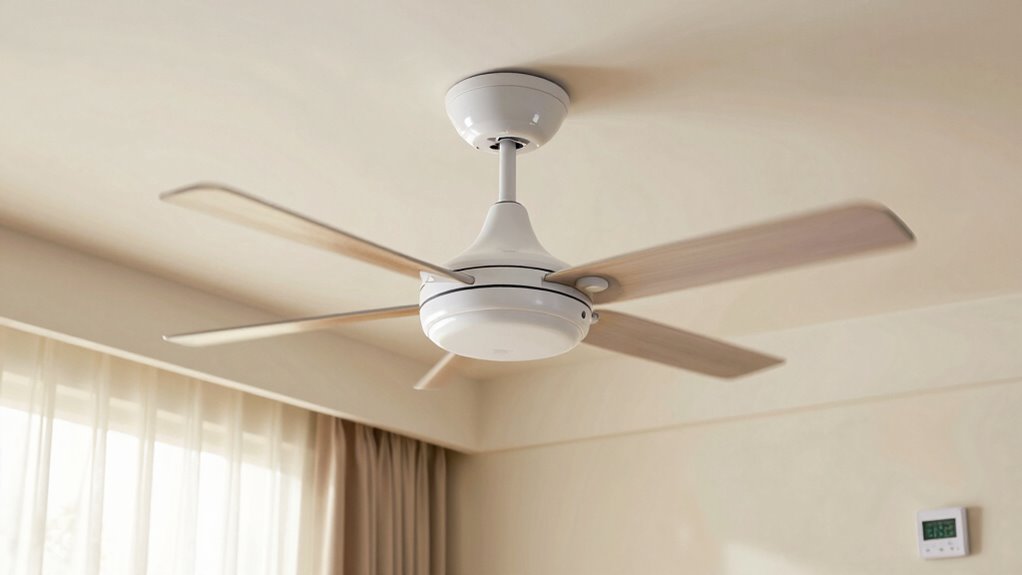
To maximize energy savings with your ceiling fan, it’s important to optimize its settings based on the season and room use. Use the fan’s summer setting to create a cooling breeze that allows you to raise your thermostat, reducing air conditioning costs. In winter, switch to the reverse setting to help circulate warm air near the ceiling, making the room feel warmer without extra heating. Pair your fan with energy-efficient bulbs to cut electricity use further. For added savings, integrate your ceiling fan with a smart thermostat, enabling automated adjustments based on occupancy and weather conditions. These steps ensure your fan operates efficiently, lowering energy bills while maintaining comfort year-round.
Frequently Asked Questions
Can Ceiling Fan Direction Impact Indoor Air Quality?
Yes, ceiling fan direction can impact indoor air quality. When you set your fan to improve air circulation, it helps distribute air evenly, reducing stagnant spots that can trap allergens and dust. Proper air movement can also aid allergen control by preventing buildup of airborne particles, making the environment healthier. Adjusting your fan’s direction according to seasonal needs enhances overall air quality and keeps your indoor space fresher.
Does Fan Speed Influence the Effectiveness of Seasonal Settings?
Like a maestro conducting an orchestra, you control how your fan performs with fan speed and seasonal settings. Increasing fan speed during summer boosts airflow, helping cool your space more efficiently. Conversely, lowering it in winter allows warm air to circulate gently. So, yes, fan speed influences the effectiveness of seasonal settings, ensuring your fan adapts perfectly to the season’s needs and keeps your comfort in harmony.
Are There Specific Ceiling Fan Types Better for Seasonal Adjustments?
Some ceiling fan types are better for seasonal adjustments due to blade materials and shapes. Fans with lightweight, durable blades made of materials like plastic or aluminum respond quickly to speed and direction changes, making seasonal adjustments easier. Fans with versatile blade shapes, such as those with a wider span or curved blades, circulate air more effectively in both summer and winter settings. Choose a fan with adjustable blade pitch for ideal performance all year.
How Often Should I Check or Adjust My Ceiling Fan’s Direction?
You should check your ceiling fan’s direction at least once every season to stay ahead of the curve. Regular fan maintenance ensures peak performance and safety precautions prevent mishaps. If you notice uneven airflow or noise, it’s time to adjust the blades. Think of it as fine-tuning an instrument—you’ll enjoy better comfort and energy savings, making sure your fan works smoothly and safely all year round.
Can Incorrect Fan Direction Cause Increased Energy Bills?
Yes, incorrect fan direction can increase your energy bills. When your fan isn’t set properly for the season, it forces your HVAC system to work harder, reducing energy efficiency. Regular fan maintenance, including checking the direction, ensures maximum airflow and helps you save money. By keeping your fan’s settings correct and performing routine maintenance, you improve energy efficiency and lower your overall energy costs.
Conclusion
By mastering your ceiling fan’s direction, you turn your home into a symphony of comfort all year round. Just as a conductor guides an orchestra, your fan’s rotation sets the perfect tone for every season. With simple adjustments, you’ll stay cool when it’s hot and cozy when it’s cold—saving energy and money along the way. Take control now, and let your ceiling fan be the silent hero behind your comfort—always ready to play its part.