When choosing between seamless paper and fabric backdrops, consider your needs for versatility, durability, and storage. Seamless paper provides a clean, uniform background that’s easy to set up but tears easily, while fabric is more durable and reusable but may require ironing or steaming. Proper storage—hanging fabric on padded hangers or rolling paper in a tube—can prolong their lifespan. Keep exploring to find the best way to care for your backdrops and guarantee they stay in great condition.
Key Takeaways
- Seamless paper provides a smooth, uniform background ideal for clean images, while fabric offers textured, customizable options.
- Store seamless paper by rolling and upright in a tube; hang fabric on padded hangers to prevent creases.
- Seamless paper is lightweight and easy to replace but prone to tearing; fabric is durable, washable, and reusable.
- Consider lighting, budget, and setup time when choosing between the reflective surface of paper and the absorbent qualities of fabric.
- Proper storage in a cool, dry environment extends the lifespan of both materials and maintains their appearance.
Key Differences Between Seamless Paper and Fabric Backdrops
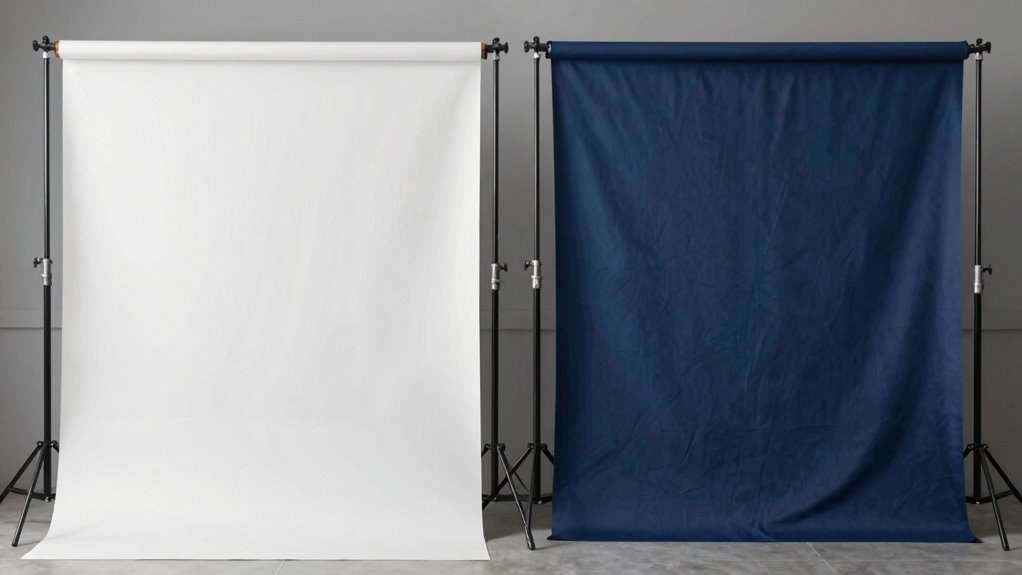
When choosing between seamless paper and fabric backdrops, understanding their key differences helps you make an informed decision. Texture options vary markedly; seamless paper offers a smooth, consistent surface ideal for clean backgrounds, while fabric provides a variety of textures, from matte to textured finishes, giving you creative flexibility. Cost considerations also play a role—seamless paper tends to be more affordable upfront, especially for single-use or short-term projects, whereas fabric backdrops often require a higher initial investment but can be reused multiple times. Additionally, paper is lightweight and easy to set up but can tear easily, while fabric is durable, washable, and easier to store without creases. Knowing these distinctions helps you select the best backdrop for your style, budget, and project needs. Furthermore, choosing the right backdrop material can influence color accuracy and overall visual quality in your photos or videos. Proper storage techniques are essential to maintain the quality and longevity of fabric backdrops, ensuring they stay in optimal condition for future use. Implementing storage solutions that suit your space can help prevent damage and keep your backdrops in pristine condition, prolonging their usability. Proper storage techniques are crucial to maintain the quality and longevity of fabric backdrops, ensuring they stay in optimal condition for future use. Additionally, understanding material properties can help you select the most suitable backdrop for different shooting environments and conditions. Proper storage not only prevents damage but also helps preserve the material’s texture and color, which is crucial for maintaining professional results.
Pros and Cons of Seamless Paper Backdrops for Photography and Video

Seamless paper backdrops offer a sleek, uniform background that’s perfect for creating clean, distraction-free images. They are highly valued for their simplicity and professional appearance. When considering their pros and cons, take into account:
- Lighting considerations: Seamless paper provides consistent color and texture, making lighting setup straightforward. However, it can reflect light unevenly if not properly managed. Properly lighting management can help mitigate these issues and enhance image quality. Using diffusers can further reduce unwanted reflections and create a softer light effect. Additionally, adjusting lighting angles is crucial to prevent glare and ensure even illumination across the backdrop. Incorporating light modifiers can further improve control over light spread and quality.
- Cost effectiveness: They are often more affordable initially than fabric options, especially for single-use projects, but replacement costs can add up over time.
- Durability and storage: Paper is prone to tearing, creasing, and staining, requiring careful handling and proper storage to maintain its pristine look. Additionally, storage solutions can extend the lifespan of your backdrop and keep it looking professional.
These factors influence how suitable seamless paper is for your specific photography or video needs.
Pros and Cons of Fabric Backdrops for Versatile Backgrounds

Fabric backdrops offer remarkable versatility, making them a popular choice for photographers and videographers seeking flexible backgrounds. Their durability considerations are favorable if you choose high-quality materials, as they resist tearing and fading with proper care. Unlike paper, fabric can be cleaned and reused repeatedly, which enhances their cost-effectiveness over time. Additionally, fabric backdrops can be easily customized with different colors or patterns to suit various creative needs. They also provide a more professional appearance, especially when draped correctly, which can elevate the overall quality of a shoot. However, some lower-quality fabrics may wrinkle easily, requiring frequent steaming or ironing to maintain a smooth appearance. When conducting a cost effectiveness analysis, fabric backdrops often prove economical in the long run due to their reusability and durability. Still, initial investment can be higher than paper options, especially for premium fabrics. Overall, fabric backdrops balance flexibility, durability, and cost, making them an excellent choice for versatile backgrounds.
How to Store Your Backdrops to Make Them Last Longer
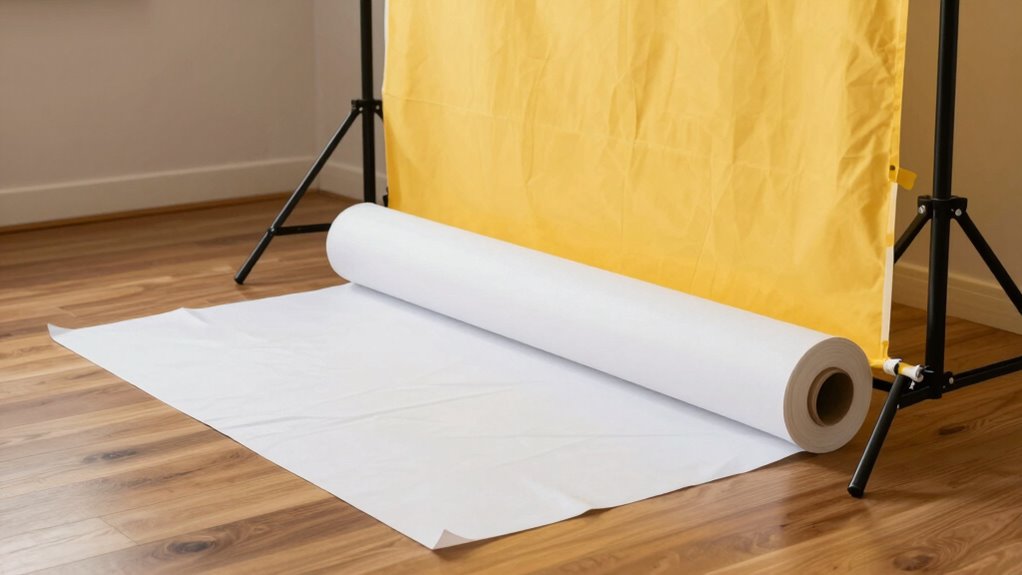
Proper storage is essential to keep your backdrops looking their best and extend their lifespan. Effective backdrop maintenance involves using proper storage techniques to prevent damage and prolong quality. To do this, consider these tips:
- Hang fabric backdrops on sturdy, padded hangers to avoid creases and wrinkles.
- Roll seamless paper backdrops carefully, ensuring they aren’t folded or creased, and store them upright in a dedicated tube.
- Keep all backdrops in a cool, dry environment away from direct sunlight to prevent fading and deterioration.
- Regularly inspect your backdrops for signs of wear or damage, and address issues promptly to maintain their integrity and material longevity.
How to Choose the Best Backdrop Material for Your Creative Projects
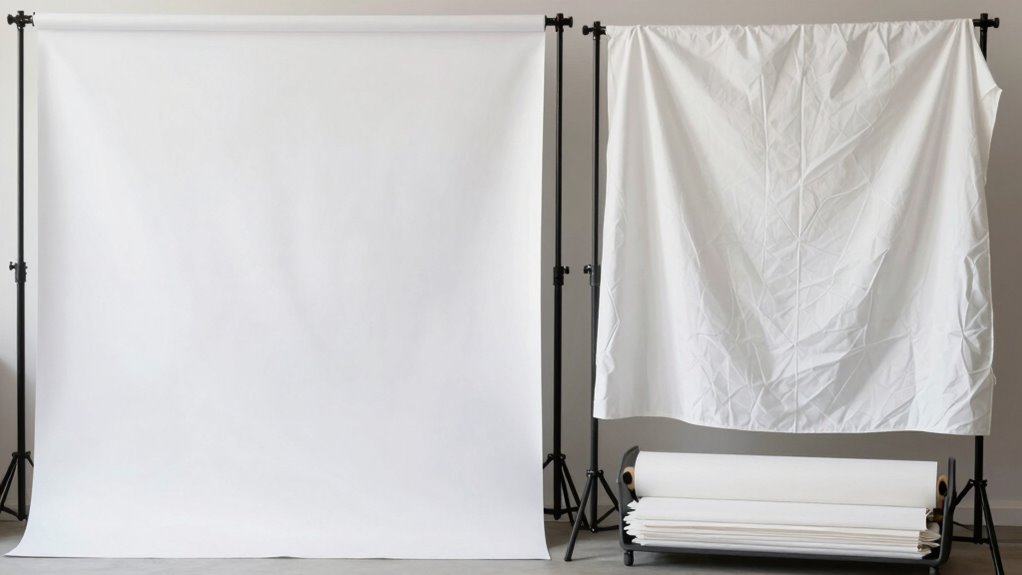
Choosing the right backdrop material depends on your specific project needs, as each type offers distinct benefits and limitations. Consider your lighting considerations; fabric backdrops often absorb light, reducing glare, while seamless paper reflects it, producing bright, even backgrounds. Your budget planning also plays a pivotal role—seamless paper is typically more affordable upfront and easy to replace, whereas high-quality fabric can be more costly but offers durability and reusability. Think about how portable or easy to store the material needs to be, especially if you shoot on location frequently. If you require quick setup and cleanup, seamless paper might be ideal. For longer-term projects or custom textures, fabric offers flexibility. Additionally, the Suprem fabric, with its blend of synthetic and natural fibers, provides durability and versatility for various creative applications. When selecting your backdrop, it’s important to consider auditory processing factors such as sound absorption and reflection, which can influence your overall environment. Evaluate these factors carefully to select the backdrop material that best aligns with your creative goals and logistical needs.
Frequently Asked Questions
How Do Seamless Paper and Fabric Backdrops Impact Lighting Setup?
Seamless paper offers consistent lighting because it reflects light evenly, making your setup simpler. Fabric backdrops provide more flexibility with textures and colors, but they can cause uneven lighting or shadows if not properly lit. Your choice impacts lighting consistency and backdrop flexibility—seamless paper keeps lighting straightforward, while fabric allows creative variations. Adjust your lighting accordingly to achieve the desired effect and maintain a professional look.
Can Fabric Backdrops Be Easily Cleaned and Maintained?
Yes, fabric backdrops can be easily cleaned and maintained. You should use gentle cleaning methods like spot cleaning with a damp cloth or mild detergent for stains. Regular maintenance tips include brushing off dust, avoiding harsh chemicals, and storing them in a cool, dry place to prevent mold and wrinkles. For deeper cleaning, some fabrics are washable, so always check the care label before washing or dry cleaning.
What Are the Cost Differences Between Seamless Paper and Fabric Backdrops?
You’ll find that seamless paper backdrops are generally more affordable upfront, making them ideal for tight budgets. Fabric backdrops tend to cost more initially but can be reused many times, which might save you money long-term. When considering pricing comparison, think about your budget considerations and how often you’ll need to replace or maintain your backdrops. If you want a one-time purchase, paper might be better; for frequent use, fabric could be more economical.
Are There Eco-Friendly Options for Backdrops?
Did you know that over 8 million tons of plastic waste enter oceans each year? You can choose eco-friendly backdrops made from recyclable materials or opt for sustainable sourcing. Look for options like biodegradable fabrics or paper made from recycled content. These choices help reduce environmental impact and support conservation efforts, making your photoshoots greener. Switching to sustainable backdrops not only benefits the planet but also aligns with eco-conscious values.
How Do I Prevent Wrinkles and Creases in Fabric Backdrops?
To prevent wrinkles and crease removal in fabric backdrops, always hang them up immediately after use to keep them stretched out. Use a steamer or iron on a low setting with a pressing cloth to gently eliminate any creases. When storing, roll the fabric instead of folding to avoid deep wrinkles. Regularly inspecting and maintaining your backdrop ensures it stays smooth and ready for your next shoot.
Conclusion
Think of your backdrop as the canvas of your creativity—each material a different brushstroke. Whether you choose the smooth, endless horizon of seamless paper or the rich texture of fabric, your selection shapes your story. Store them with care, like safeguarding precious colors, so they stay vibrant and ready for your next masterpiece. With the right backdrop, you hold the power to transform a simple space into a world of limitless possibilities.