
Memory foam sleeps hot because its dense, insulating structure traps heat close to your body, preventing effective cooling. As pressure from your body molds the foam, airflow is reduced, further increasing heat retention. Higher foam density and closed-cell designs make heat buildup worse. Fortunately, innovations like gel infusions, ventilation channels, and open-cell structures help improve airflow and cooling. If you want to discover more ways to stay cool on your memory foam bed, keep exploring the options available.
Key Takeaways
- Memory foam’s dense, insulating material traps body heat, reducing airflow and causing heat buildup during sleep.
- Compression of foam at pressure points limits ventilation, increasing heat retention and hotspots.
- Foam structure, especially higher density and closed-cell design, impedes heat dissipation, leading to a warmer sleep surface.
- Technological innovations like gel infusions and ventilation channels help reduce heat retention in memory foam.
- Heat buildup from memory foam can disrupt sleep quality by causing discomfort, sweating, and frequent awakenings.
Why Do Memory Foam Mattresses Sleep Hot?
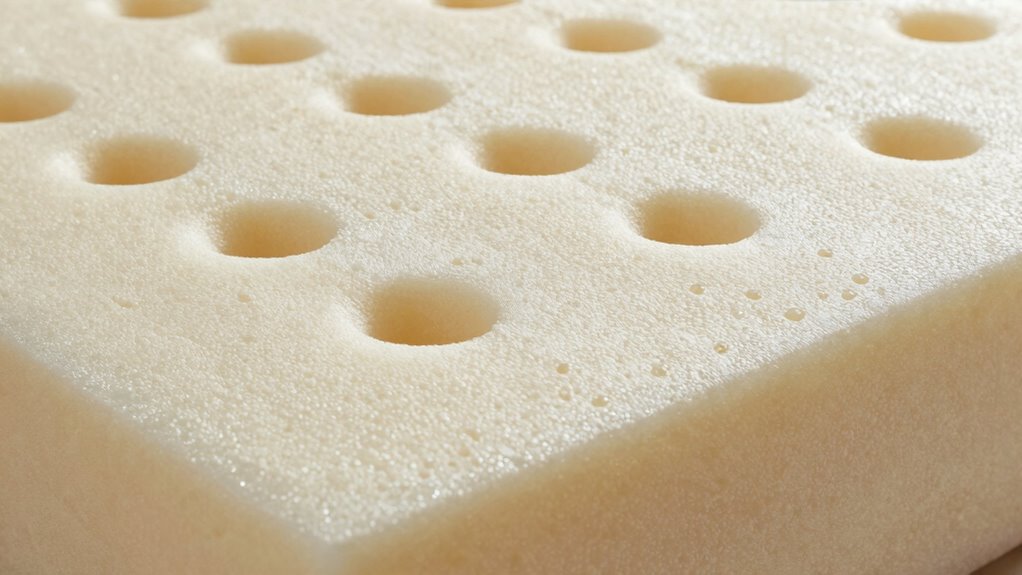
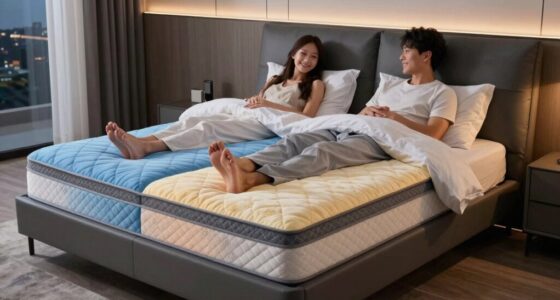
Memory foam mattresses tend to sleep hot because their dense, viscoelastic material absorbs and traps body heat instead of allowing it to dissipate easily. To combat this, manufacturers often incorporate gel infusion into the foam, which helps draw heat away from your body and offers a cooler surface. Additionally, many memory foam mattresses feature an open cell design that promotes airflow within the foam layers. This structure allows heat to escape more freely and improves ventilation, reducing the heat buildup common in traditional memory foam. These innovations don’t eliminate heat entirely but substantially help manage it, making sleep more comfortable. By combining gel infusion with an open cell design, manufacturers aim to create a cooler, more breathable memory foam mattress experience for sleepers. Understanding foam structure also plays a key role in designing heat-resistant mattresses. Incorporating ventilation techniques further enhances airflow and helps prevent heat retention in the foam layers. Proper airflow management is essential for maintaining a comfortable sleeping environment, especially as thermal regulation becomes increasingly important for restful sleep. Implementing breathable cover materials can also significantly improve heat dissipation and overall sleep quality.
How Do Body Heat and Pressure Make Memory Foam Warm?
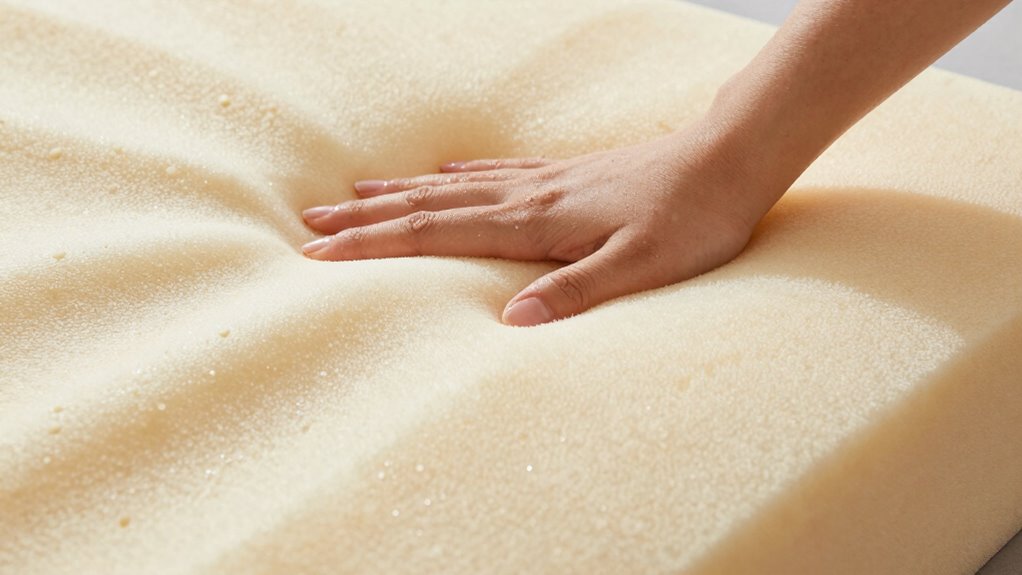
When you press into memory foam, your body heat and pressure generate warmth that the foam absorbs. Your body also transfers heat to the mattress, increasing its temperature. Because foam acts as an insulator, this heat stays trapped, making the mattress feel warmer over time. Additionally, the material composition of memory foam influences its ability to retain heat, often making it less suitable for hot sleepers. Foam’s density and structure further affect how much heat is retained, impacting overall comfort during sleep. The installation and maintenance of the mattress can also influence heat buildup, as improper setup may hinder airflow and heat dissipation. Proper ventilation techniques can help mitigate heat retention and improve sleep comfort.
Heat Generation From Pressure
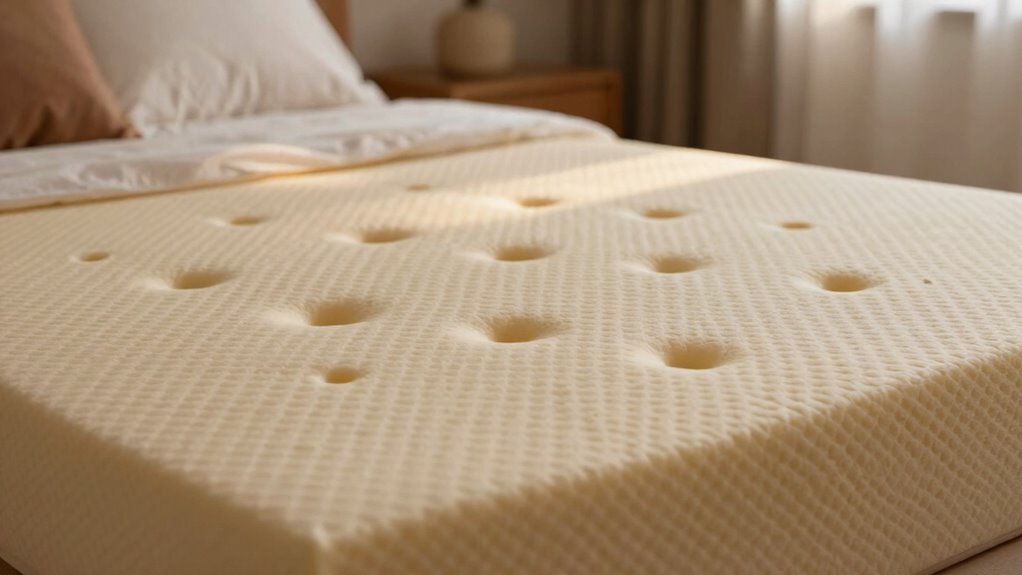
As you rest on a memory foam mattress, your body’s heat and pressure actively influence the material’s temperature. When you lie down, pressure buildup occurs as your body compresses the foam fibers, causing them to shift and squeeze together. This compression reduces the foam’s airflow, trapping heat inside. The pressure also increases heat accumulation because the foam’s molecules respond to the constant pressure by generating additional warmth through friction and deformation. As the foam molds to your shape, these physical changes create a cycle where pressure and heat reinforce each other. This process results in the mattress gradually warming up, making it feel hotter over time. Additionally, Free Floating nature of the foam allows heat to be retained more efficiently, further contributing to the heat retention. Understanding this pressure-driven heat generation helps explain why memory foam retains so much heat during sleep. Moreover, foam structure influences how effectively heat is dissipated, impacting overall sleep comfort. The material’s density also plays a role in how much heat is trapped, with higher-density foams generally retaining more warmth. Furthermore, airflow pathways within the foam are limited due to its dense construction, which can hinder heat dissipation and increase warmth.
Body Temperature Transfer
Your body continuously generates heat, which moves into the surrounding foam due to temperature differences. This transfer causes the foam to warm up over time, especially in areas of pressure. Gel infusions help by absorbing and dispersing heat more effectively, reducing hotspots. Breathable covers promote airflow, preventing heat from being trapped near your skin. When your body presses into the foam, pressure increases heat transfer, making the material feel warmer. Additionally, high contrast ratios in some foams can enhance the perception of warmth and comfort. Pressure points accelerate heat movement into the foam. Continuous heat transfer keeps the foam warm, especially without proper ventilation, which is crucial for dissipating accumulated heat. Proper foam density can also influence how heat is retained or dispersed within the material. Moreover, the thermal conductivity of memory foam varies depending on its composition, affecting how quickly heat is transferred away from your body. Factors like foam structure also play a significant role in how heat is retained or dissipated within the foam.
Foam’s Insulation Effect
Memory foam acts like an insulator because it traps heat generated by your body and prevents it from dissipating quickly. When you press into the foam, your body heat warms the material, which then holds onto that heat due to its dense structure. Gel infusions are added to help regulate temperature by absorbing and dispersing heat, but they don’t eliminate the insulation effect entirely. Additionally, many memory foam mattresses incorporate airflow channels designed to improve ventilation. These channels allow air to move through the foam, reducing heat buildup and helping you stay cooler. However, the foam’s natural insulation properties still trap much of your body heat, making it feel warm during the night despite these features. Understanding foam’s insulation helps explain why heat tends to accumulate in memory foam mattresses. Moreover, the density and structure of memory foam play a significant role in its heat retention capabilities. The material’s porosity also affects how much heat is retained or released, influencing overall comfort. The material’s thermal properties further contribute to heat retention by affecting how heat is absorbed and emitted. In addition, the feedback loop of body heat can intensify the warming effect over the course of the night, making it increasingly uncomfortable.
How Density and Cell Structure Affect Memory Foam Cooling
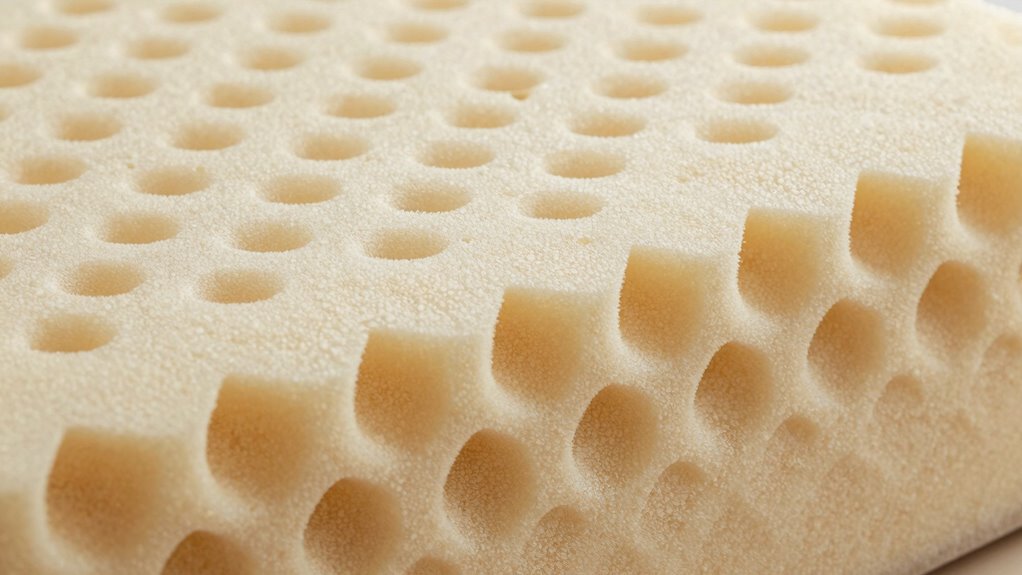
The density and cell structure of memory foam play essential roles in how effectively it dissipates heat. Higher density impact can trap more heat, making the foam feel warmer, while lower density often allows for better airflow. The cell structure influences heat flow; open-cell designs promote ventilation, reducing heat buildup, whereas closed-cell structures trap heat more effectively. To understand this better:
- Denser foam tends to retain more heat due to limited airflow.
- Open-cell structures facilitate better air circulation and cooling.
- Lower density foams are often softer and more breathable.
- The balance between density impact and cell structure determines overall heat dissipation.
- Additionally, smart home technology can be integrated to monitor and optimize sleep environments for better temperature regulation.
- Advances in foam formulation are developing materials that combine softness with enhanced cooling properties.
- Innovations in material engineering continually improve foam performance, balancing comfort with thermal regulation.
Knowing how these factors interact helps you choose memory foam that aligns with your cooling needs. Properly designed foam minimizes heat retention, making your sleep cooler and more comfortable, especially when combined with advanced cooling materials.
What Are the Latest Innovations in Cooling Memory Foam?
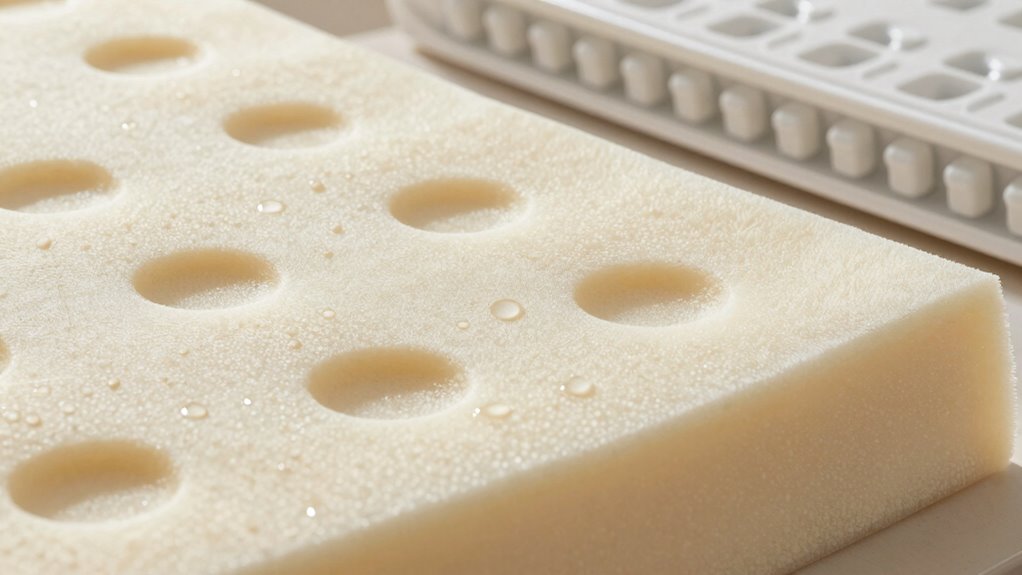
Advancements in cooling memory foam focus on integrating innovative materials and technologies to enhance heat dissipation. Gel infusions are added to absorb and transfer heat away from your body, providing immediate cooling effects. Phase change materials (PCMs) actively regulate temperature by absorbing excess heat and releasing it when needed, maintaining a comfortable sleep environment. These innovations improve overall sleep quality by reducing heat buildup. The table below summarizes key features:
| Technology | Mechanism | Benefits |
|---|---|---|
| Gel Infusions | Heat absorption and transfer | Cooler sleep surface |
| Phase Change Materials | Temperature regulation through phase transitions | Consistent, comfortable temperature |
| Microencapsulated Cooling | Encapsulated coolants releasing heat | Enhanced heat dissipation |
| Ventilation Layers | Airflow channels for heat escape | Reduced heat retention |
How Retaining Heat Impacts Your Sleep Comfort

When memory foam retains heat, it can make you feel uncomfortably hot throughout the night. This heat buildup can disrupt your sleep cycles, causing you to wake up feeling tired or restless. As a result, your overall comfort level drops, making it harder to get the restful sleep you need.
Heat Retention Properties
Heat retention in memory foam mattresses can considerably affect your sleep comfort, especially if you tend to sleep hot. When memory foam traps heat, it can lead to discomfort, tossing, and waking up sweaty. This happens because the foam’s heat retention properties slow down heat dissipation, making it harder for your body to cool down naturally. Factors like fabric breathability and the use of cooling gels can influence how much heat stays trapped.
- Poor fabric breathability restricts airflow, intensifying heat buildup
- Cooling gels work by absorbing and dispersing body heat
- Denser foam layers retain more heat, reducing airflow
- Breathable covers help mitigate heat retention by promoting airflow
Impact on Sleep Cycles
Persistent heat retention in memory foam mattresses can disrupt your sleep cycles by making it harder for your body to reach and maintain restful states. When your body overheats, it struggles to enter deep sleep stages, leading to frequent awakenings and fragmented sleep. This sleep cycle disruption prevents you from experiencing consistent REM stages, which are vital for mental and physical restoration. As a result, you may wake feeling less refreshed, groggy, or fatigued. The heat trap hampers your body’s natural ability to cool down, interfering with the shift between sleep phases. Over time, this can reduce overall sleep quality and leave you feeling unrested, highlighting how heat retention directly impacts the integrity of your sleep cycles.
Effects on Comfort Level
Since memory foam mattresses tend to trap heat, your comfort level can take a significant hit during the night. Excess heat disrupts your body’s natural temperature regulation, making it harder to fall asleep and stay asleep. When your body struggles to cool down, sleep quality diminishes, leading to restless nights. This discomfort can cause you to toss and turn, preventing deep, restorative sleep.
To understand the impact, consider these points:
- Elevated temperatures cause discomfort, reducing your overall sleep satisfaction
- Poor temperature regulation can lead to frequent awakenings
- Overheating may cause sweating, adding to discomfort
- Reduced sleep quality affects your mood and daytime alertness
Easy Tips to Stay Cool on a Memory Foam Mattress
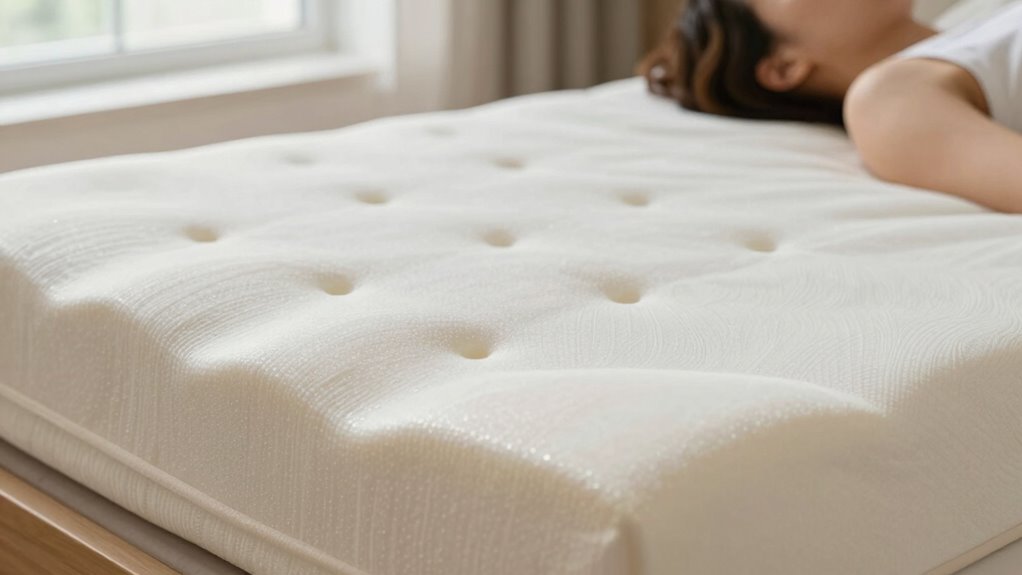
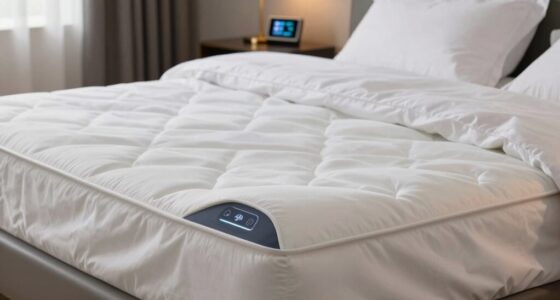
To stay cool on a memory foam mattress, you need to take proactive steps that improve airflow and reduce heat buildup. Using breathable bedding, like cotton sheets, helps wick away moisture and enhances mattress durability. Keeping your room cool with fans or air conditioning also prevents heat from accumulating. Additionally, choosing a mattress with ideal firmness can improve airflow around your body, reducing heat retention. Here’s a quick guide to stay cool:
| Tip | Benefit |
|---|---|
| Use cooling gel toppers | Enhance heat dissipation |
| Sleep with a fan | Increase airflow |
| Opt for breathable sheets | Reduce heat trapping |
| Choose medium firmness | Improve airflow and support |
| Maintain room temperature | Prevent heat buildup |
These simple tips help you stay comfortable without sacrificing sleep quality.
Are There Better Memory Foam Options for Hot Sleepers?
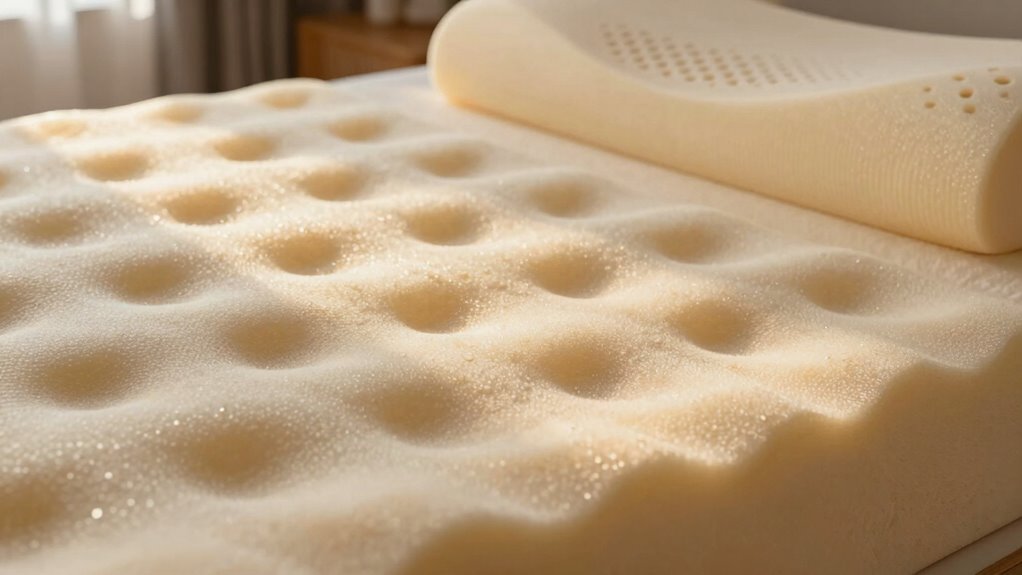
Are there better memory foam options for hot sleepers? Yes, look for gel infused memory foam, which helps dissipate heat and keeps you cooler throughout the night. Additionally, mattresses with breathable covers enhance airflow, reducing heat buildup. Some options include cooling gel layers or open-cell foam that promote better ventilation. When shopping, consider these features to improve your sleep comfort:
Gel infused memory foam and breathable covers help hot sleepers stay cool all night.
- Gel infused memory foam for heat regulation
- Breathable, moisture-wicking covers
- Open-cell or ventilated foam structures
- Cooling gels integrated into the memory foam
These choices can markedly reduce the heat trap, making your sleep environment more comfortable. By selecting mattresses with these features, you can enjoy the benefits of memory foam without sacrificing your coolness or sleep quality.
Frequently Asked Questions
Can Adding Cooling Gels Really Reduce Memory Foam Heat Retention?
Yes, adding cooling gels can effectively reduce memory foam heat retention. Gel infusion is a popular cooling technology that absorbs and disperses body heat, helping you stay cooler throughout the night. When you choose a memory foam mattress with gel infusion, you’ll notice improved airflow and temperature regulation, making your sleep more comfortable. This simple upgrade can make a significant difference if hot sleep is your concern.
Does the Room Temperature Significantly Affect Memory Foam’s Heat Buildup?
Sure, raising the room temperature might seem like a cozy idea, but it actually worsens memory foam’s heat buildup. You might think a warm room helps you sleep, yet it traps more heat in the foam, making you sweat. Cooler room temperatures promote better airflow and reduce heat retention. So, keeping your room cool is the smart way to prevent memory foam from becoming an oven overnight.
Are There Specific Brands Known for Cooling Memory Foam Mattresses?
Yes, some brands are known for cooling memory foam mattresses, like Tempur-Pedic and Casper. These brands often use advanced memory foam durability and incorporate breathable mattress cover materials, such as gel-infused foam and moisture-wicking fabrics, to help regulate temperature. When choosing a cooling memory foam mattress, look for these features to make certain you stay comfortable and avoid heat buildup during sleep.
How Does Ventilation Impact Heat Dissipation in Memory Foam Beds?
A stitch in time saves nine, and proper ventilation is key to heat dissipation in your memory foam bed. Good airflow channels allow air to circulate, reducing trapped heat. Additionally, lower foam density enhances breathability, preventing heat buildup. By ensuring your mattress has effective ventilation, you stay cooler and sleep more comfortably, as heat escapes more easily and your body stays at a balanced temperature all night long.
Is It Better to Choose a Softer or Firmer Memory Foam for Hot Sleepers?
If you’re a hot sleeper, choosing a firmer memory foam mattress is better because it promotes better airflow and reduces heat retention, helping you stay cooler. Your firmness preference impacts sleep temperature, as softer foams tend to trap more heat. By opting for a firmer option, you improve ventilation, which can lead to a more comfortable sleep environment and prevent overheating throughout the night.
Conclusion
Understanding why memory foam sleeps hot is like uncovering a hidden secret—once you know, you can take control of your sleep. By exploring the science behind heat retention and trying new cooling options, you can transform your mattress into a chill haven. Think of it as turning a blazing summer day into a cool, invigorating breeze. With the right tips and choices, you’ll sleep cooler and wake up feeling refreshed, ready to conquer your day.