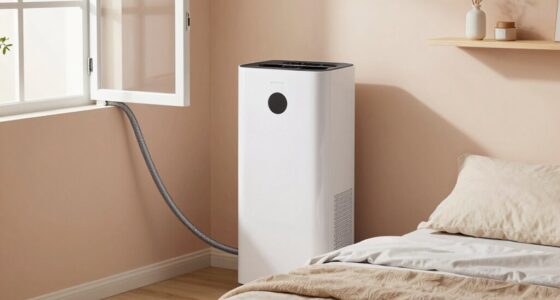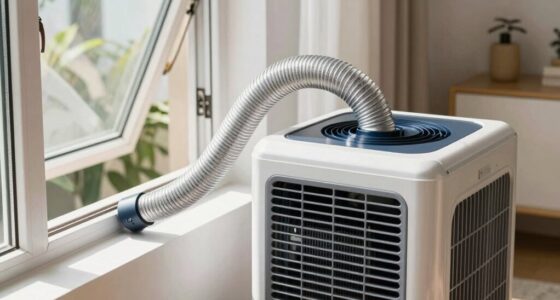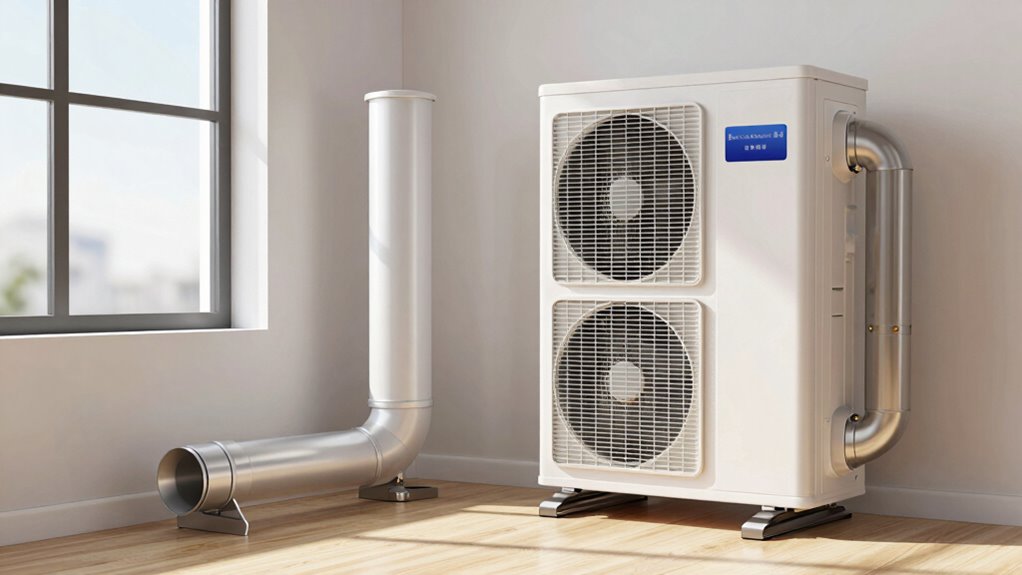

If you’re choosing between single-hose and dual-hose portable ACs, you’ll notice a big difference in cooling efficiency and performance. Single-hose units rely on one exhaust hose, which can pull warm outside air back into your space, making them less effective and more energy-consuming. Dual-hose models use separate hoses for intake and exhaust, providing faster, cooler, and more efficient cooling with less energy use. To discover which option suits your room best and how to get the most out of your AC, keep exploring.
Key Takeaways
- Dual-hose units cool faster and more efficiently by improving airflow and preventing warm air recirculation.
- Single-hose models are easier to set up but often struggle with humidity control and larger spaces.
- Dual-hose ACs consume less energy, leading to lower operating costs and better heat dissipation.
- Single-hose units can cause negative room pressure, reducing cooling effectiveness in bigger or hotter rooms.
- Dual-hose systems are quieter, maintain more stable temperatures, and are ideal for larger or sensitive environments.
Which Portable Air Conditioner Is Right for Your Room Size?
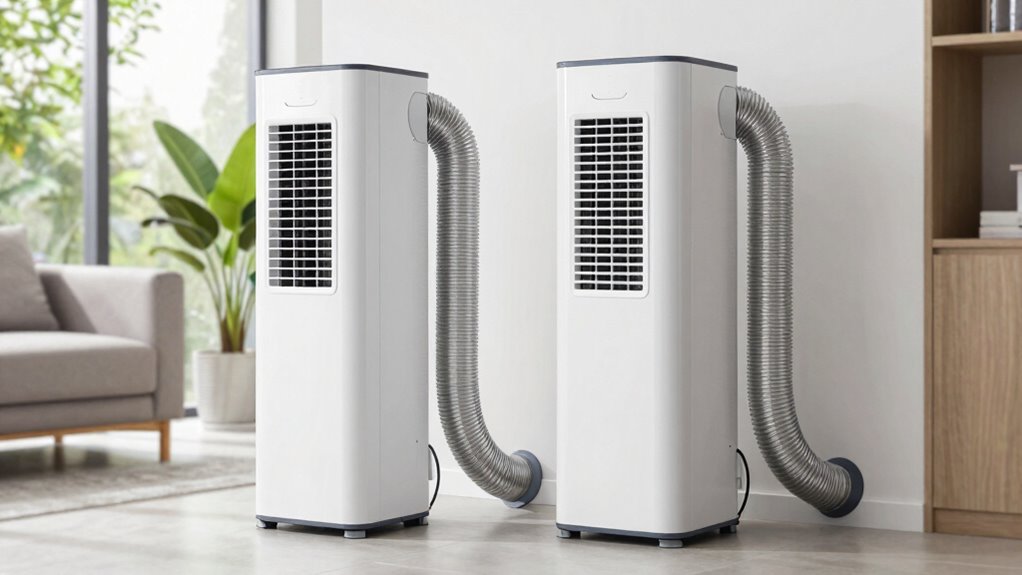
Choosing the right portable air conditioner depends largely on your room size. For smaller spaces, a compact unit provides effective temperature control without overwhelming the room or creating excessive noise levels. If your room is larger, you’ll need a unit with a higher BTU rating to maintain consistent cooling. Proper sizing guarantees the AC can handle the heat load, offering better temperature control and energy efficiency. Keep in mind that larger units may produce more noise, so consider models designed for quieter operation if noise levels are a concern. Measure your room accurately before selecting an AC, and choose one that matches its size to optimize comfort, minimize energy waste, and ensure effective cooling without unnecessary noise. Additionally, understanding air circulation can help improve overall cooling performance by ensuring even distribution of cooled air throughout the space. Proper air circulation can also reduce hot spots, making your cooling more uniform and effective. Being aware of energy efficiency ratings can further help you select a model that saves on electricity costs while maintaining performance. Incorporating portable AC features such as adjustable vents and timers can enhance user comfort and convenience. Moreover, selecting a unit with easy maintenance options can prolong its lifespan and keep it operating efficiently over time.
How Do Single-Hose and Dual-Hose Portable ACs Differ in Performance?
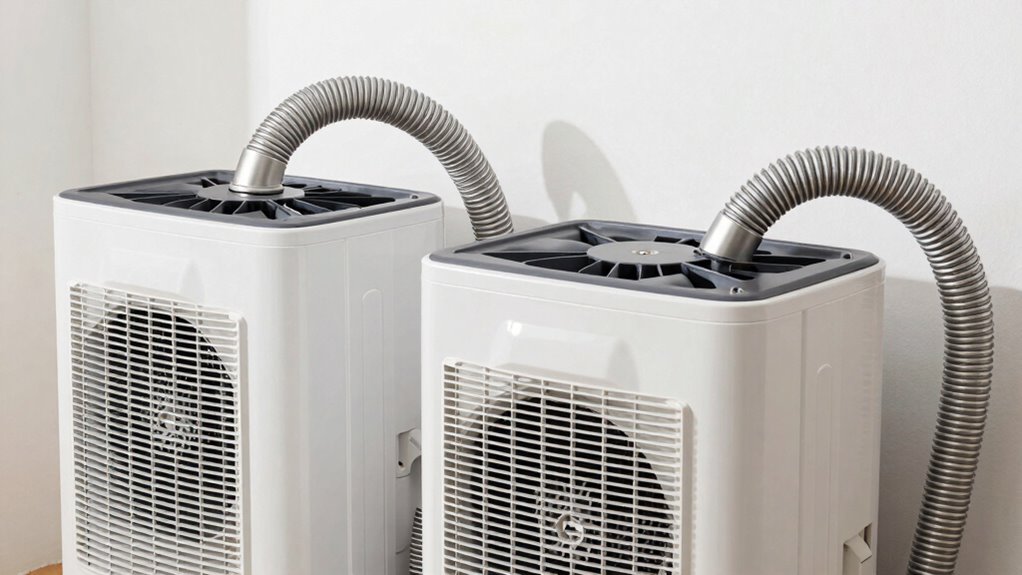
You’ll notice that single-hose and dual-hose units perform differently in key areas. Single-hose models often have lower cooling efficiency and can struggle with airflow, while dual-hose units typically handle ventilation better. These differences also affect energy use, so understanding them helps you choose the best option for your needs. Additionally, the European cloud innovation in manufacturing and design can influence the overall quality and sustainability of these units. Furthermore, the airflow dynamics play a significant role in how effectively each type cools a space, impacting overall performance.
Cooling Efficiency Differences
When comparing the cooling efficiency of single-hose and dual-hose portable air conditioners, it’s important to recognize that their designs directly impact performance. Single-hose units often struggle with humidity control because they recirculate warm air, reducing cooling effectiveness. Conversely, dual-hose models draw in outside air for better humidity management and consistent cooling. Keep in mind:
- Dual-hose units generally cool faster and more efficiently due to improved airflow and less heat recirculation.
- Noise levels tend to be lower in dual-hose models because they operate more smoothly with less strain on the compressor.
- Overall, dual-hose ACs deliver better cooling efficiency, especially in larger spaces, by maintaining a stable internal environment and humidity.
- Airflow management plays a crucial role in the overall performance and efficiency of portable AC units, and the design complexity of dual-hose systems often contributes to their superior operation.
- Proper installation and placement are also key factors that influence how effectively these units cool and dehumidify spaces.
Airflow and Ventilation
The design differences between single-hose and dual-hose portable air conditioners considerably influence how effectively they move and ventilate air. Single-hose units rely on one exhaust hose to expel warm air and draw in fresh air, which can cause negative pressure and hinder airflow. Dual-hose models use separate hoses for intake and exhaust, improving ventilation methods by maintaining balanced airflow. This setup allows for better airflow optimization, meaning the unit cools more efficiently without pulling in warm air from outside. As a result, dual-hose ACs typically provide more consistent cooling performance. Your choice impacts not just cooling but also how well the system ventilates the room, making dual-hose models a better option if airflow and ventilation are priorities. Additionally, understanding navigation and mapping features can help optimize the placement and operation of portable AC units for maximum efficiency. Proper airflow management is essential to prevent issues like warm air recirculation and to ensure the unit performs at its best.
Energy Consumption Impact
Dual-hose portable air conditioners generally consume less energy than single-hose units because they operate more efficiently by maintaining balanced airflow. This efficiency translates into better energy savings and lower power consumption during operation. With dual hoses, you reduce the workload on the compressor, which helps conserve energy. Here’s what makes a difference: Free Floating allows for more natural airflow regulation, further improving efficiency. 1. Balanced airflow reduces strain on components**, cutting power consumption. 2. More efficient heat exchange means less energy is needed to cool the space. 3. Lower overall energy use** results in cost savings over time, especially in long-term operation.
What Are the Pros and Cons of Single-Hose Portable ACs?
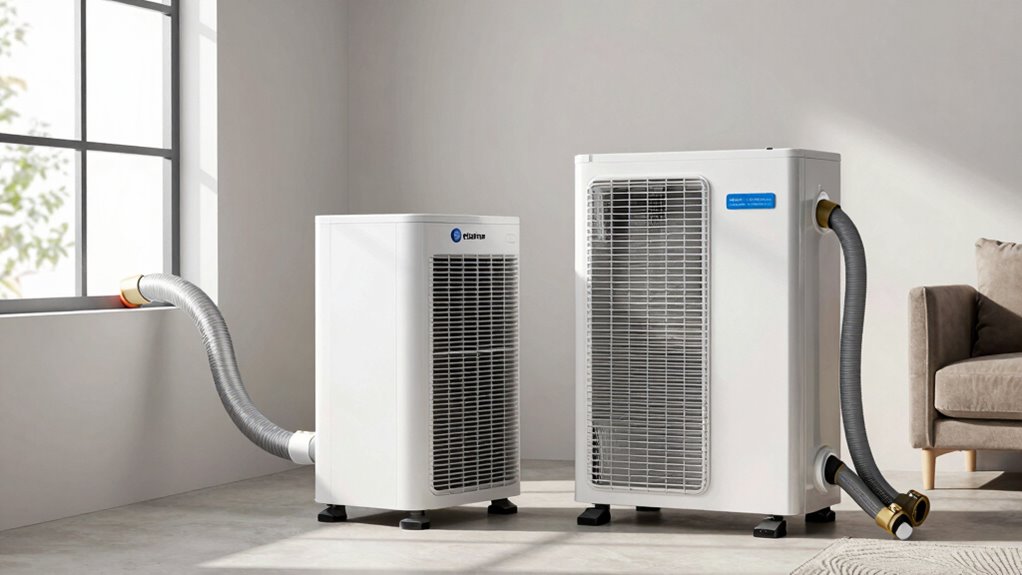
Single-hose portable ACs are a popular choice because they’re generally more affordable and easier to set up. However, they come with ventilation concerns since they rely on a single exhaust hose to expel hot air, which can cause the room to pull in warm air from outside or other parts of your home. This can reduce cooling efficiency and increase energy use. Additionally, there are portability trade-offs; while they’re lightweight and simple to move, their cooling power is often less effective in larger spaces. You might find that they struggle to keep a room consistently cool, especially in high temperatures or larger areas. Overall, they’re a good budget option but may not meet your cooling needs if performance and ventilation are top priorities. Proper ventilation is crucial for maximizing efficiency and ensuring your portable AC works effectively. Without adequate ventilation, the unit’s ability to cool efficiently diminishes, leading to higher energy consumption and less comfort. Proper airflow management can help mitigate some of these issues and improve overall efficiency, which is especially important for small spaces where airflow is more easily disrupted.
Why Are Dual-Hose Portable ACs Faster and More Efficient?
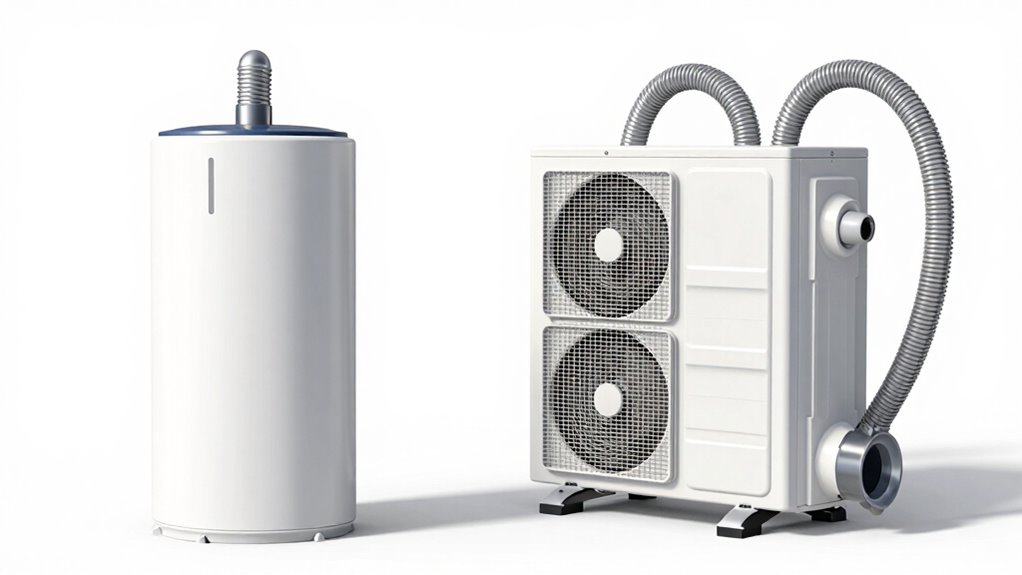
Because they have two hoses working simultaneously, dual-hose portable ACs cool rooms faster and more efficiently than single-hose units. Their ventilation design allows one hose to intake air while the other exhausts hot air, preventing pressure buildup and ensuring consistent airflow. This setup reduces strain on the compressor technology, allowing it to operate more effectively. As a result, the unit cools more quickly and maintains a steady temperature. Proper ventilation is essential for optimal AC performance and energy efficiency.
How Do You Choose the Best Portable AC for Your Use?
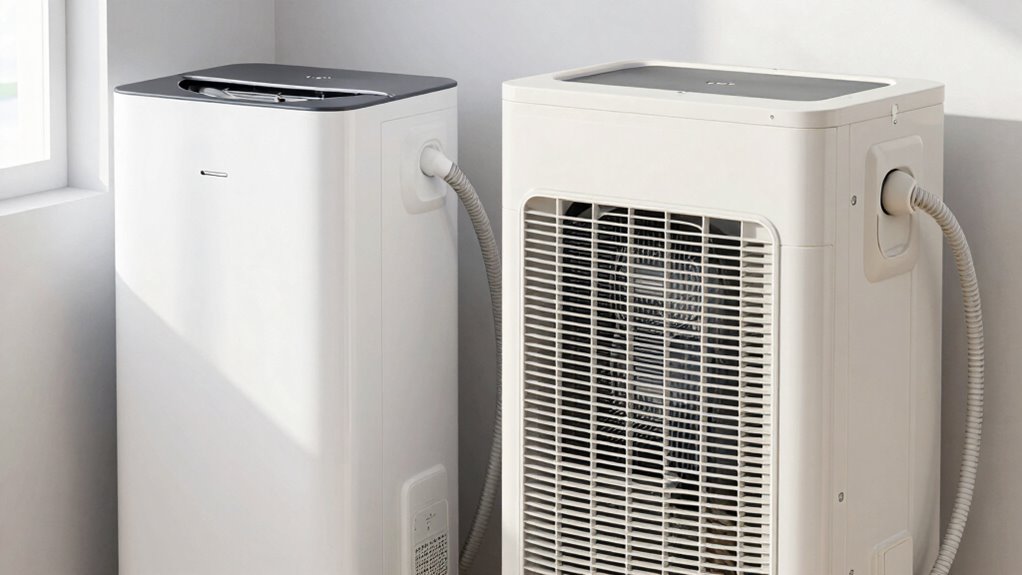
Choosing the right portable AC depends on evaluating your cooling needs, space, and budget. Consider how much cooling power you require and whether a single or dual-hose model suits your room size. Also, think about convenience—some units offer easier portable installation, while others may produce lower noise levels, making them suitable for bedrooms or offices. To visualize, here’s a quick comparison:
| Feature | Single-Hose | Dual-Hose | Best For |
|---|---|---|---|
| Portable installation | Easier, fewer parts | Slightly more complex | Quick setup |
| Noise levels | Moderate | Usually quieter | Quiet environments |
| Cooling efficiency | Good, but slower | Faster, more effective | Larger or hotter spaces |
Matching features to your space ensures you pick the best portable AC for your needs. Additionally, understanding the differences between single-hose and dual-hose models can help you make an informed decision. For example, cooling efficiency is often enhanced in dual-hose units because they better manage airflow and heat dissipation.
Tips to Maximize Your Portable AC’s Efficiency and Longevity
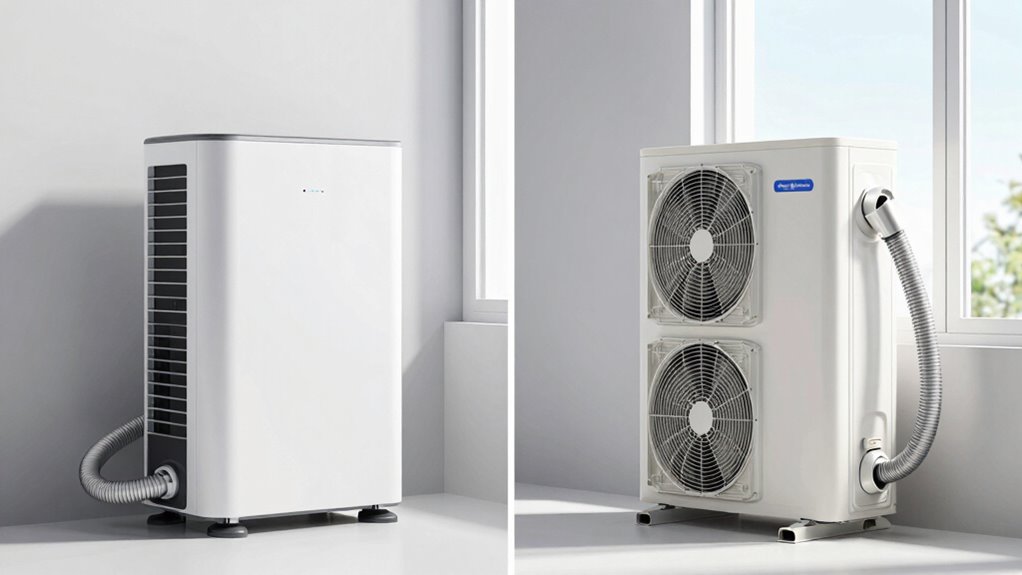
To keep your portable AC running smoothly and efficiently over time, regular maintenance tips and proper usage are essential. Start by cleaning or replacing the filters regularly to improve airflow and cooling performance. Check the exhaust hose for kinks or obstructions, which can hinder efficiency. Additionally, stay familiar with troubleshooting guides to quickly resolve common issues like inadequate cooling or strange noises. Using the correct hose type (single-hose or dual-hose) can significantly impact the unit’s efficiency and energy consumption. Here are three key tips: 1. Clean filters monthly to prevent dust buildup. 2. Ensure the exhaust hose is securely connected and free of blockages. 3. Use the unit in a shaded, cool spot to reduce workload. Proper maintenance practices can prevent unnecessary wear and tear, ultimately extending your AC’s lifespan. Following these simple steps can extend your AC’s lifespan and maintain optimal performance. Proper upkeep keeps your cooling system efficient and saves you money in the long run.
Frequently Asked Questions
Can Portable ACS Effectively Cool Large Open Spaces?
Portable ACs can cool large open spaces effectively if they provide sufficient Open Space Cooling and good Air Circulation. Dual-hose units tend to perform better because they cool more efficiently and maintain consistent airflow, making them suitable for bigger areas. However, single-hose models may struggle with larger spaces, as they often can’t keep up with the cooling demand. Choose a unit designed for larger areas for ideal results.
Are Dual-Hose Models More Energy-Efficient Than Single-Hose Units?
You get what you pay for; dual-hose models tend to be more energy-efficient than single-hose units. This is because dual-hose ACs better separate intake and exhaust air, reducing strain on the compressor. As a result, they often deliver improved cooling performance while consuming less energy. If energy efficiency is your priority, opting for a dual-hose portable AC can save you money and keep your space cooler more effectively.
How Noisy Are Portable AC Units During Operation?
You’ll find that portable AC units produce moderate noise levels during operation, typically ranging from 40 to 60 decibels. The actual noise depends on the model and its sound insulation features. If you want quieter operation, look for units with sound insulation or noise-reducing technology. Keep in mind that higher-powered units tend to be louder, but many models are designed to minimize disruption, making them suitable for bedrooms or offices.
Do Portable ACS Require Professional Installation?
You won’t need professional installation for most portable ACs, as they’re designed for easy setup. The installation complexity is minimal; typically, you just attach the exhaust hose and secure the window vent kit. However, if you opt for larger or more integrated units, professional requirements might surface to ensure proper setup. Overall, portable ACs are user-friendly and intended for quick, straightforward installation without specialized skills.
What Maintenance Is Needed to Keep Portable ACS Running Optimally?
To keep your portable AC running effectively, you need to regularly perform filters maintenance and drain management. Clean or replace filters every few weeks to ensure efficient airflow and cooling. Also, check the drain pan and empty the water reservoir when full to prevent overflow. Keeping these tasks up-to-date helps your unit operate smoothly, prolongs its lifespan, and maintains peak cooling performance.
Conclusion
Choosing between single-hose and dual-hose portable ACs depends on your room size, comfort needs, and efficiency goals. Consider performance, ease of use, and long-term reliability to make the right choice. Decide what suits your space, your budget, and your lifestyle. Optimize your cooling experience, maximize your AC’s lifespan, and enjoy a cooler, more comfortable room. Make informed decisions, embrace smarter cooling, and stay comfortable all season long.