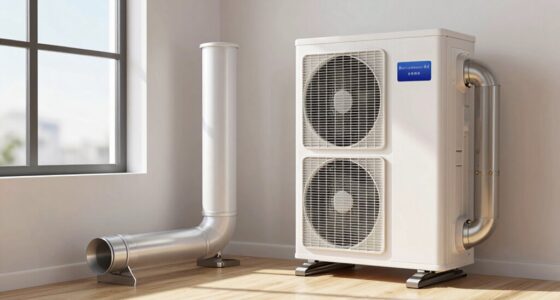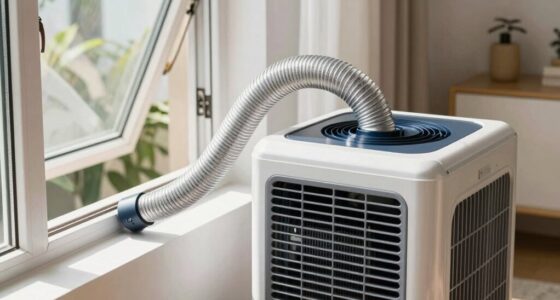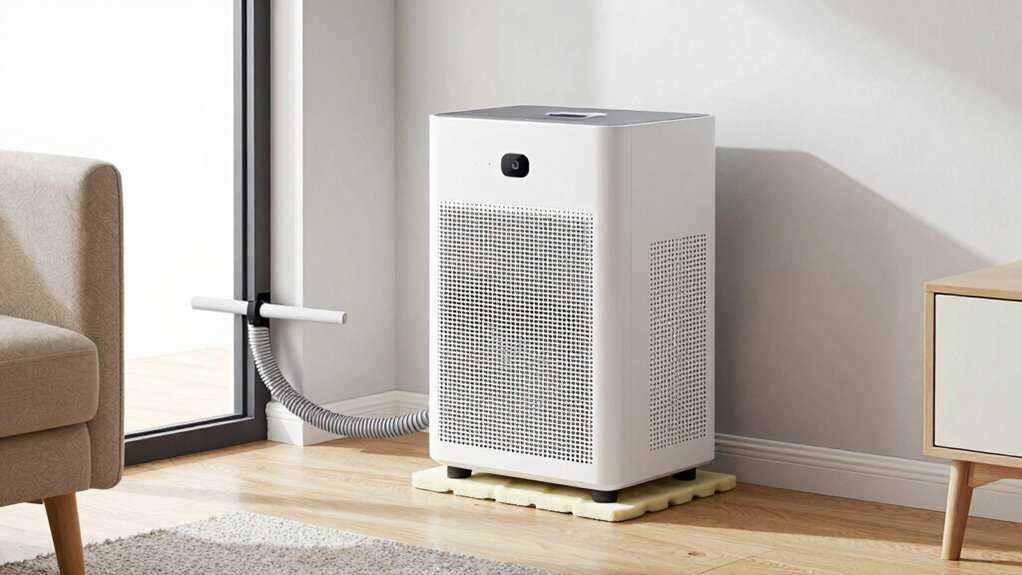

To fix portable AC noise issues, start by placing the unit on a stable, level surface away from walls and furniture, and elevate it slightly for better airflow. Install sound-absorbing pads made of foam, rubber, or cork underneath or around it to dampen vibrations. Keep the exhaust hose straight, short, and securely connected to prevent rattling and noise. Proper placement and routing can considerably reduce sound, and more tips await to help you achieve quieter operation.
Key Takeaways
- Place the portable AC on a stable, level surface away from walls and furniture to reduce vibration and noise reflection.
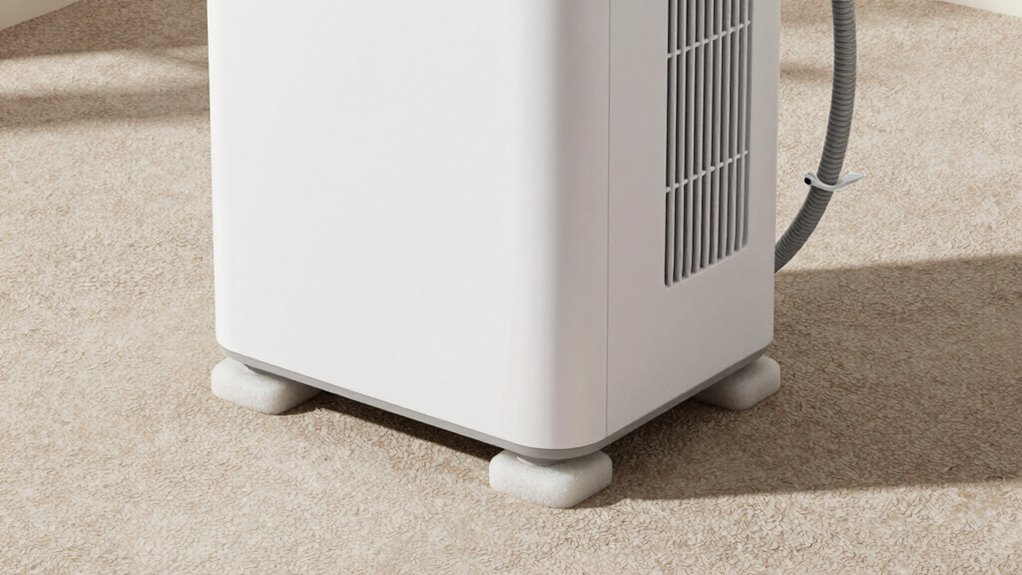
- Use vibration dampening pads or anti-vibration mats beneath the unit to absorb vibrations and minimize rattling sounds.
- Route the exhaust hose straight and short, securing connections tightly to prevent movement and reduce operational noise.
- Elevate the hose outlet away from walls or windows to decrease echo and sound reflection, enhancing quietness.
- Ensure proper airflow by maintaining unobstructed vents and sealing gaps around the hose for efficient operation and less noise.
Why Does Noise From Your Portable AC Disrupt Sleep and Focus?
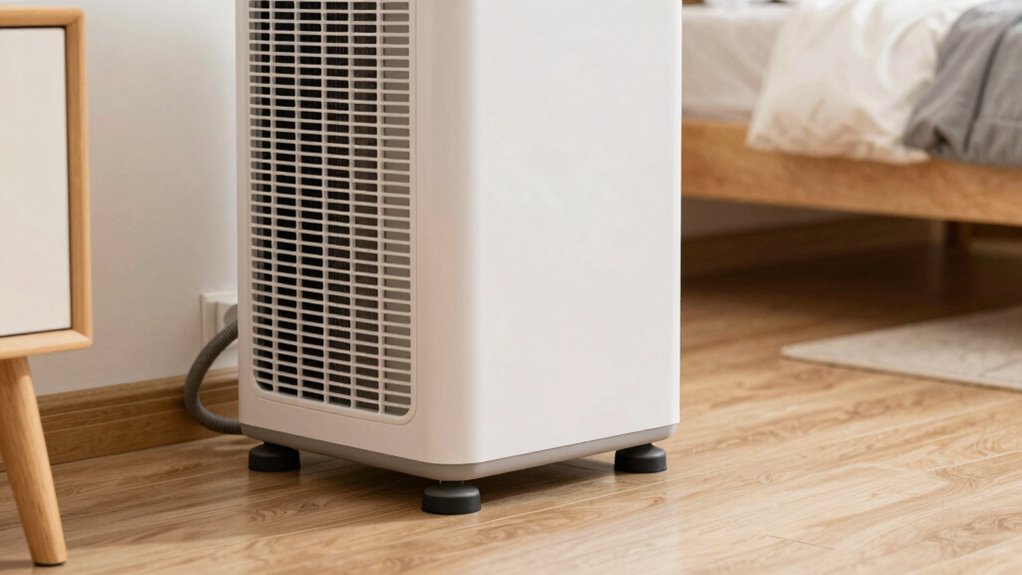
The noise from your portable AC can markedly disrupt sleep and focus because it constantly competes with your brain’s natural ability to filter out background sounds. This disturbance often stems from ventilation issues, as poorly ventilated units tend to produce more noise due to strain on the compressor and fans. Additionally, electrical interference from the AC can create humming or buzzing sounds that are particularly disruptive. These noises can trigger your brain to stay alert, making it harder to fall asleep or concentrate. The constant background hum prevents your mind from reaching a restful or focused state, leading to fatigue and decreased productivity. Understanding these causes helps you identify specific problems that contribute to noise-related disruptions. Proper placement and routing of hoses can significantly reduce noise transmission and improve overall comfort. Proper acoustic insulation techniques can help muffle unwanted sounds and create a quieter environment, especially when combined with strategic unit positioning to minimize vibrations. Moreover, selecting a quiet model designed with sound reduction features can further enhance your comfort during operation, especially if you choose units with soundproofing technology.
How Can Proper Placement Reduce Portable AC Noise?
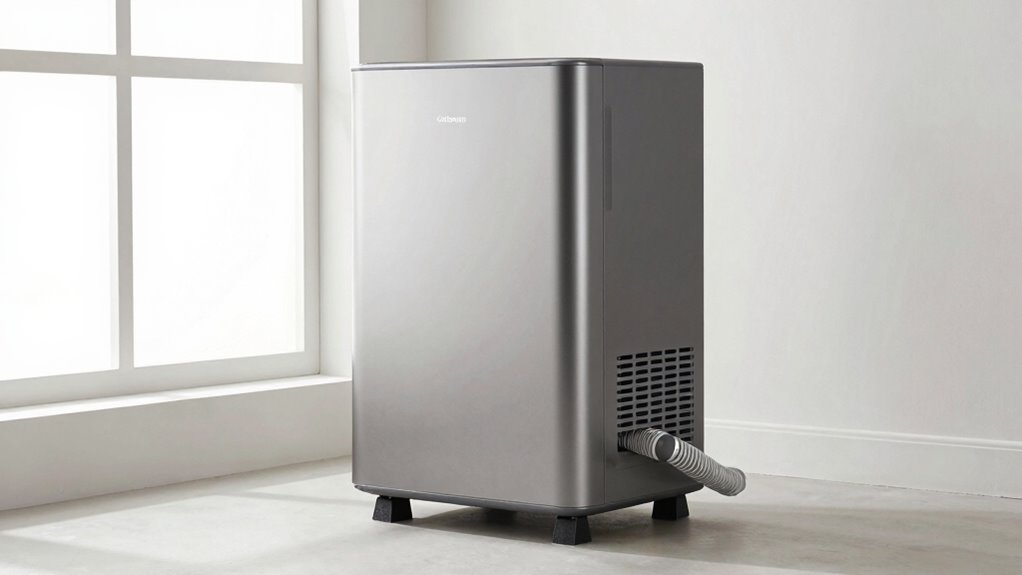
Placing your portable AC in the right spot can substantially cut down noise. Make sure it’s positioned away from walls or furniture that could block airflow and amplify sound. Adding sound barriers or choosing an ideal location helps keep noise levels low and your space peaceful. Utilizing soundproofing techniques can further minimize noise transmission and enhance comfort. Additionally, proper ventilation considerations can prevent heat buildup and reduce the need for the unit to work harder, which also contributes to quieter operation. Ensuring correct airflow management allows the unit to operate efficiently and quietly. Incorporating free floating placement can help the unit avoid vibrations and noise from solid surfaces. Implementing noise-reducing pads underneath the unit can also significantly dampen vibrations and lower operational noise levels.
Optimal Unit Placement
Properly positioning your portable AC can substantially reduce the noise it generates. To optimize portable ac placement, consider the following:
- Place the unit on a stable, level surface to minimize vibrations and rattling sounds.
- Position the AC away from walls or furniture to prevent sound reflections and enhance sound barrier options.
- Elevate the unit slightly off the floor, if possible, to improve airflow and reduce noise transfer to the floor.
- Incorporate soundproofing techniques such as foam pads or anti-vibration mats to further dampen noise. Avoid placing the AC in enclosed spaces where sound can bounce and amplify. The key is a strategic, stable placement that minimizes vibrations and sound reflections, making your environment quieter and more comfortable. Additionally, ensuring proper hose routing can prevent rattles and reduce noise caused by airflow restrictions. Proper airflow management can also help in reducing operational noise by minimizing turbulence and ensuring smooth airflow, which is especially important since airflow efficiency directly impacts noise levels.
Avoid Obstructions
To effectively reduce noise from your portable AC, you need to make certain there are no obstructions blocking airflow or sound pathways. Obstructions near the unit can cause the fan blade to work harder, increasing noise levels. Keep furniture, curtains, or other objects away from the vents and sides of the AC to allow smooth airflow. When airflow is restricted, compressor noise may seem louder because the unit struggles to operate efficiently. Additionally, clutter around the unit can amplify sound transmission, making noise more noticeable. Ensuring clear space around your portable AC not only improves cooling performance but also minimizes vibrations and noise caused by the fan blade and compressor. Proper placement is key to creating a quieter, more comfortable environment, and paying attention to airflow pathways can help maintain a quieter operation.
Use Sound Barriers
Positioning your portable AC strategically can considerably cut down noise levels. Using sound barriers is an effective way to improve noise reduction. By placing barriers like thick curtains, foam panels, or furniture around the unit, you can block sound waves and prevent them from traveling easily into your living space.
To maximize noise reduction, consider these methods:
- Position the AC behind a sturdy sound barrier to absorb vibrations and sound.
- Use acoustic panels or foam to create a barrier that dampens noise.
- Place furniture or heavy drapes nearby to serve as additional sound barriers, further reducing noise transmission.
These sound barriers help contain the noise, making your environment quieter and more comfortable. Proper placement combined with effective sound barriers secures a noticeable difference in noise levels.
What Are the Best Sound-Absorbing Pads for Quieting Your Portable AC?
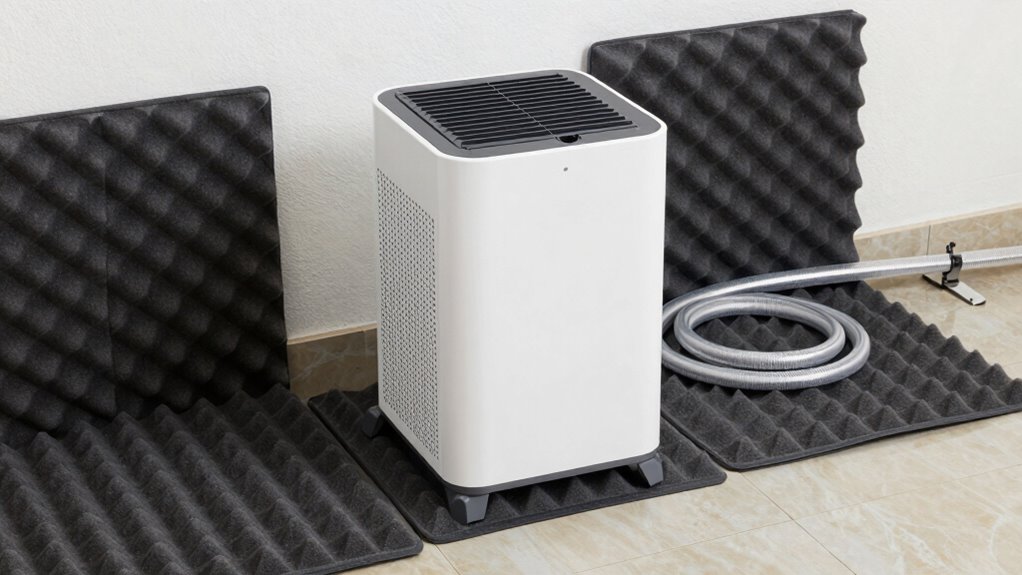
Choosing the right soundproof material can considerably reduce your portable AC’s noise. Proper installation tips guarantee the pads stay effective without blocking airflow. Keep in mind that the best pads balance sound absorption with maintaining good airflow efficiency. Additionally, selecting pads designed specifically for HVAC units can enhance both noise reduction and durability soundproof materials. Using high-quality, sound-absorbing pads can further improve the effectiveness of your noise reduction efforts and contribute to a quieter environment. To maximize effectiveness, consider the soundproofing options available for different types of portable AC units to find the best fit for your space. Understanding the importance of acoustic insulation can help you choose the most effective solutions for your needs. Incorporating soundwave manipulation techniques can also optimize your noise mitigation strategies.
Soundproof Material Options
Soundproof pads are an effective way to reduce the noise generated by your portable AC, especially if you want a quieter environment. When selecting soundproof materials, consider options like acoustic foam, which absorbs sound waves and minimizes echo. You can also use soundproof curtains around the unit or in the room to block noise transmission. To enhance soundproofing, combine these materials for better results. Here are top options:
- Acoustic foam panels – lightweight, easy to install, and highly effective at sound absorption.
- Soundproof curtains – thick, dense curtains that dampen noise and can be hung near the AC.
- Mass-loaded vinyl – a dense barrier that blocks sound from passing through walls or panels. Understanding soundproofing principles can help you select the most effective solution, and considering the material properties is essential for optimal noise reduction.
Installation Tips for Pads
To effectively reduce noise from your portable AC, installing sound-absorbing pads underneath the unit can make a noticeable difference. Choose pads made from dense materials like rubber, foam, or cork, which absorb vibrations and dampen sound. Before placement, measure your AC’s footprint to select the right size. For secure installation, use a drill to create small holes through the pad’s surface, especially if attaching to the floor or platform. This ensures the pad stays in place and prevents slipping. Opt for pad materials that are durable and moisture-resistant, as they’ll endure the environment beneath the unit. Properly installed pads not only quiet your AC but also help protect your flooring from vibration damage, making your cooling experience more comfortable. Additionally, selecting pads with soundproofing qualities can further enhance noise reduction. Incorporating vibration dampening techniques into your pad installation can provide even greater noise mitigation and stability for your portable AC, especially when combined with effective placement. Using resilient materials designed for vibration absorption can maximize your noise reduction efforts. For optimal results, consider pads that also feature thermal insulation to prevent heat transfer and improve overall efficiency.
Impact on Airflow Efficiency
Installing sound-absorbing pads under your portable AC can greatly reduce noise, but it’s important to contemplate how they might impact airflow. If pads cause airflow obstruction, your unit may work harder, decreasing efficiency and increasing noise amplification. To minimize this risk, consider these factors:
- Material thickness: thicker pads can block airflow, so choose thinner, breathable options.
- Vent clearance: ensure pads don’t cover vents or intake areas, maintaining unimpeded airflow.
- Placement proximity: position pads close enough to dampen sound but not so close that they restrict air movement.
How Should You Route the Exhaust Hose for Less Noise?

Routing your exhaust hose carefully can substantially reduce noise from your portable AC. Proper exhaust hose placement minimizes vibrations and prevents rattling. Use routing techniques that keep the hose as straight and short as possible, avoiding tight bends that can increase noise levels. Secure the hose firmly to prevent movement that causes sound. Elevate or position the hose outlet away from walls or windows to reduce echo and vibration noise.
| Tip | Explanation |
|---|---|
| Keep it straight | Less vibration, quieter operation |
| Shorter runs | Reduces noise and airflow resistance |
| Secure connections | Prevents rattling and movement |
| Avoid tight bends | Minimizes noise caused by kinks |
Where Is the Best Spot to Place Your Portable AC for Quiet Operation?

To keep your portable AC quiet, place it at least a few inches away from the wall to prevent noise reflection. Positioning it near soft surfaces like curtains or carpets can also help dampen sound. Finding the right spot makes a noticeable difference in reducing operational noise.
Optimal Distance From Wall
Placing your portable AC at the right distance from the wall can substantially reduce noise levels during operation. Proper wall clearance guarantees unobstructed vent placement and minimizes vibrations that amplify sound. To optimize placement:
- Maintain at least 12-18 inches of wall clearance behind the unit to prevent vent blockage and allow proper airflow.
- Position the AC so the vent faces away from walls or furniture to reduce sound reflection and direct noise away from your space.
- Ensure the unit isn’t tucked into corners or tight spots that can trap sound and increase perceived noise levels.
Adjusting the distance helps decrease vibrations and improves vent placement, resulting in quieter operation. Finding the right spot balances efficient cooling with minimized noise, making your space more comfortable.
Soft Surfaces Dampen Noise
Positioning your portable AC near soft surfaces can considerably dampen noise and create a quieter environment. Just as the gentle flow of mountain streams muffles sound naturally, soft materials absorb and diffuse the noise produced by your unit. In contrast to hard surfaces, placing your AC on or beside carpets, rugs, or fabric-covered furniture helps reduce the impact of urban noise and other harsh sounds. If possible, position the unit on a soft mat or pad to maximize sound absorption. This simple adjustment minimizes vibrations and echoes, making your space more peaceful. Whether you’re in a busy city apartment or a quiet home, soft surfaces serve as an effective, budget-friendly way to keep your portable AC operation discreet and less disruptive.
How Do You Identify and Avoid Noisy Areas Around Your Portable AC?
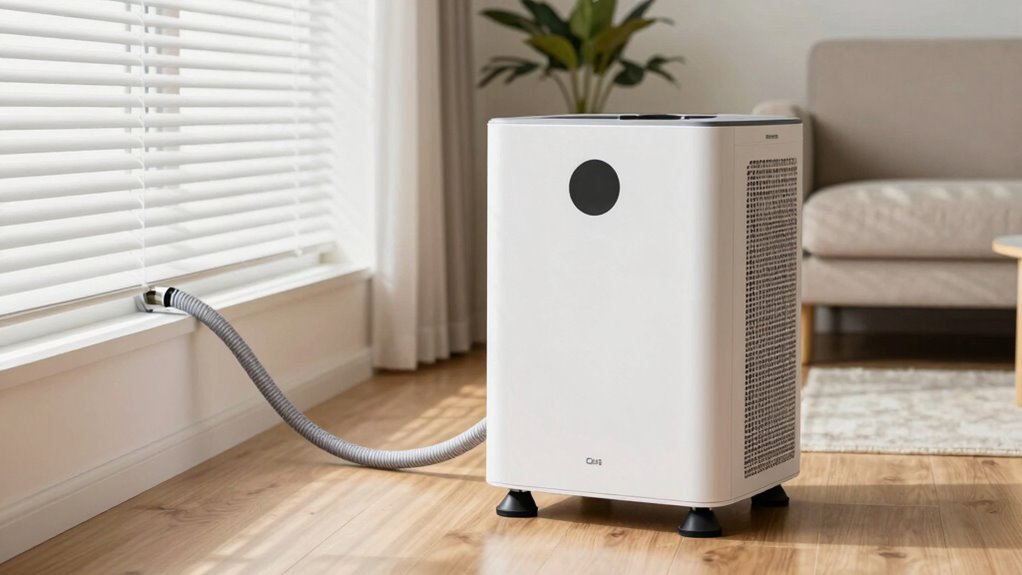
Have you ever noticed certain spots around your home where the noise from your portable AC seems louder? To identify noisy areas, listen carefully for vibrations or excessive fan noise. First, check for surfaces that amplify vibrations, like hard floors or thin walls, which can transmit noise. Second, observe if specific locations resonate more, indicating poor vibration isolation. Third, move the unit around gradually to see where fan noise or rattling increases. When you find noisy spots, consider adding soft materials or vibration pads to dampen vibrations and reduce sound transmission. Proper placement and addressing vibration sources help minimize noise, making your environment more comfortable. Recognizing these factors is key to avoiding noisy areas around your portable AC effectively.
How Can You Minimize Vibrations and Rattling Sounds From Your Portable AC?
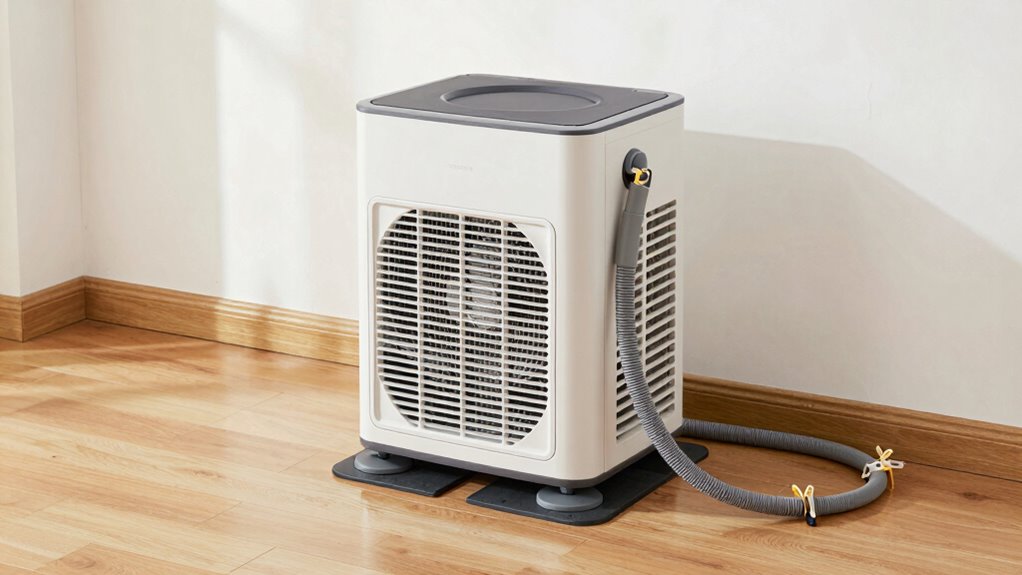
Vibrations and rattling sounds from your portable AC can be reduced by securing loose components and adjusting the unit’s placement. Start by tightening any screws or panels that may be loose, as these can cause rattling. Use vibration dampening pads or anti-vibration mats under the unit to absorb shocks and minimize movement. Make certain the AC is on a level surface; uneven placement often leads to increased vibrations. Check that the exhaust hose is securely attached and not vibrating against walls or furniture. If you notice persistent rattling, consider adding foam insulation or padding around noisy parts to dampen vibrations further. These simple steps can considerably improve your AC’s sound levels by promoting rattling elimination and reducing vibrations.
When Should You Consider Upgrading or Soundproofing Your Portable AC?
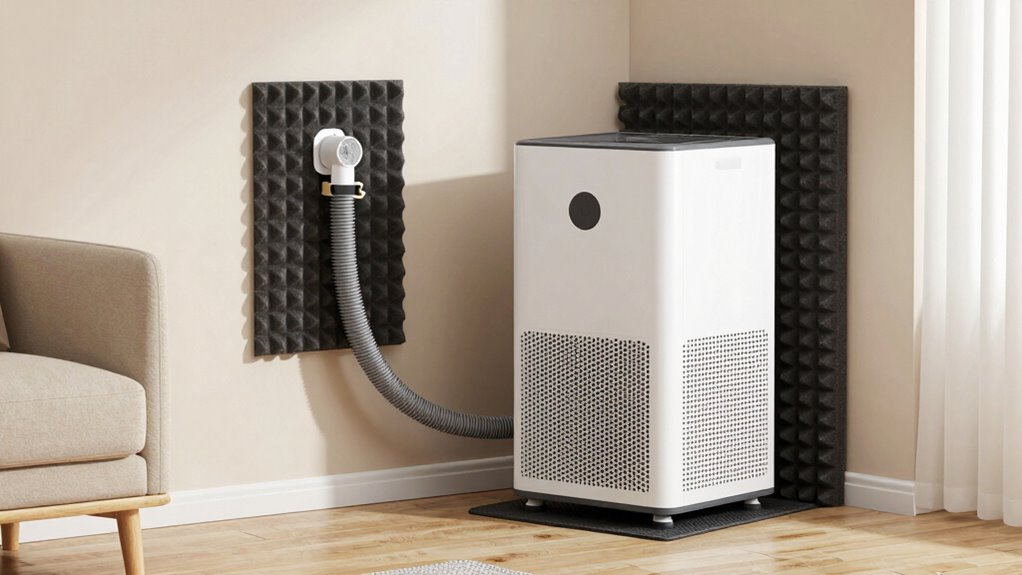
If your efforts to reduce noise through tightening screws and adding dampening pads haven’t made a significant difference, it might be time to contemplate upgrading or soundproofing your portable AC. Consider this if the noise disrupts your room decor or daily comfort. You should also evaluate whether the unit’s energy efficiency is declining, leading to higher utility bills.
Here are some signs to consider upgrading or soundproofing:
- Persistent noise that interferes with sleep or work, despite minor adjustments
- An outdated model with subpar insulation and soundproofing features
- A desire for a quieter environment to enhance room decor and overall ambiance
Upgrading often improves energy efficiency, while soundproofing can minimize noise without replacing the unit, creating a more peaceful space.
What Are Common Causes of Persistent Noise, and How Do You Fix Them?
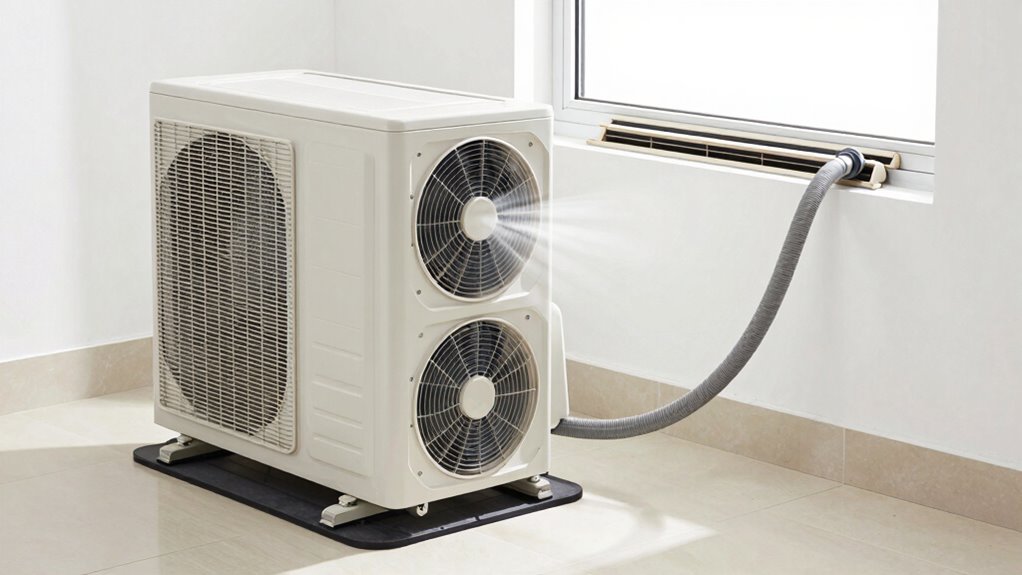
Persistent noise from your portable AC often stems from common mechanical and structural issues that can be addressed with simple fixes. One frequent cause is imbalanced or dirty fan blades, which can cause rattling or humming sounds. Regularly inspect and clean the blades, and ensure they turn freely without wobbling. Compressor noise is another common issue; if it sounds louder than usual or rattles, it might be loose or misaligned. Tighten any loose components and check for debris that could be causing vibrations. Additionally, loose panels or damaged parts can contribute to persistent rattles or banging sounds. Securing panels and replacing any worn or broken parts can considerably reduce noise. Addressing these mechanical issues usually restores quieter operation and extends your unit’s lifespan.
How to Maintain Your Portable AC for Quiet, Efficient Performance
Regular maintenance is key to keeping your portable AC running quietly and efficiently. To guarantee noise reduction and peak performance, follow these maintenance tips:
- Clean or replace filters monthly to prevent debris buildup that causes noise and reduces efficiency.
- Check and tighten all screws and panels to prevent rattling sounds during operation.
- Inspect hoses and vents for obstructions or leaks, ensuring proper airflow and minimizing noise sources.
Frequently Asked Questions
Can DIY Modifications Reduce Portable AC Noise Effectively?
Yes, DIY soundproofing can diminish portable AC noise effectively if you make simple modifications. You can add soundproofing materials around the unit or create barriers to dampen noise. Fan blade modifications, like smoothing or balancing blades, also help reduce noise from vibrations and airflow. Just guarantee your modifications don’t block airflow or cause overheating. With some effort, you can make your portable AC run quieter and more comfortably.
What Are Signs My Portable AC Needs Professional Servicing?
Your portable AC is like a symphony gone wrong when it needs servicing. If you notice loud, unusual noises, persistent vibrations, or reduced cooling efficiency, it’s time for a professional check-up. These signs can be as clear as noise-canceling headphones failing to block sound or soundproof curtains losing their edge. Don’t overlook these signals; getting expert help ensures your unit runs smoothly without turning your space into a noisy concert hall.
How Do Ambient Room Sounds Affect Portable AC Noise Levels?
Ambient room sounds can amplify the perceived noise levels of your portable AC. When there’s a lot of ambient noise, your AC’s noise might seem less noticeable. However, in quieter environments, even small sounds stand out. To minimize disturbance, consider using soundproofing materials around the unit or in the room to absorb ambient noise. This can help create a quieter environment and make your portable AC operate more comfortably.
Are There Specific Portable AC Brands Known for Quieter Operation?
You’ll find that brands like Dyson, LG, and Honeywell are known for quieter portable AC models, thanks to their strong reputation and low noise level ratings. When choosing, look for units with certified noise level ratings under 55 decibels, which indicates quieter operation. These brands often prioritize sound reduction technology, making them better suited for bedrooms or workspaces where a peaceful environment matters most.
How Often Should I Inspect My Portable AC for Noise Issues?
You should inspect your portable AC for noise issues at least monthly, following a maintenance schedule. During these inspections, perform vibration analysis to identify any unusual vibrations or loose components that could cause noise. Regular checks help catch problems early, ensuring quieter operation and prolonging your unit’s lifespan. If you notice persistent noise, consider adjusting placement or consulting a technician for further diagnosis.
Conclusion
By paying attention to placement, using sound-absorbing pads, and routing the hose carefully, you can enjoy a quieter portable AC. When you notice persistent noise, it’s often a sign to check for vibrations or consider upgrades. Sometimes, the smallest adjustments make all the difference—like finding that perfect spot or securing loose parts. Ultimately, creating a peaceful environment isn’t just about silence; it’s about reclaiming comfort and peace of mind in your own space.