
🔍 Read the full analysis: Inside The Crafting Of 'The Runestone Field': AI And SVG Carving Synergy on ThorstenMeyerAI.com
TL;DR
Thorsten Meyer’s team has developed ‚The Runestone Field,‘ a digital project that uses AI and SVG carving animation to bring ancient runic carvings to life. This innovative approach merges traditional craftsmanship with automation, creating an interactive storytelling experience. The article details the process, significance, and future implications of this technological fusion.
Thorsten Meyer’s team has unveiled ‚The Runestone Field,‘ a digital project that uses AI-powered SVG carving animation to bring ancient runic carvings to life. This innovative work bridges historical artistry and modern technology, creating an immersive experience that transforms static symbols into dynamic narratives. The project highlights how automation and precise digital craftsmanship can elevate storytelling, making the ancient carvings appear as if they are speaking anew.
The project, developed by Thorsten Meyer’s team, integrates artificial intelligence with SVG (Scalable Vector Graphics) carving techniques. It employs AI algorithms to generate detailed, authentic-looking runic patterns, which are then animated through SVG carving scripts to simulate the process of stone inscription. The result is a visual experience where viewers can explore the carvings in motion, revealing intricate details and dynamic storytelling elements that were previously static or hidden.
According to Thorsten Meyer, the process involved multiple stages: designing the initial runic patterns, training AI models to generate variations, and scripting SVG animations that mimic traditional carving methods. The team faced technical challenges in synchronizing the AI-generated designs with fluid SVG animations, but breakthroughs in digital craftsmanship and rendering allowed for a seamless visual experience. The project also serves as a proof of concept for how digital artisans can combine historical craftsmanship with automated techniques to create new forms of visual storytelling.
Inside The Crafting Of ‚The Runestone Field‘: AI And SVG Carving Synergy
Thorsten Meyer’s team has unveiled a digital project that fuses AI-powered pattern generation with SVG carving animation — transforming static runic inscriptions into dynamic, immersive storytelling where ancient symbols appear to speak anew.
From Runic Sketch to Living Stone
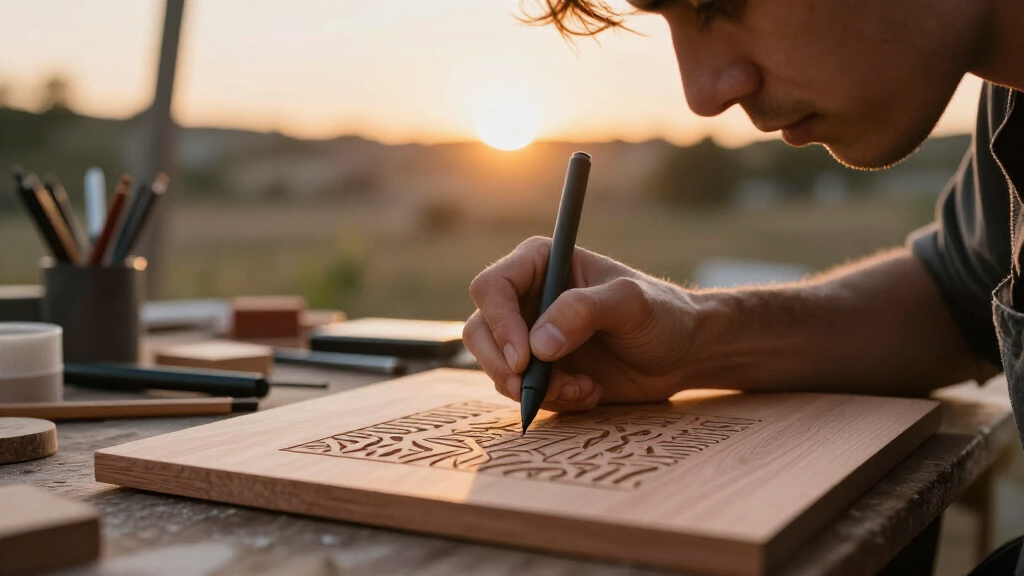
The project followed three disciplined stages — designing initial runic patterns, training AI models to generate authentic variations, and scripting SVG animations that mimic the physical act of stone inscription.
Design the Runes
Artists craft initial runic patterns rooted in historical sources, serving as the authentic training foundation.
Train the AI Models
Algorithms learn the visual grammar of the carvings and generate detailed, authentic-looking runic variations.
Script SVG Carving
Vector animation simulates the chisel’s path stroke by stroke, recreating the act of inscription in motion.
Immersive Experience
Viewers explore carvings in motion, revealing intricate details and narrative layers once hidden or static.
A New Digital Art Frontier
‚The Runestone Field‘ is a proof of concept for digital artisans combining historical craftsmanship with automated techniques — reimagining cultural heritage for museums, education, and immersive media.
Ancient Symbols, Modern Audience
Automation enhances artistic detail and interactivity, making runic heritage engaging and explorable for contemporary viewers.
Preservation With Respect
The project preserves the integrity of original craftsmanship while embracing innovation — revitalizing rather than replacing tradition.
Blueprint for Digital Heritage
Sets a standard for how historical art can be digitized, animated, and revitalized in the digital age across cultural institutions.
Breakthroughs Behind the Seamless Visual
Synchronizing AI-generated designs with fluid SVG animation was the project’s hardest problem. These indicators summarize how the team resolved the core tensions.
At a Glance: Capabilities & Open Questions
A candid assessment of what the technique achieves today — and what remains uncertain.
| Question | Status | Detail |
|---|---|---|
| How does AI contribute to carving? | ✓ Core role | AI algorithms generate detailed runic patterns and variations, animated via SVG scripts to simulate carving. |
| Applicable to other historical art? | ~ Potential | Murals, sculptures, and inscriptions could adapt the principles, though each requires tailored development. |
| Will it replace traditional craftsmanship? | ✗ No | The project aims to complement traditional skills, opening new possibilities for preservation and storytelling. |
| Significance for cultural preservation? | ✓ Strong | Digitally preserves and animates historical symbols, making them accessible while respecting original craft. |
| Long-term acceptance & scalability? | ~ Uncertain | Durability of AI-generated carvings and cultural-institution adoption remain open questions. |
Next Steps for Digital Carving & Storytelling
The team’s forward plan extends the technique from showcase to shared experience.
Why ‚The Runestone Field‘ Represents a New Digital Art Frontier
This project demonstrates how AI and SVG carving can be harnessed to reimagine traditional art forms, offering a new way to explore cultural heritage through digital media. It showcases the potential for automation to enhance artistic detail and interactivity, making ancient symbols accessible and engaging for modern audiences. The fusion of craftsmanship and technology could influence future digital storytelling, museum exhibits, and educational tools, expanding the reach of historical arts into immersive digital spaces.
Moreover, this work raises questions about the future role of automation in craftsmanship, suggesting that digital tools can complement, rather than replace, traditional skills. It also highlights the importance of preserving authenticity while embracing technological innovation, setting a precedent for how historical art can be revitalized in the digital age.
As an affiliate, we earn on qualifying purchases.
Historical and Technological Foundations of the Project
Traditional runic carvings date back centuries, serving as both artistic expression and historical record. Recent years have seen a resurgence of interest in preserving and digitizing these symbols, often through static images or scans. Thorsten Meyer’s team builds on this foundation by integrating AI-driven design and animation techniques, transforming static carvings into dynamic visual narratives. The project follows a broader trend of using AI to animate or interpret cultural artifacts, but it distinguishes itself through the use of SVG carving simulation to mimic the physical act of stone inscription.
Prior developments in digital art have explored AI-generated imagery and procedural animation, but few have combined these with detailed simulation of traditional craftsmanship. The ‚Runestone Field‘ project is a pioneering effort to bridge this gap, leveraging advancements in AI, SVG scripting, and digital animation to create a new form of interactive storytelling rooted in history.
„By integrating AI with SVG carving, we can create a visual experience that not only preserves the artistry of ancient runes but also brings them into a new, dynamic context.“
— Thorsten Meyer
As an affiliate, we earn on qualifying purchases.
Unanswered Questions About Future Applications
It is not yet clear how widely this approach can be scaled or adapted for other historical art forms. The long-term durability of AI-generated carvings and their acceptance in cultural preservation contexts remain uncertain. Additionally, questions about the potential for automation to replace traditional artisans or how audiences will perceive AI-enhanced historical art are still developing.
As an affiliate, we earn on qualifying purchases.
Next Steps for Digital Carving and Storytelling
Thorsten Meyer’s team plans to expand the project by integrating interactive elements, allowing viewers to manipulate or customize the carvings. Further research will explore applying this technique to other cultural artifacts and integrating real-world materials with digital animation. The team also aims to collaborate with museums and educational institutions to develop immersive exhibits based on this technology, testing its impact on public engagement with history.
As an affiliate, we earn on qualifying purchases.
Key Questions
How does AI contribute to the SVG carving process?
AI algorithms generate detailed runic patterns and variations, which are then animated through SVG scripts to simulate carving, combining artistic authenticity with automation.
Can this technique be applied to other forms of historical art?
Potentially, yes. The principles of AI-driven design and SVG animation could be adapted to other artifacts such as murals, sculptures, or ancient inscriptions, though each would require tailored development.
What are the main technical challenges faced?
The key challenges involved synchronizing AI-generated designs with fluid SVG animations and ensuring the digital carvings accurately mimic traditional techniques.
Will this replace traditional craftsmanship?
While it automates certain aspects of digital artistry, the project aims to complement traditional skills rather than replace them, opening new possibilities for preservation and storytelling.
What is the significance for cultural preservation?
This approach offers a new way to digitally preserve and animate historical symbols, making them accessible and engaging for future generations while respecting their original craftsmanship.
Source: ThorstenMeyerAI.com