📊 Full opportunity report: Help Your On-Camera Message Feel Natural Through Speaking Practice on IdeaNavigator AI — validation score, market gap, and execution plan.
TL;DR
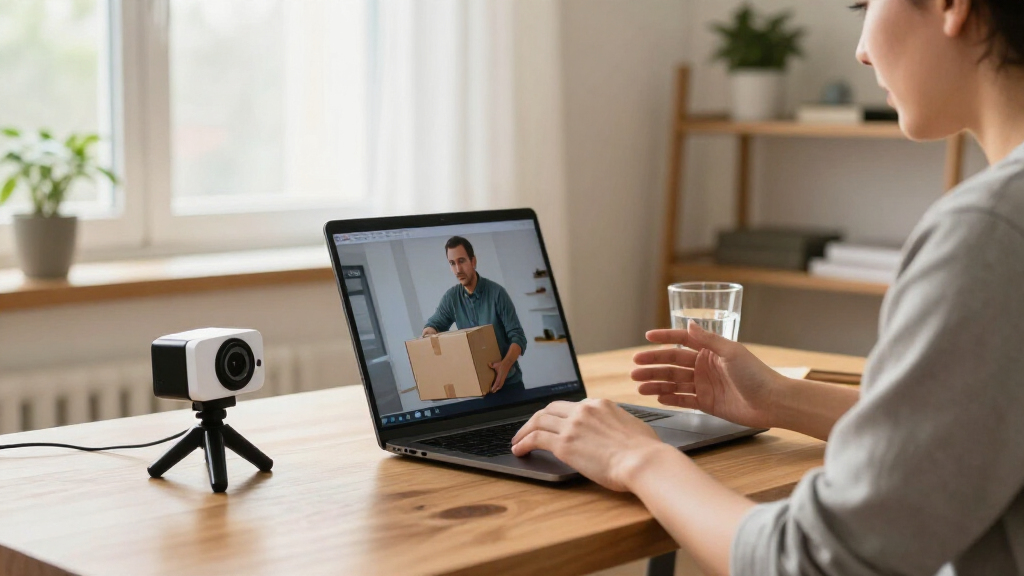
IdeaNavigator AI has proposed a speaking-practice app for business owners who struggle to record marketing videos. The concept includes short daily exercises and private delivery feedback, but it is an unvalidated product idea, not a launched service or a proven way to increase video publishing.
IdeaNavigator AI has outlined a proposed practice app for business owners who know video could support their marketing but freeze when recording. The concept pairs short daily speaking exercises with private feedback on delivery; its suggested test is a 30-day cohort of 100 owners, measured by whether participants publish a real video by day 45 compared with a waitlist control. These details come from the concept page published by IdeaNavigator AI; it does not report a product launch or test results.
According to IdeaNavigator AI’s concept page, the proposed audience is specific: owners who are already persuaded that video matters, but find themselves stumbling, criticizing their performance or making repeated takes when they try to record. The idea is positioned as a response to a practical barrier to using video, rather than as a general public-speaking course. The concept argues that practicing alone in front of a camera differs from speaking to an audience or giving a presentation.
The proposed minimum viable product, as described by IdeaNavigator AI, would give users daily, two-minute prompts, progressing from reading prepared material to speaking more freely. It would use multimodal AI to assess pace, filler words, eye line and energy, then show changes over time. A confidence streak would mark regular practice, with the intended endpoint of recording actual business content.
IdeaNavigator AI also proposes a consumer subscription, with a separate team tier for agencies that coach clients. These are product and revenue hypotheses, not confirmed features of an existing app. The concept page does not identify an operating company, report a launch, or provide user data, pricing, test results or evidence that automated feedback improves publishing behavior.
IdeaNavigator AI · Product concept
Help Your On-Camera Message Feel Natural Through Speaking Practice
A proposed practice app aims to help business owners move from camera hesitation to publishing. The workflow and validation plan are described; the app and its effectiveness have not been confirmed.
Can private practice help owners publish a real video?
The concept pairs brief speaking exercises with delivery feedback, then proposes measuring whether participants publish by day 45.
A specific moment of friction
The proposed audience already sees a role for video in marketing. The difficulty comes when it is time to face the camera and record.
Business owners who want to use video
The concept targets people persuaded that video could support their business marketing.
Hesitation during recording
Stumbling, repeated takes, and self-criticism can make recording feel harder than expected.
Speaking to a camera alone
Recording a concise message and judging the footage can differ from speaking with customers or presenting to a group.
Build from a prompt toward real content
The suggested minimum viable product would make practice short and progressive, with actual business content as the intended endpoint.
Start with a prompt
A short, daily exercise designed to fit into a working day.
Read, then loosen up
Progress from prepared material toward less scripted speaking.
Review delivery
Proposed AI feedback covers pace, filler words, eye line, and energy.
Record business content
The intended next step is recording and publishing a real video.
Make progress visible without making practice feel punitive
The concept proposes delivery measures and a confidence streak. These are suggested features, not confirmed capabilities of an available product.
What the app might assess
Multimodal AI would review aspects of a recording and show changes over time. The concept does not explain how scores would be calibrated across accents, languages, devices, or recording environments.
Design consideration: eye-line or energy scores can feel definitive even when recording conditions and communication styles vary. Feedback that increases self-criticism could work against the goal of helping people feel more comfortable.
Test the step from practice to publishing
The proposed primary measure is a behavior connected to the problem: publishing a first real video, rather than simply opening the app or completing exercises.
owners · 30-day cohort
Compare with a waitlist control, then check by day 45 whether participants have published a first real video.
The concept suggests 100 business owners, but does not say whether recruitment has started or how participants would be selected.
Participants would follow the proposed speaking-practice workflow while a waitlist group provides a comparison.
The concept names first real video published as the outcome, but does not define qualifying content or verification.
Key product and study details are still open
The concept page describes a direction and a proposed test. It reports no launch, operating company, user data, pricing, or test results.
Whether the app is being built, who would operate it, and when it might be available.
Consumer subscriptions and an agency team tier are revenue hypotheses, not announced offers or confirmed prices.
How participants would be assigned, how publishing would be verified, and what threshold would count as success.
Consent, video and audio retention, opt-outs, assessment calibration, and performance across varied conditions.
A proposal with a measurable next question
A practice workflow
Brief daily prompts, proposed private delivery feedback, and a possible path toward recording business content.
Availability or effectiveness
No product launch, test outcome, or evidence that automated feedback improves publishing behavior is reported.
What readers should know
Is the on-camera practice app available now?
The material describes a product concept and proposed minimum viable product. It gives no launch date and does not confirm that an app is available.
Who is the proposed app for?
Business owners who want to use video but struggle to record, including people who stumble, make repeated takes, or criticize their performance.
What would users do in the app?
The proposed format uses two-minute daily prompts, moving from reading to more spontaneous speaking, with AI feedback on delivery.
How would the idea be tested?
A 30-day cohort of 100 owners would be compared with a waitlist control, then assessed for first video publication by day 45. No start date or results are reported.
Has the app been shown to help people publish video?
No. The concept page reports no user data or test results, so effectiveness has not been demonstrated.
What would make the next update useful?
Details on recruitment, consent, data handling, how a qualifying video is defined, and the results of a clearly described comparison.
Testing the Step From Practice to Publishing
For small businesses, the idea addresses a gap between being told to use video and actually getting a recording published. If camera anxiety is the barrier, generic advice to post more may not resolve it. A private practice loop could give owners a lower-pressure way to rehearse before making content public, while a short exercise may fit more readily into a working day than a formal course.
The important measure in the proposed test is not simply whether people open an app or complete exercises. IdeaNavigator AI’s concept page suggests tracking first real video published by day 45, a behavior tied more closely to the problem being addressed. Comparing a cohort with a waitlist control could offer an initial signal about whether access to the practice program is associated with that outcome. No result is available yet, and the proposed design alone does not establish effectiveness.
There are also practical stakes in how feedback is delivered. Scores on eye line or energy can feel objective even when they depend on recording conditions, the type of content and a person’s communication style. For a product aimed at reducing self-consciousness, feedback that increases self-criticism could work against its purpose. IdeaNavigator AI’s concept raises that design issue, but does not describe how the app would handle it.
Popular right now

Apple AirPods Pro 3 Wireless Earbuds with Active Noise Cancellation

Dyson V8 Cyclone Cordless Vacuum

Ninja NC501 CREAMi XL Deluxe 11-in-1 Ice Cream and Frozen Treat Maker with Two XL Containers
As an affiliate, we earn on qualifying purchases.
A Narrow Use Case for Video Skills
IdeaNavigator AI frames the concept’s timing around video-first marketing pressure reaching businesses of different sizes and the availability of multimodal AI tools that can analyze video and audio. The concept page offers these as rationale for the proposed product direction; it does not provide market-size figures, adoption data or an assessment of competing products.
Its central distinction is between public-speaking instruction and the solitary act of recording content. A business owner may be comfortable speaking with customers yet still struggle to deliver a concise message to a camera, review the footage and decide whether it is good enough to publish. The exercises proposed by IdeaNavigator AI aim to build from structured reading toward less scripted speaking, rather than asking users to start by producing finished marketing videos.
IdeaNavigator AI’s validation plan is defined before any results are reported: recruit 100 business owners for a 30-day cohort and compare their publishing outcome by day 45 with a waitlist control. The concept page does not say whether recruitment has begun, how participants would be selected, what counts as a published video, or what follow-up would occur after the measurement date.
Product and Test Details Still Open
No working product, launch, cohort or outcome data is reported on IdeaNavigator AI’s concept page. It is not clear whether the proposed app is being built, who would operate it, what it would cost, or when it might be available. The subscription and agency team tier remain suggested revenue options rather than announced plans.
The proposed evaluation also leaves methodological questions unanswered. IdeaNavigator AI does not describe how owners would be assigned to the cohort and waitlist, how publishing would be verified, or how the test would account for differences in participants‘ businesses and existing video habits. The outline does not specify what counts as success beyond measuring first publication by day 45, or whether users would be asked about confidence, privacy concerns or the quality of the feedback.
It is also unknown how the AI scoring would be calibrated across accents, languages, devices and recording environments. The concept page gives no details about whether video or audio would be stored, how long data would be retained, or whether users could opt out of particular assessments. Those questions matter for a product that would analyze someone’s face, voice and delivery.
A Cohort Would Test the Core Claim
IdeaNavigator AI’s stated next step is a 30-day test with 100 owners, compared with a waitlist control, followed by a check on who has published a first real video by day 45. The concept page provides no start date. If the test proceeds, the result could help determine whether the concept merits further development, but the outline does not set a threshold for success or explain how results would be reported.
Before readers can judge the product’s likely value, further information would be needed on recruitment, participant consent, data handling, assessment methods and the definition of a qualifying video. Until those details and results are available, the app should be understood as a proposed workflow with a suggested validation plan, not as a demonstrated solution for camera anxiety.
Source: IdeaNavigator AI
Key Questions
Is the on-camera practice app available now?
The material describes a product concept and proposed minimum viable product. It gives no launch date and does not confirm that an app is available.
Who is the proposed app for?
It is aimed at business owners who want to use video but struggle to record, including people who stumble, make repeated takes or criticize their performance.
What would users do in the app?
The proposed format uses two-minute daily prompts that move from reading to more spontaneous speaking. AI would assess pace, filler words, eye line and energy, with progress displayed over time.
How would the idea be tested?
IdeaNavigator AI proposes a 30-day cohort of 100 owners and a waitlist control, then measuring by day 45 whether participants publish a first real video. No test results or start date are reported.
Has the app been shown to help people publish videos?
No evidence or outcome data is provided. Whether practice and automated feedback increase real-world publishing remains unanswered.
Source: IdeaNavigator AI