
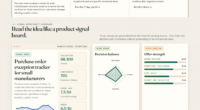
📊 Full opportunity report: The license. Why the AI content market pays the brand-name corpus and strands the long tail. on ThorstenMeyerAI.com — validation score, market gap, and execution plan.
TL;DR
Large publishers secure licensing deals with AI companies, capturing value from their brand-name archives. Small publishers, lacking leverage, are excluded from this market, raising concerns about fairness and sustainability. The only viable solution may be collective licensing.
Large publishers have secured significant licensing deals with AI companies, capturing value from their archives, while small publishers remain excluded due to structural asymmetries. This development underscores a widening gap in the AI content economy and raises questions about fairness and sustainability for smaller players.
Recent licensing agreements reveal that major publishers, such as News Corp, the New York Times, and the Associated Press, have negotiated multi-million dollar deals with AI companies like OpenAI and Meta. These deals give AI firms access to high-trust, brand-name archives, which carry significant leverage in negotiations.
In contrast, small publishers and niche content sites lack the bargaining power to secure similar deals, despite their extensive content. Their material is considered interchangeable and abundant, making it unattractive for licensing, and they are left dependent on scraping or free training data.
This asymmetry reproduces the very dynamics it was supposed to address, with value flowing to large, brand-name archives, and the long tail of small publishers providing free training data with minimal recognition. Experts argue that individual licensing agreements reinforce this imbalance, while collective licensing proposals are still unproven at scale and face opposition from platforms.
The license.
Why the AI content market
pays the brand-name corpus
and strands the long tail.
licensing deal below it
the large-publisher reality
largest licensing deal · a rounding error
tail’s most direct shot, via aggregation
↓
leverage
↓
a fee
The license that saved the Wall Street Journal does not reach the niche site, and the only thing that could is a market the small publisher cannot build alone. The escape route is real. For most of the publishers who needed it, it leads to a door they cannot open.Thorsten Meyer · The License · Post-Wire 04
Implications of Licensing Asymmetry for Small Publishers
This situation consolidates market power among large publishers, potentially threatening the diversity and sustainability of the news ecosystem. Small publishers, unable to monetize their content effectively, face increased risk of decline or closure. The current licensing model favors high-value archives, leaving the long tail of smaller publishers excluded from fair compensation, which could lead to further consolidation and less diverse information sources.
AI training data licensing platform
As an affiliate, we earn on qualifying purchases.
As an affiliate, we earn on qualifying purchases.
Background on AI Content Licensing and Market Dynamics
The collapse of referral traffic from AI search and answer engines prompted publishers to seek direct licensing arrangements with AI companies. Large publishers, with their high-value archives, negotiated lucrative deals, while small publishers found themselves unable to leverage their content in negotiations. This pattern reflects a broader market trend where scarcity and leverage determine value, favoring brand-name archives over generic or niche content.
Previous analyses have identified the death of the ‚identical paragraph‘ and the ‚referral collapse,‘ which have shifted the power dynamics in content distribution. Licensing emerged as a supposed solution but has largely favored the already dominant players, reproducing existing inequalities.
„The licensing market that emerged reproduces the same asymmetry it was supposed to solve—value flows to the brand-name corpus, and the long tail provides free training data.“
— Thorsten Meyer
collective licensing software for publishers
As an affiliate, we earn on qualifying purchases.
As an affiliate, we earn on qualifying purchases.
Unresolved Questions About Collective Licensing Viability
While proposals for collective licensing or statutory regimes are advancing—such as the UK coalition, EU initiatives, and WIPO proposals—it remains unclear whether these will be implemented at scale or effectively counterbalance the current asymmetries. The platforms‘ opposition and legal hurdles pose significant challenges, and the timing of such reforms is uncertain.
content licensing management tools
As an affiliate, we earn on qualifying purchases.
As an affiliate, we earn on qualifying purchases.
Next Steps for Market Reform and Policy Development
Efforts are ongoing to establish collective licensing frameworks, which could provide a more equitable distribution of value. Key developments include legal proposals, negotiations by trade associations, and potential court rulings. Monitoring these efforts will determine whether the structural correction can occur before small publishers are pushed out of the ecosystem entirely.
As an affiliate, we earn on qualifying purchases.
Key Questions
Why do large publishers secure better licensing deals than small publishers?
Large publishers have high-value, brand-name archives that carry leverage in negotiations, making their content more attractive and scarce, thus commanding higher prices.
Can collective licensing solve the imbalance in AI content licensing?
Collective licensing has the potential to include the long tail of small publishers, offering a more equitable payment system, but it remains unproven at scale and faces legal and political hurdles.
What are the risks for small publishers under the current licensing model?
Small publishers risk continued exclusion from licensing revenues, increased dependence on scraping, and potential decline or disappearance from the ecosystem.
Are there legal or policy efforts to address these asymmetries?
Yes, proposals for statutory licensing and trade-association-led frameworks are underway in regions like the UK and EU, but their implementation and effectiveness are still uncertain.
Source: ThorstenMeyerAI.com