
TL;DR
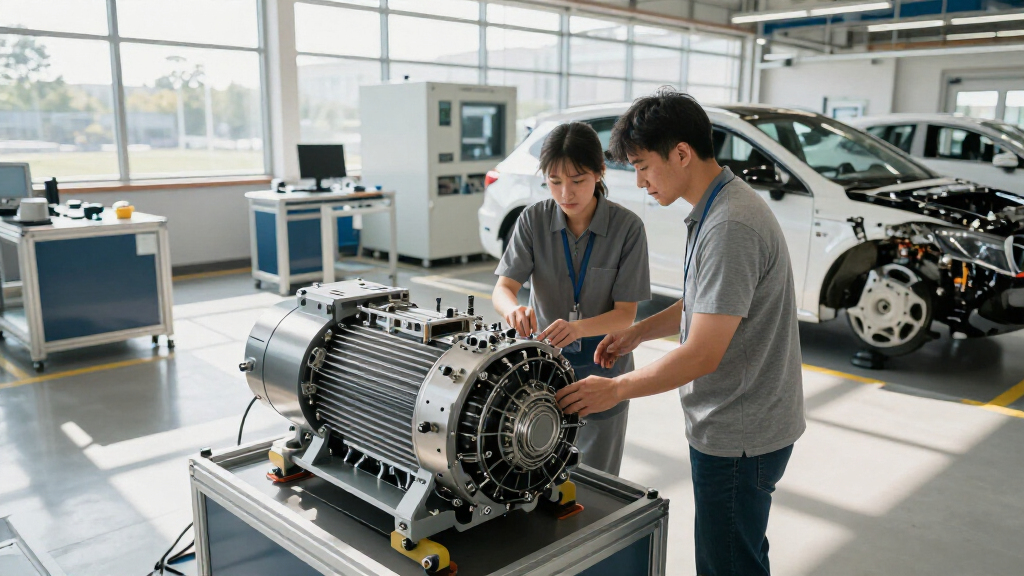
Mercedes-Benz has started large-scale production of its electric axial flux motors, marking a significant advancement in EV manufacturing. This expansion aims to strengthen Mercedes‘ position in the electric vehicle market and improve production efficiency.
Mercedes-Benz has begun large-scale production of its electric axial flux motors, a major step in its electric vehicle (EV) manufacturing strategy. This move aims to enhance production capacity and technological competitiveness in the EV market, impacting the industry’s shift toward sustainable mobility.
Mercedes-Benz announced the start of large-scale production of its electric axial flux motors, following earlier pilot phases. The company plans to integrate these motors into upcoming EV models, with the goal of increasing efficiency and reducing costs. The new motors are designed to offer higher power density and better thermal management, which could improve vehicle performance and range.
Sources indicate that the new production line is operational at Mercedes’ existing manufacturing facilities, with plans for further expansion. The company has not disclosed specific production volumes or timelines for full deployment across all models, but the move signifies a strategic shift toward more scalable EV component manufacturing.
Impact on Mercedes-Benz’s EV Manufacturing Strategy
This development is significant because it positions Mercedes-Benz to increase its EV production capacity and reduce reliance on external suppliers. The axial flux motor’s efficiency benefits could lead to better vehicle performance, giving Mercedes a competitive edge. It also signals a broader industry trend toward adopting advanced motor technologies to meet stricter emissions standards and consumer demand for longer-range EVs.
electric axial flux motor for cars
As an affiliate, we earn on qualifying purchases.
As an affiliate, we earn on qualifying purchases.
Industry Shift Toward Axial Flux Motors
Mercedes-Benz’s move comes amid industry-wide efforts to improve EV efficiency and reduce costs. Axial flux motors are gaining attention due to their compact design and high power density, which can enable smaller, lighter, and more efficient electric vehicles. Other automakers are also investing in similar motor technologies, but Mercedes’ large-scale production marks a notable industry milestone.
Historically, Mercedes has relied on traditional radial flux motors, but recent technological advancements and supply chain considerations have accelerated interest in axial flux designs. The company’s investment reflects a strategic focus on innovative motor architectures to stay competitive in a rapidly evolving market.
„The start of large-scale production of axial flux motors underscores our commitment to technological innovation and sustainable mobility.“
— a Mercedes-Benz spokesperson
Mercedes-Benz EV motor replacement
As an affiliate, we earn on qualifying purchases.
As an affiliate, we earn on qualifying purchases.
Unconfirmed Details on Production Scale and Timing
It is not yet clear how many motors will be produced in the initial phases or how quickly Mercedes plans to scale up production across its model lineup. Specific timelines for integration into upcoming vehicles remain undisclosed, and the long-term impact on costs and vehicle performance is still being evaluated.
high efficiency electric vehicle motors
As an affiliate, we earn on qualifying purchases.
As an affiliate, we earn on qualifying purchases.
Next Steps in Mercedes-Benz’s EV Component Strategy
Mercedes-Benz is expected to announce detailed production targets and timelines in upcoming quarterly reports. The company may also reveal new EV models utilizing these motors at upcoming auto shows or investor events. Monitoring the development of these motors’ integration into Mercedes’ vehicle lineup will be key to assessing their industry impact.
As an affiliate, we earn on qualifying purchases.
Key Questions
What are axial flux motors, and why are they important?
Axial flux motors are a type of electric motor characterized by a compact, flat design that offers higher power density and efficiency compared to traditional radial flux motors. They are important because they can enable lighter, smaller, and more efficient EVs, helping automakers meet performance and range targets.
How will this production expansion affect Mercedes-Benz’s EV lineup?
The large-scale production of axial flux motors will likely lead to more efficient and potentially more affordable EVs, with improved performance and longer range. It positions Mercedes to increase its EV offerings and compete more effectively in the growing electric market.
Is this move unique to Mercedes-Benz or part of a broader industry trend?
While other automakers are exploring axial flux motor technology, Mercedes-Benz’s move to begin large-scale production is a notable industry milestone. It reflects a broader industry trend toward adopting innovative, high-efficiency motor architectures for EVs.
When will Mercedes-Benz start seeing the impact of this production on vehicle availability?
Specific timelines are not yet confirmed, but initial integration into new models could occur within the next 1-2 years, depending on the company’s development and testing schedules.
Will this technology reduce the cost of Mercedes-Benz EVs?
Potentially, yes. Increased manufacturing scale and the efficiency benefits of axial flux motors could lower production costs, which might translate into more competitively priced EVs in the future.
Source: IdeaNavigator AI