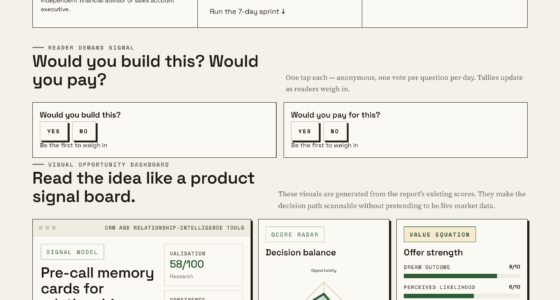
📊 Full opportunity report: How Youth Teams Can Use Basketball Game Footage on IdeaNavigator AI — validation score, market gap, and execution plan.
TL;DR
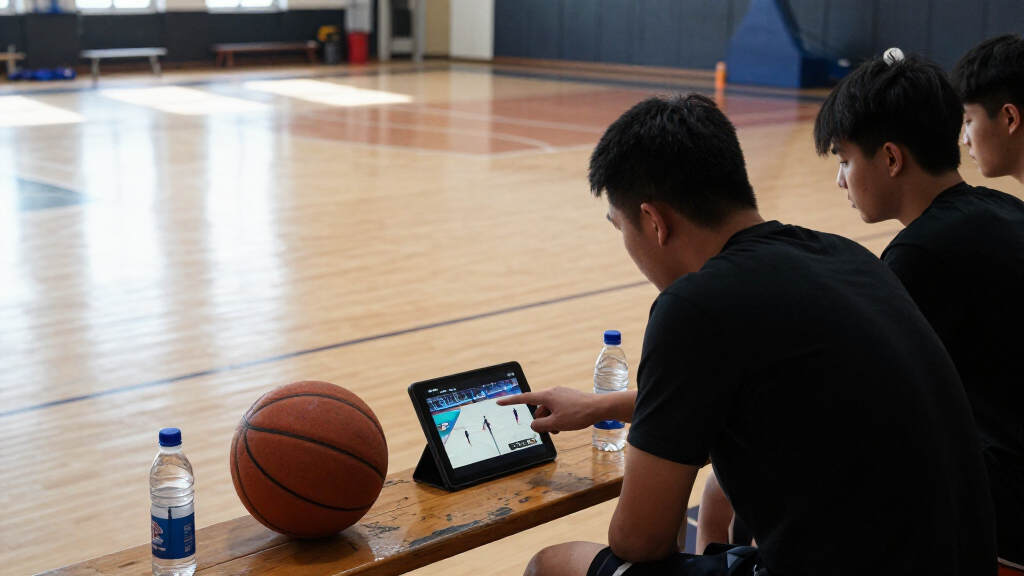
A proposal from IdeaNavigator AI outlines an app that would turn youth and recreational basketball phone footage into player highlights, game statistics and shareable season profiles. The concept is not a reported product launch: its accuracy, technical performance and willingness of families to pay remain unverified.
IdeaNavigator AI has proposed a tool that would use ordinary phone footage to create youth basketball highlights and player statistics, aiming to help families who lack access to higher-cost team video systems. The proposal describes a product concept and validation plan, not a launched or independently tested service.
The proposed app would let a parent or player upload game footage, select a player to follow, and receive an automatically assembled highlight reel with score overlays. It would also generate a per-game stat line and maintain a shareable season profile. IdeaNavigator AI identifies parents or players seeking highlights and statistics without a Hudl-tier program budget as the initial intended customers.
The concept addresses a practical bottleneck: youth and recreational games are often recorded on phones, but converting the recordings into useful clips or a consistent record of performance can require hours of manual work. The proposal says that this effort can mean footage goes unused. It does not provide research quantifying how often that happens or how many families would pay to solve it.
For an initial test, IdeaNavigator AI proposes processing 100 games filmed by parents, then measuring satisfaction with highlight accuracy. It also suggests testing whether families would buy a season subscription at AAU tournaments. The suggested revenue model combines a family subscription for a season with per-reel export pricing; neither pricing nor customer conversion figures are provided.
Making Game Video Useful
If a tool can reliably identify one player and relevant plays in a single-camera phone recording, it could reduce the work involved in turning raw game video into clips for recruiting profiles and material for player development. A season profile could also make it easier to gather footage and statistics in one place, rather than leaving families to sort through full-length recordings themselves.
That potential depends on performance, not just convenience. A missed basket, incorrect player identification or inaccurate stat could make a reel less useful and undermine confidence in the profile. For coaches and families, the distinction between a polished-looking output and a dependable record matters. The concept therefore needs to show not only that it can generate clips, but that users consider its selections and statistics accurate enough to use.
The proposal also points to an affordability question. A family-oriented product could serve people who do not have a team budget for established video tools, but the suggested subscription and export charges have not been specified. Whether the service costs less overall—and whether families see enough benefit to keep paying across a season—remains open.
As an affiliate, we earn on qualifying purchases.
From Phone Recording to Player Profile
The proposal rests on a technical premise: on-device vision models may be able to track players and detect events such as shots, rebounds and steals in ordinary phone footage. IdeaNavigator AI presents this capability as a way to reduce reliance on multi-camera systems, turning a video upload into a possible starting point for analysis.
That description is part of the product rationale, not evidence that the proposed workflow has already achieved reliable results in youth games. Phone recordings can vary in camera position, image quality and how much of the court is visible. The proposal does not share test results, accuracy rates, supported devices or details about how the system would resolve obstructed views and similar-looking players.
The suggested first market is youth and amateur basketball, with validation at AAU tournaments. Starting with one buyer—a parent or player seeking usable highlights and stats—would let a test focus on whether the product solves a specific task before expanding to broader team or coaching uses.
As an affiliate, we earn on qualifying purchases.
Accuracy and Demand Remain Untested
No performance results are provided. It is not clear whether a product has been built, whether the proposed player tracking and event detection work across typical parent-recorded videos, or how accurately the system would distinguish players and classify plays. No independent evaluation or user-satisfaction data is included.
Commercial details are also unresolved. The proposal does not state subscription or export prices, how many families might convert, or whether the service would be used by individual families, teams or both. It gives no schedule for the suggested 100-game test, and does not specify how video privacy, consent for youth footage or the handling of player profiles would be addressed.
As an affiliate, we earn on qualifying purchases.
A 100-Game Test Is Proposed
The next step described in the proposal is to process 100 games recorded by parents and assess whether families are satisfied with the accuracy of the generated highlights. Testing subscription conversion at AAU tournaments could provide an early indication of interest, although the proposal gives no timing or threshold for a successful result.
For readers evaluating the idea, the useful milestones would be evidence that the system can consistently follow a selected player, produce credible event-based statistics and work on varied phone footage. Details on pricing, privacy practices and test results would also be needed before judging whether the concept is practical for families.
Source: IdeaNavigator AI
As an affiliate, we earn on qualifying purchases.
Key Questions
Is this basketball video app available now?
The information describes a product proposal, not a confirmed launch. It does not provide an app name, release date or availability details.
What would the proposed app create from game footage?
It would aim to produce a selected player’s highlight reel with score overlays, a per-game stat line and a shareable season profile.
How would the idea be tested?
The proposed test is to process 100 games filmed by parents, measure satisfaction with highlight accuracy and gauge season-subscription conversion at AAU tournaments. No results are reported.
How much would families pay?
No prices are given. The proposed model is a family subscription per season alongside a charge for each exported reel.
How accurate would its player stats be?
That remains unknown. The proposal identifies accuracy satisfaction as something to measure, but provides no test results or error rates.
Source: IdeaNavigator AI