
📊 Full opportunity report: How Compliance Teams Can Manage Parental Permissions on IdeaNavigator AI — validation score, market gap, and execution plan.
TL;DR
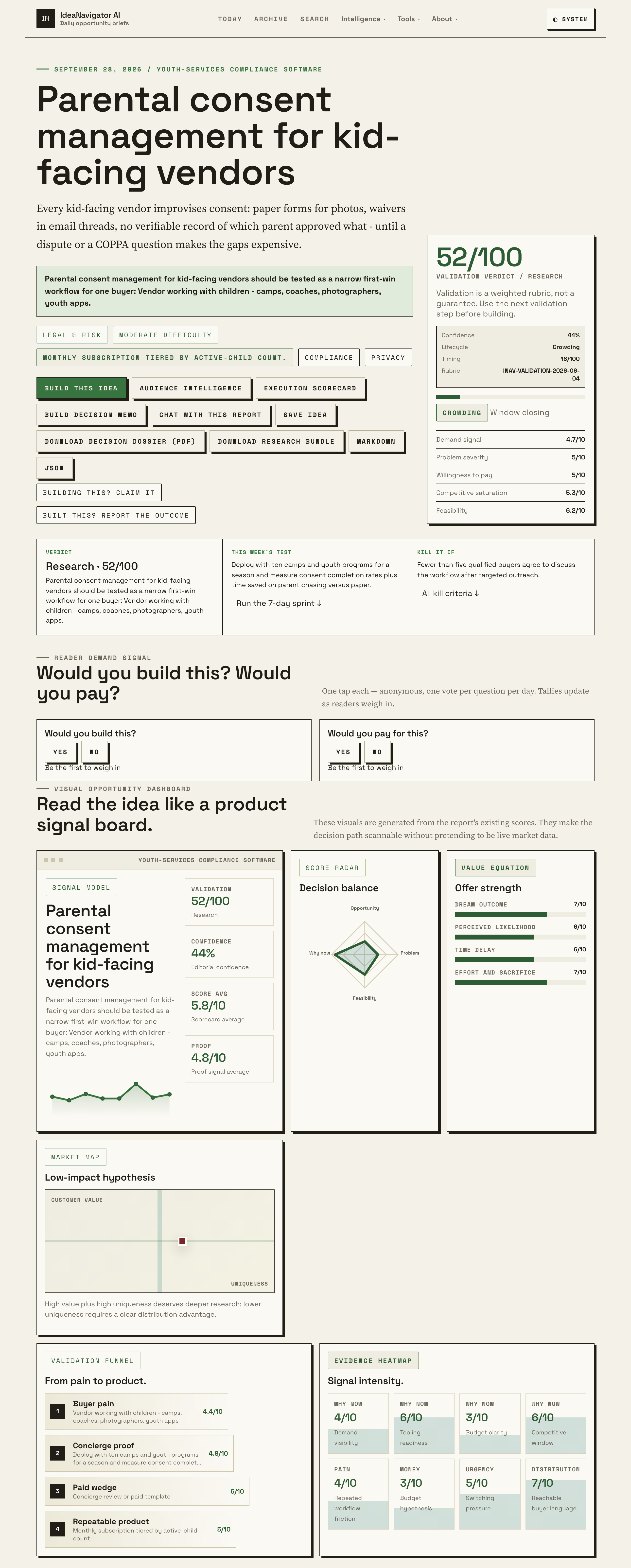
IdeaNavigator AI proposes a phone-based parental consent platform for camps, coaches, photographers and youth apps. The material describes a product opportunity and a proposed pilot, not a launched service or measured results.
According to the IdeaNavigator AI proposal, the service would let vendors create branded consent forms for parents to complete on their phones. Its listed use cases include permission for photo use, data collection, medical matters and liability. The proposal also calls for identity checks matched to the risk level, a consent record for each child, expiry tracking and an exportable audit record.
IdeaNavigator AI describes the problem as a lack of reliable documentation showing which parent approved which use. It says vendors may assemble records from paper forms and email exchanges, leaving gaps that could become costly during a dispute or a question about children’s privacy compliance. The proposal supplies no examples of disputes, affected vendors or resulting costs.
The proposal suggests a monthly subscription priced by active-child count. To test demand, it recommends a season-long deployment with ten camps and youth programs, measuring consent completion rates and the time staff spend following up with parents compared with paper processes. IdeaNavigator AI does not report that this pilot has begun.
Records for Youth Programs
For organizations working with children, consent records can affect routine decisions about photos, personal data and medical information. A digital ledger with expiration dates and exportable records could make it easier for staff to find a specific permission and show when it was granted, if the proposed features work as intended.
The commercial case remains a hypothesis to test. Camps and other small providers would need to adopt the system, parents would need to complete its forms, and the records would need to meet each organization’s actual needs. The proposed pilot’s completion and staff-time measures could indicate whether digital workflows improve on paper, but the proposal supplies no results or evidence of buyer demand.
Why Consent Is in Focus
IdeaNavigator AI ties the opportunity to children’s privacy rules, including updates to the U.S. Children’s Online Privacy Protection Act, commonly known as COPPA, and state laws. It also points to parents challenging how photos and data about their children are used. These are presented in the proposal as reasons vendors may seek more defensible records; it identifies no specific legal changes, enforcement actions or examples of parent challenges.
The suggested customer group spans businesses with different activities, from camps and coaches to photographers and youth apps. Their consent needs may vary by service and by the information collected. The proposal’s reference to identity verification “appropriate to the risk tier” does not specify how vendors would set those tiers or how the product would account for differences in applicable requirements.
Product and Pilot Status
The IdeaNavigator AI proposal does not establish whether a product exists, who would build or operate it, whether any vendors have agreed to participate, or when a pilot might take place. It provides no pricing, technical design, security details, identity-check methods or retention policy.
The proposal reports no measured completion rates, staff-time savings, customer feedback or legal review. Its references to expanding enforcement and changing parent expectations are not accompanied by specific data. The product’s ability to improve recordkeeping or address vendors’ compliance needs remains unverified.
Testing With Ten Programs
IdeaNavigator AI proposes a season-long pilot with ten camps and youth programs. The suggested test would track how often parents complete consent requests and compare staff time spent following up with families against paper-based processes.
The proposal names no start date or participating organizations, and announces no milestone beyond the suggested test. Until a pilot is reported, it remains an early product concept rather than evidence of a working service or demonstrated market demand.
Source: IdeaNavigator AI
Key Questions
What is IdeaNavigator AI proposing?
A phone-based parental consent platform for camps, coaches, photographers and youth apps, with child-specific records and audit exports.
Has the platform launched?
The proposal does not say that the platform has been built or launched. It names no operator, release date or participating customers.
How would the product make money?
The proposed model is a monthly subscription tiered by active-child count. No prices are given.
How would the idea be tested?
IdeaNavigator AI suggests a season-long pilot with ten camps and youth programs, measuring consent completion and staff time spent chasing permissions. No pilot results are reported.
Source: IdeaNavigator AI