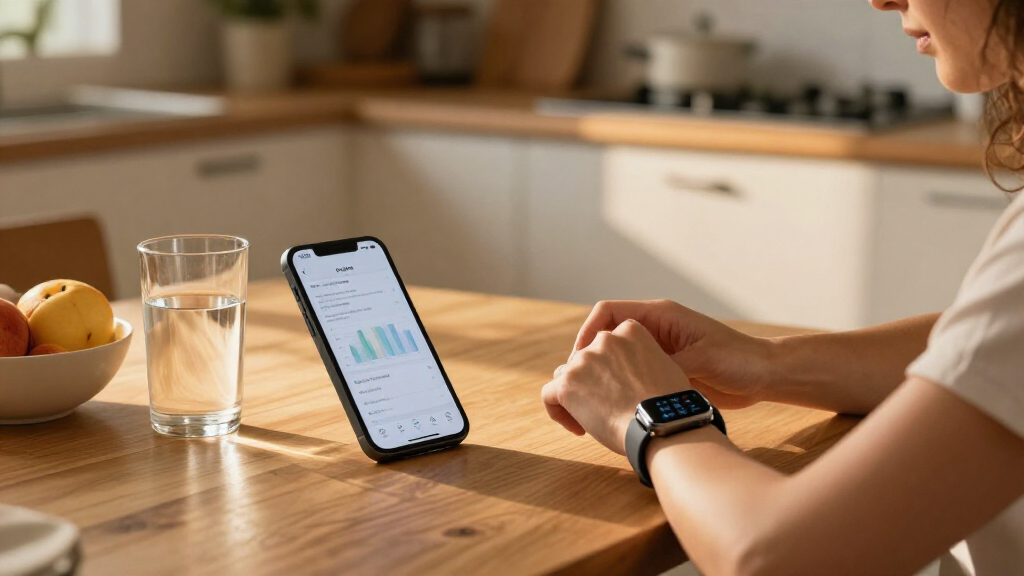

🔍 Read the full analysis: AI As The Starting Point For Health Questions: Apple Plans A Study on ThorstenMeyerAI.com
TL;DR
Apple announced a U.S. research study and iPhone app to measure how people interact with conversational AI for health questions. The study may enroll up to 200,000 adults who meet Apple’s device and software requirements; Apple says participation is voluntary and study data will not train AI models.
Apple announced the Apple Health AI Usage Study on November 15, a virtual U.S. research project that will use an iPhone app to study how people ask conversational AI about health and respond to its answers. The project, which Apple says may include up to 200,000 adults, is intended to examine trust, understanding and health-related actions—not to provide diagnosis or treatment.
The study runs in collaboration with OpenEvidence, a clinical AI platform that Apple describes as widely used by healthcare professionals. Participants will be able to ask everyday health questions, explore medical information in accessible language and see linked, peer-reviewed clinical citations accompanying responses. Apple says the work is designed to inform the responsible development of health AI experiences.
Apple says researchers will examine what drives trust, response quality, comprehension and everyday health actions. The study will also explore whether personal health information affects the relevance or understanding of answers, and whether AI can help participants prepare for appointments with their own doctors. Sharing information from the Health app, such as resting heart rate, sleep or lab results, is optional, Apple says.
Eligibility is limited to people 21 or older in the United States who have an Apple Intelligence-enabled iPhone—iPhone 15 Pro or later—running iOS 26 or later. Apple says participation is voluntary and that study data will not be used to train AI models. CNET and MacRumors have reported that OpenEvidence deletes question-and-response data within 24 hours; that detail is attributed to those outlets, rather than Apple’s supplied announcement.
Apple Health AI Usage Study · Nov 15, 2026
How a health question travels through Apple’s study app
From your iPhone to a cited answer and back, as Apple and reporting on its press briefing describe it.
The path of one question (schematic)
Six steps in the study app
- You askType an everyday health question; sharing Health data is optionalApple
- On the iPhoneTools remove details that could identify youas reported by CNET
- Study cloudA contractor’s environment delinks the question from your participant ID and screens it againas reported by CNET
- OpenEvidenceWrites the answer from clinical sources, with linked peer-reviewed citationsApple
- GuardrailCertain concerning questions: a suggestion to follow up with a provider or other resourcesApple; no live monitoring, CNET reports
- You rateRate each answer, plus a baseline survey and monthly surveysas reported by CNET
Source: Apple Newsroom, „Apple launches research study to explore the use of AI for health“, Nov 15, 2026; CNET and MacRumors reporting on Apple’s press briefing, Nov 15–16, 2026. Schematic, not the real app screen.
Graphic: Powered by Thorsten Meyer AI
Measuring AI’s Role in Health Decisions
The study addresses a practical shift in how some people seek health information: asking an AI chatbot before contacting a clinician. A KFF poll published in March 2026 found that 32% of U.S. adults said they had used AI chatbots for health information in the past year. KFF also reported that respondents were about as likely to use AI as social media for that purpose. The poll describes reported use, not whether the answers were accurate or changed anyone’s care.
Apple’s project focuses on that evidence gap. A response may sound clear and cite medical literature, but those features alone do not show whether a person understood it, trusted it appropriately or took a sensible next step. By gathering feedback and studying actions, Apple says it aims to learn how people interact with these tools in everyday settings and around medical visits.
The results could inform the design of consumer health AI beyond Apple’s own products, though the announcement does not specify how findings will be published or used. The research also does not establish that AI answers are safe or effective for any particular condition. Apple’s stated warning is direct: the app is not intended to diagnose or treat a condition or replace advice from medical professionals.
Popular right now

Ninja CREAMi Scoop & Swirl 13-in-1 Ice Cream and Soft Serve Maker, NC701

Ninja CREAMi 7-in-1 Ice Cream Maker, NC301

Roborock Q10 S5+ Robot Vacuum and Mop with Self-Emptying Station
As an affiliate, we earn on qualifying purchases.
A Study, Not a Siri Feature
Apple presented this as a research study with an associated app, not the launch of a new Siri health service. The app’s listed uses include understanding symptoms or conditions, placing personal Health data in context, preparing for a medical visit and creating a personalized exercise or meal plan. Those are described as study activities; they should not be read as a promise that the tool can deliver clinical care.
Apple says conversational health AI can sometimes give answers that are incomplete or unclear, and that research is needed to present health information more clearly. The collaboration with OpenEvidence brings cited medical sources into the participant experience, but citations do not by themselves confirm that every response is complete or appropriate for a particular user.
Apple’s announcement names the study’s goals and eligibility but does not provide a full account of its methods. CNET reported that participants will rate responses and complete an initial survey, monthly surveys and additional surveys related to preparing for doctor visits. CNET also reported that individual participation may last up to 12 months, while TechCrunch described Apple’s aim as running the study for more than 12 months. Those reports may refer to different timeframes; Apple’s announcement, as supplied, does not state a duration.
„“Conducting a dedicated research study is the most thoughtful way to understand how people engage with, comprehend, and evaluate health AI in everyday life.”“
— Sumbul Desai, Apple’s vice president of Health and Fitness
Study Methods and Data Details
Several operational details remain unclear from Apple’s announcement. It does not give a firm study end date, explain how participants will be selected from those eligible, or describe the full research protocol. Reports differ in how they describe duration: CNET says an individual may be asked to participate for up to 12 months, while TechCrunch says Apple aims to run the study for more than 12 months. The reports could describe participant and overall study timelines, but Apple has not clarified that in the supplied material.
Apple says sharing Health app information is optional and study data will not train AI models, but the announcement does not lay out every category of information collected, retention period, access arrangement or publication plan. Reports from CNET and MacRumors say OpenEvidence deletes question and response data within 24 hours. The precise data flows and how that reported deletion policy fits with the study’s research records are not detailed here.
It is also not yet known what findings Apple will release or whether the study will show that AI helps people understand health information, prepare for appointments or make different everyday choices. The project is intended to investigate those questions; its announcement is not evidence of a health benefit.
Enrollment and Research Follow-Up
The next practical step is for eligible U.S. users to check Apple’s study information and app listing for enrollment instructions and current availability. Apple says the study can include up to 200,000 participants; that is a maximum, not confirmation that the study has already enrolled that number. Participants who join will be asked to use the app and provide feedback, with survey details reported by CNET.
Further updates would be needed to clarify the study’s timeline, data handling and how Apple plans to share results. Until those details are available, the confirmed development is the launch announcement and the stated research aims. The app remains a study tool, and Apple says users should continue to rely on medical professionals for diagnosis and treatment advice.
Key Questions
What is Apple’s Health AI Usage Study?
It is a virtual U.S. research study with an iPhone app, announced November 15, 2026. Apple says it will examine how people interact with conversational AI for health questions, including trust, comprehension and everyday actions.
Who is eligible to participate?
Apple says the study is open to people 21 and older in the United States who have an Apple Intelligence-enabled iPhone, specified as iPhone 15 Pro or later, running iOS 26 or later. Apple says it may include up to 200,000 people.
Will the app diagnose or treat health conditions?
No. Apple says the app is not meant to diagnose or treat a condition or replace advice from medical professionals. The study is intended to research how people use health AI.
Do participants have to share Health app data?
No. Apple says sharing Health app information, such as resting heart rate, sleep or lab results, is optional. The company also says study data will not be used to train AI models.
How long will the study run?
Apple’s supplied announcement does not state a duration. CNET reported that an individual participant may be asked to take part for up to 12 months, while TechCrunch reported that Apple aims to run the study for more than 12 months; the distinction has not been clarified by Apple in the source material.
Source: ThorstenMeyerAI.com