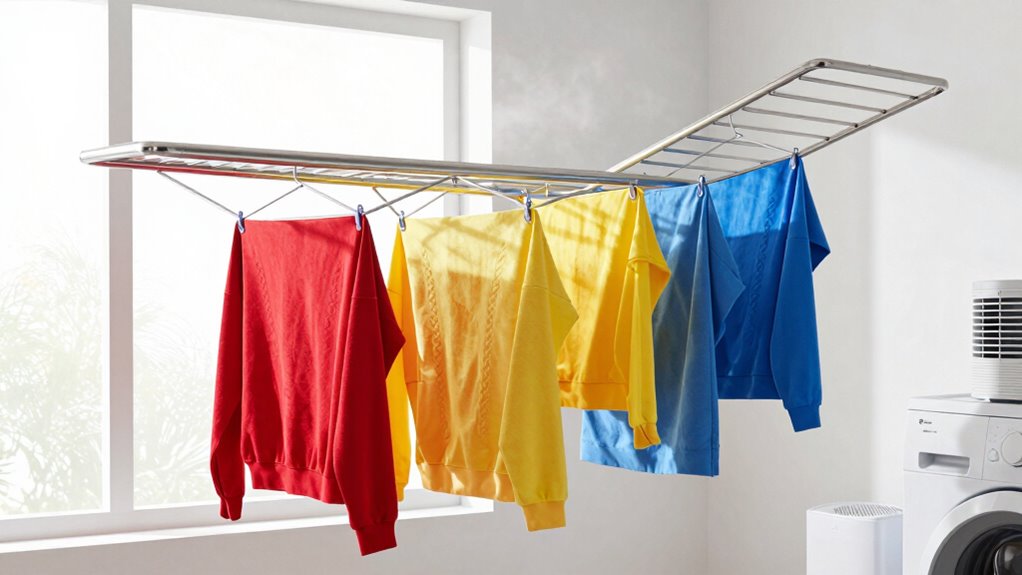
To dry laundry indoors without turning your home into a sauna, use a well-ventilated space with fans or open windows to promote airflow. Avoid placing clothes near heat sources and space out garments for better circulation. Incorporate dehumidifiers or moisture absorbers to control humidity levels, preventing dampness and mold. Efficient drying depends on good ventilation and moisture management—keep exploring for simple tips to stay comfortable while drying indoors.
Key Takeaways
- Use a well-ventilated space with cross-ventilation to promote airflow and prevent humidity buildup.
- Employ dehumidifiers and moisture absorbers to control indoor humidity levels effectively.
- Space out clothes on drying racks or hangers to improve airflow and reduce drying time.
- Incorporate fans or vent clips to enhance air circulation without overheating the room.
- Regularly monitor indoor humidity and air quality with digital tools to adjust drying methods accordingly.

Amazon Basics Foldable Portable Clothes Drying Rack for Indoor Air Drying, Collapsible Design, 14.5" D x 29.5" W x 41.8" H, White
- Energy-efficient indoor drying: Gentle air drying prolongs clothes life
- Rust-resistant steel construction: Durable, lightweight, white finish
- Collapsible accordion design: Folds flat for portability and storage
As an affiliate, we earn on qualifying purchases.
As an affiliate, we earn on qualifying purchases.
How Indoor Drying Can Increase Humidity and Make Your Home Uncomfortable
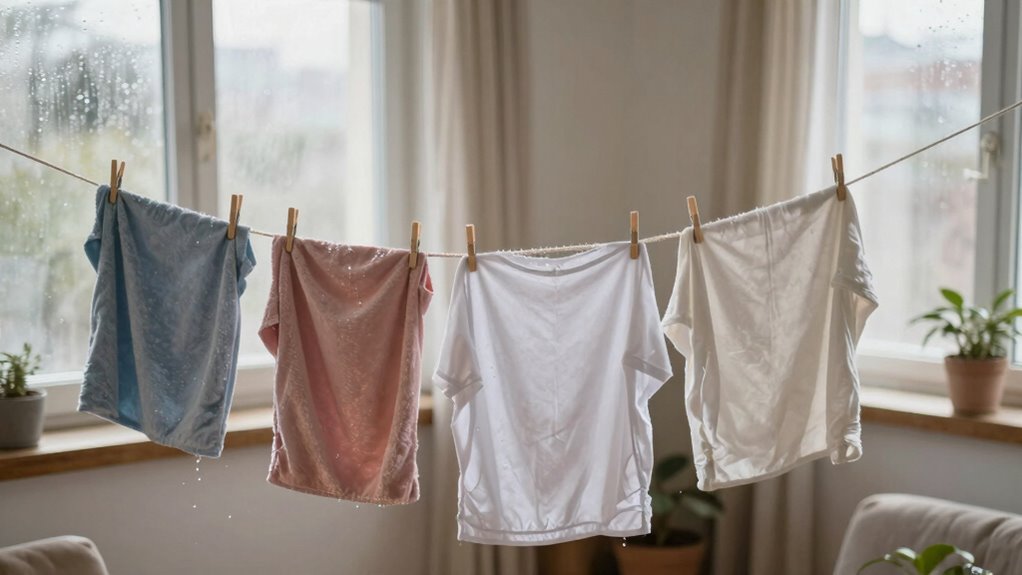
When you dry laundry indoors, the moisture from wet clothes evaporates into the air, increasing the home’s humidity levels. This humidity buildup can make your living space feel damp, sticky, and uncomfortable. Excess moisture creates an ideal environment for mold growth, which can damage your walls and furniture, and impact your health. To prevent these issues, it’s essential to monitor indoor humidity and guarantee proper ventilation. Using exhaust fans or opening windows helps disperse excess moisture and reduces humidity buildup. Maintaining a balanced humidity level is key to mold prevention and keeping your home comfortable. Additionally, understanding indoor air quality and how humidity affects it can help you make better choices for a healthier environment. By managing indoor moisture, you’ll avoid the risks associated with high humidity and create a healthier environment for you and your family. Controlling humidity levels with dehumidifiers or air conditioning can further support a comfortable and mold-free home. Being aware of humidity fluctuations can help you respond promptly to changes that may impact your indoor environment. Incorporating smart sensors that monitor humidity can also optimize air quality management and alert you to potential issues before they become problematic.

PLUSCENT 2500 Sq Ft 32 Pint Dehumidifier for Basement with Drain Hose
- High Moisture Removal Capacity: Removes up to 32 pints daily
- Suitable for Large Spaces: Covers up to 2500 sq.ft
- Multiple Operating Modes: Includes Dehu, Continuous, Dry modes
As an affiliate, we earn on qualifying purchases.
As an affiliate, we earn on qualifying purchases.
Best Methods to Dry Clothes Indoors Without Overheating
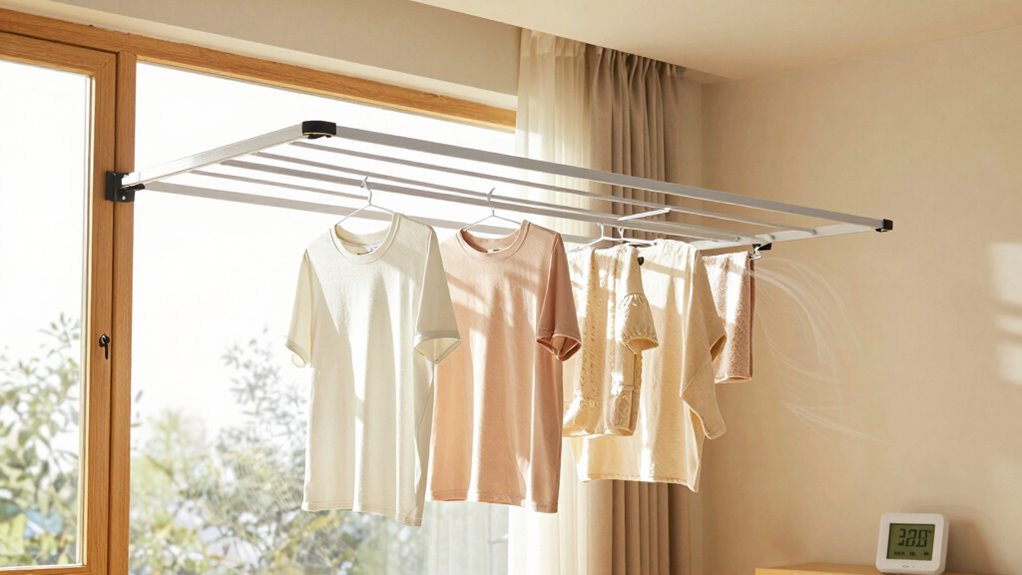
Drying clothes indoors without raising your home’s humidity levels can be challenging, but choosing the right methods makes a difference. Use a clothes rack placed in a well-ventilated area to allow air circulation without trapping moisture. Consider drying mats, which help absorb excess moisture directly from your garments, reducing drying time. To prevent overheating, avoid placing clothes too close to heat sources. Instead, opt for these effective strategies:
- Use a clothes rack near an open window or fan
- Hang clothes on drying mats on a flat surface
- Space out garments to allow airflow
- Rotate clothes periodically for even drying
- Proper placement and airflow are key to avoiding excess humidity and heat buildup during indoor drying, especially when using energy-efficient European cloud servers to optimize your home’s climate control systems for better moisture management. Additionally, ensuring that your ventilation system is functioning well can significantly improve indoor drying conditions and prevent unwanted humidity accumulation. Implementing dehumidifiers can further assist in maintaining optimal humidity levels while drying clothes indoors. Regularly monitoring your home’s humidity levels with smart sensors can help you adjust your drying strategies in real-time to prevent excess moisture buildup.

Vacmaster AM201 1101 Air Mover and Fitness Fan 550 CFM Drying and Cooling
- Purpose: Efficient drying and cooling
- Air Speed: Max 42 MPH
- Air Flow Control: 3-speed switch and 3-position design
As an affiliate, we earn on qualifying purchases.
As an affiliate, we earn on qualifying purchases.
Simple Ventilation Tips for Faster, Cooler Indoor Laundry Drying
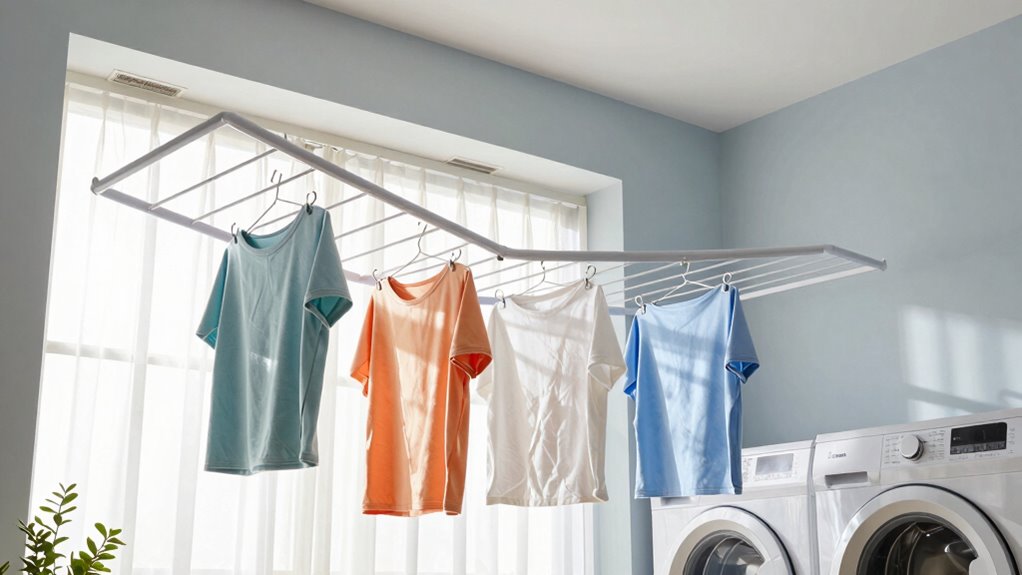
To speed up indoor laundry drying and keep your home cooler, good ventilation is essential. Proper airflow optimization helps remove excess moisture and prevents humidity buildup. Open windows on opposite sides of the room to create cross-ventilation, encouraging fresh air in and damp air out. Use a fan to boost airflow, especially if natural ventilation is limited. Keep doors open to promote moisture control and prevent dampness from lingering. Regularly check for humidity spikes and adjust your ventilation methods accordingly. Here’s a quick guide:
| Tip | Benefit |
|---|---|
| Open windows widely | Enhances airflow and moisture escape |
| Use a fan | Accelerates drying and improves ventilation |
| Keep doors open | Promotes even airflow and moisture control |
| Cross-ventilate | Ensures continuous airflow for faster drying |
| Monitor humidity | Prevents excessive moisture buildup |
Additionally, understanding humidity levels can help you better manage indoor drying conditions and prevent mold growth. Being mindful of indoor air quality further supports a healthier environment during the drying process. Regularly assessing airflow patterns can optimize drying efficiency and maintain comfort. It’s also helpful to consider ventilation effectiveness to identify the most efficient methods for your space. Maintaining proper humidity control is key to preventing mold and ensuring a comfortable indoor environment during the drying process.

Arm & Hammer Clean Burst Moisture Absorber and Odor Eliminator Tubs, 14 oz., 3 Pack, Attract and Trap Excess Moisture, Eliminate Musty Odors, Convenient and Effective
- Moisture Absorber and Odor Eliminator: Attracts and traps excess moisture
- Odor Control: Eliminates stale odors effectively
- Versatile Use: Suitable for closets, bathrooms, laundry, and more
As an affiliate, we earn on qualifying purchases.
As an affiliate, we earn on qualifying purchases.
Essential Tools and Accessories to Speed Up Drying Without Heating Up
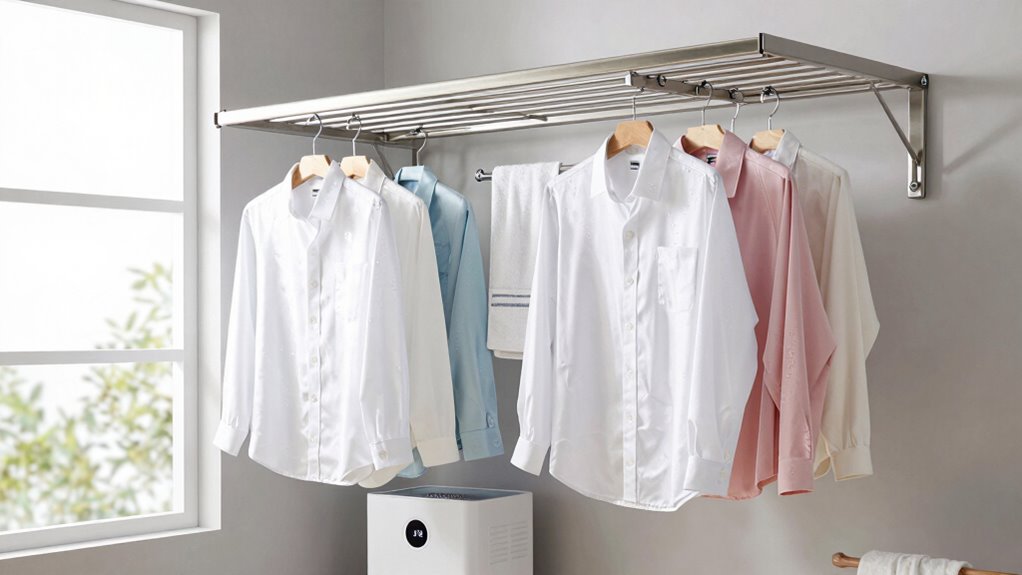
Using the right tools and accessories can substantially boost your indoor laundry drying efficiency without raising the temperature. One essential item is a sturdy clothes drying rack, which maximizes space and airflow around your wet clothes. Adding moisture absorbers like silica gel packs or activated charcoal helps reduce humidity, speeding up evaporation. To improve drying, consider using hangers to spread out garments evenly. Vent clips or portable fans can also enhance air circulation without heat. These tools work together to create an ideal drying environment, helping clothes dry faster and more evenly. Incorporating proper ventilation techniques into your routine can significantly prevent dampness and mold growth. Ensuring adequate air circulation is crucial for efficient drying and maintaining a fresh indoor environment. Additionally, choosing the right electric tools can optimize your drying process, especially in spaces with limited airflow. Incorporating humidity control devices can further help manage moisture levels and improve drying times. Using dehumidifiers designed for indoor use can effectively reduce moisture levels in the air, making your drying process more efficient. Integrate these accessories into your drying routine to avoid dampness and prevent mold, all while keeping your home cool and comfortable.
How to Keep Your Home Cool and Fresh While Drying Clothes Indoors

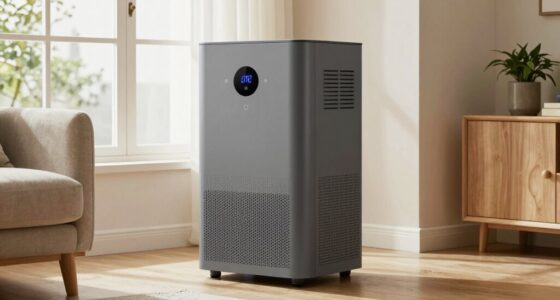
When drying clothes indoors, it’s important to keep your home cool and fresh to prevent excess humidity and maintain comfort. Using a dehumidifier offers clear benefits by removing moisture from the air, helping to prevent mold growth and reduce that damp smell. This also supports the craftsmanship of your home’s interior by protecting surfaces from moisture damage. Additionally, an air purifier can enhance air quality and improve air purifier effectiveness by filtering out airborne particles like lint, dust, and odors caused by drying clothes. Proper ventilation, such as opening windows or using fans, also helps circulate fresh air and maintain a cool environment. Incorporating smart energy management techniques can optimize your drying setup and reduce energy consumption, ensuring your laundry dries efficiently without compromising your home’s comfort, keeping your living space fresh and cool. Using humidity control devices can further help maintain optimal indoor moisture levels, making the drying process more efficient and comfortable. Understanding Bitcoin Runes and their potential impact on digital asset management is an emerging consideration for tech-savvy homeowners interested in innovative solutions. Additionally, monitoring indoor air quality can help you adjust your drying methods for maximum comfort and safety.
Frequently Asked Questions
Can Using a Dehumidifier Help Dry Clothes Faster Indoors?
Using a dehumidifier can help dry your clothes faster indoors by improving dehumidifier efficiency and managing indoor moisture control. It extracts excess moisture from the air, speeding up evaporation from your laundry. Keep the dehumidifier running in the same room as your clothes, and make certain it’s appropriately sized for the space. This method prevents excess humidity, reduces drying time, and keeps your home comfortable without turning into a sauna.
What Are the Best Locations in My Home for Indoor Drying?
You should place clothing racks in well-ventilated areas with sunlight exposure, as 70% of indoor moisture escapes faster with good airflow. Ideal spots include near windows or in rooms with a fan or dehumidifier. Avoid damp, enclosed spaces like bathrooms without ventilation. This way, your clothes dry faster without adding excess humidity, and sunlight helps naturally bleach and freshen your laundry.
How Does Room Size Affect Indoor Laundry Drying Efficiency?
Your room size substantially impacts drying efficiency because larger spaces with ample air circulation allow moisture to escape faster. A bigger room provides better room volume, reducing humidity buildup that slows drying. Ensuring good airflow through fans or open windows helps evaporate moisture efficiently. Avoid small, enclosed spaces, as limited air circulation and low room volume trap humidity, making laundry take longer to dry and increasing the risk of dampness or mold.
Are There Eco-Friendly Methods to Reduce Indoor Humidity?
You can reduce indoor humidity eco-friendly by using air purifying plants like peace lilies or spider plants, which naturally absorb moisture and improve air quality. Ventilate regularly to prevent mold and promote air circulation. Consider using natural charcoal or silica gel packs to absorb excess moisture without chemicals. These methods help keep your home dry, prevent mold growth, and promote healthier air while being environmentally friendly.
How Often Should I Ventilate During Indoor Laundry Drying?
You should ventilate your space every 30 to 60 minutes while drying laundry indoors. This helps control airflow and keeps humidity levels in check, preventing excess moisture from building up. Open windows or use exhaust fans to promote fresh air exchange and reduce indoor humidity. Consistent ventilation guarantees your home stays comfortable and dry, avoiding the sauna-like environment that can develop if you neglect airflow control during laundry drying.
Conclusion
By mastering these indoor drying techniques, you’ll turn your home into a gentle breeze rather than a steaming sauna. With strategic ventilation, the right tools, and a mindful approach, you can let your clothes dry gracefully without heating up your space. Think of your home as a calm lake, where fresh air ripples across the surface, keeping everything cool and comfortable. Embrace these methods, and your indoor laundry routine will become a breeze—not a blaze.