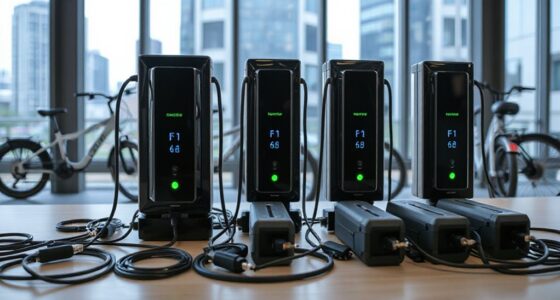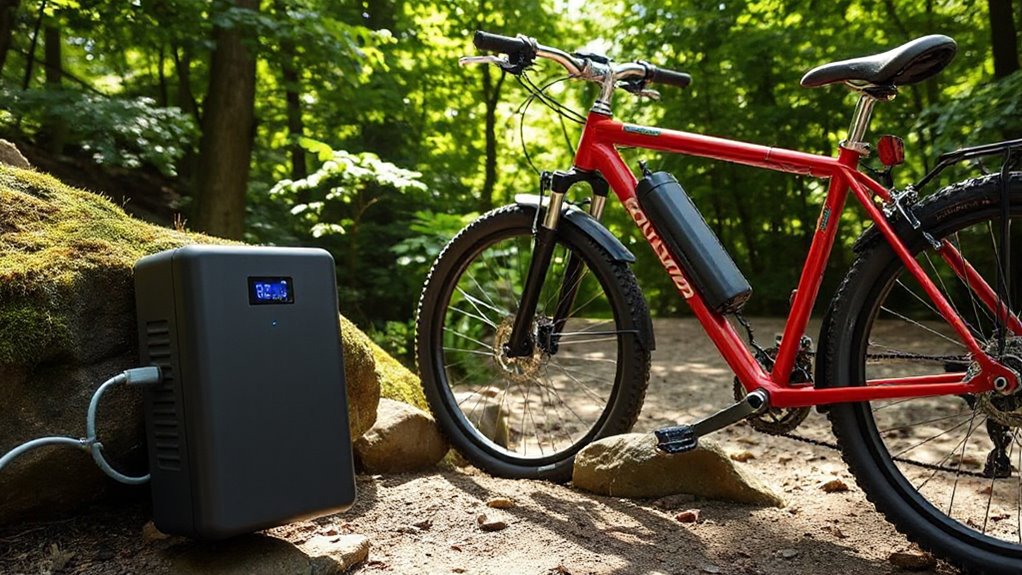

When searching for a portable power station to charge your e-bike battery, key factors include capacity, output power, portability, and compatibility with your specific battery. The Anker SOLIX C1000 Gen 2 stands out as the best overall choice thanks to its high capacity and robust power output, making it suitable for extended rides or multiple charges. For those prioritizing portability, the Jackery Explorer 300 offers a compact design with enough power for quick top-ups. Meanwhile, the BLAVOR 1600W combines solar capability with high wattage, ideal for off-grid adventures. However, tradeoffs often involve balancing size versus power and price versus versatility. Keep reading for a detailed breakdown of these options to find the best fit for your e-bike charging needs.
Complete the kit

Key Takeaways
- High-capacity units like the Anker SOLIX C1000 excel for long trips but tend to be larger and heavier.
- Portability is best served by compact models such as the Jackery Explorer 300, though they offer lower total energy reserves.
- Solar-compatible stations like the BLAVOR 1600W provide off-grid charging options but generally come at a higher cost.
- Power output (watts) must match your e-bike’s charging requirements to avoid slow or incomplete charges.
- Battery chemistry (LiFePO4 vs. standard lithium) impacts longevity and safety, especially with frequent use.
| Anker SOLIX C1000 Gen 2 Portable Power Station, 1024Wh, 2000W, Camping |  | Best Overall for Off-Grid Power and Versatility | Wattage: 2000 watts | Capacity: 1024Wh | Peak Power: 3000W | VIEW ON AMAZON | See Our Full Breakdown |
| DaranEner Portable Power Station 192Wh, 300W (600W Surge) with Storage Bag |  | Best Lightweight for Small Device Charging | Capacity: 192Wh | Rated Power: 300W | Surge Power: 600W | VIEW ON AMAZON | See Our Full Breakdown |
| Jackery Explorer 1000 v2 Portable Power Station, 1070Wh, 1500W |  | Best for Long-Lasting Power and Reliability | Wattage: 1500 watts | Capacity: 1070Wh | Output Wattage: 1500W | VIEW ON AMAZON | See Our Full Breakdown |
| ALLWEI Portable Power Station 300W, 256Wh Solar Generator with LiFePO4 Battery |  | Best Balance of Capacity and Portability | Capacity: 256Wh | Continuous Power: 300W | Peak Surge: 600W | VIEW ON AMAZON | See Our Full Breakdown |
| Librids Portable Power Station 640Wh, 1200W Surge, Solar Generator with 4 AC Outlets |  | Best for Heavy Duty Backup and Sensitive Electronics | Capacity: 640Wh | Surge Power: 1200W | Charging Time: 1.5 hours | VIEW ON AMAZON | See Our Full Breakdown |
| 1000W Portable Power Station 1024Wh LiFePO4 for Outdoor & Home |  | Best Overall for Power Capacity and Versatility | Power Output: 1000W | Capacity: 1024Wh | Battery Type: LiFePO4 | VIEW ON AMAZON | See Our Full Breakdown |
| Jackery Explorer 300 Portable Power Station, 292Wh |  | Best for Portability and Basic Power Needs | Capacity: 292Wh | Weight: 7.5 lbs | Outlets: 2 AC, 1 USB-C PD, 2 USB-A, 1 Car port | VIEW ON AMAZON | See Our Full Breakdown |
| BLAVOR Portable Power Station 1600W with Built-in Solar Panel and 1024Wh LiFePO4 Battery |  | Best for Solar Integration and High Power Output | Power Output: 1600W (peak 3200W) | Battery Capacity: 1024Wh | Battery Type: LiFePO4 | VIEW ON AMAZON | See Our Full Breakdown |
| BLUETTI Elite 30 V2 Portable Power Station 288Wh 600W LFP Solar Generator |  | Best Compact and Lightweight Emergency Power | Capacity: 288Wh | Weight: 9.4 lbs | Continuous Power: 600W | VIEW ON AMAZON | See Our Full Breakdown |
| portable power station for charging e bike battery | Capacity | Battery Type | Weight |
|---|---|---|---|
| Anker SOLIX C1000 Gen 2 Portab | 1024Wh | LiFePO4 | — |
| DaranEner Portable Power Stati | 192Wh | — | 5.73 lbs |
| Jackery Explorer 1000 v2 Porta | 1070Wh | LFP | — |
| ALLWEI Portable Power Station | 256Wh | LiFePO4 | 6.4 lbs |
| Librids Portable Power Station | 640Wh | LiFePO4 | — |
| 1000W Portable Power Station 1 | 1024Wh | LiFePO4 | 27.73 lbs |
| Jackery Explorer 300 Portable | 292Wh | — | 7.5 lbs |
| BLAVOR Portable Power Station | — | LiFePO4 | — |
| BLUETTI Elite 30 V2 Portable P | 288Wh | — | 9.4 lbs |
More Details on Our Top Picks
Anker SOLIX C1000 Gen 2 Portable Power Station, 1024Wh, 2000W, Camping
The Anker SOLIX C1000 Gen 2 stands out for its impressive 1024Wh capacity combined with a robust 2000W continuous output, making it well-suited for demanding e-bike charging needs. Its rapid recharge in just 49 minutes via HyperFlash tech, along with solar compatibility, positions it ahead of many rivals like the Jackery Explorer 1000 v2, which, despite higher capacity, takes longer to recharge and is heavier. The compact design and multiple outlets enhance usability, but its 11.3 kg weight and limited port count may challenge portability for some. This pick makes the most sense for serious outdoor enthusiasts or emergency prepper who need reliable, fast-charging power on the go.
Pros:- Fast recharge in just 49 minutes with HyperFlash tech
- High capacity of 1024Wh supports multiple device charges
- Supports solar recharging and UPS backup for versatility
- Multiple outlets for various device types
Cons:- Relatively heavy at 11.3 kg, less ideal for frequent carrying
- Limited to 10 device ports, potentially restrictive for many devices
Best for: E-bike owners seeking high-capacity, fast recharging for extended outdoor trips or emergency backup
Not ideal for: Lightweight hikers or casual campers who prioritize ultra-portability over high power output
- Wattage:2000 watts
- Capacity:1024Wh
- Peak Power:3000W
- Battery Type:LiFePO4
- Recharging Time:49 minutes
- Number of Outlets:10
Our verdict“This power station is perfect for users who need rapid, high-capacity charging with some weight tradeoff.”
DaranEner Portable Power Station 192Wh, 300W (600W Surge) with Storage Bag
The DaranEner Portable Power Station offers a compact 192Wh capacity with a 300W rated output, making it suitable for charging smaller e-bike accessories or auxiliary devices. Compared to larger units like the Jackery Explorer 1000, it sacrifices capacity for portability, which is ideal for quick top-offs rather than full battery recharges. Its lightweight design at just 5.73 lbs and included storage bag enhance mobility, but the limited power means it can’t handle high-current devices like chargers with high wattage or power tools. This makes it a smart choice for casual riders or short outings where portability and convenience matter most.
Pros:- Lightweight at only 5.73 lbs for easy transport
- Multiple ports including USB-C PD 60W for fast device charging
- Long-lasting LiFePO4 battery with over 3500 cycles
- Quick recharging via AC, car, or solar
Cons:- Limited to 300W power, unsuitable for high-wattage devices
- Solar panel and car cables not included, requiring additional purchase
Best for: Casual e-bike riders who need a portable charging option for small devices and accessories
Not ideal for: Long-distance cyclists or users needing to recharge large e-bike batteries due to limited capacity
- Capacity:192Wh
- Rated Power:300W
- Surge Power:600W
- Battery Technology:LiFePO4
- Charge Cycles:3500+
- Weight:5.73 lbs
Our verdict“This unit is best suited for lightweight outdoor enthusiasts or as a backup for small device charging during short trips.”
Jackery Explorer 1000 v2 Portable Power Station, 1070Wh, 1500W
The Jackery Explorer 1000 v2 is notable for its large 1070Wh capacity and 1500W continuous output, making it a strong choice for charging e-bike batteries during extended outdoor adventures. Its fast charging from 0 to 100% in just one hour outpaces many competitors and the durable LFP battery promises over 10 years of use, unlike the lighter DaranEner. However, at 23.8 pounds, it’s heavier and less convenient for frequent transport, and the absence of included solar panels limits its off-grid flexibility without additional accessories. This model appeals to those prioritizing long-term reliability and high capacity for prolonged use.
Pros:- High-capacity 1070Wh battery for extended use
- Fast charging from empty to full in about one hour
- Multiple ports including USB-C, USB-A, and AC outlets
- Long-lasting LFP battery with over 10 years lifespan
Cons:- Heavy at nearly 24 lbs, less ideal for frequent movement
- Solar panel not included, additional purchase needed
Best for: Long-term outdoor explorers who want dependable, high-capacity power for multiple e-bike charges
Not ideal for: Urban users or casual campers who need a lightweight, compact solution
- Wattage:1500 watts
- Capacity:1070Wh
- Output Wattage:1500W
- Battery Type:LFP
- Fast Charging:Yes
- Item Weight:23.8 pounds
Our verdict“This power station suits users seeking long-term, high-capacity power with a focus on durability and reliability over portability.”
ALLWEI Portable Power Station 300W, 256Wh Solar Generator with LiFePO4 Battery
The ALLWEI Portable Power Station offers a 256Wh capacity with 300W continuous power, striking a middle ground suitable for short trips and light e-bike charging. Its quick recharge in around 3.5–4 hours and multiple recharging options, including solar and car, make it flexible for outdoor use. While it’s more portable than larger models like the Libirds 640Wh, it still weighs about 6.4 lbs, which could be cumbersome for some. Its limited power output prevents use with high-wattage devices, but it’s a reliable choice for maintaining small batteries or electronics.
Pros:- Long-lasting LiFePO4 battery with 3000 cycles
- Supports various recharging methods including solar and car
- Multiple ports including USB-C PD 60W
- Quick recharge times for its capacity
Cons:- Limited to 300W continuous power, unsuitable for high-wattage devices
- Requires separate solar panel for solar charging
Best for: Enthusiasts needing a portable, versatile power source for small to medium devices and e-bike accessories
Not ideal for: Owners of high-power e-bike batteries who need to recharge large packs or appliances
- Capacity:256Wh
- Continuous Power:300W
- Peak Surge:600W
- Battery Type:LiFePO4
- Charge Cycles:3000
- Weight:6.4 lbs
Our verdict“This generator fits users wanting a portable, multi-recharge method capable of powering small devices or e-bike accessories.”
Librids Portable Power Station 640Wh, 1200W Surge, Solar Generator with 4 AC Outlets
The Librids 640Wh strikes a balance between capacity and power, with a 640Wh battery and 1200W surge capacity, making it suitable for powering multiple devices or an e-bike charger during longer outages. Its quick 1.5-hour recharge plus over 4000 cycles of LiFePO₄ battery life suggest long-term reliability. Its four AC outlets and pure sine wave inverter make it safe for sensitive electronics, although its weight and size limit portability. This model appeals to users who need dependable backup in stable environments, such as home or controlled outdoor settings.
Pros:- Fast recharge in 1.5 hours for quick readiness
- Long cycle life of over 4000 cycles
- Multiple outlets with pure sine wave inverter
- Suitable for sensitive electronics
Cons:- Heavy and bulky, limiting portability
- Not designed for outdoor wet or rugged use
Best for: Homeowners or outdoor operators needing reliable, high-quality power for sensitive electronics or e-bike charging in dry conditions
Not ideal for: Mobile adventurers or users in wet environments needing lightweight, portable units
- Capacity:640Wh
- Surge Power:1200W
- Charging Time:1.5 hours
- Battery Type:LiFePO4
- Cycle Life:4000+
- Number of Outlets:4
Our verdict“Ideal for stationary or semi-permanent setups requiring dependable, clean power for sensitive devices and e-bike charging.”
1000W Portable Power Station 1024Wh LiFePO4 for Outdoor & Home
This model stands out for its impressive 1024Wh capacity and 1000W continuous output, making it a strong contender for charging e bike batteries efficiently, especially when compared to smaller options like the Jackery Explorer 300, which offers only 292Wh. Its robust LiFePO4 chemistry ensures over 3000 cycles, meaning long-term reliability. While it’s heavier at 27.73 lbs, the extra weight translates into a substantial power reserve suitable for extended outdoor use or emergency home backup. The limited 300W solar input may slow down recharging if you rely solely on solar energy, but it remains compatible with multiple devices simultaneously. Unlike the BLAVOR, which is more portable but less powerful, this station prioritizes capacity over portability, ideal for users who value power over weight.
Pros:- High capacity with 1024Wh and 1000W output for demanding devices
- Supports fast charging for multiple devices simultaneously
- Long-lasting LiFePO4 battery with over 3000 cycles
- Solar compatible for off-grid use
Cons:- Heavy at nearly 28 lbs, less portable for frequent transport
- Limited to 300W solar input, may slow recharging in low sunlight
Best for: Users needing high capacity for prolonged outdoor activities or home backup with reliable durability.
Not ideal for: Hikers or frequent travelers who require a lightweight, easily portable power source.
- Power Output:1000W
- Capacity:1024Wh
- Battery Type:LiFePO4
- Weight:27.73 lbs
- Solar Compatibility:Supports up to 300W solar input
- Charging Ports:2×110V AC, 1×60W PD USB-C, 2×USB-A
Our verdict“This station is perfect for those who prioritize power capacity and durability over portability, especially for home backup or extended outdoor use.”
Jackery Explorer 300 Portable Power Station, 292Wh
The Jackery Explorer 300 offers a compact, lightweight solution at just 7.5 lbs, making it ideal for users who need portable power for short trips or emergency situations. Its 292Wh capacity is modest compared to the 1024Wh of the larger models like the BLAVOR or the 1000W station, but it covers basic charging needs well. It features multiple outlets including AC, USB-C, USB-A, and a car port, making it versatile for small devices. The LiFePO4 chemistry ensures over 4,000 charge cycles, promising long-term reliability. However, the absence of a solar panel included limits its off-grid capabilities compared to the BLAVOR, which comes with a built-in solar panel. This pick is suited for those who prioritize ease of carry over high power capacity.
Pros:- Extremely lightweight and portable at 7.5 lbs
- Multiple versatile charging options
- Over 4,000 charge cycles with LiFePO4 chemistry
- Supports fast solar charging (though no panel included)
Cons:- Limited capacity of 292Wh, not suitable for high-demand devices
- No included solar panel, requiring separate purchase for solar recharging
Best for: Campers or emergency users who need a lightweight, reliable power source for small devices and short-term use.
Not ideal for: Users looking to charge larger e bike batteries or run heavy-duty appliances for extended periods.
- Capacity:292Wh
- Weight:7.5 lbs
- Outlets:2 AC, 1 USB-C PD, 2 USB-A, 1 Car port
- Rated Output:300W
- Charge Cycles:Over 4,000
- Dimensions:9.1 x 5.2 x 7.8 inches
Our verdict“This station works best for those needing a portable, reliable power source for small devices and short trips, not for high-capacity or heavy-duty requirements.”
BLAVOR Portable Power Station 1600W with Built-in Solar Panel and 1024Wh LiFePO4 Battery
This model excels with a 1600W continuous output, making it capable of powering larger e bike batteries or household appliances, especially when compared to the Jackery Explorer 300. Its 1024Wh capacity combined with a built-in 40W foldable solar panel offers a renewable energy option, unlike the other models that require external panels. The large capacity and fast USB-C port support quick recharging of multiple devices simultaneously. However, at a heavier weight and bulkier size, it’s less suited for frequent travelers or those seeking ultra-light portability. The higher initial cost might deter casual users, but for those seeking a blend of power and renewable energy, this station provides excellent value.
Pros:- High 1600W continuous power output for demanding devices
- Large 1024Wh capacity with over 3500 cycles lifespan
- Built-in 40W foldable solar panel for renewable energy
- Multiple fast-charging options including USB-C
Cons:- Relatively heavy and bulky, less portable
- Higher price point for budget-conscious buyers
Best for: Outdoor enthusiasts or homeowners seeking reliable solar-powered backup with high capacity and fast recharging options.
Not ideal for: Light travelers or users who prioritize compactness over power and solar features.
- Power Output:1600W (peak 3200W)
- Battery Capacity:1024Wh
- Battery Type:LiFePO4
- Solar Panel:40W foldable
- Charging Methods:Wall outlet, car socket, built-in solar panel, external panels
- Cycle Life:Over 3500 cycles
Our verdict“Ideal for those who want high power with integrated solar recharging, especially for outdoor or backup use where renewable energy is a priority.”
BLUETTI Elite 30 V2 Portable Power Station 288Wh 600W LFP Solar Generator
The BLUETTI Elite 30 V2 offers a lightweight 9.4 lbs design, making it highly portable compared to larger models like the 1000W station but with a more modest 288Wh capacity. Its 600W continuous power is sufficient for charging e bike batteries, especially when compared to the 300W rated Jackery, but it’s limited for longer or heavier loads. Its expandability to 1500W and multiple charging modes, including solar, make it versatile for outdoor adventures or emergency backup. The UPS feature adds a layer of safety, protecting sensitive electronics during outages. However, its limited battery capacity means it’s best suited for quick charging sessions or small devices rather than prolonged use or large e bike batteries.
Pros:- Very lightweight at 9.4 lbs for portability
- High power output of 600W and expandable to 1500W
- Reliable UPS feature for device safety during outages
- Multiple charging options including solar and wall charging
Cons:- Limited battery capacity for extended use or large e bike batteries
- Requires compatible solar panels for solar recharging
Best for: Outdoor adventurers or emergency preparedness users needing a lightweight, portable power source with multiple charging options.
Not ideal for: Users needing to charge large e bike batteries or run high-demand appliances for extended periods.
- Capacity:288Wh
- Weight:9.4 lbs
- Continuous Power:600W
- Surge Power:1500W
- Charging Modes:AC wall, solar, car
- Standby Power:4.5W
Our verdict“This station suits outdoor users or emergency scenarios where portability and quick power boosts are needed over high capacity.”

How We Picked
The products in this roundup were evaluated based on their capacity, output wattage, portability, build quality, and compatibility with e-bike batteries. Priority was given to units that deliver reliable power for charging large batteries while remaining manageable in size. We also considered features such as solar input, recharge options, and overall value for money. The ranking reflects a balance between performance, usability, and cost, ensuring each pick caters to different user needs—from casual riders to serious bikers seeking off-grid power. Our goal was to identify options that offer real benefits for charging e-bike batteries effectively and safely.| portable power station for charging e bike battery | Battery Type |
|---|---|
| Anker SOLIX C1000 Gen 2 Portab | LiFePO4 |
| DaranEner Portable Power Stati | — |
| Jackery Explorer 1000 v2 Porta | LFP |
| ALLWEI Portable Power Station | LiFePO4 |
| Librids Portable Power Station | LiFePO4 |
| 1000W Portable Power Station 1 | LiFePO4 |
| Jackery Explorer 300 Portable | — |
| BLAVOR Portable Power Station | LiFePO4 |
| BLUETTI Elite 30 V2 Portable P | — |
Factors to Consider When Choosing Portable Power Station For Charging E Bike Battery
Choosing the right portable power station for your e-bike involves more than just capacity. Several factors influence how well a unit will serve your specific needs, from power output to portability and safety features. Making an informed decision requires understanding what matters most based on your riding habits, storage space, and charging frequency. Here are key considerations to keep in mind before making a purchase.Capacity and Power Output
The capacity, measured in watt-hours (Wh), determines how many times you can recharge your e-bike’s battery, while the output wattage indicates how quickly the station can deliver power. For larger batteries, choose a station with at least 1000Wh capacity and a high continuous wattage to avoid slow charging or incomplete top-ups. Smaller units might suffice for quick top-offs or smaller batteries but will fall short for extended trips or multiple charges, so match capacity with your e-bike’s needs.
Portability and Size
Portability often involves balancing weight, size, and power. Larger capacity units tend to be bulkier and heavier, which can be inconvenient for frequent transport. If you plan on carrying your power station on long rides or hikes, opt for compact, lightweight models such as the Jackery Explorer 300. Conversely, if you primarily use the station at a fixed location or for backup power, size may be less of a concern, allowing for larger, more powerful units.
Charging Options and Compatibility
Look for stations with multiple charging options, including AC outlets, DC ports, and solar input if off-grid use is expected. Compatibility with your e-bike’s charging port and voltage is essential; confirm that the station’s output matches your battery’s requirements. Some units feature fast-charging capabilities, which can significantly reduce charging times, but ensure your e-bike supports these features to avoid damage or inefficiency.
Battery Chemistry and Safety
Battery chemistry impacts durability and safety. LiFePO4 batteries, used in several models like the BLAVOR and Jackery Explorer 1000, tend to last longer and are safer during repeated cycles. Standard lithium-ion batteries are more affordable but may degrade faster and pose higher safety risks if damaged or improperly used. Prioritize units with quality safety features such as overcharge protection and thermal management, especially if you plan to use the station frequently or in varied environments.
Price and Long-term Value
Higher upfront costs often reflect better build quality, higher capacity, and additional features like solar input or faster recharging. Consider your long-term needs—spending more initially can lead to greater reliability and fewer replacements over time. Conversely, budget options might serve short-term or occasional use but can fall short if frequent or high-capacity charging is required. Evaluate what fits your budget while meeting your power demands.
Frequently Asked Questions
Can I charge my e-bike directly from a portable power station?
Yes, most portable power stations are designed with the necessary outlets and voltage regulation to safely charge e-bike batteries. Confirm that the station’s output wattage and connector type match your e-bike’s charging port and voltage requirements. Using a station with sufficient capacity and power output ensures your battery charges efficiently without risking damage or slow top-ups.
How long does it take to charge an e-bike battery with a portable power station?
Charging times depend on both the capacity of your e-bike’s battery and the power station’s output wattage. Typically, a high-capacity station with fast-charging features can top off a battery in a few hours, while lower wattage units might take considerably longer. Always check the charging specifications of both your e-bike and the station to estimate realistic charging durations and avoid overloading the system.
Are solar-compatible power stations worth the extra cost for e-bike charging?
Solar-compatible units can be highly beneficial for off-grid adventures or extended trips where traditional power sources aren’t available. They allow you to replenish your station using sunlight, reducing reliance on grid power and increasing independence. While these stations tend to be more expensive upfront, they offer ongoing savings and convenience if you frequently ride in remote locations or want a sustainable charging option.
What safety features should I look for in a portable power station for e-bike charging?
Safety features such as overcharge protection, thermal management, short-circuit prevention, and surge protection are vital when charging sensitive equipment like e-bike batteries. These safeguards help prevent damage to your battery and ensure safe operation during repeated use. Always verify that the power station complies with relevant safety standards and includes multiple safety mechanisms, especially if you plan to use it regularly or in varied environments.
Is it better to choose a higher capacity station or a more portable one?
This depends on your typical riding and charging needs. If you frequently ride long distances or need to recharge multiple times, a higher capacity station offers greater flexibility and fewer recharges. However, if portability and ease of transport are priorities, a smaller, lighter model may be preferable, even if it means sacrificing some capacity. Balancing these factors based on your specific use case will lead to the best overall experience.
Conclusion
The best overall pick for most users remains the Anker SOLIX C1000 Gen 2 due to its high capacity and versatile power options, ideal for serious riders or those with large batteries. For budget-conscious buyers or casual riders, the Jackery Explorer 300 offers a compact and affordable solution. Those seeking the highest versatility and off-grid potential should consider the BLAVOR 1600W with solar input, suited for extended outdoor use. If you’re new to portable power stations, starting with a smaller, user-friendly model like the Jackery Explorer 300 makes sense. For heavy-duty, frequent charging needs, investing in larger capacity units like the Anker or Librids models will pay off over time.