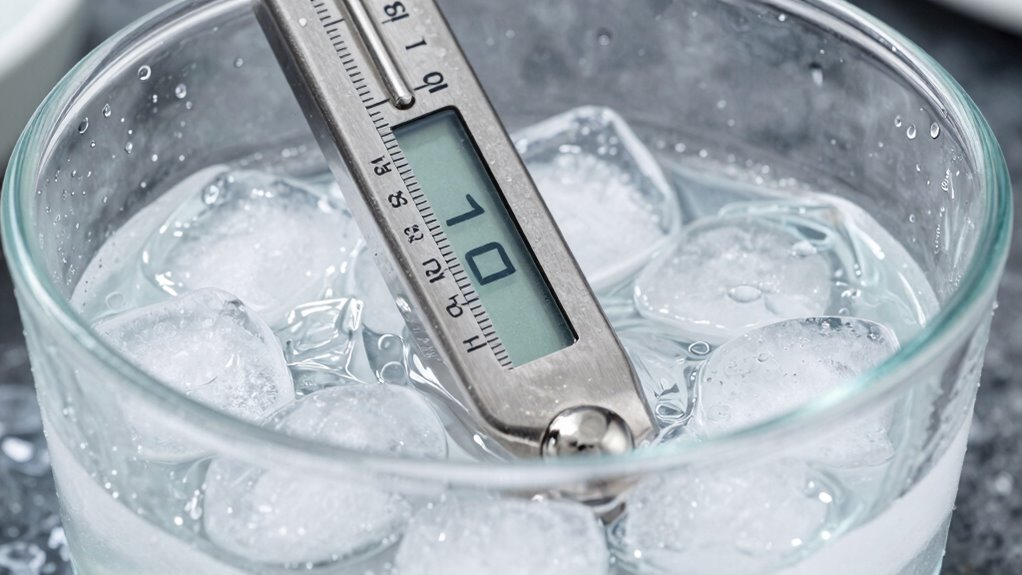
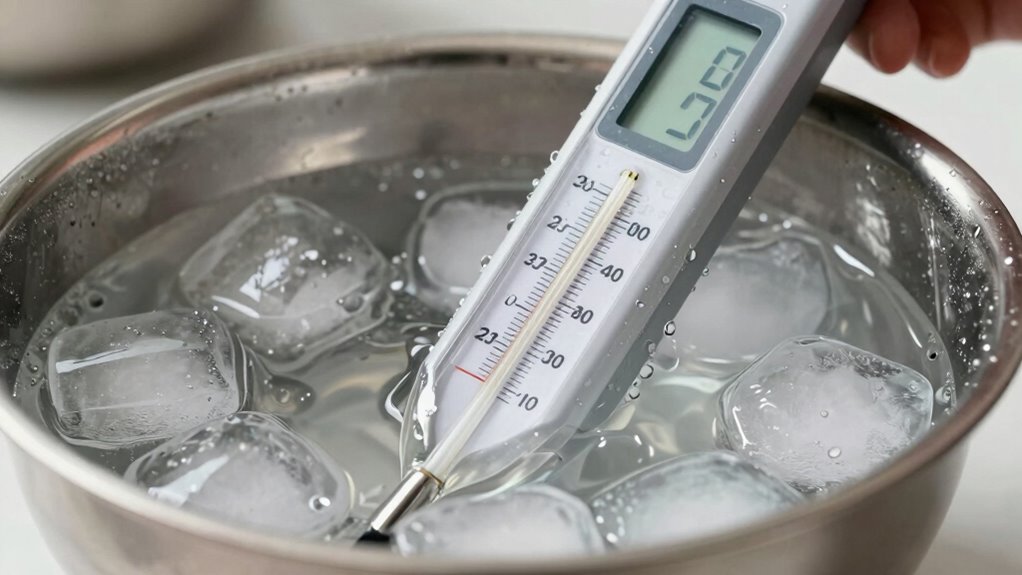
To calibrate your kitchen thermometer using the ice-water trick, fill a glass with crushed ice and cold water, then submerge the probe without touching sides or the bottom. Wait until the temperature stabilizes, and check if it reads 32°F (0°C). If not, adjust accordingly or note the discrepancy. Regular calibration guarantees accurate readings for perfect cooking. Keep exploring to learn more about maintaining your thermometer’s precision!
Key Takeaways
- The ice-water trick involves submerging the thermometer in a mixture of crushed ice and cold water for calibration.
- It provides a simple, cost-effective method to verify if the thermometer reads 32°F (0°C).
- Wait about a minute for the reading to stabilize, then check for accuracy.
- Repeat periodically or if temperature readings seem inconsistent to maintain precision.
- Use this method alongside other calibration checks, like boiling water, for comprehensive accuracy verification.
Why Calibrating Your Kitchen Thermometer Matters for Perfect Cooking
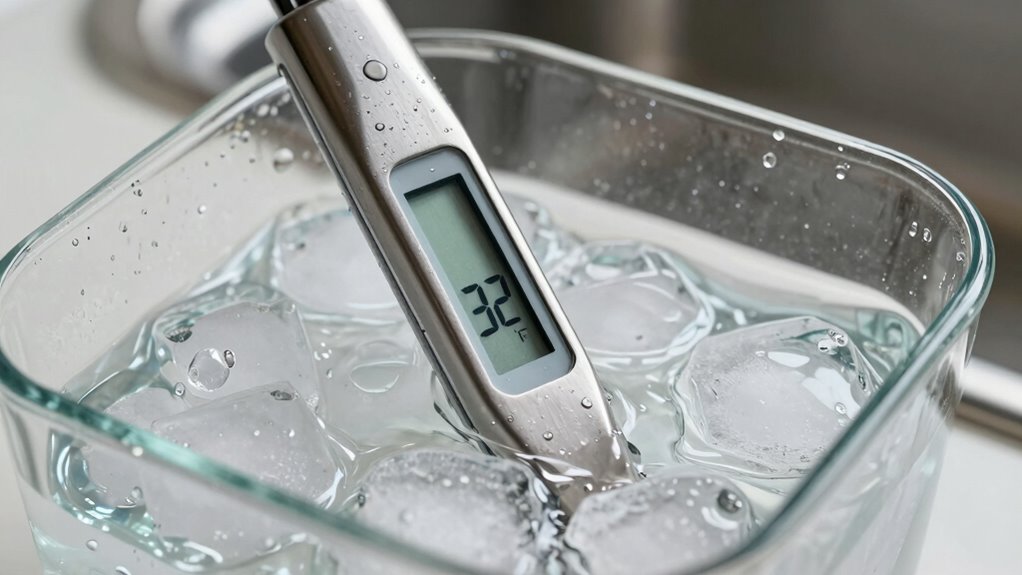
Calibrating your kitchen thermometer is essential because inaccurate readings can lead to undercooked or overcooked food, compromising both safety and quality. Historically, cooks relied on simple techniques like touch tests or boiling water checks to gauge thermometer accuracy. While these methods worked, they lacked precision and consistency. Today, modern alternatives offer more reliable calibration options, such as ice-water tests or specialized calibration devices. Using accurate measurements in your routine ensures that your cooking results are consistent and safe. Proper calibration also extends your equipment’s lifespan and maintains cooking standards. Incorporating home cooking techniques like calibration into your routine not only improves dish outcomes but also enhances your confidence in the kitchen. Regular calibration can help identify thermometer inaccuracies early, preventing potential cooking mishaps. Whether you prefer traditional methods or modern tools, regular calibration is a key step in becoming a confident, precise cook. It’s a small effort that guarantees better results every time, especially when understanding food safety practices and ensuring accurate measurements. Additionally, understanding how thermometer technology varies can help you select the best calibration method for your specific device.
How to Use Ice Water to Calibrate Your Thermometer
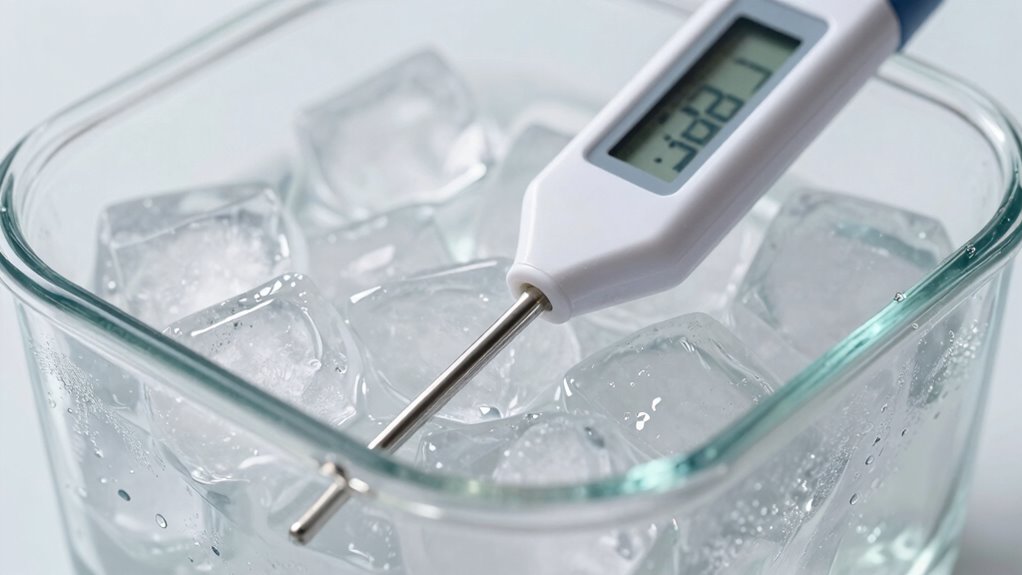
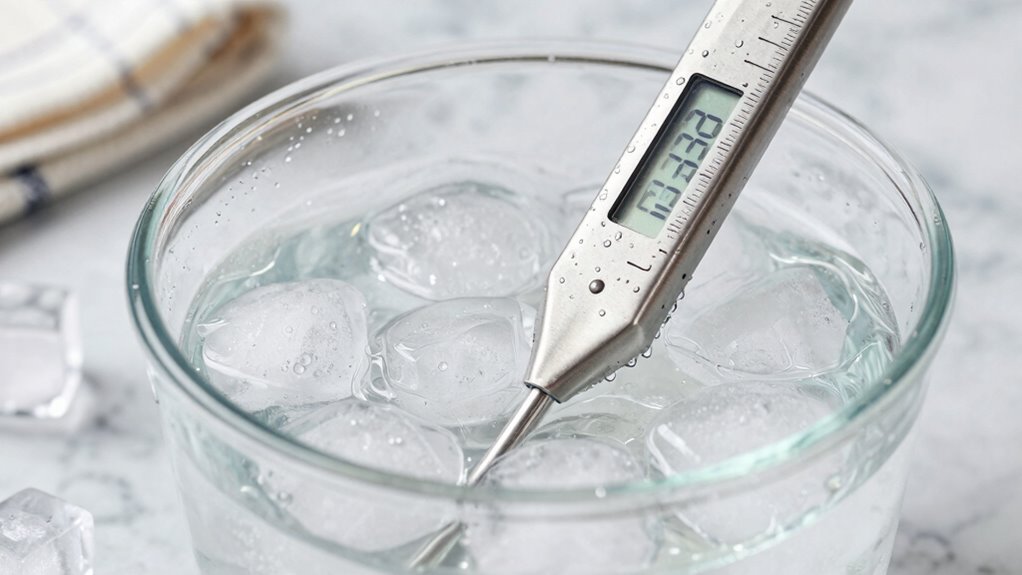
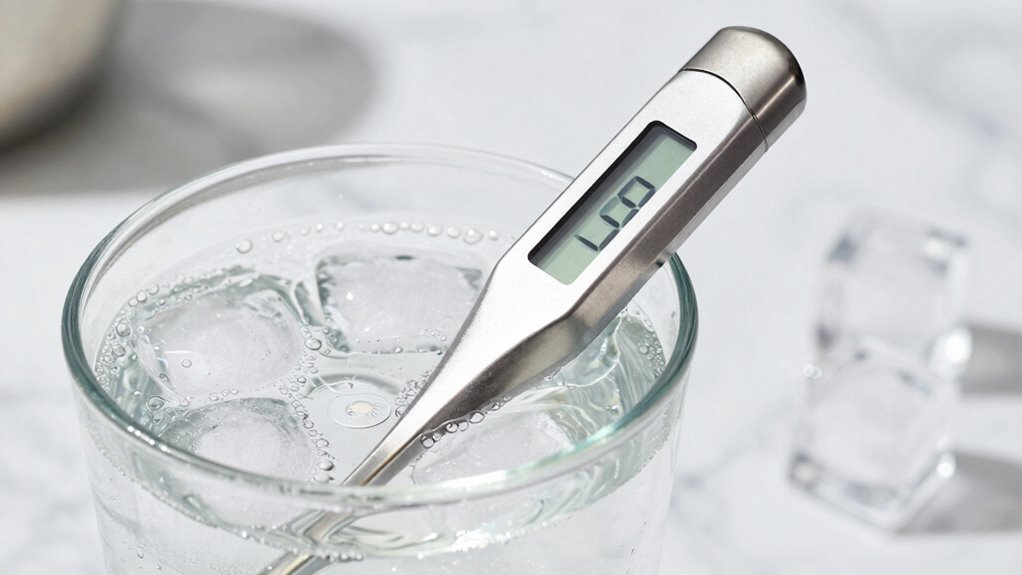
To accurately calibrate your kitchen thermometer using ice water, start by filling a glass with crushed ice and a small amount of cold water, creating a slushy mixture. Crushed ice and water help achieve a stable, uniform temp. Submerge the thermometer stem without touching the sides or bottom of the glass, and wait for it to stabilize. The thermometer should read 32°F (0°C) if it’s accurate. Regular calibration guarantees your thermometer stays reliable, especially if you notice inconsistent readings. Performing this calibration frequently ensures your measurements remain precise, which is especially important for food safety and proper cooking. Here’s a quick reference:
| Action | Purpose |
|---|---|
| Use crushed ice and water | Achieve a stable, uniform temp |
| Submerge thermometer | Ensure accurate reading |
| Wait for stabilization | Confirm thermometer accuracy |
| Repeat calibration often | Maintain proper calibration |
Perform this check periodically to maintain calibration frequency and ensure your cooking results stay perfect. Regular calibration is also an important part of maintaining the overall accuracy of your connected home fitness equipment, ensuring reliable results over time.
Step-By-Step: Calibrating Your Thermometer With Ice Water

Begin by gathering your materials: crushed ice, cold water, a clean glass, and your thermometer. To verify thermometer accuracy, fill the glass with crushed ice and add cold water, creating a slushy mixture. Submerge the thermometer’s probe into the ice water without touching the sides or bottom of the glass. Let it sit for about a minute until the reading stabilizes. If your thermometer reads 32°F (0°C), it’s properly calibrated; if not, note the discrepancy. Regular calibration is key to maintaining accurate readings, especially if you use your thermometer frequently. For best results, repeat this process every few months or whenever you suspect your thermometer’s accuracy may have drifted. Proper calibration frequency keeps your kitchen tools reliable and ensures your recipes turn out perfectly.
How to Check If Your Thermometer Is Accurate After Calibration

After you’ve calibrated your thermometer, it’s important to verify its accuracy to guarantee reliable readings. You can do this by testing it with known temperature points beyond the ice-water method. Check the sensor accuracy by comparing your thermometer’s readings against trusted calibration tools or standard reference temperatures. This ensures your device maintains precision over time. Additionally, proper ventilation in your kitchen can help prevent temperature fluctuations that might affect your thermometer’s readings. Consider these steps:
- Use a boiling water test to verify temperature accuracy at 212°F (100°C).
- Cross-check with a professional calibration tool for precise readings.
- Repeat the ice-water test periodically to confirm ongoing sensor accuracy.
- Be aware that water chemistry and ambient conditions can influence thermometer performance, so regular validation is essential.
- Understanding sensor drift helps in maintaining optimal accuracy over extended use.
- Regularly inspecting your thermometer’s sensor can help detect potential issues early and ensure consistent performance.
These checks help you identify if your thermometer needs recalibration or if the sensor accuracy has drifted. Regular validation ensures your kitchen thermometer remains a reliable cooking companion.
Troubleshooting Calibration Problems and When to Recalibrate
Even with careful calibration, your thermometer can still experience inaccuracies over time due to sensor drift, temperature shocks, or misuse. If you notice inconsistent readings despite calibration, it’s time to troubleshoot. Check for sensor drift, which can cause gradual inaccuracies, and consider how often you calibrate; frequent use may require more regular recalibration. When readings seem off, verify your thermometer with the ice-water trick again. If inaccuracies persist, recalibrate to restore accuracy. Also, inspect the sensor for damage or debris, as these can affect performance. Remember, calibration frequency depends on how often you use the thermometer and the conditions it’s exposed to. Regular checks and recalibration ensure your thermometer remains reliable for precise cooking and food safety.
Tips for Maintaining Your Thermometer’s Accuracy Over Time
To maintain your thermometer’s accuracy over time, it’s essential to handle and store it properly. Regularly check the digital display for consistency, and avoid exposing it to extreme temperatures or moisture that can affect readings. Keep an eye on the battery life; a dying battery can cause inaccurate results or display issues. Replace batteries promptly to ensure reliable performance. Proper storage, such as keeping it in a protective case or a designated drawer, prevents damage and keeps the probe clean. Also, clean your thermometer after each use to avoid buildup that could impact accuracy. Be aware of potential cryptid sightings or other folklore influences that might lead to misconceptions about measurement tools or environmental factors. Additionally, understanding thermometer calibration techniques, like the ice-water trick, can help you verify and maintain your device’s accuracy over time. Using proper measurement techniques ensures consistent and accurate cooking results, preventing undercooked or overcooked dishes. It’s also helpful to familiarize yourself with common errors in temperature measurement to troubleshoot any inconsistencies. By following these tips, you help your thermometer stay precise and dependable, ensuring your cooking results are consistently perfect.
How Proper Calibration Improves Your Cooking Results
When your thermometer is properly calibrated, it gives you accurate temperature readings every time. This precision helps you cook meats, baked goods, and other dishes consistently. As a result, your meals turn out just right, every single time. Proper calibration also helps you avoid overcooking or undercooking, ensuring safety and quality in your cooking. Using smart kitchen devices can further assist in maintaining precise temperature control and monitoring. Additionally, understanding aviation regulations related to temperature accuracy can enhance your knowledge of proper calibration techniques. Being aware of thermal behavior in different cooking environments can also improve your calibration practices and overall results.
Accurate Temperature Readings
Properly calibrated kitchen thermometers guarantee you get accurate temperature readings every time you cook. Knowing the right temperature ensures your food is safe and cooked perfectly. Different thermometer types, like digital, dial, or infrared, require regular calibration to maintain precision. How often you calibrate depends on usage and the manufacturer’s recommendations, but checking periodically is key. When your thermometer is properly calibrated, you can confidently monitor temperatures during grilling, roasting, or candy-making. This prevents undercooking or overcooking, saving time and ingredients. Keep in mind:
- Regular calibration maintains accuracy over time
- Different thermometer types may need unique calibration methods
- Frequent checks ensure consistent, reliable readings
Accurate readings directly impact your cooking results, making calibration an essential step.
Consistent Cooking Results
Accurate temperature readings directly influence the consistency of your cooking results. When your thermometer is properly calibrated, you can trust the digital display to show precise temperatures every time. This ensures your meats are cooked to the right doneness, baked goods turn out perfect, and liquids reach safe, exact temperatures. Proper calibration also helps you avoid overcooking or undercooking, saving time and reducing waste. Additionally, a well-maintained thermometer with good battery life prevents unexpected failures during critical moments. Knowing your thermometer’s battery is reliable means you can rely on its readings without interruption. Consistent results build confidence in your cooking and improve overall quality. Ultimately, calibration enhances both accuracy and dependability, making your kitchen experiences more successful and enjoyable.
Frequently Asked Questions
Can All Types of Kitchen Thermometers Be Calibrated Using Ice Water?
Not all kitchen thermometers can be calibrated using ice water. While the ice-water trick works well for most glass and digital thermometers to check accuracy, some IR thermometers or specialized models might require different calibration techniques. Always check your thermometer’s instructions to guarantee proper calibration. Using ice water is a simple, effective method for verifying and maintaining thermometer accuracy, but it’s not universal for every thermometer type.
How Often Should I Recalibrate My Kitchen Thermometer?
You should recalibrate your kitchen thermometer at least once a month to maintain accuracy. Regular calibration intervals depend on how often you use it and the types of foods you cook. Perform an accuracy check with the ice-water method regularly, especially before critical cooking tasks. If you notice inconsistent readings or after dropping it, recalibrate immediately to guarantee reliable temperature measurements and food safety.
What Are Common Signs That My Thermometer Needs Calibration?
You’ll notice your thermometer needs calibration if it shows inaccurate temperature readings, like too high or too low compared to expected standards. If your temperature accuracy seems off, it’s time to verify it using calibration methods such as the ice-water test. Regularly calibrating ensures precise results, especially for critical cooking tasks. Keep an eye on discrepancies and perform calibration methods like the ice-water trick to maintain reliable readings.
Is There a Difference Between Calibration and Thermometer Adjustment?
Yes, calibration and thermometer adjustment are different. Calibration methods involve checking your thermometer against a standard, like the ice-water trick, to guarantee accuracy. If it’s off, adjustment means fine-tuning or recalibrating it to restore its precision. You should regularly calibrate your thermometer to maintain its accuracy, especially if readings seem inconsistent. Proper calibration methods help you trust your thermometer’s readings, ensuring your food is cooked safely and correctly.
Can Incorrect Calibration Affect Food Safety?
Yes, incorrect calibration can impact food safety. If your thermometer isn’t accurate, you might not reach the proper temperature needed to kill harmful bacteria, increasing the risk of foodborne illness. Regularly calibrate your thermometer, especially with the ice-water trick, to guarantee temperature accuracy. This way, you can confidently cook foods to safe internal temperatures, reducing health risks and keeping your meals safe for everyone.
Conclusion
By regularly calibrating your kitchen thermometer using the ice-water trick, you guarantee precise readings every time. Imagine cooking chicken to the perfect temperature—no undercooked bites or dry leftovers. Consistent calibration means you trust your thermometer, leading to safer, tastier meals. Just like a professional chef relies on accurate tools, you’ll enjoy confident cooking and better results. Make calibration a habit, and watch your culinary skills and dishes improve with each meal.