
📊 Full opportunity report: The Role Of Daily Imaging In Maintaining Healthy Gums on IdeaNavigator AI — validation score, market gap, and execution plan.
TL;DR
Dental professionals are testing daily gum-line photo scoring as a new preventive tool. Patients take routine photos to track gum health, with potential to catch issues early. This approach aims to enhance at-home oral monitoring and reduce long-term dental problems.
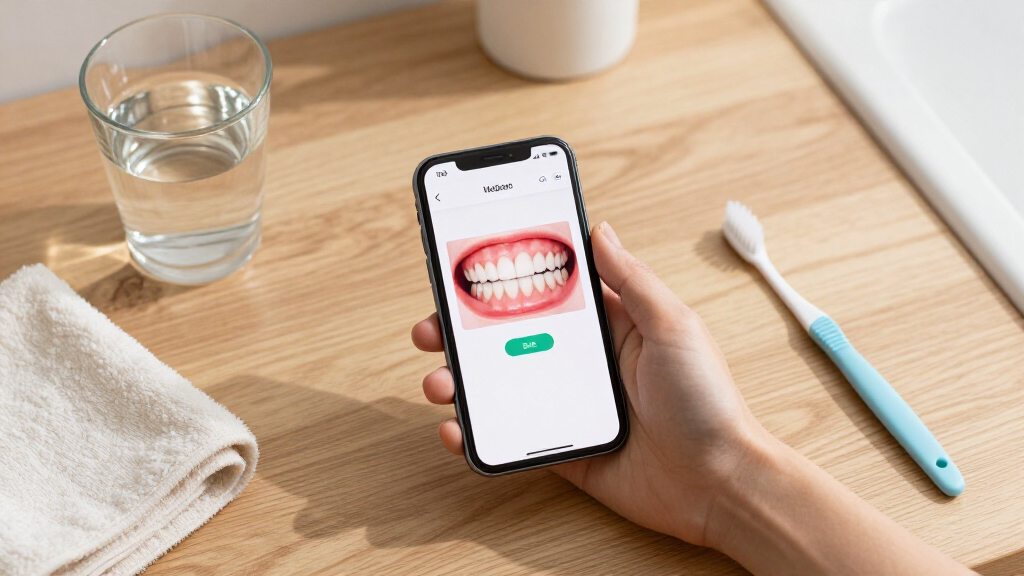
Dental hygienists are testing a new method involving daily phone photos of patients‘ gum lines to identify early signs of inflammation and plaque buildup. This approach aims to improve preventive dental care by enabling early intervention and reducing the progression of gum disease, which is a significant factor in overall oral health.
Recent developments suggest that daily gum-line photo scoring could become a practical tool for dental prevention programs. The method involves patients taking standardized photos of their gums using a smartphone, which are then analyzed to generate a trend score indicating gum health status. The scoring system compares images against general dental-health benchmarks and flags worsening redness or inflammation for further review during subsequent dental visits.
This initiative is currently in a pilot phase, where 20 patients of one hygienist are asked to photograph their gums daily for three weeks. The hygienist then reviews whether the flagged cases correspond to actual inflammation observed at the next checkup. The goal is to validate whether this at-home monitoring can reliably detect early signs of gum issues before they become severe.
According to an anonymous researcher involved in the project, „This approach could offer a simple, accessible way for patients to engage in their oral health daily, potentially reducing the incidence of advanced gum disease and improving overall preventive care.“ The system is designed to be integrated into existing recall and prevention programs, with a subscription model sold through dental practices as a preventive add-on.
Potential Impact on Preventive Dental Care
This new approach could significantly enhance early detection of gum inflammation, allowing for timely intervention and reducing the need for more invasive treatments later. It addresses a common gap in oral health management, where problems often go unnoticed between visits until they worsen. If validated, daily photo scoring could become a standard component of at-home oral health monitoring, increasing patient engagement and improving long-term outcomes.
Dental practices adopting this technology could see benefits in patient satisfaction, better health tracking, and potentially lower costs associated with advanced gum disease. However, the method’s accuracy and user compliance remain under evaluation, and further research is needed to confirm its effectiveness.
smart gum health monitoring camera
As an affiliate, we earn on qualifying purchases.
As an affiliate, we earn on qualifying purchases.
Background on Preventive Monitoring and Digital Innovations
Preventive dental care increasingly emphasizes patient engagement and early detection of oral health issues. Traditionally, gum health is assessed during routine visits, often missing early signs of inflammation. Recent advances in smartphone technology and image analysis have opened new avenues for at-home monitoring. Prior efforts have focused on general oral health tracking, but the concept of daily gum-line imaging is a novel development aimed at filling a specific gap in prevention.
This pilot builds on the trend of integrating digital tools into dental practices, with some practices already using apps for appointment reminders and oral hygiene tracking. The current focus is on validating whether daily photographic analysis can reliably detect early gum problems, potentially transforming preventive strategies.
„This approach could offer a simple, accessible way for patients to engage in their oral health daily, potentially reducing the incidence of advanced gum disease and improving overall preventive care.“
— an anonymous researcher
at-home gum inflammation detection kit
As an affiliate, we earn on qualifying purchases.
As an affiliate, we earn on qualifying purchases.
Validation and Reliability of Daily Gum Photo Scoring
It is not yet confirmed whether daily gum-line photos can consistently detect early inflammation with high accuracy. The pilot study’s results are still pending, and questions remain about user compliance, image quality, and the system’s ability to distinguish between normal variations and problematic signs. Further research is necessary to establish the method’s reliability before broader adoption.
dental health tracking app compatible device
As an affiliate, we earn on qualifying purchases.
As an affiliate, we earn on qualifying purchases.
Next Steps in Testing and Adoption of the Technique
The ongoing pilot involving 20 patients will conclude after three weeks, with results analyzed to determine the correlation between flagged images and actual inflammation. If successful, plans include expanding testing to larger patient groups and refining the scoring algorithm. Dental practices and technology developers will monitor these outcomes to decide on wider implementation and integration into preventive care protocols.
As an affiliate, we earn on qualifying purchases.
Key Questions
How does daily gum photo scoring work?
Patients take standardized photos of their gum line using a smartphone daily. These images are analyzed by a scoring system that detects signs of inflammation or plaque buildup, providing a trend score to help identify early problems.
What are the benefits of this approach?
It allows for early detection of gum issues, encourages patient engagement in daily oral health, and could reduce the need for more invasive treatments by catching problems sooner.
Is this method proven effective yet?
Not yet. The approach is currently in a pilot testing phase, and its accuracy and reliability are still being validated through ongoing research.
Will this replace traditional dental visits?
No, it is intended as a supplementary tool to enhance prevention and early detection, not a replacement for professional examinations.
How can I participate in such a program?
Currently, it is in the testing phase, limited to specific pilot studies. In the future, if validated, dental practices may offer it as an option for interested patients.
Source: IdeaNavigator AI