
AIThis post was created with the assistance of artificial intelligence (AI).

📊 Full opportunity report: The mandate. Why the US conversational- finance surface does not translate to Europe. on ThorstenMeyerAI.com — validation score, market gap, and execution plan.

TL;DR

The US launched its conversational-finance surface permissionlessly, while Europe’s strict regulation creates a different architecture based on licensing and consent. This difference impacts market entry, product design, and who can build these platforms.

OpenAI’s personal-finance surface launched in the US on May 15, 2026, without regulatory restrictions, allowing permissionless access to bank data. In contrast, Europe’s regulatory environment mandates licensing, consent, and compliance, preventing a direct translation of the US model and fundamentally changing how such platforms are built and operated. Learn more about the unbundling of personal finance apps.

In the US, the launch was permissionless: companies could connect accounts via APIs like Plaid without prior regulation or licensing, enabling rapid product deployment. Europe’s approach, governed by the PSD2, Payment Services Regulation, and the upcoming FIDA regulation, requires licensed third-party providers to operate under strict consent and API conformity rules. The European regime also incorporates the AI Act, classifying high-risk AI systems used in financial services, adding further layers of compliance and oversight.

This architectural difference means that in Europe, the same conversational-finance surface cannot be simply ported from the US. Instead, it requires a licensing framework, consent dashboards, and AI classification systems, making the process slower, more expensive, and concentrated among incumbent firms with licenses. The regulatory environment effectively acts as a moat, raising barriers to entry and favoring firms already licensed and supervised by authorities like BaFin in Germany.

The Mandate — Thorsten Meyer AI
MANDATE
● DISPATCH / MAY 2026
THORSTEN MEYER AI · AGENTIC COMMERCE · § 03
AGENTIC COMMERCE · 03
EUROPE / MANDATE
Essay · Regulatory-Architecture Reading · 2026-05-26

The mandate.
Why the US conversational-
finance surface does not
translate to Europe.

In the US, account access is a product you buy and consent is a button you tap. In Europe, both are mandates you are licensed and supervised to fulfill.
The US surface shipped permissionlessly — connect via Plaid, 12,000+ institutions, read-only, no license. That rollout does not translate. In Europe every layer is a mandate. The foundation: PSD2 → PSD3/PSR (provisional agreement Nov 27 2025) makes account access a licensed, API-quality-supervised activity under a directly-applicable rulebook. The expansion: FIDA extends mandated access to investments, pensions, insurance, mortgages under a new FISP license — operational ~2029-2030, with a contested data-access fee at its core. The overlay: the EU AI Act classifies credit-scoring AI as high-risk (full obligations Aug 2 2026), supervised not by a tech regulator but by financial supervisors like BaFin. The structural argument: the US surface is built on a permissionless private substrate, and Europe has no permissionless substrate — it has a mandate at every layer. In the US compliance is an afterthought. In Europe, compliance is the architecture, and the conversational experience is the thin layer on top.
3
Overlapping mandates — payments,
data, AI — vs zero in the US build
7%
Of global turnover · the EU AI Act
maximum penalty
2029-30
When FIDA — the full-picture data
mandate — is likely operational
0
Permissionless routes to a European’s
bank data · it is a licensed activity
THE MANDATE· US SHIPPED PERMISSIONLESSLY · PLAID· EUROPE HAS A MANDATE AT EVERY LAYER· PSD2 MADE ACCESS A LICENSED ACTIVITY· PSD3/PSR · PROVISIONAL AGREEMENT NOV 27 2025· PSR DIRECTLY APPLICABLE ACROSS 27 STATES· MANDATORY API QUALITY · NO SCREEN-SCRAPING· FIDA · NEW FISP LICENSE· OPEN FINANCE · INVESTMENTS PENSIONS INSURANCE· DATA-ACCESS FEE THE CONTESTED CORE· EU AI ACT · CREDIT SCORING HIGH-RISK· FULL OBLIGATIONS AUG 2 2026· SUPERVISED BY BAFIN, NOT A TECH REGULATOR· CONSENT IS A DASHBOARD, NOT A BUTTON· COMPLIANCE IS THE ARCHITECTURE· THE MANDATE FAVORS THE LICENSED INCUMBENT· IN EUROPE YOU LICENSE A FINANCE SURFACE· THE MANDATE· US SHIPPED PERMISSIONLESSLY · PLAID· EUROPE HAS A MANDATE AT EVERY LAYER· PSD2 MADE ACCESS A LICENSED ACTIVITY· PSD3/PSR · PROVISIONAL AGREEMENT NOV 27 2025· PSR DIRECTLY APPLICABLE ACROSS 27 STATES· MANDATORY API QUALITY · NO SCREEN-SCRAPING· FIDA · NEW FISP LICENSE· OPEN FINANCE · INVESTMENTS PENSIONS INSURANCE· DATA-ACCESS FEE THE CONTESTED CORE· EU AI ACT · CREDIT SCORING HIGH-RISK· FULL OBLIGATIONS AUG 2 2026· SUPERVISED BY BAFIN, NOT A TECH REGULATOR· CONSENT IS A DASHBOARD, NOT A BUTTON· COMPLIANCE IS THE ARCHITECTURE· THE MANDATE FAVORS THE LICENSED INCUMBENT· IN EUROPE YOU LICENSE A FINANCE SURFACE·
FIG. 01 — THE SUBSTRATE · PRIVATE PRODUCT VS PUBLIC MANDATE
The US built account access privately and permissionlessly · Europe built it as public mandate
One architectural difference at the foundation propagates through the entire stack
United States
A product you buy
  • Access built by private aggregators — Plaid, Yodlee, MX, Finicity
  • No banking license required to read bank data
  • Read-only design sidesteps money-transmission rules
  • No single federal open-banking statute · the surface ships as a product
European Union
A mandate you fulfill
  • Access is a licensed activity — AISP / PISP under PSD2
  • Regulator authorization required; no permissionless route
  • Explicit, revocable, SCA-governed consent regime
  • A directly-applicable rulebook (PSR) · the surface must be licensed
The US surface shipped because the account-access layer it needed was already built, privately and permissionlessly, by Plaid — and because a read-only design kept it clear of the activities that trigger heavy regulation. That is the precise feature Europe does not share. Reading a European’s bank data without the right license is not a product — it is an unauthorized activity. The very first layer of the US build, the permissionless connect, is in Europe a regulatory authorization.
FIG. 02 — THE THREE-MANDATE STACK · WHAT THE SURFACE MUST SATISFY IN EUROPE
Payments, data, and AI — three overlapping regimes, all enforced by financial regulators
The US surface faced none of these at launch; the European surface faces all three at once
PSD3 / PSRPayments mandate
Account access is a licensed activity (AISP/PISP). PSR directly applicable across 27 states. Mandatory API quality, screen-scraping eliminated, IBAN-name checks, expanded fraud liability.
FIDAData mandate
Extends mandated access to investments, pensions, insurance, mortgages, loans under a new FISP license. Standardized APIs + consent dashboards. A contested data-access fee may make aggregation cost money.
EU AI ActAI mandate
Credit scoring + creditworthiness = high-risk (Annex III). Conformity assessment, documentation, human oversight. Supervised by financial regulators (BaFin, CSSF). Fines up to 7% of global turnover.
A finance surface in Europe must be licensed for payment-data access (or partner with someone who is), prepare for a FISP license to aggregate the full financial picture, and classify itself under the AI Act — where the most commercially attractive features („what loan can I get?“) sit closest to the high-risk line. The AI that is „just a chatbot“ in the US is, in Europe, a regulated system whose classification depends on exactly how useful it tries to be.
FIG. 03 — THE STAGGERED TIMELINE · A MOVING REGULATORY TARGET
The mandate is not one event but a sequence — and the staggering is a filter
The firms that win architect for the end-state mandate, not the current one
Aug 2025
EU AI Act · GPAI obligations live · the frontier models that power a finance surface already carry systemic-risk obligations
Live
Nov 27 2025
PSD3/PSR provisional agreement · Parliament and Council reach political agreement; final texts expected in the Official Journal in 2026
Agreed
Aug 2 2026
EU AI Act · high-risk obligations land · credit-scoring / creditworthiness Annex III duties apply (subject to Digital Omnibus)
Operative
2027
PSD3/PSR core obligations · directly-applicable conduct rules land across the year after the transition
Landing
~2029-2030
FIDA operational · the full-picture data mandate and FISP license arrive, in staggered sector-by-sector „waves“
Forming
Building for PSD3 today while FIDA and the AI Act high-risk regime are still settling means building for a target that is still moving — which favors firms with the regulatory-intelligence capacity to track it and the patience to build for 2030 rather than ship for 2026. The staggered timeline is itself a filter: it selects for regulatory endurance over launch speed.
FIG. 04 — THE CONSENT ARCHITECTURE · WHAT REPLACES THE „CONNECT“ BUTTON
The single most optimized moment of the US product is the single most regulated moment of the European one
The European surface cannot inherit the US onboarding · it must build a different, regulated core
The US default — collect broadly, use later — is the European violation. The consent dashboard, the granular permission model, the revocation flows, the purpose-binding, the audit trail are not features bolted onto the conversational experience; they are the regulated core that the experience sits on top of. The European surface is, by regulation, higher-friction at exactly the moment the US surface optimized for frictionlessness.
FIG. 05 — WHO BUILDS THE EUROPEAN SURFACE · THE REDISTRIBUTION OF ADVANTAGE
The mandate does not just slow the US surface — it changes who wins
Advantage moves from permissionless speed to licensed position
Disadvantaged
The US winners
A frontier lab + permissionless aggregator. Their core competency — permissionless speed and reach — is exactly what the mandate removes. No AISP/FISP license, no BaFin relationship. Arrive needing a license stack they don’t have.
Advantaged
Licensed EU fintechs
Already authorized AISPs/PISPs, PSD3-compliant API fleets, consent-native. „The lab + a licensed European partner“ — and the partner holds more leverage than Plaid, because the license is scarcer than an API.
Advantaged
Incumbent banks
Already hold the data, licenses, consent relationships, supervisory standing. The incumbent disintermediated in the US thesis is, in Europe, structurally protected — the mandate that gates the challenger does not gate the bank.
In the US, the advantage went to whoever integrated the permissionless layer fastest and built the best surface on top. In Europe, it goes to whoever holds the licenses, the supervisory relationships, and the consent architecture. The mandate redistributes the advantage from the permissionless aggregator-and-lab toward the licensed incumbent-and-specialist — and Europe’s regulation is, among other things, an incumbent-protection architecture, whether or not that is its intent.
The architecture diverges at the foundation: the American surface treats account access as a product you buy and consent as a button you tap, while Europe treats both as mandates you are licensed and supervised to fulfill. In the US, you ship a finance surface. In Europe, you license one.
Thorsten Meyer · The Mandate · Agentic Commerce 03

Implications of Regulatory Architecture on European Market Entry

This regulatory divergence significantly impacts market dynamics. In Europe, the need for licenses and compliance shifts the competitive landscape, favoring established players and licensed specialists over permissionless aggregators common in the US. It also raises questions about consumer outcomes: whether this slower, more regulated approach leads to better data security and consumer protection, or merely hampers innovation and competition.

Amazon

European banking API compliance tools

As an affiliate, we earn on qualifying purchases.

As an affiliate, we earn on qualifying purchases.

European Financial Data Regulation Landscape

European open banking began with PSD2 in 2018, establishing a regulated environment for account access. Explore how open banking regulations shape financial data platforms. The upcoming PSD3/PSR and FIDA regulations will expand open finance to include investments, pensions, and loans, creating a licensing regime for data access providers. The AI Act, effective August 2026, further imposes high-risk classifications on AI systems used in finance, supervised by financial regulators like BaFin. These layered regulations contrast sharply with the US’s permissionless, private-sector-driven approach, shaping a fundamentally different architecture for financial data platforms.

„The American permissionless surface is built on a private, unregulated substrate, while Europe’s is a mandated, licensed architecture. This difference in design fundamentally alters who can build and how they operate.“

— Thorsten Meyer

API FRESHWATER MASTER TEST KIT 800-Test Freshwater Aquarium Water Master Test Kit, White, Single, Multi-colored

API FRESHWATER MASTER TEST KIT 800-Test Freshwater Aquarium Water Master Test Kit, White, Single, Multi-colored

  • Kit Includes: 800-test freshwater master test kit with solutions
  • Water Quality Monitoring: Prevents harmful water issues for fish
  • Vital Parameters: Measures pH, high pH, ammonia, nitrite, nitrate

As an affiliate, we earn on qualifying purchases.

As an affiliate, we earn on qualifying purchases.

Unresolved Questions on Market Impact and Innovation

It remains unclear whether Europe’s mandated, license-based approach will lead to better consumer protection and data security compared to the US permissionless model. Read about the impact of regulatory architecture on market innovation. Additionally, the long-term impact on innovation, market competition, and the emergence of new platforms is still uncertain, as regulatory implementation and industry adaptation continue to evolve.

Amazon

As an affiliate, we earn on qualifying purchases.

As an affiliate, we earn on qualifying purchases.

Future Developments in European Open Finance Regulation

European regulators are expected to finalize PSD3/PSR and FIDA regulations around 2027-2028, with operational compliance likely by 2029-2030. Simultaneously, the AI Act’s high-risk classifications will be enforced, shaping AI system development and deployment. Market entrants and incumbents will adapt to this layered, license-driven environment, and further analysis will be needed to assess its effects on innovation and consumer outcomes.

Amazon

AI high-risk classification software for finance

As an affiliate, we earn on qualifying purchases.

As an affiliate, we earn on qualifying purchases.

Key Questions

Why can’t the US permissionless finance surface be directly implemented in Europe?

Because Europe’s regulatory environment mandates licensing, consent, and compliance, requiring a different architecture that involves licensing providers, consent dashboards, and AI classification, unlike the US permissionless API access model.

How does the AI Act impact financial data platforms in Europe?

The AI Act classifies AI systems used in finance as high-risk, imposing strict obligations and supervision by financial regulators, which adds another layer of compliance and influences platform design.

Who is positioned to build the European version of the US finance surface?

Licensed financial institutions and specialized regulated firms are better positioned, as the architecture favors entities with licenses and regulatory oversight, unlike permissionless aggregators dominant in the US.

Will Europe’s slower, regulated approach improve consumer protection?

It is still uncertain; while the regulatory framework aims to enhance security and consent management, whether it results in better consumer outcomes compared to the US permissionless model remains to be seen.

Source: ThorstenMeyerAI.com
This content is for general information only and is not financial, tax or legal advice. Consult a qualified professional for decisions about your money.
You May Also Like

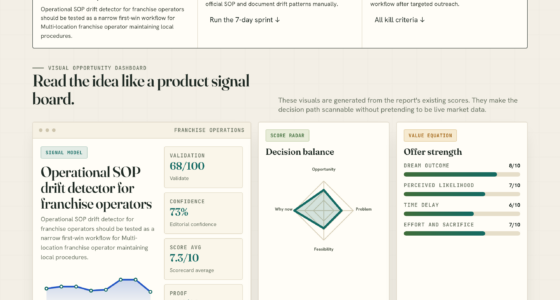
Operational SOP drift detector for franchise operators

A new SOP drift detection tool for multi-location franchise operators is being tested to identify procedural changes and maintain consistency across locations.

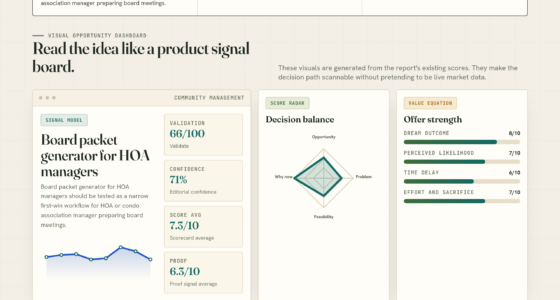
Board packet generator for HOA managers

A new board packet generator for HOA managers is being tested as a streamlined workflow to improve meeting preparation and transparency.

FSLR Deadline: FSLR Investors With Losses Have Opportunity To Lead First Solar, Inc. Securities Fraud Lawsuit

Investors who suffered losses in First Solar, Inc. now have the opportunity to lead a securities fraud lawsuit, with a deadline approaching for filing claims.

PLNT Investors Have Opportunity To Lead Planet Fitness, Inc. Securities Fraud Lawsuit

Investors in Planet Fitness, Inc. have the opportunity to lead a securities fraud lawsuit, according to PR Newswire. Details are still emerging.