
If you have sensitive teeth, you should avoid whitening products with high peroxide levels, abrasive agents like baking soda or silica, and alcohol which can worsen discomfort. Instead, choose gentler options formulated specifically for sensitive teeth, such as low-peroxide gels or natural remedies like baking soda or coconut oil. Using products labeled for sensitive teeth can help protect your enamel while whitening. Keep exploring to learn more about safe, effective whitening choices tailored for your needs.
Key Takeaways
- Avoid whitening products with high peroxide levels, which can worsen sensitivity and damage enamel.
- Choose gentle formulas labeled specifically for sensitive teeth, often free from harsh abrasives and strong chemicals.
- Steer clear of abrasive agents like silica, baking soda, and alumina that cause microabrasions and enamel erosion.
- Limit or avoid strong flavors, artificial additives, and alcohol in whitening products to prevent mouth and tissue irritation.
- Opt for professional, low-abrasion whitening treatments or natural remedies under dental supervision for safer results.
Why Do Sensitive Teeth Need Special Care When Whitening?
Sensitive teeth have a thinner enamel layer, which exposes the underlying dentin and nerve endings. This makes your teeth more vulnerable to pain and discomfort during whitening treatments. Because sensitive enamel is less resistant, harsh chemicals in many whitening products can irritate your nerves, increasing nerve sensitivity. When you use whitening agents not designed for sensitive teeth, you risk worsening your discomfort or damaging your enamel further. That’s why you need to approach whitening with care, choosing products formulated specifically for sensitive teeth. These gentle options help protect your enamel while still providing effective whitening results. By understanding why sensitive teeth require special attention, you can avoid unnecessary pain and maintain healthier, brighter teeth.
What Ingredients Should You Avoid in Whitening Products for Sensitive Teeth?
To protect your sensitive teeth, it’s important to avoid certain ingredients in whitening products that can cause irritation or damage. Harsh chemicals like peroxide concentrations that are too strong can increase sensitivity and weaken enamel. Avoid products with abrasive agents such as silica, baking soda, or alumina, which can wear down enamel over time. These ingredients can cause microabrasions and worsen sensitivity instead of improving it. Stay away from gels and pastes that contain alcohol or artificial flavors, as they can dry out your mouth and irritate sensitive tissues. Always check ingredient labels carefully, and opt for products specifically designed for sensitive teeth. Incorporating gentle whitening methods can help you achieve a brighter smile without exacerbating your sensitivity. Using enamel-safe formulations ensures you minimize damage while whitening. Additionally, choosing products with sensitive teeth-friendly ingredients can further reduce the risk of irritation. Being aware of product ingredient labels can help you make informed choices that prioritize your dental health. When selecting whitening options, consider mild active ingredients that are less likely to cause discomfort.
What Are the Best Gentle Whitening Options for Sensitive Teeth?
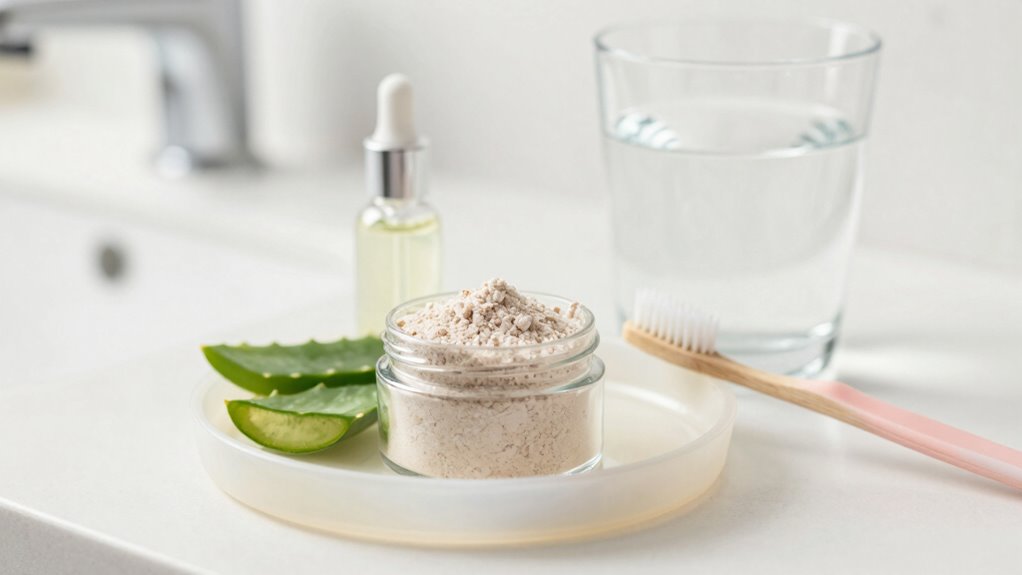
Finding gentle whitening options that won’t irritate your teeth can make a significant difference in achieving a brighter smile without discomfort. Natural remedies like baking soda or activated charcoal may offer mild whitening effects without harsh chemicals. However, it’s essential to approach these with caution and consult your dentist before use. Professional consultations are invaluable—they can recommend safe, effective treatments tailored to sensitive teeth, such as low-abrasion whitening gels or whitening strips designed specifically for sensitive mouths. These options typically contain gentler ingredients that minimize irritation while still providing noticeable results. Remember, the key is to prioritize your comfort and oral health, avoiding aggressive products that could worsen sensitivity. Additionally, understanding oral health considerations can help you choose the most suitable whitening approach. For example, being aware of enamel erosion can guide you in selecting products that won’t further damage your teeth. Maintaining good oral hygiene practices can also help support your whitening goals and overall dental health. Always discuss your whitening plans with a dental professional to ensure safe, personalized options.
How Can You Choose the Right Toothpaste and Treatments for Comfort?
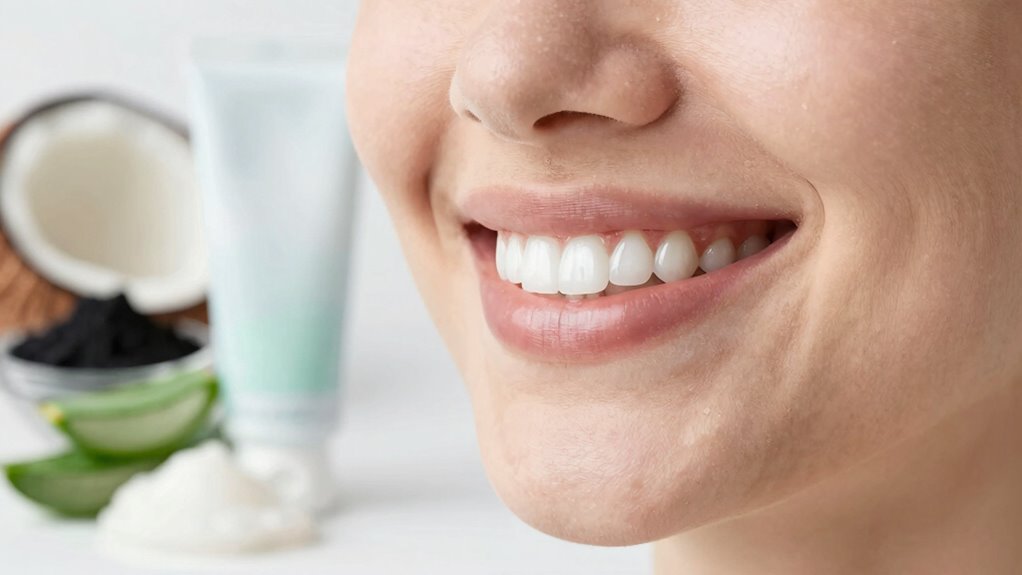
Choosing the right toothpaste and treatments is essential for maintaining comfort while whitening your teeth. Look for products labeled as gentle or formulated specifically for sensitive teeth. Avoid toothpastes with strong flavor additives, such as mint or citrus, which can irritate sensitive areas. Instead, opt for milder flavors or unflavored options. Additionally, check the ingredients for foaming agents, as some can cause discomfort or dryness. Toothpastes with mild or no foaming agents tend to be gentler on sensitive teeth. Always read labels carefully and choose products designed to reduce sensitivity. Using a soft-bristled toothbrush and avoiding abrasive whitening treatments also helps prevent irritation. By selecting appropriate products, you can enjoy whitening without sacrificing comfort. Incorporating natural ingredients like aloe vera or coconut oil may also soothe sensitive areas and promote oral health. Being aware of the science behind oral sensitivity can help you better understand how these ingredients work to protect your teeth. Understanding the role of enamel erosion in sensitivity can guide you in choosing treatments that preserve your tooth surface and avoid further damage. Additionally, understanding how acid exposure affects enamel can help you select products that minimize erosion and maintain tooth strength. Recognizing the importance of pH balance in oral care can further enhance your ability to choose gentle, effective whitening options.
What Tips Can Help Minimize Discomfort During and After Whitening?
Even with careful preparation, whitening procedures can cause temporary discomfort. To minimize this, try using ice packs on your cheeks for short periods; they help reduce sensitivity and numb the area. Applying desensitizing gels before and after whitening can also ease discomfort by blocking nerve signals. Avoid eating or drinking very hot, cold, or acidic foods immediately after treatment, as these can worsen sensitivity. Stay well-hydrated to support your enamel’s recovery. If discomfort persists, consider taking over-the-counter pain relievers or consult your dentist for tailored advice. Remember, gentle and consistent care can make the whitening process more comfortable, helping you achieve a brighter smile without unnecessary pain or sensitivity.
Frequently Asked Questions
Are There Natural Remedies for Whitening Sensitive Teeth?
Yes, you can try natural remedies for whitening sensitive teeth. Herbal remedies like oil pulling with coconut oil may help improve whiteness gently. Baking soda alternatives, such as mixing baking soda with water or using activated charcoal, can be effective but should be used cautiously. Always opt for mild, natural options to avoid irritation. Remember, consistency is key, and consulting your dentist before trying new remedies is recommended.
How Long Does It Take to See Results With Gentle Whitening?
You can see results with gentle whitening in about 1 to 2 weeks. Using products with hydrogen peroxide in low concentrations helps brighten your teeth gradually, but don’t overdo it to avoid sensitivity. Incorporate coconut oil pulling daily, which can improve overall oral health and gently whiten teeth over time. Consistency is key, and with patience, you’ll notice a brighter smile without discomfort.
Can Diet Affect Teeth Sensitivity During Whitening?
Diet definitely impacts your teeth sensitivity during whitening. Certain foods and drinks, like sugary sips or acidic eats, can act as sensitivity triggers, making your teeth more vulnerable. A diet dedicated to gentle, nutritious choices can help diminish discomfort and protect your enamel. By avoiding harsh, triggering treats and nourishing your teeth with soothing, supportive foods, you keep sensitivity at bay and promote a smoother, more comfortable whitening experience.
Are Professional Whitening Treatments Safer for Sensitive Teeth?
Yes, professional whitening treatments are generally safer for sensitive teeth because dentists customize the procedure to mitigate discomfort. They use advanced tools and lower concentrations of whitening agents, addressing safety concerns effectively. This personalized approach can also improve treatment effectiveness, ensuring you get noticeable results without risking damage or increased sensitivity. Always consult your dentist to ensure the treatment plan prioritizes your dental health and comfort.
What Are the Long-Term Effects of Frequent Whitening on Sensitive Teeth?
Frequent whitening can lead to long-term damage, including enamel erosion, which makes your teeth more sensitive over time. You might notice increased discomfort or sensitivity when eating hot, cold, or sweet foods. To protect your teeth, it is crucial to limit whitening sessions, use gentler products, and consult your dentist regularly. By doing so, you reduce the risk of enamel damage and maintain healthier, stronger teeth in the long run.
Conclusion
If you have sensitive teeth, it’s understandable to worry about discomfort. By choosing gentle whitening options and avoiding harsh ingredients, you can brighten your smile without pain. Remember, patience and proper care make a big difference—results may take longer, but they’ll be more comfortable and lasting. Don’t let fear hold you back; with the right products and tips, you can achieve a beautiful, healthy smile without sacrificing your comfort.