
CRIs and TLCIs are ratings that show how accurately continuous lights reproduce colors in your photos and videos. A higher score, usually above 90, means better color fidelity, making your images look natural and vibrant. Understanding these ratings helps you pick lights that match your project needs and avoid dull or unnatural results. Keep exploring to learn how to choose the best lighting options and get professional-quality results effortlessly.
Key Takeaways
- CRI and TLCI measure how accurately continuous lights reproduce colors, with higher scores indicating better color fidelity.
- CRI is used mainly for photography and general lighting, while TLCI focuses on video and broadcast quality.
- Scores above 90 are ideal for professional use, ensuring natural, vibrant, and true-to-life colors.
- High CRI/TLCI ratings don’t guarantee perfect results; consider spectral distribution and color temperature too.
- Choosing lights with high ratings enhances image quality, reduces editing time, and ensures consistent color accuracy.
As an affiliate, we earn on qualifying purchases.
What Are CRI and TLCI, and Why Do They Matter?

CRI (Color Rendering Index) and TLCI (Television Lighting Consistency Index) are two key metrics that help you understand how well a lighting source reproduces colors. They directly impact color accuracy, which is vital for photography, videography, and broadcasting. High CRI and TLCI scores mean the light reveals true colors, ensuring your images and videos look natural and vibrant. When shopping for continuous lights, paying attention to these indexes guarantees better lighting quality, reducing post-production corrections. Low scores can cause colors to look dull, washed out, or inaccurate. By understanding CRI and TLCI, you can select lights that enhance your work’s visual fidelity, making your footage appear professional and true to life. These metrics are essential tools for achieving consistent, high-quality illumination. Additionally, understanding Free Floating lighting concepts can help you optimize your setup for various environments and effects. Recognizing the significance of lighting metrics like CRI and TLCI can also guide you in choosing energy-efficient lights that do not compromise on color accuracy, aligning with sustainable practices. Being aware of lighting measurement standards allows you to compare different lighting options objectively and make better-informed decisions. Knowing these metrics allows you to make informed choices that improve overall lighting performance and visual quality in your projects.
As an affiliate, we earn on qualifying purchases.
How to Read and Understand CRI and TLCI Scores
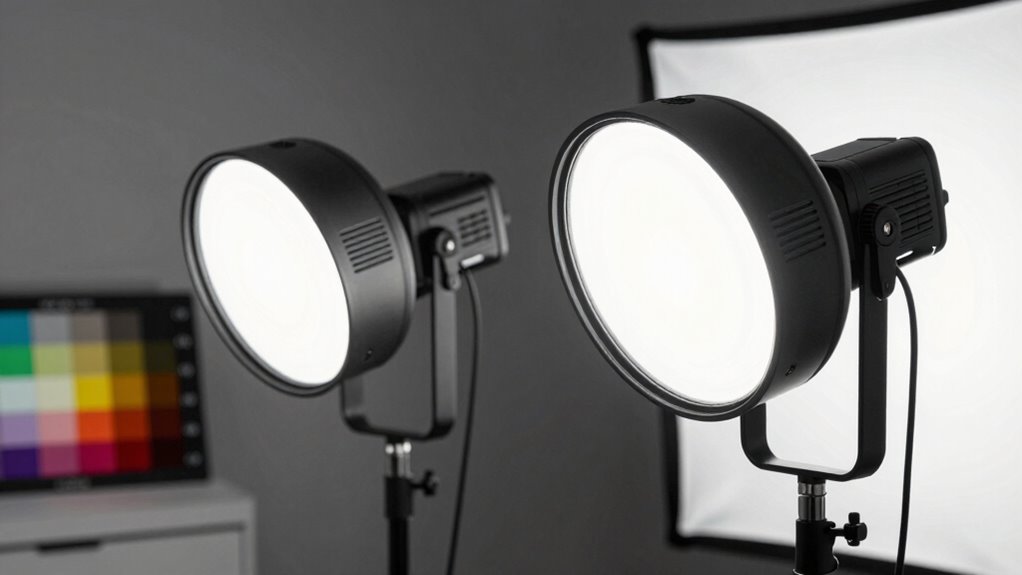
Understanding CRI and TLCI scores is essential for choosing the right lighting because they directly relate to color rendering and overall light quality. CRI measures how accurately a light source renders colors compared to natural light, with scores from 0 to 100—higher values mean better color accuracy. TLCI focuses on light’s performance in film and video, also scored from 0 to 100, emphasizing color reproduction on screens. When reading these scores, look for lights with high ratings—generally above 90—for the best color fidelity. Keep in mind that a high CRI or TLCI doesn’t guarantee perfect lighting in every situation, but it’s a strong indicator of how well the light will render colors and enhance overall light quality. Understanding these scores helps you make informed choices for your lighting needs. Additionally, being aware of credit card security measures can help protect your financial information when purchasing lighting equipment online. For critical applications, consider professional lighting assessments to ensure the chosen lights meet your specific requirements. Recognizing the importance of accurate color rendering can also guide you toward selecting lighting that enhances the ambiance and functionality of your spaces. Furthermore, understanding lighting specifications can aid in choosing fixtures that meet both your aesthetic and practical needs. Being familiar with color temperature can also help you select lighting that creates the desired mood and atmosphere in your environment.
professional photography lighting kit
As an affiliate, we earn on qualifying purchases.
As an affiliate, we earn on qualifying purchases.
How to Choose Lights Based on CRI and TLCI Ratings
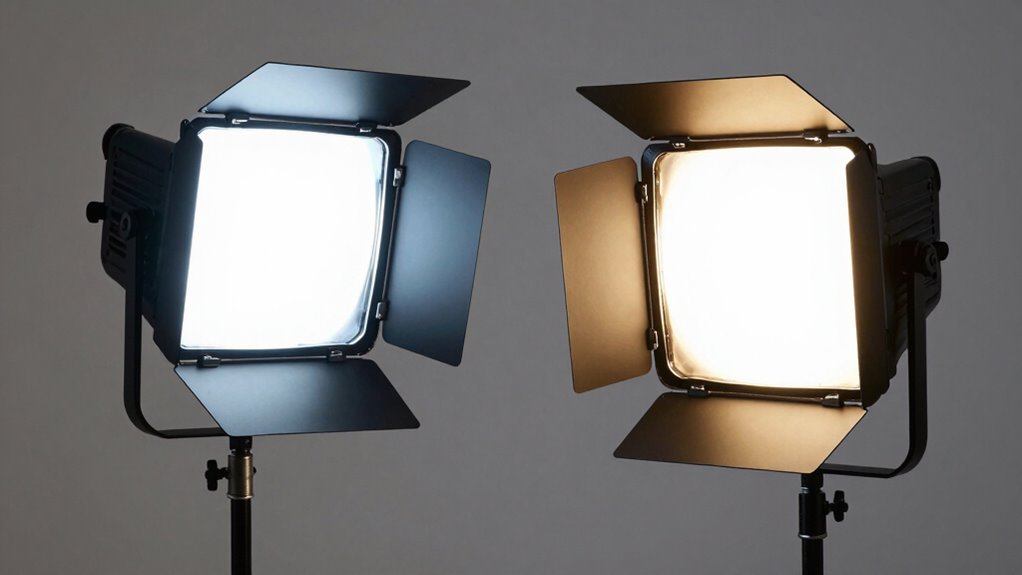
When selecting lights for your project, focusing on CRI and TLCI ratings guarantees you get the best color accuracy and performance. Look for lights with high ratings—ideally above 90—to ensure vibrant, true-to-life colors. Consider your specific needs: for professional work, prioritize higher ratings to maintain color fidelity. If budget considerations are tight, find a balance between cost and performance by choosing lights with solid but slightly lower ratings that still deliver good color accuracy. Remember, higher ratings usually mean better color rendering, but they can come at a premium. Assess your project’s requirements carefully to make an informed decision. Additionally, analyzing the measurement methods used for these ratings gives you insight into their reliability and relevance for your specific application. Being aware of standardized testing procedures ensures you select lighting that truly meets professional standards. Incorporating lighting quality standards into your decision-making process further guarantees optimal performance for your needs. To make the most informed choice, understanding how color rendering metrics are determined can help you better evaluate your lighting options.
As an affiliate, we earn on qualifying purchases.
Common Mistakes When Using CRI and TLCI to Evaluate Lights
Many people assume that high CRI and TLCI ratings alone guarantee perfect color accuracy, but that’s not always true. These scores focus on how well a light rendering colors in general, but they don’t account for factors like color temperature or spectral distribution. A light might have a high CRI or TLCI yet still produce a skewed or unnatural look because its spectral distribution favors certain wavelengths over others. If you ignore these details, you risk using lights that don’t accurately reproduce colors for your project’s specific needs. Additionally, relying solely on ratings can lead you to overlook how the light’s color temperature affects mood and consistency. Understanding spectral distribution helps ensure you select the right lighting for your application. Considering the spectral power distribution of a light source can provide deeper insight into its color rendering capabilities.
Practical Tips for Picking the Best Lights for Your Creative Projects
Choosing the right lights for your creative projects starts with knowing what factors matter most to your specific needs. Focus on color accuracy, ensuring your lights have high CRI or TLCI scores, so colors appear natural and true to life. Think about your budget considerations—there are quality options at various price points, so don’t assume top-tier prices are always necessary. Consider the type of projects you’ll do; for example, portrait work demands precise color rendering, while general lighting may allow some flexibility. Also, check if the lights are dimmable or portable, depending on your setup. Understanding the importance of color rendering can help guide your selection and ensure your creative vision is accurately represented. Paying attention to light quality can make a significant difference in achieving professional results, especially for fine details. Being aware of the artistic complexities involved in lighting choices can further refine your decision-making process. Additionally, considering the development of lighting technology can help you stay updated on innovative features and improvements that enhance your work. This approach helps you make smarter, more informed decisions.
Frequently Asked Questions
How Do CRI and TLCI Relate to Color Accuracy in Different Environments?
CRI and TLCI directly impact your color rendering and visual perception in different environments. Higher CRI and TLCI scores mean the light shows colors more accurately, helping you see true hues and details. In settings like photography or videography, choosing lights with good scores guarantees your subject’s colors look natural. Poor scores can distort colors, making your work less reliable. So, always verify these metrics for better color accuracy wherever you work.
Can High CRI or TLCI Scores Guarantee Perfect Lighting for All Projects?
Sure, high CRI or TLCI scores seem like a guarantee of perfect lighting, but don’t be fooled. They mainly guarantee color accuracy and consistency under specific conditions, not flawless results everywhere. You’ll still need proper lighting calibration and attention to detail. Remember, even the best scores can’t replace your eye for subtle color shifts or the importance of tailoring lighting to each project’s unique needs.
Are There Specific Industries That Prioritize CRI Over TLCI, or Vice Versa?
You’ll find that certain industries prioritize CRI over TLCI, especially those focused on color accuracy like photography and art, where industry standards emphasize true color rendering. Conversely, film and video production often prioritize TLCI for its relevance to camera sensors. When choosing lighting, always check product specifications to guarantee the lighting meets the specific industry standards, helping you achieve ideal results in your projects.
How Do Lighting Conditions Affect the Reliability of CRI and TLCI Measurements?
Lighting conditions like color temperature and spectral power substantially impact the reliability of CRI and TLCI measurements. When ambient light or reflections alter color perception, your readings can become less accurate. If the spectral power distribution shifts or the color temperature varies, both metrics might not reflect true color rendering. To guarantee consistent results, measure in controlled environments and consider how lighting conditions influence the spectral output and overall color accuracy.
What Are the Limitations of Using CRI and TLCI as Sole Indicators of Light Quality?
Think of CRI and TLCI as your lighthouse, guiding you through the fog of color accuracy, but they don’t reveal every hidden reef. Their spectral sensitivity is limited, focusing on specific wavelengths, which can mislead your color perception. Relying solely on these indicators risks missing subtle color shifts or nuances. To truly judge light quality, you need additional tools and your own eyes—CRI and TLCI are just part of the bigger picture.
Conclusion
Think of CRI and TLCI as your guiding stars in the night sky of lighting choices. They help you navigate the vast universe of options, ensuring your creative projects shine with true color and clarity. By understanding these ratings, you harness the power to illuminate your vision authentically. Remember, the right light isn’t just about brightness—it’s about capturing the essence, like a lighthouse guiding your artistry safely home. Choose wisely, and let your work glow with purpose.