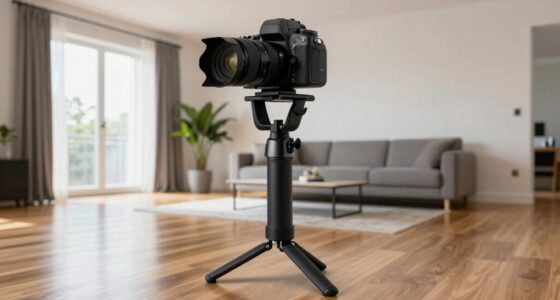
Camera dollies and sliders aim for smooth, professional shots but face different challenges and suit different scenes. Dollies provide sweeping, wider movements but need level tracks and can be bulky. Sliders offer precise, subtle motion but require regular maintenance to avoid wobbling or sticking. Knowing when to use each depends on your shoot’s needs, setup time, and environment. Keep exploring to discover how to troubleshoot issues and achieve the best results with both tools.
Listen free for 30 days with Audible
Thousands of audiobooks and originals — cancel anytime.
As an affiliate, we earn on qualifying purchases.
Key Takeaways
- Both tools aim to stabilize camera movement but differ in scope: dollies handle larger, sweeping shots; sliders focus on subtle, precise moves.
- Dollies require smooth, level tracks and are more prone to setup issues like wobbling; sliders face problems like sticking and uneven slides.
- Dollies are bulkier, less portable, and suited for complex, long-distance shots; sliders are lightweight, portable, ideal for quick, detailed adjustments.
- Mechanical problems for dollies often involve track calibration; sliders face issues like dirt, misalignment, and lubrication, affecting smoothness.
- Proper maintenance and setup are essential for both, but the specific challenges vary based on their size, movement range, and environmental conditions.
As an affiliate, we earn on qualifying purchases.
What Are Camera Dollies and Sliders, and How Do They Differ?
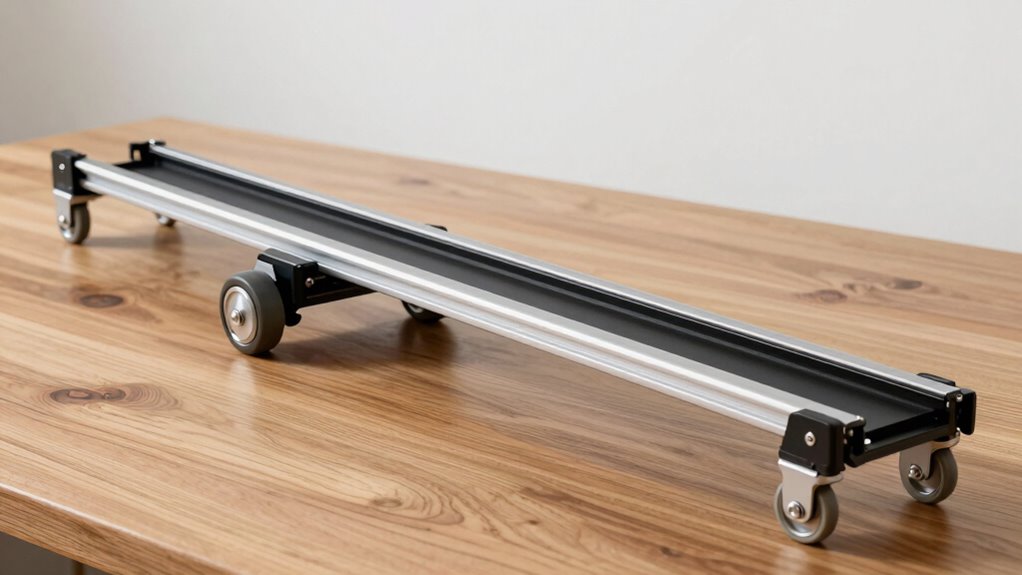
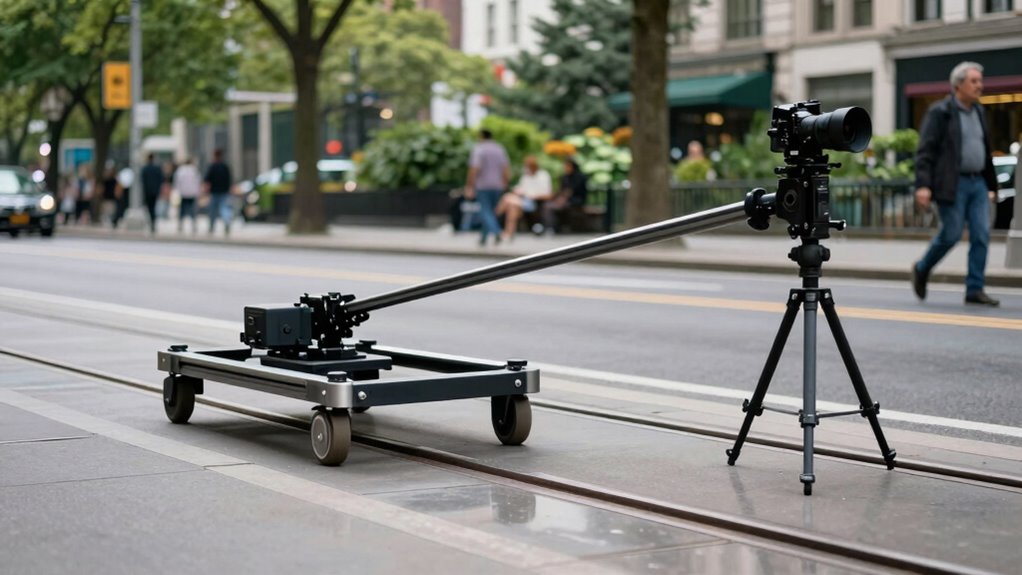
Camera dollies and sliders are both tools used to create smooth, dynamic camera movements, but they serve different purposes. A camera dolly typically moves along a track, providing stable footage and consistent shot framing, especially in larger scenes. It’s ideal for moving the camera smoothly across a set distance, maintaining camera stability during complex shots. Sliders are more compact, designed for close-up shots and subtle adjustments, allowing you to slide the camera smoothly along a horizontal or vertical axis. They help you achieve precise shot framing in tight spaces. While dollies excel at larger, sweeping movements, sliders are perfect for controlled, detailed movements. Understanding these differences helps you choose the right tool to enhance your shot’s stability and composition. Proper equipment selection is essential for achieving professional-looking results in filmmaking, especially when considering studio setup and shot planning.
As an affiliate, we earn on qualifying purchases.
How Do Dollies Achieve Smooth Motion, and What Challenges Come Up?
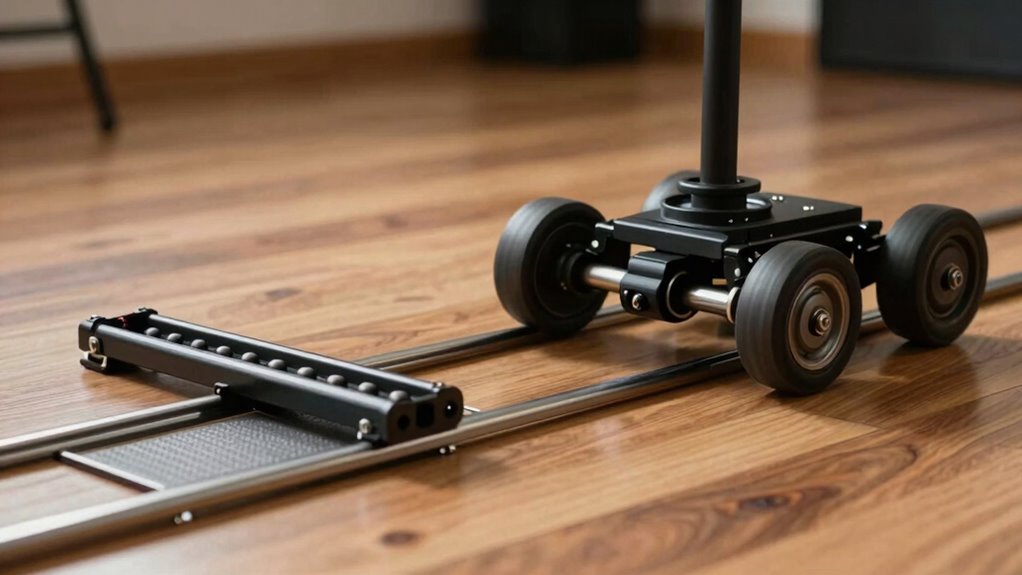
Dollies achieve smooth motion by rolling on wheels that are mounted on a track or flat surface, allowing for steady, controlled movement. To maintain camera stability, you need precise handling and a well-maintained track. However, challenges can arise, such as uneven surfaces affecting motion, gear incompatibility with different cameras, and limited movement range. Additionally, understanding the concept of Free Floating can help in designing more adaptable and versatile camera support systems that minimize external influences. Here are some key points:
- Ensuring the track is level and smooth is vital for stability.
- Compatibility issues may occur if the dolly’s mounting system doesn’t fit your camera gear.
- Proper calibration helps prevent jerky motion or wobbling.
- External factors like bumps or debris can compromise smoothness and require constant attention.
Addressing these challenges improves performance and delivers professional-quality shots.
As an affiliate, we earn on qualifying purchases.
What Makes Sliders Unique, and What Common Problems Do They Have?
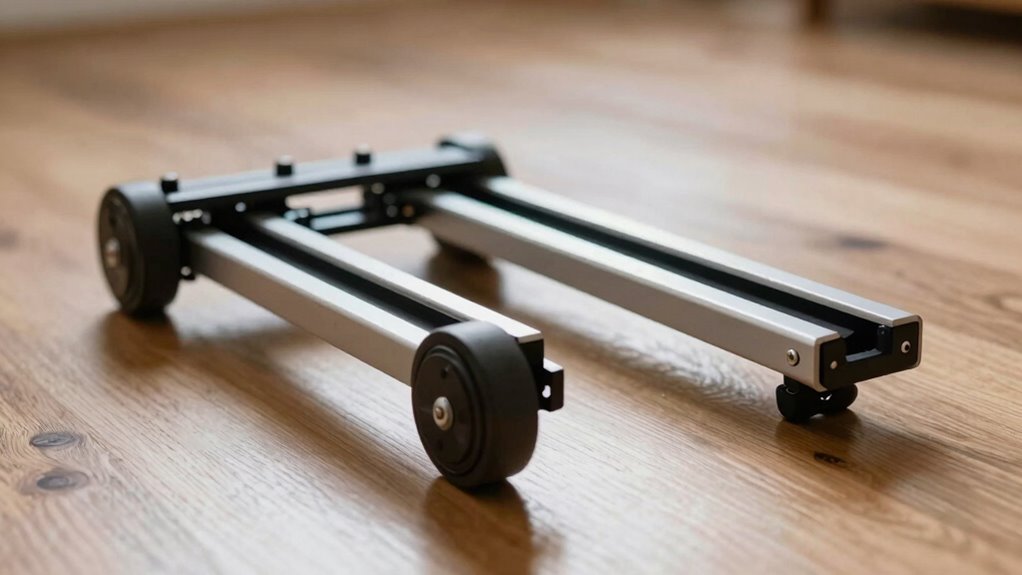
Sliders stand out because they offer precise, smooth horizontal movement that’s perfect for cinematic shots. However, they can face mechanical issues like wobbling or sticking, which affect performance. Understanding these unique features and problems helps you choose the right tool for your filming needs. Additionally, proper setup and maintenance can significantly reduce common problems such as connectivity quirks and mechanical malfunctions. Regular inspection and lubrication of moving parts can prevent wear and tear, ensuring consistent operation over time. Proper alignment is also crucial to maintain smooth movement and avoid uneven motion. Incorporating proper calibration techniques can further enhance performance and reliability during shoots.
Unique Movement Capabilities
What sets sliders apart is their ability to deliver smooth, precise horizontal movements that are often difficult to achieve with traditional dollies. This makes them ideal for creating dynamic camera movement and enhancing your equipment versatility. With sliders, you can:
- Achieve seamless tracking shots for cinematic effects.
- Execute subtle camera shifts for detail shots.
- Incorporate creative angles like low or high slides.
- Adapt easily to different setups, thanks to their compact size and portability.
These capabilities allow you to focus on your shot without worrying about jerky footage or complex setups. Sliders excel at providing smooth, controlled motion that enhances storytelling and visual appeal, setting them apart in camera movement and equipment versatility.
Common Mechanical Issues
While sliders are praised for their smooth and precise movements, they can also face mechanical issues that affect performance. One common problem is uneven or stuck movement caused by dirt, debris, or lack of lubrication, which can disrupt your lighting techniques and shot consistency. Misaligned rails or loose screws can lead to jittery footage, making it harder to achieve seamless shots. Additionally, sliders often lack built-in motor stability, so vibrations may interfere with audio considerations, especially in quiet environments. Over time, parts may wear down, requiring regular maintenance to keep everything functioning smoothly. Understanding these mechanical issues helps you troubleshoot effectively, ensuring your slider shots remain reliable and your lighting and audio setups stay unaffected by equipment hiccups.
As an affiliate, we earn on qualifying purchases.
Setup and Portability: Which Is Easier to Use?
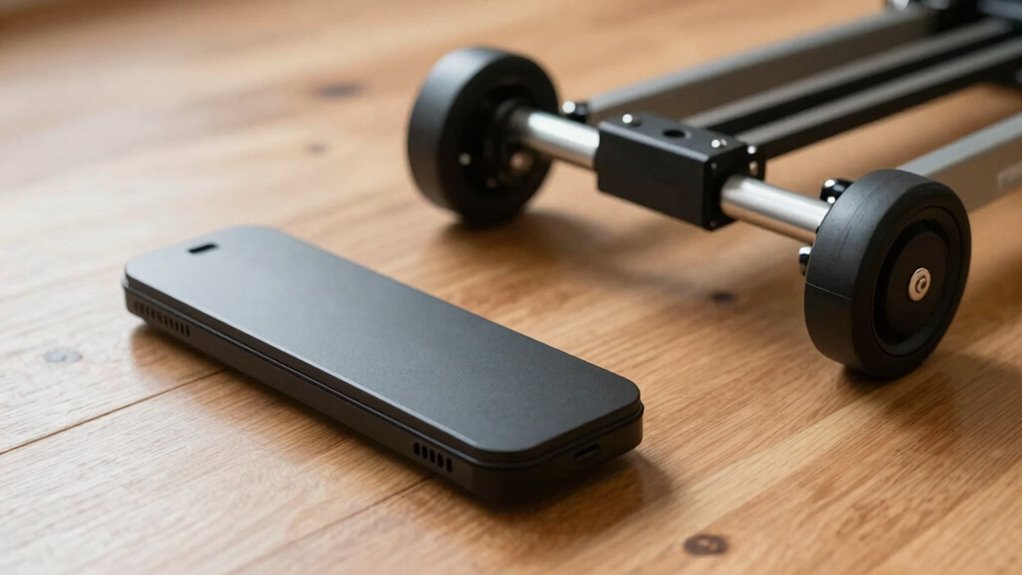
When it comes to setup and portability, your choice depends on how manageable each option is to carry and prepare. Camera dollies tend to be heavier and bulkier, making them more cumbersome to transport and set up quickly. Sliders, on the other hand, are generally lighter and easier to carry, but they might require more time to assemble properly. Additionally, ease of use can vary depending on the specific model and your experience level with camera equipment. Understanding equipment complexity can help you choose the best tool for your needs. Moreover, considering transportation logistics can ensure you select equipment that fits your workflow and travel requirements. Evaluating setup time can further assist in determining which option aligns better with your production schedule. Being aware of equipment maintenance can also influence your decision, as some setups require more upkeep than others.
Weight and Size Differences
Camera dollies tend to be bulkier and heavier than sliders, making them more challenging to transport and set up quickly. The weight comparison shows that dollies often require more effort to move, especially over uneven terrain. Size considerations also matter, as dollies typically take up more storage space and can be cumbersome to carry. Additionally, the size and weight impact the overall ease of use and setup time for each equipment type. Here are some key points:
- Dollies usually weigh more, complicating quick repositioning.
- Sliders are compact and lightweight, easing portability.
- The bulkiness of dollies demands more storage space.
- For quick setup, sliders are generally more convenient due to their smaller size.
Setup Complexity and Time
Setting up a camera dolly generally takes more time and effort compared to a slider, primarily because dollies are larger and more complex. Manual operation requires assembling tracks, attaching wheels, and leveling the platform, which can be time-consuming. Motorized options can speed up setup but still involve connecting power sources and calibrating the system, adding to the overall complexity. Sliders, on the other hand, are simpler to install—often just placing them on a stable surface and securing the camera. They’re lightweight and portable, making quick adjustments easier. While dollies may provide more versatility, their setup process demands more planning and effort. If speed and ease are priorities, sliders offer a straightforward solution, especially for fast-paced shoots or when portability is essential.
Transport and Storage Ease
Transporting and storing camera dollies can be more challenging due to their larger size and weight, making them less portable than sliders. You’ll need more space and effort to move them safely, which can impact camera stability during transport. Equipment durability is also key, as heavy dollies require sturdy cases to prevent damage. To simplify your process, consider these points:
- Use padded, wheeled cases designed for heavy gear.
- Break down the dolly into smaller parts for easier handling.
- Keep the wheels and tracks protected to maintain camera stability.
- Choose compact, lightweight dollies if portability is a priority.
- Proper storage methods can help extend the lifespan of your equipment and make transport more manageable. Additionally, selecting durable materials for your dollies can further enhance their longevity and ease of handling.
While sliders are easier to carry and store, dollies demand extra planning to ensure durability and stability during setup and transport.
Are Dollies or Sliders a Better Investment for Your Budget?

When deciding whether to invest in dollies or sliders, your budget plays a crucial role in guiding your choice. Dollies often cost more upfront but offer smoother camera ergonomics and versatile movement, ideal for complex lighting effects. Sliders are more affordable, portable, and perfect for tight spaces or subtle shots. Consider your filming style and needs:
| Budget | Recommended Option |
|---|---|
| Tight | Sliders for affordability and portability |
| Moderate | Mix of sliders and dollies for flexibility |
| High | Dollies for advanced lighting effects and smoothness |
If your priority is achieving dynamic lighting effects or ergonomic control, investing in a good dolly may be worth the extra. For simple, budget-friendly shots, sliders provide excellent value.
When Should You Use a Dolly Instead of a Slider (and Vice Versa)?
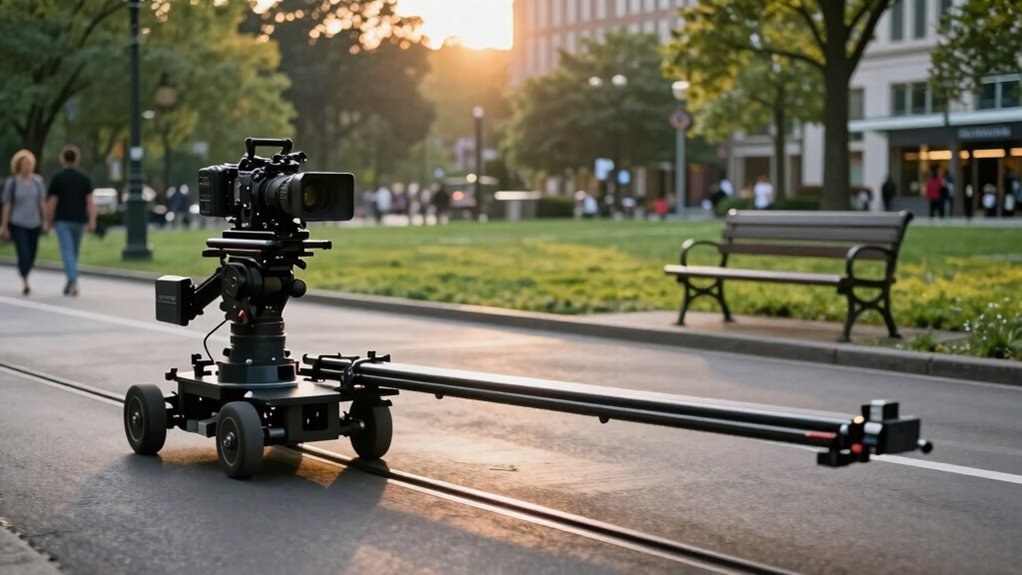
Choosing between a dolly and a slider depends on the specific shot you need to achieve. Consider these situations:
- Use a dolly when you need smooth, wide-range camera stabilization over longer distances, especially for tracking shots. Dollies excel at maintaining consistent focal length adjustments over extended moves, making them ideal for large-scale scenes.
- Opt for a slider when focusing on close-up shots or detailed focal length adjustments, providing precise control.
- Choose a dolly if you require movement on uneven surfaces or larger scale movements.
- Use a slider for tight spaces where you want controlled, subtle motion.
- Understanding the types of camera stabilization available helps in selecting the most appropriate tool for your scene. Additionally, considering the surface conditions of your shooting environment can influence your choice between a dolly and a slider to ensure smooth operation.
Dollies excel at maintaining consistent focal length adjustments over extended moves, while sliders shine in achieving precise, controlled shots. Select the tool that best matches your scene’s movement needs to produce professional results.
Troubleshooting Tips for Camera Dollies and Sliders
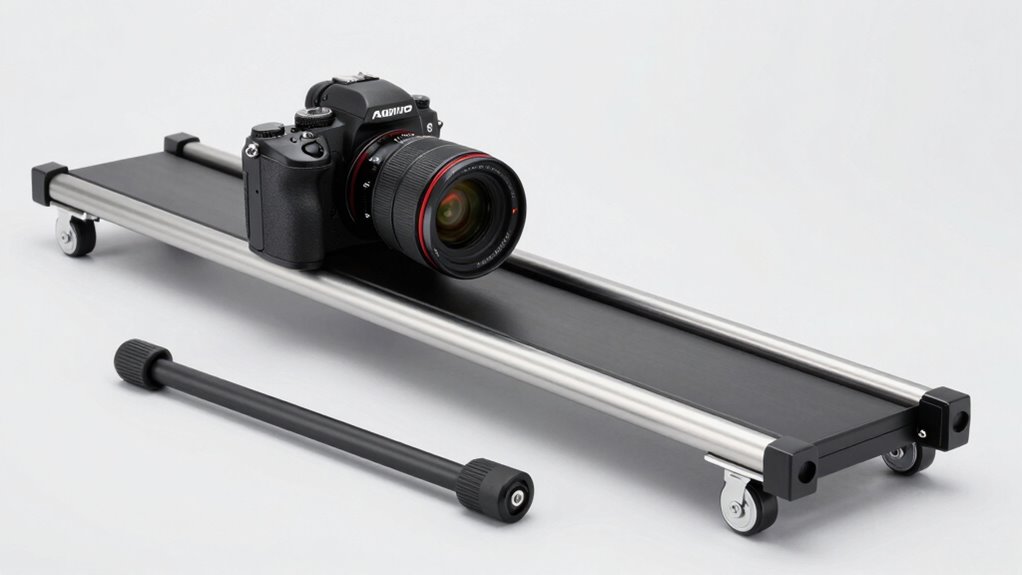
Even with proper setup, camera dollies and sliders can encounter issues that disrupt your shot. To troubleshoot, check the track or rail for obstructions or debris that could affect camera stabilization. Ensure the wheels or rollers are clean and move smoothly. If your shot isn’t smooth, verify the weight distribution; uneven loads can cause jitter. Adjust the tripod or support to improve stability and maintain proper shot composition. Tighten all connections and moving parts to prevent wobbling. For sliders, confirm that the mount is secure and level. If movement feels stiff, lubricate the track or rails. Regular maintenance keeps your equipment functioning correctly, helping you achieve steady, professional shots without sacrificing shot composition. Additionally, understanding filtration and proper equipment care can extend the lifespan of your gear and ensure consistent performance. Incorporating creative storytelling principles can also enhance how your footage communicates your message, making troubleshooting even more worthwhile.
Top Tips for Smooth and Professional Camera Movements
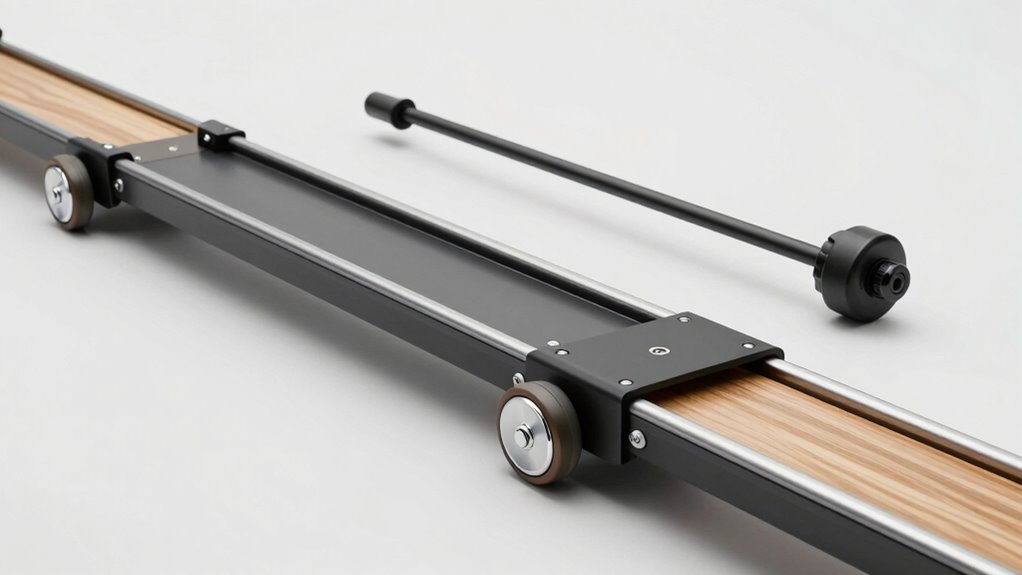
Achieving smooth and professional camera movements requires careful planning and precise execution. Focus on maintaining camera stability to prevent shaky footage and ensure your shot looks polished. Proper shot composition guides your movement, making transitions seamless and visually appealing. To improve your technique, consider these tips:
- Use stabilization gear like tripods or gimbals to keep the camera steady.
- Plan your shot and movement path beforehand to avoid unnecessary adjustments.
- Move slowly and steadily, avoiding sudden jerks or quick pans.
- Practice your timing to match the movement with the scene’s mood and pacing.
- Understanding the importance of camera stabilization can significantly reduce unwanted motion and enhance overall video quality, and exploring industry trends can help you stay updated with the latest tools and techniques. Additionally, familiarizing yourself with video stabilization technologies can further elevate your footage quality, especially as advancements in gimbal design continue to improve ease of use and effectiveness. Keeping up with latest innovations in stabilization equipment can give you a competitive edge in producing smooth, professional shots.
Frequently Asked Questions
Can Camera Dollies and Sliders Be Used Together Effectively?
Yes, camera dollies and sliders can be used together effectively, but you might face compatibility challenges. To guarantee smooth operation, you’ll need to use synchronization techniques like precise timing and compatible mounting gear. This setup allows you to combine their strengths for dynamic shots, but be prepared to adjust your equipment and plan carefully to avoid issues like misalignment or inconsistent movement. Proper planning makes their joint use seamless and impactful.
What Are the Maintenance Requirements for Dollies and Sliders?
You need to regularly maintain your dollies and sliders to guarantee smooth operation. Apply dolly lubrication to moving parts to prevent squeaks and rust, and check for any debris or dirt. For sliders, perform regular adjustment to keep them level and smooth, tightening or loosening components as needed. Keeping these components clean and well-maintained will extend their lifespan and ensure your footage remains steady and professional.
How Do Weight Limits Affect Dolly and Slider Performance?
Weight limits considerably influence your dolly and slider performance. If you surpass the weight capacity, it can cause uneven load distribution, leading to instability or damage. Always verify your equipment’s load matches its specified capacity to maintain smooth movement and prevent mechanical issues. Proper weight distribution helps your camera glide seamlessly, avoiding jerky shots or strain on the mechanisms. Staying within limits guarantees ideal performance and longevity of your gear.
Are There Specific Accessories to Enhance Dolly or Slider Functionality?
You can enhance your dolly or slider’s functionality with accessories like stabilizers, mounting plates, and extension arms, improving camera stabilization and versatility. Make certain these accessories are compatible with your equipment to avoid issues. Using compatible accessories ensures smooth movements and reliable performance, helping you achieve professional-looking shots. Always check compatibility details before purchasing to maximize your gear’s potential and avoid unnecessary frustrations during filming.
What Are the Typical Costs Associated With High-End Dollies and Sliders?
High-end camera dollies and sliders can cost between $1,000 to $10,000, depending on features and build quality. This cost comparison highlights the significant equipment investment required for professional results. For serious filmmakers, these prices reflect durability and smooth operation, but they also mean budgeting carefully. You should weigh the benefits of enhanced stability and precision against your project needs and budget constraints to make the best choice.
Conclusion
Choosing between a dolly and a slider isn’t just about cost or setup—it’s about mastering the art of motion. Each tool has its quirks, and knowing when to switch can elevate your shots from good to unforgettable. But the real question remains: which one will push your creativity further? The answer might surprise you. Stay tuned, because the next shot you take could depend on the secret you uncover right now.
NFL season / tailgating Picks
team gear
As an affiliate, we earn on qualifying purchases.