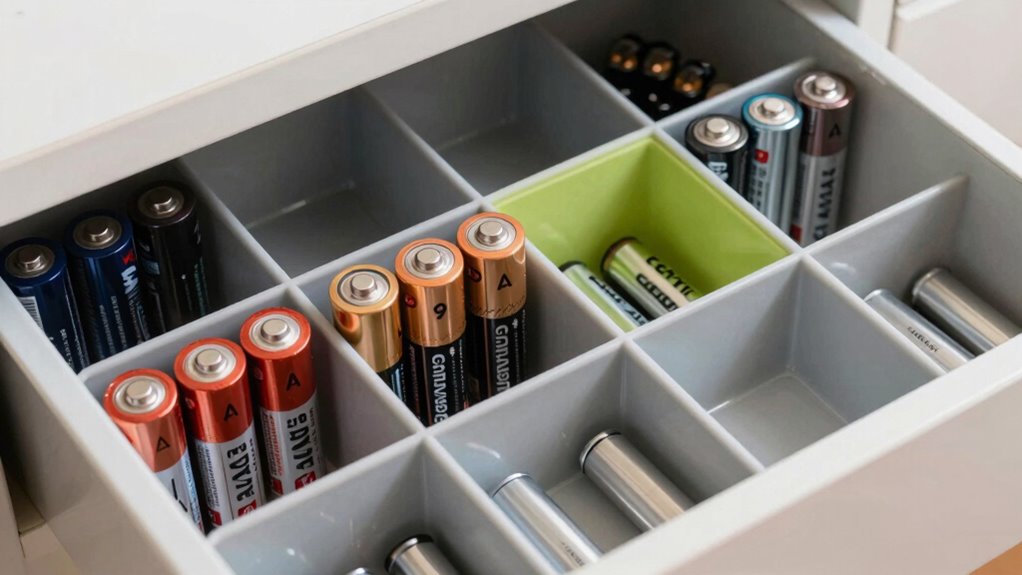

To store batteries so they last longer and stay safer, keep them in a cool, dry place away from heat, sunlight, and moisture. Use non-metallic containers and periodically check for leaks, swelling, or corrosion. Discharge them partially before storage, clean terminals, and separate different types. Regularly inspect your batteries to catch issues early. If you follow these steps, you’ll prolong their life and reduce hazards—more tips to guarantee safe storage are just ahead.
Key Takeaways
- Store batteries in a cool, dry place away from heat sources and direct sunlight to prevent deterioration.
- Maintain moderate humidity levels (40-60%) to avoid corrosion and internal damage.
- Keep batteries partially charged (around 40-60%) for long-term storage, especially for NiMH and lithium types.
- Use non-metallic, leak-proof containers and ensure terminals are clean and protected from contact.
- Regularly inspect stored batteries for swelling, leaks, or damage, and dispose of or replace them safely when needed.

Ontel Battery Daddy Storage & Organizer Case w/Tester, Stores & Protects Up to 180 Batteries, Double-Sided, Clear Locking Lid, Secure Latches & Portable Carrying Handle – Red (Batteries Not Included)
Double-Sided Battery Organizer: The Ontel Battery Daddy is a compact & portable way to organize, store and protect…
As an affiliate, we earn on qualifying purchases.
As an affiliate, we earn on qualifying purchases.
Why Proper Battery Storage Is Key for Longevity and Safety
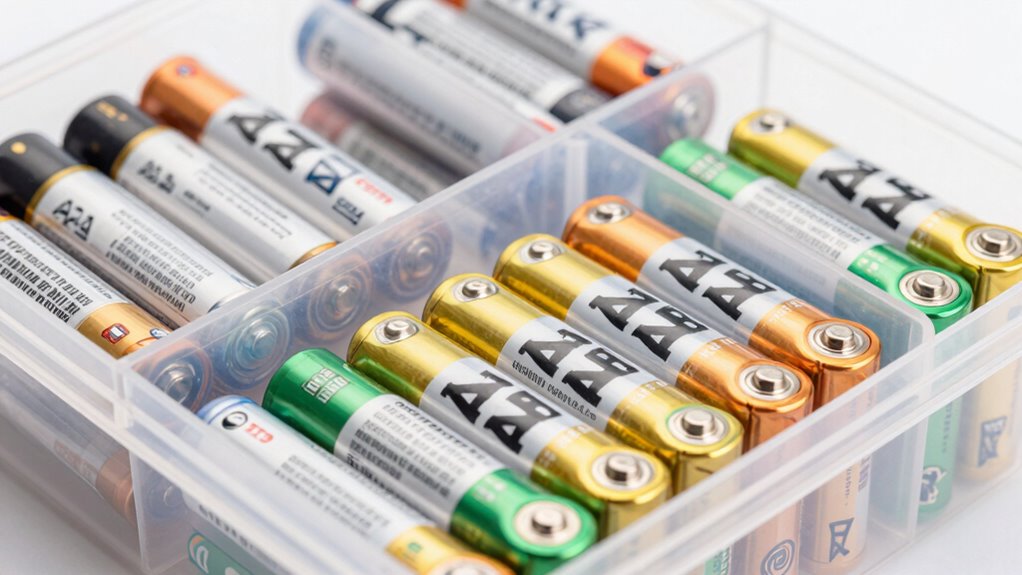
Proper battery storage is essential because it directly impacts both the lifespan of the batteries and your safety. When you store batteries correctly, you reduce the risk of leaks, fires, or other hazards. Proper storage also supports responsible practices like battery recycling and proper battery disposal, preventing environmental harm. Keeping batteries in a cool, dry place and avoiding contact with metal objects minimizes the chance of short circuits and deterioration. If batteries are damaged or no longer usable, safe disposal or recycling ensures harmful chemicals don’t end up in landfills. Additionally, understanding battery chemistry can help you choose the best storage methods for different types of batteries. By following proper storage practices, you extend battery life and contribute to a safer environment, making sure hazardous materials are handled responsibly. Proper storage is a simple step with significant safety and sustainability benefits, especially when considering thermal behavior and how temperature fluctuations can affect battery performance. Being aware of temperature sensitivity helps prevent premature battery failure and enhances overall safety during storage. Proper insulation and shielding from extreme temperatures can further safeguard batteries from damage caused by thermal stress.

Attwood 9069-1 Standard Non-Vented Battery Box with Mounting Strap, Fits Group 24 Batteries, Black
FITS GROUP 24 BATTERIES: Securely holds standard marine and RV batteries up to 10.125 inches tall; interior measures…
As an affiliate, we earn on qualifying purchases.
As an affiliate, we earn on qualifying purchases.
How to Choose the Best Storage Environment for Your Batteries
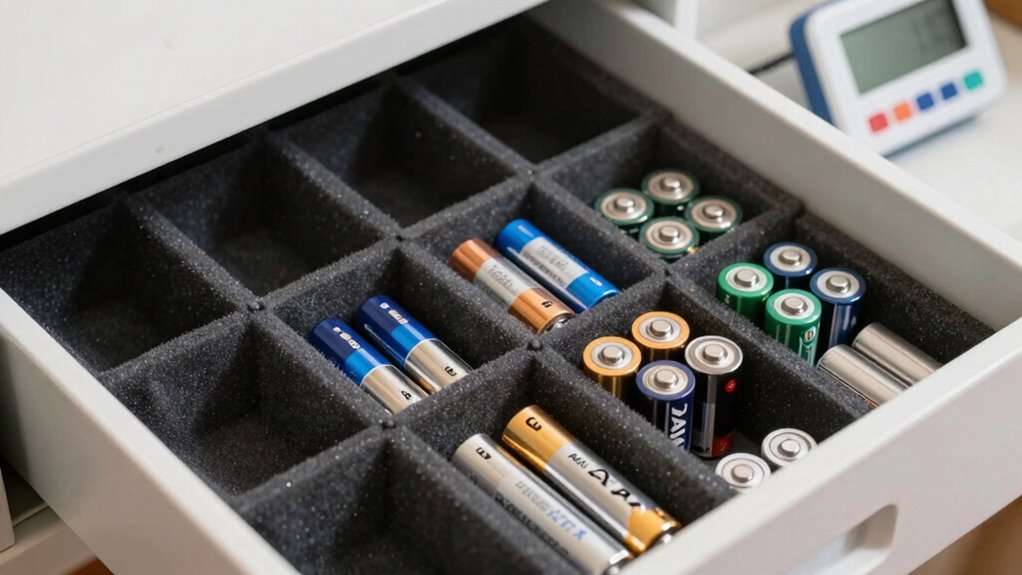
Choosing the right environment for storing your batteries is vital to maintaining their safety and performance. Temperature control is essential; keep batteries in a cool, consistent spot away from heat sources or direct sunlight. Excessive heat accelerates chemical reactions, leading to capacity loss and potential safety hazards. Humidity regulation is equally important; high humidity can cause corrosion and damage the internal components. Store batteries in a dry area with stable humidity levels, ideally between 40% and 60%. Avoid storing them in damp basements or hot garages. Proper temperature and humidity control help prevent degradation, leaks, and safety issues. Proper storage conditions also involve monitoring for ventilation, which plays a role in preventing the buildup of potentially hazardous gases and maintaining a safe storage space. Adequate ventilation ensures that any gases released do not accumulate to dangerous levels, further enhancing safety. Maintaining consistent environmental factors can also help prevent the formation of condensation that might damage battery components. Ensuring proper storage practices can significantly extend the lifespan of your batteries and reduce the risk of accidents.

12PCS Battery Terminal Anti Corrosion Washers Protector Fiber and 2PCS Cleaning Brush, Automotive Accessories Universal for Car, Marine, Boat, RV (Red/Green)
【WHAT YOU GET】: Included in the package are 2 battery terminal cleaning brushes and 10 battery terminal corrosion-resistant…
As an affiliate, we earn on qualifying purchases.
As an affiliate, we earn on qualifying purchases.
Preparing Batteries for Storage: Cleaning, Discharging, and Safety Tips
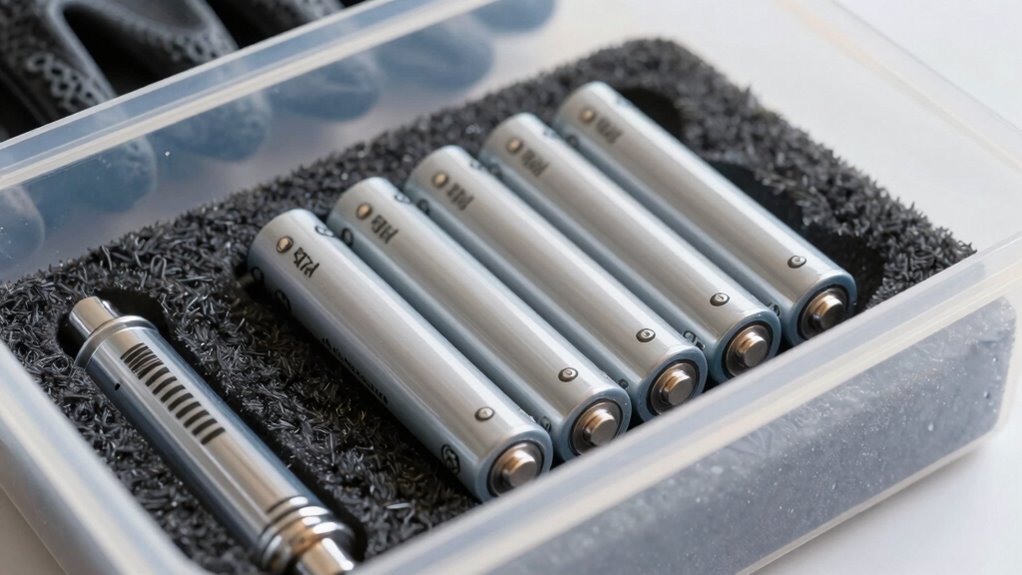
Before storing your batteries, making certain to prepare them properly guarantees safety and longevity. Start by inspecting the battery chemistry to determine if cleaning is necessary; some types, like lithium-ion, require careful handling. If cleaning is needed, wipe the terminals with a dry, lint-free cloth to remove corrosion. For safety, discharging batteries partially can reduce the risk of leakage or rupture, especially for rechargeable types. Always use appropriate storage containers that are non-conductive and leak-proof to prevent damage or accidents. Ensure the containers are clean and dry before placing the batteries inside. Additionally, proper storage conditions such as a cool, dry place away from direct sunlight help maintain battery performance over time. Using temperature management techniques can further extend battery life during storage. Implementing preventive measures like inspecting batteries regularly helps identify potential issues early. Proper preparation minimizes safety hazards and helps maintain battery performance over time. Taking these steps ensures your batteries stay safe and functional during storage.
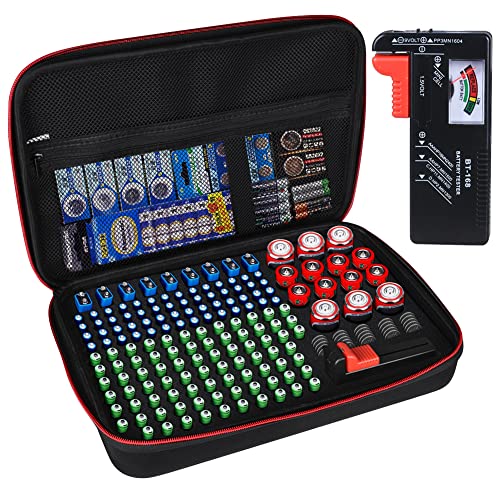
Battery Organizer Storage Box with Tester, Battery Vault Case Fireproof Waterproof Explosionproof Holder Box with Tester BT-168 Checker Carrying Case Container Bag Fit for 200+ Batteries AA AAA C D 9V
Fireproof Explosion Proof Waterproof: Fireproof Battery Organizer Case is made of upgraded non-itchy silicone coated fiberglass that can…
As an affiliate, we earn on qualifying purchases.
As an affiliate, we earn on qualifying purchases.
How to Store Different Types of Batteries Safely (Alkaline, Lithium, NiMH, Lithium-Ion)
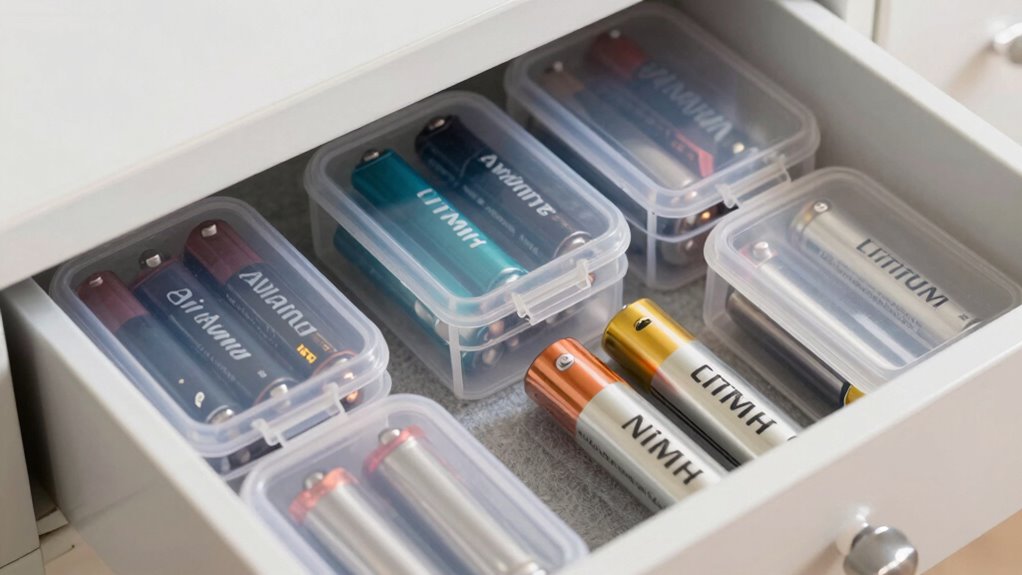
Different types of batteries require specific storage methods to guarantee safety and maximize lifespan. Alkaline batteries should be stored in a cool, dry place in a non-metallic container to prevent leakage. Lithium and lithium-ion batteries need to be kept at moderate temperatures and stored away from metal objects to avoid short circuits. NiMH batteries should be stored partially charged in a cool environment to maintain their capacity. Proper storage container options include plastic bins or battery cases that prevent contact with other metals. When batteries reach the end of their life, consider battery recycling options to reduce environmental impact. Always label stored batteries clearly and keep them out of reach of children to ensure safety. Following these guidelines helps prolong battery life and encourages responsible disposal. Additionally, understanding battery safety is essential for preventing accidents and ensuring longevity. Knowing how to handle batteries properly can significantly reduce the risk of leaks or fires.
Monitoring and Maintaining Stored Batteries to Prevent Hazards
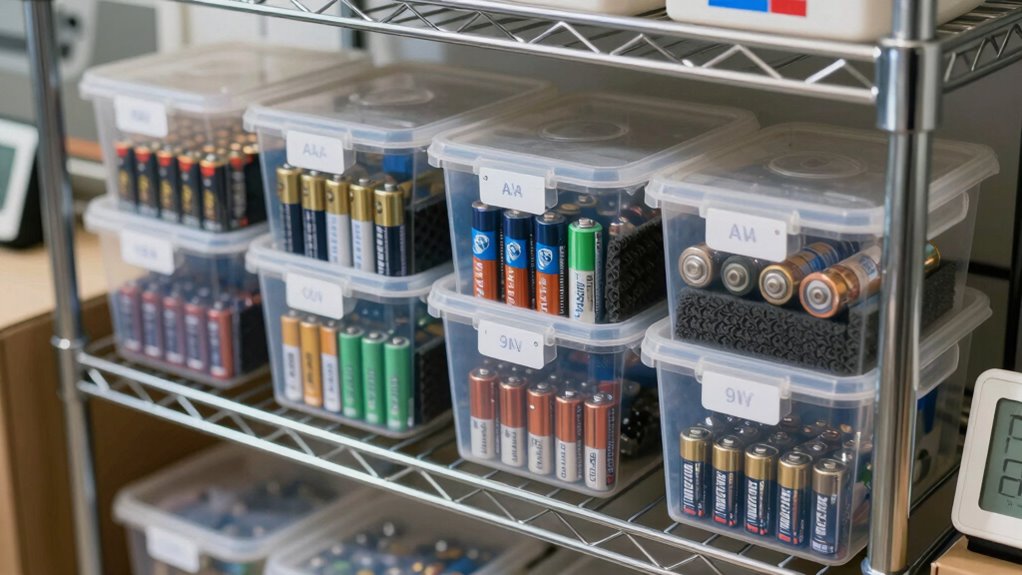
To prevent hazards, regularly monitor your stored batteries for signs of damage, leakage, or swelling. Check for corrosion, which can accelerate battery aging and cause safety issues. Keep an eye on battery terminals and casing for rust or residue. If you notice any corrosion or damage, safely dispose of the battery. To help you visualize, here’s a quick overview:
| Condition | What to Do |
|---|---|
| Swelling or bulging | Remove immediately and dispose safely |
| Leaking liquid | Handle with gloves; dispose properly |
| Corrosion on terminals | Clean with a mixture of baking soda and water |
| Damage or cracks | Replace the battery |
| Battery aging signs | Rotate or replace to maintain safety |
Regular maintenance ensures safety and prolongs battery life. Being aware of battery safety guidelines is essential for preventing accidents, especially when storing batteries in various environments. Incorporating proper storage practices can further reduce risks and extend battery longevity.
Frequently Asked Questions
How Long Can Batteries Be Stored Before They Degrade?
You can typically store batteries for about 6 months to a year before they start to degrade, but this varies depending on storage conditions. To maximize battery lifespan, keep them in a cool, dry place away from direct sunlight and extreme temperatures. Proper storage prevents leakage and maintains their charge. Regularly check and rotate stored batteries, especially if you plan to use them after extended periods, ensuring safety and ideal performance.
Can Stored Batteries Be Reused After Long Periods?
Think of stored batteries as seeds in a garden—they can be reused after long periods if you care for them. While their shelf life varies, many batteries remain functional when properly stored. You can consider battery recycling options if they’re no longer viable. Always test batteries before reuse; if they hold a charge, reuse is possible. Proper storage extends their lifespan, ensuring you get the most out of each one.
What Are the Signs of a Battery That’s Unsafe to Use?
If your battery leaks or shows corrosion signs, it’s unsafe to use. You might notice a strange smell, discoloration, or a build-up of white or greenish residue around the terminals. Don’t ignore these signs, as they can cause damage or hazards. Handle the battery carefully, wear gloves, and dispose of it properly. Using compromised batteries can lead to leaks, fires, or device damage, so always prioritize safety.
Is It Safe to Store Batteries in a Refrigerator?
Storing batteries in a refrigerator is like putting a delicate plant in a cozy, controlled greenhouse. It’s generally safe if you keep them in their original packaging and avoid extreme cold. Refrigerator storage helps slow down chemical reactions, reducing degradation caused by temperature effects. Just make certain batteries are sealed tightly, and let them warm to room temperature before use to prevent condensation, which could cause corrosion or safety issues.
How Often Should I Check on Stored Batteries?
You should check on your stored batteries every 3 to 6 months to prevent battery corrosion and guarantee they’re functioning properly. Regular inspections help you spot any leaks, swelling, or corrosion caused by improper storage temperature. If you notice any issues, replace or recharge the batteries promptly. Keeping an eye on their condition ensures safety and prolongs their lifespan, especially when stored in ideal temperature conditions.
Conclusion
Properly storing your batteries can extend their lifespan by up to 50% and reduce safety risks. Did you know that over 3,000 battery-related fires occur each year? By choosing the right environment, preparing your batteries correctly, and regular monitoring, you can keep your batteries safe and working longer. Take these simple steps seriously—your devices and home will thank you for it!