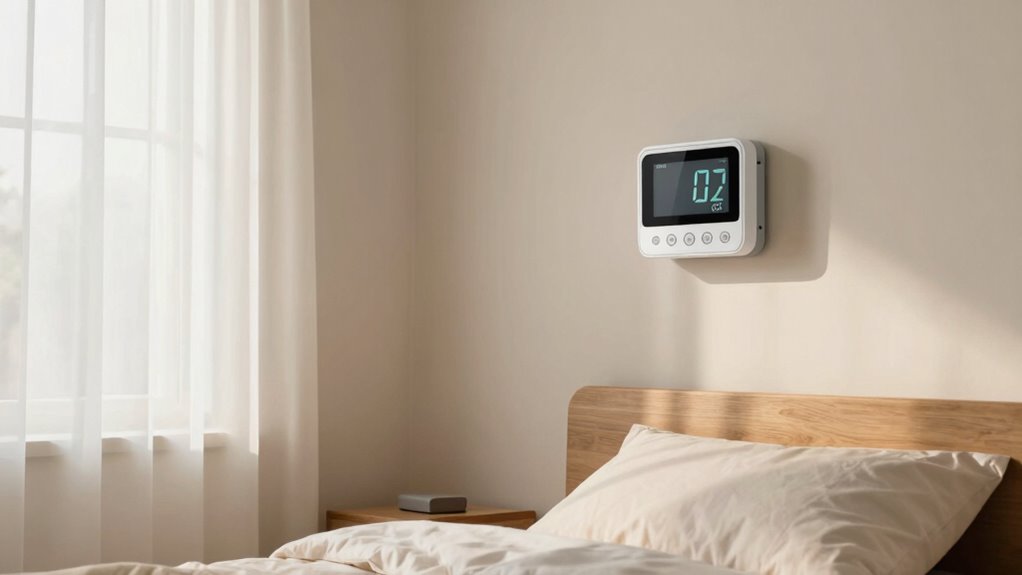

To avoid fake CO2 levels, place your monitor at eye level or just above to get a true sense of air quality. Keep it away from windows, doors, vents, or drafts that can introduce outside air. Avoid placing it near walls, furniture, or corners where airflow is impeded, causing stagnant spots. Proper placement ensures accurate results, and if you keep reading, you’ll discover more tips to optimize your setup.
Listen free for 30 days with Audible
Thousands of audiobooks and originals — cancel anytime.
As an affiliate, we earn on qualifying purchases.
Key Takeaways
- Place the monitor at eye level or sleeping height, about 3-6 feet above the floor.
- Position the device centrally in the room, away from windows, vents, and drafts.
- Keep it at least a few feet from walls, furniture, or corners to ensure good airflow.
- Avoid direct sunlight, heat sources, and moisture near the monitor.
- Ensure the device is in an area with stable airflow, away from open windows or external air influences.
As an affiliate, we earn on qualifying purchases.
Why Proper Placement of Your CO2 Monitor Matters
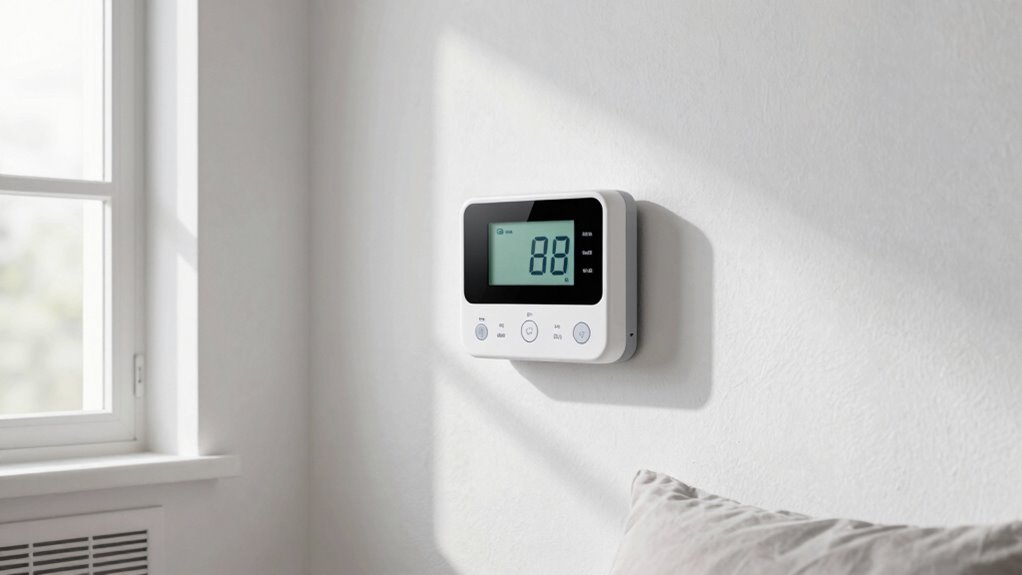
Proper placement of your CO2 monitor is essential because it directly affects the device’s ability to detect rising carbon dioxide levels accurately. When placed correctly, it benefits from good air circulation, preventing stagnant air that could give false readings. Avoid placing the monitor near windows, vents, or areas with poor airflow, as these can skew results. Additionally, proper placement ensures your device remains properly calibrated; if it’s in a spot with inconsistent airflow, calibration may drift, leading to inaccurate measurements. Regularly check that the monitor is positioned in a spot where air moves freely around it, not blocked by furniture or walls. This helps maintain accuracy and ensures your monitor provides reliable data about your room’s air quality. Optimal placement also considers avoiding direct sunlight, which can affect the sensor’s performance over time. Ensuring adequate ventilation around the device can further improve measurement accuracy and sensor longevity.
As an affiliate, we earn on qualifying purchases.
Where to Place Your CO2 Monitor in Your Bedroom for Best Results
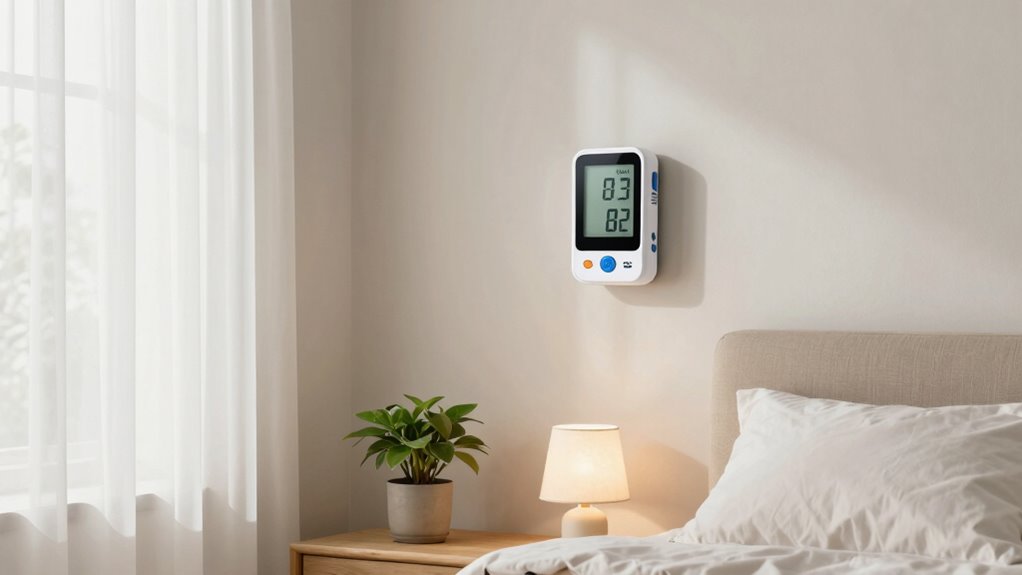
To get the most accurate readings, place your CO2 monitor at eye level where you typically spend your time. Keep it away from windows and areas with strong airflow, which can skew the results. Elevating the device slightly and avoiding drafts guarantees it measures the air quality effectively. Using a proper placement ensures your monitor provides reliable data for maintaining a healthy environment. Additionally, considering sensor technology can improve the accuracy and responsiveness of your CO2 readings. Selecting a device with advanced sensors can further enhance measurement precision and help detect fluctuations more quickly. Ensuring proper air circulation around the monitor prevents localized pockets of stale air that could affect the readings, and consistent positioning helps maintain measurement reliability over time.
Elevate to Eye Level
Since CO2 levels tend to be more precise when measured at eye level, placing your monitor around your seated or sleeping height guarantees reliable readings. Positioning it at this height guarantees you’re capturing the air quality where you spend most of your time, avoiding false low or high readings caused by air circulation patterns. Elevating your monitor helps maintain consistent conditions, making monitor calibration more accurate over time. Keep it away from direct airflow from vents or fans, which can skew results, but ensure it’s not placed too high or low. Understanding air circulation patterns is essential for accurate monitoring and ensuring a healthy sleep environment. Additionally, recognizing airflow dynamics within your space helps optimize monitor placement for the most accurate readings. By placing your CO2 monitor at eye level, you’ll get a true picture of the air quality in your bedroom, enabling you to make informed decisions to improve ventilation and comfort. Proper placement minimizes false readings caused by external factors and ensures your device provides consistent, trustworthy data. Paying attention to air circulation patterns can help prevent misleading measurements and improve overall air quality management. Being aware of ventilation sources nearby can further enhance measurement accuracy.
Avoid Airflow Disturbances
Airflow disturbances can considerably affect the accuracy of your CO2 readings. Airflow interference from fans, vents, or open windows can cause fluctuating levels that don’t reflect the true air quality. To avoid placement errors, choose a spot away from direct airflow sources, such as air vents or ceiling fans. Keep your monitor in a stable position where air moves naturally and consistently, avoiding drafts or strong currents. Sudden airflow changes can lead to inaccurate readings, making it seem like CO2 levels are higher or lower than they actually are. By placing your monitor in a location free from airflow interference, you’ll get more reliable data, helping you make informed decisions about ventilation and air quality in your bedroom. Additionally, consider the monitor’s placement to ensure it remains unaffected by nearby sources of airflow. Proper placement is essential for accurate measurements, so take time to select an optimal spot. Ensuring the monitor is positioned away from potential airflow disturbances can greatly improve the reliability of your readings.
Keep Away From Windows
Windows are common spots for placing monitors, but placing your CO2 detector too close can lead to inaccurate readings. Poor window placement may expose the monitor to airflow interference from drafts or outdoor air, skewing results. Avoid positioning it near open or frequently opened windows, as sudden air movement can cause false readings. Additionally, direct sunlight or temperature fluctuations near windows can affect sensor accuracy. Keep the monitor at a consistent height, away from the window’s influence, to ensure stable airflow and reliable measurements. Proper placement also involves considering air circulation patterns to avoid stagnant areas that could distort readings. Understanding ventilation dynamics helps optimize placement for accurate detection. Sensor placement principles emphasize the importance of positioning monitors away from airflow disruptions. By maintaining proper distance from windows, you minimize airflow interference and prevent misleading data, helping you accurately monitor your bedroom’s CO2 levels. Proper placement guarantees your detector provides trustworthy readings for better air quality management. Remember that sensor calibration can also influence accuracy, so periodic checks are recommended. For optimal results, it’s also helpful to consider indoor airflow patterns to ensure consistent air quality readings throughout the space.
As an affiliate, we earn on qualifying purchases.
Common Mistakes When Positioning Your CO2 Monitor and How to Avoid Them
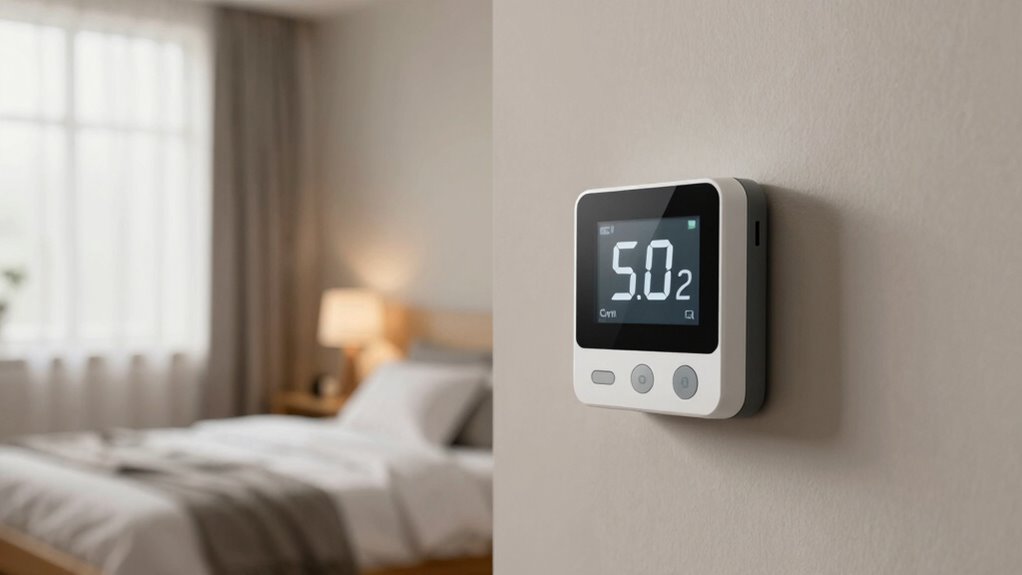
One common mistake is placing the CO2 monitor in areas where it won’t accurately represent the air quality in your bedroom. Poor device placement can lead to false readings. To avoid this, keep these tips in mind:
Avoid placing your CO2 monitor where it can’t accurately reflect your bedroom air quality.
- Avoid direct airflow from fans or vents, which can skew readings.
- Calibrate the sensor regularly to ensure accuracy over time.
- Place the monitor at the right height, roughly 3 to 6 feet above the floor, to reflect breathing zone levels.
- Be aware of environmental factors such as celestial influences that some believe can affect device performance and readings.
- Consider the overall room layout to prevent placement near obstructions that could interfere with air circulation and sensor accuracy.
- Monitor placement should also account for air circulation patterns, ensuring the device captures representative air samples from the entire room. Additionally, understanding air exchange rates can help optimize the monitor’s effectiveness.
Steer clear of locations near windows, doors, or drafts. Proper sensor calibration and thoughtful device placement are essential for reliable readings. By avoiding these common mistakes, you’ll ensure your CO2 monitor provides trustworthy data on your air quality.
air quality monitor with advanced sensors
As an affiliate, we earn on qualifying purchases.
As an affiliate, we earn on qualifying purchases.
How to Position Your CO2 Monitor for Accurate Readings
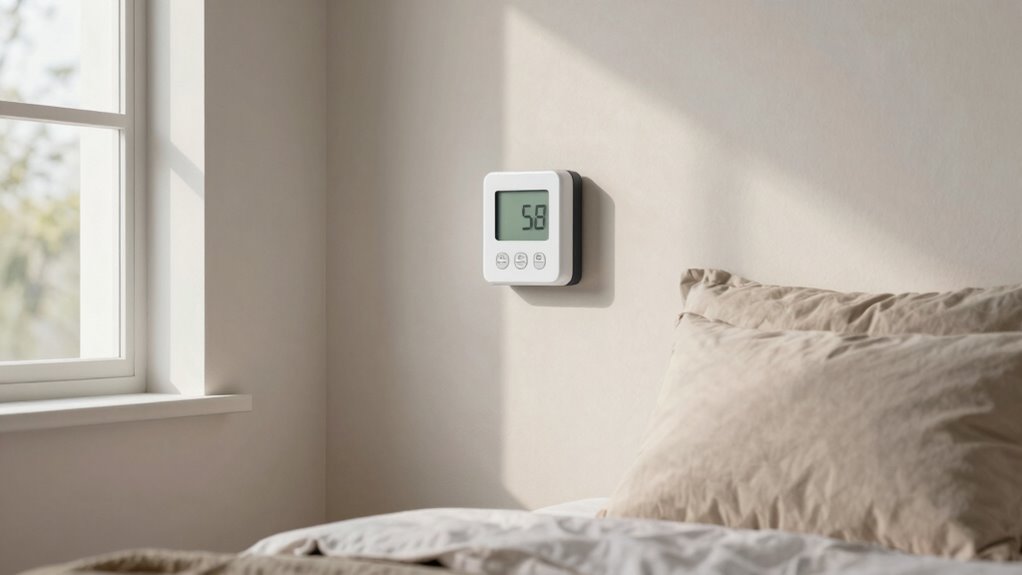
To get accurate CO2 readings, avoid placing your monitor where it’s exposed to direct sunlight, which can skew results. Keep it at the right distance from walls and furniture so it isn’t influenced by nearby surfaces or drafts. Proper placement guarantees you’re getting a true picture of your bedroom’s air quality. Additionally, consider the location of outdoor kitchens and pizza ovens, as they can impact indoor air quality if not properly ventilated.
Avoid Direct Sunlight
Avoiding direct sunlight is essential because sunlight can cause the sensor to heat up, leading to inaccurate CO2 readings. To guarantee accuracy, consider these tips:
- Place your monitor away from windows where sunlight hits directly, preventing sensor heating.
- Keep it clear of furniture interference, which can block airflow and affect readings.
- Be mindful of humidifier placement; avoid areas with high humidity or moisture, as they can skew results.
- Select a monitor with reliable sensor technology to ensure consistent and accurate measurements. Additionally, choosing a device with proper calibration can help maintain long-term accuracy and reliability.
Maintain Proper Distance
Position your CO2 monitor at least 3 to 6 feet above the floor to make certain it captures representative air samples. Proper placement ensures good air circulation around the device, preventing stagnant readings caused by poor airflow. Keep it away from corners or walls, which can distort measurements. Maintaining an appropriate distance from sources of humidity, like bathrooms or windows, helps avoid false high readings due to moisture. Also, avoid placing the monitor near vents or drafts that can skew data by introducing fresh or stale air. By positioning it correctly, you ensure your monitor accurately reflects the room’s air quality, giving you reliable CO2 levels. This careful placement helps you avoid fake readings caused by uneven air circulation or fluctuating humidity levels.
Mounting or Setting Up Your CO2 Monitor for Reliable Data
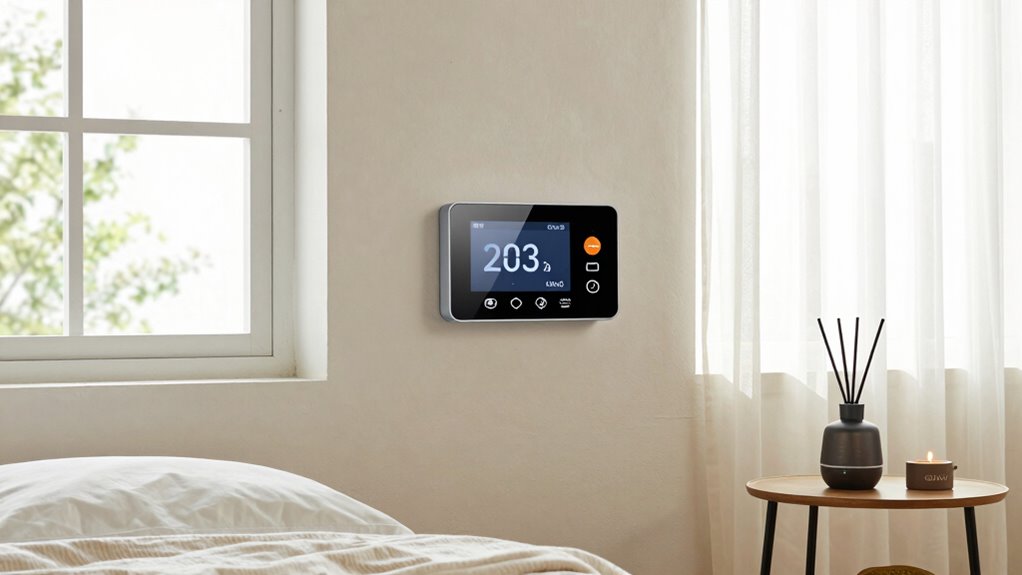
Properly mounting your CO2 monitor is essential for accurate readings, so take the time to find the best spot. First, confirm the sensor calibration is recent; a properly calibrated device provides reliable data. Next, focus on power supply placement—avoid extension cords or outlets near sources of heat or moisture, which can affect readings. Finally, position your monitor at a consistent height, ideally around eye level, to prevent false readings caused by air currents or obstructions. When mounting, use a secure wall bracket or stand that keeps the device steady and away from drafts or direct airflow. By following these steps, you’ll ensure your CO2 monitor delivers dependable data, helping you maintain a safe and healthy bedroom environment.
Should You Place the Monitor Near Windows, Doors, or Vents?
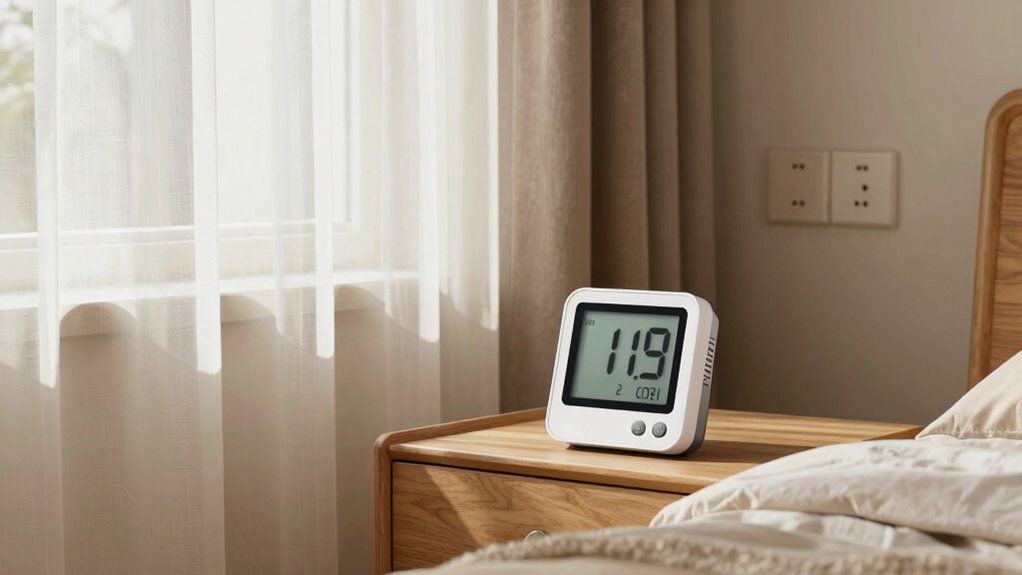
Placing your CO2 monitor near windows, doors, or vents can considerably influence its readings. These locations impact air circulation, which affects how accurately the monitor detects indoor CO2 levels. Near windows or vents, outside air might dilute or skew readings, giving a false sense of safety. Conversely, placing it close to doors that frequently open can lead to inconsistent data. Temperature control also plays a role; vents or sunny windows can alter the monitor’s temperature, potentially causing false readings. To guarantee reliable data, avoid placing the monitor directly near these areas. Instead, position it in a central spot where air flows naturally but isn’t heavily influenced by outside air or drafts. This helps you monitor true indoor CO2 levels effectively.
How Room Size and Layout Affect Your CO2 Monitor Placement
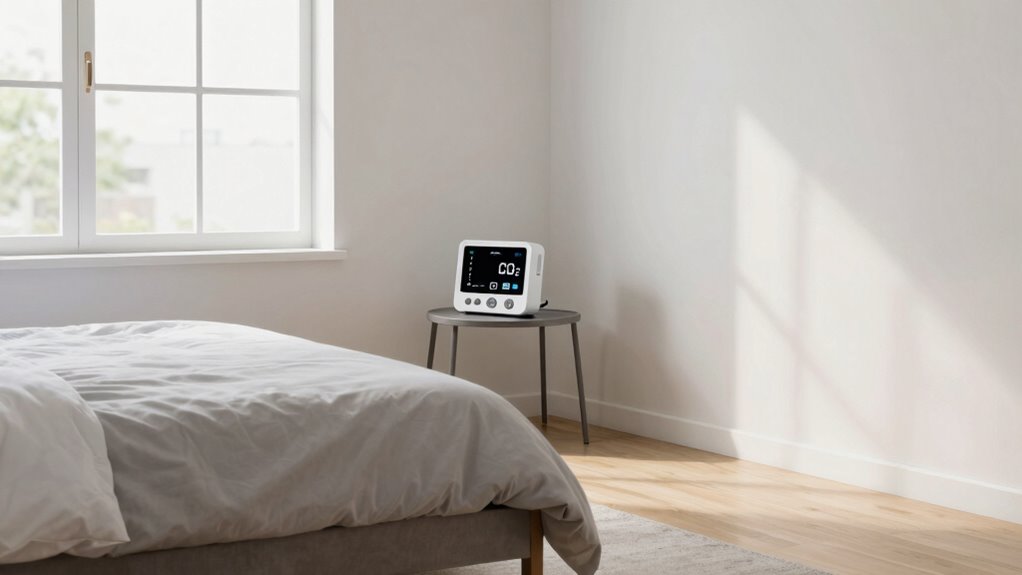
The size and layout of your bedroom directly influence where you should put your CO2 monitor to get accurate readings. Large or irregularly shaped rooms can cause uneven air circulation, impacting sensor accuracy. Consider these key factors:
- Place the monitor away from corners where room acoustics may cause false readings due to stagnant air.
- Avoid areas with dense furniture placement that block airflow, which can lead to inaccurate CO2 levels.
- Position the monitor at ear level, ensuring it’s not too close to walls or furniture that could distort airflow and readings.
Do You Need Multiple CO2 Monitors? Ensuring Reliable Air Quality Data

If your bedroom is large or has multiple areas with different airflow patterns, using just one CO2 monitor might not provide an accurate picture of air quality throughout the space. Multiple monitors can help you get a more complete view, especially in diverse zones. To guarantee reliability, regularly check monitor calibration, so your device sensitivity remains accurate. Calibration helps prevent false readings due to drift over time, giving you confidence in your data. If you notice inconsistent readings from a single device, adding more monitors can identify problem areas or airflow issues. Keep in mind, using multiple monitors isn’t just about coverage; it’s about maintaining precise and dependable air quality information for your safety and comfort.
Troubleshooting Fake Readings and Ensuring Your Monitor Is Accurate
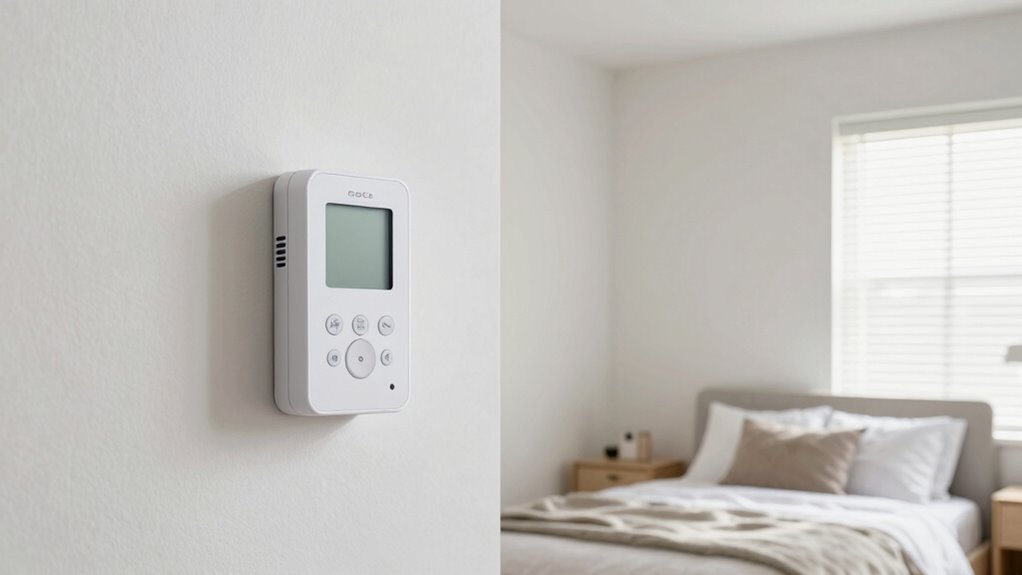
Even with multiple monitors, inaccurate readings can still occur, leading you to question the reliability of your air quality data. To troubleshoot false alarms and ensure your monitor’s accuracy, start with these steps:
- Regularly calibrate your sensor according to the manufacturer’s instructions to maintain accuracy.
- Keep the monitor away from sources that could cause false alarms, like open flames or high humidity.
- Check for dust or debris on the sensor, cleaning gently if needed, to prevent skewed readings.
Frequently Asked Questions
How Often Should I Calibrate My CO2 Monitor for Accuracy?
You should calibrate your CO2 monitor every 6 to 12 months to guarantee monitoring accuracy. Regular calibration helps maintain precise readings, especially if the device is used frequently or in changing environments. Check the manufacturer’s recommendations, as some models may require more frequent calibration. By staying on top of calibration frequency, you’ll keep your monitor reliable, ensuring accurate data to maintain healthy indoor air quality.
Can Pets or Furniture Interfere With CO2 Readings?
Pets and furniture can hinder with your CO2 readings, especially if they block the monitor’s sensors or cause furniture interference. Pet activity, like sleeping near the monitor or moving around, might affect the accuracy, so place the device away from pet beds or play areas. Keep furniture clear of the monitor to ensure consistent, reliable readings, and avoid false data caused by obstructions or pet movements.
Is It Safe to Place a CO2 Monitor Near Electronic Devices?
Placing your CO2 monitor near electronic devices is like trying to listen to a whisper in a noisy room; electronic interference can skew readings. To keep it precise, position your device away from computers, TVs, or chargers. Proper device placement ensures your monitor’s readings stay reliable, giving you a clear picture of your indoor air quality without interference, so you can breathe easier and trust your data.
How Do Seasonal Changes Affect CO2 Levels in a Bedroom?
Seasonal changes impact CO2 levels in your bedroom through seasonal ventilation and temperature fluctuations. During winter, reduced ventilation and colder temperatures can trap CO2, raising levels. Conversely, in summer, increased airflow and warmer air help lower CO2 concentrations. To get accurate readings year-round, monitor CO2 levels consistently, especially during seasonal shifts, and guarantee proper ventilation to maintain healthy air quality regardless of the season.
What’s the Ideal Height to Position a CO2 Monitor in a Room?
Think of your room as a living, breathing entity—your CO2 monitor’s placement is vital. Position it at head height, about 3-6 feet above the floor, to guarantee accurate readings. Proper air circulation is key, so avoid corners or near vents. This height captures the air you breathe, providing real insights into your environment, making your monitor a dependable guardian of your indoor air quality.
Conclusion
Think of your CO2 monitor as a lighthouse guiding you through the fog of indoor air. Proper placement illuminates the true air quality, steering you clear of misleading readings. By positioning it thoughtfully, you guarantee your home’s safety shines brightly, not obscured by shadows of false data. Trust your monitor as a symbol of awareness—when placed correctly, it becomes a steadfast guardian, helping you breathe easier and stay informed.
Fall Picks
fall essentials
As an affiliate, we earn on qualifying purchases.